American Trilogy
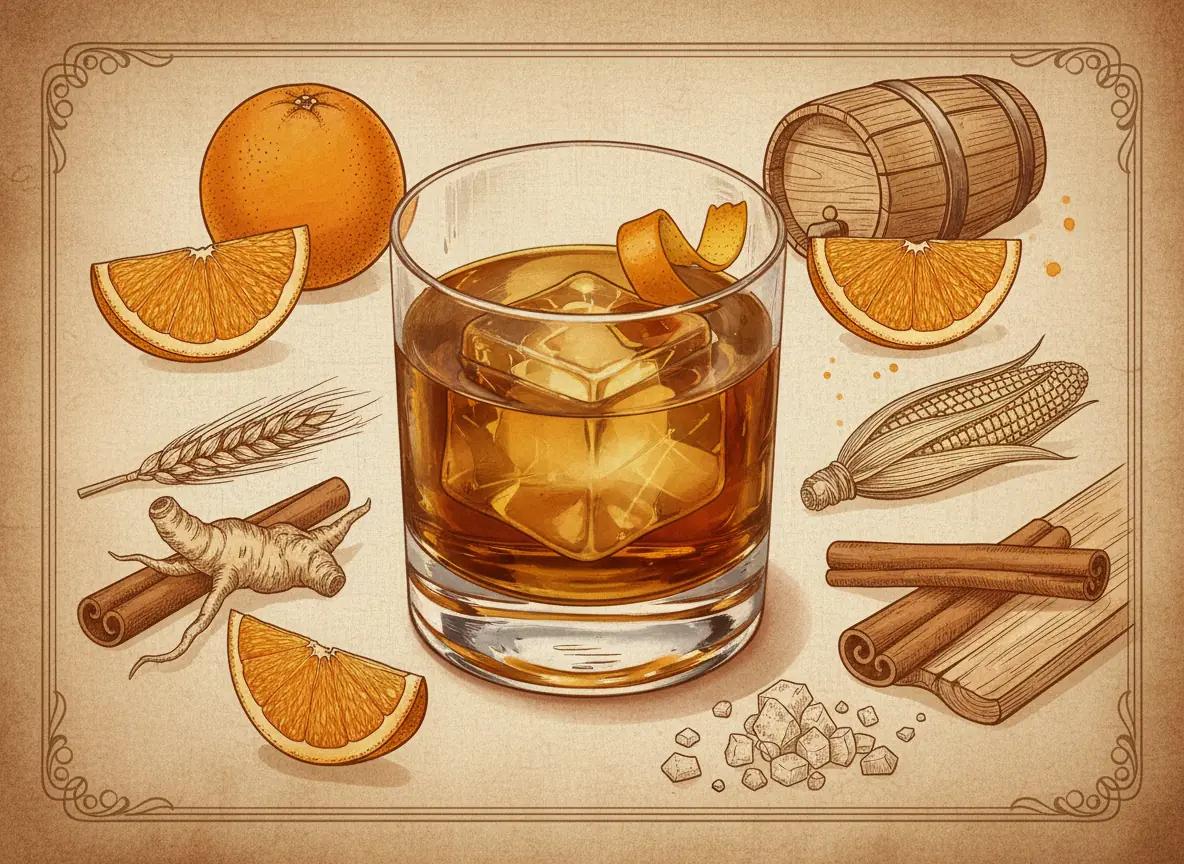
An American Trilogy is 30ml of rye whiskey and 30ml of applejack poured over a brown sugar cube muddled with two dashes of orange bitters, stirred over one large ice cube in a rocks glass for 15 to 20 seconds and finished with an orange twist. About 2.5 UK units with both spirits at 40% ABV, or about 3.1 with bonded bottles at 50%. Punch credits Richard Boccato and Michael McIlroy with it, at the New York bar Little Branch; Difford’s Guide says it was adapted from a recipe they created in 2006 at Milk & Honey, and was a staple at Little Branch by the following year. It is an Old Fashioned with the base split between two American spirits. Punch says it nods to the Diamondback, a 20th century classic of rye, applejack and yellow Chartreuse, and is emblematic of the popularity of Laird’s Bonded Apple Brandy, newly available in the city in the aughts. The applejack does not make it taste of apple so much as round off the rye. The sugar cube keeps dissolving as you drink, so the first sip is drier than the last.
Glassware: Rocks Glass
Garnish: Orange twist
Ingredients
30ml
Half the base, so it has to hold its half. A bonded rye at 50% ABV matches bonded applejack; at 40% against a 50% applejack, the apple leads.
30ml
American apple brandy, bonded at 50% ABV if you can find it. Blended applejack, which 27 CFR 5.146 lets be up to 80 percent neutral spirits, thins the drink; calvados is the closer substitute, drier and more austere.
1 cube
A brown or demerara cube, with a deeper, toffee-like sweetness than white sugar. Muddled with the bitters, it dissolves slowly as the drink goes.
2 dashes
Two dashes, soaked into the cube. Orange peel bridges the grain and the apple, where Angostura’s clove would push the drink towards Christmas.
Instructions
Put the brown sugar cube in a rocks glass and soak it with the orange bitters.
Add a bar spoon of water and muddle to a paste.
Add the rye and the applejack.
Add one large ice cube.
Stir for 15 to 20 seconds.
Express an orange twist over the surface and drop it in.
Our version
Published with an ounce each of rye and bonded applejack, a brown sugar cube and two dashes of orange bitters over a large cube. Ours converts the measures to 30ml and stirs for 15 to 20 seconds.
Source: our own specification. Last checked 9 October 2026.
Expert Tip
Muddle the cube into a paste with the bitters and a bar spoon of water before the spirits go in. A few grains left at the bottom keep dissolving as you drink, which is part of the design; a whole cube never fully goes. Match the two spirits in strength. Bonded applejack is bottled at 50% ABV, so pair it with a bonded rye, or the stronger spirit leads. If you can only find calvados, it gives a drier, more restrained drink. Stir for 15 to 20 seconds over the one large cube, then stop. The cube keeps chilling and diluting slowly as the drink sits, and a longer stir leaves it watery by the end.
Behind the American Trilogy
Flavour Profile
Where It Comes From
Punch credits Richard Boccato and Michael McIlroy with the drink, created at Little Branch in New York, and calls it emblematic of the popularity of Laird’s Bonded Apple Brandy, which was newly available in the city in the aughts. Difford’s Guide says it was adapted from a recipe they created in 2006 at Milk & Honey.
Punch says it nods to the Diamondback, a 20th century classic made with rye, applejack and yellow Chartreuse, and in our view it moves the same pair into an Old Fashioned.
Two American Spirits
Applejack is American apple brandy. 27 CFR 5.143 sets American rye whisky as a fermented mash of not less than 51% rye. 27 CFR 5.88 allows a spirit to be labelled bottled in bond only if it is stored for at least four years and bottled at 50 percent alcohol by volume.
Equal measures make each half count. The rye brings spice and grip; the applejack brings fruit and a softer middle, so the result tastes like a rounder Old Fashioned more than an apple drink.
Why the Sugar Cube Matters
Every Old Fashioned recipe now offers syrup, and syrup makes a consistent drink. A muddled cube makes a different one.
A cube muddled with bitters and a little water is not fully dissolved when the stir ends. It keeps dissolving in the glass, so the sweetness climbs as the ice melts: drier at the start, rounder at the end.
Applejack and Its Substitutes
Bonded applejack has the weight to sit beside rye at equal measure without being pushed under.
Calvados works and makes a drier, more restrained drink with less obvious fruit. Blended applejack, which 27 CFR 5.146 lets be up to 80 percent neutral spirits, is the one to avoid: at half the base, it thins the whole drink.
The apple half, each with 30ml of rye at 40% ABV
Bonded applejack
- ABV
- 50%
- What it does to the drink
- Rounder and fuller; the recipe’s choice
- UK units
- About 2.8
Calvados
- ABV
- 40 to 42%
- What it does to the drink
- Drier and more austere, less obvious apple
- UK units
- About 2.5
Blended applejack
- ABV
- 40%
- What it does to the drink
- Thinner, because part of it is neutral spirit
- UK units
- About 2.5
| Apple spirit | ABV | What it does to the drink | UK units |
|---|---|---|---|
| Bonded applejack | 50% | Rounder and fuller; the recipe’s choice | About 2.8 |
| Calvados | 40 to 42% | Drier and more austere, less obvious apple | About 2.5 |
| Blended applejack | 40% | Thinner, because part of it is neutral spirit | About 2.5 |
How to Serve It
In a rocks glass over one large cube, with an orange twist expressed and dropped in. It is a slow drink, and it changes as the sugar dissolves.
For rye and apple brandy with yellow Chartreuse, make a Diamondback; for the single-spirit original, an Old Fashioned.
Make it at home
The Spirit
Whiskey (Rye)Rye whiskey, under the US standard 27 CFR 5.143, takes at least 51% of its grain from rye and its colour from new charred oak, and goes into bottle at a 40% ABV minimum; our recipes take 40% as the figure. Rye makes a drier, spicier, more peppery spirit than corn, which is why stirred classics such as the Manhattan, Vieux Carré and Brooklyn are written for it. It appears in 23 of our recipes.
More to explore
Frequently Asked Questions
What is an American Trilogy?
Why is it called the American Trilogy?
Applejack or calvados?
Why muddle a sugar cube instead of using syrup?
How is it different from a Diamondback?
How long should I stir it?
How strong is an American Trilogy?
Sources.
Correct as of 19 October 2026.
- Punch, “American Trilogy” (secondary source: created at New York bar Little Branch by Richard Boccato and Michael McIlroy; nods to the Diamondback (rye, applejack, yellow Chartreuse); emblematic of Laird’s Bonded Apple Brandy, newly available in the city in the aughts; 1 ounce rye, 1 ounce bonded applejack, a brown sugar cube, 2 dashes orange bitters).
- Difford’s Guide, “American Trilogy” (secondary source: adapted from a recipe created in 2006 by Richard Boccato and Michael McIlroy at Milk & Honey; a staple at Little Branch by the following year; three American ingredients, hence the name: rye whisky, applejack and Regan’s Orange Bitters).
- Cornell Law School LII, “27 CFR 5.143, Standards of identity for whisky” (rye whisky: fermented mash of not less than 51% rye).
- Cornell Law School LII, “27 CFR 5.88, Bottled in bond” (stored at least 4 years; bottled at 50 percent alcohol by volume).
- Cornell Law School LII, “27 CFR 5.146, Blended applejack” (at least 20 percent apple brandy stored in oak barrels for not less than 2 years and not more than 80 percent neutral spirits; bottled at not less than 40% ABV).
You Might Also Like
Old Fashioned
The IBA’s Old Fashioned is 45ml of bourbon or rye whiskey, one sugar cube, a few dashes of Angostura bitters and a few dashes of water; we use bourbon and two dashes. The sugar and bitters are muddled in a rocks glass until the cube dissolves, then ice goes in, the bourbon goes over it and the drink is stirred for 15 to 20 seconds. Orange peel is expressed over the top. About 1.9 UK units. Only the sugar and bitters are muddled: no orange flesh, no cherry. The recipe predates the name. The Oxford Companion says that when a newspaper in Hudson, New York, defined the cocktail in 1806, it described “spirits of any kind, sugar, water, and bitters”. The name came later in the century: the Companion has people ordering Old-Fashioneds in Chicago in 1880, as bartenders added liqueurs to the format and drinkers who wanted it plain asked for one made the old-fashioned way.
Diamondback
A Diamondback is 45ml of rye, 22.5ml of calvados and 22.5ml of yellow Chartreuse, stirred over ice for 20 to 30 seconds and strained into a chilled Nick & Nora, with a cherry or no garnish. About 3.7 UK units. There is no citrus, sugar or soda; the only sweetness is the yellow Chartreuse, which Chartreuse’s own page describes as characterised by its sweetness. Difford’s Guide, adapting Ted Saucier’s Bottoms Up of 1951, says it was the signature drink of the Diamondback Lounge at the Lord Baltimore Hotel in Baltimore, and Saucier’s recipe uses applejack. We have found no source that names who first mixed it. Rye gives it pepper and grain, calvados apple, and yellow Chartreuse honey, saffron and herbs. Each sits in a different place, so three strong bottles make one drink. It belongs after dinner, and one is enough.
Improved Whiskey Cocktail
An Improved Whiskey Cocktail is 60ml of rye whiskey with 5ml of maraschino liqueur, 2.5ml of absinthe, 10ml of demerara syrup and two dashes of Angostura bitters, stirred over ice for 20 to 30 seconds and strained over one large cube in a rocks glass, with lemon peel expressed and dropped in. About 2.8 UK units. Difford’s Guide, reproducing it, says Jerry Thomas printed an Improved Whiskey Cocktail in his 1876 bar guide: the plain whiskey cocktail of spirit, sugar and bitters, with dashes of maraschino and absinthe added. The Oxford Companion says that once vermouth drinks arrived in the 1870s some drinkers kept to the tried-and-true formula and called for an “old-fashioned” cocktail. The additions are small on purpose. Each should sit behind the rye, never in front of it.
Where this one sits
Recipe by Jerry Can Spirits · Updated 19 October 2026