Ti’ Punch
A Ti’ Punch is 60ml rhum agricole blanc and 10ml cane syrup over a small disc of lime, squeezed and dropped into a rocks glass, stirred briefly and served without ice. With a Martinique blanc at our working figure of 50% ABV it holds about 3.0 UK units, and the glass carries only about 70ml. The Oxford Companion says the name is Creole, from the French petit punch, and that the drink dates to at least the 1880s, when Lafcadio Hearn met it in Martinique; Imbibe calls it the national drink of Martinique. The saying that goes with it, chacun prépare sa propre mort, roughly each prepares his own death, refers to the custom of setting out the bottle, the syrup and the limes so every drinker builds their own. The lime disc is cut from the side of the fruit, mostly peel, and it perfumes the drink rather than souring it. That is the point most often missed.
Variations
Glassware: Rocks Glass
Garnish: Lime disc already in the glass
Ingredients
60ml
An AOC Martinique rhum agricole blanc, taken at our working figure of 50% ABV. INAO says Rhum de la Martinique is exclusively rhum agricole, made from cane juice rather than molasses, and in our view its grassy, green character is the drink.
10ml
Sirop de canne, made from cane like the rhum. The 10ml is a starting point; each drinker sets their own sweetness.
Instructions
Cut a coin-sized disc from the side of a lime: mostly peel, a little flesh.
Squeeze the disc over a small rocks glass and drop it in.
Add the cane syrup and press the lime once with a bar spoon.
Add the rhum agricole and stir for a few seconds.
Serve without ice, or over a single cube on a hot day.
Expert Tip
Cut the lime as a coin-sized disc from the side of the fruit, mostly peel with a thin layer of flesh. Squeeze it over the glass and drop it in: the peel oil is the aroma, and a wedge’s worth of juice would turn it into a sour. Use sirop de canne, not simple syrup. It is made from cane, like the rhum, and its vegetal richness sits with the agricole’s grassiness. White sugar syrup tastes thin beside it. Serve it small and without ice. At our working 50% ABV it is strong, and it is sipped in a few mouthfuls. A single cube on a hot afternoon is common and does no harm.
Behind the Ti’ Punch
Flavour Profile
The Origin
Ti’ Punch means petit punch, small punch, and Imbibe calls it the national drink of Martinique. The Oxford Companion says it dates to at least the 1880s, when Lafcadio Hearn met it in Martinique. We have found no source that names a first maker.
It is as plain as it is because rhum agricole needs little help. Made from fresh cane juice rather than molasses, the spirit already tastes of the plant, and a drink built to show that has no use for a fourth ingredient.
The Ritual
Nobody builds a Ti’ Punch for anyone else. The bottle, the syrup and a saucer of lime discs go on the table, and each drinker makes their own, to their own strength and sweetness. Chacun prépare sa mort, the saying goes: each prepares his own death.
Choosing the Rhum
A white AOC Martinique rhum agricole is the usual pour; we work the units at 50% ABV, and a stronger bottling raises them. The strength is high and the measure small, and the drink is sipped.
Molasses rum tastes of what sugar production leaves behind: caramel, toffee, dried fruit. Agricole tastes of the cane itself, grassy and green. Swap one for the other and the drink has no reason to exist.
Ti’ Punch: what goes in the glass
Rhum agricole blanc
- Measure
- 60ml
- Its job
- The drink: grassy cane at full strength
Cane syrup
- Measure
- 10ml, to taste
- Its job
- Sweetness from the same plant
Lime disc
- Measure
- One, mostly peel
- Its job
- Perfume, and a little acid
| Ingredient | Measure | Its job |
|---|---|---|
| Rhum agricole blanc | 60ml | The drink: grassy cane at full strength |
| Cane syrup | 10ml, to taste | Sweetness from the same plant |
| Lime disc | One, mostly peel | Perfume, and a little acid |
The AOC
INAO’s specification says the appellation d’origine contrôlée Rhum de la Martinique was initially recognised by the decree of 5 November 1996.
The specification fixes the geographic area and a cutting season from 1 January to 31 August, limits fermentation to 120 hours from the end of filling the vats until distillation, and gives distillation in a column still as the traditional principle. Guadeloupe makes fine cane-juice rhum outside the appellation, so a missing AOC is not a verdict on quality.
Blanc or vieux: rhum agricole comes in both, and the blanc is the one made for this drink.
The Vieux Variant
Aged agricole with less syrup makes a softer, after-dinner drink, closer to a brandy. With a good vieux, some drinkers leave the lime out altogether.
How to Serve It
In a small rocks glass, with the lime disc squeezed and dropped in, then the syrup, a press, the rhum and a short stir. No ice unless the afternoon is hot, and never a fourth ingredient.
Make it at home
The Spirit
Rhum AgricoleRhum agricole is rum distilled from the pressed juice of freshly cut sugar cane, not from molasses, made in the French Caribbean and Madeira, with a grassy, vegetal taste. INAO dates Martinique's appellation, AOC Rhum de la Martinique, to 1996. Our Ti’ Punch and Three Dots and a Dash count a blanc at 50% ABV.
More to explore
Frequently Asked Questions
Why is a Ti’ Punch served without ice?
What does chacun prépare sa mort mean?
Can I make a Ti’ Punch with ordinary white rum?
How strong is a Ti’ Punch?
Which rhum should I use?
What is sirop de canne?
Sources.
Correct as of 19 October 2026.
- The Oxford Companion to Spirits and Cocktails (Wayne Curtis), “Ti’ Punch” (secondary source: a popular drink in the French West Indies, especially Martinique; Creole from petit punch; dates back to at least the 1880s (Lafcadio Hearn); rum, sugar and a squeeze of lime peel; the bottle, sugar and lime set out so each customer builds their own).
- INAO, “Cahier des charges de l’AOC Rhum de la Martinique” (primary source (the version put out for national opposition in 2020): “initialement reconnue par le décret du 5 novembre 1996”; cutting period 1 January to 31 August; maximum fermentation 120 hours from the end of filling the vats until distillation; traditional principle, column distillation).
- INAO, “Rhum de la Martinique” (primary source: exclusively a rhum agricole, made from cane juice; three categories, blanc, élevé sous bois and vieux).
- Imbibe Magazine (Paul Clarke), “An Introduction to Ti’ Punch” (trade press: Ti’ Punch the national drink of Martinique; “chacun prépare sa propre mort”, roughly “each prepares his own death”, you mix your own drink).
You Might Also Like
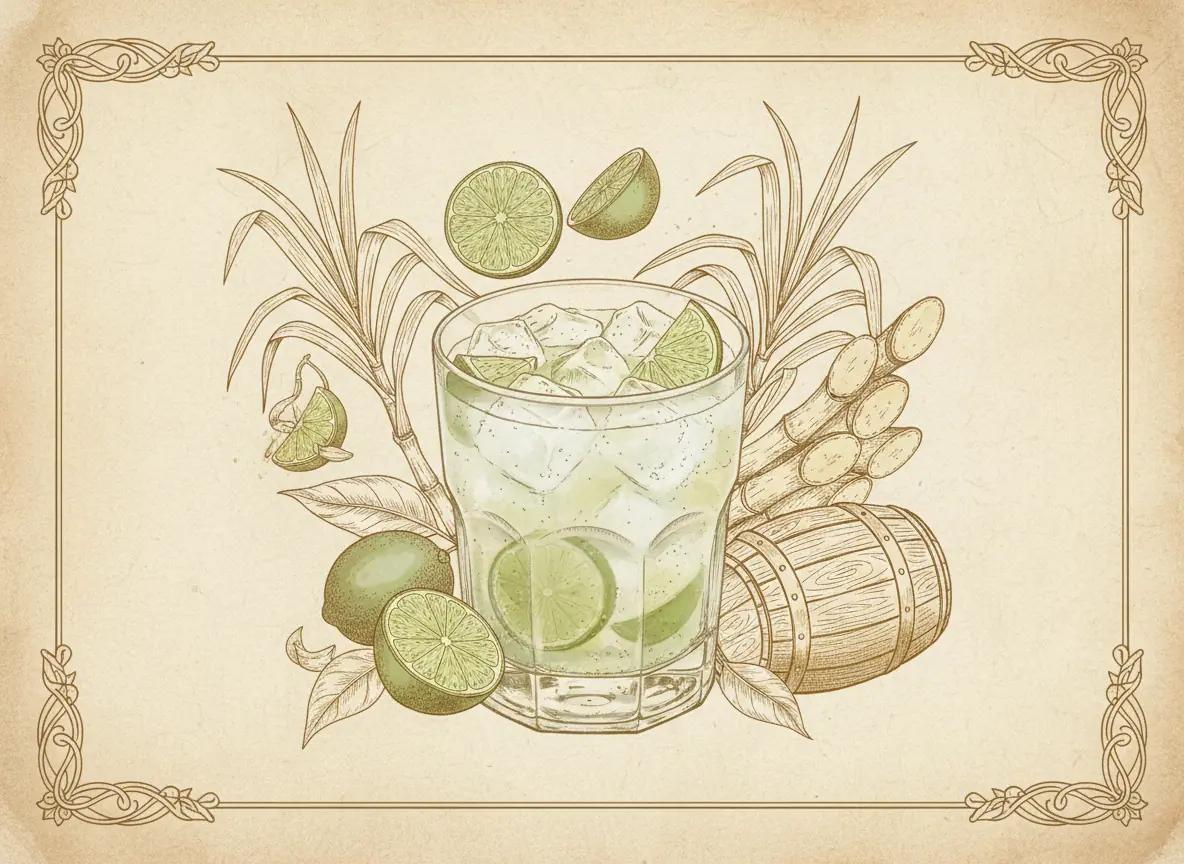
Caipirinha
A Caipirinha is 60ml of cachaça poured over one lime cut into eight pieces and muddled firmly with four teaspoons of caster sugar for 20 to 30 seconds, in a rocks glass filled with crushed ice and stirred briefly. About 2.4 UK units. The measures match the IBA’s. The Oxford Companion says non-Brazilians consider it the national drink of Brazil, though in Brazil it is the most famous of a large class of mixed drinks, the batidas. The Companion adds that the drink seems to have been called simply pinga com limão, cachaça with lime, before the 1950s, and that the name caipirinha, from caipira, a southern Brazilian word for a person from the rural hinterlands, was in occasional use by the 1950s and widespread by the end of the 1960s. Cachaça is what makes it. It is made from fresh sugarcane juice, where much rum starts from molasses, and it brings a grassy, green edge that the lime and sugar frame rather than cover.
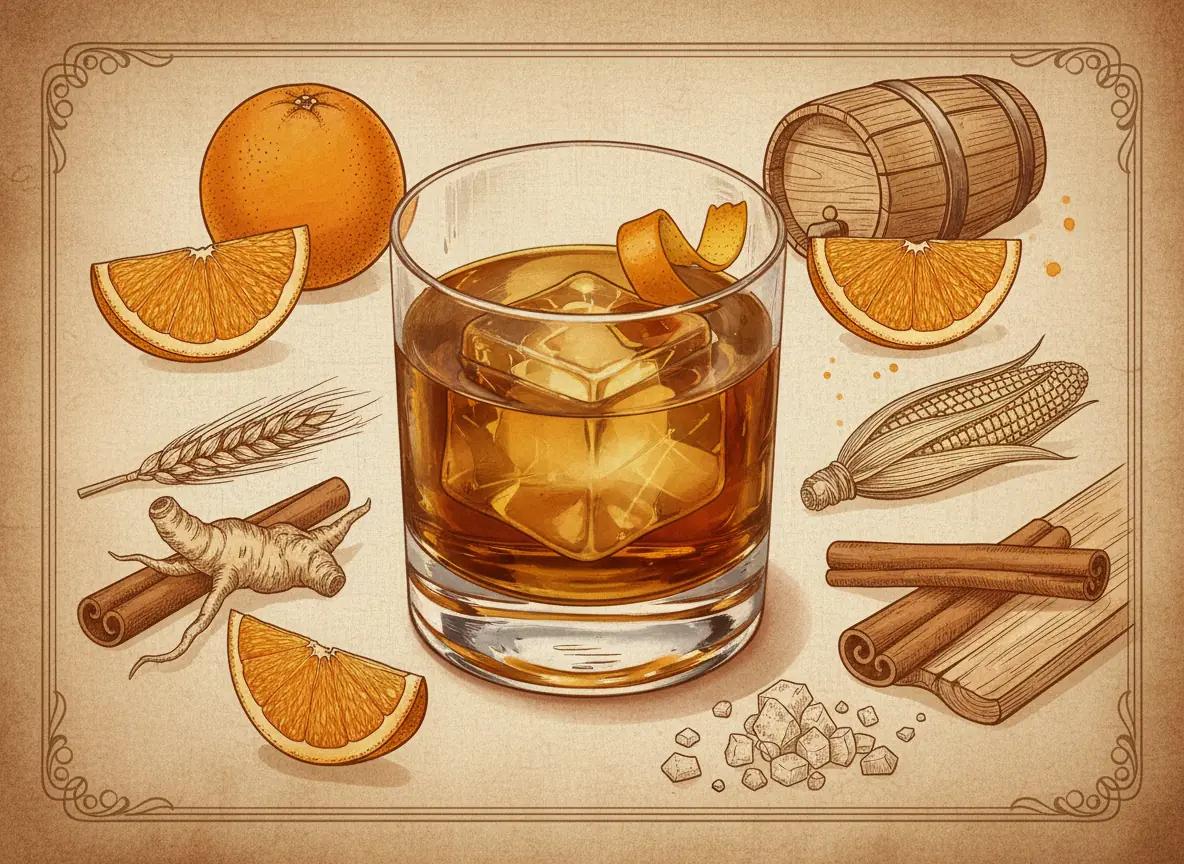
Old Fashioned
The IBA’s Old Fashioned is 45ml of bourbon or rye whiskey, one sugar cube, a few dashes of Angostura bitters and a few dashes of water; we use bourbon and two dashes. The sugar and bitters are muddled in a rocks glass until the cube dissolves, then ice goes in, the bourbon goes over it and the drink is stirred for 15 to 20 seconds. Orange peel is expressed over the top. About 1.9 UK units. Only the sugar and bitters are muddled: no orange flesh, no cherry. The recipe predates the name. The Oxford Companion says that when a newspaper in Hudson, New York, defined the cocktail in 1806, it described “spirits of any kind, sugar, water, and bitters”. The name came later in the century: the Companion has people ordering Old-Fashioneds in Chicago in 1880, as bartenders added liqueurs to the format and drinkers who wanted it plain asked for one made the old-fashioned way.
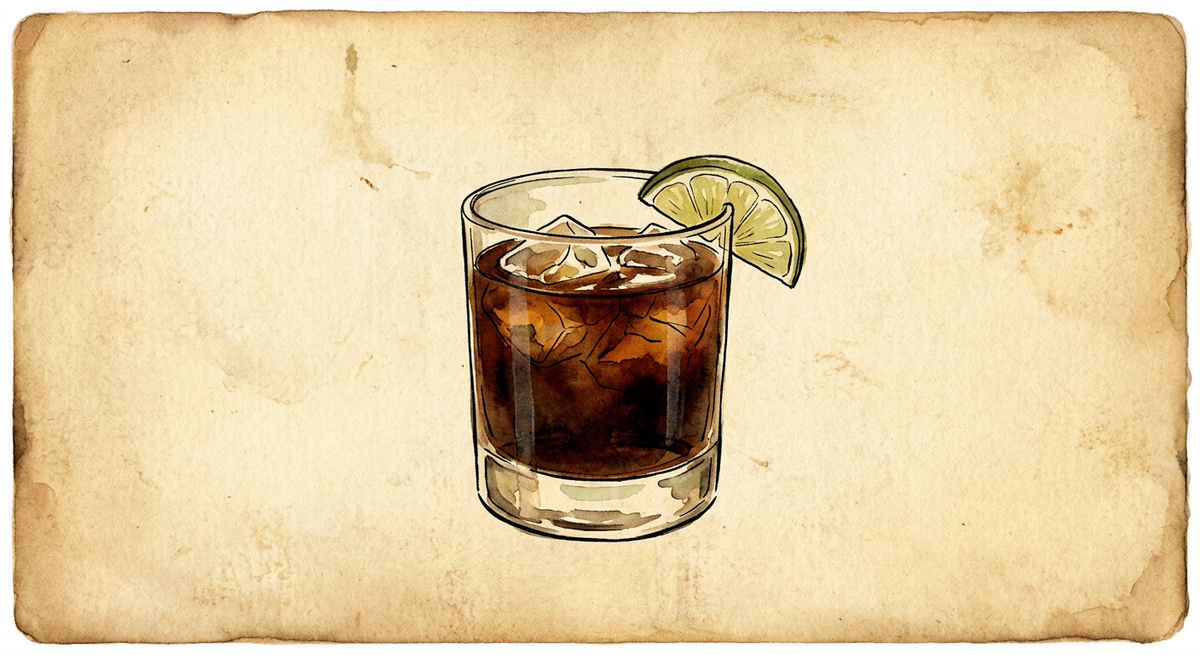
Corn n’ Oil
A Corn n’ Oil is 15ml of falernum over crushed ice in a rocks glass, with 60ml of blackstrap rum floated on top, two dashes of Angostura and a squeeze of lime, served unstirred. About 2.6 UK units. The Oxford Companion says almonds are sometimes added to falernum, so treat the drink as containing nuts. Difford’s Guide calls the Corn ’n’ Oil a traditional Barbadian planters’ drink, authentic with a Bajan rum and no oil-slick float. The blackstrap version, with near-black rum sitting on top of the falernum, is a later bar reading: bar-vademecum credits Murray Stenson of the Zig Zag Café in Seattle with the version made with Cruzan Black Strap. Ours is that blackstrap version. The rum is dark, heavy and slightly bitter; the falernum brings lime, clove and sugar; and the lime and bitters keep the two from turning sweet.
Where this one sits
Recipe by Jerry Can Spirits · Updated 19 October 2026