Fancy Free
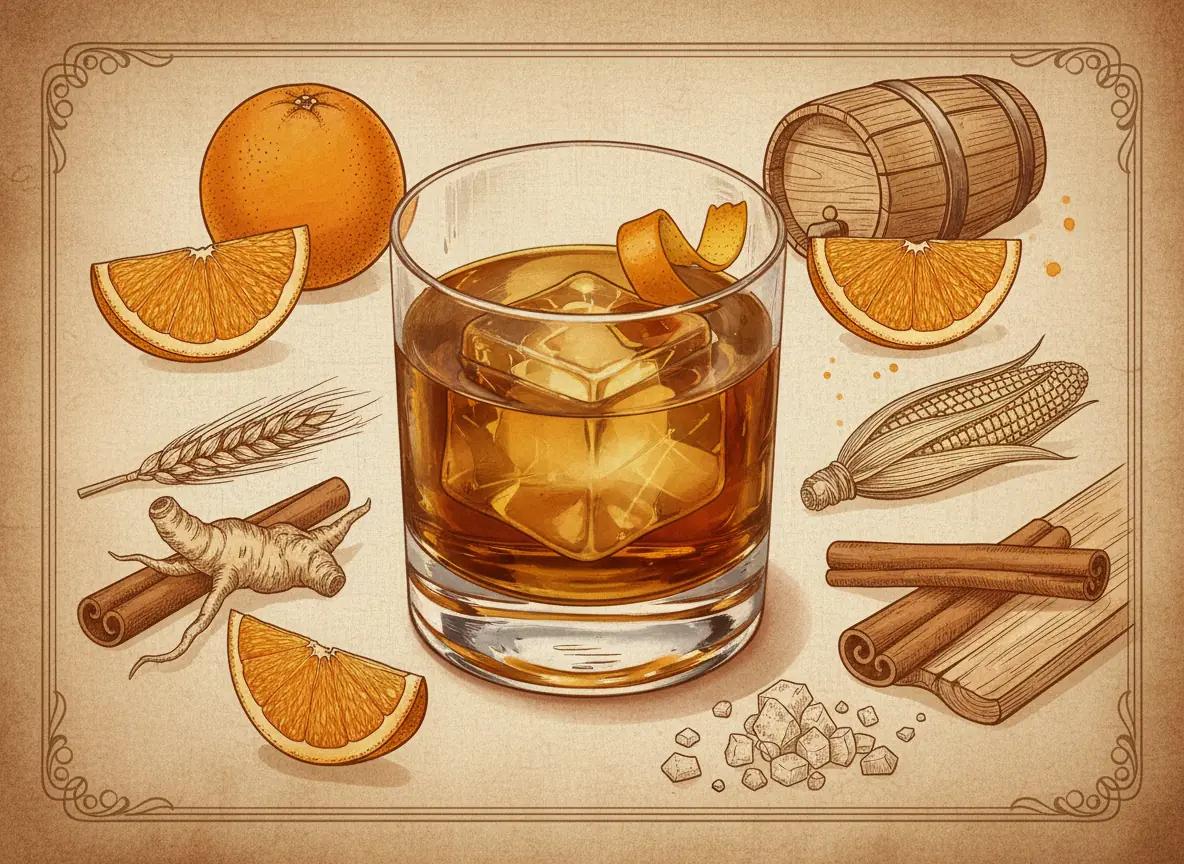
A Fancy Free is 60ml of rye whiskey, 15ml of maraschino liqueur and two dashes each of Angostura and orange bitters, stirred with ice for 20 to 30 seconds and strained over one large cube in a rocks glass, with an expressed orange twist. About 3.0 UK units. It is an Old Fashioned sweetened with maraschino in place of sugar. Punch traces it to Crosby Gaige’s Cocktail Guide and Ladies’ Companion of 1941, where it was shaken, served in a sugar-rimmed cocktail glass and given only two dashes of maraschino. The drink came back through New York’s revival bars. Punch says the bartender Jeremy Oertel met it at Dram in Brooklyn around 2010, where it had arrived on a Milk & Honey spec sheet, and his version, stirred over a big cube with 15ml of maraschino, is the one we follow, with rye where he uses bourbon.
Glassware: Rocks Glass
Garnish: Orange twist
Ingredients
60ml
Rye at 40% ABV or a little more. Its pepper pushes back against the maraschino. In our view bourbon, which Jeremy Oertel uses, makes a rounder, sweeter drink.
15ml
Luxardo’s own page gives its Maraschino Originale at 32% ABV. It is the only sweetener, made from sour marasca cherries, and it tastes as much of almond and flowers as of fruit.
2 dashes
Two dashes, at the 44.7% ABV on DrinkSupermarket’s listing. Clove and cinnamon at the back of the drink.
Instructions
Add the rye, maraschino and both bitters to a mixing glass.
Fill with cubed ice and stir for 20 to 30 seconds.
Strain over one large cube in a rocks glass.
Express an orange twist over the drink and drop it in.
Our version
Jeremy Oertel’s revival recipe from Punch, 2oz whiskey and ½oz maraschino stirred over a big cube, made with rye instead of bourbon and with two dashes of each bitters instead of one.
Source: our own specification. Last checked 10 October 2026.
Expert Tip
Use a real maraschino liqueur. The syrup from a jar of cocktail cherries is sugar and colouring, with none of the dry, nutty edge the liqueur brings. Treat 15ml as the most the drink will take. Maraschino is strongly flavoured, and at 20ml it starts to cover the rye. If it is new to you, start at 10ml and work up. Stir for 20 to 30 seconds before straining onto the cube. There is no water or syrup in the recipe, so the stir is where the dilution comes from, and an under-stirred one tastes hot.
Behind the Fancy Free
Flavour Profile
Crosby Gaige, 1941
Punch traces the Fancy Free to Crosby Gaige’s Cocktail Guide and Ladies’ Companion, published in 1941. Its version, Punch says, was two ounces of Fine Arts whiskey, two dashes of maraschino and a dash each of orange and Angostura bitters, shaken with ice and strained into a cocktail glass with a sugar rim.
That is a lighter, drier drink than the one made now. Two dashes of maraschino perfume the whiskey; 15ml sweetens it.
The Revival
Punch says Jeremy Oertel first met the drink while working at Dram in Brooklyn in 2010, where it had come through a Milk & Honey spec sheet that he copied into his notebook, and that he has championed it for 15 years.
Punch says revivalists dropped the sugar rim, stirred the drink instead of shaking it and garnished it with an orange twist, and Oertel’s recipe is 2oz of bourbon, ½oz of maraschino and a dash of each bitters, strained over a big cube.
Maraschino in Place of Sugar
An Old Fashioned needs sugar to round the spirit. Maraschino rounds it and adds flavour: it is a clear liqueur made from marasca cherries. Luxardo’s own page describes infusing the cherries in larch-wood vats with leaves and branches of the same trees, then distilling both the liquid and the solid parts; in our view that gives a dry almond note alongside the fruit.
So the drink reads drier than a full liqueur measure suggests. Cocktail-cherry syrup, which is sugar and flavouring, cannot stand in for it.
Rye, and Two of Each Bitters
We use rye where Oertel uses bourbon. Rye’s pepper holds the maraschino in check and keeps the finish dry. Bourbon makes a rounder, sweeter glass, and some will prefer it.
We also double his bitters. Angostura’s clove sits under the cherry, and orange bitters lift the top of the glass toward the twist.
Three Versions
The Fancy Free in 1941 and in Jeremy Oertel’s revival, both as Punch gives them, and ours; the units are our calculation at our working figure of 40% for rye, with maraschino at Luxardo’s 32%
Whiskey
- Gaige, 1941 (Punch)
- 2oz Fine Arts whiskey
- Oertel (Punch)
- 2oz bourbon
- Ours
- 60ml rye
Maraschino
- Gaige, 1941 (Punch)
- Two dashes
- Oertel (Punch)
- ½oz
- Ours
- 15ml
Angostura bitters
- Gaige, 1941 (Punch)
- One dash
- Oertel (Punch)
- One dash
- Ours
- Two dashes
Orange bitters
- Gaige, 1941 (Punch)
- One dash
- Oertel (Punch)
- One dash
- Ours
- Two dashes
Method
- Gaige, 1941 (Punch)
- Shaken
- Oertel (Punch)
- Stirred
- Ours
- Stirred 20 to 30 seconds
Glass
- Gaige, 1941 (Punch)
- Cocktail glass, sugar rim
- Oertel (Punch)
- Double rocks, big cube
- Ours
- Rocks, one large cube
Garnish
- Gaige, 1941 (Punch)
- Not stated
- Oertel (Punch)
- Orange twist
- Ours
- Orange twist
UK units
- Gaige, 1941 (Punch)
- Not stated
- Oertel (Punch)
- Not stated
- Ours
- About 3.0
| Element | Gaige, 1941 (Punch) | Oertel (Punch) | Ours |
|---|---|---|---|
| Whiskey | 2oz Fine Arts whiskey | 2oz bourbon | 60ml rye |
| Maraschino | Two dashes | ½oz | 15ml |
| Angostura bitters | One dash | One dash | Two dashes |
| Orange bitters | One dash | One dash | Two dashes |
| Method | Shaken | Stirred | Stirred 20 to 30 seconds |
| Glass | Cocktail glass, sugar rim | Double rocks, big cube | Rocks, one large cube |
| Garnish | Not stated | Orange twist | Orange twist |
| UK units | Not stated | Not stated | About 3.0 |
How to Serve It
Over one large cube, with the orange twist expressed over the top, before dinner. It is short and strong, so one goes a long way.
It descends from the Old Fashioned. For maraschino with absinthe in a rye cocktail, make an Improved Whiskey Cocktail; for rye with dry vermouth and maraschino, a Brooklyn.
Make it at home
The Spirit
Whiskey (Rye)Rye whiskey, under the US standard 27 CFR 5.143, takes at least 51% of its grain from rye and its colour from new charred oak, and goes into bottle at a 40% ABV minimum; our recipes take 40% as the figure. Rye makes a drier, spicier, more peppery spirit than corn, which is why stirred classics such as the Manhattan, Vieux Carré and Brooklyn are written for it. It appears in 23 of our recipes.
Master the Techniques
More to explore
Frequently Asked Questions
What is in a Fancy Free?
Where does the Fancy Free come from?
How did the 1941 recipe differ?
Does a Fancy Free taste of cherries?
Rye or bourbon in a Fancy Free?
Why two kinds of bitters?
How strong is a Fancy Free?
Sources.
Correct as of 19 October 2026.
- Punch, “Bring Back the Fancy Free” (secondary source (Al Culliton, 16 October 2024): Oertel first met the drink at Dram, Brooklyn, in 2010 via a Milk & Honey spec sheet; first in print in Crosby Gaige’s Cocktail Guide and Ladies’ Companion (1941): two ounces of Fine Arts, two dashes maraschino, a dash each of orange and Angostura bitters, shaken, sugar rim; revivalists dropped the sugar rim, stirred, orange twist).
- Punch, “Fancy Free” (secondary source: Jeremy Oertel’s recipe, 2 ounces bourbon, ½ ounce maraschino, a dash each of Angostura and orange bitters, stirred, over a big cube, orange twist; “essentially an Improved Whiskey Cocktail”).
- Luxardo, “Maraschino Originale” (producer’s product page: 32% Alc. by Vol.; marasca cherries infused in larch-wood vats with leaves and branches, then distilled).
- DrinkSupermarket, “Angostura Aromatic Bitters 200ml” (retailer listing: Strength (ABV)% 44.7).
You Might Also Like
Improved Whiskey Cocktail
An Improved Whiskey Cocktail is 60ml of rye whiskey with 5ml of maraschino liqueur, 2.5ml of absinthe, 10ml of demerara syrup and two dashes of Angostura bitters, stirred over ice for 20 to 30 seconds and strained over one large cube in a rocks glass, with lemon peel expressed and dropped in. About 2.8 UK units. Difford’s Guide, reproducing it, says Jerry Thomas printed an Improved Whiskey Cocktail in his 1876 bar guide: the plain whiskey cocktail of spirit, sugar and bitters, with dashes of maraschino and absinthe added. The Oxford Companion says that once vermouth drinks arrived in the 1870s some drinkers kept to the tried-and-true formula and called for an “old-fashioned” cocktail. The additions are small on purpose. Each should sit behind the rye, never in front of it.
Old Fashioned
The IBA’s Old Fashioned is 45ml of bourbon or rye whiskey, one sugar cube, a few dashes of Angostura bitters and a few dashes of water; we use bourbon and two dashes. The sugar and bitters are muddled in a rocks glass until the cube dissolves, then ice goes in, the bourbon goes over it and the drink is stirred for 15 to 20 seconds. Orange peel is expressed over the top. About 1.9 UK units. Only the sugar and bitters are muddled: no orange flesh, no cherry. The recipe predates the name. The Oxford Companion says that when a newspaper in Hudson, New York, defined the cocktail in 1806, it described “spirits of any kind, sugar, water, and bitters”. The name came later in the century: the Companion has people ordering Old-Fashioneds in Chicago in 1880, as bartenders added liqueurs to the format and drinkers who wanted it plain asked for one made the old-fashioned way.
Brooklyn
A Brooklyn is 60ml of rye whiskey and 22.5ml of dry vermouth, with 7.5ml each of maraschino liqueur and Averna and two dashes of orange bitters, stirred over ice for 20 to 30 seconds and strained into a chilled Nick and Nora glass with a cherry. About 3.3 UK units. The Averna and orange bitters stand in for Amer Picon, the French bitter orange aperitif the old recipes call for. The Oxford Companion says Picon’s strength fell from about 40% ABV to 38% in the 1920s, 27% in the 1970s and 18% in 1989, and Punch says it is still largely unavailable in the United States; in our view any Brooklyn poured now is a reconstruction. Difford’s Guide says the Brooklyn as we know it first appears in print in Jacob Grohusko’s Jack’s Manual, 1908, as equal parts rye and Italian vermouth with a dash each of Picon and maraschino. In 1913 Jacques Straub’s manual, as Difford’s Guide reproduces it, made it with French, or dry, vermouth.
Where this one sits
Recipe by Jerry Can Spirits · Updated 19 October 2026