Revolver
The Revolver is 60ml of bourbon, 15ml of coffee liqueur and two dashes of orange bitters, stirred over ice for 20 to 30 seconds and strained into a chilled coupe, with an orange twist flamed over the surface and dropped in. About 2.7 UK units. Punch says Jon Santer created it in 2004 while bar manager at Bruno’s, a jazz club in San Francisco’s Mission District. He built it on Bulleit bourbon, preferred the rum-based Tia Maria among the few coffee liqueurs then on the market, and credits Dale DeGroff for the flamed orange twist. Punch says the name nods to the bourbon brand, evokes the gun-smoke aroma of the flamed twist, and pays tribute to the 1966 Beatles album. In the glass it is a coffee Manhattan. The liqueur darkens the bourbon’s toffee, and the bitters and the burnt orange oil keep the finish from turning to dessert.
Glassware: Coupe Glass
Garnish: Orange twist
Ingredients
60ml
At 40% ABV or more. High-rye if you have it: Santer built the drink on Bulleit, and the rye’s pepper keeps the coffee liqueur’s sweetness in check.
15ml
At the 20% Difford’s Guide gives for Tia Maria, which Santer preferred. Fifteen millilitres darkens the bourbon without turning the drink into dessert, and real roast bitterness matters more than the brand.
2 dashes
Two dashes. They hold up the finish against the liqueur’s sugar and tie the drink to the flamed orange on top.
Instructions
Chill a coupe.
Add the bourbon, coffee liqueur and orange bitters to a mixing glass.
Fill with cubed ice and stir for 20 to 30 seconds.
Strain into the chilled coupe.
Hold a lit match between an orange twist and the drink, squeeze the oils through the flame, then drop the twist in.
Source: its creator's published specification (Jon Santer, 2004; recipe as Punch gives it, ounces taken as 30ml; stir time and coupe ours). Last checked 19 October 2026.
Expert Tip
Keep the coffee liqueur at 15ml. Take it to 20 and the glass becomes a coffee drink with whiskey in it, sweeter and heavier. Choose a liqueur with real roast bitterness behind the sugar. Give it 20 to 30 seconds on the spoon. The drink should be properly cold and diluted before the coffee turns assertive. Hold the lit match between the peel and the glass, over the drink, and squeeze firmly so the oils pass through the flame and land on the surface. Keep your face and anything flammable well back.
Behind the Revolver
Flavour Profile
The Origin
Punch says Jon Santer created the Revolver in 2004 at Bruno’s, a jazz club in San Francisco’s Mission District, where he was bar manager. He built it on Bulleit bourbon, which he happened to have a case of, and preferred the rum-based Tia Maria; the idea came from a friend who added crème de cacao to his Manhattans, and Santer’s thoughts turned from chocolate to coffee.
Santer credits Dale DeGroff for the flamed orange twist. Punch says the drink gained its foothold at Bourbon & Branch, which opened in 2006 with Santer on the bar staff, and was then adopted by Milk & Honey and its associated bars.
Coffee Liqueur, Rationed
Fifteen millilitres is the whole dose. The liqueur darkens the bourbon’s toffee and stops there.
That makes the bottle matter more than the measure suggests. A liqueur with real roast character has something to say at 15ml; a syrupy one registers only as sweetness, and the temptation is then to pour more. The orange bitters are the other half of the balance, holding the finish up where the sugar would close it down.
The Flamed Twist
Squeeze an orange coin through a lit match over the surface and the oils catch as they pass, landing toasted, bitter-edged and faintly smoky.
Coffee and burnt orange sit naturally together, which is why the flame suits this drink. Cut a wide coin with little pith, hold it skin towards the glass with the match in between, and squeeze firmly so the oils pass through the flame rather than round it.
Bourbon, High-Rye or Wheated
High-rye bourbon is the reading the drink was built on. The rye’s pepper runs against the liqueur’s sweetness and keeps the finish dry.
A wheated bourbon makes a gentler version, rounder and nearer dessert. Straight rye goes the other way, its spice cutting across the coffee rather than framing it.
Beside the Manhattan and the Black Russian
The Revolver beside our Manhattan, Black Russian and Espresso Martini
Spirit
- Revolver
- 60ml bourbon
- Manhattan
- 50ml rye
- Black Russian
- 50ml vodka
- Espresso Martini
- 50ml vodka
Modifier
- Revolver
- 15ml coffee liqueur
- Manhattan
- 20ml sweet vermouth
- Black Russian
- 20ml coffee liqueur
- Espresso Martini
- 30ml Kahlúa, 30ml espresso, 10ml sugar syrup
Bitters
- Revolver
- Two dashes orange
- Manhattan
- One dash Angostura
- Black Russian
- None
- Espresso Martini
- None
Method
- Revolver
- Stirred, served up
- Manhattan
- Stirred, served up
- Black Russian
- Built over ice
- Espresso Martini
- Shaken hard
UK units
- Revolver
- About 2.7
- Manhattan
- About 2.3
- Black Russian
- About 2.4
- Espresso Martini
- About 2.6
| Element | Revolver | Manhattan | Black Russian | Espresso Martini |
|---|---|---|---|---|
| Spirit | 60ml bourbon | 50ml rye | 50ml vodka | 50ml vodka |
| Modifier | 15ml coffee liqueur | 20ml sweet vermouth | 20ml coffee liqueur | 30ml Kahlúa, 30ml espresso, 10ml sugar syrup |
| Bitters | Two dashes orange | One dash Angostura | None | None |
| Method | Stirred, served up | Stirred, served up | Built over ice | Shaken hard |
| UK units | About 2.7 | About 2.3 | About 2.4 | About 2.6 |
In structure the Revolver is a Manhattan with coffee liqueur in the vermouth’s seat. The Black Russian uses coffee liqueur the same way over vodka and comes out sweeter, because vodka gives the liqueur nothing to push against. The Espresso Martini adds real coffee and a shake, and makes a livelier, foamier drink.
How to Serve It
Up, cold and late, in a chilled coupe with no ice. It suits the guest who once ordered Espresso Martinis and now drinks whiskey.
Stirred, never shaken: the silky texture is half of what separates it from the Espresso Martini. Drop the twist in after the flame so the toasted oils stay on the surface, where the nose meets them first.
For rye and sweet vermouth, make a Manhattan; for coffee liqueur over vodka, a Black Russian.
Make it at home
The Spirit
Whiskey (Bourbon)Under the US standard 27 CFR 5.143, bourbon is an American whiskey whose mash is at least 51% corn, matured in fresh charred oak barrels and bottled at 40% ABV or higher, the figure our recipes use. The fresh charred wood gives it its vanilla, caramel and colour, and the corn gives a rounder, sweeter spirit than rye. It is the base of 26 of our recipes, more than any other whiskey.
Master the Techniques
More to explore
Frequently Asked Questions
What is a Revolver?
Where does the name Revolver come from?
Is it just a whiskey Espresso Martini?
Do I have to flame the twist?
What bourbon suits it best?
Which coffee liqueur should I use?
How strong is a Revolver?
Sources.
Correct as of 19 October 2026.
- Punch, “How the Revolver became a modern classic” (secondary source: created by San Francisco bartender Jon Santer in 2004; Santer bar manager at Bruno’s, a jazz club in the Mission District; a case of Bulleit bourbon; Tia Maria, rum-based, preferred of the few coffee liqueurs then; orange bitters; flamed orange from Dale DeGroff’s The Craft of the Cocktail; the name nods to the bourbon brand, the gun-smoke aroma and the 1966 Beatles album; Bourbon & Branch, Tenderloin, opened 2006 with Santer on the opening bar staff; adopted by Milk & Honey and its associated bars; two ounces of bourbon, half an ounce of coffee liqueur, two dashes of orange bitters and a flamed orange twist).
- Bulleit, “Bulleit Bourbon” (producer’s product page: Kentucky Straight Bourbon Whiskey, 45% Alc/Vol.).
- Difford’s Guide, “Tia Maria liqueur” (secondary source: alc./vol: 20%).
You Might Also Like
Espresso Martini
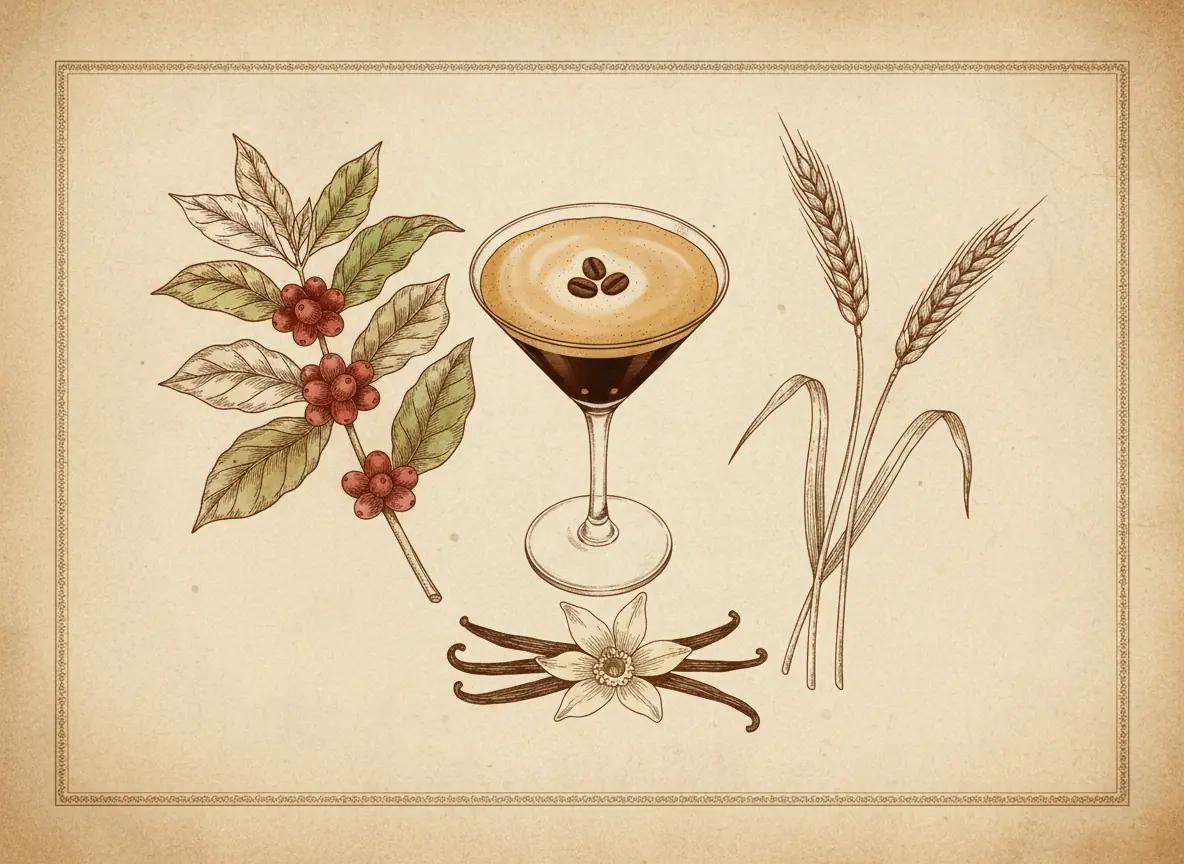
An Espresso Martini is 50ml of vodka, 30ml of Kahlúa, 10ml of sugar syrup and one freshly pulled espresso of about 30ml, shaken hard for 10 to 12 seconds and double strained into a chilled martini glass, with three coffee beans laid on the foam. About 2.5 UK units, and the caffeine of a single shot. The Oxford Companion says Dick Bradsell created it at the Soho Brasserie in London in 1983, for a famous model who asked for a drink to wake her up and then mess her up; he never said who she was. The measures are the IBA’s. Vodka gives strength and cold without flavour, so the coffee leads. The foam comes from the crema of a shot pulled moments before the shake, which is why the espresso goes in last.
Old Fashioned
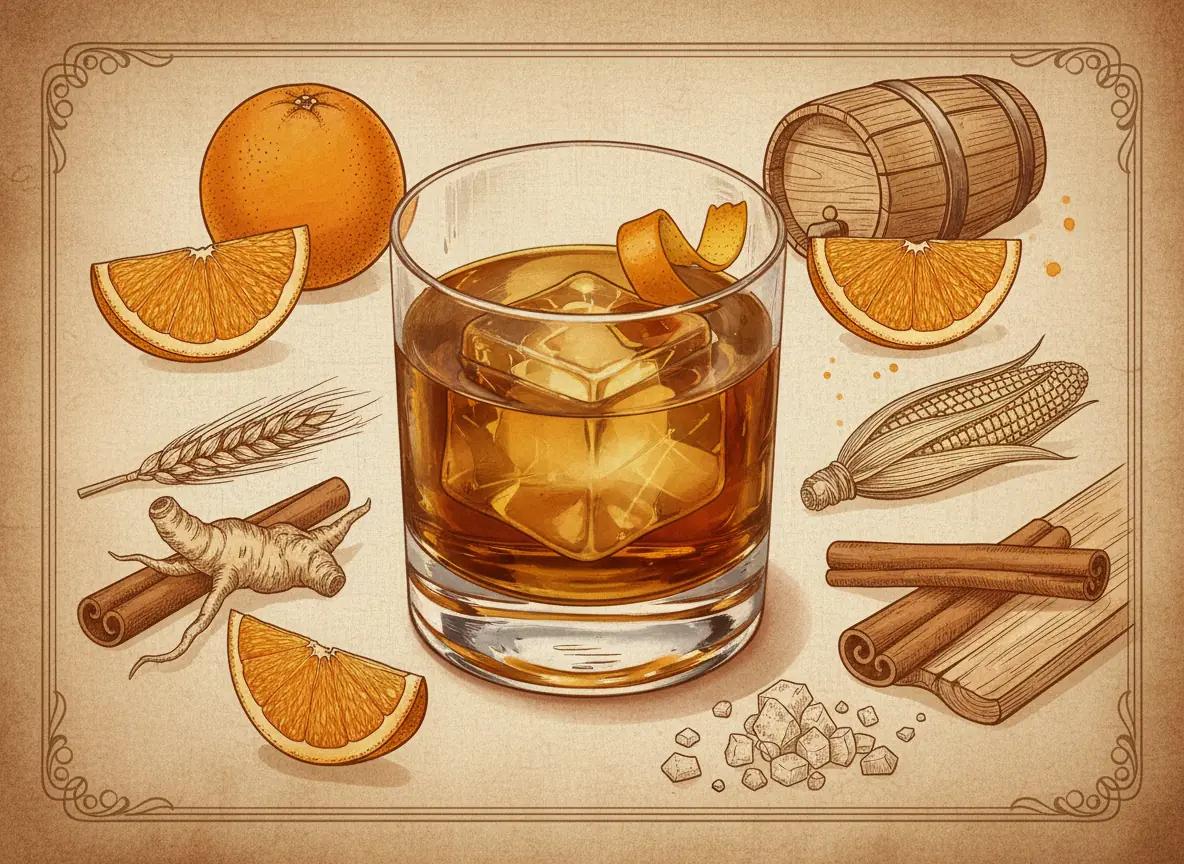
The IBA’s Old Fashioned is 45ml of bourbon or rye whiskey, one sugar cube, a few dashes of Angostura bitters and a few dashes of water; we use bourbon and two dashes. The sugar and bitters are muddled in a rocks glass until the cube dissolves, then ice goes in, the bourbon goes over it and the drink is stirred for 15 to 20 seconds. Orange peel is expressed over the top. About 1.9 UK units. Only the sugar and bitters are muddled: no orange flesh, no cherry. The recipe predates the name. The Oxford Companion says that when a newspaper in Hudson, New York, defined the cocktail in 1806, it described “spirits of any kind, sugar, water, and bitters”. The name came later in the century: the Companion has people ordering Old-Fashioneds in Chicago in 1880, as bartenders added liqueurs to the format and drinkers who wanted it plain asked for one made the old-fashioned way.
Black Manhattan
A Black Manhattan is 50ml of rye whiskey, 20ml of Averna and a dash each of Angostura and orange bitters, stirred over ice for 20 to 30 seconds and strained into a chilled coupe, with a cocktail cherry. About 2.6 UK units. It keeps the Manhattan’s five parts whiskey to two of the sweet partner and replaces all of the vermouth with amaro. Drinks and Drinking, a drinks newsletter, credits Todd Smith with it in 2005, when he was working at Cortez, a San Francisco restaurant; it gives his first version as bourbon, a smaller measure of Averna and coffee-cherry bitters he made himself. Kindred Cocktails, a cocktail database, says a 2008 Washington Post recipe already had rye, Averna, Angostura and orange bitters. Averna is a Sicilian amaro at 29% ABV on Difford’s Guide’s listing, and in our view sweet first and bitter after, with orange peel and a note close to cola. In the vermouth’s place it makes a darker, denser drink with a longer bitter finish.
Where this one sits
Recipe by Jerry Can Spirits · Updated 19 October 2026