El Diablo
El Diablo is 45ml of blanco tequila, 15ml of crème de cassis and 15ml of fresh lime juice, stirred over ice in a highball and topped with 90ml of chilled ginger beer, with the spent lime shell dropped in. About 2.0 UK units. Its earliest known printing is in Trader Vic’s Book of Food and Drink of 1946, as the Mexican El Diablo, which the book marks as a Trader Vic original. That version was topped with ginger ale. Ginger beer is the usual choice now, and ours: its heat stands up to the cassis, where ginger ale lets the drink turn sweet. Cassis is French blackcurrant liqueur. It turns the glass deep red, sweetens it and adds dark fruit, so the tequila’s pepper, the ginger and the lime all have something to push against.
Glassware: Highball Glass
Garnish: Lime shell spent, dropped in
Ingredients
45ml
Blanco, made from 100% agave, at 38 to 40% ABV. Its green, peppery edge answers the ginger; a reposado’s oak softens it and leaves the cassis in charge.
15ml
French blackcurrant liqueur, usually 15 to 20% ABV. Choose a dark, tart one; a thin, sugary bottle tastes of cordial.
15ml
About half a lime, squeezed into the glass the same day, with the spent shell dropped in after it. The shell adds a little bitter peel oil as the drink sits.
90ml
Dry and fiery, chilled and freshly opened. Trader Vic’s printed recipe uses ginger ale, as Alcademics shows; ginger beer’s heat is what keeps the cassis in check.
Instructions
Squeeze the lime juice into a highball glass and drop in the spent shell.
Add the tequila and crème de cassis.
Fill the glass with cubed ice and stir briefly.
Top with the chilled ginger beer and stir once, gently.
Serve with a straw.
Expert Tip
Measure the cassis. It is thick and pours slowly, so it is easy to overpour; at 20ml the drink turns jammy and the tequila disappears, and at 10ml the colour goes. Pick a dry, fiery ginger beer. The cassis brings all the sugar the drink needs, and a soft, sweet ginger beer turns it into blackcurrant squash. Stir the tequila, cassis and lime first, because cassis is dense and sinks. After the top-up, one gentle turn of the spoon will do.
Behind the El Diablo
Flavour Profile
The Origin
Trader Vic’s Book of Food and Drink, published in 1946, gives the Mexican El Diablo: half a lime squeezed into a ten-ounce glass with the shell dropped in, ice, an ounce of tequila, half as much crème de cassis, and ginger ale to fill. Alcademics prints the recipe as it stands in the book and, citing the tiki expert Martin Cate, says the book marks it as a Trader Vic original; Punch also dates it to that book.
Whether Victor Bergeron created it or wrote down a drink already being made is not certain; VinePair says the tiki writer Jeff Berry speculates that he was riffing on a similar rum drink called the Diablo. Alcademics finds it in his 1968 Pacific Island Cookbook as plain El Diablo, the Mexican gone from the name.
The Cassis
Crème de cassis does three jobs in one pour: it gives the drink its deep red colour, all of its sweetness and its dark fruit.
A good cassis is thick, dark and tart beneath the sugar. A thin one tastes of cordial, and with no other sweetener beside it the fault shows.
Tequila and Ginger
The drink is built like a mule, with tequila where the vodka would be. Blanco tequila’s pepper and the ginger’s heat land together and read as one sensation.
Reposado softens that edge with oak, and the cassis then runs the drink unopposed. Keep to blanco.
The drier the ginger beer, the better. The cassis covers the sweetness, and the only acid is 15ml of lime, so a sugary mixer has nothing to absorb it.
Ours Against the 1946 Recipe
Trader Vic’s 1946 El Diablo as Alcademics prints it, beside ours
Tequila
- Trader Vic, 1946
- One ounce
- Ours
- 45ml blanco
Crème de cassis
- Trader Vic, 1946
- Half as much
- Ours
- 15ml
Lime
- Trader Vic, 1946
- Half a lime, squeezed, shell dropped in
- Ours
- 15ml, squeezed into the glass, shell dropped in
Mixer
- Trader Vic, 1946
- Ginger ale to fill
- Ours
- 90ml dry ginger beer
Glass
- Trader Vic, 1946
- Ten-ounce glass with ice cubes
- Ours
- Highball with cubed ice
| Element | Trader Vic, 1946 | Ours |
|---|---|---|
| Tequila | One ounce | 45ml blanco |
| Crème de cassis | Half as much | 15ml |
| Lime | Half a lime, squeezed, shell dropped in | 15ml, squeezed into the glass, shell dropped in |
| Mixer | Ginger ale to fill | 90ml dry ginger beer |
| Glass | Ten-ounce glass with ice cubes | Highball with cubed ice |
We keep Vic’s build, pour a little more tequila than his ounce, and change the mixer.
How to Serve It
Tall and cold, with the lime shell in the glass and a straw, early in the evening. Its alcohol matches a double measure of spirit, whatever its colour suggests.
Its ginger beer cousins are the Dark ’n’ Stormy on rum and the Moscow Mule on vodka.
Make it at home
The Spirit
TequilaTequila is a Mexican spirit distilled from the blue agave plant, made, the Oxford Companion says, only in Jalisco and municipalities of four other states; our recipes use 40% ABV. A label reading 100% agave means every sugar came from the plant, where plain tequila needs only 51%. Most of our 26 tequila recipes ask for 100% agave blanco.
More to explore
Frequently Asked Questions
What does El Diablo taste like?
Who invented El Diablo?
What is crème de cassis?
Ginger beer or ginger ale?
How strong is El Diablo?
Which tequila should I use?
Sources.
Correct as of 19 October 2026.
- Alcademics (Wayback Machine copy, 2020; the original address now returns 404), “History of the El Diablo Cocktail in Trader Vic’s Books” (secondary source quoting the 1946 recipe: Mexican El Diablo, 1/2 lime, 1 ounce tequila, 1/2 crème de cassis, ginger ale; squeeze the lime into a 10-ounce glass, drop in the shell, add ice, tequila and cassis, fill with ginger ale; Martin Cate: in the 1946 Book of Food and Drink it is singled out as an original; 1947 Bartender’s Guide; Pacific Island Cookbook 1968 as “El Diablo” only).
- Punch, “El Diablo” (secondary source: “First published in Trader Vic’s Book of Food and Drink in 1946”).
- VinePair, “The El Diablo, a Tequila Cocktail From the 1940s, Is Having a Moment” (secondary source: the drink appeared in Trader Vic’s cocktail manual in 1946; a “Mexican El Diablo” on his 1947 menu; Jeff Berry speculates a link to a rum drink called the Diablo; vanished in the 1950s, back in the 1960s at Señor Pico).
You Might Also Like
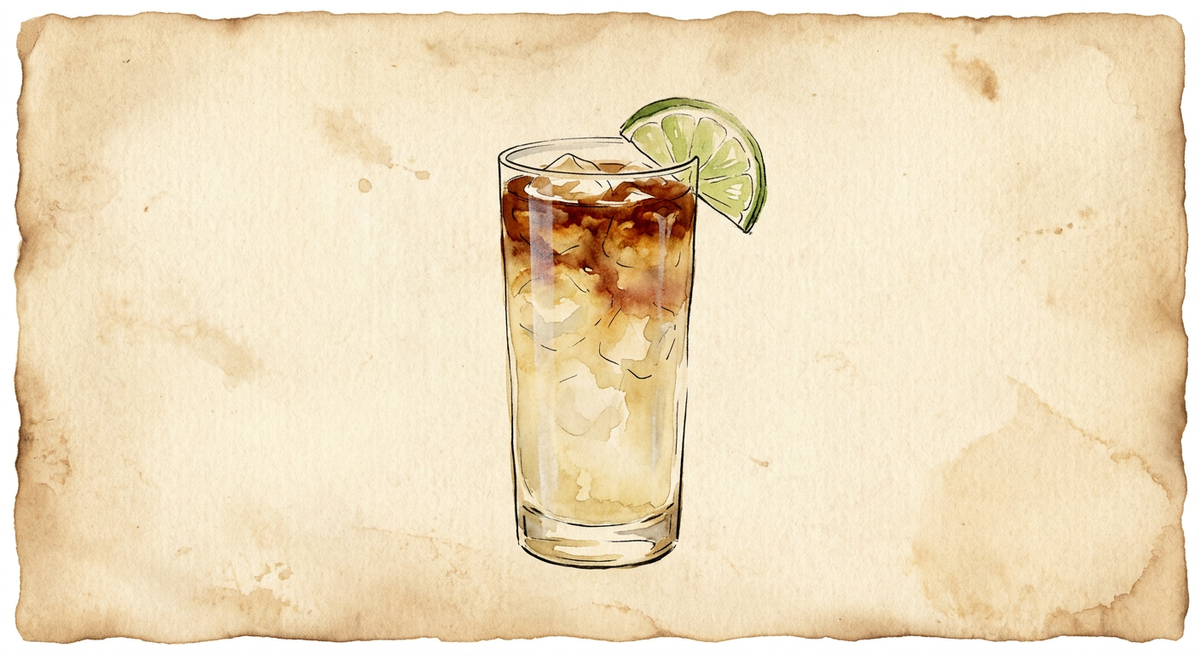
Dark ’n’ Stormy
A Dark ’n’ Stormy is 60ml of Gosling’s Black Seal rum floated over 100ml of ginger beer in a highball full of ice, with a lime wedge. About 2.4 UK units. Those are the IBA’s measures, and the name is a Gosling Brothers trade mark tied to Black Seal. The Oxford Companion says the drink purportedly originated among British sailors on shore leave in Bermuda after the First World War, though another origin story places it earlier, in the nineteenth century. Gosling’s own page puts ginger beer from a Royal Navy officers’ club with the local Black Seal rum, and a sailor is said to have called the colour that of a cloud only a fool or a dead man would sail under. The Oxford Companion says the Gosling family claimed a trademark for the cocktail’s recipe in 1991 and has repeatedly turned to the US Patent and Trademark Office to protect it, and Gosling’s own page writes the name with the registered symbol. The same build with another dark rum is a rum and ginger beer, and a sound one. The same build with another dark rum is a rum and ginger beer, and a sound one.
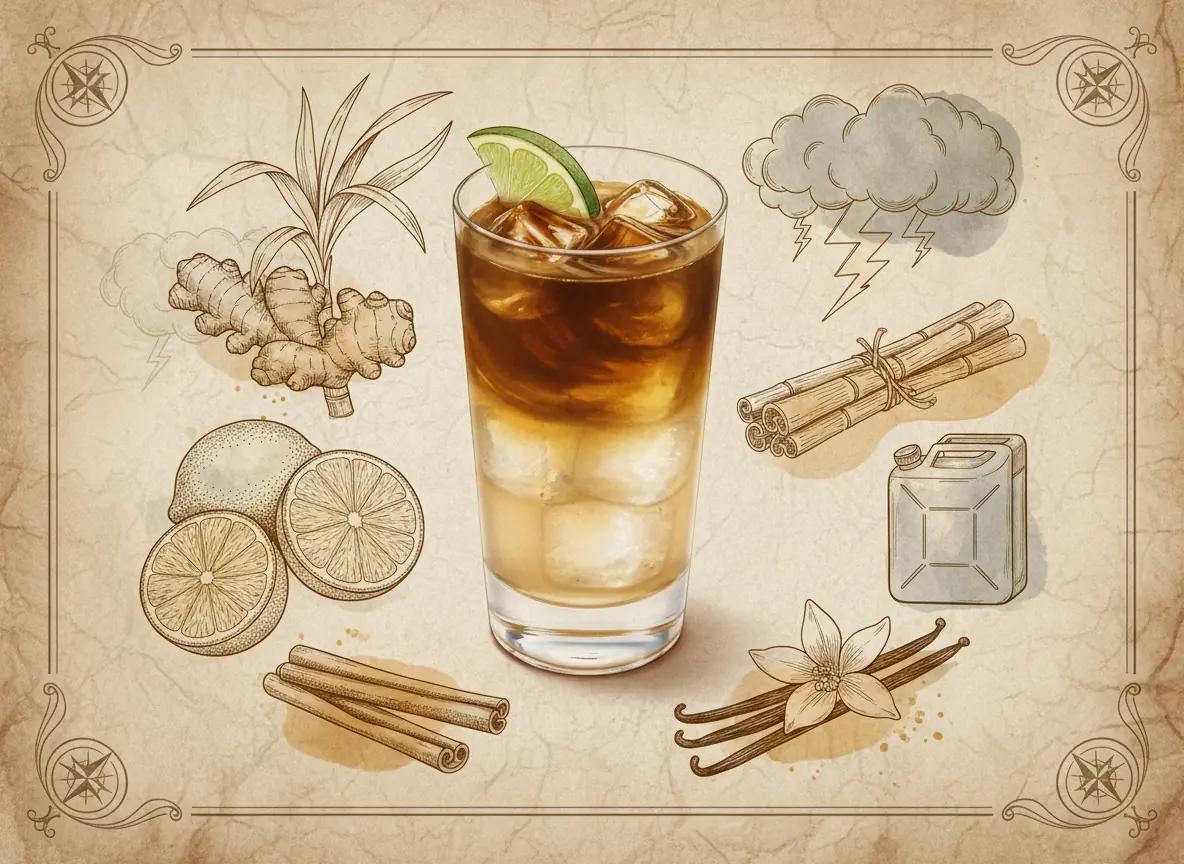
Storm & Spice
Storm & Spice is 50ml of Expedition Spiced Rum floated over 150ml of ginger beer and 15ml of fresh lime juice in a highball full of cubed ice, with two dashes of Angostura on top, a lime wedge and crystallised ginger. About 2.0 UK units from the rum at 40% ABV; the bitters add less than 0.1. It is our spiced-rum answer to the Dark ’n’ Stormy, the Bermudian highball of black rum and ginger beer. Gosling’s own site writes the name Dark ‘n Stormy® with the registered symbol and calls Black Seal Rum its essential ingredient, so this is a different drink on the same frame. A black rum brings weight and dark sugar. Expedition Spiced Rum brings vanilla, cinnamon and clove, which gives the ginger more to catch hold of. The build is the point. Ginger beer goes in first, then the rum is poured slowly over the back of a spoon so it sits dark over the pale ginger. Left layered, the first sips lead with rum. Stirred, the two run together.
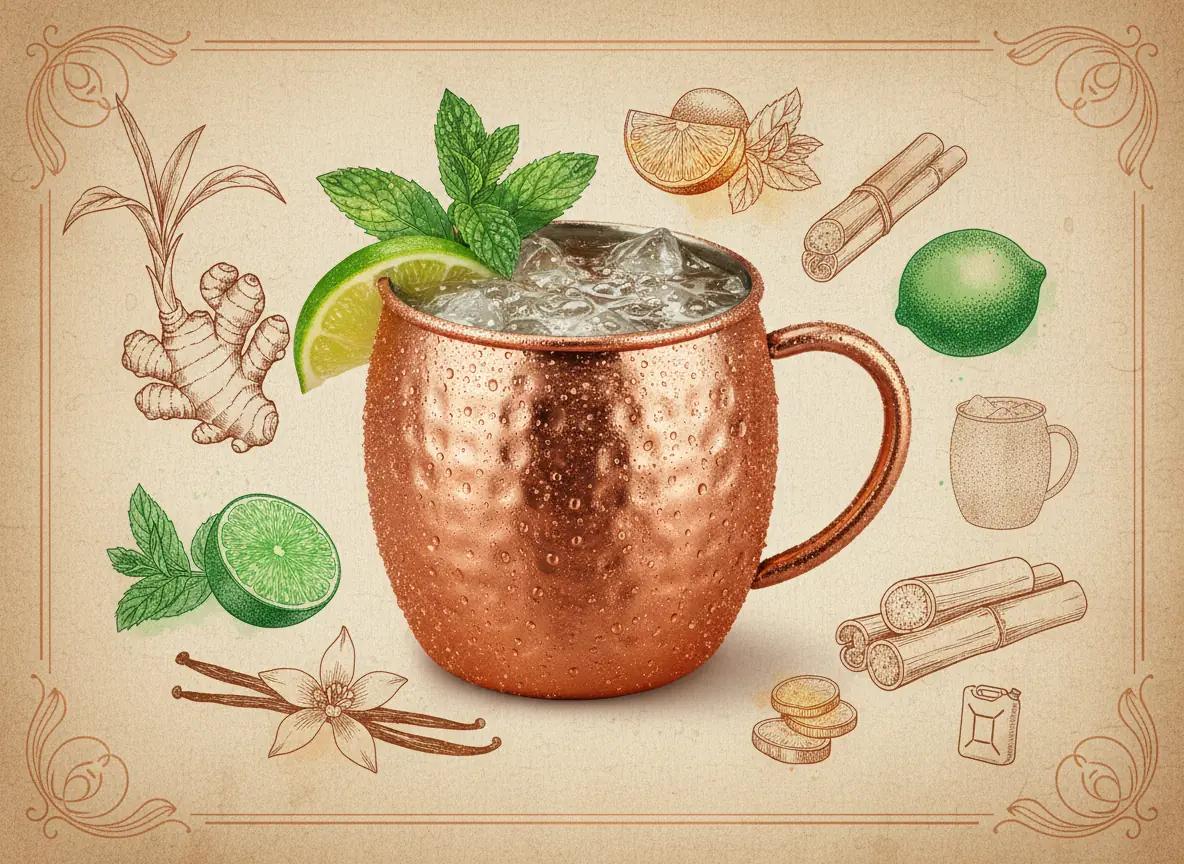
Pack Mule
A Pack Mule is 50ml of Expedition Spiced Rum, 20ml of fresh lime juice and 10ml of sugar syrup over ice in a copper mug, lengthened with 100 to 120ml of ginger beer and given one stir, then finished with a lime wheel and a mint sprig. About 2.0 UK units from the rum at 40% ABV. It is our mule. The published spiced rum mule, the Jamaican Mule, is a short drink: 75ml of ginger beer, a quarter-measure of lime and a rich syrup. The Pack Mule takes the same four parts and opens them out, with the lime doubled to 20ml and the ginger beer run long, because Expedition Spiced Rum brings its own sweetness and the vanilla, cinnamon and clove in it want room and acid rather than more sugar. The ginger beer decides most of it. A dry one with real heat suits the rum, and the syrup is set by how sweet the bottle is: the full 10ml for a dry ginger beer, none for a sweet one.
Where this one sits
Recipe by Jerry Can Spirits · Updated 19 October 2026