Moscow Mule
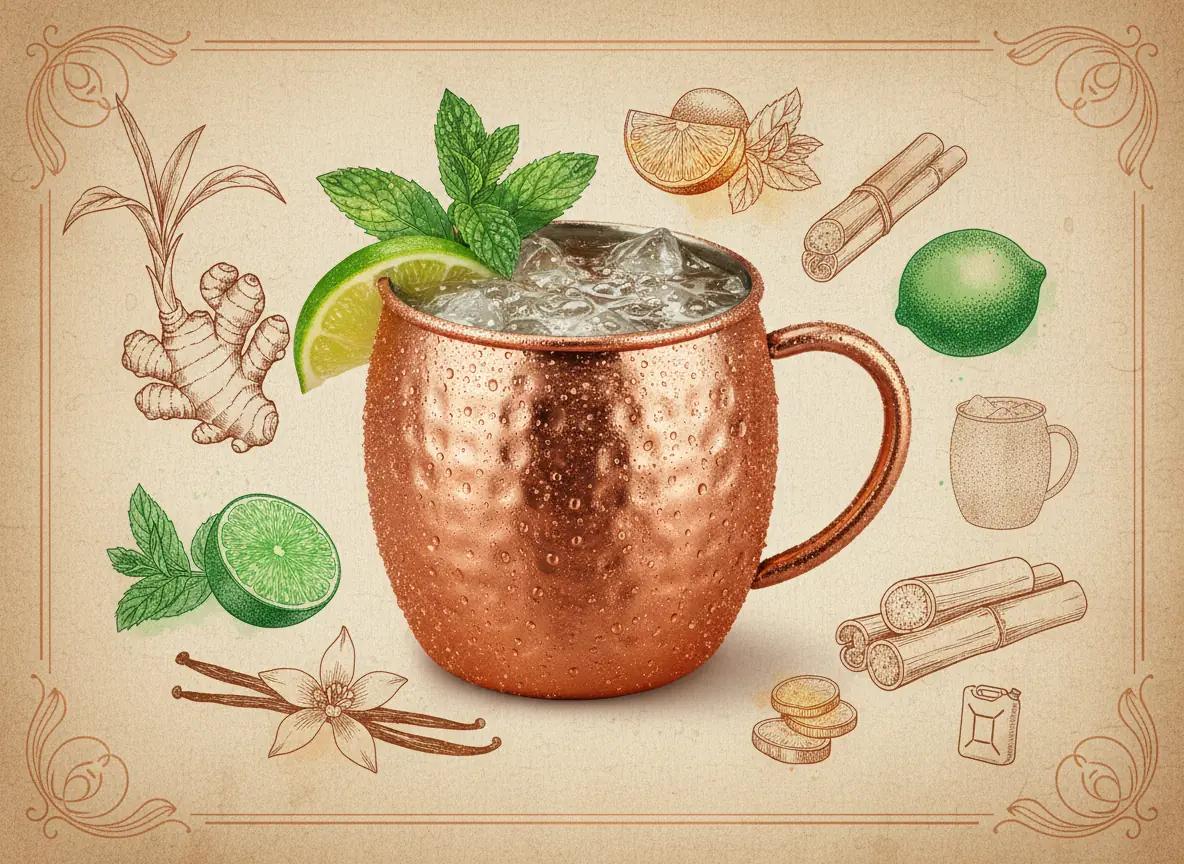
A Moscow Mule is 45ml of vodka and 10ml of fresh lime juice over ice in a copper mug, topped with 120ml of cold ginger beer and stirred once, with a lime wedge. Those are the IBA’s measures. About 1.8 UK units, all from the vodka. It is usually dated to 1941 and credited to John G. Martin of Heublein, which had bought Smirnoff and was left with a surplus of vodka, and Jack Morgan of the Cock ’n’ Bull in Los Angeles, who was pushing his own ginger beer, VinePair reports. The Oxford Companion gives other accounts: that Morgan and Martin devised it in New York, or that the Cock ’n’ Bull’s head bartender, Wes Price, did. The ginger beer decides the drink. At 120ml it is two thirds of the glass, so a soft, sugary one gives a soft, sugary Mule. Use the fieriest you can find, and keep the lime short: good ginger beer brings its own bite.
Glassware: Copper Mug
Garnish: Lime wedge and Mint sprig (optional)
Ingredients
45ml
Around 40% ABV and clean. Its job is strength without flavour, so the ginger and lime have the glass; an expensive bottle adds little here.
10ml
Squeezed the same day. Ten millilitres is short for a long drink because a good ginger beer brings its own sharpness, and bottled lime tastes cooked against the ginger.
120ml
The fieriest you can find, well chilled. At 120ml it is most of the drink. Most ginger beer sold in the UK is a soft drink under 0.5% alcohol, so check the label if that matters.
Instructions
Fill a copper mug or a highball to the top with cubed ice.
Add the vodka and the lime juice, and drop a squeezed lime shell into the mug.
Top with the chilled ginger beer.
Stir once, gently, and garnish with a lime wedge.
Source: the IBA (Official IBA specification; ice, a lime wedge for the IBA’s slice and method ours). Last checked 9 October 2026.
Expert Tip
Buy the ginger beer for heat, not sweetness. Taste it on its own first: if it does not catch the back of your throat, it will not carry a drink that is two thirds ginger beer, and extra lime will not fix it. Fill the mug to the top with ice before anything goes in. Copper takes on the temperature of what is inside it, so a full mug frosts and stays cold, and a half-empty one warms the drink. Drop the squeezed lime shell into the mug. The oil in the skin keeps releasing as you drink, and in a drink this simple you can smell the difference.
Behind the Moscow Mule
Flavour Profile
The Origin
The usual account, as VinePair tells it, dates the Moscow Mule to 1941. John G. Martin of Heublein had recently bought Smirnoff and found himself with a surplus of vodka, a spirit that was not yet mainstream, VinePair says. Jack Morgan ran the Cock ’n’ Bull in Los Angeles and was pushing his own brand of ginger beer. Vodka, ginger beer and lime solved both problems at once.
The details are argued. A 1948 New York Herald Tribune piece, as VinePair relays it, put the first one in Manhattan, with Martin, Morgan and Rudolph Kunett, president of Heublein’s vodka division, at the bar. A 2007 Wall Street Journal account, as VinePair relays it, credits Wes Price, a bartender at the Cock ’n’ Bull, clearing dead stock from the basement.
The Polaroid Campaign
Martin sold the drink bar by bar. VinePair reports that he sold both his vodka and the copper mug by going to bars and taking Polaroids of bartenders posing with both products.
The mug stayed with the drink. It is still how most people recognise a Mule across a room.
Why Vodka Works Here
Ginger beer is loud, spicy and sweet, and lime is sharp; between them they fill the glass. What the recipe needs from the spirit is strength and a clean line, and here vodka supplies exactly that and nothing else.
Change the spirit and the drink changes shape. Irish whiskey needs more lime and some syrup, which is the Dublin Mule; tequila’s pepper meets the ginger in the Mexican Mule; spiced rum with double the lime is the Pack Mule.
The IBA Mule and Ours
Moscow Mule: the IBA’s measures against ours
Vodka
- IBA
- 45ml
- Ours
- 45ml
Fresh lime juice
- IBA
- 10ml
- Ours
- 10ml, squeezed the same day
Ginger beer
- IBA
- 120ml
- Ours
- 120ml, the fieriest you can find
Ice
- IBA
- Not specified
- Ours
- Mug filled to the top with cubed ice
Vessel
- IBA
- Mule cup or rocks glass
- Ours
- Copper mug or highball
Garnish
- IBA
- Lime slice
- Ours
- Lime wedge, with the squeezed shell in the mug
UK units
- IBA
- About 1.8
- Ours
- About 1.8
| Element | IBA | Ours |
|---|---|---|
| Vodka | 45ml | 45ml |
| Fresh lime juice | 10ml | 10ml, squeezed the same day |
| Ginger beer | 120ml | 120ml, the fieriest you can find |
| Ice | Not specified | Mug filled to the top with cubed ice |
| Vessel | Mule cup or rocks glass | Copper mug or highball |
| Garnish | Lime slice | Lime wedge, with the squeezed shell in the mug |
| UK units | About 1.8 | About 1.8 |
The Copper Mug
Copper carries heat away much faster than glass does. Packed with ice, the mug drops to the drink’s temperature quickly and frosts on the outside, and the rim feels colder against the lip.
Bare copper and acidic drinks are a poor pairing, and the US FDA Food Code bars copper and copper alloys from contact with acidic food such as fruit juice, so choose a mug lined with stainless steel on the inside and the lip. A tall glass full of ice does the job just as well.
How to Serve It
Mug filled to the top with ice, vodka and lime in, the spent shell dropped after them, ginger beer over and one gentle stir. A lime wedge on the rim.
It takes under a minute to build. Add a sprig of mint as well if you like; it brings scent rather than flavour.
Make it at home
The Spirit
VodkaVodka is spirit made from a farmed crop, usually grain or potatoes, distilled and refined so that the taste of that crop is deliberately reduced. Under the retained Regulation (EC) 110/2008 its minimum is 37.5% ABV and it may not be given a predominant flavour, which separates it from flavoured vodka and from gin; our recipes count it at 40%. In a mixed drink it adds strength and body while the other ingredients carry the taste.
More to explore
Frequently Asked Questions
Why is a Moscow Mule served in a copper mug?
Are copper mugs safe to drink from?
What ginger beer works best?
Who invented the Moscow Mule?
Is there anything Russian about it?
Does the vodka matter?
What is the difference between a Moscow Mule and a Dublin Mule?
How strong is a Moscow Mule?
Sources.
Checked between 18 October and 19 October 2026.
- VinePair, “The Moscow Mule Recipe” (secondary source: Martin of Heublein, surplus of vodka; Morgan’s ginger beer; Wes Price; Smirnoff Mule renamed Moscow Mule; Polaroids).
- The Oxford Companion to Spirits and Cocktails (Paul Clarke), “The Moscow Mule” (secondary source: purportedly 1941 at the Cock ’n Bull, Los Angeles; Martin and Morgan; a competing history in New York; Wes Price’s claim; the copper-mug story possibly apocryphal).
- US Food and Drug Administration, “Food Code 2022, 4-101.14 Copper, use limitation” (primary: copper and copper alloys may not be used in contact with food with a pH below 6, such as vinegar, fruit juice or wine).
You Might Also Like
Pack Mule
A Pack Mule is 50ml of Expedition Spiced Rum, 20ml of fresh lime juice and 10ml of sugar syrup over ice in a copper mug, lengthened with 100 to 120ml of ginger beer and given one stir, then finished with a lime wheel and a mint sprig. About 2.0 UK units from the rum at 40% ABV. It is our mule. The published spiced rum mule, the Jamaican Mule, is a short drink: 75ml of ginger beer, a quarter-measure of lime and a rich syrup. The Pack Mule takes the same four parts and opens them out, with the lime doubled to 20ml and the ginger beer run long, because Expedition Spiced Rum brings its own sweetness and the vanilla, cinnamon and clove in it want room and acid rather than more sugar. The ginger beer decides most of it. A dry one with real heat suits the rum, and the syrup is set by how sweet the bottle is: the full 10ml for a dry ginger beer, none for a sweet one.
El Diablo
El Diablo is 45ml of blanco tequila, 15ml of crème de cassis and 15ml of fresh lime juice, stirred over ice in a highball and topped with 90ml of chilled ginger beer, with the spent lime shell dropped in. About 2.0 UK units. Its earliest known printing is in Trader Vic’s Book of Food and Drink of 1946, as the Mexican El Diablo, which the book marks as a Trader Vic original. That version was topped with ginger ale. Ginger beer is the usual choice now, and ours: its heat stands up to the cassis, where ginger ale lets the drink turn sweet. Cassis is French blackcurrant liqueur. It turns the glass deep red, sweetens it and adds dark fruit, so the tequila’s pepper, the ginger and the lime all have something to push against.
Dark ’n’ Stormy
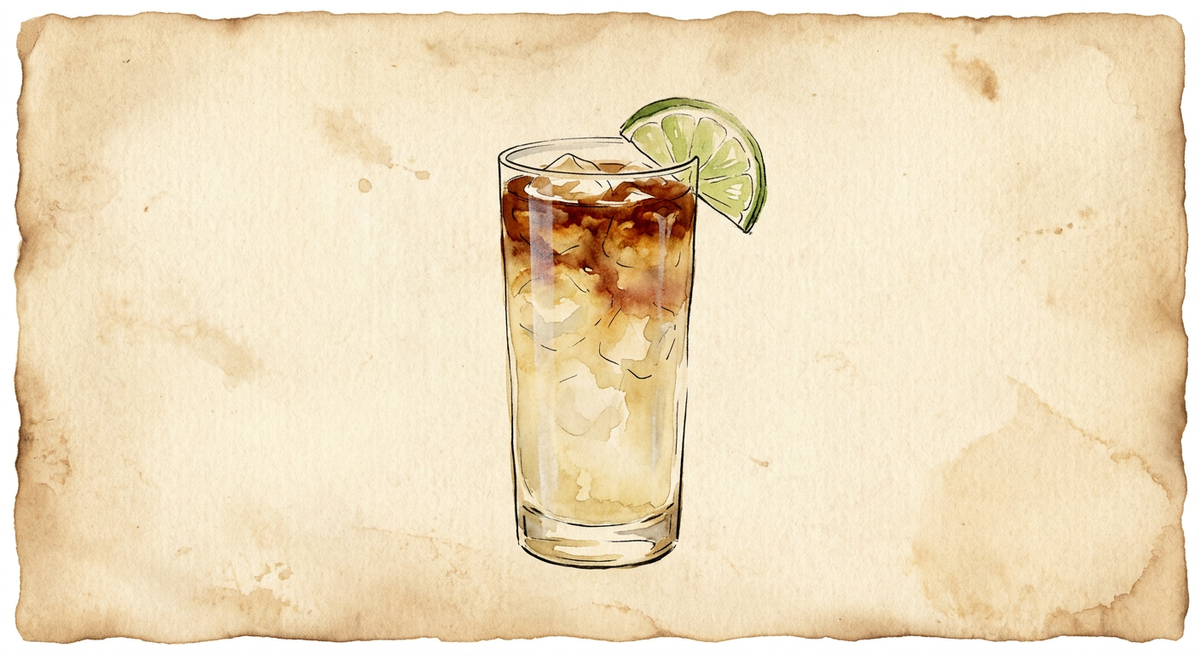
A Dark ’n’ Stormy is 60ml of Gosling’s Black Seal rum floated over 100ml of ginger beer in a highball full of ice, with a lime wedge. About 2.4 UK units. Those are the IBA’s measures, and the name is a Gosling Brothers trade mark tied to Black Seal. The Oxford Companion says the drink purportedly originated among British sailors on shore leave in Bermuda after the First World War, though another origin story places it earlier, in the nineteenth century. Gosling’s own page puts ginger beer from a Royal Navy officers’ club with the local Black Seal rum, and a sailor is said to have called the colour that of a cloud only a fool or a dead man would sail under. The Oxford Companion says the Gosling family claimed a trademark for the cocktail’s recipe in 1991 and has repeatedly turned to the US Patent and Trademark Office to protect it, and Gosling’s own page writes the name with the registered symbol. The same build with another dark rum is a rum and ginger beer, and a sound one. The same build with another dark rum is a rum and ginger beer, and a sound one.
Jamaican Mule
A Jamaican Mule is 50ml of spiced rum, 12.5ml of fresh lime juice and 7.5ml of rich sugar syrup stirred briefly in a copper mug, filled two thirds with cubed ice, topped with 75ml of ginger beer and capped with a crown of crushed ice, with a lime slice and a bouquet of mint. About 2.0 UK units from a rum at 40% ABV. The name says Jamaica. The recipe does not. Difford’s Guide’s recipe calls for spiced rum, not a Jamaican pot-still rum, and we have found no source that names who created or named it. In our view it is the drink most people mean when they ask for a spiced rum mule: a Moscow Mule with the vodka swapped for a rum that already carries vanilla, cinnamon and clove, so the ginger beer meets the spice instead of covering it. It is shorter than it looks. At 75ml the ginger beer is half the glass rather than two thirds, and the lime and rich syrup sit under it as a small sour. Taste the ginger beer first: a dry, hot one wants the full syrup, a sweet one wants none.
Where this one sits
Recipe by Jerry Can Spirits · Updated 19 October 2026