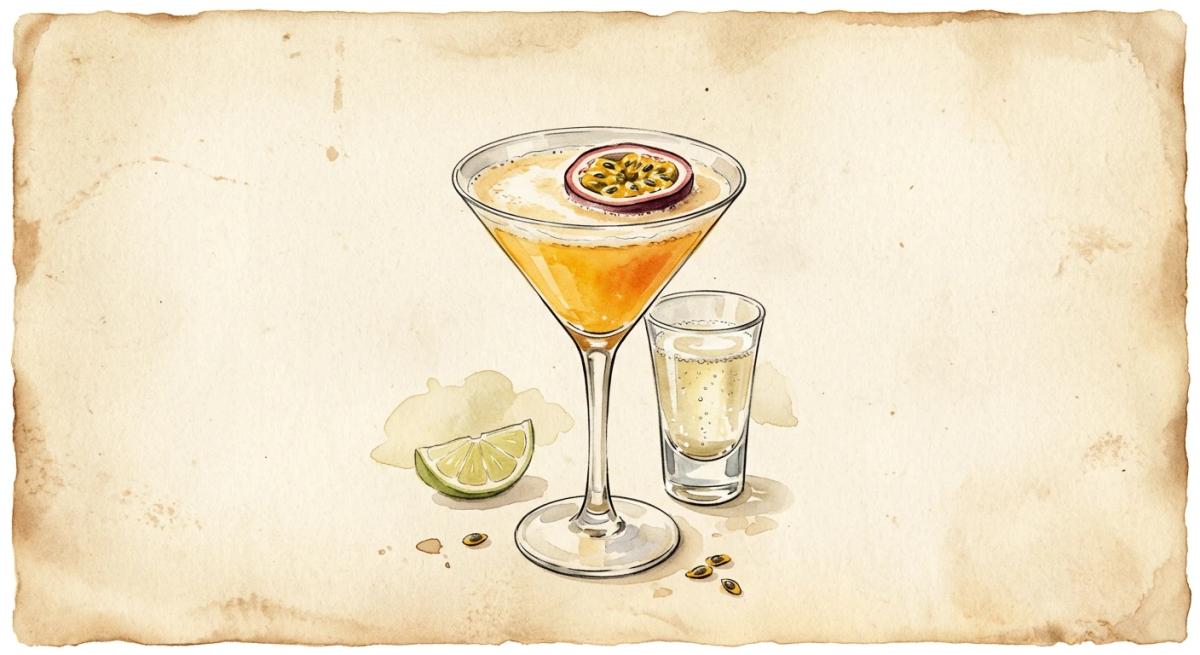
Pornstar Martini
A Pornstar Martini is 50ml vanilla vodka, 20ml passion fruit liqueur, 50ml passion fruit purée and 10ml vanilla syrup, shaken, double strained and served in a chilled martini glass with half a passion fruit floating on top. A 50ml shot of chilled Champagne is served alongside. About 2.2 UK units in the glass and 2.8 with the Champagne. Douglas Ankrah created it in 2002 at Townhouse, his bar in Knightsbridge, by Difford’s Guide’s account, which says he first called it the Maverick Martini after a Cape Town nightclub; his 2004 book, as Difford’s quotes it, headed the recipe Maverick Martini or Porn Star Martini. In November 2018 the Morning Advertiser reported CGA figures that put it first among UK cocktails by share of serves in managed outlets. Passion fruit does the work. The purée gives sharpness and body, the liqueur sweetness and perfume, and the vanilla rounds both. The Champagne is a separate drink, sipped alongside or after.
Variations
Glassware: Martini Glass
Garnish: Half a passion fruit
Ingredients
50ml
A vanilla vodka at around 37.5% ABV. Taste it first, because some are very sweet. A plain vodka with a few drops of vanilla extract works.
20ml
Passoã, 17% ABV by its maker’s site, is the common pick. It adds sweetness and passion fruit perfume rather than strength.
50ml
Unsweetened or lightly sweetened purée, chilled. It carries the fruit and the sharpness. The strained pulp of two or three fresh fruits can replace it.
10ml
The IBA uses two bar spoons of vanilla sugar; a syrup mixes more evenly in a cold shake. Make it 1:1 by weight, sugar and warm water, with a split vanilla pod, or buy one.
50ml
Brut, well chilled, in a shot glass alongside. It is drunk separately, so pour it as the drink goes out.
½ fruit
Halved and floated cut side up on the foam. It is the garnish, and its scent arrives before the drink does.
Instructions
Chill a martini glass of 180 to 200ml and a shot glass.
Add the vanilla vodka, passion fruit liqueur, purée and vanilla syrup to a shaker.
Fill with cubed ice and shake hard for 10 to 12 seconds.
Double strain into the chilled martini glass.
Float half a passion fruit on the foam, cut side up.
Pour the chilled Champagne into the shot glass and serve it alongside.
Source: the IBA (Official IBA specification (New Era), with 10ml vanilla syrup for the IBA’s two bar spoons of vanilla sugar and half a passion fruit for its passion fruit cup; method ours). Last checked 9 October 2026.
Expert Tip
Give it a hard shake, 10 to 12 seconds by the clock. Purée is dense, and only a vigorous shake breaks it up and builds the foam the half passion fruit floats on. Double strain to catch ice shards; a few seeds getting through does no harm. Taste the purée first: sugar and sharpness differ widely from one brand to the next. If the drink comes out flat, a few drops of lime put the edge back; if it is too sharp, add a little more vanilla syrup rather than more liqueur. Pour the Champagne last, as the drink goes out, and keep it cold. Prosecco or another dry sparkling wine works if that is what is open, and makes a softer, fruitier shot.
Behind the Pornstar Martini
Flavour Profile
Where It Comes From
Douglas Ankrah created the drink in 2002 at Townhouse, his bar in Knightsbridge, and first called it the Maverick Martini after a Cape Town nightclub, by Difford’s Guide’s account of his 2004 book. Difford’s quotes that book heading the recipe Maverick Martini or Porn Star Martini.
In November 2018 the Morning Advertiser reported CGA figures that put it first among UK cocktails by share of serves in managed outlets, ahead of the Mojito. Ankrah died in August 2021, aged 51, The Caterer reported, and the drink outlived the flavoured-vodka fashion it was born in.
Three Kinds of Passion Fruit
Passion fruit arrives three ways. The purée brings body and sharpness, the liqueur brings sweetness and perfume, and half a fresh fruit on top brings scent before the first sip.
The IBA’s recipe has no citrus juice. The purée supplies the acid, which is why its sharpness matters. If yours is sweet, a few drops of lime restore the edge.
The IBA specification and ours
Vanilla vodka
- IBA
- 50ml
- Ours
- 50ml
Passion fruit liqueur
- IBA
- 20ml
- Ours
- 20ml
Passion fruit purée
- IBA
- 50ml
- Ours
- 50ml
Vanilla
- IBA
- 2 bar spoons vanilla sugar
- Ours
- 10ml vanilla syrup
Champagne
- IBA
- 50ml, on the side
- Ours
- 50ml, on the side
Glass
- IBA
- Large chilled cocktail glass
- Ours
- Chilled martini glass
Garnish
- IBA
- Passion fruit cup and sugar
- Ours
- Half a passion fruit
| Element | IBA | Ours |
|---|---|---|
| Vanilla vodka | 50ml | 50ml |
| Passion fruit liqueur | 20ml | 20ml |
| Passion fruit purée | 50ml | 50ml |
| Vanilla | 2 bar spoons vanilla sugar | 10ml vanilla syrup |
| Champagne | 50ml, on the side | 50ml, on the side |
| Glass | Large chilled cocktail glass | Chilled martini glass |
| Garnish | Passion fruit cup and sugar | Half a passion fruit |
The Champagne Shot
The shot is served alongside and never poured in. Drink it between sips or after the cocktail; either works. Keep it cold and pour it at the last moment so it is still lively.
Champagne is the IBA’s choice. A dry prosecco or cava gives a softer, fruitier shot, and costs less.
The Vanilla
Vanilla comes from two places, the vodka and the syrup. Vanilla vodkas differ a lot in sweetness, so taste yours before you build. A sweet one may need less syrup.
A plain vodka with a few drops of vanilla extract also works. The vanilla is a little thinner, and the syrup carries more of it.
How to Serve It
Double strained, served in a chilled martini glass, with half a passion fruit floating cut side up on the foam and a cold shot of Champagne beside it. Send it out straight away, while the foam holds.
Make it at home
The Spirit
Vanilla VodkaVanilla vodka is a flavoured vodka: vodka given a predominant vanilla flavour, which the retained Regulation (EC) 110/2008 also allows to be sweetened and coloured, as long as its strength is 37.5% ABV or higher. Our recipes count it at 37.5%, and the sugar differs from brand to brand. It is the vanilla in our Pornstar Martini and Spicy Fifty, carrying the aroma without a pod to steep.
More to explore
Frequently Asked Questions
What is in a Pornstar Martini?
How strong is a Pornstar Martini?
Who created the Pornstar Martini?
What is the shot of Champagne for?
Fresh passion fruit or purée?
Is the Pornstar Martini an IBA cocktail?
Why is it also called a Passion Fruit Martini?
Is there an alcohol-free version?
Sources.
Correct as of 18 October 2026.
- Passoã SAS, “Passoã (German product page)” (17%vol; the UK page gives no figure).
- Difford’s Guide, “Porn Star Martini” (Douglas Ankrah, Townhouse, Knightsbridge, 2002; first named the Maverick Martini).
- The Caterer, “Douglas Ankrah, inventor of the Pornstar Martini, dies” (died August 2021, aged 51).
- Morning Advertiser, “What is the UK’s favourite cocktail?” (CGA Q3 2018 figures: first by share of serves in managed outlets).
- Portman Group, “Marks & Spencer Group plc’s Porn Star Martini: decision upheld” (ruling of 27 August 2019; M&S renamed it Passion Star Martini).
You Might Also Like
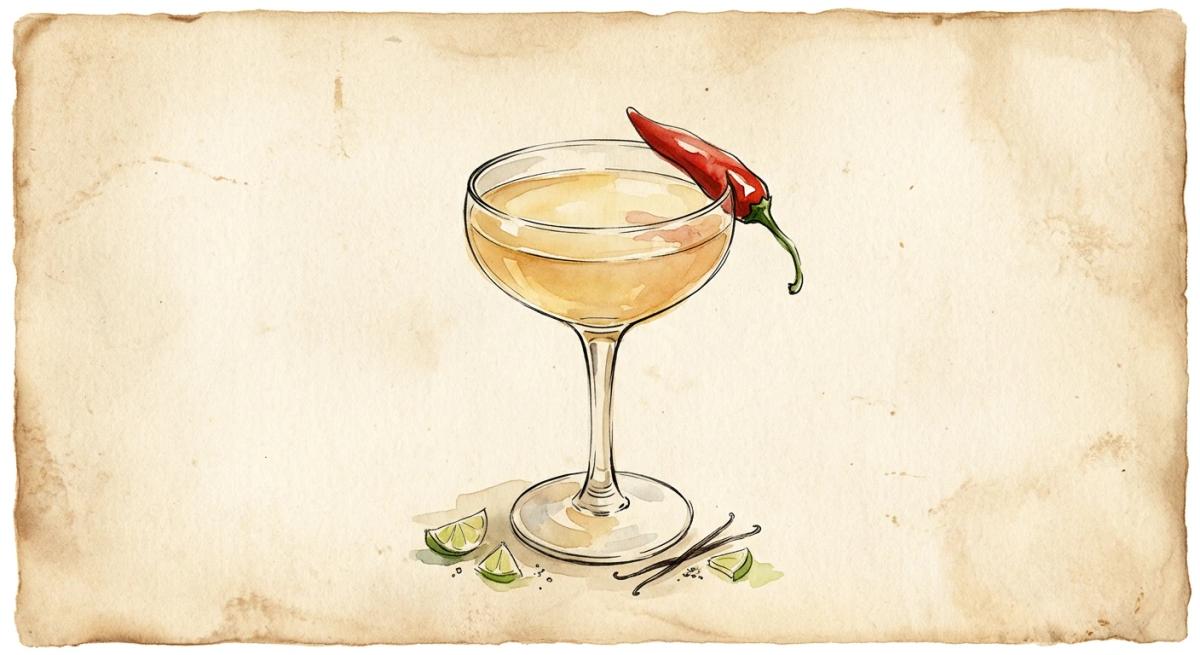
Spicy Fifty
A Spicy Fifty is 50ml of vanilla vodka, 15ml of elderflower cordial, 15ml of fresh lime juice, 10ml of honey syrup and two thin slices of red chilli, shaken hard with ice, double strained into a chilled coupe and garnished with a red chilli, all to the IBA’s specification. About 1.9 UK units. Difford’s Guide says Salvatore Calabrese adapted it from a recipe he created in 2004 or 2005 for his bar Fifty in London, which opened in February 2005 with the drink as a signature on its first menu. His starting point was the chilli-led cooking of the chef Jean-Georges Vongerichten. The IBA added the drink to its New Era list in 2020. The chilli is shaken with the liquid, not left as decoration, so its heat runs through the whole glass. Against it, vanilla, honey and elderflower bring sugar and scent, and the lime keeps that sweetness in check.
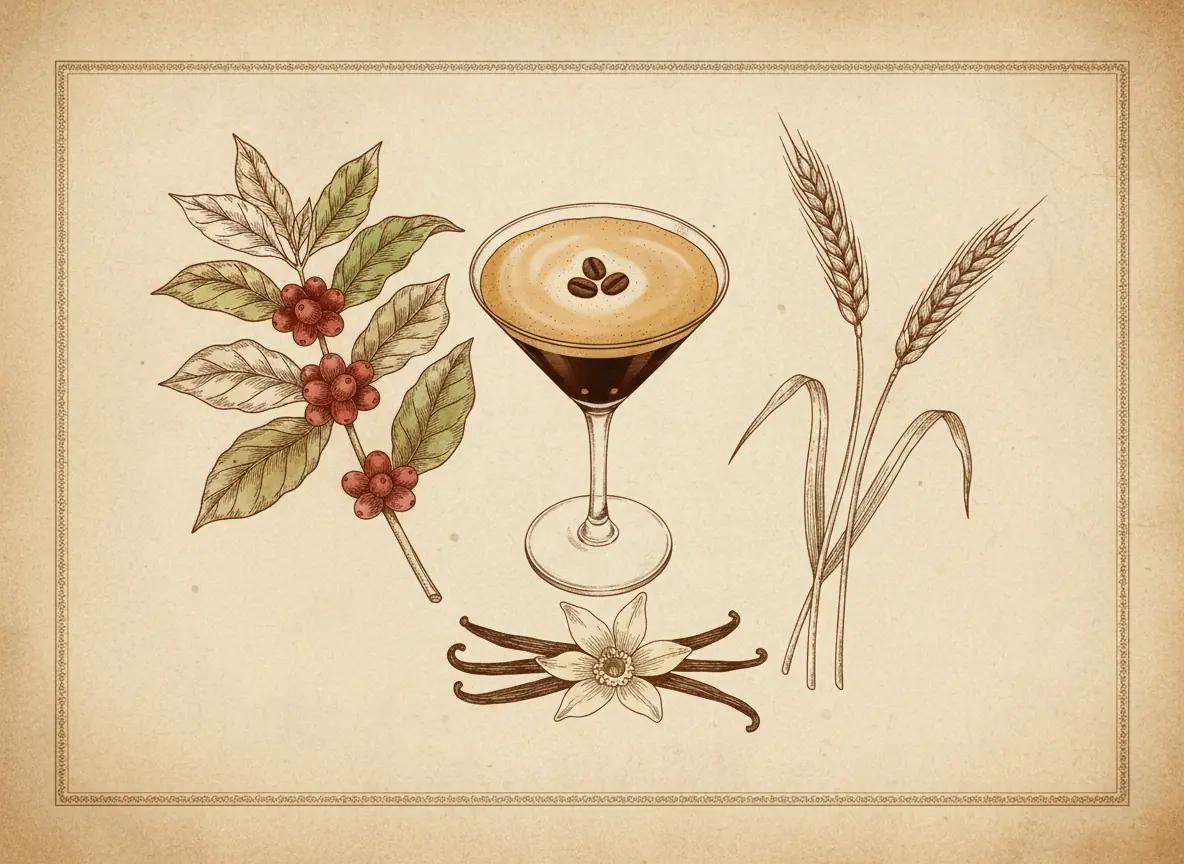
Espresso Martini
An Espresso Martini is 50ml of vodka, 30ml of Kahlúa, 10ml of sugar syrup and one freshly pulled espresso of about 30ml, shaken hard for 10 to 12 seconds and double strained into a chilled martini glass, with three coffee beans laid on the foam. About 2.5 UK units, and the caffeine of a single shot. The Oxford Companion says Dick Bradsell created it at the Soho Brasserie in London in 1983, for a famous model who asked for a drink to wake her up and then mess her up; he never said who she was. The measures are the IBA’s. Vodka gives strength and cold without flavour, so the coffee leads. The foam comes from the crema of a shot pulled moments before the shake, which is why the espresso goes in last.
Where this one sits
Recipe by Jerry Can Spirits · Updated 19 October 2026