New York Sour
A New York Sour is 60ml of rye whiskey, 30ml of fresh lemon juice, 22.5ml of sugar syrup and a few drops of egg white, shaken and strained over fresh ice in a rocks glass, with 15ml of dry red wine floated on top. Those measures are the IBA’s, and bourbon may stand in for the rye. About 2.6 UK units. The wine stays as a separate red layer on the surface. The first sips come through the wine, the middle mixes the two, and the last of the glass is the sour on its own. Rye keeps the sour dry enough for the fruit and tannin of the wine to show. Difford’s Guide says it is thought to have been first made in Chicago in the 1880s, as the Continental Sour among other names, and became the New York Sour probably after a Manhattan bartender served it and made it popular. Difford’s gives the 1934 Mr. Boston Bartender’s Guide as the first appearance in print under the New York name.
Glassware: Rocks Glass
Garnish: None; the floated wine finishes it
Ingredients
60ml
Rye at 40% ABV or a little stronger. Its dry spice holds the sour together under the wine. Bourbon, the alternative the IBA permits, gives a rounder, sweeter sour.
30ml
Squeezed the same day. At 30ml against 22.5ml of syrup the sour runs slightly sharp, which suits the fruit of the wine on top.
A few drops
Optional, and only a few drops: enough for a silky surface, not a thick head. Raw. Following the FSA, British Lion-mark eggs are safe raw, including for vulnerable groups and in pregnancy; pasteurised carton white is the alternative. Eating out, where the mark cannot be checked, the FSA advises vulnerable people to have their eggs thoroughly cooked. Contains egg: leave it out, or use aquafaba, for anyone allergic.
15ml
A dry red with fruit and some tannin, around 13% ABV. The IBA names Shiraz or Malbec. A bottle opened the day before is fine for 15ml.
Instructions
Add the rye, lemon juice, sugar syrup and egg white, if using, to a shaker.
If using egg white, dry shake without ice for 10 to 15 seconds.
Add ice and shake hard for 10 to 12 seconds.
Strain into a rocks glass filled with fresh ice.
Hold a bar spoon upside down just over the surface and pour the red wine slowly over its back so it floats.
Serve without stirring.
Source: the IBA (Official IBA specification; egg white dry shaken first, and served without the IBA’s zest and cherry; method ours). Last checked 9 October 2026.
Expert Tip
Float the wine over the back of a bar spoon held just over the surface, in a thin stream. Wine is lighter than the shaken sour, so a gentle pour spreads into a layer. A fast one plunges through and turns the glass a muddy purple. With the egg white, dry shake for 10 to 15 seconds before the ice goes in, and give the foam a moment to settle before you float. The foam gives the wine a firmer surface and a cleaner line between the layers. Choose a dry red with fruit and some tannin, the Shiraz or Malbec the IBA names. A sweet or heavily oaked red blurs the finish, and a light, delicate one disappears under the lemon.
Behind the New York Sour
Flavour Profile
The Origin
Difford’s Guide says the drink is thought to have been first made in the 1880s by a Chicago bartender, and was named the Continental Sour, then the Southern Whiskey Sour, with Brunswick Sour and Claret Snap also used, before becoming best known as the New York Sour, probably after a Manhattan bartender started serving it. The name first appears in print in the 1934 Mr. Boston Bartender’s Guide, it says.
Today it sits on the IBA’s New Era list, with rye or bourbon under the float and Shiraz or Malbec on top, as the IBA’s specification gives it.
Why Wine Works on a Sour
A whiskey sour is sharp and sweet, with no tannin in it. Red wine brings tannin and dark fruit, the two things the sour lacks.
Floated, they arrive in order. The opening sips are dry and grippy, the middle blends wine and citrus, and the bottom of the glass is the plain sour.
The Float
Red wine at around 13% ABV is lighter than a shaken sour carrying sugar syrup, so it will sit on top if it arrives gently. The back of a bar spoon spreads the stream and slows it.
Pour too fast and the wine plunges through, then rises in streaks. You still get wine and sour, but the layers, and the order they reach you in, are gone.
Ours Against the IBA
New York Sour as the IBA writes it and as we make it
Whiskey
- IBA
- 60ml rye or bourbon
- Ours
- 60ml rye; bourbon for a rounder drink
Lemon juice
- IBA
- 30ml
- Ours
- 30ml, squeezed the same day
Sugar syrup
- IBA
- 22.5ml
- Ours
- 22.5ml
Egg white
- IBA
- A few drops
- Ours
- A few drops, optional, dry shaken first
Red wine
- IBA
- 15ml Shiraz or Malbec, floated
- Ours
- 15ml dry red, floated
Garnish
- IBA
- Lemon or orange zest with a cherry
- Ours
- None; the wine layer finishes it
| Element | IBA | Ours |
|---|---|---|
| Whiskey | 60ml rye or bourbon | 60ml rye; bourbon for a rounder drink |
| Lemon juice | 30ml | 30ml, squeezed the same day |
| Sugar syrup | 22.5ml | 22.5ml |
| Egg white | A few drops | A few drops, optional, dry shaken first |
| Red wine | 15ml Shiraz or Malbec, floated | 15ml dry red, floated |
| Garnish | Lemon or orange zest with a cherry | None; the wine layer finishes it |
The only differences are the dry shake, which helps the egg white foam, and the garnish. Zest and a cherry on a wine float add little and break the surface.
How to Serve It
Over fresh ice in a rocks glass, with the wine floated last and the glass handed over unstirred. Serve it straight away, before melting ice starts to blur the line between wine and sour.
Leave off the wine and the drink underneath is a rye cousin of the Whiskey Sour, a little stronger and sharper.
Make it at home
The Spirit
Whiskey (Rye)Rye whiskey, under the US standard 27 CFR 5.143, takes at least 51% of its grain from rye and its colour from new charred oak, and goes into bottle at a 40% ABV minimum; our recipes take 40% as the figure. Rye makes a drier, spicier, more peppery spirit than corn, which is why stirred classics such as the Manhattan, Vieux Carré and Brooklyn are written for it. It appears in 23 of our recipes.
More to explore
Frequently Asked Questions
What is a New York Sour?
How do you float the wine on a New York Sour?
What red wine should I use?
Do I stir the wine in?
Does a New York Sour contain egg?
How strong is a New York Sour?
Why is it called a New York Sour?
Sources.
Correct as of 19 October 2026.
- Difford’s Guide, “New York Sour” (secondary source: thought first made in the 1880s by a Chicago bartender, originally the Continental Sour, then Southern Whiskey Sour, also Brunswick Sour and Claret Snap, before becoming best known as the New York Sour, probably after a Manhattan bartender; first in print under the New York Sour name in the 1934 Mr. Boston Bartender’s Guide).
- IBA, “New York Sour” (official New Era specification: 60 ml rye whiskey or bourbon, 22.5 ml simple syrup, 30 ml fresh lemon juice, 15 ml red wine (Shiraz or Malbec) floated on top; lemon or orange zest and cherry).
You Might Also Like
Whiskey Sour
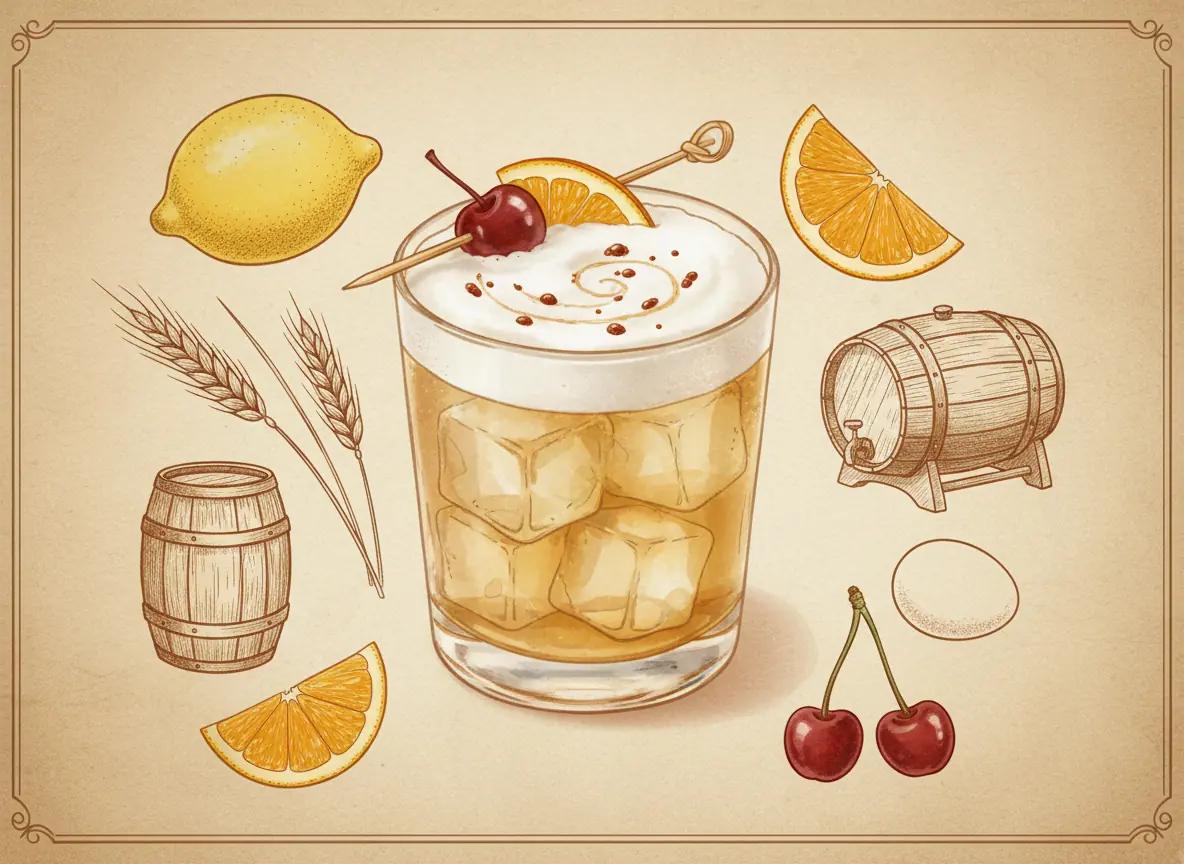
A Whiskey Sour is 45ml of bourbon, 25ml of fresh lemon juice and 20ml of sugar syrup, shaken hard with ice, then poured through a strainer onto fresh cubes in a rocks glass, with half an orange slice and a cherry. Add 15ml of egg white, dry shaken first, and dot the foam with Angostura. About 1.8 UK units. The measures are the IBA’s. The IBA’s egg white is optional and only a few drops; we use 15ml, about half a white, because that is what a full foam takes. The bitters are not in the IBA recipe, and they only go on when there is foam to hold them. The name is in print by 1870, in a Wisconsin newspaper, and the sour is older still: Jerry Thomas printed brandy, gin and rum sours in 1862. Difford’s Guide lists a Boston Sour as bourbon soured with lemon juice and smoothed by egg white.
Gold Rush
A Gold Rush is 60ml bourbon, 22.5ml fresh lemon juice and 22.5ml honey syrup, made with twice as much honey as warm water. Shake it hard for 10 to 12 seconds, strain it onto a single big cube in a rocks glass and finish with a lemon twist. About 2.4 UK units. Punch credits T.J. Siegal, at Milk & Honey in New York, with the idea sometime in 2000, and VinePair dates the drink to 2001. T.J. Siegal, a friend of the owner, Sasha Petraske, ordered his usual Whiskey Sour and asked for it without the egg white and with honey syrup in place of sugar. The change stuck, and the drink became a modern standard. Honey does more than sweeten. It tastes faintly of flowers and wax, gives the drink weight that sugar syrup cannot, and sits comfortably with the vanilla and caramel in bourbon. With no egg and no bitters, the Gold Rush is plainer and heavier than a Whiskey Sour, and quicker to make.
Penicillin
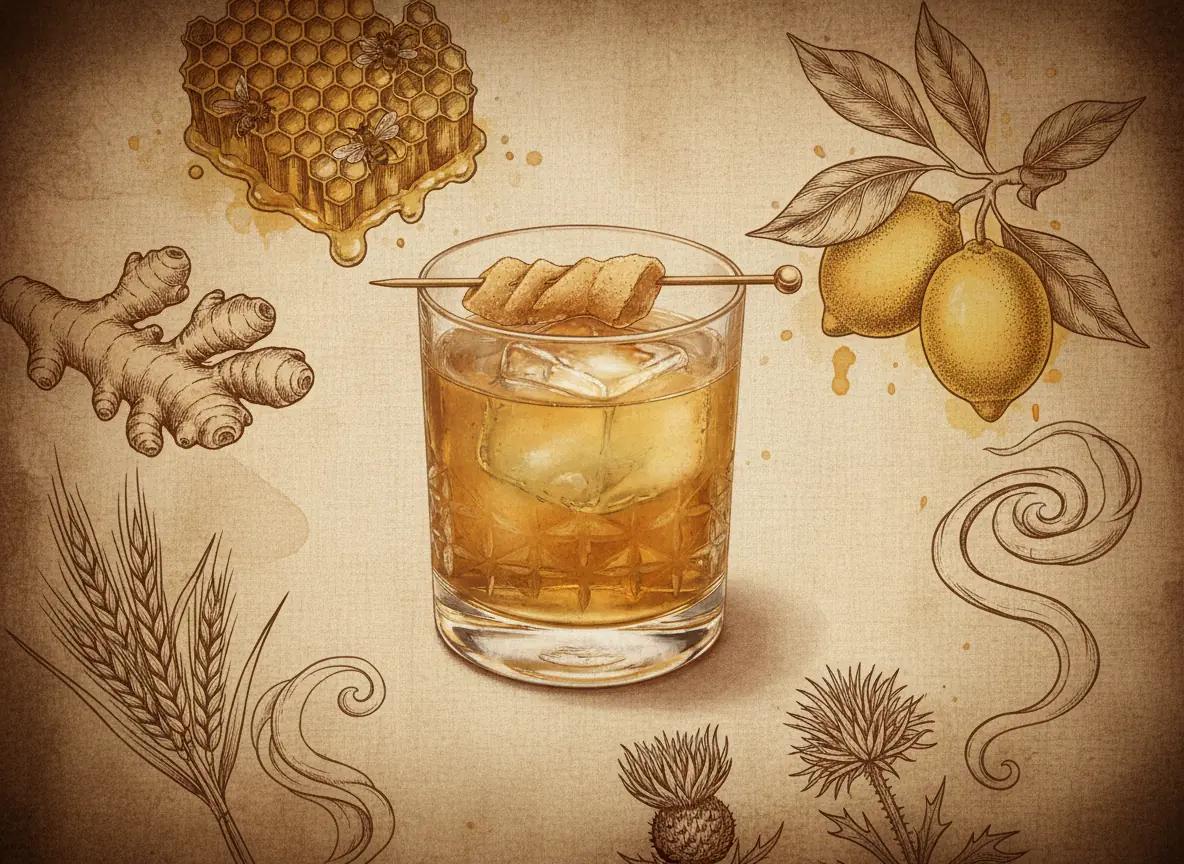
A Penicillin is 60ml blended Scotch, 22.5ml honey syrup, 22.5ml fresh lemon juice and two or three thin slices of fresh ginger, shaken hard and double strained over one large cube, with 7.5ml of Lagavulin 16 floated on top and candied ginger on the rim. That is the IBA specification, at about 2.7 UK units. Difford’s Guide, a secondary source, dates it to 2005 and credits Sam Ross with creating it at Milk & Honey in Manhattan; Chilled Magazine calls Ross an Australian bartender. Chilled says Ross described the name as a tongue-in-cheek reference to the drink’s cure-all properties, and that a nod to the antibiotic discovered by the Scottish scientist Alexander Fleming may have been a factor. It is a whisky sour in structure. The ginger gives it heat, and the smoky malt on top reaches the nose before the first sip.
Where this one sits
Recipe by Jerry Can Spirits · Updated 19 October 2026