Midnight Stinger
A Midnight Stinger is 30ml of bourbon, 30ml of Fernet-Branca, 22.5ml of fresh lemon juice and 12.5ml of rich syrup, shaken hard, then strained over crushed ice into a rocks glass, with a bouquet of mint. Around 2.4 UK units by our strengths. Difford’s Guide prints 2.3. Difford’s presents its recipe as an adaptation of a drink Sam Ross created at Attaboy in New York City. Ross’s original uses three quarters of an ounce each of lemon juice and 1:1 syrup, and Difford’s moved to a richer 2:1 syrup. It is a whiskey sour with fernet in the middle, bitter and cool, with mint over the top.
Glassware: Rocks Glass
Garnish: Mint sprigs a bouquet, set in the ice
Ingredients
Instructions
Chill a rocks glass and fill it with crushed ice.
Squeeze the lemon the day you serve it.
Add the bourbon, Fernet-Branca, lemon juice and rich syrup to a shaker with ice.
Shake hard for 10 to 12 seconds.
Strain into the glass of crushed ice.
Set a bouquet of mint in the ice.
Source: Difford's Guide (recipe 4573, measures, method and garnish as printed (30ml bourbon, 30ml Fernet-Branca, 22.5ml lemon juice, 12.5ml 2:1 cane sugar syrup, shaken, strained into an old-fashioned glass filled with crushed ice, mint sprigs bouquet); Difford’s presents it as adapted from Sam Ross at Attaboy, New York City, whose original uses 3/4 oz each of lemon juice and 1:1 syrup). Last checked 1 November 2026.
Expert Tip
Slap the mint once between your palms before it goes in. The scent is half the point. Measure the syrup carefully. At 12.5ml it is a small amount, and a heavy pour hides the fernet. If fernet is new to you, begin with the full measure anyway. A half measure leaves a drink that is neither a sour nor a bitter.
Behind the Midnight Stinger
Flavour Profile
A fernet sour from Attaboy
Difford’s Guide says its Midnight Stinger is adapted from a drink Sam Ross created at Attaboy in New York City. Ross’s own version has equal measures of lemon juice and a 1:1 sugar syrup, three quarters of an ounce each. Difford’s chose a richer 2:1 syrup, so the recipe here uses less of it. The structure is a sour: spirit, citrus and sugar, with fernet taking the weight that a second spirit or a liqueur might.
Difford’s reviews it as a digestivo for the end of a meal. It warns that the first sips can be a challenge if you do not know fernet, and says the drink then turns refreshing and easy to drink.
Fernet, bourbon and mint
Fernet-Branca is a bitter at 39% ABV with a cooling menthol finish, so it is nearly as strong as the bourbon it sits beside. Bourbon brings vanilla and sweetness to answer it. Fresh lemon juice and a measure of rich syrup pull the two into a sour. The mint garnish repeats the fernet’s cool note, and you smell it before the first sip.
Crushed ice is part of the build. It chills fast and dilutes the strong bitter as you drink.
Not a Stinger
The name comes from the Stinger, but nothing in the recipe does. The Stinger is cognac and white crème de menthe, stirred. The Midnight Stinger is bourbon, fernet and lemon, shaken.
The Midnight Stinger beside the Stinger and two bourbon sours
Midnight Stinger
- Spirit
- Bourbon
- Other main ingredients
- Fernet-Branca, lemon, rich syrup
- Method
- Shaken, over crushed ice
Stinger
- Spirit
- Cognac
- Other main ingredients
- White crème de menthe
- Method
- Stirred, over crushed ice
Whiskey Smash
- Spirit
- Bourbon
- Other main ingredients
- Lemon wedges, sugar syrup, mint
- Method
- Muddled and shaken
Paper Plane
- Spirit
- Bourbon
- Other main ingredients
- Aperol, Amaro Nonino, lemon
- Method
- Shaken, served up
| Drink | Spirit | Other main ingredients | Method |
|---|---|---|---|
| Midnight Stinger | Bourbon | Fernet-Branca, lemon, rich syrup | Shaken, over crushed ice |
| Stinger | Cognac | White crème de menthe | Stirred, over crushed ice |
| Whiskey Smash | Bourbon | Lemon wedges, sugar syrup, mint | Muddled and shaken |
| Paper Plane | Bourbon | Aperol, Amaro Nonino, lemon | Shaken, served up |
The Paper Plane is the lighter way to pair bourbon with an Italian bitter.
Make it at home
The Spirit
Whiskey (Bourbon)Under the US standard 27 CFR 5.143, bourbon is an American whiskey whose mash is at least 51% corn, matured in fresh charred oak barrels and bottled at 40% ABV or higher, the figure our recipes use. The fresh charred wood gives it its vanilla, caramel and colour, and the corn gives a rounder, sweeter spirit than rye. It is the base of 26 of our recipes, more than any other whiskey.
More to explore
Frequently Asked Questions
What is a Midnight Stinger?
How does a Midnight Stinger differ from a Stinger?
Who created the Midnight Stinger?
How strong is a Midnight Stinger?
What if I find fernet too bitter?
Can I use rye instead of bourbon?
Why crushed ice?
Can I make it for a group?
Sources.
Correct as of 1 November 2026.
- Difford’s Guide, “Midnight Stinger” (recipe 4573: bourbon, Fernet-Branca, lemon juice, 2:1 syrup, shaken, crushed ice, mint; 2.3 units; adapted from Sam Ross at Attaboy, original syrup ratio; review as a digestivo).
- NHS, “Calculating alcohol units” (the 14-units-a-week guidance and the units calculation).
You Might Also Like
Stinger
A Stinger is 50ml of cognac and 20ml of white crème de menthe, stirred with ice for 20 to 30 seconds and strained over crushed ice in a rocks glass, with a sprig of mint if you want one. About 2.5 UK units. The measures are the IBA’s, which strains it up into a chilled cocktail glass instead. The Oxford Companion says the Stinger first appears in 1890 as the Bartholdi Cocktail, brandy and crème de menthe shaken together, that the same mix surfaced for two decades under other names, among them the Judge, a mix of brandy, crème de menthe and gum that William Schmidt printed in 1892, and that it hit big as the Stinger in 1913. The Companion calls it the king of after-dinner cocktails and says it petered out in the 1980s. There is no citrus and no bitters, so the cognac does most of the talking. The peppermint cools the finish and takes the edge off the brandy’s heat. Use white crème de menthe: the green is the same liqueur with colouring, and it turns the glass the colour of mouthwash.
Whiskey Smash
A Whiskey Smash is 60ml of bourbon, three lemon wedges, 20ml of sugar syrup and eight mint leaves. The lemon is muddled hard with the syrup and the mint pressed gently, then everything is shaken hard with ice for 10 to 12 seconds and strained over crushed ice in a rocks glass, with a mint sprig. About 2.4 UK units. Jerry Thomas’s bar guide of 1862, in the Internet Archive’s scan, describes the smash as “simply a julep on a small plan”. Punch dates Dale DeGroff’s fresh-fruit Whiskey Smash to 1988 at the Rainbow Room in New York, muddling lemon into the julep’s mint, sugar and whiskey. Muddled wedges put the oil from the peel into the drink as well as the juice. That is what separates a smash from a whiskey sour over crushed ice. Our measures are larger and drier than DeGroff’s published recipe, which adds water.
Paper Plane
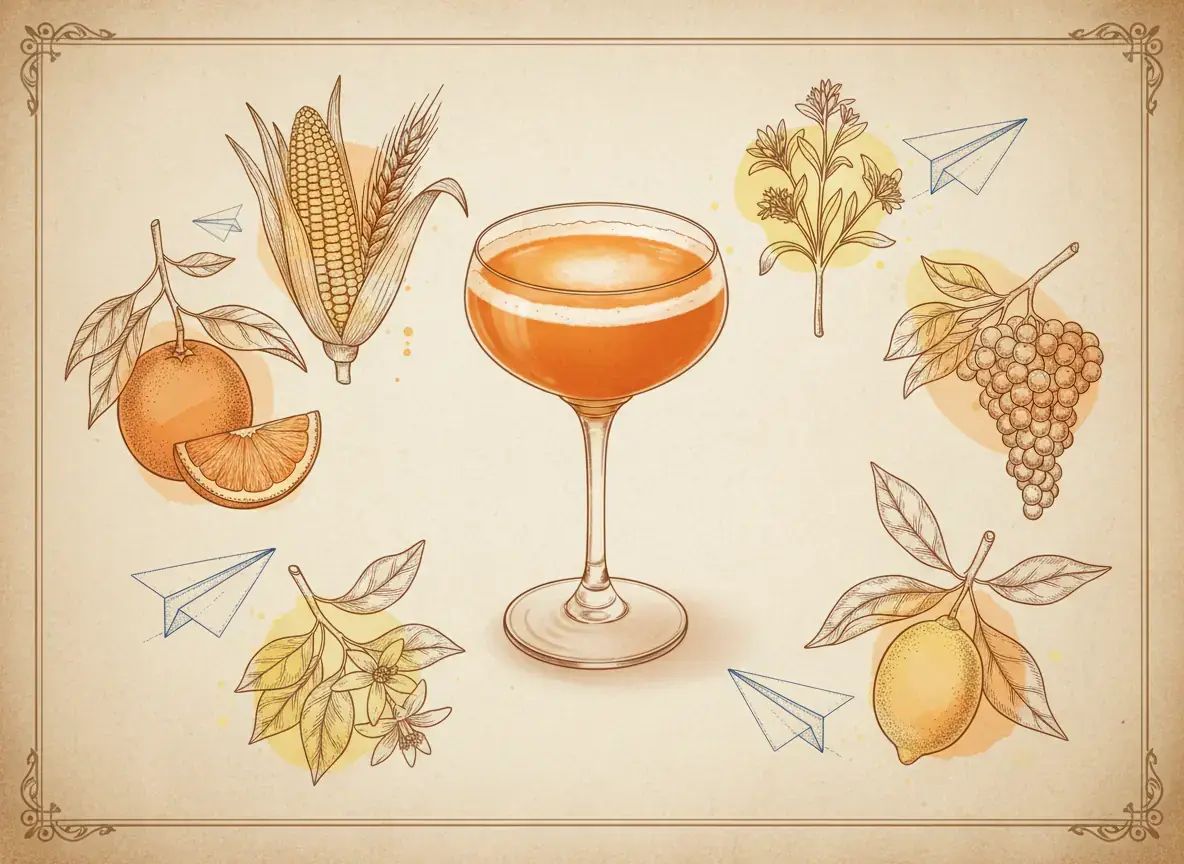
A Paper Plane is 30ml each of bourbon, Aperol, Amaro Nonino and fresh lemon juice, shaken hard and double strained into a chilled coupe. Four equal parts, which is the IBA specification: bitter orange, herbs and lemon over bourbon, at about 2.6 UK units. Punch, a secondary source, says Toby Maloney, who helped open The Violet Hour in Chicago, asked Sam Ross to create a drink for the bar, and that it was on the menu there in the summer of 2008. Ross named it after the M.I.A. song Paper Planes. The first version used Campari; Punch quotes Ross finding it slightly too bitter and short of sweetness, and he moved to Aperol. Equal parts leaves nowhere to hide. Squeeze the lemon the same day and use Nonino, not a cheaper amaro, because each ingredient is a quarter of the drink.
Hanky Panky
A Hanky Panky is 45ml of London Dry gin, 45ml of sweet vermouth and 7.5ml of Fernet-Branca, stirred with ice for 20 to 30 seconds and strained into a chilled coupe, with an orange twist expressed over the top and dropped in. About 2.8 UK units. The measures are the IBA’s. Ada Coleman made it at the American Bar of the Savoy, where, the Oxford Companion says, she rose to head bartender before Harry Craddock displaced her in January 1926. The Companion quotes her telling The People in 1925 that she spent hours experimenting until she invented a new cocktail for the actor Charles Hawtrey, who had come in complaining of overwork. He either called it “the real hanky panky” on the spot or came in the next day asking for “that hanky panky stuff”, and the name stuck. Craddock put it in The Savoy Cocktail Book, in the Internet Archive’s scan. Equal gin and sweet vermouth make a sweet Martini. The Fernet-Branca, a bitter Italian amaro, adds menthol and dark herbs, cools the finish and keeps the vermouth from tasting syrupy.
Where this one sits
Recipe by Jerry Can Spirits · Updated 1 November 2026