Whiskey Smash
A Whiskey Smash is 60ml of bourbon, three lemon wedges, 20ml of sugar syrup and eight mint leaves. The lemon is muddled hard with the syrup and the mint pressed gently, then everything is shaken hard with ice for 10 to 12 seconds and strained over crushed ice in a rocks glass, with a mint sprig. About 2.4 UK units. Jerry Thomas’s bar guide of 1862, in the Internet Archive’s scan, describes the smash as “simply a julep on a small plan”. Punch dates Dale DeGroff’s fresh-fruit Whiskey Smash to 1988 at the Rainbow Room in New York, muddling lemon into the julep’s mint, sugar and whiskey. Muddled wedges put the oil from the peel into the drink as well as the juice. That is what separates a smash from a whiskey sour over crushed ice. Our measures are larger and drier than DeGroff’s published recipe, which adds water.
Glassware: Rocks Glass
Garnish: Mint sprig slapped awake
Ingredients
60ml
Bourbon at 40% ABV, ideally one with some corn sweetness. A high-rye bottle makes a sharper, spicier drink.
3 wedges
About half a lemon, cut the same day and muddled skin and all. The oil in the peel is the reason to use wedges instead of juice.
20ml
One to one by weight, muddled in with the lemon. Muddled wedges are sharper than the same volume of strained juice, and the syrup is set against that.
8 leaves
Pressed gently after the lemon. Hard muddling tears the leaves, and the drink turns grassy and bitter.
Instructions
Muddle the lemon wedges hard with the sugar syrup in a shaker.
Add the mint leaves and press them gently, two or three times.
Add the bourbon and fill with cubed ice.
Shake hard for 10 to 12 seconds.
Strain over fresh crushed ice in a rocks glass.
Slap a mint sprig between your palms and stand it in the ice.
Our version
DeGroff’s 1988 recipe, published by Punch, is 45ml of bourbon, 30ml of water, 22.5ml of syrup, a quarter lemon and three mint leaves. Ours drops the water and uses 60ml of bourbon, three lemon wedges, 20ml of syrup and eight leaves for a stronger, more lemony smash.
Source: our own specification. Last checked 10 October 2026.
Expert Tip
Muddle twice, with two different pressures. Lean on the lemon wedges and syrup until the skins split and the oil comes out. Then add the mint and press it only two or three times: torn mint turns the drink grassy and bitter. Strain it. The muddled lemon and mint have given everything they have during the shake, and leaving the pulp in the glass adds nothing but debris. Fresh crushed ice in the glass keeps it cold and dilutes it as you drink. Cut the lemon the same day. Wedges that have sat in the fridge overnight lose their oil first, and the oil is the point of muddling them.
Behind the Whiskey Smash
Flavour Profile
A Julep on a Small Plan
Jerry Thomas included smashes in his bar guide of 1862 and described them as “simply a julep on a small plan”: the julep’s spirit, sugar and mint, made as a smaller drink.
The format worked with any spirit, and his book gives several. By 1988, Punch says, the smash as a category had been lost to time.
DeGroff, 1988
Punch dates Dale DeGroff’s fresh-fruit Whiskey Smash, at the Rainbow Room in New York, to 1988, and says the smash as a category had been lost to time by then. His change was to muddle lemon into the julep’s mint, sugar and whiskey before shaking it and straining it over crushed ice.
His recipe, as Punch publishes it, is smaller and wetter than ours: 45ml of bourbon, 30ml of water, 22.5ml of syrup, a quarter lemon in two pieces and three mint leaves. Ours drops the water, raises the bourbon and the mint, and uses three wedges for more peel oil.
Two Pressures
Lemon first, and hard. The wedges go in with the syrup and take real weight, so the oil comes out of the skin as well as the juice from the flesh.
Mint second, and barely. Two or three presses release the oil on the surface of the leaves. More than that tears them and puts chlorophyll into the drink, which tastes bitter and grassy and does not shake out.
Against the Julep
A julep is about the whiskey and the mint alone, slowly diluted over crushed ice. Put lemon in the middle and the balance moves: acid and oil lead, the mint steps back, and the drink becomes quicker to make and quicker to drink.
DeGroff’s Recipe and Ours
Dale DeGroff’s published Whiskey Smash beside ours
Bourbon
- DeGroff (Punch)
- 1½oz (45ml)
- Ours
- 60ml
Water
- DeGroff (Punch)
- 1oz (30ml)
- Ours
- None
Sugar syrup
- DeGroff (Punch)
- ¾oz (22.5ml)
- Ours
- 20ml
Lemon
- DeGroff (Punch)
- A quarter lemon, cut in two
- Ours
- Three wedges
Mint
- DeGroff (Punch)
- Three leaves
- Ours
- Eight leaves
Method
- DeGroff (Punch)
- Muddle, shake, strain over crushed ice
- Ours
- Muddle, shake 10 to 12 seconds, strain over crushed ice
Garnish
- DeGroff (Punch)
- Mint sprig
- Ours
- Mint sprig
UK units
- DeGroff (Punch)
- About 1.8
- Ours
- About 2.4
| Element | DeGroff (Punch) | Ours |
|---|---|---|
| Bourbon | 1½oz (45ml) | 60ml |
| Water | 1oz (30ml) | None |
| Sugar syrup | ¾oz (22.5ml) | 20ml |
| Lemon | A quarter lemon, cut in two | Three wedges |
| Mint | Three leaves | Eight leaves |
| Method | Muddle, shake, strain over crushed ice | Muddle, shake 10 to 12 seconds, strain over crushed ice |
| Garnish | Mint sprig | Mint sprig |
| UK units | About 1.8 | About 2.4 |
How to Serve It
Over fresh crushed ice in a rocks glass, with a slapped mint sprig standing in the ice so the scent reaches you before the drink does. It suits a warm afternoon.
Without the lemon it is close to a Mint Julep; with strained lemon juice and no mint, a Whiskey Sour; built the same way on spiced rum, a Rum Smash.
Make it at home
The Spirit
Whiskey (Bourbon)Under the US standard 27 CFR 5.143, bourbon is an American whiskey whose mash is at least 51% corn, matured in fresh charred oak barrels and bottled at 40% ABV or higher, the figure our recipes use. The fresh charred wood gives it its vanilla, caramel and colour, and the corn gives a rounder, sweeter spirit than rye. It is the base of 26 of our recipes, more than any other whiskey.
More to explore
Frequently Asked Questions
What is in a Whiskey Smash?
Who created the Whiskey Smash?
What is the difference between a Whiskey Smash and a Mint Julep?
Why muddle lemon wedges instead of using juice?
Should I strain it or leave the fruit in?
Can I use rye instead of bourbon?
How strong is a Whiskey Smash?
Sources.
Correct as of 19 October 2026.
- Punch, “Dale DeGroff’s Whiskey Smash” (secondary source: the smash as a category had been lost to time when DeGroff put out this fresh-fruit answer to the Mint Julep in 1988; 1½oz bourbon, 1oz water, ¾oz simple syrup, ¼ lemon cut in two, 3 mint leaves; muddle, shake with ice, strain over crushed ice).
- Jerry Thomas, 1862 (Internet Archive scan), “How to Mix Drinks, or The Bon-Vivant’s Companion” (primary source: 93. The Smash: “simply a julep on a small plan”; 96. Whiskey Smash: sugar, water, a wine-glass of whiskey, shaved ice, two sprigs of mint).
You Might Also Like
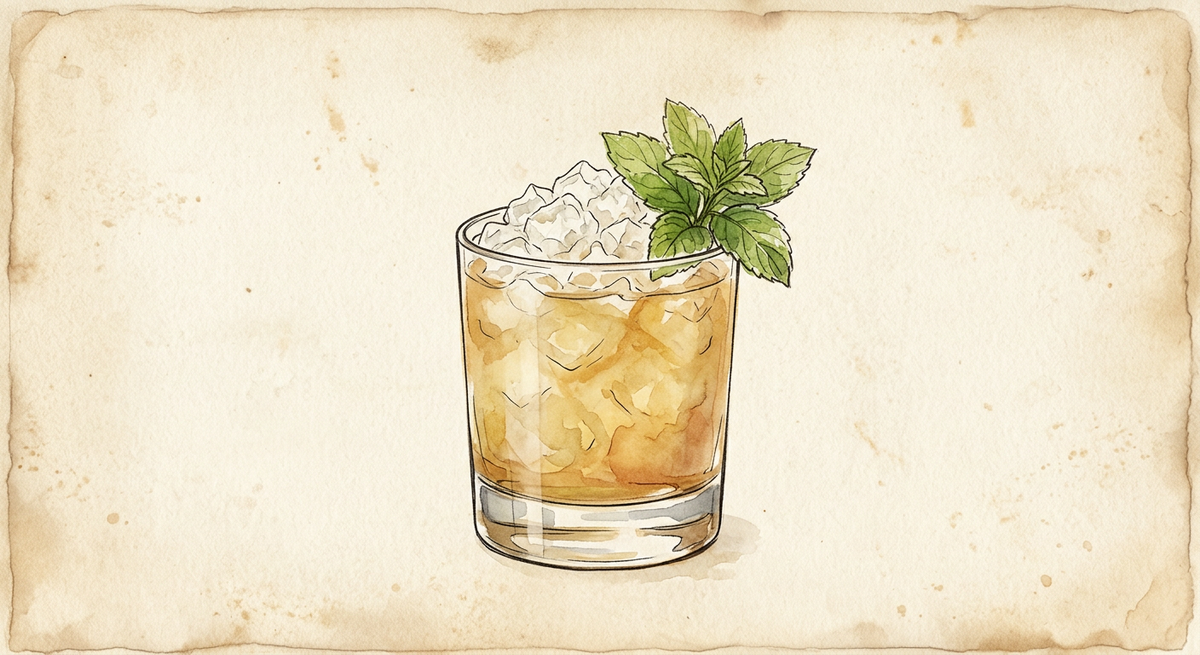
Rum Smash
A Rum Smash is 60ml of spiced rum, three lemon wedges, 15ml of demerara syrup and eight mint leaves. The lemon is muddled hard with the syrup and the mint pressed gently after it; then the rum goes in and the lot is shaken hard with ice for 10 to 12 seconds and strained over crushed ice in a rocks glass, with a slapped mint sprig. About 2.4 UK units with Expedition Spiced Rum at 40% ABV. The smash is a julep cut down: Jerry Thomas’s 1862 guide, in the Internet Archive’s scan, calls it “simply a julep on a small plan”. Muddled lemon is the modern addition, and that lemon divides a smash from a julep now: the peel oils give it a bitter, aromatic edge that juice alone does not. Spiced rum suits the lemon version. Vanilla and baking spice sit under the peel oils and the mint, and the caramel of the demerara ties them together.
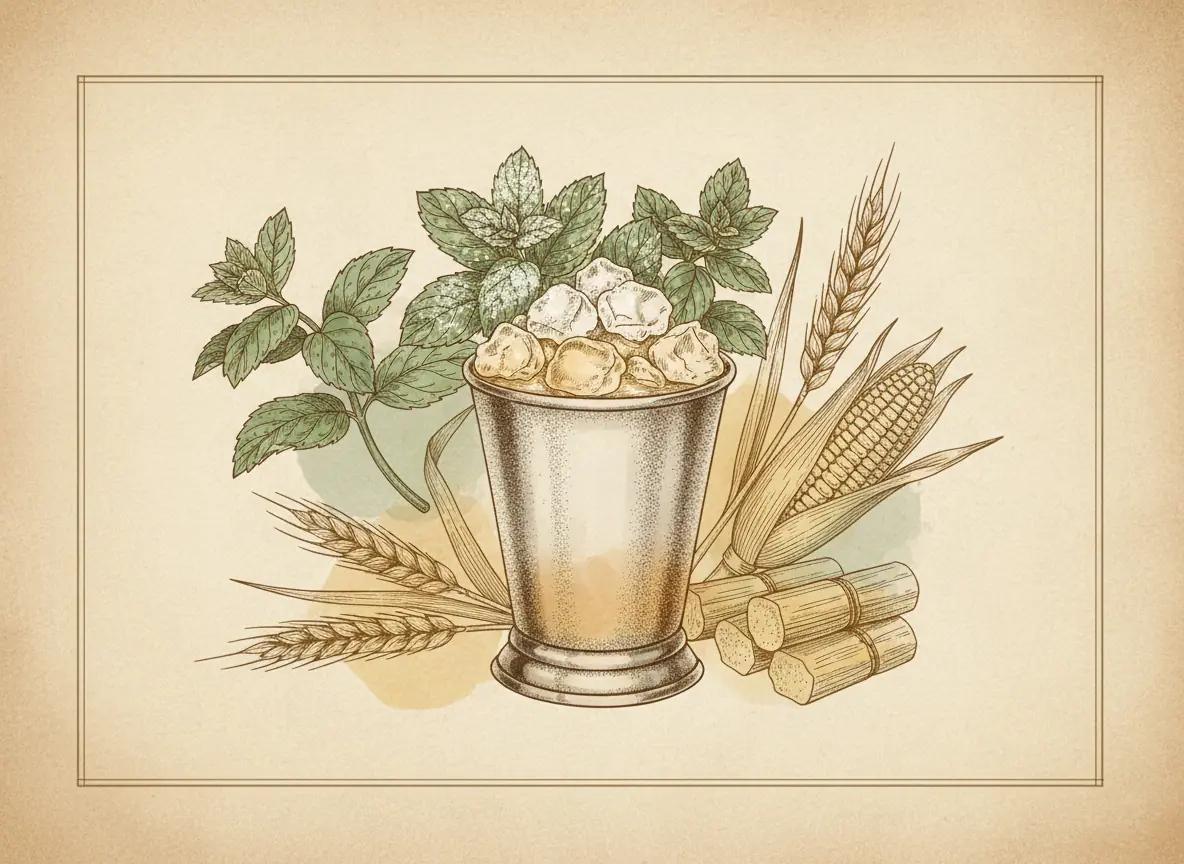
Mint Julep
A Mint Julep is 60ml of bourbon, the leaves of four mint sprigs, one teaspoon of powdered sugar and two teaspoons of water. Stir the sugar into the water, press the mint gently into it, pack the cup with crushed ice, pour in the bourbon and churn until the outside frosts, then crown it with a mint bouquet. About 2.4 UK units. The measures are the IBA’s. It is an old drink in print. The Oxford Companion, in an entry by David Wondrich, calls it the oldest of the canonical American mixed drinks, and finds a Williamsburg, Virginia, newspaper poem of 1770 that is clearly about a julep drunk for pleasure. It says Jerry Thomas’s 1862 guide gave the title Mint Julep to the brandy version, that from the 1870s the name meant a whisky drink, and that Churchill Downs named the bourbon Mint Julep its official drink in 1938. There is no citrus and no liqueur in the cup, so the work is in the cold. Crushed ice packed hard frosts the metal, melts slowly into the bourbon and holds the mint upright where the nose meets it.
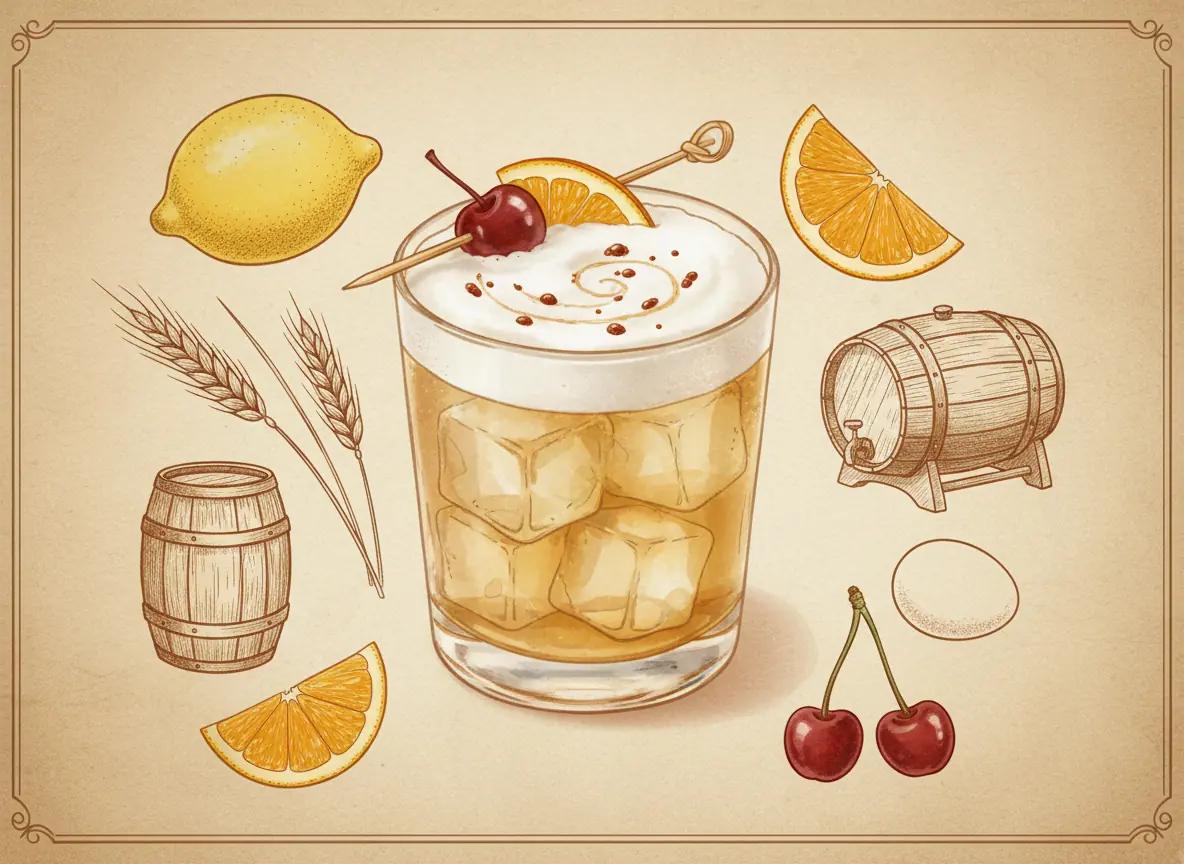
Whiskey Sour
A Whiskey Sour is 45ml of bourbon, 25ml of fresh lemon juice and 20ml of sugar syrup, shaken hard with ice, then poured through a strainer onto fresh cubes in a rocks glass, with half an orange slice and a cherry. Add 15ml of egg white, dry shaken first, and dot the foam with Angostura. About 1.8 UK units. The measures are the IBA’s. The IBA’s egg white is optional and only a few drops; we use 15ml, about half a white, because that is what a full foam takes. The bitters are not in the IBA recipe, and they only go on when there is foam to hold them. The name is in print by 1870, in a Wisconsin newspaper, and the sour is older still: Jerry Thomas printed brandy, gin and rum sours in 1862. Difford’s Guide lists a Boston Sour as bourbon soured with lemon juice and smoothed by egg white.
Where this one sits
Recipe by Jerry Can Spirits · Updated 19 October 2026