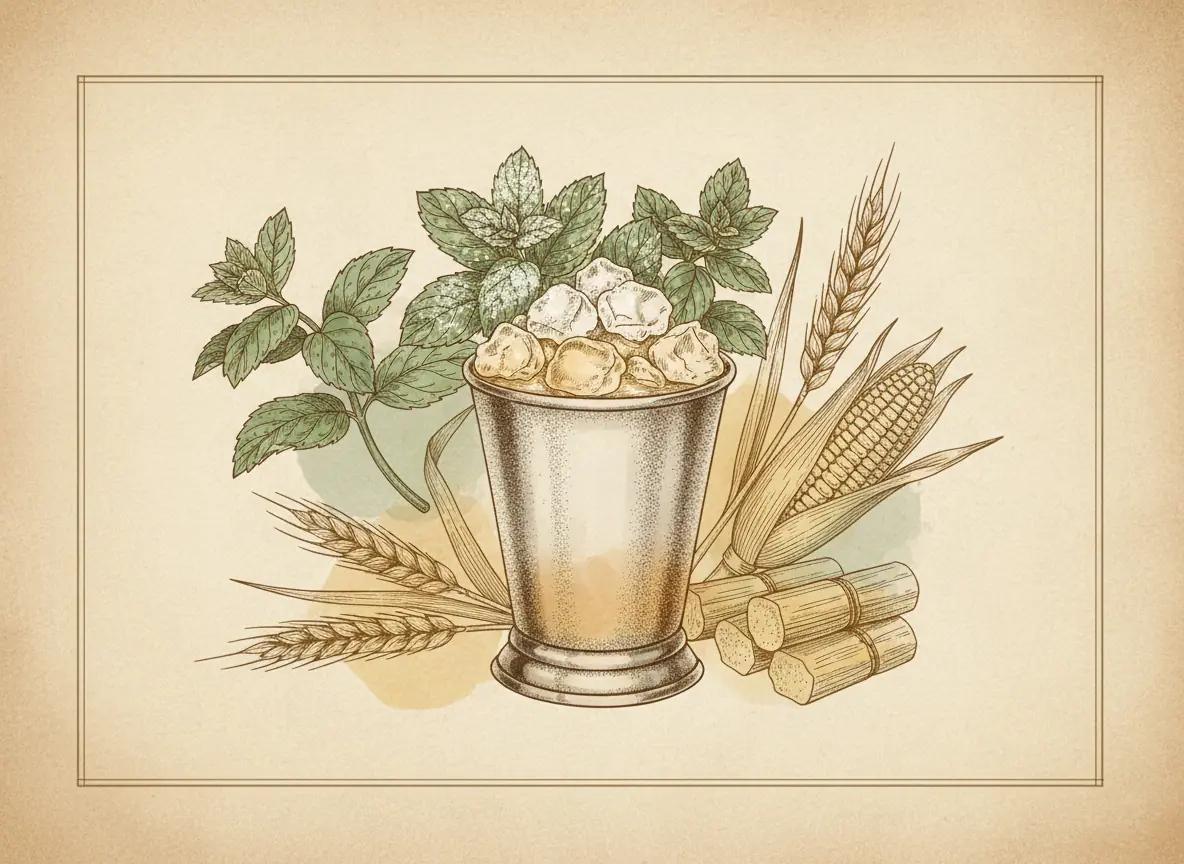
Mint Julep
A Mint Julep is 60ml of bourbon, the leaves of four mint sprigs, one teaspoon of powdered sugar and two teaspoons of water. Stir the sugar into the water, press the mint gently into it, pack the cup with crushed ice, pour in the bourbon and churn until the outside frosts, then crown it with a mint bouquet. About 2.4 UK units. The measures are the IBA’s. It is an old drink in print. The Oxford Companion, in an entry by David Wondrich, calls it the oldest of the canonical American mixed drinks, and finds a Williamsburg, Virginia, newspaper poem of 1770 that is clearly about a julep drunk for pleasure. It says Jerry Thomas’s 1862 guide gave the title Mint Julep to the brandy version, that from the 1870s the name meant a whisky drink, and that Churchill Downs named the bourbon Mint Julep its official drink in 1938. There is no citrus and no liqueur in the cup, so the work is in the cold. Crushed ice packed hard frosts the metal, melts slowly into the bourbon and holds the mint upright where the nose meets it.
Glassware: Julep Cup
Garnish: Mint bouquet and Powdered sugar dusting (optional)
Ingredients
60ml
A bourbon at 40% ABV or a little over. With only sugar, mint and ice beside it, its vanilla and oak are most of what you taste, so use one you would drink neat.
4 sprigs
Spearmint, the leaves stripped from the stems and pressed gently in the sugared water. The stems add bitterness and nothing else. Keep extra sprigs for the bouquet.
1 teaspoon
Stirred into the water until it dissolves, as the IBA specifies; caster sugar works with a little more stirring. A pinch more dusted over the bouquet is optional and sits at the nose.
2 teaspoons
Just enough to dissolve the sugar before the ice arrives. The rest of the water in the drink comes from the crushed ice as you churn.
Instructions
Strip the leaves from four mint sprigs into a julep cup or rocks glass, keeping a few good tops aside for the bouquet.
Add the powdered sugar and water and stir until the sugar dissolves.
Press the mint gently, once or twice.
Fill the cup with crushed ice and pour in the bourbon.
Churn with a bar spoon, lifting from the bottom, for 20 to 30 seconds, until the outside of the cup frosts.
Top up with crushed ice and press it into a dome over the rim.
Stand the mint bouquet in the ice, dust it with a little powdered sugar if you like, and serve with a short straw beside the mint.
Source: the IBA (Official IBA specification; the mint bouquet and optional sugar dusting ours). Last checked 10 October 2026.
Expert Tip
Press the mint, never pound it. Press it lightly, once or twice, in the sugared water to release the oil near the surface of the leaf. Grinding tears it and brings out a bitter, grassy taste that no sugar covers. Get the sugar fully dissolved first. Powdered sugar melts quickly in two teaspoons of water, which is why the IBA names it; once the cup is cold, sugar stops dissolving and sits gritty at the bottom. Churn, then pack again. The crushed ice settles as you work the bourbon through it, so top it up and press it into a dome over the rim. The cup should frost within about half a minute. If it does not, the ice is too loose or too wet.
Behind the Mint Julep
Flavour Profile
A Morning Dram in Virginia
The julep began as medicine. The Oxford Companion traces the name to gûl-ab, the Persian word for rosewater, and says a julep was originally a medicinal mixture of water and an infused syrup.
The Companion puts the American drink on record in the 1770s and 1780s: a Williamsburg, Virginia, newspaper printed a foxhunting poem in 1770 that speaks of a julep which doctors storm at and some adore, and a 1787 ode defined it as “water, sugar, rum, and mint”. The Companion first attests ice in Virginia in 1807.
Many Spirits, Then Bourbon
Nineteenth-century juleps were not tied to one spirit. Jerry Thomas’s Bar-Tender’s Guide of 1862, in the Internet Archive’s scan, gives a Mint Julep on cognac, brandy, gin and whiskey juleps besides it, and a Pineapple Julep on sparkling Moselle. The Oxford Companion says the Civil War reversed the relationship, so that from the 1870s Mint Julep meant a whisky drink, and that Churchill Downs named the bourbon julep its official drink in 1938. In our reading the Derby fixed it in place.
The Ice Does the Work
With no citrus and no liqueur to balance, temperature and dilution decide the drink. Crushed ice has far more surface than cubes. Packed hard, it chills the bourbon fast and melts steadily into it, so a short pour of whiskey becomes a long, cold drink over ten or fifteen minutes.
The frost on a metal cup is the proof. It forms when the metal gets cold enough for the moisture in the air to freeze onto it. Hold the cup by the rim or the base, so your hand does not melt it.
Three Mint and Crushed Ice Drinks
The Mint Julep beside our Jerry Can Julep and the Whiskey Smash
Spirit
- Mint Julep (IBA)
- 60ml bourbon
- Jerry Can Julep (ours)
- 60ml Expedition Spiced Rum
- Whiskey Smash
- 60ml bourbon
Mint
- Mint Julep (IBA)
- Four sprigs, pressed
- Jerry Can Julep (ours)
- 8 to 10 leaves, pressed
- Whiskey Smash
- 8 leaves, pressed
Sweetener
- Mint Julep (IBA)
- One teaspoon powdered sugar, two of water
- Jerry Can Julep (ours)
- 10ml simple syrup
- Whiskey Smash
- 20ml simple syrup
Citrus
- Mint Julep (IBA)
- None
- Jerry Can Julep (ours)
- None
- Whiskey Smash
- Three lemon wedges, muddled
Bitters
- Mint Julep (IBA)
- None
- Jerry Can Julep (ours)
- One dash Angostura
- Whiskey Smash
- None
UK units
- Mint Julep (IBA)
- About 2.4
- Jerry Can Julep (ours)
- About 2.4
- Whiskey Smash
- About 2.4
| Element | Mint Julep (IBA) | Jerry Can Julep (ours) | Whiskey Smash |
|---|---|---|---|
| Spirit | 60ml bourbon | 60ml Expedition Spiced Rum | 60ml bourbon |
| Mint | Four sprigs, pressed | 8 to 10 leaves, pressed | 8 leaves, pressed |
| Sweetener | One teaspoon powdered sugar, two of water | 10ml simple syrup | 20ml simple syrup |
| Citrus | None | None | Three lemon wedges, muddled |
| Bitters | None | One dash Angostura | None |
| UK units | About 2.4 | About 2.4 | About 2.4 |
How to Serve It
In a julep cup or a rocks glass, the crushed ice packed into a dome over the rim and a full bouquet of mint standing in it, with a short straw right beside the mint. Drink it slowly. It is built to last through a warm afternoon.
For the same build on our rum, a Jerry Can Julep; shaken with lemon wedges, a Whiskey Smash.
Make it at home
The Spirit
Whiskey (Bourbon)Under the US standard 27 CFR 5.143, bourbon is an American whiskey whose mash is at least 51% corn, matured in fresh charred oak barrels and bottled at 40% ABV or higher, the figure our recipes use. The fresh charred wood gives it its vanilla, caramel and colour, and the corn gives a rounder, sweeter spirit than rye. It is the base of 26 of our recipes, more than any other whiskey.
More to explore
Frequently Asked Questions
What is in a Mint Julep?
How old is the Mint Julep?
Why is it the Kentucky Derby drink?
Do I need a julep cup?
Can I use rye or brandy?
Why a short straw?
How strong is a Mint Julep?
Sources.
Checked between 18 October and 19 October 2026.
- The Oxford Companion to Spirits and Cocktails (David Wondrich), “The julep” (secondary source: from gûl-ab, Persian for rosewater; a Virginia poem of 1770; a 1787 ode, “water, sugar, rum, and mint”; ice first attested 1807; Thomas’s 1862 Mint Julep on brandy; a whisky drink from the 1870s; Churchill Downs 1938).
- IBA, “Mint Julep” (official specification: 60ml bourbon, four mint sprigs, one teaspoon powdered sugar, two teaspoons water; stainless steel julep cup; cracked ice).
- Internet Archive (Jerry Thomas), “The Bar-Tender’s Guide (1862, $1.50 edition), scan” (primary source, read 19 Oct: 87 to 92, Mint Julep (Cognac brandy, shaved ice, Jamaica rum), Brandy Julep, Gin Julep, Whiskey Julep, Pineapple Julep (old gin, sparkling Moselle)).
You Might Also Like
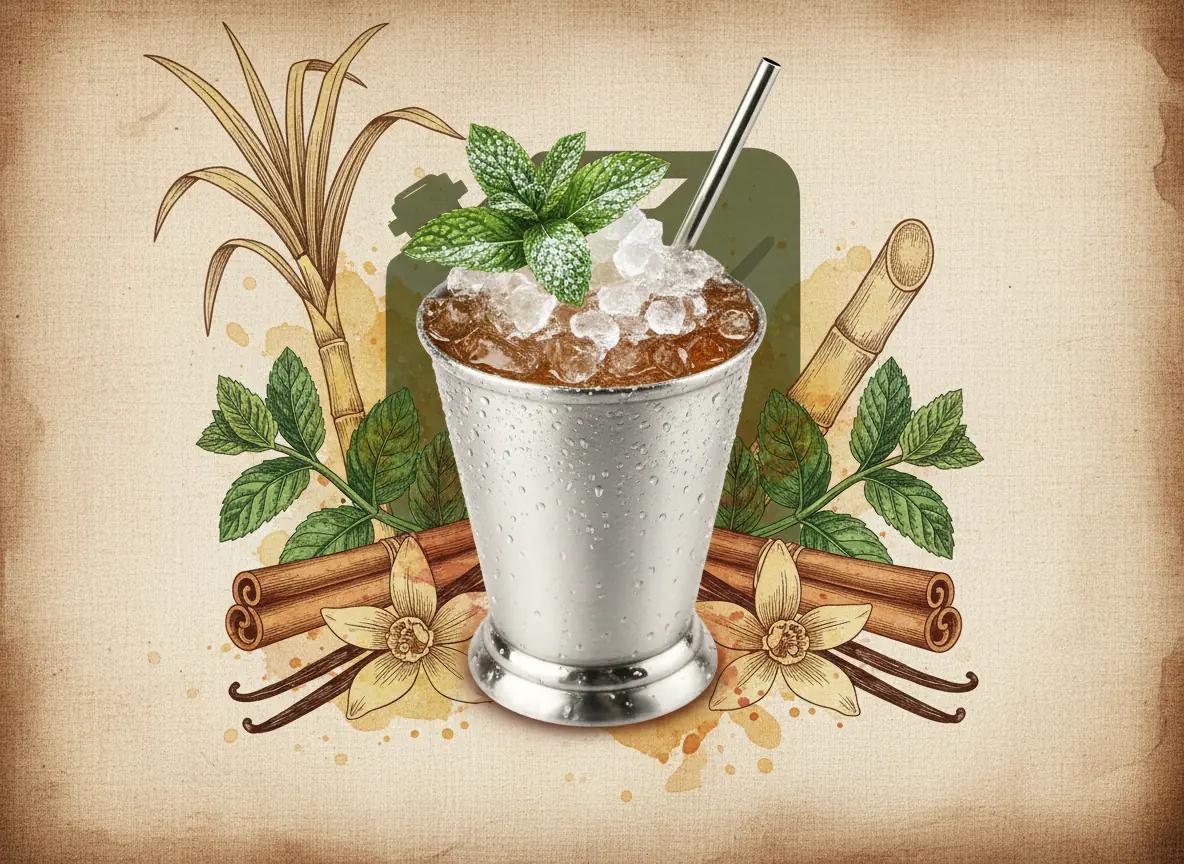
Jerry Can Julep
The Jerry Can Julep is 60ml of Expedition Spiced Rum, eight to ten fresh mint leaves pressed lightly with 10ml of simple syrup, and a dash of Angostura over a glass packed with crushed ice, finished with a mint bouquet and, if you like, an expressed orange peel. About 2.4 UK units. It is our julep. The Mint Julep is usually bourbon, but the format is older and looser than that, and the Oxford Companion describes nineteenth-century juleps made with French brandy, peach brandy, wines and Dutch gin as well as whisky. Spirit, sugar, mint and a great deal of crushed ice is all it asks. Expedition Spiced Rum suits it because its vanilla and cinnamon are warm where mint is cool. The syrup stays at 10ml because the rum brings sweetness of its own, and the Angostura goes on top of the ice, where it meets the mint at the nose.
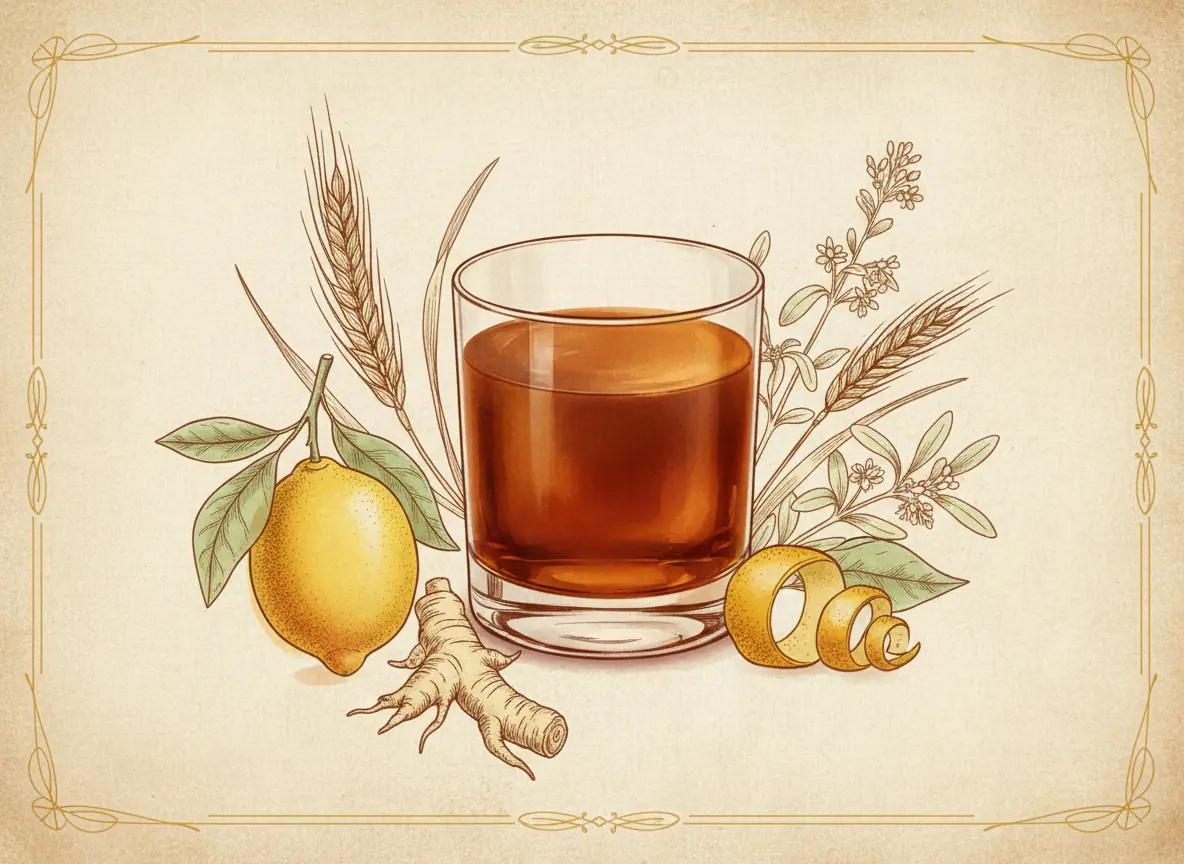
Sazerac
The IBA’s Sazerac is 50ml of cognac stirred with a sugar cube and two dashes of Peychaud’s bitters, then strained, with no ice, into a chilled rocks glass rinsed with absinthe, and finished with lemon zest. About 2.1 UK units. New Orleans more often makes it with rye whiskey. The Sazerac Company’s own history places Aaron Bird at the Sazerac House beside the Merchants Exchange from 1852 and dates the switch to rye to 1885. The Oxford Companion says the Sazerac cocktail was first mentioned in print only in 1899, and that the company’s account, which follows the historian Stanley Clisby Arthur, is undercut by numerous errors. The absinthe never goes into the mixing glass. It coats the glass and is poured away, leaving anise on the nose of every sip.
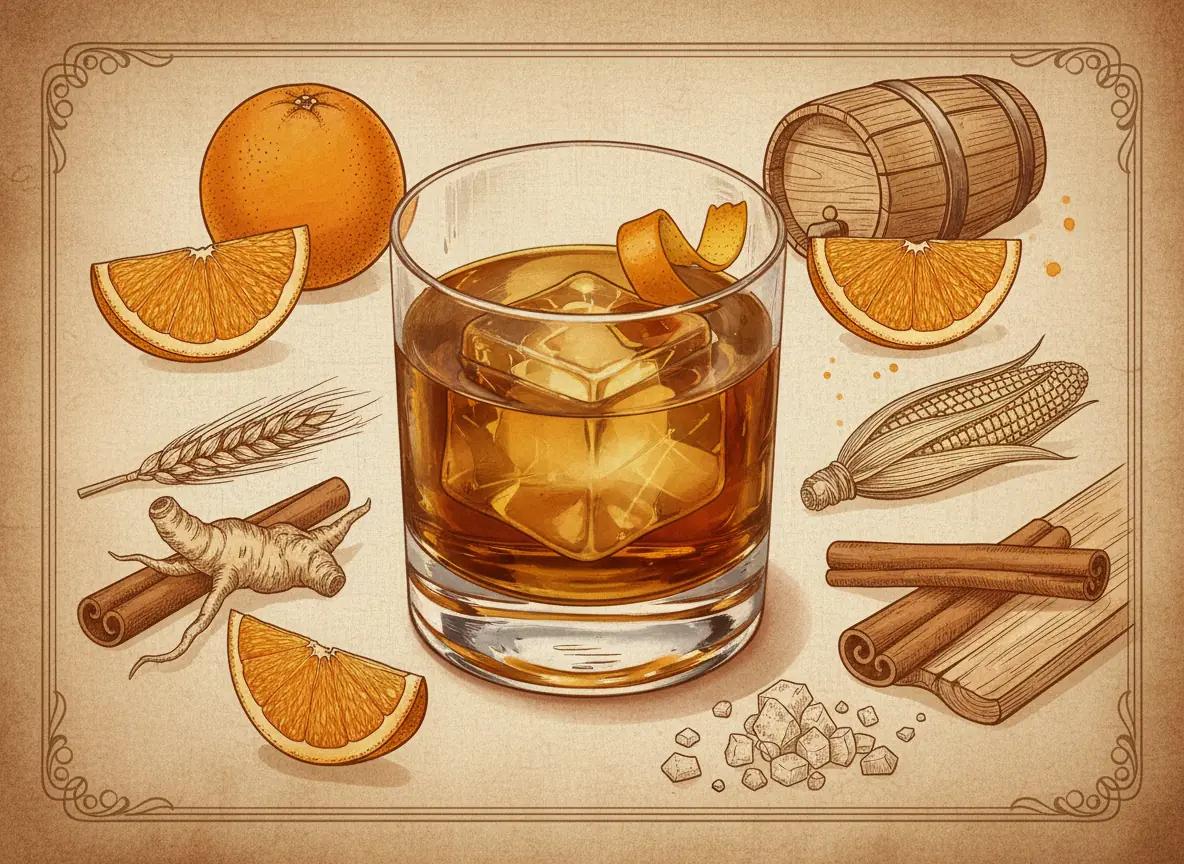
Old Fashioned
The IBA’s Old Fashioned is 45ml of bourbon or rye whiskey, one sugar cube, a few dashes of Angostura bitters and a few dashes of water; we use bourbon and two dashes. The sugar and bitters are muddled in a rocks glass until the cube dissolves, then ice goes in, the bourbon goes over it and the drink is stirred for 15 to 20 seconds. Orange peel is expressed over the top. About 1.9 UK units. Only the sugar and bitters are muddled: no orange flesh, no cherry. The recipe predates the name. The Oxford Companion says that when a newspaper in Hudson, New York, defined the cocktail in 1806, it described “spirits of any kind, sugar, water, and bitters”. The name came later in the century: the Companion has people ordering Old-Fashioneds in Chicago in 1880, as bartenders added liqueurs to the format and drinkers who wanted it plain asked for one made the old-fashioned way.
Where this one sits
Recipe by Jerry Can Spirits · Updated 19 October 2026