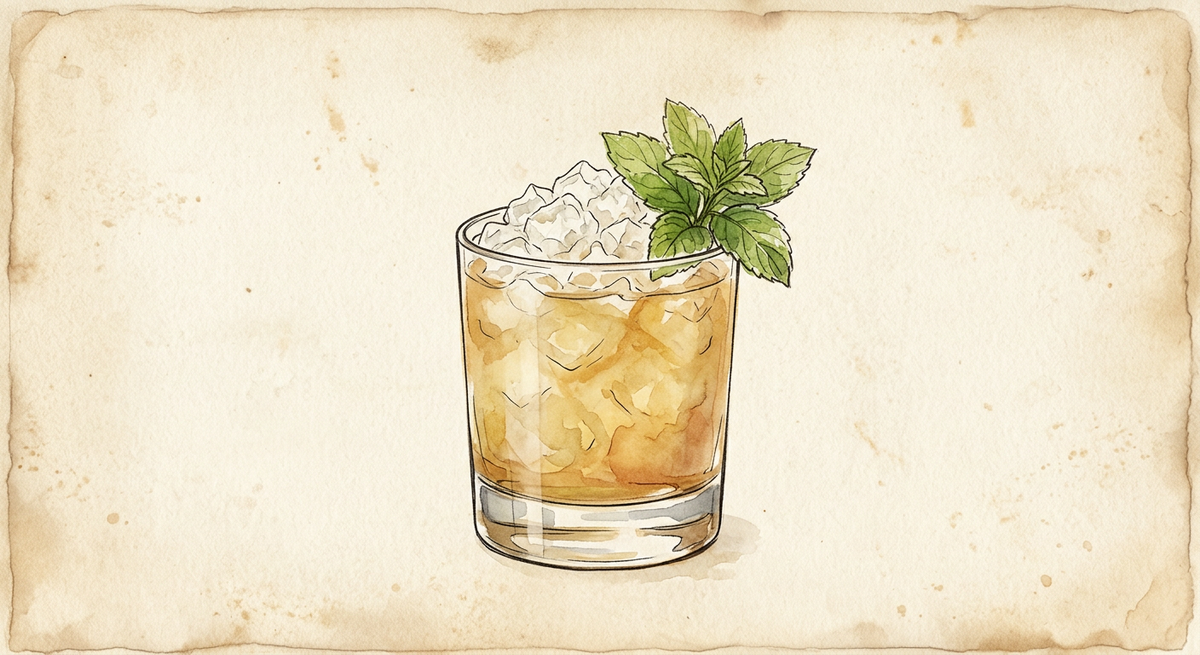
Rum Smash
A Rum Smash is 60ml of spiced rum, three lemon wedges, 15ml of demerara syrup and eight mint leaves. The lemon is muddled hard with the syrup and the mint pressed gently after it; then the rum goes in and the lot is shaken hard with ice for 10 to 12 seconds and strained over crushed ice in a rocks glass, with a slapped mint sprig. About 2.4 UK units with Expedition Spiced Rum at 40% ABV. The smash is a julep cut down: Jerry Thomas’s 1862 guide, in the Internet Archive’s scan, calls it “simply a julep on a small plan”. Muddled lemon is the modern addition, and that lemon divides a smash from a julep now: the peel oils give it a bitter, aromatic edge that juice alone does not. Spiced rum suits the lemon version. Vanilla and baking spice sit under the peel oils and the mint, and the caramel of the demerara ties them together.
Glassware: Rocks Glass
Garnish: Mint sprig slapped awake
Ingredients
60ml
A spiced rum at 40% ABV; we pour Expedition Spiced Rum, with seven real spices, two natural sweeteners, and bourbon oak. Its vanilla, cinnamon and clove sit under the raw lemon and mint, and at 60ml it still leads over the crushed ice.
3 wedges
Three wedges, skin on, muddled hard. The pressure releases bitter, aromatic oils from the peel along with the juice, and those oils are what make a smash taste of more than lemon juice.
15ml
Its caramel sits under the mint and lemon. At 15ml it rounds off the raw peel without turning the glass into lemonade.
8 leaves
Eight leaves, pressed gently after the lemon. Bruised, they release their oil; ground, they turn bitter and ragged.
Instructions
Muddle the lemon wedges hard with the demerara syrup in a shaker, until the skins split and the oils come out.
Add the mint leaves and press them gently, two or three times.
Add the rum and fill with cubed ice.
Shake hard for 10 to 12 seconds.
Strain over fresh crushed ice in a rocks glass.
Slap a mint sprig between your palms and stand it in the ice.
Our version
The smash has no fixed modern specification. Ours builds it on 60ml of spiced rum with three lemon wedges, 15ml of demerara syrup and eight mint leaves, and makes it as our Whiskey Smash is made: muddled, shaken hard and strained over crushed ice.
Source: our own specification. Last checked 10 October 2026.
Expert Tip
Muddle the lemon hard and the mint gently. The wedges need real force against the syrup to split the skins and release the peel oils with the juice. The mint needs only bruising, because torn leaves turn bitter. Lemon first, then two or three light presses for the mint. Shake hard with cubed ice for 10 to 12 seconds, then strain over fresh crushed ice. The shake carries the oils into the drink; the crushed ice keeps it cold to the last sip and holds the sprig upright. Leave the pulp in the shaker. The lemon and mint have done their work by the end of the shake, and pith left in the glass keeps adding bitterness.
Behind the Rum Smash
Flavour Profile
The Origin
The smash appears in Jerry Thomas’s 1862 guide, where he calls it “simply a julep on a small plan”, with brandy, gin and whiskey versions: sugar, water, spirit, two sprigs of mint and shaved ice in a small bar glass.
The muddled lemon came later. Punch dates Dale DeGroff’s fresh-fruit Whiskey Smash at New York’s Rainbow Room to 1988 and says the smash as a category had been lost to time by then. The Rum Smash keeps his lemon and his method: muddled, shaken and strained over crushed ice.
The Two Pressures
In our experience lemon keeps its oils in small sacs in the peel. They are bitter and aromatic, and they only come out under real force, so the wedges want crushing, not pressing. A timid muddle gives you juice and little else.
Mint is the opposite. Its oils sit close to the outside of the leaf and give way to the lightest press, while the tissue underneath turns bitter and grassy as soon as it tears. Two or three gentle presses are enough.
Doing the lemon first helps. The juice and syrup give the mint something to be pressed into, so it bruises against liquid instead of shredding against the bottom of the shaker.
The Rum
Spiced rum gives the smash a warm base under all that raw lemon and mint. Expedition Spiced Rum adds vanilla, cassia, clove and orange peel, and the caramel of the demerara links them to the lemon. An aged rum makes a rounder, quieter smash and a white rum a sharper one.
The Smash and Its Neighbours
The Rum Smash beside the Whiskey Smash and the Jerry Can Julep
Rum Smash
- Spirit
- 60ml spiced rum
- Lemon
- Three wedges, muddled
- Sweetener
- 15ml demerara syrup
- Mint
- 8 leaves
- Served
- Shaken, strained over crushed ice
- UK units
- About 2.4
Whiskey Smash
- Spirit
- 60ml bourbon
- Lemon
- Three wedges, muddled
- Sweetener
- 20ml simple syrup
- Mint
- 8 leaves
- Served
- Shaken, strained over crushed ice
- UK units
- About 2.4
Jerry Can Julep
- Spirit
- 60ml Expedition Spiced Rum
- Lemon
- None
- Sweetener
- 10ml simple syrup
- Mint
- 8 to 10 leaves
- Served
- Built, crushed ice, dash of Angostura
- UK units
- About 2.4
| Drink | Spirit | Lemon | Sweetener | Mint | Served | UK units |
|---|---|---|---|---|---|---|
| Rum Smash | 60ml spiced rum | Three wedges, muddled | 15ml demerara syrup | 8 leaves | Shaken, strained over crushed ice | About 2.4 |
| Whiskey Smash | 60ml bourbon | Three wedges, muddled | 20ml simple syrup | 8 leaves | Shaken, strained over crushed ice | About 2.4 |
| Jerry Can Julep | 60ml Expedition Spiced Rum | None | 10ml simple syrup | 8 to 10 leaves | Built, crushed ice, dash of Angostura | About 2.4 |
The bourbon version is the Whiskey Smash; without the lemon, the same rum makes the Jerry Can Julep.
How to Serve It
Strained over fresh crushed ice in a rocks glass, with a slapped mint sprig standing where the nose will find it.
Make it at home
The Spirit
Jerry Can Spirits Expedition Spiced RumA spiced rum built for balance. Madagascan vanilla leads, with Ceylon cinnamon, ginger and cassia through the middle and bourbon oak on the finish. 40% ABV, designed to work neat, over ice, and across classic and modern cocktails.
Need the Rum?
Pick up a bottle of Expedition Spiced Rum to make this cocktail.
Master the Techniques
More to explore
Frequently Asked Questions
What makes a smash different from a julep or a mojito?
Which rum works best?
Do I strain a smash?
How strong is a Rum Smash?
What is a sprig of mint?
Can I make it for a group?
Sources.
Correct as of 19 October 2026.
- Jerry Thomas, 1862 (Internet Archive scan), “How to Mix Drinks, or The Bon-Vivant’s Companion” (primary source: 93. The Smash: “simply a julep on a small plan”; brandy, gin and whiskey smashes: sugar, water, a wine-glass of spirit, two sprigs of mint, shaved ice, small bar glass; no lemon).
- Punch, “Dale DeGroff’s Whiskey Smash” (secondary source: the smash as a category had been lost to time when DeGroff put out this fresh-fruit answer to the Mint Julep in 1988; 1½oz bourbon, 1oz water, ¾oz simple syrup, ¼ lemon cut in two, 3 mint leaves).
You Might Also Like
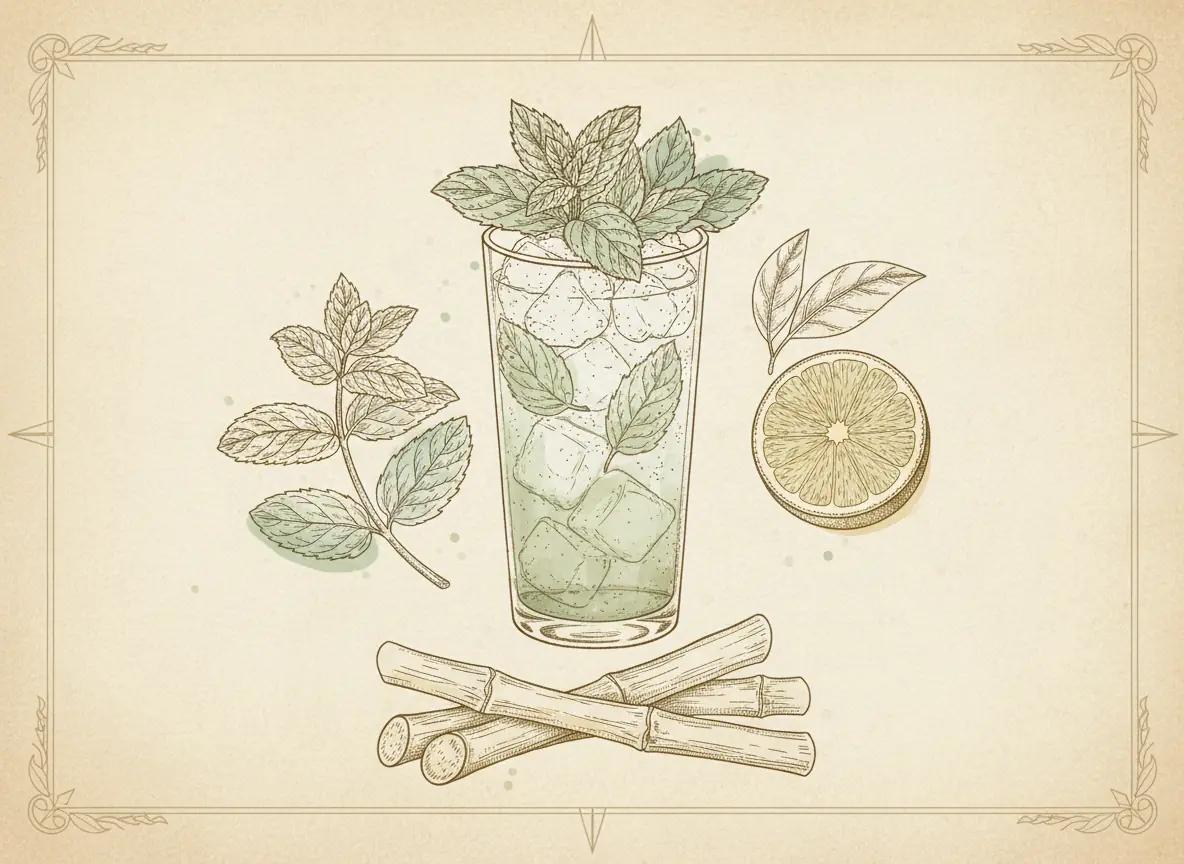
Mojito
A Mojito is 45ml of white rum, 20ml of fresh lime juice, two teaspoons of white cane sugar and six sprigs of mint, built in a highball. The mint is pressed gently with the sugar, the glass is filled with cubed ice, the rum and lime go in, and 75 to 100ml of chilled soda water tops it. About 1.8 UK units. Those are the IBA’s measures. The IBA only says to top up with soda, so the 75 to 100ml is ours. Press the mint once or twice and stop. Torn leaves make the drink bitter and grassy, and that, more often than the rum, is why a Mojito disappoints. The sugar grains help: they bruise the surface of the leaf as you press, and the lime then carries the oil through the glass.
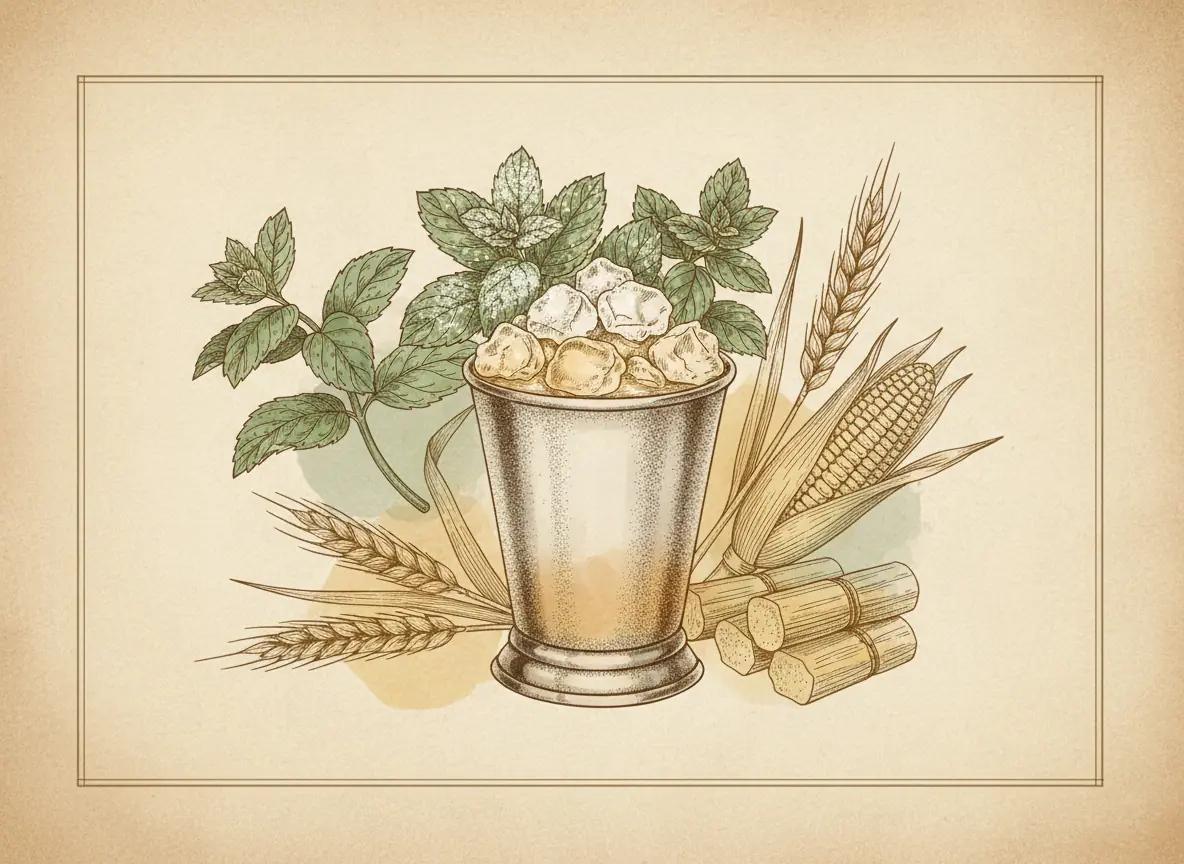
Mint Julep
A Mint Julep is 60ml of bourbon, the leaves of four mint sprigs, one teaspoon of powdered sugar and two teaspoons of water. Stir the sugar into the water, press the mint gently into it, pack the cup with crushed ice, pour in the bourbon and churn until the outside frosts, then crown it with a mint bouquet. About 2.4 UK units. The measures are the IBA’s. It is an old drink in print. The Oxford Companion, in an entry by David Wondrich, calls it the oldest of the canonical American mixed drinks, and finds a Williamsburg, Virginia, newspaper poem of 1770 that is clearly about a julep drunk for pleasure. It says Jerry Thomas’s 1862 guide gave the title Mint Julep to the brandy version, that from the 1870s the name meant a whisky drink, and that Churchill Downs named the bourbon Mint Julep its official drink in 1938. There is no citrus and no liqueur in the cup, so the work is in the cold. Crushed ice packed hard frosts the metal, melts slowly into the bourbon and holds the mint upright where the nose meets it.
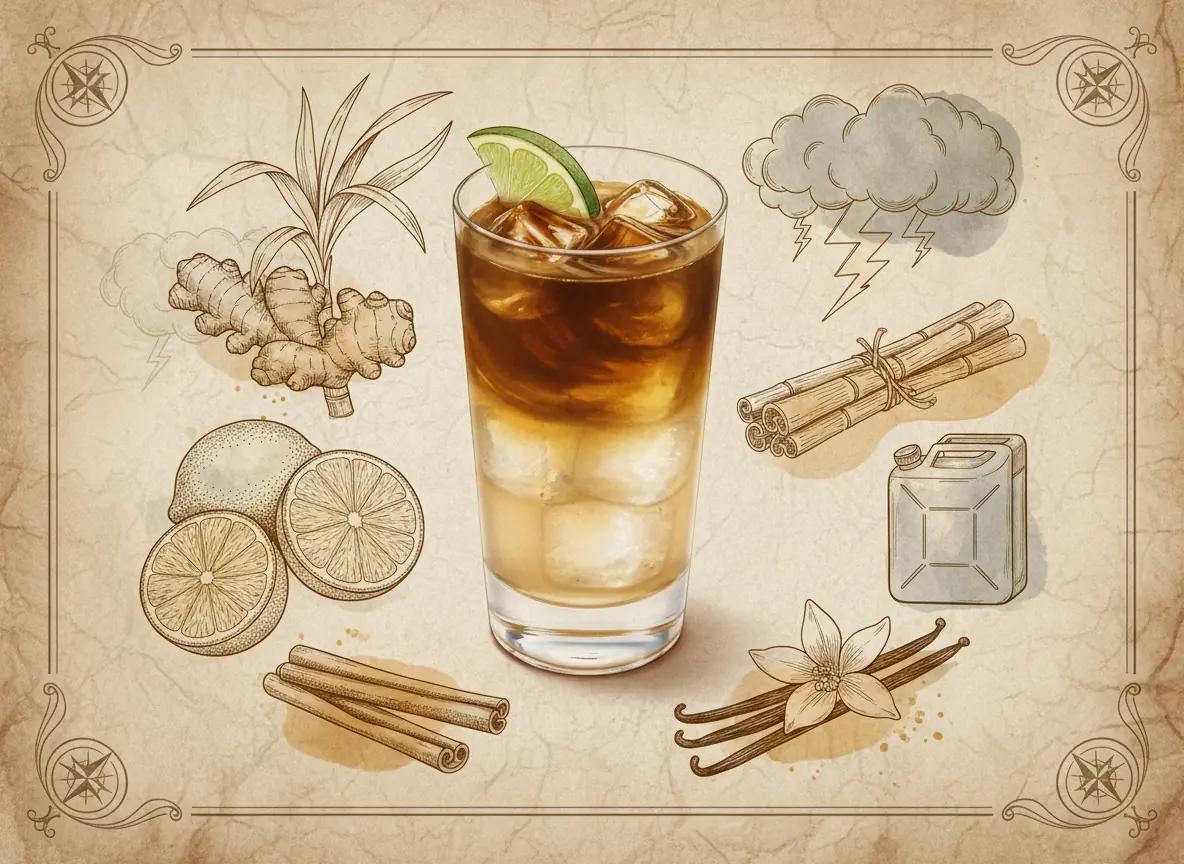
Storm & Spice
Storm & Spice is 50ml of Expedition Spiced Rum floated over 150ml of ginger beer and 15ml of fresh lime juice in a highball full of cubed ice, with two dashes of Angostura on top, a lime wedge and crystallised ginger. About 2.0 UK units from the rum at 40% ABV; the bitters add less than 0.1. It is our spiced-rum answer to the Dark ’n’ Stormy, the Bermudian highball of black rum and ginger beer. Gosling’s own site writes the name Dark ‘n Stormy® with the registered symbol and calls Black Seal Rum its essential ingredient, so this is a different drink on the same frame. A black rum brings weight and dark sugar. Expedition Spiced Rum brings vanilla, cinnamon and clove, which gives the ginger more to catch hold of. The build is the point. Ginger beer goes in first, then the rum is poured slowly over the back of a spoon so it sits dark over the pale ginger. Left layered, the first sips lead with rum. Stirred, the two run together.
Where this one sits
Recipe by Jerry Can Spirits · Updated 19 October 2026