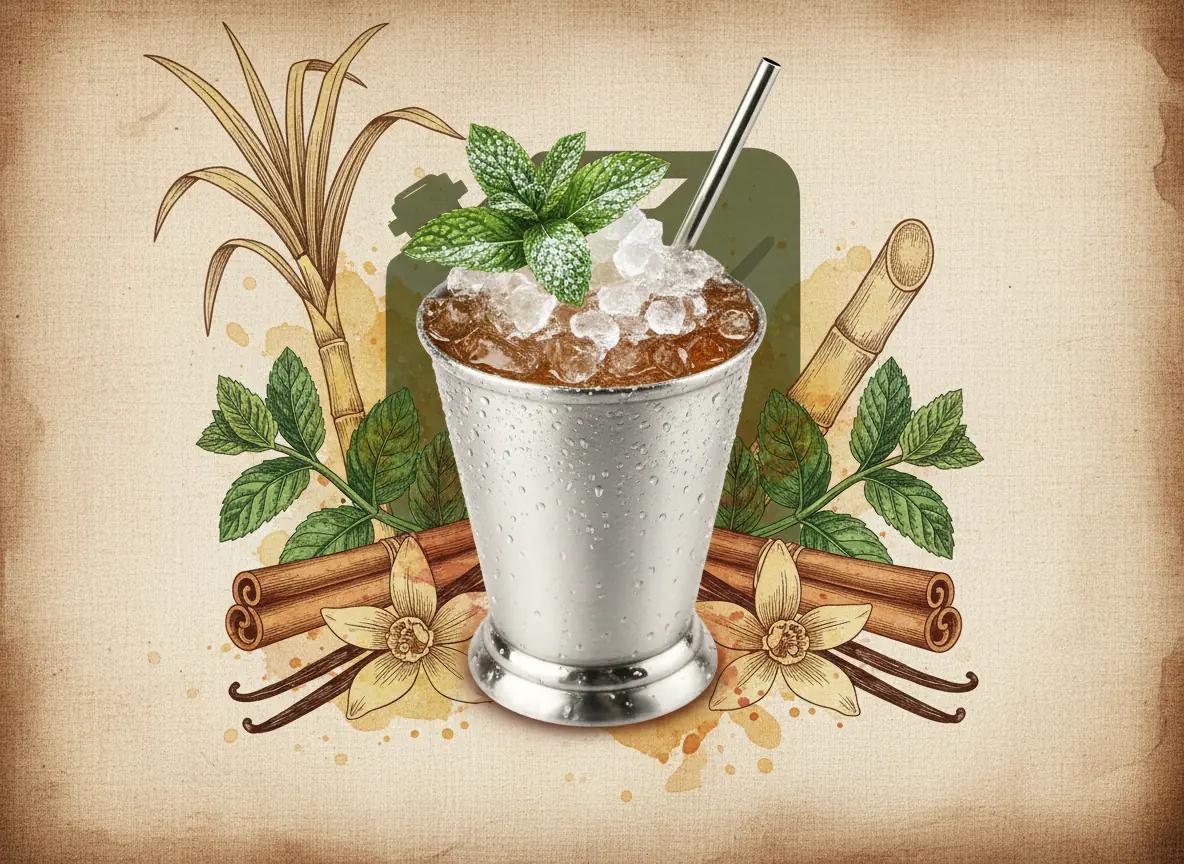
Jerry Can Julep
The Jerry Can Julep is 60ml of Expedition Spiced Rum, eight to ten fresh mint leaves pressed lightly with 10ml of simple syrup, and a dash of Angostura over a glass packed with crushed ice, finished with a mint bouquet and, if you like, an expressed orange peel. About 2.4 UK units. It is our julep. The Mint Julep is usually bourbon, but the format is older and looser than that, and the Oxford Companion describes nineteenth-century juleps made with French brandy, peach brandy, wines and Dutch gin as well as whisky. Spirit, sugar, mint and a great deal of crushed ice is all it asks. Expedition Spiced Rum suits it because its vanilla and cinnamon are warm where mint is cool. The syrup stays at 10ml because the rum brings sweetness of its own, and the Angostura goes on top of the ice, where it meets the mint at the nose.
Glassware: Julep Cup
Garnish: Mint bouquet and Orange peel (optional)
Ingredients
60ml
Expedition Spiced Rum, at 40% ABV, carries seven real spices, two natural sweeteners, and bourbon oak. It stands in for bourbon, and its vanilla and cinnamon give the cool mint something warm to work against.
8 to 10 leaves
Fresh mint, the leaves picked off the stem just before use. Press them once or twice with the syrup to bruise them; ground or torn leaves turn bitter.
10ml
Sugar and warm water, 1:1 by weight. 10ml is deliberately modest: the rum carries sweetness of its own, and more syrup flattens the mint.
1 dash
One dash over the top of the crushed ice, not muddled in. It sits at the surface with the mint. Angostura’s own page gives its palate as a bouquet of fruits, spices and herbs, which sit alongside the spice already in the rum.
Instructions
Place fresh mint leaves and sugar syrup in the base of a julep tin or rocks glass.
Gently press the mint with a muddler or bar spoon once or twice to release the aromatic oils. Do not crush or grind. The mint should bruise, not disintegrate.
Add the Expedition Spiced Rum and stir briefly to combine with the mint and sugar.
Pack the glass firmly with crushed ice, filling to just above the rim.
Add a single dash of Angostura bitters directly over the top of the crushed ice.
Place a generous mint bouquet into the crushed ice at the rim so it stands upright.
If using, express an orange peel over the build and rest it alongside the mint.
Serve immediately with a short straw positioned so the nose sits close to the mint garnish.
Our version
The Mint Julep is bourbon, mint, sugar and crushed ice. Ours swaps the bourbon for 60ml of Expedition Spiced Rum, sweetens it with a modest 10ml of simple syrup because the rum brings its own sweetness, and adds a dash of Angostura over the ice.
Source: our own specification. Last checked 9 October 2026.
Expert Tip
Bruise the mint; never grind it. One or two gentle presses release the oils held near the outside of the leaf; tearing it releases the bitter, grassy taste underneath, and no syrup covers that. Pack the crushed ice hard and mound it over the rim. It keeps a slow drink cold, holds the bouquet upright and gives the Angostura a surface to sit on. Loose ice slumps within minutes. Use a short straw and set it beside the mint bouquet. A julep is drunk with the nose in the mint, and a long straw keeps your face away from it.
Behind the Jerry Can Julep
Flavour Profile
The Format
The Oxford Companion, in an entry by David Wondrich, traces the name to gûl-ab, the Persian for rosewater, and says British juleps were medicinal mixtures of water and an infused syrup. The Companion dates the American drink to a Virginia newspaper poem of January 1770, says a Philadelphia ode of 1787 defined it as water, sugar, rum and mint, and has ice first attested in Virginia in 1807.
The Oxford Companion says that by the 1820s juleps were made with French brandy, peach brandy, wines and Dutch gin, that in 1862 Jerry Thomas still gave the name Mint Julep to the brandy version, and that from the 1870s it came to mean a whisky drink. The Companion adds that in 1938 Churchill Downs named the bourbon Mint Julep its official drink. The shape stayed simple throughout: spirit, sugar, mint and crushed ice, drunk slowly.
Why Spiced Rum
Mint is cool and sharp; Expedition Spiced Rum is warm. Its vanilla and cinnamon sit on the other side of the palate from the mint, so the two stay distinct instead of blurring. The bourbon oak gives the rum enough weight that a glass of crushed ice and mint does not drink thin.
The Angostura Decision
One dash of Angostura separates this from a plain rum and mint build. It works as seasoning, as it does in an Old Fashioned: Angostura’s own page gives its palate as a bouquet of fruits, spices and herbs, which sit alongside the spice already in the rum, so it ties spirit and sugar together without adding anything foreign.
Three Mint Drinks
The Jerry Can Julep beside the Mint Julep and the Rum Smash; the Mint Julep row is the IBA’s specification
Jerry Can Julep (ours)
- Spirit
- 60ml Expedition Spiced Rum
- Mint
- 8 to 10 leaves, pressed
- Sweetener
- 10ml simple syrup
- Citrus
- None
- Bitters
- One dash Angostura
- UK units
- About 2.4
Mint Julep
- Spirit
- 60ml bourbon
- Mint
- Four sprigs
- Sweetener
- One teaspoon powdered sugar, two of water
- Citrus
- None
- Bitters
- None
- UK units
- About 2.4
Rum Smash
- Spirit
- 60ml spiced rum
- Mint
- 8 leaves, pressed after the lemon
- Sweetener
- 15ml demerara syrup
- Citrus
- Three lemon wedges, muddled
- Bitters
- None
- UK units
- About 2.4
| Drink | Spirit | Mint | Sweetener | Citrus | Bitters | UK units |
|---|---|---|---|---|---|---|
| Jerry Can Julep (ours) | 60ml Expedition Spiced Rum | 8 to 10 leaves, pressed | 10ml simple syrup | None | One dash Angostura | About 2.4 |
| Mint Julep | 60ml bourbon | Four sprigs | One teaspoon powdered sugar, two of water | None | None | About 2.4 |
| Rum Smash | 60ml spiced rum | 8 leaves, pressed after the lemon | 15ml demerara syrup | Three lemon wedges, muddled | None | About 2.4 |
The bourbon original is the Mint Julep; with lemon muddled in, the same rum makes a Rum Smash.
How to Serve It
In a julep tin or rocks glass packed hard with crushed ice, a dash of Angostura on the ice, a generous mint bouquet standing upright and an expressed orange peel beside it if you want one, with a short straw close to the mint. It is a drink to take slowly, and the crushed ice keeps it cold while you do.
Make it at home
The Spirit
Jerry Can Spirits Expedition Spiced RumA spiced rum built for balance. Madagascan vanilla leads, with Ceylon cinnamon, ginger and cassia through the middle and bourbon oak on the finish. 40% ABV, designed to work neat, over ice, and across classic and modern cocktails.
Need the Rum?
Pick up a bottle of Expedition Spiced Rum to make this cocktail.
More to explore
Frequently Asked Questions
What is a Jerry Can Julep?
How does it differ from a Mint Julep?
Why dash the Angostura on top rather than muddle it in?
How strong is a Jerry Can Julep?
What is a mint bouquet?
Julep tin or rocks glass?
Sources.
Correct as of 19 October 2026.
- The Oxford Companion to Spirits and Cocktails (David Wondrich), “The julep” (secondary source: julep from the Persian gûl-ab (rosewater); a Virginia poem of 1770 and a 1787 ode; ice attested in 1807; brandy, peach brandy, wines and Dutch gin by the 1820s; Thomas’s 1862 Mint Julep is brandy; from the 1870s a whisky drink; Churchill Downs named the bourbon Mint Julep its official drink in 1938).
- IBA, “Mint Julep” (official specification: 60ml bourbon, four mint sprigs, 1 tsp powdered sugar, 2 tsp water).
- House of Angostura, “Aromatic bitters” (maker’s own page: aromatic taste with a bouquet of fruits, spices and herbs; nose, aromatic bouquet of herbs, fruits and spices).
- DrinkSupermarket, “Angostura Aromatic Bitters 20cl” (UK retailer listing: 44.7% ABV).
You Might Also Like
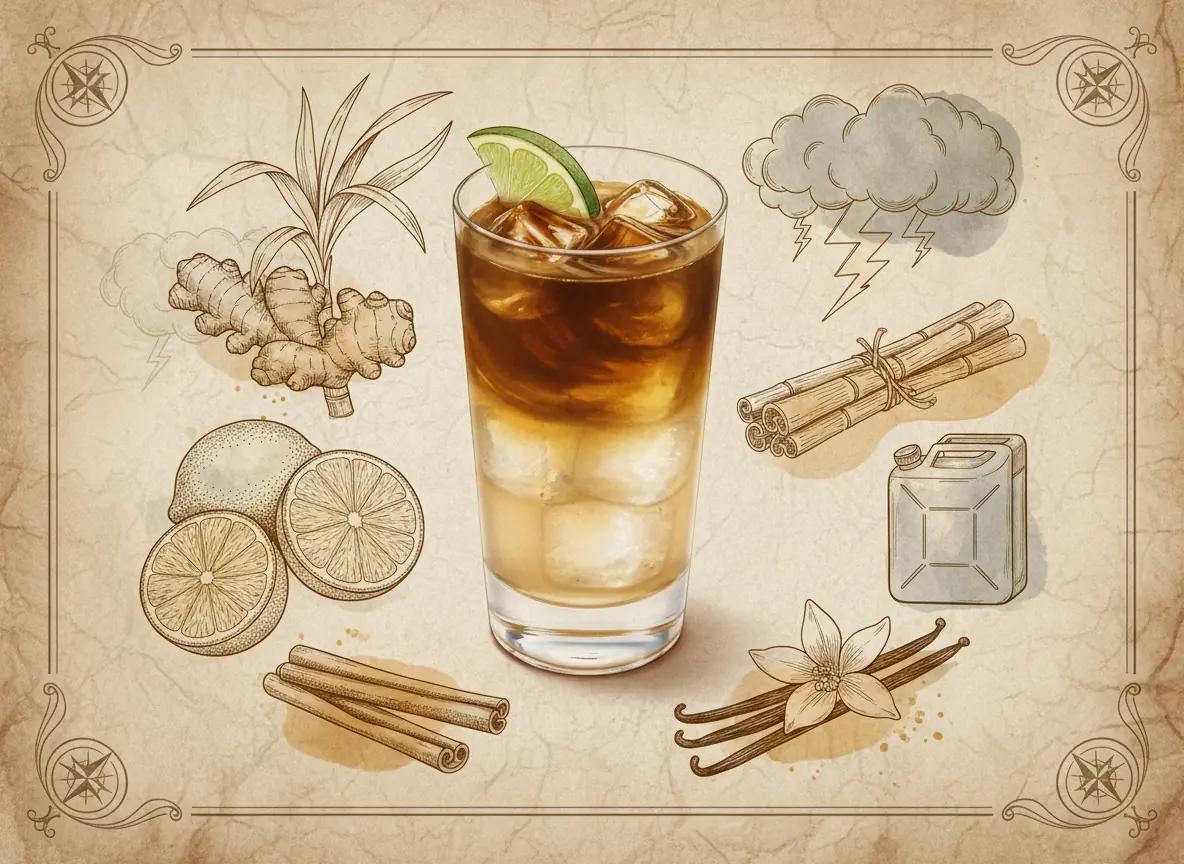
Storm & Spice
Storm & Spice is 50ml of Expedition Spiced Rum floated over 150ml of ginger beer and 15ml of fresh lime juice in a highball full of cubed ice, with two dashes of Angostura on top, a lime wedge and crystallised ginger. About 2.0 UK units from the rum at 40% ABV; the bitters add less than 0.1. It is our spiced-rum answer to the Dark ’n’ Stormy, the Bermudian highball of black rum and ginger beer. Gosling’s own site writes the name Dark ‘n Stormy® with the registered symbol and calls Black Seal Rum its essential ingredient, so this is a different drink on the same frame. A black rum brings weight and dark sugar. Expedition Spiced Rum brings vanilla, cinnamon and clove, which gives the ginger more to catch hold of. The build is the point. Ginger beer goes in first, then the rum is poured slowly over the back of a spoon so it sits dark over the pale ginger. Left layered, the first sips lead with rum. Stirred, the two run together.
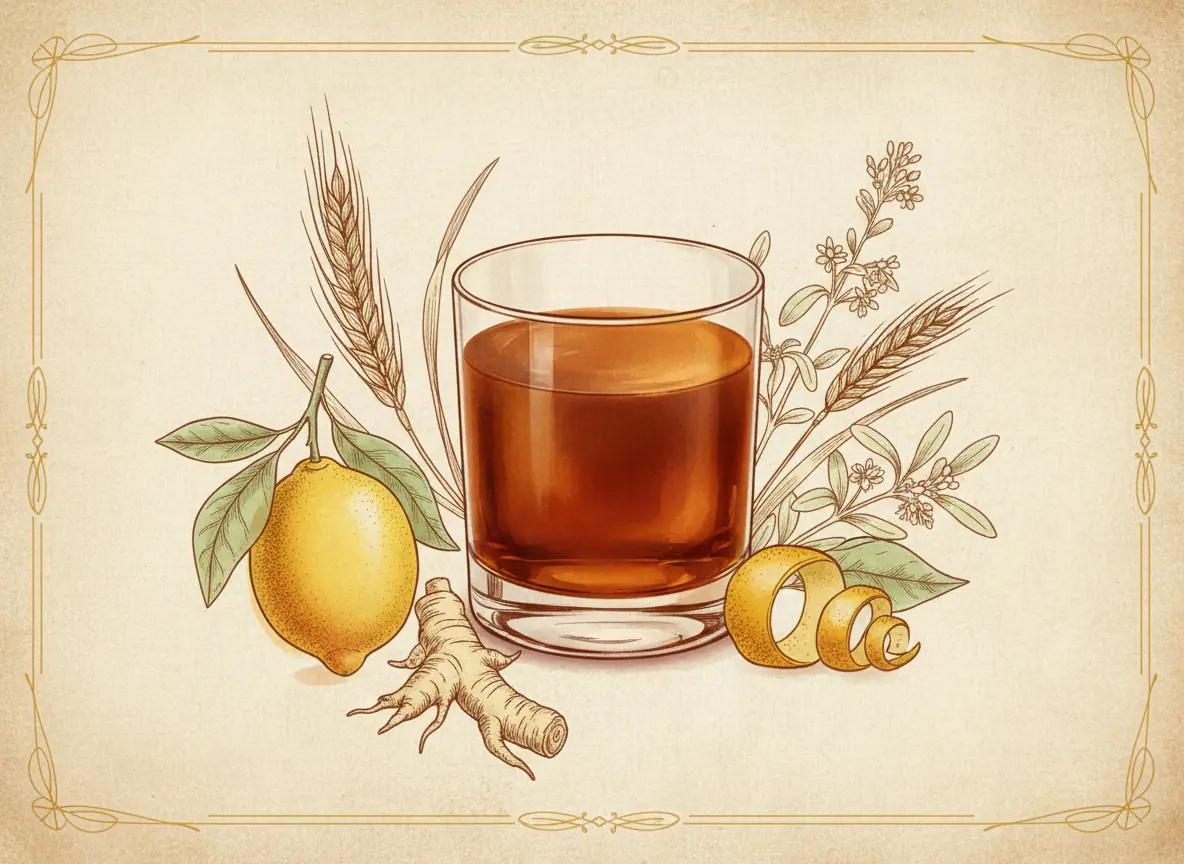
Sazerac
The IBA’s Sazerac is 50ml of cognac stirred with a sugar cube and two dashes of Peychaud’s bitters, then strained, with no ice, into a chilled rocks glass rinsed with absinthe, and finished with lemon zest. About 2.1 UK units. New Orleans more often makes it with rye whiskey. The Sazerac Company’s own history places Aaron Bird at the Sazerac House beside the Merchants Exchange from 1852 and dates the switch to rye to 1885. The Oxford Companion says the Sazerac cocktail was first mentioned in print only in 1899, and that the company’s account, which follows the historian Stanley Clisby Arthur, is undercut by numerous errors. The absinthe never goes into the mixing glass. It coats the glass and is poured away, leaving anise on the nose of every sip.
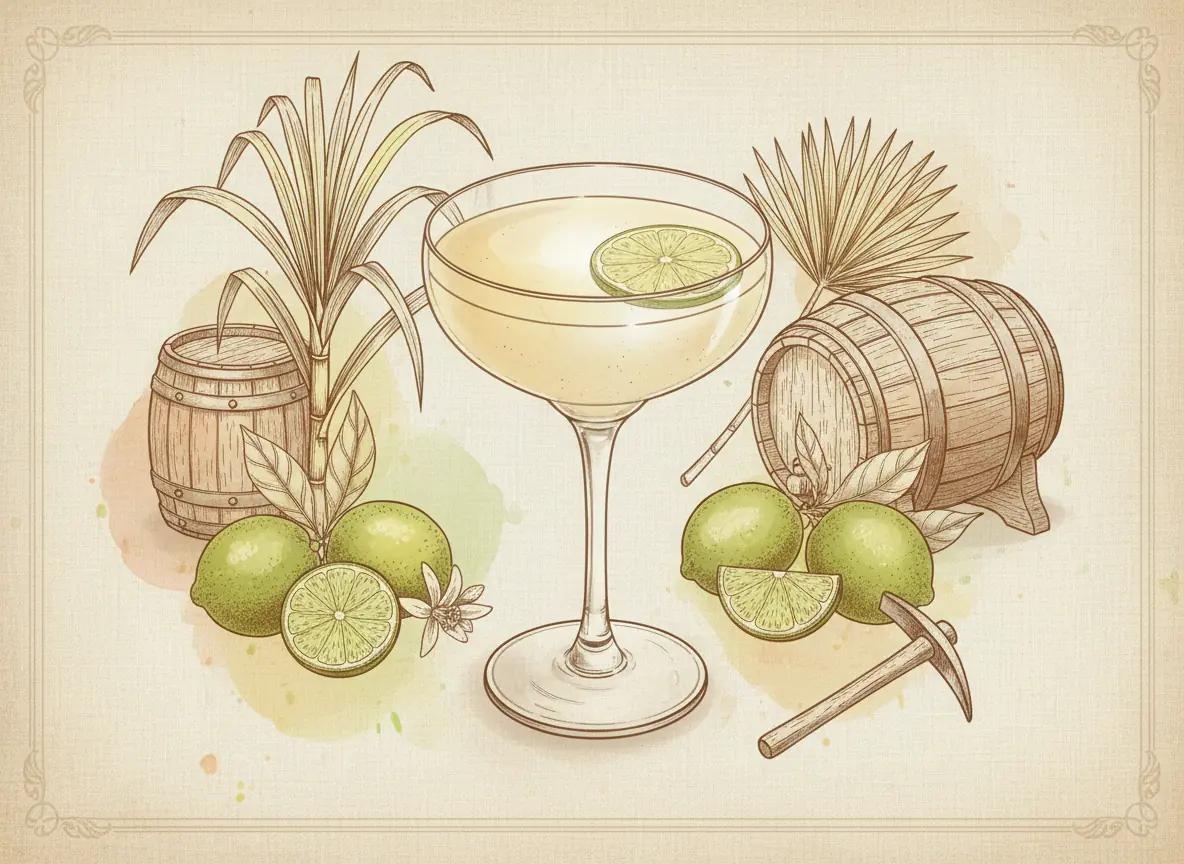
Daiquiri
A Daiquiri is 60ml white rum, 20ml fresh lime juice and two bar spoons of caster sugar. Stir the sugar into the rum and lime in the shaker until it dissolves, then add ice, shake hard for 10 to 12 seconds and double strain into a chilled coupe. About 2.4 UK units. Those are the IBA’s measures, and its method dissolves the sugar first too. The name belongs to Daiquirí, an iron-mining district and beach near Santiago de Cuba. Difford’s Guide credits Jennings Stockton Cox, an American engineer who led one of the first mining parties into Cuba’s iron-ore country after the Spanish-American War of 1898; the Oxford Companion has him making or supervising the first Daiquiri in 1896, and a Santiago bartender naming it in 1908. Difford’s says Constantino Ribalaigua Vert of Havana’s El Floridita made the frozen version famous. With three ingredients and no liqueur or bitters, the Daiquiri hides nothing. A flat rum, tired lime or undissolved sugar shows in the first sip.
Where this one sits
Recipe by Dan Freeman · Updated 19 October 2026