Jasmine
A Jasmine is 45ml of London Dry gin, 22.5ml of fresh lemon juice, 7.5ml of Cointreau or another triple sec and 7.5ml of Campari, shaken hard and double strained into a chilled coupe with a lemon twist. About 2.3 UK units. It is pale pink, sharp and lightly bitter, and most people who taste it say grapefruit. Punch, a secondary source, says Paul Harrington made it in 1993 at Townhouse, a restaurant in Emeryville, California, for his friend Matt Jasmin, and misspelled the name. He started from the Pegu Club, used Campari in place of its Angostura and lemon in place of its lime. Punch says his 1998 book, Cocktail: The Drinks Bible for the 21st Century, launched it beyond the San Francisco area. The measures are Harrington’s, as Punch publishes them: a quarter of an ounce, about 7.5ml, each of Cointreau and Campari. Two small measures of orange liqueur and bitter liqueur against the lemon are what make the drink read as grapefruit.
Glassware: Coupe Glass
Garnish: Lemon twist
Ingredients
45ml
A London Dry at 40% ABV or a little more. It is half the drink and wants clear juniper; a loud floral gin blurs the grapefruit effect.
7.5ml
At 25% ABV on an LWC listing, and one of the two smallest measures in the glass. It brings the bitterness and the pink. Pour more and it stops reading as fruit and starts reading as Campari.
7.5ml
Harrington used Cointreau, at 40% ABV on Cointreau’s own nutrition page, and a quarter-ounce of it, in the recipe Punch publishes. A dry triple sec of the same strength works; a sweet, weak one blurs the orange.
22.5ml
Squeezed the same day. It is the sharpest thing in the glass, and the reason the drink tastes of grapefruit rather than orange.
Instructions
Chill a coupe.
Add the gin, lemon juice, triple sec and Campari to a shaker.
Fill with ice and shake hard for 10 to 12 seconds.
Double strain into the chilled coupe.
Express a lemon twist over the surface and drop it in.
Source: its creator's published specification (Paul Harrington, Cocktail: The Drinks Bible for the 21st Century, with Laura Moorhead, 1998; measures as PUNCH publishes them; shake time and double strain ours). Last checked 10 October 2026.
Expert Tip
Measure the Campari. At 7.5ml it reads as grapefruit pith. At twice that it reads as Campari, and the drink becomes a gin sour with a bitter liqueur in it. Use a jigger, not a pour spout. Use Cointreau, which Cointreau’s own nutrition page gives at 40% ABV, or a dry triple sec of the same strength. A cheap, sticky triple sec adds sugar and little orange, and the grapefruit impression needs the orange more than the sugar. Shake hard for 10 to 12 seconds and double strain. The drink is pale and clear, and ice chips on the surface dull both the colour and the first sip.
Behind the Jasmine
Flavour Profile
The Origin
Punch says Paul Harrington created the Jasmine in 1993 at Townhouse, a restaurant in Emeryville across the bay from San Francisco, when his friend Matt Jasmin asked for something Harrington had never made before. Harrington started from the Pegu Club, swapped its Angostura for Campari and its lime for lemon, and named the result after his friend, with an extra e he did not notice for years.
Punch says he collaborated with Wired’s editors on a series of cocktail columns, CocktailTime.com, for the magazine’s new website, and that in 1998 the columns were collected in Cocktail: The Drinks Bible for the 21st Century, a collaboration with the Wired editor Laura Moorhead. The Jasmine was in it, and the book fell into the hands of dozens of striving bartenders, Punch reports.
The Grapefruit Trick
There is no grapefruit in the glass. Campari brings bitter orange and pith, Cointreau brings sweet orange peel, and lemon brings sharp acid. Together they land close enough to pink grapefruit that most people name the fruit before anyone tells them the recipe.
The effect depends on proportion. Push the Campari and it reads as Campari. Leave out the triple sec and the drink turns lean and sour, with nothing to round the pith.
Harrington’s Measures and Ours
Harrington’s Jasmine beside ours
Gin
- Harrington
- 1½oz (45ml)
- Ours
- 45ml
Fresh lemon juice
- Harrington
- ¾oz (22.5ml)
- Ours
- 22.5ml
Cointreau
- Harrington
- ¼oz (7.5ml)
- Ours
- 7.5ml
Campari
- Harrington
- ¼oz (7.5ml)
- Ours
- 7.5ml
Method
- Harrington
- Shaken, strained into a chilled cocktail glass
- Ours
- Shaken hard 10 to 12 seconds, double strained into a chilled coupe
Garnish
- Harrington
- Lemon twist
- Ours
- Lemon twist
UK units
- Harrington
- About 2.3
- Ours
- About 2.3
| Element | Harrington | Ours |
|---|---|---|
| Gin | 1½oz (45ml) | 45ml |
| Fresh lemon juice | ¾oz (22.5ml) | 22.5ml |
| Cointreau | ¼oz (7.5ml) | 7.5ml |
| Campari | ¼oz (7.5ml) | 7.5ml |
| Method | Shaken, strained into a chilled cocktail glass | Shaken hard 10 to 12 seconds, double strained into a chilled coupe |
| Garnish | Lemon twist | Lemon twist |
| UK units | About 2.3 | About 2.3 |
A Gentle Start on Campari
At 7.5ml, Campari arrives as fruit rather than as bitterness. That makes the Jasmine a fair first step for someone who has given up on the Negroni, where, in the IBA’s specification, Campari is a full third of the glass.
For the same flavour from real fruit, the Old Friend pours grapefruit juice and lets Campari season it; the Enzoni puts grapes and Campari together in a sour.
How to Serve It
Up, cold and pale pink in a chilled coupe, with the lemon twist expressed over the top. The oil sharpens the citrus on the nose before the first sip.
Make it at home
The Spirit
GinGin is a spirit flavoured with juniper berries. Under the retained Regulation (EC) 110/2008, juniper must lead the taste, the floor is 37.5% ABV, and the route the flavour takes sets the grade: plain gin, distilled gin or London gin. Our recipes count it at 40%, and it carries the Martini, the Negroni and the Gin and Tonic.
Master the Techniques
More to explore
Frequently Asked Questions
What is in a Jasmine?
Who created the Jasmine?
Why does the Jasmine taste of grapefruit?
Is the Jasmine very bitter?
How is it related to the Pegu Club?
Can I use more Campari?
How strong is a Jasmine?
Sources.
Correct as of 18 October 2026.
- Punch, “How the Jasmine Became a Modern Classic” (secondary source: created on a whim in 1993 at Townhouse, Emeryville, for Matt Jasmin; name misspelled; Pegu Club with Campari for the bitters and lemon for lime; a regular said “You’ve invented grapefruit juice”; the 1998 book Cocktail: The Drinks Bible for the 21st Century with Laura Moorhead launched it beyond the San Francisco area).
- Punch, “Jasmine” (secondary source, Harrington’s recipe: 1½ ounces gin, ¾ ounce lemon, ¼ ounce Cointreau, ¼ ounce Campari).
- Cointreau, “Nutritional information” (maker’s page: Cointreau 40% alcohol per volume).
- LWC, “Campari 70cl” (UK wholesaler listing: 25% ABV).
- IBA, “Negroni” (official specification: 30ml gin, 30ml Campari, 30ml sweet red vermouth).
You Might Also Like
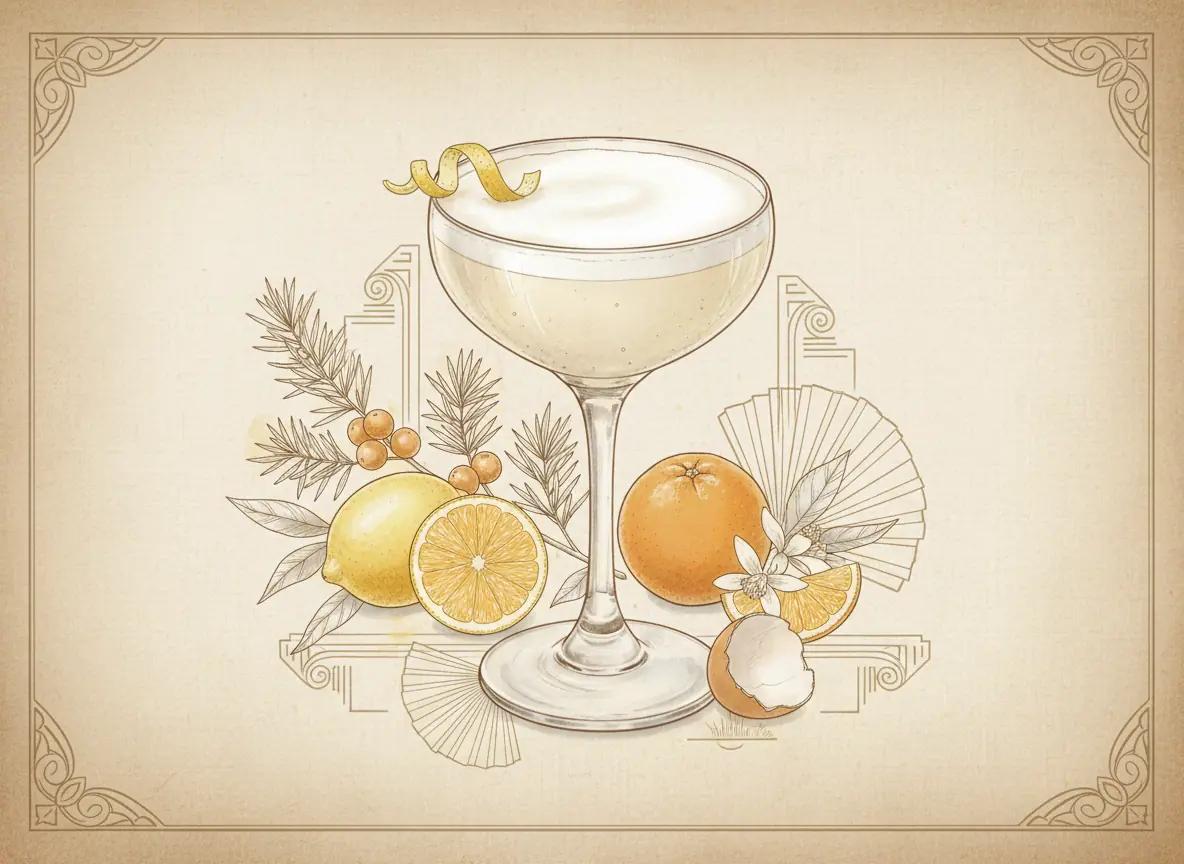
White Lady
A White Lady is 40ml of London Dry gin, 30ml of Cointreau and 20ml of fresh lemon juice, shaken hard with ice for 10 to 12 seconds and double strained into a chilled coupe, with lemon peel expressed over the top. About 2.8 UK units. Those are the IBA’s measures, and there is no egg white in them. The name is older than the recipe. Difford’s Guide, a secondary source, says Harry MacElhone gave it in 1919, at Ciro’s Club in London, to a drink of brandy, crème de menthe and Cointreau. The gin, Cointreau and lemon version is credited to his rebuild at Harry’s New York Bar in Paris in 1929, though Difford’s says most dispute that, and The Savoy Cocktail Book printed it in 1930, also without egg. Egg white came later: Difford’s Guide finds the earliest recipe with it in The Sacramento Bee of 1936. It makes a softer, foamed drink, given here as a variation. The plain version is sharp and dry, the gin in front and the orange behind it.
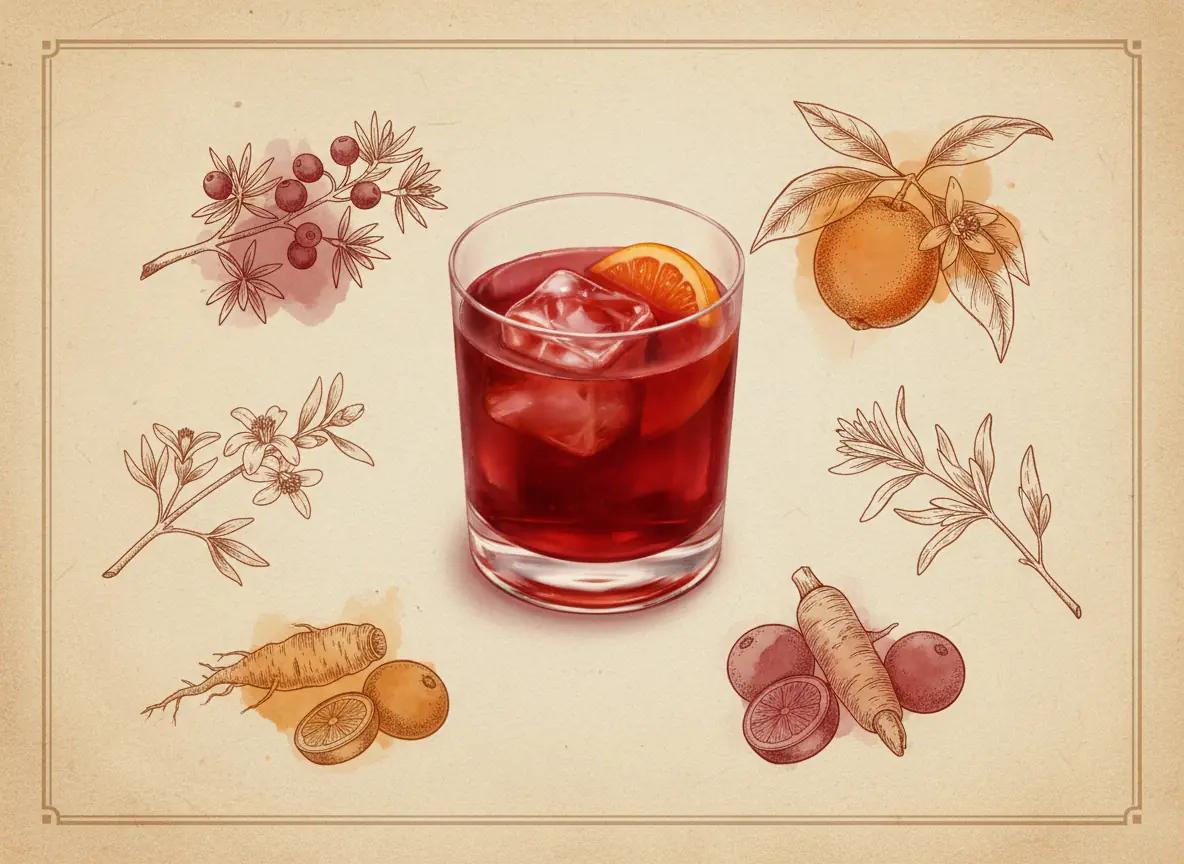
Negroni
A Negroni is 30ml each of gin, Campari and sweet vermouth, stirred with ice for 20 to 30 seconds and strained over fresh ice in a rocks glass, with an orange peel expressed over the top. About 2.4 UK units. The measures are the IBA’s; the IBA builds the drink in the glass and garnishes it with half an orange slice. Difford’s Guide gives the most widely reported account: Florence in 1919, at the Casoni Bar, where the bartender Fosco Scarselli is said to have replaced the soda in Count Camillo Negroni’s Americano with gin. The Oxford Companion has the drink named in a surviving letter of October 1920 and then absent under that name until 1947. A French book of 1929 by Alimbau and Milhorat, in the Internet Archive’s scan, gives equal parts of the three as the Campari Mixte. Each third has a job. Gin gives strength and juniper, the red bitter gives bitterness and orange, and the vermouth gives body and sugar. With no juice or soda in the glass, a tired vermouth shows at once.
White Negroni
A White Negroni is 45ml of London Dry gin, 30ml of Lillet Blanc and 20ml of Suze, stirred over one large cube in a rocks glass for 20 to 30 seconds, with a lemon twist expressed over the top and dropped in. About 2.7 UK units. Punch reports that Wayne Collins, a London bartender, made the first ones on a hot summer night in 2001 near Bordeaux, where he and Nick Blacknell, then director of Plymouth Gin, were in town for Vinexpo. Rummaging in a local liquor store for the ingredients, they bought French bottles instead, Punch says: Suze for the bitter, Lillet Blanc for the wine. Collins chose the name, he told Punch, because it would be easy to communicate to the trade. The shape survives and every flavour moves. Suze is bitter from gentian root, earthy where Campari is orange peel, and Lillet is lighter and more honeyed than sweet vermouth. Suze is also the louder of the two bitters, which is why ours trims it to 20ml rather than pouring three equal measures.
Where this one sits
Recipe by Jerry Can Spirits · Updated 18 October 2026