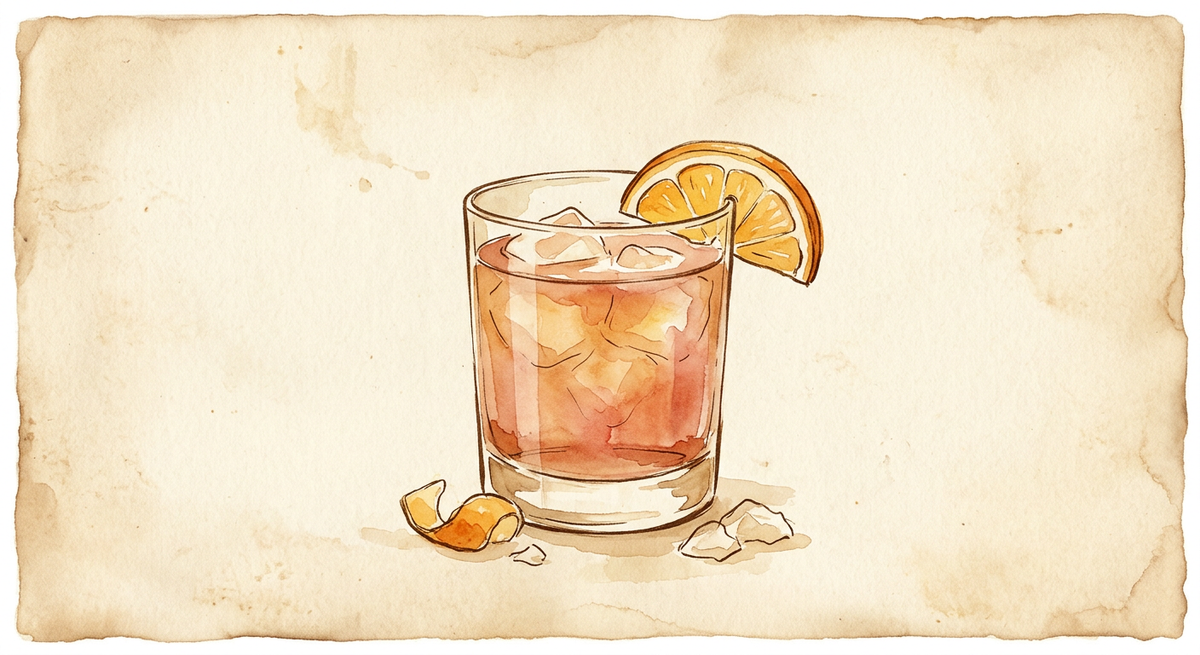
Knickerbocker
A Knickerbocker is 60ml of aged rum, 20ml of fresh lime juice, 15ml of raspberry syrup and 5ml of orange curaçao, shaken hard for 10 to 12 seconds and strained over fresh ice in a rocks glass, dressed with berries and an orange slice. About 2.6 UK units. Jerry Thomas printed it in 1862 among his fancy drinks: half a lime or lemon, juice and rind in the glass, two teaspoons of raspberry syrup, a wine-glass of Santa Cruz rum and half a teaspoon of curaçao, shaken with shaved ice and ornamented with berries in season. The scan names no inventor. The name points to New York: the Oxford Companion says Knickerbocker is a nickname for a New Yorker, and that the drink’s first known appearance is in 1843, on Peter Brigham’s list of drinks at the Concert Hall in Boston. The raspberry syrup is the only sweetener. Fifteen millilitres against 20ml of lime keeps the drink dry, with the berry as flavour rather than sugar, and the curaçao seasons it with bitter orange.
Glassware: Rocks Glass
Garnish: Berries in season and Orange slice
Ingredients
60ml
Thomas named Santa Cruz rum, from St Croix. A lightly aged Caribbean rum at 40% ABV stands in for it today, with enough body to carry the fruit without burying it.
15ml
The only sweetener in the drink. A syrup made from fresh raspberries tastes of the fruit; many bought ones taste mostly of sugar. Thomas used two teaspoons; ours is 15ml.
20ml
Squeezed the same day. Thomas’s 1862 recipe, in the Internet Archive’s scan, allows lime or lemon and puts the squeezed rind in the glass as well.
5ml
A dry orange curaçao at around 40% ABV. A barspoon seasons the drink; more turns it into an orange sour.
Instructions
Squeeze the lime juice the same day.
Add the rum, lime juice, raspberry syrup and curaçao to a shaker.
Fill with cubed ice and shake hard for 10 to 12 seconds.
Strain into a rocks glass over fresh ice.
Dress the glass with berries and an orange slice.
Our version
Jerry Thomas’s 1862 recipe uses half a lime or lemon, two teaspoons of raspberry syrup, a wine-glass of Santa Cruz rum and half a teaspoon of curaçao over shaved ice. Ours measures it as 60ml aged rum, 20ml lime, 15ml syrup and 5ml curaçao, strained over fresh cubes.
Source: our own specification. Last checked 10 October 2026.
Expert Tip
Taste the raspberry syrup before you measure it. It is the only sweetener, and syrups vary a great deal. Thomas’s own advice still holds: if the drink is not sweet enough, add a little more syrup. Keep the curaçao to a barspoon, 5ml. Thomas used half a teaspoon. Much more and the orange takes the lead from the raspberry. Strain onto fresh ice, not the cubes you shook with. Shaken ice is broken and melts fast, and a drink with this little sugar turns thin quickly once it is watered down.
Behind the Knickerbocker
Flavour Profile
Where It Comes From
Jerry Thomas printed the Knickerbocker in 1862 among his fancy drinks, the kind built from spirit, fruit syrup and juice over ice. The Internet Archive’s scan of the book names no inventor.
The name places it in New York. The Oxford Companion says Knickerbocker is a nickname for a New Yorker and that the drink first appears in 1843, on Peter Brigham’s list at the Concert Hall in Boston, with Jerry Thomas publishing the first recipe in 1862. Washington Irving’s Knickerbocker’s History of New York, which the Project Gutenberg edition dates to December 1809, was written as by Diedrich Knickerbocker and treats local follies with good-humoured satire.
Thomas’s Recipe and Ours
The Knickerbocker as the Internet Archive’s scan of the 1862 book gives it, and ours
Rum
- Thomas, 1862
- One wine-glass of Santa Cruz rum
- Ours
- 60ml aged rum
Citrus
- Thomas, 1862
- Half a lime or lemon, juice and rind in the glass
- Ours
- 20ml fresh lime juice
Raspberry syrup
- Thomas, 1862
- Two teaspoons, more to taste
- Ours
- 15ml
Curaçao
- Thomas, 1862
- Half a teaspoon
- Ours
- 5ml
Ice and method
- Thomas, 1862
- Shaved ice, shaken in the glass
- Ours
- Shaken hard, strained over fresh cubes
Garnish
- Thomas, 1862
- Berries in season
- Ours
- Berries and an orange slice
UK units
- Thomas, 1862
- Depends on the wine-glass
- Ours
- About 2.6
| Element | Thomas, 1862 | Ours |
|---|---|---|
| Rum | One wine-glass of Santa Cruz rum | 60ml aged rum |
| Citrus | Half a lime or lemon, juice and rind in the glass | 20ml fresh lime juice |
| Raspberry syrup | Two teaspoons, more to taste | 15ml |
| Curaçao | Half a teaspoon | 5ml |
| Ice and method | Shaved ice, shaken in the glass | Shaken hard, strained over fresh cubes |
| Garnish | Berries in season | Berries and an orange slice |
| UK units | Depends on the wine-glass | About 2.6 |
The Raspberry
The syrup does all the sweetening, which is why the drink tastes of fruit rather than sugar. The Clover Club uses raspberry the same way, with gin, lemon and egg white.
Make the syrup from fresh or frozen raspberries and sugar and it tastes of the berry. Many bought syrups taste of little but sugar, and with no other sweetener in the glass, that shows.
Dry by Design
A drink sweetened with fruit syrup sounds sweet. This one is not. Fifteen millilitres of syrup against 20ml of lime is a tight ratio, and with no other sugar the result is dry, with the berry sitting as flavour.
If you want it sweeter, Thomas’s note still applies: add a little more raspberry syrup and taste again.
How to Serve It
Over fresh ice in a rocks glass, with berries and an orange slice on top. It is a long, cold drink for an afternoon.
For rum and lime shaken with sugar and served up, make a Daiquiri; for raspberry syrup with gin, lemon and egg white, a Clover Club.
Make it at home
The Spirit
Aged RumAged rum is rum that has spent years in oak casks, usually ex-bourbon barrels, and taken on vanilla, caramel and dried fruit; our recipes count it at 40% ABV. In our recipes it is the rum for drinks where you should taste the spirit: the Old Cuban, the Mai Tai, the Rum Sour and the punch bowl.
Master the Techniques
More to explore
Frequently Asked Questions
What is a Knickerbocker cocktail?
Where does the Knickerbocker come from?
What was Jerry Thomas’s recipe?
Why is there no sugar in it?
What rum should I use?
Lemon or lime?
How strong is a Knickerbocker?
Sources.
Correct as of 19 October 2026.
- Jerry Thomas, 1862 (Internet Archive scan), “How to Mix Drinks, or The Bon-Vivant’s Companion” (primary source: 184. Knickerbocker (small bar glass): half a lime or lemon, juice and rind in the glass; 2 teaspoonfuls raspberry syrup; 1 wine-glass Santa Cruz rum; half a teaspoonful Curaçao; cool with shaved ice, shake up well, ornament with berries in season; a little more raspberry syrup if not sweet enough).
- Washington Irving, Project Gutenberg, “Knickerbocker’s History of New York, Complete” (primary source: published December 1809 as by Diedrich Knickerbocker; the introduction describes good-humoured satire of local follies).
- The Oxford Companion to Spirits and Cocktails (David Wondrich), “The Knickerbocker” (secondary source: Knickerbocker a nickname for a New Yorker; first known appearance 1843 on Peter Brigham’s list, Concert Hall, Boston; Jerry Thomas 1862, rum, orange curaçao, lime and raspberry syrup).
You Might Also Like
Daiquiri
A Daiquiri is 60ml white rum, 20ml fresh lime juice and two bar spoons of caster sugar. Stir the sugar into the rum and lime in the shaker until it dissolves, then add ice, shake hard for 10 to 12 seconds and double strain into a chilled coupe. About 2.4 UK units. Those are the IBA’s measures, and its method dissolves the sugar first too. The name belongs to Daiquirí, an iron-mining district and beach near Santiago de Cuba. Difford’s Guide credits Jennings Stockton Cox, an American engineer who led one of the first mining parties into Cuba’s iron-ore country after the Spanish-American War of 1898; the Oxford Companion has him making or supervising the first Daiquiri in 1896, and a Santiago bartender naming it in 1908. Difford’s says Constantino Ribalaigua Vert of Havana’s El Floridita made the frozen version famous. With three ingredients and no liqueur or bitters, the Daiquiri hides nothing. A flat rum, tired lime or undissolved sugar shows in the first sip.
Mai Tai
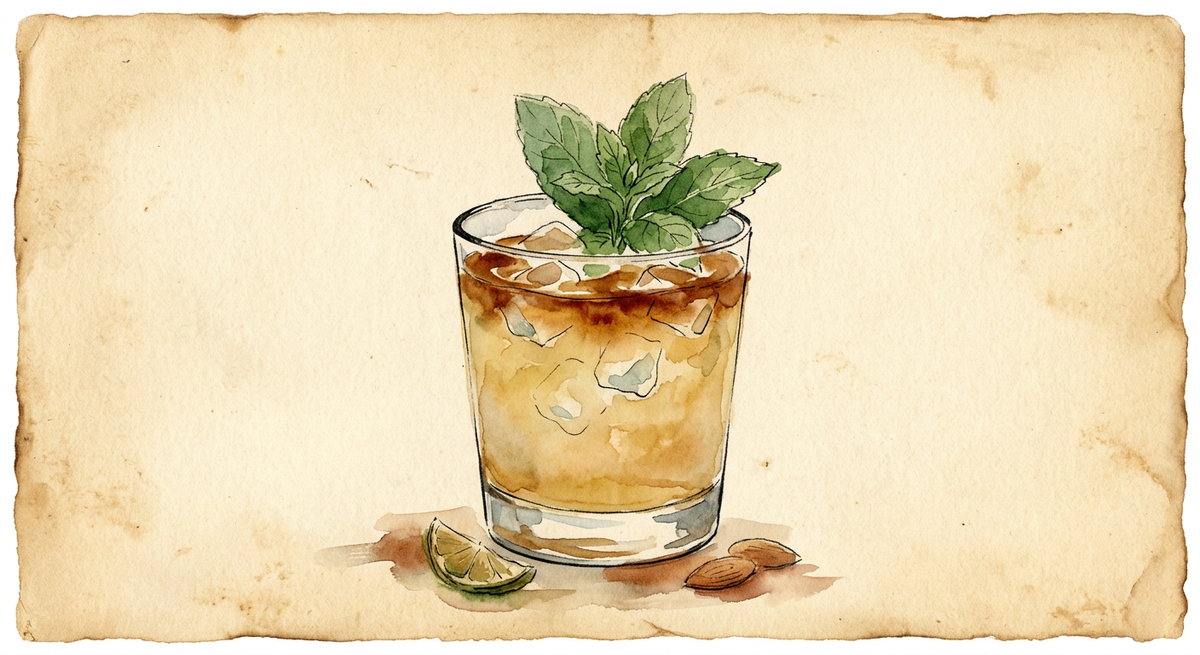
A Mai Tai is aged rum, lime, orange curaçao and orgeat: 30ml amber Jamaican rum, 30ml Martinique molasses rum, 30ml fresh lime juice, 15ml orange curaçao, 15ml orgeat and 7.5ml sugar syrup, shaken hard and strained over crushed ice in a double rocks glass, with a spent lime shell and a sprig of mint. This is the IBA specification. There is no pineapple or orange juice in it. Victor “Trader Vic” Bergeron said he created it in 1944 and gave the first two to friends from Tahiti, one of whom said “Mai tai roa ae”, which gave it the name, as Famous Hotels quotes him. The Oxford Companion places his restaurant in Oakland and adds that Donn Beach’s widow, Phoebe, wrote in 2002 that he made a Mai Tai in 1933, though the Companion finds good reason to doubt that Vic copied it. Orgeat is almond syrup, so the drink contains nuts. A glass holds about 3.0 UK units.
Clover Club
A Clover Club is 45ml of London Dry gin, 15ml of fresh lemon juice, 15ml of raspberry syrup and 15ml of egg white, dry shaken, shaken again hard with ice and double strained into a chilled coupe, with three raspberries on a pick. About 1.8 UK units. The egg white is raw, so leave it out for anyone allergic to egg. Those are the IBA’s measures, except the egg white: the IBA asks for a few drops, and 15ml, about half a white, gives the full foam this method builds. Difford’s Guide says the drink is named for a Philadelphia club founded on 29 January 1882 by prominent journalists, whose membership grew to include lawyers, bankers and businessmen, and the Oxford Companion says the drink was created as the club’s signature around the turn of the twentieth century. The Oxford Companion says the drink did not survive Prohibition, and that Julie Reiner’s Brooklyn bar Clover Club, which followed in 2008, brought it back as the house drink. Made with real raspberry syrup it is tart first and fruity second, with the foam softening both.
Where this one sits
Recipe by Jerry Can Spirits · Updated 19 October 2026