Clover Club
A Clover Club is 45ml of London Dry gin, 15ml of fresh lemon juice, 15ml of raspberry syrup and 15ml of egg white, dry shaken, shaken again hard with ice and double strained into a chilled coupe, with three raspberries on a pick. About 1.8 UK units. The egg white is raw, so leave it out for anyone allergic to egg. Those are the IBA’s measures, except the egg white: the IBA asks for a few drops, and 15ml, about half a white, gives the full foam this method builds. Difford’s Guide says the drink is named for a Philadelphia club founded on 29 January 1882 by prominent journalists, whose membership grew to include lawyers, bankers and businessmen, and the Oxford Companion says the drink was created as the club’s signature around the turn of the twentieth century. The Oxford Companion says the drink did not survive Prohibition, and that Julie Reiner’s Brooklyn bar Clover Club, which followed in 2008, brought it back as the house drink. Made with real raspberry syrup it is tart first and fruity second, with the foam softening both.
Glassware: Coupe Glass
Garnish: Raspberries on a pick
Ingredients
45ml
Around 40% ABV. The only spirit in the glass, and its juniper keeps a fruity drink from turning sweet.
15ml
Squeezed the same day. Fifteen millilitres is short for a sour, because the raspberry syrup brings its own tartness.
15ml
Made from fresh or frozen raspberries steeped in sugar and strained. Grenadine fills the same slot but tastes of pomegranate and turns the drink a deeper red.
15ml
About half a white; the IBA asks for a few drops. Raw. Following the FSA, British Lion-mark eggs are safe raw, including for vulnerable groups and in pregnancy; pasteurised carton white is the alternative. Eating out, where the mark cannot be checked, the FSA advises vulnerable people to have their eggs thoroughly cooked. Contains egg: leave it out, or use aquafaba, for anyone allergic.
3
Three on a pick across the rim; the IBA garnishes with fresh raspberries. Drawn through the foam between sips, they bring the berry aroma back.
Instructions
Squeeze the lemon juice the same day.
Chill a coupe.
Add the gin, lemon juice, raspberry syrup and egg white to a shaker.
Dry shake without ice for 10 to 15 seconds.
Add cubed ice and shake hard for 10 to 12 seconds.
Double strain into the chilled coupe and let the foam settle.
Lay three raspberries on a pick across the rim.
Source: the IBA (Official IBA specification; egg white measured at 15ml where the IBA asks for a few drops; dry shake and method ours). Last checked 9 October 2026.
Expert Tip
Dry shake first, for 10 to 15 seconds without ice. Egg white foams best while the drink is still warm; the second shake, hard with ice for 10 to 12 seconds, chills that foam and tightens it into a head that lasts. Taste the raspberry syrup before you pour. A real one, made from berries steeped in sugar, carries acidity as well as sweetness; a thin commercial cordial brings sugar alone and leaves the middle of the drink flat. Double strain, then give it about twenty seconds. The foam needs that long to separate cleanly from the pink liquid beneath it.
Behind the Clover Club
Flavour Profile
The Origin
Difford’s Guide says the Clover Club was founded on 29 January 1882 by a group of prominent Philadelphia journalists who, from January 1883 to January 1897, met each Thursday at the Hotel Bellevue, and that its membership grew to include lawyers, bankers and prominent businessmen. The Oxford Companion says the drink was created as the club’s signature around the turn of the twentieth century, that the first notice of it is from 1901, from Michael Killackey, head bartender at the Waldorf-Astoria, and that by 1910 it was ubiquitous.
Difford’s Guide credits David Wondrich with the first reference to a Clover Club cocktail, in the New York Press of 23 June 1901, as a recipe of egg white, lemon juice, raspberry syrup and Plymouth gin, frappé. It was a pink sour under a white head.
The Oxford Companion says Esquire named it one of the “ten worst cocktails” in 1934, and that it was more or less dead until Julie Reiner gave its name to her new Brooklyn bar in 2007 or 2008 and made it the house drink. Its entry on Reiner dates the bar to 2008.
The Dry Shake
Egg white foams best before it is cold. Shake it without ice first, for 10 to 15 seconds, and the proteins stretch and trap air; then add ice and shake hard for 10 to 12 seconds to chill the foam and set it. Reverse the order and the head comes out thin and is gone within a minute.
Raspberry Syrup
The syrup decides the drink. Steep fresh or frozen raspberries in sugar overnight and strain them, with no heat, and the syrup keeps the sharp top note that cooking drives off.
Grenadine fills the same slot and changes the drink: pomegranate is deeper, rounder and less tart, and the glass turns dark red rather than pink.
Bought raspberry syrups vary a good deal. Taste one before you pour it, and if it is sweet rather than sharp, the drink will want a little more lemon.
The Egg White
The IBA asks for a few drops of egg white, enough to soften the texture. We use 15ml, about half a white, because the dry shake turns that into a full head. The foam has no flavour of its own; it softens the lemon and holds the raspberry at the nose.
The Vermouth Question
Some versions of the Clover Club add 15ml of dry vermouth. The IBA’s does not, and that is the biggest difference between the drinks served under the name.
The vermouth gives the middle of the drink a dry, herbal edge, correcting the sweetness much as a dash of bitters would elsewhere. Without it the drink is leaner and more direct, and the gin does that work.
Ours Against the IBA
The Clover Club as the IBA writes it and as we make it
Gin
- IBA
- 45ml
- Ours
- 45ml London Dry
Raspberry syrup
- IBA
- 15ml
- Ours
- 15ml
Lemon juice
- IBA
- 15ml, fresh
- Ours
- 15ml, squeezed the same day
Egg white
- IBA
- A few drops
- Ours
- 15ml
Method
- IBA
- Shaken with ice
- Ours
- Dry shaken 10 to 15 seconds, then shaken with ice 10 to 12 seconds
Glass
- IBA
- Chilled cocktail glass
- Ours
- Chilled coupe
Garnish
- IBA
- Fresh raspberries
- Ours
- Three raspberries on a pick
UK units
- IBA
- About 1.8
- Ours
- About 1.8
| Element | IBA | Ours |
|---|---|---|
| Gin | 45ml | 45ml London Dry |
| Raspberry syrup | 15ml | 15ml |
| Lemon juice | 15ml, fresh | 15ml, squeezed the same day |
| Egg white | A few drops | 15ml |
| Method | Shaken with ice | Dry shaken 10 to 15 seconds, then shaken with ice 10 to 12 seconds |
| Glass | Chilled cocktail glass | Chilled coupe |
| Garnish | Fresh raspberries | Three raspberries on a pick |
| UK units | About 1.8 | About 1.8 |
For the plain sour underneath it, make a Gin Sour; for gin, egg white and apple brandy, a Pink Lady.
How to Serve It
Double strained into a chilled coupe, with three raspberries on a pick across the rim. Serve it straight away, while the head is dense and the glass still cold.
Make it at home
The Spirit
GinGin is a spirit flavoured with juniper berries. Under the retained Regulation (EC) 110/2008, juniper must lead the taste, the floor is 37.5% ABV, and the route the flavour takes sets the grade: plain gin, distilled gin or London gin. Our recipes count it at 40%, and it carries the Martini, the Negroni and the Gin and Tonic.
More to explore
Frequently Asked Questions
How much egg white goes in a Clover Club?
Is raw egg white in a cocktail safe?
Should there be dry vermouth in it?
Can I use fresh raspberries instead of syrup?
Why is it called the Clover Club?
How strong is a Clover Club?
Sources.
Correct as of 19 October 2026.
- Difford’s Guide, “Clover Club Cocktail” (secondary source: club founded 29 January 1882 by prominent Philadelphia journalists, met each Thursday at the Hotel Bellevue from January 1883 to January 1897, membership grew to lawyers, bankers and businessmen; first reference (Wondrich) New York Press, 23 June 1901 (white of one egg, juice of half a lemon, dash raspberry syrup, one drink Plymouth gin, frappé)).
- The Oxford Companion to Spirits and Cocktails (David Wondrich), “The Clover Club” (secondary source: created as the signature drink of the Philadelphia journalists’ club around the turn of the twentieth century; first notice 1901 (Michael Killackey, Waldorf-Astoria); ubiquitous by 1910; Esquire’s “ten worst cocktails” 1934; revived by Julie Reiner’s bar, 2007 or 2008).
- The Oxford Companion to Spirits and Cocktails (Lauren Viera), “Reiner, Julie” (secondary source: Clover Club in Brooklyn followed in 2008, winning Best New Cocktail Lounge in the World at Tales of the Cocktail the following year).
- NHS, “Foods to avoid in pregnancy” (official page: hen eggs with the British Lion stamp (or from the Laid in Britain scheme) can be eaten raw, partially cooked or well cooked, including in pregnancy; other hen eggs only well cooked).
You Might Also Like
Aviation
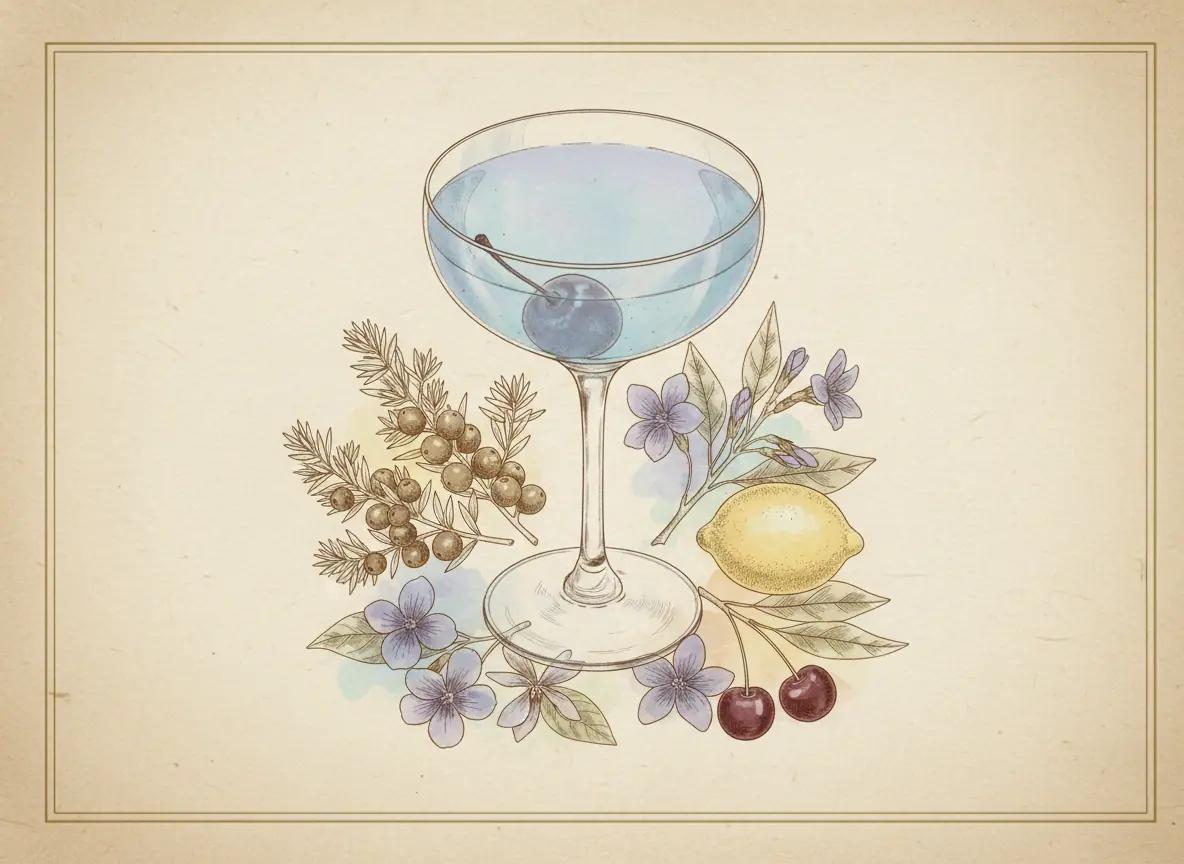
An Aviation is gin, maraschino, lemon and a little crème de violette: 45ml gin, 15ml maraschino liqueur, 15ml fresh lemon juice and one bar spoon of crème de violette, shaken hard and double strained into a chilled coupe, with a cherry dropped in. The measures are the International Bartenders Association’s. The violette gives the drink its pale blue-violet colour. Hugo Ensslin, bar manager at the Wallick Hotel in New York, published the original formula for the classic Aviation in his 1916 Recipes for Mixed Drinks, the Oxford Companion says. In 1930 the Savoy Cocktail Book printed it without the violette, and many bartenders followed that version. Keep the violette to a bar spoon: more turns the drink soapy and purple. A glass holds about 2.4 UK units.
White Lady
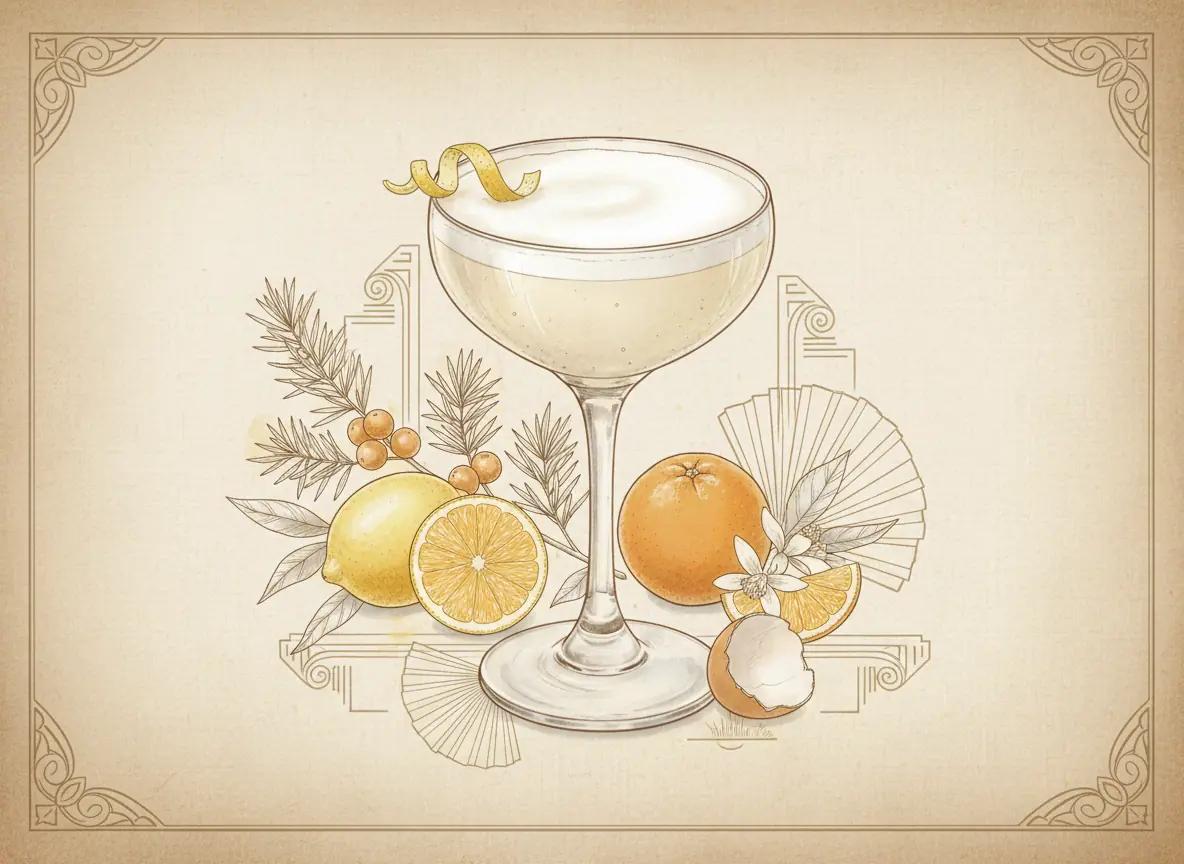
A White Lady is 40ml of London Dry gin, 30ml of Cointreau and 20ml of fresh lemon juice, shaken hard with ice for 10 to 12 seconds and double strained into a chilled coupe, with lemon peel expressed over the top. About 2.8 UK units. Those are the IBA’s measures, and there is no egg white in them. The name is older than the recipe. Difford’s Guide, a secondary source, says Harry MacElhone gave it in 1919, at Ciro’s Club in London, to a drink of brandy, crème de menthe and Cointreau. The gin, Cointreau and lemon version is credited to his rebuild at Harry’s New York Bar in Paris in 1929, though Difford’s says most dispute that, and The Savoy Cocktail Book printed it in 1930, also without egg. Egg white came later: Difford’s Guide finds the earliest recipe with it in The Sacramento Bee of 1936. It makes a softer, foamed drink, given here as a variation. The plain version is sharp and dry, the gin in front and the orange behind it.
Ramos Gin Fizz
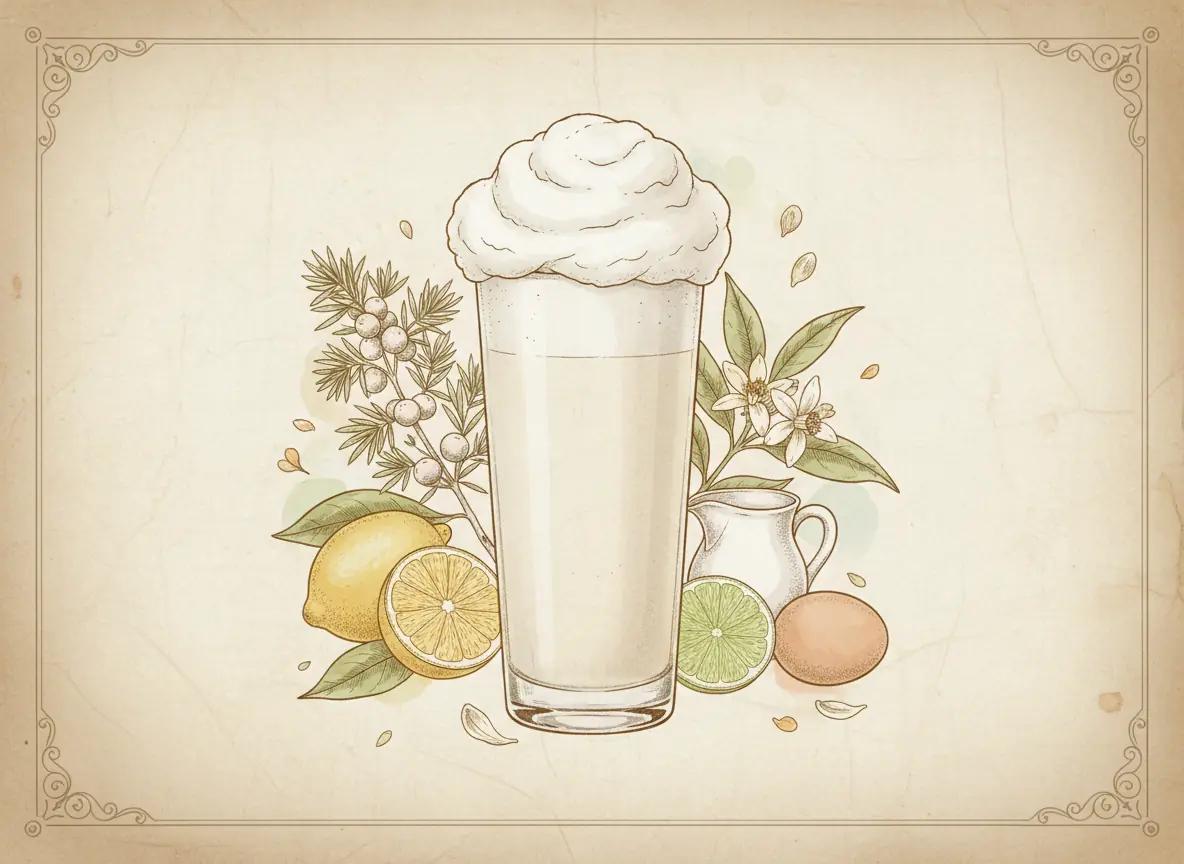
A Ramos Gin Fizz is 45ml of London Dry gin, 15ml each of fresh lemon and lime juice, 30ml of sugar syrup, 30ml of egg white, 60ml of double cream, three dashes of orange flower water and two drops of vanilla extract, shaken long and hard, strained into a chilled highball with no ice and lifted with 60ml of soda water. About 1.8 UK units. It contains raw egg and dairy. Difford’s Guide, a secondary source, says Henry C. Ramos created it in 1888 at the Imperial Cabinet Saloon in New Orleans; the IBA gives the same year but a different bar. The Oxford Companion says the drink’s precise origins are unknown, that the earliest definite notice in print is from 1895, and that the likeliest period is 1892 to 1894. Difford’s quotes Stanley Clisby Arthur on 35 shaker boys at Ramos’s later bar, the Stag, during the 1915 Mardi Gras. The measures are the IBA’s. The shake is the work: cream and egg white need time to whip into a foam dense enough for the soda to push up out of the glass.
Where this one sits
Recipe by Jerry Can Spirits · Updated 19 October 2026