Gin Sour
A Gin Sour is 60ml of London Dry gin, 25ml of fresh lemon juice and 20ml of sugar syrup, shaken hard with ice for 10 to 12 seconds and strained over fresh ice in a rocks glass, with a lemon wheel and a cherry. About 2.4 UK units. Add 15ml of egg white for a silkier version, dry shaken first; it is raw, so leave it out for anyone allergic to egg. It is the plain sour with gin as the spirit. Difford’s Guide says Jerry Thomas’s 1862 bar guide has a Gin Sour, and the frame of spirit, citrus and sugar runs under most gin classics since: the White Lady sweetens it with orange liqueur, the Bee’s Knees with honey, the Clover Club with raspberry. With only three ingredients the gin has nowhere to hide. A juniper-led London Dry gives the classic reading; a citrus or floral gin changes the drink more than any change of measure.
Glassware: Rocks Glass
Garnish: Lemon wheel and Maraschino cherry
Ingredients
60ml
Around 40% ABV. With nothing else to hide behind, the gin is the whole character of the drink, so pour one you like neat.
25ml
Squeezed the same day. Taste it first: lemons vary through the year more than anything else in the glass.
20ml
Sugar and water, 1:1 by weight. The one measure to adjust, a few millilitres either way, to suit the lemons.
15ml (optional)
Half the white of a medium egg, shaken dry first, for a soft head and a rounder texture. Raw. The NHS says hen eggs with the British Lion stamp can be eaten raw, including in pregnancy, while other hen eggs should be eaten well cooked; pasteurised carton white is the alternative. Contains egg: leave it out, or use aquafaba, for anyone allergic.
Instructions
Squeeze the lemon juice the same day.
Fill a rocks glass with fresh cubed ice.
Add the gin, lemon juice and sugar syrup to a shaker, with the egg white if using.
If using egg white, dry shake without ice for 10 to 15 seconds.
Fill with cubed ice and shake hard for 10 to 12 seconds.
Strain over the fresh ice; double strain if you used egg white.
Garnish with a lemon wheel and a cherry.
Our version
Difford’s Guide says Jerry Thomas’s 1862 guide printed a Gin Sour without millilitre measures. Ours is 60ml of gin, 25ml of lemon and 20ml of sugar syrup, served over ice, with 15ml of egg white as an option.
Source: our own specification. Last checked 9 October 2026.
Expert Tip
Taste the lemon juice before you build. Lemons vary through the year, and 25ml against 20ml of syrup assumes an average one. Adjust the syrup a few millilitres either way and leave the lemon alone: the acid makes it a sour, and the sugar only makes it drinkable. With the egg white, shake it dry for 10 to 15 seconds first, then add the ice. Skip that and the foam never forms properly, however long you shake afterwards. Strain onto fresh ice, never the ice you shook with. Shaken ice is broken and wet, and it waters the glass down within minutes.
Behind the Gin Sour
Flavour Profile
The Origin
Difford’s Guide says the first known written recipe for a Sour is in Jerry Thomas’s 1862 Bartender’s Guide, with a Brandy Sour, a Gin Sour and a Santa Cruz, and The Oxford Companion calls the sour an American drink of the 1850s, first seen in print in a New York Times reference of 1857.
In Thomas’s book the drink is simply the Gin Sour. Its better-known descendants came later as additions to the same frame, which is why the Gin Sour now looks like a stripped-down version of drinks that were built up from it.
The Template
Spirit, citrus and sugar has outlasted almost every fashion in mixed drinks, and the Gin Sour is its plainest gin form: no liqueur, no fruit, and no egg unless you choose it.
Learn to balance it by taste and every sour becomes an adjustment rather than a new recipe. A Bee’s Knees swaps the sugar for honey. A White Lady swaps it for orange liqueur. A Clover Club swaps it for raspberry and adds egg white.
Choosing the Gin
With three ingredients the gin is the only variable that matters, which makes this the drink to try a new bottle in before it meets more complicated company.
London Dry gives the reference reading: juniper and a dry finish. Old Tom sweetens it and wants less syrup. A citrus-led gin doubles the lemon; a floral one drifts towards a Bee’s Knees without the honey.
The Egg White
Egg white is optional by history and by taste, and the two versions drink differently.
Without it the sour is bright and sharp, and the gin leads. With 15ml of white the texture softens and the botanicals reach the nose through the foam. Dry shake it for 10 to 15 seconds before the ice goes in, or the foam never sets.
The Gin Sour and Its Descendants
The plain Gin Sour against three drinks built on the same frame
Gin Sour (ours)
- Spirit
- 60ml gin
- Citrus
- 25ml lemon
- Sweetener
- 20ml syrup
- Egg white
- 15ml, optional
- UK units
- About 2.4
Clover Club (IBA)
- Spirit
- 45ml gin
- Citrus
- 15ml lemon
- Sweetener
- 15ml raspberry syrup
- Egg white
- A few drops; 15ml in ours
- UK units
- About 1.8
Bramble
- Spirit
- 50ml gin
- Citrus
- 25ml lemon
- Sweetener
- 12.5ml syrup, 15ml crème de mûre
- Egg white
- None
- UK units
- About 2.3
Whiskey Sour (IBA)
- Spirit
- 45ml bourbon
- Citrus
- 25ml lemon
- Sweetener
- 20ml syrup
- Egg white
- A few drops, optional; 15ml in ours
- UK units
- About 1.8
| Drink | Spirit | Citrus | Sweetener | Egg white | UK units |
|---|---|---|---|---|---|
| Gin Sour (ours) | 60ml gin | 25ml lemon | 20ml syrup | 15ml, optional | About 2.4 |
| Clover Club (IBA) | 45ml gin | 15ml lemon | 15ml raspberry syrup | A few drops; 15ml in ours | About 1.8 |
| Bramble | 50ml gin | 25ml lemon | 12.5ml syrup, 15ml crème de mûre | None | About 2.3 |
| Whiskey Sour (IBA) | 45ml bourbon | 25ml lemon | 20ml syrup | A few drops, optional; 15ml in ours | About 1.8 |
The Clover Club adds raspberry and egg white; the Whiskey Sour is the same frame on bourbon.
How to Serve It
Strained over fresh ice in a rocks glass, with a lemon wheel and a cherry. With egg white, double strain so the foam comes out smooth.
Make one with a gin you know well and its descendants make more sense afterwards: you can taste what the honey or the raspberry is doing, and what it replaced.
Make it at home
The Spirit
GinGin is a spirit flavoured with juniper berries. Under the retained Regulation (EC) 110/2008, juniper must lead the taste, the floor is 37.5% ABV, and the route the flavour takes sets the grade: plain gin, distilled gin or London gin. Our recipes count it at 40%, and it carries the Martini, the Negroni and the Gin and Tonic.
Master the Techniques
More to explore
Frequently Asked Questions
What is the difference between a Gin Sour and a White Lady?
Egg white or not?
Which gin works best?
How do I get the balance right?
Gin Sour or Whiskey Sour: what changes?
How strong is a Gin Sour?
Sources.
Correct as of 19 October 2026.
- Difford’s Guide, “Sour cocktails: history” (secondary source: the first known written recipe for a Sour is in Jerry Thomas’s 1862 Bartender’s Guide: a Brandy Sour, a Gin Sour and a Santa Cruz (rum sour)).
- The Oxford Companion to Spirits and Cocktails (David Wondrich), “The sour” (secondary source: an American drink of the 1850s, first in print in the New York Times of 1857; brandy, Santa Cruz rum, Holland gin and whisky the early spirits; Thomas’s sour as a fix without the fruit).
- NHS, “Foods to avoid in pregnancy” (official page: hen eggs with the British Lion stamp (or from the Laid in Britain scheme) can be eaten raw, partially cooked or well cooked; other hen eggs only well cooked).
You Might Also Like
Fitzgerald
A Fitzgerald is 60ml of London Dry gin, 25ml of fresh lemon juice, 20ml of sugar syrup and two dashes of Angostura, shaken hard with ice for 10 to 12 seconds and strained over fresh ice in a rocks glass, with a lemon wheel or wedge. About 2.5 UK units. It is our Gin Sour with the bitters shaken in. Difford’s Guide credits the drink to Dale DeGroff at the Rainbow Room in New York in the early 1990s, and DeGroff says he came up with it on a busy shift at the Promenade Bar. Two dashes change more than the measure suggests. Shaken through, the Angostura darkens the middle with clove and dries the finish, and a bright daytime sour becomes an evening one.
White Lady
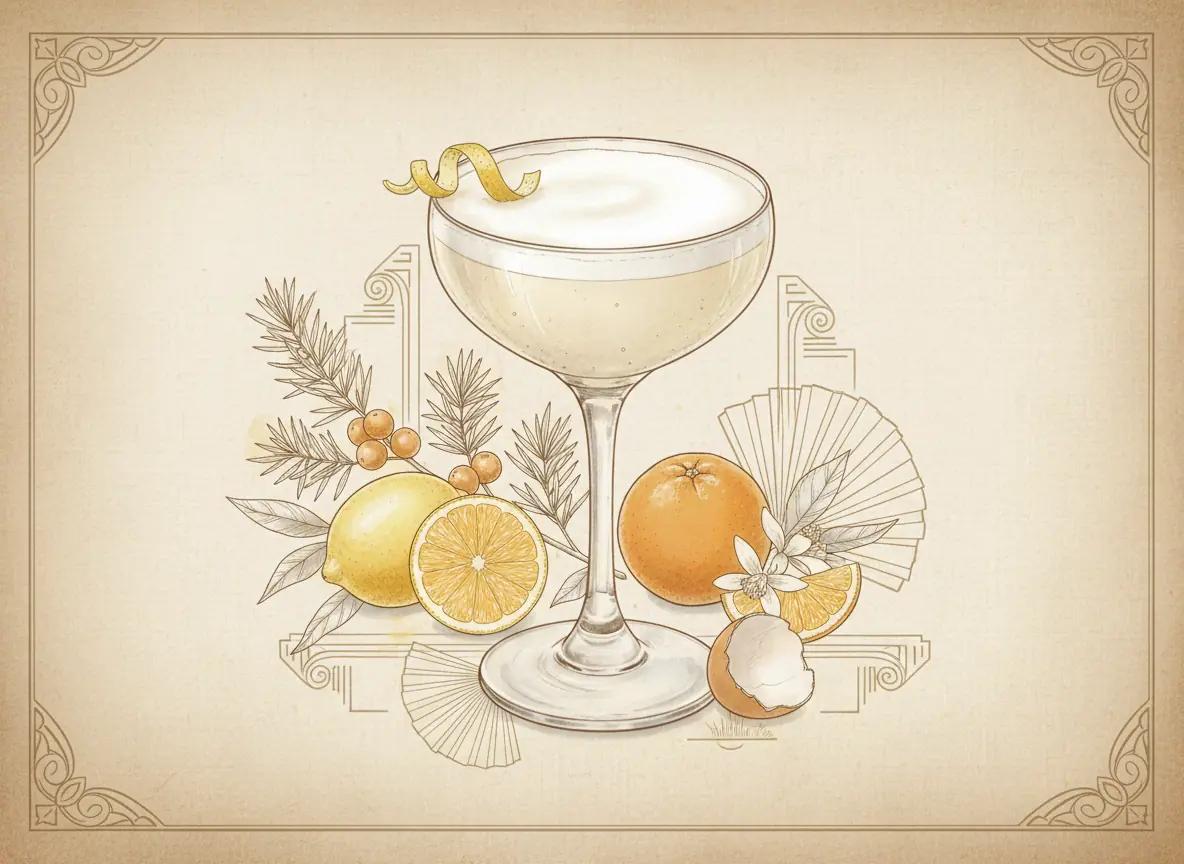
A White Lady is 40ml of London Dry gin, 30ml of Cointreau and 20ml of fresh lemon juice, shaken hard with ice for 10 to 12 seconds and double strained into a chilled coupe, with lemon peel expressed over the top. About 2.8 UK units. Those are the IBA’s measures, and there is no egg white in them. The name is older than the recipe. Difford’s Guide, a secondary source, says Harry MacElhone gave it in 1919, at Ciro’s Club in London, to a drink of brandy, crème de menthe and Cointreau. The gin, Cointreau and lemon version is credited to his rebuild at Harry’s New York Bar in Paris in 1929, though Difford’s says most dispute that, and The Savoy Cocktail Book printed it in 1930, also without egg. Egg white came later: Difford’s Guide finds the earliest recipe with it in The Sacramento Bee of 1936. It makes a softer, foamed drink, given here as a variation. The plain version is sharp and dry, the gin in front and the orange behind it.
Bee’s Knees
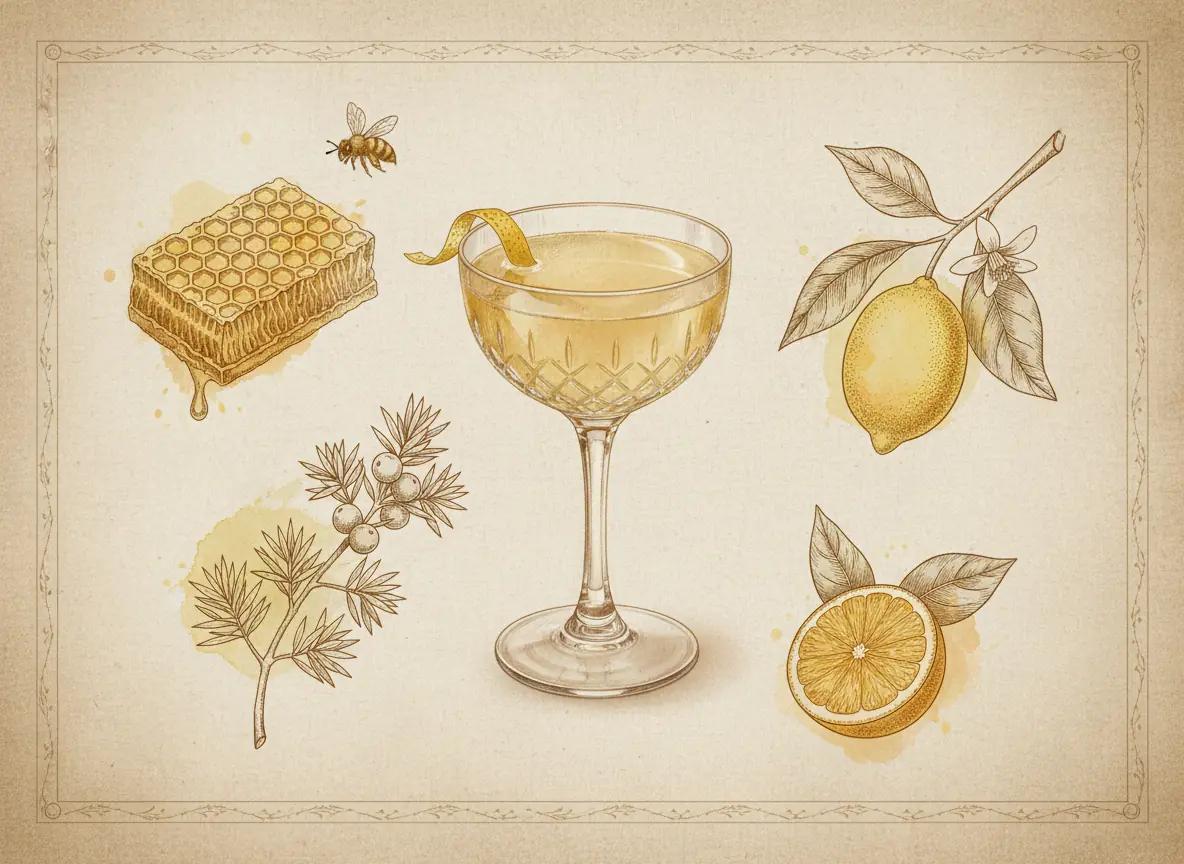
A Bee’s Knees is 52.5ml of London Dry gin, 22.5ml each of fresh lemon and orange juice and two teaspoons (10ml) of honey syrup, made with two parts honey to one of warm water. Shake it hard for 10 to 12 seconds and double strain it into a chilled coupe, with a strip of lemon peel. About 2.1 UK units. The measures are the IBA’s. The orange is the part most recipes leave out. The oldest printings are gin, lemon and honey alone; David Embury suggested a little orange juice as a variation in 1948, and the IBA built it in. Orange softens the lemon, which is why two teaspoons of honey syrup are enough. The drink is often filed under American Prohibition, with honey and lemon covering for bathtub gin. Difford’s Guide, a secondary source, says the earliest printing tells a different story: Cocktails de Paris, published in 1929, credits it to Frank Meier of the Ritz in Paris, and Meier claimed it again in his own book in 1936.
Where this one sits
Recipe by Jerry Can Spirits · Updated 19 October 2026