Pink Lady
A Pink Lady is 45ml of gin, 15ml of apple brandy, 20ml of fresh lemon juice, 15ml of grenadine and 15ml of egg white, dry shaken, shaken hard with ice and double strained into a chilled coupe, with a cherry. About 2.4 UK units. The egg white is raw, so leave it out for anyone allergic to egg. The Oxford Companion says the drink was named after the musical comedy The Pink Lady, which opened in New York in 1911, and that Jacques Straub published the gin and applejack Pink Lady in 1913. The plainest recipe is gin, grenadine and egg white, which is how the Café Royal Cocktail Book gave it in 1937. Straub’s used lime juice and applejack; in ours lemon and apple brandy add body. Made with real pomegranate grenadine, it tastes tart before it is sweet, with the apple brandy under the gin and a white foam over a pink drink.
Glassware: Coupe Glass
Garnish: Maraschino cherry
Ingredients
45ml
A London Dry at 40% ABV with clear juniper, which keeps the drink dry and shaped under the fruit and the foam.
15ml
Calvados or applejack at 40% ABV. At 15ml it adds body and a dry apple note under the gin without taking over. Leave it out and you have a thinner, simpler drink.
15ml
Pomegranate juice and sugar, with no alcohol. It colours and sweetens the drink; a synthetic syrup adds colour and sugar and nothing else.
15ml
About half a white. It builds the foam and softens the lemon; without it the drink becomes a pink gin sour, sharper and without the silk. Raw. Following the FSA, British Lion-mark eggs are safe raw, including for vulnerable groups and in pregnancy; pasteurised carton white is the alternative. Eating out, where the mark cannot be checked, the FSA advises vulnerable people to have their eggs thoroughly cooked. Contains egg: leave it out, or use aquafaba, for anyone allergic.
Instructions
Squeeze the lemon juice the same day.
Chill a coupe.
Add the gin, calvados, lemon juice, grenadine and egg white to a shaker.
Dry shake without ice for 10 to 15 seconds.
Add cubed ice and shake hard for 10 to 12 seconds.
Double strain into the chilled coupe and let the foam settle.
Garnish with a cherry.
Our version
Recipes vary. The Café Royal Cocktail Book of 1937 gives gin, grenadine and egg white alone. Ours adds 20ml of lemon and 15ml of apple brandy for body, with the egg white measured at 15ml.
Source: our own specification. Last checked 9 October 2026.
Expert Tip
Use real grenadine, made from pomegranate juice and sugar. Most bright red supermarket syrups are coloured sugar with no fruit in them, and in a pale drink built on gin and egg white that shows at once. Shake twice. First without ice, for 10 to 15 seconds, to whip the egg white; then with ice, hard, for 10 to 12 seconds, to chill the drink and set the foam. In the other order the head comes out thin. Measure the egg white at 15ml, about half a white; a whole one makes a foam so thick it mutes the lemon. Use British Lion eggs, which the Food Standards Agency advises can be eaten raw.
Behind the Pink Lady
Flavour Profile
Where It Comes From
The Oxford Companion says the Pink Lady was named after the musical comedy of that name, which opened at New York’s New Amsterdam theatre in 1911 and starred Hazel Dawn, who told the drinks historian William Grimes that the drink was created for a surprise party in her honour at Murray’s Roman Gardens. The Companion adds that the Pink Lady served that evening was probably not the one that entered the books: the 1911 drink was a jigger of ojen, a Spanish anisette, shaken with two bitters, which in New Orleans became the Pink Shimmy.
The Companion says Jacques Straub published the gin and applejack Pink Lady in 1913, basically a Jack Rose with a splash of gin; Straub’s Manual of Mixed Drinks prints a jigger each of lime juice, applejack and gin with five dashes of grenadine. By the end of Prohibition, the Companion says, the version in most bars was generally gin, grenadine and egg white, which is how the Café Royal Cocktail Book of 1937 gives it: a glass of gin, a tablespoon of grenadine and the white of one egg. Harry McElhone’s Barflies and Cocktails of 1927 prints a Pink Lady of one egg white, two teaspoons of grenadine, a sixth brandy and a third gin.
The Reputation
The Oxford Companion says the Pink Lady was one of the most popular drinks of the first half of the twentieth century, despite a reputation as a “ladies’ drink”, a label attached not so much to drinks women liked as to drinks some men believed would make them seem effeminate.
Made with fresh lemon and real grenadine, it is a dry, tart sour that happens to be pink.
The Split Base
Gin and apple brandy share the base. The gin brings juniper and keeps the drink dry; 15ml of calvados or applejack adds body and an apple note underneath.
The apple brandy is the link to the Jack Rose, which is applejack, lemon and grenadine with no gin and no egg. The Clover Club, the other relation, swaps the grenadine for raspberry syrup and leaves out the apple.
The Foam
Egg white whips best at room temperature, so the first shake goes without ice and the second, with ice, chills the drink and sets the foam. Let it settle for half a minute before serving, so the foam sits as a clean white layer on the pink.
Three Relations Compared
The Pink Lady beside the Clover Club and the Jack Rose
Pink Lady (ours)
- Base
- 45ml gin, 15ml apple brandy
- Citrus
- 20ml lemon
- Sweetener
- 15ml grenadine
- Egg white
- 15ml
- UK units
- About 2.4
Clover Club
- Base
- 45ml London Dry gin
- Citrus
- 15ml lemon
- Sweetener
- 15ml raspberry syrup
- Egg white
- 15ml
- UK units
- About 1.8
Jack Rose
- Base
- 60ml applejack
- Citrus
- 22.5ml lemon
- Sweetener
- 22.5ml grenadine
- Egg white
- None
- UK units
- About 2.4
| Drink | Base | Citrus | Sweetener | Egg white | UK units |
|---|---|---|---|---|---|
| Pink Lady (ours) | 45ml gin, 15ml apple brandy | 20ml lemon | 15ml grenadine | 15ml | About 2.4 |
| Clover Club | 45ml London Dry gin | 15ml lemon | 15ml raspberry syrup | 15ml | About 1.8 |
| Jack Rose | 60ml applejack | 22.5ml lemon | 22.5ml grenadine | None | About 2.4 |
How to Serve It
Up, in a chilled coupe, with a single cherry. It sits before dinner, where a Clover Club would.
For raspberry in place of grenadine, make a Clover Club; for apple brandy alone with lemon and grenadine, a Jack Rose.
Make it at home
The Spirit
GinGin is a spirit flavoured with juniper berries. Under the retained Regulation (EC) 110/2008, juniper must lead the taste, the floor is 37.5% ABV, and the route the flavour takes sets the grade: plain gin, distilled gin or London gin. Our recipes count it at 40%, and it carries the Martini, the Negroni and the Gin and Tonic.
More to explore
Frequently Asked Questions
What is in a Pink Lady?
Where does the Pink Lady come from?
Is it a pink Clover Club?
Why apple brandy?
Does the grenadine have to be real?
Can I make a Pink Lady without egg white?
How strong is a Pink Lady?
Sources.
Correct as of 19 October 2026.
- The Oxford Companion to Spirits and Cocktails (David Wondrich), “The Pink Lady Cocktail” (secondary source: named after the 1911 musical comedy The Pink Lady (Hazel Dawn); the 1911 drink was ojen with bitters, the New Orleans Pink Shimmy; Straub’s gin and applejack Pink Lady of 1913; gin, grenadine and egg white by the end of Prohibition; the “ladies’ drink” label).
- Harry McElhone, 1927 (Internet Archive scan), “Barflies and Cocktails” (primary source: Pink Lady Cocktail: 1 white of a fresh egg, 2 teaspoonfuls of grenadine, 1/6 brandy, 1/3 gin; shake well and strain into cocktail glass).
- Internet Archive (vintage-cocktail-books-euvs), “Straub’s Manual of Mixed Drinks (1913)” (primary source: Pink Lady Cocktail, a jigger each of lime juice, applejack and gin, five dashes of grenadine, shaken).
- Internet Archive (vintage-cocktail-books-euvs), “Café Royal Cocktail Book (William J. Tarling, 1937)” (primary source: Pink Lady: the white of one egg, a tablespoonful of grenadine, a glass of gin, shaken and strained).
You Might Also Like
Clover Club
A Clover Club is 45ml of London Dry gin, 15ml of fresh lemon juice, 15ml of raspberry syrup and 15ml of egg white, dry shaken, shaken again hard with ice and double strained into a chilled coupe, with three raspberries on a pick. About 1.8 UK units. The egg white is raw, so leave it out for anyone allergic to egg. Those are the IBA’s measures, except the egg white: the IBA asks for a few drops, and 15ml, about half a white, gives the full foam this method builds. Difford’s Guide says the drink is named for a Philadelphia club founded on 29 January 1882 by prominent journalists, whose membership grew to include lawyers, bankers and businessmen, and the Oxford Companion says the drink was created as the club’s signature around the turn of the twentieth century. The Oxford Companion says the drink did not survive Prohibition, and that Julie Reiner’s Brooklyn bar Clover Club, which followed in 2008, brought it back as the house drink. Made with real raspberry syrup it is tart first and fruity second, with the foam softening both.
Jack Rose
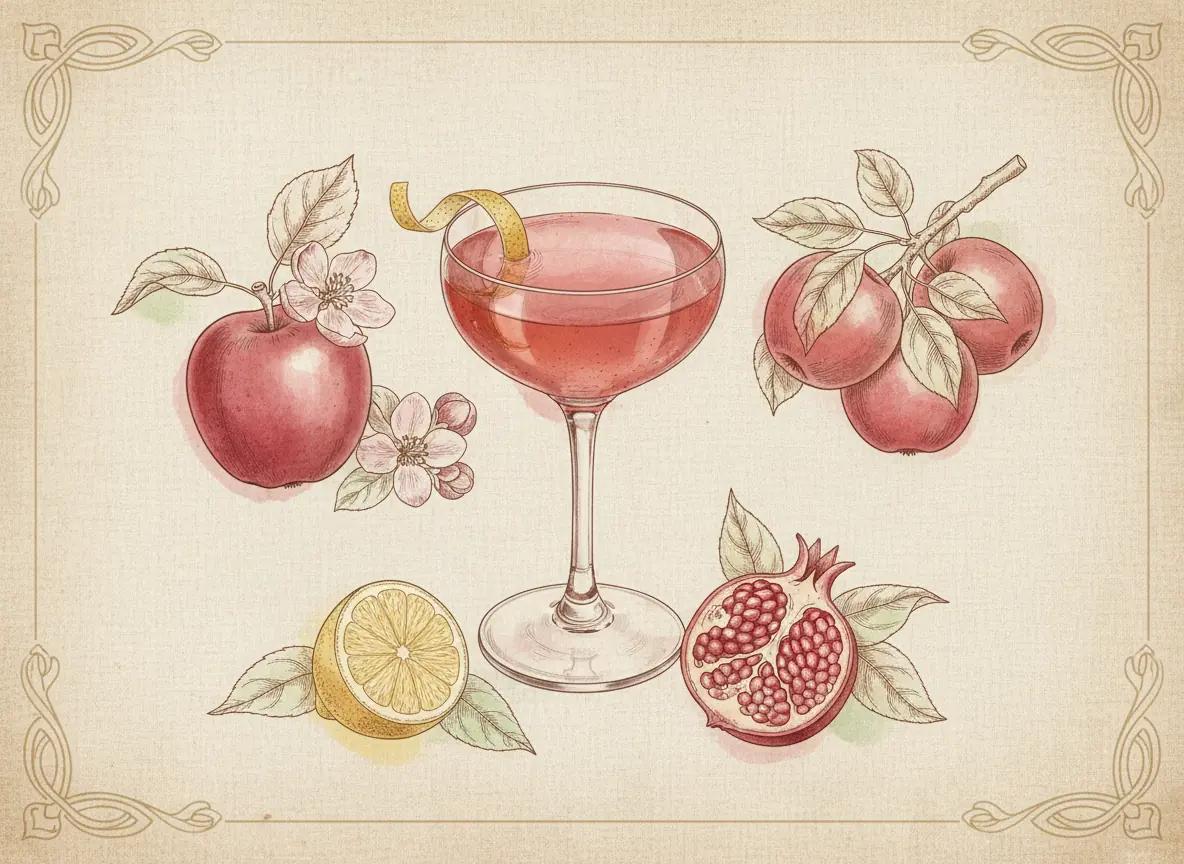
A Jack Rose is 60ml applejack, 22.5ml fresh lemon juice and 22.5ml grenadine, shaken hard and double strained into a chilled coupe, with lemon peel expressed over the top. About 2.4 UK units with a 40% applejack, or 3.0 with a bonded apple brandy at 50%. The lemon and grenadine are poured in equal measure, and the grenadine is why the drink looks and tastes as it does. Made from real pomegranate, it brings tart red fruit as well as sugar, and turns the glass pink. The Oxford Companion finds it in print in 1899, in the New York Press, as the pet of many connoisseurs at a downtown New York bar, and says the name was apparently taken from the Général Jacqueminot, or Jack, rose, a hybrid the drink resembles in colour. Difford’s Guide lists other claims for the name, among them a 1905 Police Gazette item crediting the Jersey City bartender Frank J. May. Hemingway put one in Jake Barnes’s hand at the Crillon in The Sun Also Rises.
White Lady
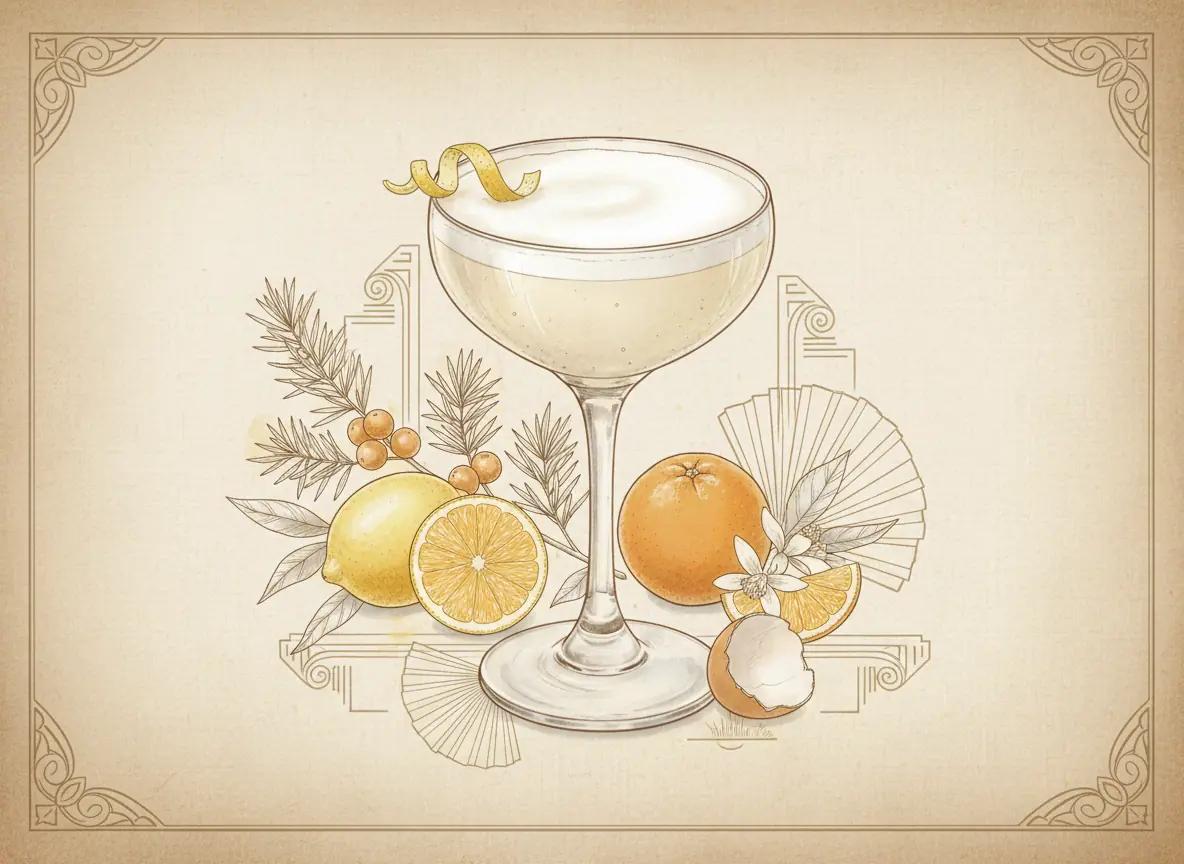
A White Lady is 40ml of London Dry gin, 30ml of Cointreau and 20ml of fresh lemon juice, shaken hard with ice for 10 to 12 seconds and double strained into a chilled coupe, with lemon peel expressed over the top. About 2.8 UK units. Those are the IBA’s measures, and there is no egg white in them. The name is older than the recipe. Difford’s Guide, a secondary source, says Harry MacElhone gave it in 1919, at Ciro’s Club in London, to a drink of brandy, crème de menthe and Cointreau. The gin, Cointreau and lemon version is credited to his rebuild at Harry’s New York Bar in Paris in 1929, though Difford’s says most dispute that, and The Savoy Cocktail Book printed it in 1930, also without egg. Egg white came later: Difford’s Guide finds the earliest recipe with it in The Sacramento Bee of 1936. It makes a softer, foamed drink, given here as a variation. The plain version is sharp and dry, the gin in front and the orange behind it.
Where this one sits
Recipe by Jerry Can Spirits · Updated 19 October 2026