
Sours, page 2

89 recipes, page 2 of 4

Base Spirit

Difficulty Level
Daiquiri

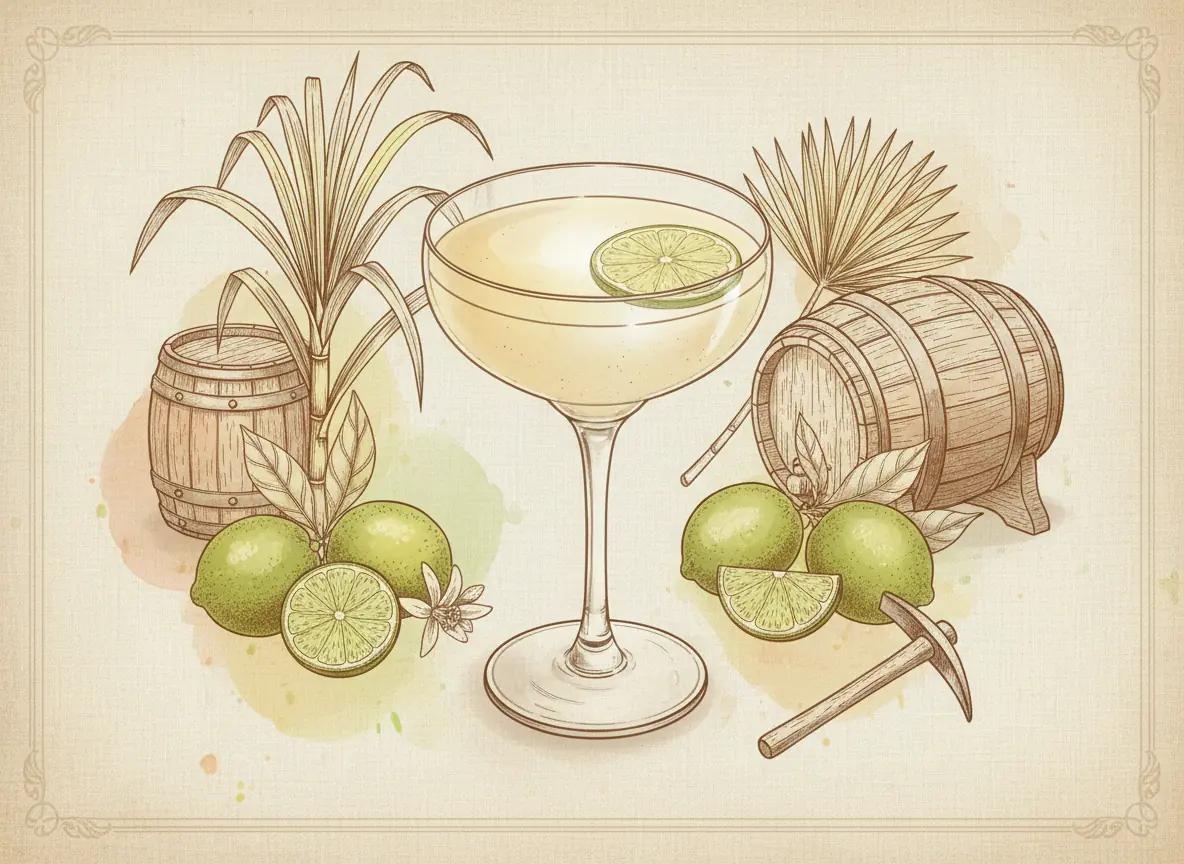
Daiquiri

The Daiquiri is a sour in its most elemental form: white rum, fresh lime juice and sugar syrup, shaken and served up. Three ingredients, no bitters, no liqueur, nothing to hide behind. It takes its name from a mining district on the south-eastern coast of Cuba, near Santiago, where Jennings Cox, an American mining engineer, is credited with combining local white rum with lime and sugar around 1898. Whether Cox invented it or documented what Cuban workers had been drinking for years is not something the record can resolve. What is not disputed is that it was refined and popularised in Havana at El Floridita by Constantino Ribalaigua Vert. The simplicity is the point and the problem at once. There is nothing in the construction to compensate for a poor rum, juice that was not squeezed fresh, or a syrup made carelessly. Every variable is fully exposed, which is why a properly balanced Daiquiri demonstrates more skill than a ten-ingredient tiki drink.

Division Bell

The Division Bell is Phil Ward's mezcal answer to the Last Word, built at Mayahuel in 2009 and named for the Pink Floyd album: mezcal, Aperol, maraschino and lime, with the mezcal pushed slightly forward of true equal parts. It arrived two years before the Naked and Famous finished the same thought, and to its partisans it is the better drink. The maraschino is what separates them. Where the Naked and Famous runs honeyed through yellow Chartreuse, the Division Bell runs dry: the cherry liqueur's funk and almond sit against the smoke while Aperol keeps the middle gentle and orange. It lands leaner and stranger, a Last Word that traded the monastery for the mezcaleria. Taken side by side the two make the cleanest comparison in modern agave drinking. Same skeleton, one substitution, entirely different weather, and a room that will reliably split down the middle about which one it prefers.

Earl Grey MarTEAni

The Earl Grey MarTEAni is the cocktail renaissance drinking tea: gin infused with Earl Grey, shaken with lemon, sugar and egg white into a sour wearing a scented foam. Audrey Saunders built it in the early 2000s and it became a house classic at her Pegu Club, the New York bar that spent fifteen years teaching America to drink gin again. The infusion is the whole trick. Bergamot sits close to gin’s own citrus botanicals, so the tea reads as an extension of the spirit rather than a flavour bolted on, while its tannin gives the drink a dry grip that plain gin sours never have. The egg white then does what egg white does, softening that grip into silk, and the lemon oil expressed over the foam finishes the work before the first sip starts. The name’s pun has dated better than most: beneath it is a serious drink, precise about its ratios and unbothered by fashion, that turned a thousand bars on to tea as an ingredient. Twenty years on, it remains the standard the copies are measured against.

Eastern Standard

The Eastern Standard is a cucumber and mint gin sour served over ice, and it is the house cocktail of Soho House, poured to the same specification in every club the group runs. The name is a time-zone joke that doubles as the point: the drink is meant to taste identical in London and New York. It is an Eastside with the serve changed. Where the Eastside goes up in a coupe, this comes over fresh ice in a rocks glass, with a slightly fuller pour of spirit and vodka written into the recipe as a standing alternative rather than a concession. That sounds like a small set of differences and is not. Up and short, the Eastside is a cocktail you finish with attention. Over ice, at this length, the same flavours become something you can hold for an hour, which is exactly what a members' club needs and exactly why the drink turns up on terraces everywhere in summer.

Eastside

The Eastside is the modern classic that tastes like a garden: gin, lime, mint and cucumber, shaken cold and strained silky, out of the early-2000s New York revival and most often credited to George Delgado at Libation on the Lower East Side. It reads as a gimlet that walked through a greenhouse. The mint and cucumber are muddled fresh into the sour frame, the cucumber cooling exactly where the lime sharpens, and the drink lands green, cold and improbably refreshing at full cocktail strength. Names shift by neighbourhood between Eastside, East Side and Eastside Gimlet; the drink underneath is constant. It is also the modern bar’s great gin ambassador, the drink bartenders reach for when a guest says they do not like gin, and the one that most reliably proves them wrong. The botanicals do not vanish. They simply get a garden to stand in, and the glass tastes green before it tastes of juniper.

El Floridita Daiquiri

The El Floridita Daiquiri is the house version from the Havana bar that called itself la cuna del daiquiri, the cradle of the daiquiri. Two things separate it from the shaken original: five millilitres of maraschino, and the fact that it is blended rather than shaken. The maraschino is a seasoning rather than a sweetener. At that measure you would not identify it blind; what you notice is that the lime tastes brighter and the rum tastes rounder. It perfumes the drink without adding anything you could call cherry. The texture is the other half. Constantino Ribalaigua Vert, who ran the bar through the 1920s and 30s, used the newly available electric blender not to make slush but to shave the drink into fine, dry frost. It arrives in the coupe holding its shape like a snowbank and is drunk through a straw as it gives way. Texture as an ingredient in its own right, which almost nobody was doing at the time.

Enzoni

The Enzoni is a Negroni spliced with a sour, and the graft is five muddled grapes. Gin and Campari come from the first family, lemon and sugar from the second, and the grapes hold the two together. They do it by carrying two inheritances at once. The juice sweetens the way syrup would, and the skins bring a gentle tannin that structures the drink the way vermouth might. Wine's raw materials standing in where wine would ordinarily be, which is why the finished drink reads as vinous without a wine bottle anywhere near it. It is credited to Vincenzo Errico, the same bartender behind the Red Hook, around 2003. Errico worked in both the New York and London rooms of Milk & Honey and the sources differ on which this came out of, so it is more honest to leave that open than to pick one. Two grafts in the same year, both permanent, is a considerable record.
Explorers Gold

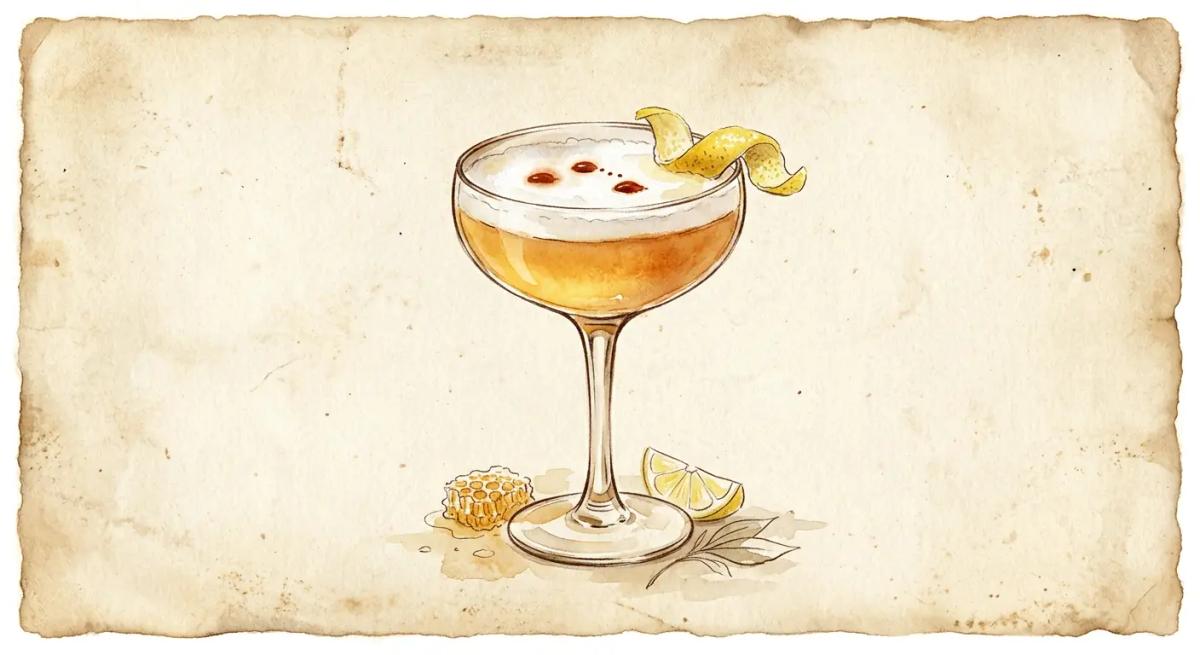
Explorers Gold

Explorers Gold is the Jerry Can Spirits rum and honey: a cold sour built on Expedition Spiced Rum, honey syrup and fresh lemon, with an egg white for texture and two dashes of Angostura across the foam. Rum and honey is older than cocktail bartending. Honey was the most widely available sweetener across Britain and the Caribbean before refined sugar became affordable, and the pairing turns up in everything from medicinal preparations to celebration drinks. The hot version survived in British domestic culture as a cold remedy; the cold version had to wait for bartending to mature enough to build a sour around it. What makes the pairing work here is that honey and a spiced rum occupy the same territory. Honey is floral and botanical; seven real spices, two natural sweeteners and bourbon oak is a profile it can lean into rather than sit on top of. The lemon keeps it from going cloying and the bitters tie the two halves together.

Fitzgerald

The Fitzgerald is proof that a modern classic can be four ingredients old. Dale DeGroff built it at the Rainbow Room in the 1990s when a guest asked for a gin drink that was not a martini, and he answered with a gin sour seasoned with Angostura. He named it for F. Scott, and it reads like something Gatsby’s caterers would have poured without comment. The bitters are the entire intervention and they change everything. Two dashes against gin and lemon add clove-dark depth and a dry finish, pulling the sour out of the afternoon and into the evening. It is the same trick the Pegu Club plays with two bitters, executed with one bottle and no liqueur at all. DeGroff’s books spread it worldwide as the example of how little a new drink needs, and it remains the fastest upgrade to a gin sour anyone knows: the bottle is already on the bar, and the dash costs nothing but the thought.

Gimlet

The Gimlet is the Royal Navy in a coupe. In 1867 the Merchant Shipping Act made lime rations compulsory aboard British ships, and in the same year Lauchlin Rose of Leith patented a way of preserving lime juice in sugar without a drop of alcohol. Rose's Lime Cordial went to sea, the officers' gin went into it, and somewhere between Portsmouth and Bombay the Gimlet was born. The defining decision is the cordial. A true Gimlet is gin and lime cordial and nothing else, and its character is exactly the cooked, marmalade-edged lime that preservation produces: smooth, rounded and faintly nostalgic, closer to silk than to citrus. Fresh lime and sugar make a bright and blameless drink, but they make a different one, and the traditional position is that the cordial version is the Gimlet and the fresh version is its modern variation. Proportions are the drinker's prerogative in the naval spirit. The classic pour ran as heavy as half and half; the modern palate prefers the drier three to one given here.

Gin Sour

The Gin Sour is the sour family’s plainest statement and one of its oldest: spirit, lemon and sugar, the template Jerry Thomas codified in 1862 applied to the botanical spirit, predating most of the famous gin drinks that descend from it. Every White Lady, Bee’s Knees and Clover Club is a Gin Sour that learned a second language. Its plainness is the point. Three ingredients expose the gin completely, which makes this the sour that teaches botanicals: a juniper-led London Dry gives the classic spine, while a citrus or floral gin turns the same spec into a different afternoon entirely. The optional egg white borrows the Boston Sour’s silk without changing the argument. It sits in the canon as the missing link drinkers skip past, ordering its descendants without ever meeting the ancestor. Made with a good gin and honest lemon, it explains in one glass why the template conquered the world.

Gold Rush

The Gold Rush was invented at Milk and Honey, the Lower East Side bar that rewrote modern cocktail culture, when T.J. Siegal asked Sasha Petraske for a whiskey sour and got talked into honey instead of sugar. That was 2001, the drink went around the world with the bar’s alumni, and it is now as close to a canonical modern classic as the twenty-first century has produced: bourbon, lemon, honey, done. The honey is the entire intervention and it changes everything: floral weight where sugar is neutral, a waxy richness that rounds bourbon’s corners, and a golden colour that named the drink. Cut into syrup at two parts honey to one part water it integrates like sugar never quite does, and the drink lands somewhere between a whiskey sour and a warm afternoon. Its family tree runs in both directions: back to the Bee’s Knees, the Prohibition gin sour that proved honey and citrus belonged together, and sideways to the Penicillin, Milk and Honey’s other golden child, which is a Gold Rush that emigrated to Islay. Three ingredients, no technique beyond a hard shake, and no excuse for a bad one ever.

Grand Margarita

The Grand Margarita is a Margarita with Grand Marnier in place of triple sec, and the substitution changes more than the label suggests. Grand Marnier is built on cognac rather than on neutral spirit, so it brings oak, dried fruit and weight alongside the orange, and the drink that results is rounder, deeper and noticeably less sharp than the original. Forty-five millilitres of tequila to thirty of Grand Marnier and fifteen of lime is also a sweeter ratio than the standard Margarita, where the liqueur usually sits below the citrus rather than twice above it. That is deliberate: Grand Marnier is less aggressively sweet than most triple secs and needs the volume to register. It is the version to pour for somebody who finds a classic Margarita too tart, and the wrong one for anybody who finds it too sweet.

Hemingway Daiquiri

Ernest Hemingway wandered into El Floridita in 1932, tried the house daiquiri and issued his amendment: no sugar, double the rum. The bar named the result the Papa Doble, and its most loyal customer reportedly worked through them in scarcely credible quantities, a drink for a man who distrusted sweetness and wrote like it. The honest truth is that the original Papa Doble is a punishing drink: 120ml of rum, no sugar, all austerity. The version the world now calls the Hemingway Daiquiri is the civilised descendant, with grapefruit joining the lime and maraschino carrying all the sweetness, and it is a better cocktail than its patron ever ordered. He would probably have objected, which is part of the charm. What survives from the great man’s spec is the drink’s character: bone-dry, citrus-forward and bracing, the daiquiri stripped of its plush. Alongside its sibling, the maraschino-kissed Floridita No. 3, it shows how far one bar in Havana stretched three ingredients and a lime press.
Honey Sour

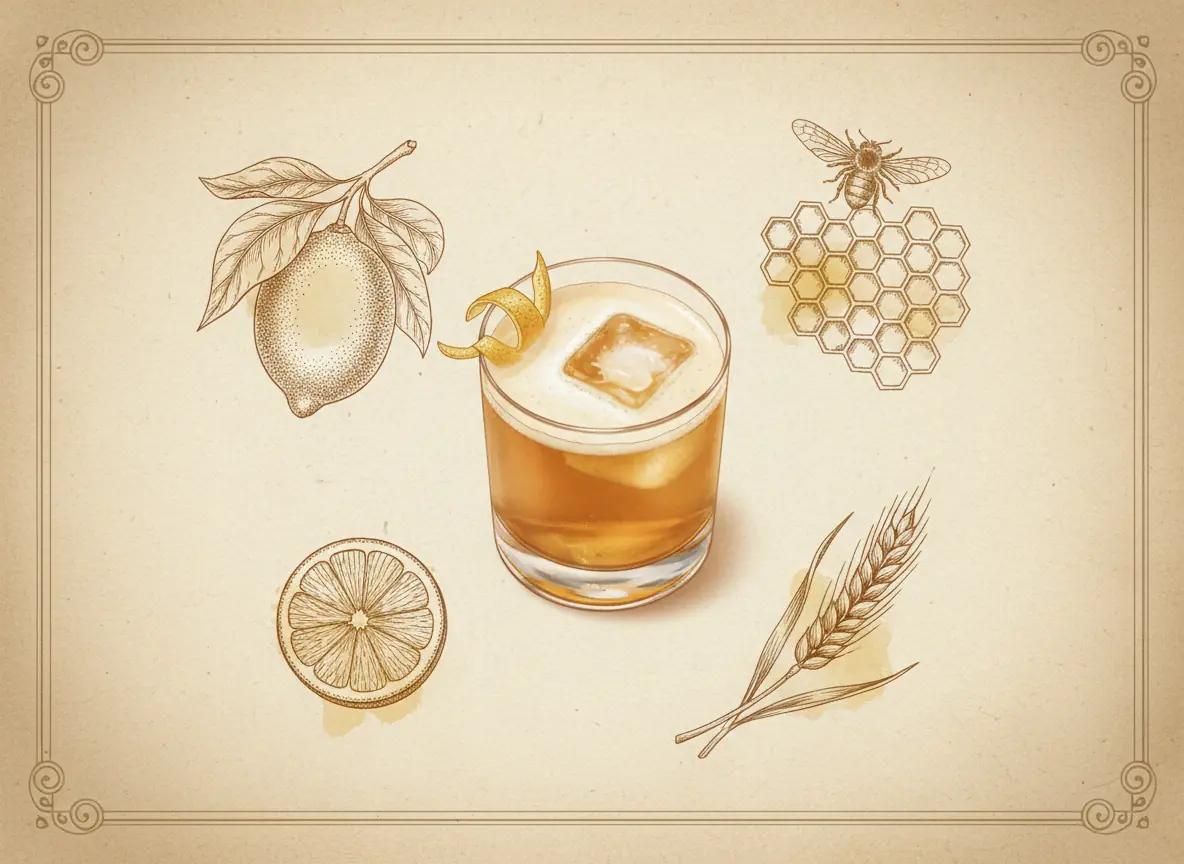
Honey Sour

The Whiskey Sour is one of the most accommodating formats in the canon, because its three-ingredient structure takes sweetener variations that produce meaningfully different drinks rather than mere substitutions. The Honey Sour is the most instructive of them. Replacing simple syrup with honey syrup changes the texture, the aromatic character, the mid-palate weight and the relationship between the bourbon and the lemon, which is enough to justify a separate entry rather than a footnote. Honey brings a floral, slightly waxy sweetness with genuine botanical depth that simple syrup does not possess, and it interacts with the vanilla and caramel of a good bourbon in a way that makes the pairing taste considered rather than incidental. The egg white is optional here as it is in the parent, and the decision changes the drink considerably. With it the Honey Sour is silky and rounded; without it, sharper and more directly tart. Both are correct.

Honeysuckle

The Honeysuckle is a daiquiri with honey syrup instead of sugar, and that single change does considerably more than sweeten it. Honey has floral weight and a waxy texture that plain syrup does not, so instead of simply balancing the lime it wraps around it. The drink comes out rounder and golden where a daiquiri is sharp and clear. The proportions are the daiquiri's own: sixty of rum, twenty-two of lime, twenty-two of honey syrup, shaken hard and served up. Nothing else changes and nothing else needs to. It is the least celebrated of the honey sours and arguably the most natural of them. The Bee's Knees does the same thing to gin and the Gold Rush does it to bourbon, and both are better known. But rum and honey have been drunk together in the Caribbean for as long as there has been rum, and of the three this is the pairing that needed the least persuading.

Hotel Nacional

The Hotel Nacional is a pineapple daiquiri with ten millilitres of apricot brandy in it, and that small measure is what makes it worth knowing. Pineapple and rum on their own are holiday drinking. Add stone fruit underneath and the whole thing acquires depth: the apricot's kernel note runs beneath the pineapple and gives the drink a finish it otherwise would not have. It is named for the Hotel Nacional de Cuba, the clifftop hotel that opened in Havana in 1930 and went on to host most of the twentieth century, from Churchill and Sinatra to the mob conference of December 1946. The drink is generally attributed to its bar in the 1930s. It sits between the daiquiri's discipline and the piña colada's abandon, which is a useful place for a drink to be. The rum, the lime and the small syrup measure keep the sour structure intact, and the fruit sits on top of that rather than replacing it.

Illegal

The Illegal is a mezcal sour with a rum backbone, and it is one of the drinks that made mezcal make sense to people who thought they disliked it. Thirty millilitres of espadín against fifteen of Jamaican overproof white rum, with falernum, maraschino, lime and a little syrup, and the effect is smoke framed by fruit rather than smoke on its own. The split base is doing the work. Mezcal alone in a sour is austere and can read as ashy; the overproof rum adds ester-heavy fruit and raw power that pushes back against the smoke and gives the drink a middle. Falernum and maraschino then supply spice and a dry cherry note that meet both. It takes its name from a mezcal brand and carries the suggestion of something clandestine, which suits a drink built on a spirit that spent decades as an unregulated village product.
Jack Rose

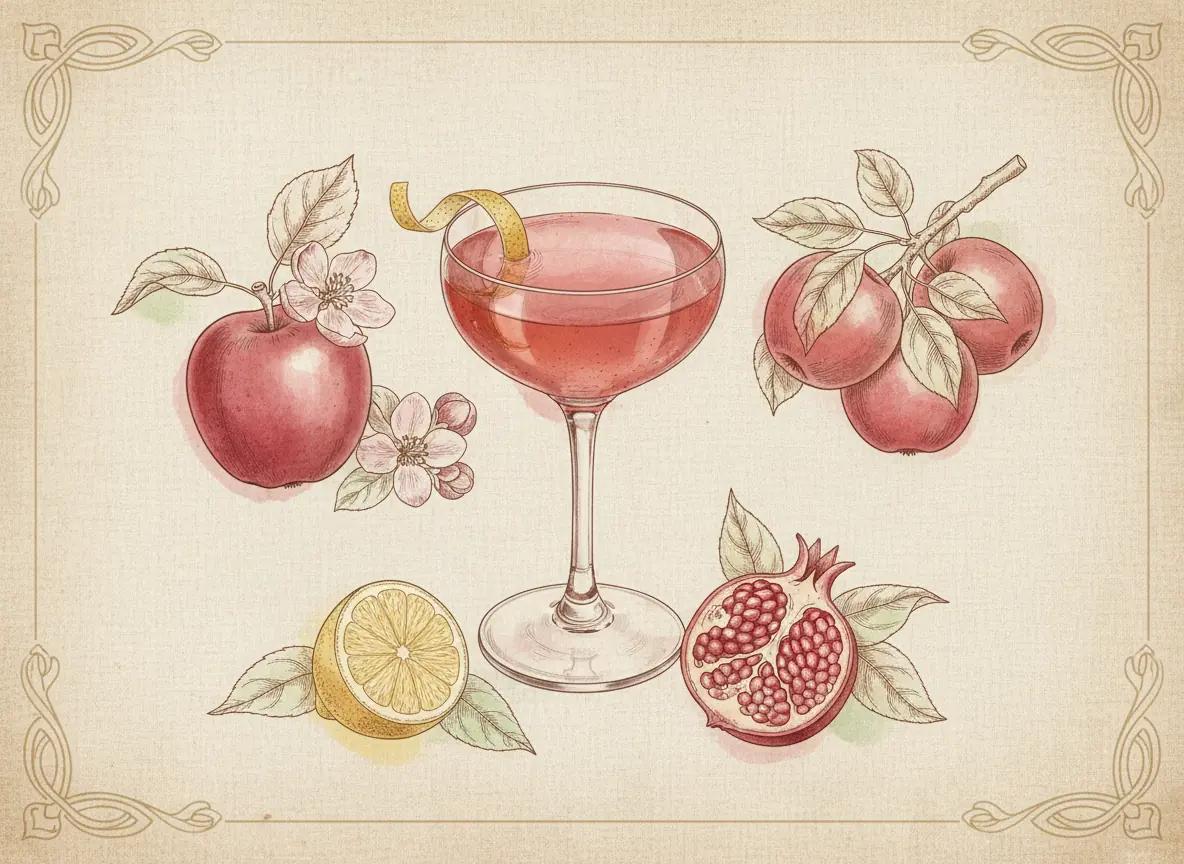
Jack Rose

The Jack Rose is one of the great pre-Prohibition American classics, documented in bar guides from the early twentieth century. Its base is applejack, the American apple brandy produced primarily in New Jersey and most closely associated with Laird’s, producing since 1780 and the oldest licensed distillery in the United States. The name comes either from the Jacqueminot rose, a deep red variety whose colour the grenadine approximates in the glass, or from Bald Jack Rose, a notorious New York gangster of the same era. Both origin stories are plausible. Neither is definitively confirmed. Three ingredients: applejack, fresh lemon juice, and grenadine. The structure is a sour at its simplest, but the grenadine changes its character the way honey syrup changes the Bee’s Knees, bringing pomegranate depth, a faint tartness, and a colour no neutral sweetener can replicate. At this volume it is a primary modifier, and quality matters accordingly. Applejack is distinct from Calvados in the way bourbon is distinct from Scotch: the production methods, ageing requirements, and geography that define Calvados as a French appellation product give it a different character. It is a legitimate substitute that produces a different drink.

Jasmine

The Jasmine is the modern classic that performs a magic trick: gin, Campari, orange liqueur and lemon, and the finished drink tastes, unmistakably and to everybody who tries it, of pink grapefruit. Paul Harrington built it in 1990s California for a friend named Jasmin, published it in his pioneering book Cocktail, and the accidental grapefruit has been converting drinkers ever since. The illusion is arithmetic. Campari’s bitter orange plus Cointreau-style sweetness plus lemon’s acid lands precisely on grapefruit’s coordinates, so three ingredients triangulate a fourth fruit that never enters the glass at all. It is the drinks world’s favourite proof that flavour is construction rather than contents. It drinks as a dry, blush-pink sour with a properly bitter finish, and it is one of the great Campari gateways for the aperitivo-shy: the bitterness arrives dressed as fruit, and by the time anybody notices they are two in and asking questions about Negronis.

Kamikaze

The Kamikaze is the 1970s in a shaker: vodka, triple sec and lime, born by most accounts in the American bars of the disco era and named with the decade’s customary subtlety. It ran the party circuit for twenty years as both cocktail and shot, and its DNA went on to build the Cosmopolitan, which is essentially a Kamikaze that moved uptown. Underneath the name is a classical drink. This is the White Lady’s formula with vodka in place of gin, a clean citrus daisy that balances at equal parts and sharpens considerably when the vodka is doubled. The lime has to be fresh, which is the entire difference between the drink and its sour-mix reputation. Served up it is a crisp, grown-up sour; poured as shots it is the same drink at higher velocity. Either way, almost everybody has met it and almost nobody has met it made properly.

Knickerbocker

The Knickerbocker is the daiquiri’s New York grandfather: rum, raspberry syrup, citrus and a curaçao thread, printed by Jerry Thomas in 1862 among the first rum sours in any book, and named for the old-Dutch aristocracy of its city. It is what a fancy rum drink meant when the cocktail was young. The build reads as proto-tiki a full century early. Golden rum sweetened by berry syrup rather than by sugar, orange liqueur used as seasoning, and the whole thing poured over ice with fruit dressing the glass in the old manner. Cold-process raspberry syrup is the drink’s heart and its only sweetener. The revival restored it as a bridge exhibit: the drink connecting Thomas’s bar to the Clover Club’s berry and to the tiki century’s fruit, one glass explaining roughly fifty years of drinking on either side of it. It is also considerably drier than a list of its ingredients suggests.

Lemon Drop Martini

The Lemon Drop is a vodka sour with a sugared rim, and the rim is structural rather than decorative. The liquid is balanced sharper than a standard sour precisely because every sip collects sweetness at the edge of the glass, so sugar and acid arrive in sequence rather than pre-mixed. It was born at Henry Africa's in San Francisco, the original fern bar, where Norman Hobday built drinks through the 1970s for people who found the old rooms intimidating. Bright, sweet-edged and unpretentious was the brief, and the Lemon Drop was the flagship: a lemon and vodka sour named after the boiled sweet. It grew a martini glass and a longer name in the decades after, but the architecture never moved. Made with fresh lemon and an honest hand on the syrup it is a genuinely good sour wearing party clothes, and the fern-bar school it comes from was mocked for years before the revival quietly admitted it had a point.

London Calling

London Calling is a gin sour with fino sherry in it, and the sherry is doing the job salt does in cooking. Fifteen millilitres is not enough to taste as sherry. It is enough to dry the finish, deepen the middle and make the lemon read sharper than it otherwise would. It is credited to Chris Jepson, who built it at MASH in London in 2002, and named for the Clash record. That date matters: it is roughly a decade ahead of the point at which fino became a fashionable thing to have behind a bar, and the drink is routinely named as one of the things that started the shift. The result is a sour with its collar up. Dry, mineral and considerably more serious than a gin sour has any obligation to be, and the sort of drink to put in front of someone who has told you they do not like sherry, without mentioning what is in it.