Explorers Gold
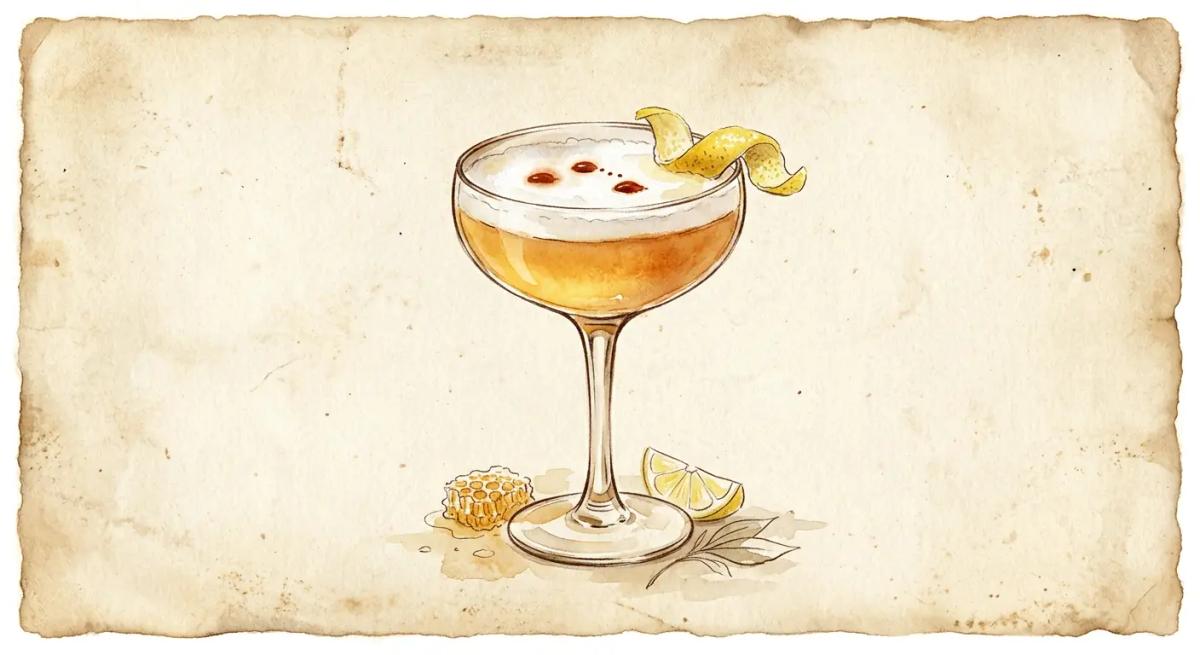
Explorers Gold is 50ml of Expedition Spiced Rum, 25ml of honey syrup, 25ml of fresh lemon juice and one egg white, dry shaken for 15 seconds, shaken hard with ice for 12 more and double strained into a chilled coupe or rocks glass, with two dashes of Angostura across the foam and a lemon peel on the rim. About 2.0 UK units, with a trace more from the Angostura. It contains raw egg. It is our rum and honey sour. Honey and lemon with a brown spirit is a well-worn pairing: the Gold Rush does it with bourbon, the Bee’s Knees with gin. Here the honey meets a rum that already carries vanilla, cinnamon and clove, so it softens the spice instead of sitting on top of it. Equal measures of honey syrup and lemon put it on the soft side of a sour. The white gives it a soft head for the Angostura to rest on, and lifts the honey and spice to the nose. The egg white is part of the recipe: without it the drink is flatter, and the bitters have nothing to sit on.
Glassware: Coupe Glass
Garnish: Lemon peel and Angostura bitters two dashes dotted across the foam
Ingredients
50ml
Seven real spices, two natural sweeteners, and bourbon oak, at 40% ABV. Its vanilla and oak meet the honey, and its cinnamon and clove keep the sour from tasting of honey alone.
25ml
Two parts honey to one part warm water; we keep it in the fridge for up to a month. As syrup it mixes into a cold shake where neat honey seizes. The honey you choose sets the character: light and floral, or dark and rich.
25ml
Squeezed the same day. At 25ml, level with the honey syrup, it holds the sweetness in check and keeps the rum’s spice audible.
2 dashes
Two dashes dotted across the foam after straining, so the first thing you smell is spice. More would compete with the spice already in the rum.
1 white (about 30ml)
One fresh white, for foam and texture; it adds almost nothing to taste, and the drink is flatter without it. It is raw egg. Use eggs stamped with the British Lion mark, which UK food safety advice treats as safe raw, pregnancy included. Anyone allergic to egg should shake with aquafaba in its place.
Instructions
Make the honey syrup in advance: two parts honey dissolved in one part warm water. We keep it a month refrigerated.
Squeeze the lemon juice immediately before building the drink.
Chill a coupe or rocks glass.
Add the rum, honey syrup, lemon juice and egg white to a shaker with no ice.
Dry shake vigorously for 15 seconds to build the foam.
Add cubed ice and shake hard for a further 12 seconds.
Double strain into the chilled glass.
Dot two dashes of Angostura across the foam, then express a wide strip of lemon peel over the surface and rest it on the rim.
Our version
Explorers Gold is our own sour, not a classic. It pairs Expedition Spiced Rum with honey syrup and lemon in equal 25ml measures, shakes in an egg white for foam, and dots two dashes of Angostura on top to echo the spice already in the rum.
Source: our own specification. Last checked 9 October 2026.
Expert Tip
Give the dry shake the full 15 seconds, with no ice and the tin sealed tight. That is the shake that builds the foam; the 12 seconds with ice afterwards chills and dilutes. Skip the first and the head comes out thin. Double strain through a fine strainer into the chilled glass. Shards of ice left under the foam keep melting and break it from underneath, and a coarse strain lets them through. Let the foam settle for a few seconds before the Angostura goes on. Dotted onto a firm surface, the two dashes stay where they land and reach the nose first; on loose foam they sink into the drink.
Behind the Explorers Gold
Flavour Profile
Rum and Honey
Rum and honey is a familiar pairing in Britain, mostly as a hot drink for a cold night. Explorers Gold takes it cold and shapes it as a sour: spirit, citrus and sweetener, shaken, with egg white for texture.
Its closest relatives are the honey sours. The Bee’s Knees, first printed in Paris in 1929 on Difford’s Guide’s account, does it with gin. The Gold Rush, which Difford’s Guide dates to 2001 at Milk & Honey in New York (Punch says 2000), does it with bourbon. Explorers Gold uses spiced rum, with more honey than either.
Why a Spiced Rum
Honey is more than sweet. It carries floral and waxy notes, and its character depends on what the bees fed on.
That suits a spiced rum. The vanilla and oak in Expedition Spiced Rum meet the honey’s warmth, the cinnamon, allspice and clove give it spice to soften, and the orange peel and ginger sit alongside the lemon.
A light white rum gives the honey little to lean on, and the drink tastes mostly of honey and lemon.
The Honey Syrup Discipline
Two parts honey to one part warm water, stirred together while the water is still warm.
Straight from the jar, honey goes stiff against the ice and clings to the tin. The drink comes out uneven, and some of the honey never leaves the shaker.
Loosened into syrup, it flows like any other sweetener, so 25ml is 25ml every time.
Choosing the Honey
The honey changes this drink more than any other choice. Wildflower gives a lighter, aromatic glass that lets the rum’s spice lead. Heather or buckwheat, both dark, push it richer and towards winter. Acacia, one of the palest, adds texture more than flavour.
The Egg White
Egg white adds almost nothing to taste and a great deal to texture. Dry shaken, its proteins trap air and build a foam that sits on the drink after straining.
That foam does two jobs. It carries the honey and spice aroma to the nose before the lemon reaches the tongue, and it gives the Angostura somewhere to sit. Bitters stirred into the liquid would vanish; dotted on the foam they stay visible and aromatic.
It is raw egg. Use eggs stamped with the British Lion mark, which UK food safety advice treats as safe raw, pregnancy included. Anyone allergic to egg should shake with aquafaba in its place.
Three Honey Sours
Explorers Gold beside two bourbon honey sours
Explorers Gold (ours)
- Spirit
- 50ml Expedition Spiced Rum
- Lemon
- 25ml
- Honey syrup
- 25ml
- Egg white
- One white
- UK units
- About 2.0
Honey Sour
- Spirit
- 60ml bourbon
- Lemon
- 25ml
- Honey syrup
- 15ml
- Egg white
- 15ml, optional
- UK units
- About 2.4
Gold Rush
- Spirit
- 60ml bourbon
- Lemon
- 22.5ml
- Honey syrup
- 22.5ml
- Egg white
- None
- UK units
- About 2.4
| Drink | Spirit | Lemon | Honey syrup | Egg white | UK units |
|---|---|---|---|---|---|
| Explorers Gold (ours) | 50ml Expedition Spiced Rum | 25ml | 25ml | One white | About 2.0 |
| Honey Sour | 60ml bourbon | 25ml | 15ml | 15ml, optional | About 2.4 |
| Gold Rush | 60ml bourbon | 22.5ml | 22.5ml | None | About 2.4 |
The bourbon versions are the Gold Rush and the Honey Sour.
How to Serve It
Double strained into a chilled coupe or rocks glass, two dashes of Angostura dotted across the foam, and a wide strip of lemon peel, its oils twisted over the drink, laid on the rim.
Hand it over at once, while the foam is firm, before dinner or slowly after it.
Make it at home
The Spirit
Jerry Can Spirits Expedition Spiced RumA spiced rum built for balance. Madagascan vanilla leads, with Ceylon cinnamon, ginger and cassia through the middle and bourbon oak on the finish. 40% ABV, designed to work neat, over ice, and across classic and modern cocktails.
Need the Rum?
Pick up a bottle of Expedition Spiced Rum to make this cocktail.
More to explore
Frequently Asked Questions
What is Explorers Gold?
Why does the honey have to be a syrup?
Which honey should I use?
Is the egg white necessary?
How is it different from a Honey Sour?
How strong is Explorers Gold?
Why dry shake first?
Sources.
Checked between 18 October and 19 October 2026.
- Difford’s Guide, “Bee’s Knees” (secondary source: first printed in Cocktails de Paris, 1929).
- Difford’s Guide, “Gold Rush” (secondary source: recipe envisaged by T. J. Siegel one night in 2001 at Milk & Honey, New York, where Sasha Petraske first made it).
- Punch, “Gold Rush” (secondary source: T. J. Siegal came up with the idea sitting at the bar of Milk & Honey, sometime in 2000).
You Might Also Like
Honey Sour
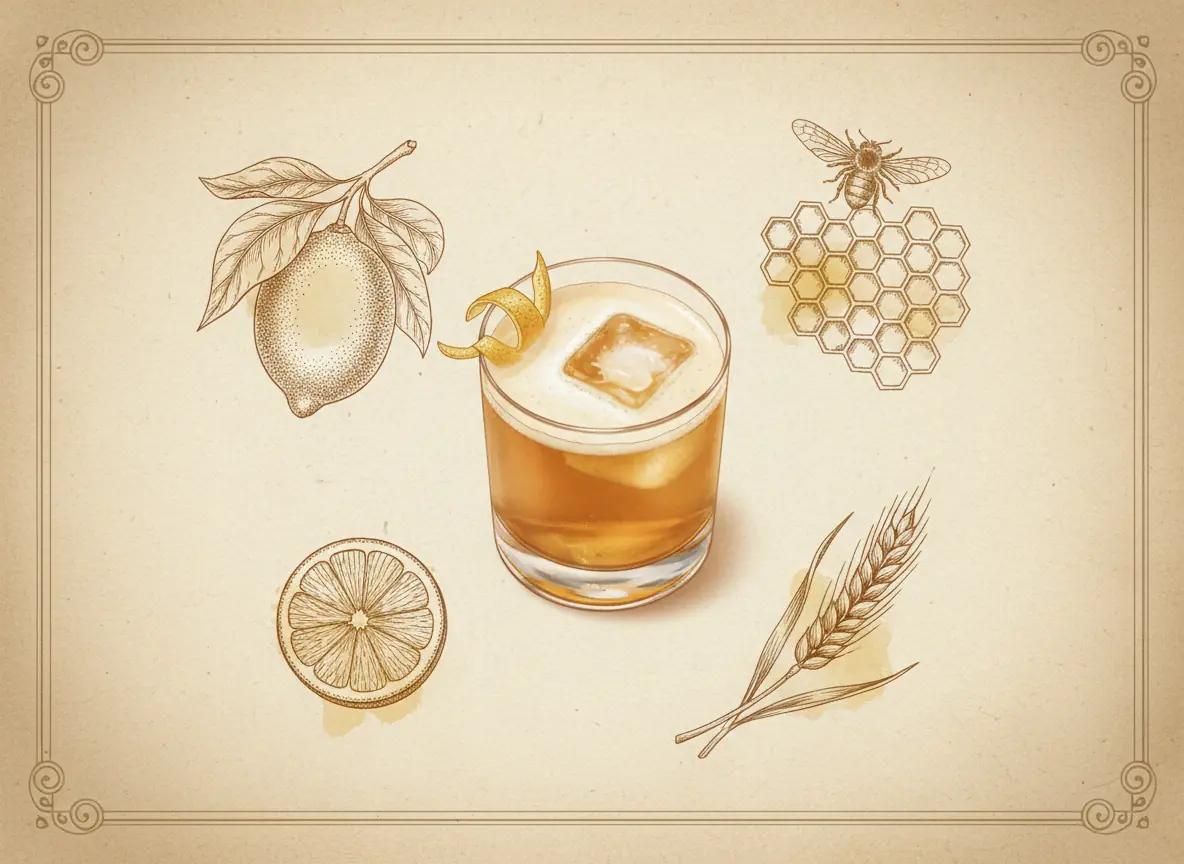
A Honey Sour is a Whiskey Sour sweetened with honey: 60ml bourbon, 25ml fresh lemon juice and 15ml honey syrup mixed at two parts honey to one of warm water, shaken hard and double strained over a large cube in a rocks glass. A 15ml egg white is optional and gives it a soft foam, with three drops of Angostura on top. Honey changes more than the sweetness. It adds a floral, waxy note on top of the bourbon’s vanilla and caramel, and more body than sugar syrup. The drink sits between the Whiskey Sour and the Gold Rush, the bourbon, lemon and honey drink that Punch credits to T. J. Siegal at Milk & Honey in New York, in 2000 by its account and 2001 by VinePair’s. The Honey Sour adds back the egg white and the bitters, with a little less syrup. No one is recorded as its inventor. It is a sweetener swap on a sour. Difford’s Guide dates the first written sour recipes to Jerry Thomas’s 1862 guide and the oldest known whiskey sour mention to a Wisconsin newspaper of 1870. A glass holds about 2.4 UK units.
Bee’s Knees
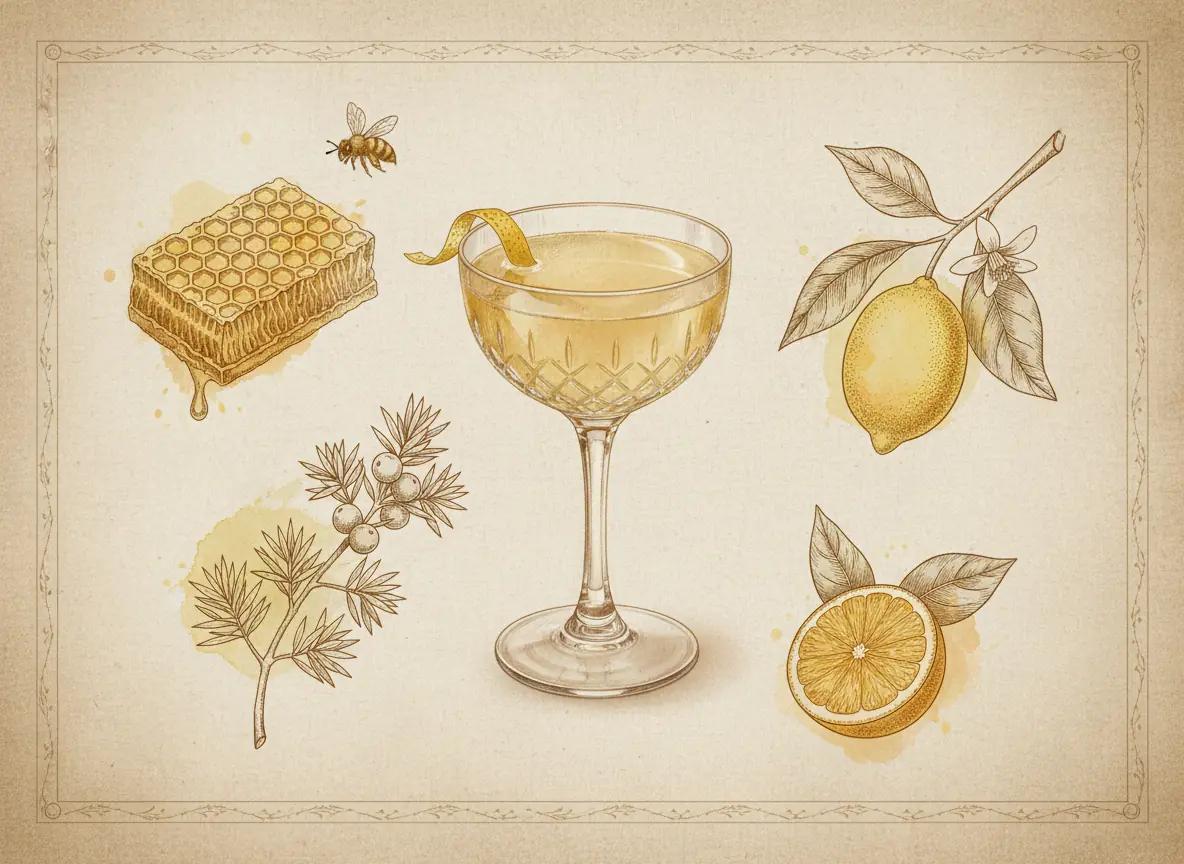
A Bee’s Knees is 52.5ml of London Dry gin, 22.5ml each of fresh lemon and orange juice and two teaspoons (10ml) of honey syrup, made with two parts honey to one of warm water. Shake it hard for 10 to 12 seconds and double strain it into a chilled coupe, with a strip of lemon peel. About 2.1 UK units. The measures are the IBA’s. The orange is the part most recipes leave out. The oldest printings are gin, lemon and honey alone; David Embury suggested a little orange juice as a variation in 1948, and the IBA built it in. Orange softens the lemon, which is why two teaspoons of honey syrup are enough. The drink is often filed under American Prohibition, with honey and lemon covering for bathtub gin. Difford’s Guide, a secondary source, says the earliest printing tells a different story: Cocktails de Paris, published in 1929, credits it to Frank Meier of the Ritz in Paris, and Meier claimed it again in his own book in 1936.
The Old Standard
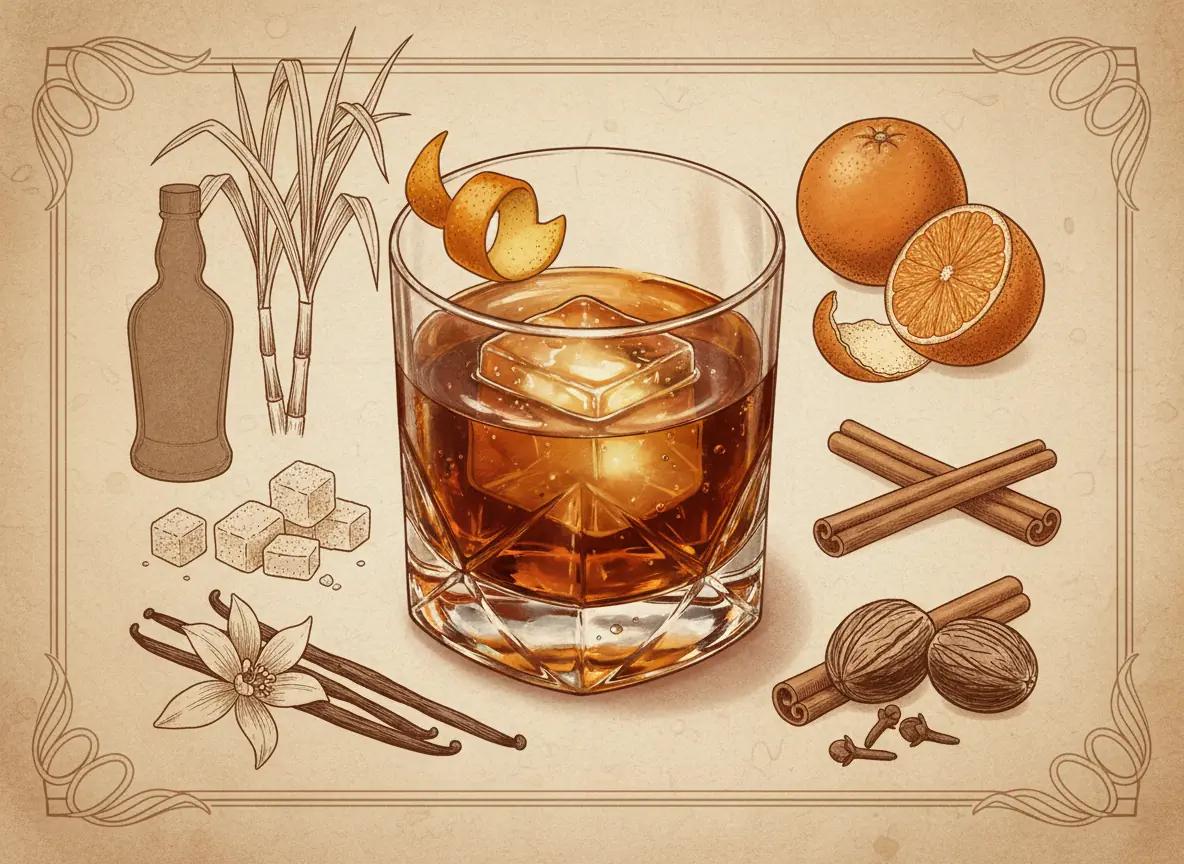
The Old Standard is 50ml of Expedition Spiced Rum, 10ml of demerara syrup, two dashes of Angostura and one of orange bitters, stirred in a mixing glass for 20 to 30 seconds and strained over a single large cube or fresh cubed ice in a rocks glass, with a wide strip of orange peel expressed over the top. About 2.1 UK units: 2.0 from the rum and about 0.1 from the bitters. It is our rum Old Fashioned. The format is spirit, sugar, water and bitters, the parts in the first definition of a cocktail known to be an alcoholic drink, which the Oxford Companion dates to a Hudson, New York, newspaper of 1806, and with nothing else in the glass it shows the spirit plainly. Two changes follow from the rum. Demerara syrup replaces white sugar, because its caramel meets the vanilla and oak. Orange bitters join the Angostura, to lift the orange peel already in the rum at the nose. Everything else is the Old Fashioned, measured.
Where this one sits
Recipe by Dan Freeman · Updated 19 October 2026