Sours, page 4
89 recipes, page 4 of 4
Base Spirit
Difficulty Level
Snowdonia Sour
The Snowdonia Sour is our whisky sour rebuilt around Welsh ingredients: Penderyn shaken with fresh lemon, elderflower liqueur, a short measure of syrup and an optional egg white, strained into a coupe under a lemon wheel. It is a house serve with a working logic rather than a history. The sour template is the most forgiving balance in mixed drinks, and Penderyn's lighter body suits it, the honeyed malt showing through the citrus instead of fighting past it. The elderflower is what makes it Welsh twice over. The liqueur's floral depth stands in for part of the sugar, and elderflower grows wild across the Welsh countryside, so the drink's second flavour is also its second flag. Lemon does the sharpening, ten millilitres of simple syrup trues the balance, and the egg white, if you use it, turns the surface to silk. Dry shake first when the white goes in, and the foam will hold the lemon wheel. Skip it and the drink still works, quicker to make and cleaner-edged.
Southside
Nobody owns the Southside’s origin story, which is half its charm. New York claims it for the 21 Club, the speakeasy where it was the house pour for the well-dressed end of Prohibition; Long Island claims it for the Southside Sportsmen’s Club, where mint from the kitchen garden met gin after the shooting; Chicago claims it for the South Side itself, where mobs allegedly softened harsh bootleg gin with lemon, sugar and mint. All three stories involve gin that needed forgiving and mint that obliged. What emerged is the Mojito’s cooler-headed cousin: gin, citrus, sugar and mint, shaken and strained into a coupe rather than built long over ice. Without soda and crushed ice diluting the frame, the drink is more concentrated and more elegant, the mint reading as perfume rather than salad, the gin’s botanicals and the herb finishing each other’s sentences. It survived Prohibition for the simplest reason: it never needed bad gin to justify itself. With a good London Dry the Southside is one of the finest simple gin sours in the canon, a drink that dresses for dinner where the Mojito dresses for the beach.
Spicy Fifty
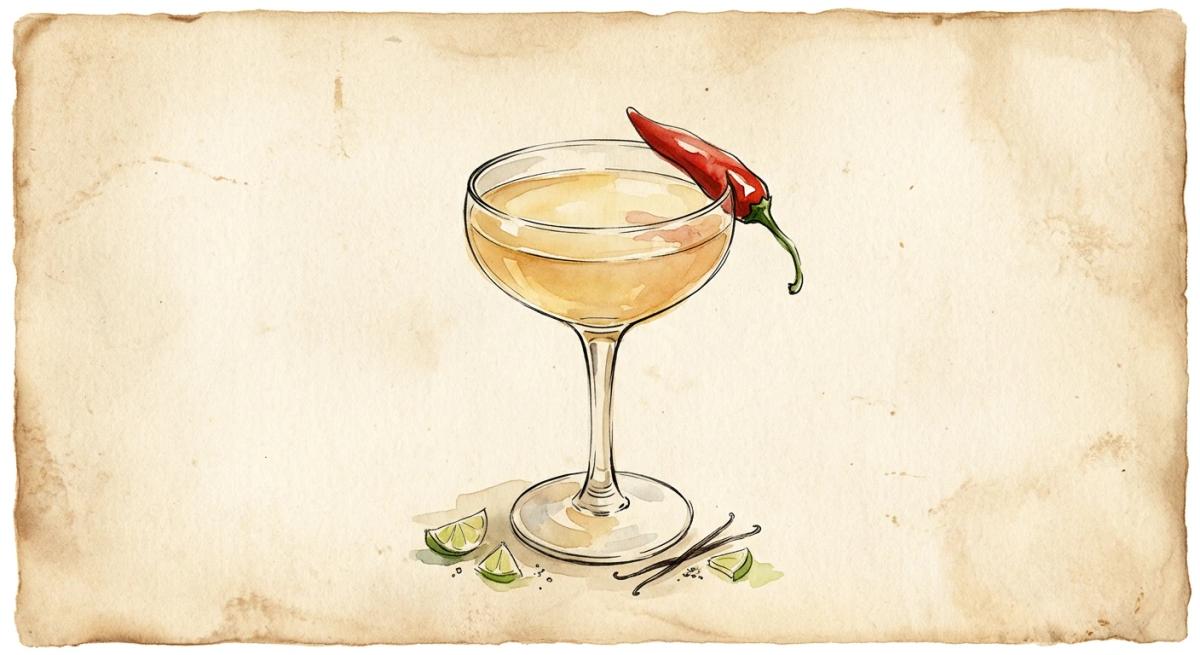
The Spicy Fifty was created by Salvatore Calabrese in 2004 for the opening menu of his London bar FIFTY, which opened in February 2005 and gave the drink its name. Calabrese, known throughout the industry as The Maestro, is one of the most influential bartenders of the modern era, and the drink was added to the IBA list of official cocktails in 2020 in the new era drink category, formal recognition of what serious bartenders had known for over a decade. The structure is a shaken sour. Vanilla vodka anchors the build with a soft sweetness; elderflower cordial brings the floral note that defined mid-2000s cocktail culture; honey syrup adds body; fresh lime juice provides the acid backbone; and red chilli pepper, sliced thin and shaken with the rest, provides the heat that gives the drink its name. An optional pinch of black pepper reinforces the warmth without adding capsaicin. The chilli heat is the variable most worth calibrating. Two thin slices, properly deseeded, give a present but pleasant heat that builds gradually through the drink; more chilli, or seeds left in, gives a considerably more aggressive result. Calibrate it to the drinker rather than serving a fixed heat level.
Spicy Margarita
The Spicy Margarita is the twenty-first century’s favourite margarita and a rare modern standard with no inventor to credit. Chilli-spiked tequila drinks are as old as Mexico, and the muddled-jalapeño margarita simply condensed out of the 2000s agave boom until every bar had a version. By the 2020s it was among the most ordered cocktails on earth. The build is a Tommy’s Margarita with the heat folded in: fresh jalapeño muddled into the shake, agave syrup smoothing the burn, lime holding the frame. Capsaicin and agave are natural partners, the pepper’s green vegetal side speaking the tequila’s own language, and the drink reads bright first and warm second. The dial is yours: seeds out for warmth, seeds in for fire, or the bottle-infusion route for a party’s worth of consistency. However it arrives, the chilli margarita is that rarest thing, a fashion that genuinely improved the classic it borrowed from.
Strawberry Margarita
The Strawberry Margarita is the frozen daiquiri's agave twin, and the machine age's other great casualty: a blended berry classic that resort slush turned into a punchline. The rescue is the same one the daiquiri needs — ripe fruit, real lime, a short blend — and the drink was always good underneath. The honest spec blends five berries with the classic trio. Triple sec is kept at half strength for the orange bridge, lime stays at full measure because it is what keeps a blended berry drink a margarita at all, and the fruit supplies the colour, the body and most of the sweetness. Ten millilitres of syrup is insurance against a poor punnet rather than a fixed ingredient. The rim question splits the family honestly: salt for the margarita's chemistry, sugar for the berry's dessert lean, and half a rim of either keeps the choice open sip by sip.
The Daffodil
The Daffodil is a house gin serve for St David’s Day, named for the national flower it resembles in the glass: Welsh gin shaken with limoncello, fresh lemon and a short measure of syrup, strained into a coupe under a lemon twist. Its work is colour as much as flavour, yellow-hued and spring-forward for a feast day that lands while winter is still arguing its case. Doubling the lemon sounds like a mistake and is the opposite. The limoncello brings sweetened, sunny peel; the fresh juice brings the sharp half of the same fruit; and ten millilitres of simple syrup trues the seam between them. Underneath, a Welsh gin supplies the structure, and there are several worth reaching for. Serve it cold and serve it early in the running order. It is a first-drink cocktail, bright enough to open a gathering and clean enough that the heavier whisky serves still make sense afterwards.
Tiki Sour
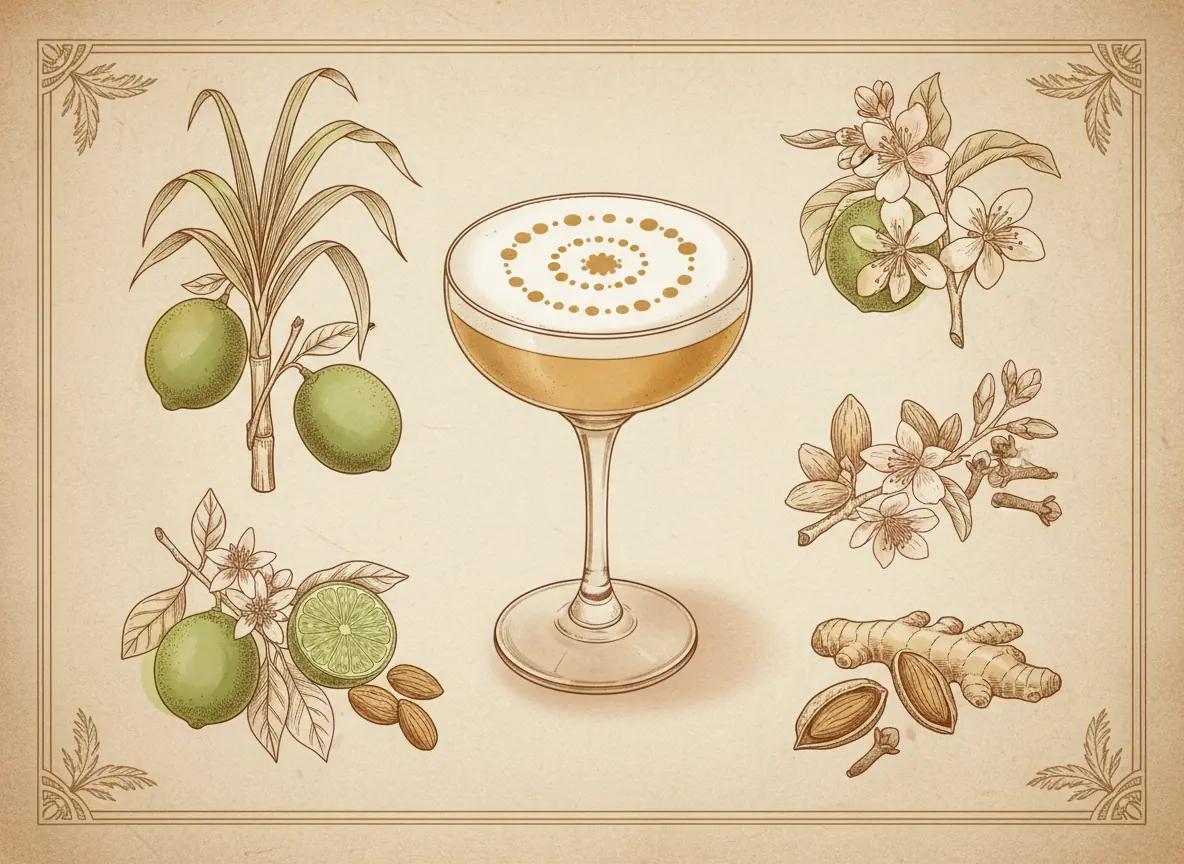
The Tiki Sour bridges two of cocktail culture’s most distinct traditions: the precision of the egg white sour and the exuberant, layered complexity of the tiki drink. Tiki drinks tend toward volume, long and layered over crushed ice; sours are precise, three or four components in careful balance, technique-driven. This drink applies the discipline of the sour to the flavour vocabulary of tiki, and the result belongs fully to both traditions. Aged rum provides the base: rich, rounded, with the vanilla and caramel depth that comes from barrel time. Fresh lime juice cuts through with clean tartness. Orgeat brings almond sweetness and body. Falernum adds spice: clove, ginger, almond, and a faint anise note that signals the tropics without announcing itself. The egg white pulls it all into a unified, silky whole, crowned with a foam that carries the aromatics upward on every sip. The result is a drink that is simultaneously disciplined in structure and generous in flavour. Complex enough to reward attention. Smooth enough to drink without effort.
Toffee Apple Sour
The Toffee Apple Sour is the cold answer to Bonfire Night’s signature flavour: a bourbon sour carrying cloudy apple juice and caramel syrup, dry shaken with egg white for a foam that will hold a drizzle of extra caramel. It is a house recipe, written for the drinker who prefers a cold glass whatever the weather is doing outside. The balance is the point. Fresh lemon keeps the caramel honest, the apple juice brings orchard character without heaviness, and the bourbon’s vanilla does the toffee work from underneath before the syrup arrives. Sweet and tart sit level, nothing cloys, and at 45ml of spirit it stays a proper sour rather than a soft one. The dry shake matters more here than the ingredient list suggests. Shaking the egg white without ice first builds the foam that defines the drink’s texture, and the second shake with ice then chills and dilutes it into its final shape.
Tommy’s Margarita
The Tommy’s Margarita was born at Tommy’s Mexican Restaurant in San Francisco, where Julio Bermejo, working his family’s floor from the early 1990s, made two changes to the house margarita that became modern doctrine: out went the triple sec, in came agave syrup, and the well tequila became 100 per cent agave or nothing. The result carries his family’s restaurant name into every serious bar on earth. The logic is like-with-like. Orange liqueur, the classic margarita’s sweetener, brings its own flavour to the party; agave syrup brings only sweetness with the plant’s own accent, which lets the tequila stand at the front of its own drink. Three ingredients, and the spirit finally audible: the Tommy’s is less a variation than an argument about what a margarita is for. It is also the drink that taught a generation to read tequila labels. Bermejo evangelised 100 per cent agave bottlings from behind his bar decades before the category boomed, and the Tommy’s remains the fastest way to taste why the words on the label matter.
Trinidad Sour
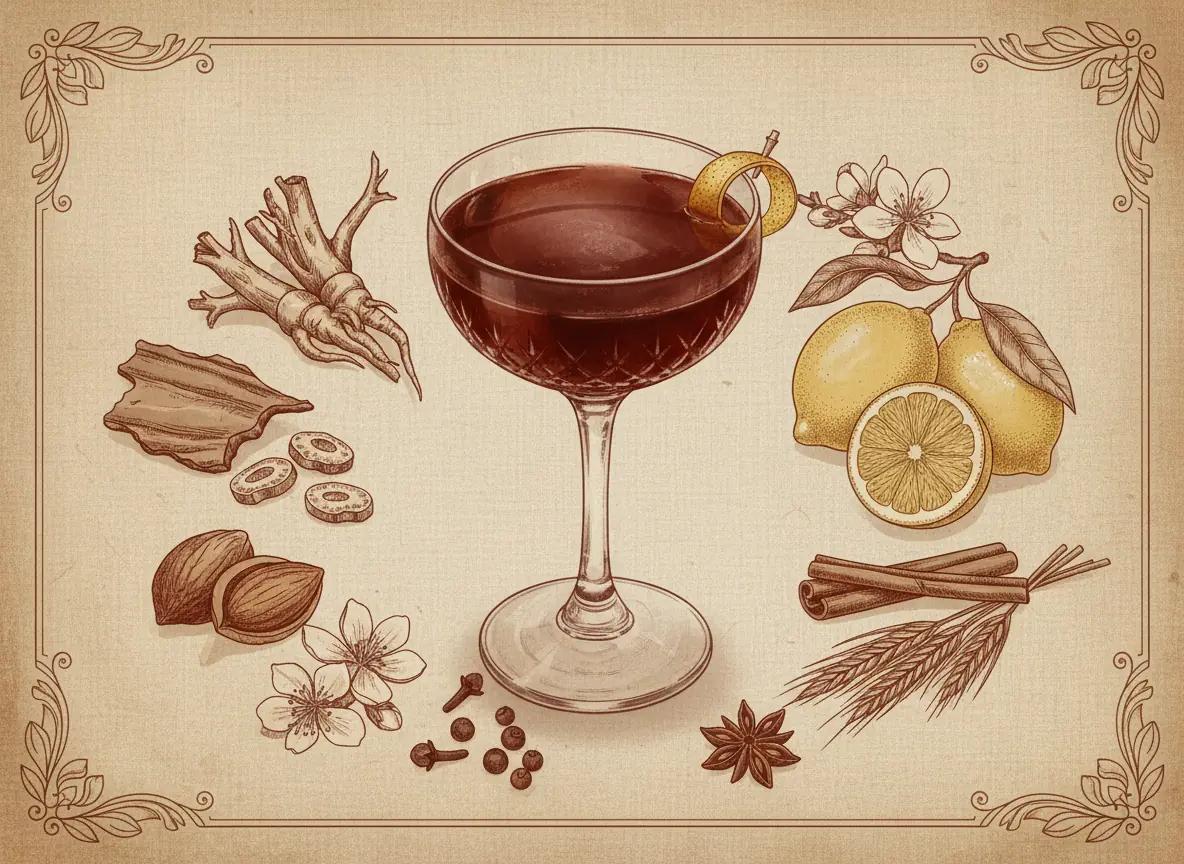
The Trinidad Sour uses Angostura bitters as the base spirit. Not a dash and not a rinse: a full forty-five millilitres, doing the job gin does in a Martini. It is the most radical inversion of conventional cocktail logic in the modern canon, and it should not work. It works because of the orgeat. At thirty millilitres, a good orgeat is the only modifier with enough sweetness and body to absorb Angostura at that volume, and the almond skin carries a faint bitterness of its own that meets the gentian rather than simply cancelling it. Lemon supplies the acid that stops the orgeat cloying, and a small measure of rye gives the whole thing a grain backbone. Giuseppe González built it at Clover Club in Brooklyn around 2008. The four measures are not interchangeable, and it is among the most precisely calibrated drinks anyone has put on a menu.
Ve.N.To
Ve.N.To is a grappa sour, which is a sentence most people have never had cause to read. It is built on white grappa with lemon, a chamomile honey mix and chamomile cordial, and it exists to make a case: that Italy's most misunderstood spirit belongs in a cocktail glass rather than only at the end of a meal. Forty-five millilitres of grappa against twenty-two and a half of lemon is a standard sour ratio, and the chamomile is where the drink becomes itself. It appears twice — once as the water in the honey mix, once as a cordial — which means the florality is the structure rather than a garnish note. The name is an acronym of Venezia, Nordest and Todaro, and the drink comes out of the movement to rehabilitate grappa as a modern ingredient rather than a rustic digestivo.
Vodka Gimlet
The Vodka Gimlet is what happened when the Gimlet emigrated to mid-century America. Vodka was the coming spirit of the 1950s, country clubs preferred their drinks clean and cold, and the naval original’s gin, with all its opinionated botanicals, was quietly asked to wait outside. What remained was the essential transaction: cold spirit, lime cordial, no argument. Losing the juniper changes the drink honestly rather than cheaply. With no botanicals to answer, the cordial steps forward and the whole thing becomes a study in preserved lime, smoother and more transparent than its parent, and colder-seeming at the same temperature. It asks more of both remaining ingredients, because there is nothing else on stage. It has its own place in the culture, ordered across decades of American fiction and film by characters who wanted something precise and unfussy and never a drink that needed explaining. That is still the job description, and it is a narrower brief than it sounds.
Vodka Sour
The Vodka Sour is the sour template at its plainest bearing: spirit, lemon and sugar in the proportions the nineteenth-century guides codified, with the spirit contributing strength and nothing else. It is the version nobody writes about and a great many people order, which is roughly the relationship vodka has with the entire cocktail canon. The plainness is the point rather than a failing. A whiskey sour argues about barrels, a gin sour about botanicals, a daiquiri about cane. This one argues about none of them, so what you taste is the triangle itself: how much acid, how much sugar, how cold it is and how hard it was shaken. Everything the template does is visible, because nothing is standing in front of it. The egg white is optional and it is the only decision here with a real consequence. Without it the drink is bright and direct. With it, silk arrives over exactly the same balance.
Ward Eight
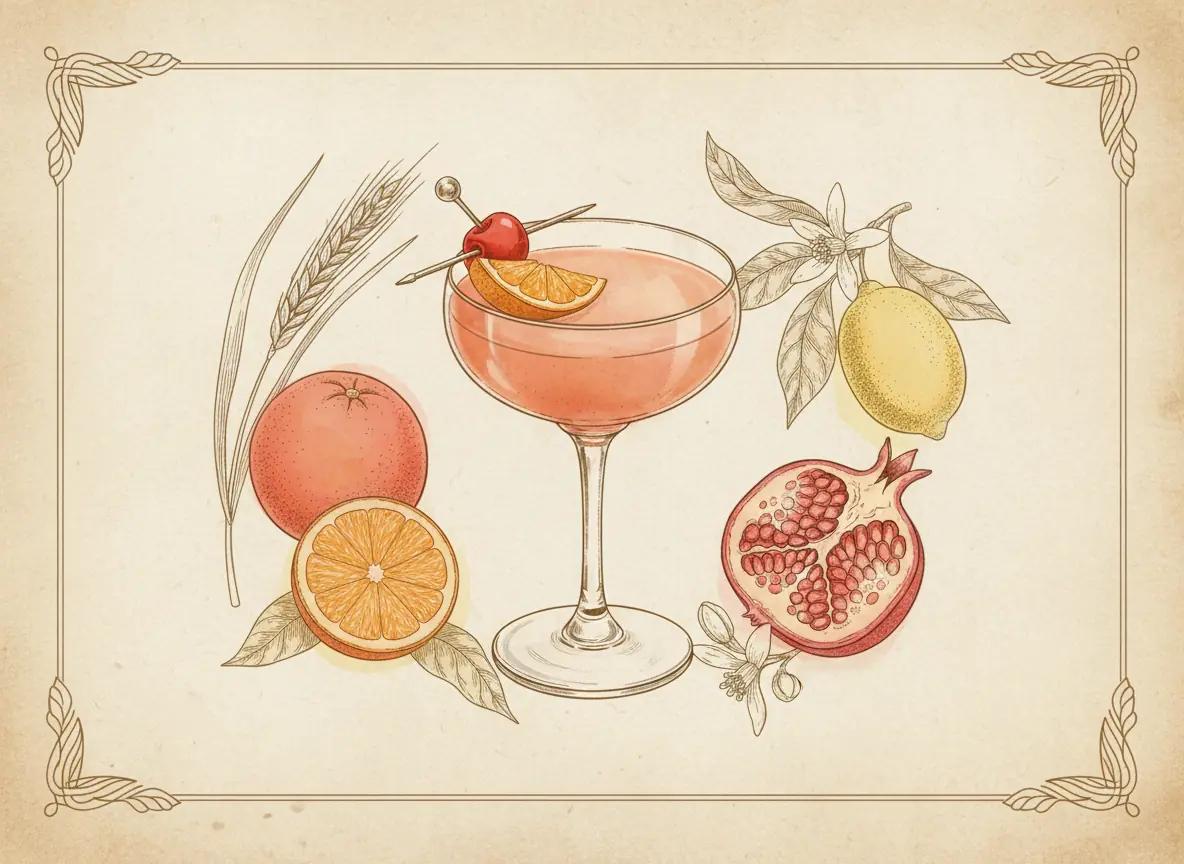
The Ward Eight was created at Locke-Ober Café in Boston in 1898, named after the eighth ward of the city, whose Democratic machine was celebrating the anticipated election victory of Martin Lomasney on the night it was first served. Lomasney won as expected, and the drink outlasted both his career and the ward system by over a century. The structure sits in the whiskey sour family with one element that separates it from the standard sour: rye with fresh lemon juice, fresh orange juice and grenadine. The orange alongside the lemon softens and rounds the citrus, while the grenadine provides the sweetening and a colour that makes this one of the more visually striking drinks in the sour canon. Rye is the historically correct and most interesting choice. Its spice and dryness sit against the combined citrus and grenadine in a way that bourbon's rounder character does not replicate, keeping the whiskey present and the balance dynamic.
Whiskey Sour
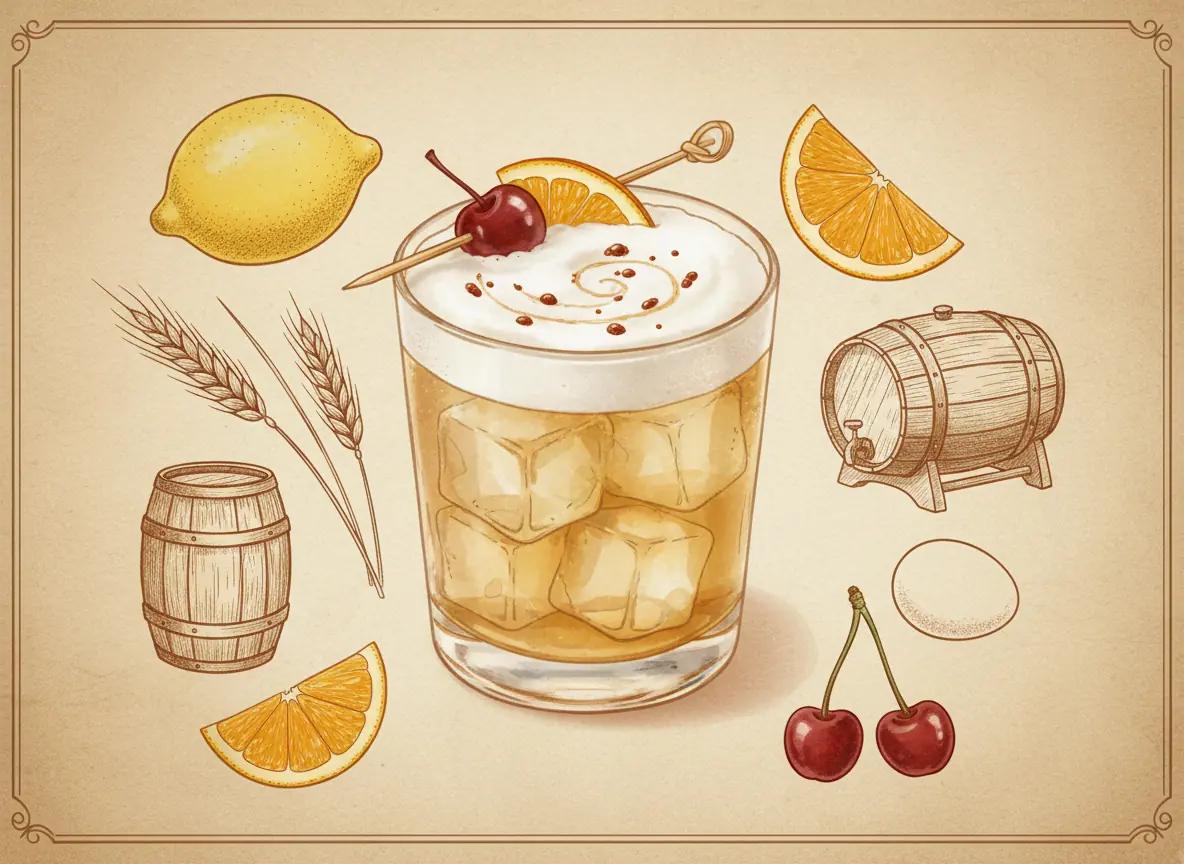
The Whiskey Sour is one of the oldest documented cocktails in the American canon, printed in Jerry Thomas’s 1862 bar guide, and its structure of whiskey, fresh lemon and sugar is the template every other whiskey sour derives from. The Honey Sour changes the sweetener. The Penicillin changes the sweetener and the technique. The Amaretto Sour changes the base spirit. Understand this drink and the whole family becomes readable. The egg white question matters more here than in most sours, because both versions are widely ordered and both are correct. With it, the drink is a Boston Sour: silky, with the foam carrying the bourbon’s vanilla to the nose before the lemon reaches the palate. Without it, sharper and more direct. Pre-made sour mix has shown a generation this drink at its worst. Built with lemon squeezed to order, a decent bourbon and a properly proportioned syrup, it surprises almost everyone whose expectations were formed by the imitation.
White Lady
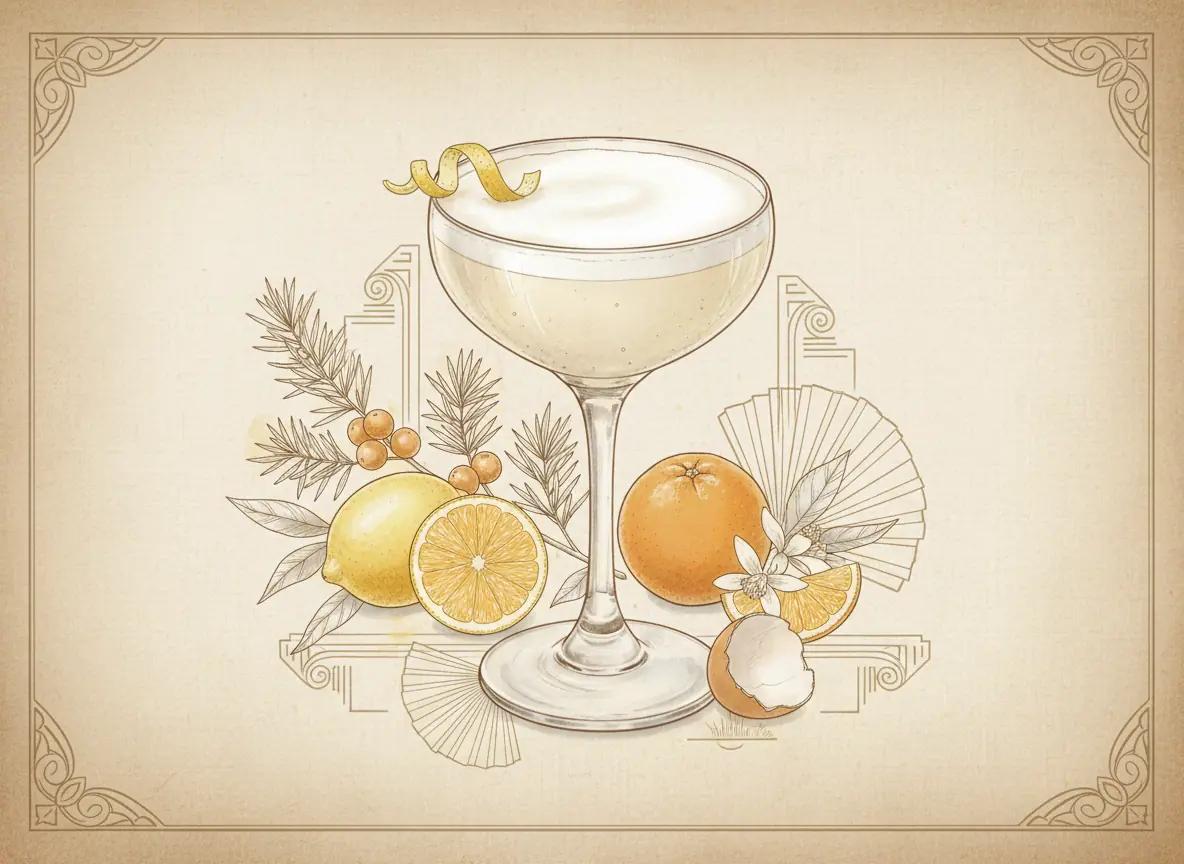
The White Lady was created by Harry MacElhone at Ciro's Club in London in 1919, in an early form built on crème de menthe, and then substantially revised by MacElhone himself at Harry's New York Bar in Paris in 1929, when he replaced the mint with gin and added egg white. The earlier drink carries the same name and is a different thing entirely. The 1929 revision is the one ordered today. Gin, Cointreau and fresh lemon in a ratio that seats the gin clearly in front, with the liqueur and the acid holding a balanced frame around it. The official specification stops there; MacElhone's own rebuild adds an egg white, and that version is below. It is often described as a Sidecar made with gin, which is accurate as far as it goes and misses the specific relationship between juniper and Cointreau's orange. The two sit at adjacent points in the canon rather than one being a substitution of the other.
Yellow Jacket
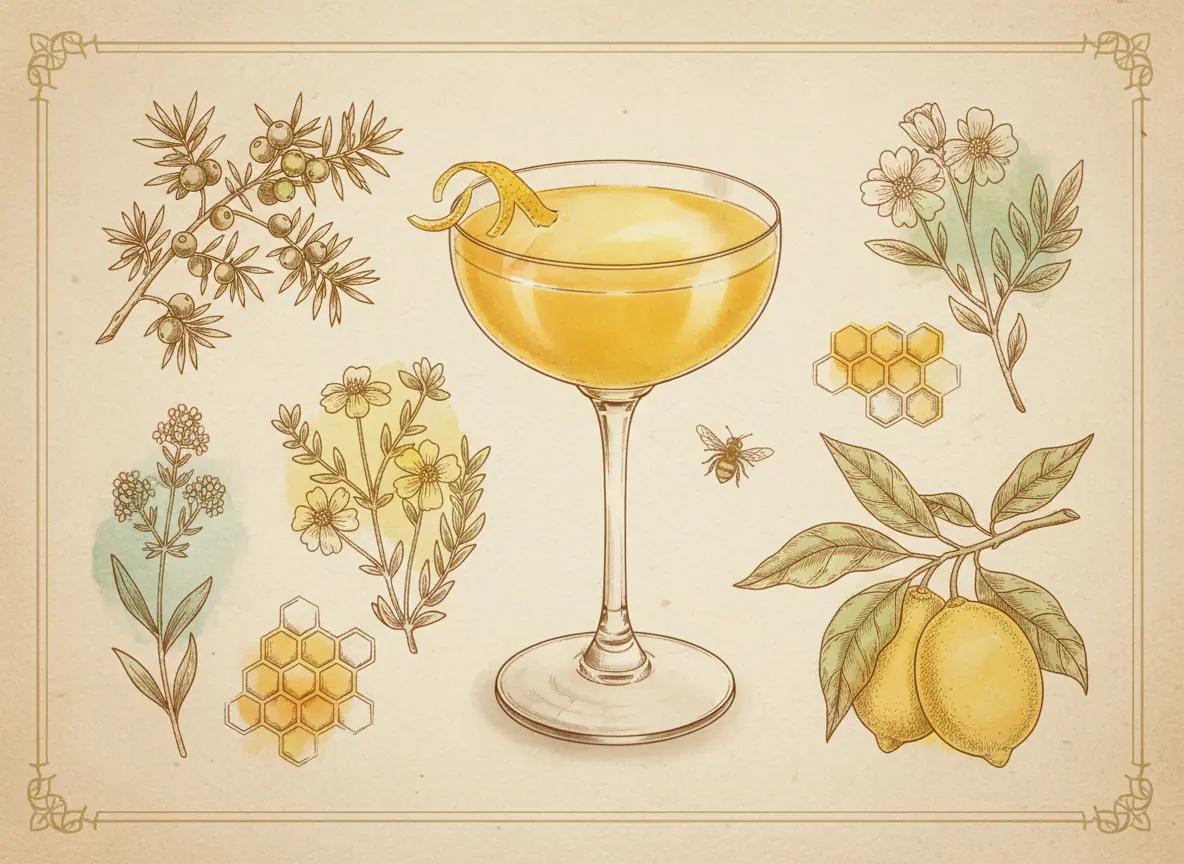
A gin sour built around two natural allies. Yellow Chartreuse and honey syrup share a floral, herbal sweetness that neither achieves alone, and fresh lemon juice cuts through both with clean tartness. London Dry gin provides the backbone, holding its own against the Chartreuse's complexity without overwhelming the delicacy of the honey. The pairing is not obvious until you taste it. Yellow Chartreuse is built around chamomile, saffron and alpine botanicals; good honey carries floral notes from the flowers the bees visited. They do not duplicate each other so much as extend each other, and the drink's character comes almost entirely from the way the two sit together in the glass. The result is bright, aromatic and golden in the glass. Herbal without being aggressive. Sweet without being cloying. Tart without being sharp. The Yellow Jacket sits in its own space on the sour spectrum, recognisable in structure but quite distinctive in character, and it is one of the cleaner expressions of yellow Chartreuse anywhere in the canon.