Rattlesnake
A Rattlesnake is 60ml of rye whiskey, 22.5ml of fresh lemon juice, 20ml of sugar syrup, 15ml of egg white and three dashes of absinthe, dry shaken for 10 to 15 seconds, shaken hard with ice for 10 to 12 seconds more and double strained into a chilled coupe. No garnish. About 2.6 UK units. It is a whiskey sour with absinthe shaken through it. In a Sazerac the absinthe coats the glass and reaches you as scent; here it is mixed into the foam, so a light anise runs through every sip. The egg white is optional and raw: leave it out for anyone allergic to egg, or use pasteurised white from a carton. Difford’s Guide prints the drink from Harry Craddock’s Savoy Cocktail Book of 1930, where a note says it is so called because it will either cure a rattlesnake bite, kill rattlesnakes or make you see them.
Glassware: Coupe Glass
Garnish: None
Ingredients
60ml
Rye at 40% ABV or a little more. Its pepper is what the anise needs to meet; bourbon makes a softer, sweeter drink.
20ml
One to one sugar syrup, by weight. Enough to balance the lemon; absinthe adds a little sweetness of its own.
15ml (optional)
About half a white, for a full foam. Raw. The NHS says hen eggs with the British Lion stamp can be eaten raw, including in pregnancy, while other hen eggs should be eaten well cooked; pasteurised carton white is the alternative. Contains egg: leave it out, or use aquafaba, for anyone allergic.
Instructions
Squeeze the lemon juice the same day and chill a coupe.
Add the rye, lemon juice, sugar syrup, absinthe and egg white, if using, to a shaker.
If using egg white, dry shake without ice for 10 to 15 seconds.
Fill with cubed ice and shake hard for 10 to 12 seconds.
Double strain into the chilled coupe and let the foam settle for a moment. No garnish.
Our version
Craddock’s Savoy Rattlesnake measured for one: 60ml of rye, 22.5ml of lemon and 20ml of sugar syrup in place of his sweetened lemon juice, 15ml of egg white made optional, and three dashes of absinthe.
Source: our own specification. Last checked 10 October 2026.
Expert Tip
Count the absinthe: three dashes. At 68% ABV it can take over a sour, and a few dashes too many turn a background anise into the main flavour. With egg white, dry shake without ice for 10 to 15 seconds first, then add ice and shake hard for 10 to 12 seconds. The white whips into foam far more easily before it is chilled and diluted. Choose rye over bourbon. Rye’s pepper stands up to the anise; bourbon’s sweetness lets the absinthe sit on top.
Behind the Rattlesnake
Flavour Profile
Craddock’s Note
Difford’s Guide prints the Rattlesnake from the Savoy Cocktail Book of 1930 as a recipe for six: rye, sweetened lemon juice, egg white and absinthe, shaken. The Oxford Companion has Harry Craddock hired in 1920 to work the dispensary bar at London’s Savoy Hotel, and management asking him to compile his drinks recipes in 1930.
Its note on the name is the reason most people know the drink: it will either cure a rattlesnake bite, kill rattlesnakes or make you see them. The last option is a joke about absinthe, which the Oxford Companion says the United States banned in 1912.
Absinthe Inside the Drink
A Sazerac rinses absinthe round the glass and pours the rest away, so the anise is mostly on the nose. The Rattlesnake shakes three dashes in with the rest. Mixed through a foam, the absinthe stays in the texture, and the anise reaches you at the same low level on every sip.
Three dashes is enough at 68% ABV. The sour underneath is already balanced, so the absinthe is seasoning, not a fourth main ingredient.
Rye Against Anise
Rye brings grain spice and pepper, which meet the absinthe’s anise and herbs head on. Bourbon’s corn and vanilla are softer, so the absinthe ends up sitting on top of the drink. Either works; rye gives the tighter balance.
Our Whiskey Sour and the Rattlesnake
Our Whiskey Sour beside our Rattlesnake
Whiskey
- Whiskey Sour
- 45ml bourbon
- Rattlesnake
- 60ml rye
Lemon juice
- Whiskey Sour
- 25ml
- Rattlesnake
- 22.5ml
Sugar syrup
- Whiskey Sour
- 20ml
- Rattlesnake
- 20ml
Egg white
- Whiskey Sour
- 15ml, optional
- Rattlesnake
- 15ml, optional
Absinthe
- Whiskey Sour
- None
- Rattlesnake
- Three dashes, shaken in
Serve
- Whiskey Sour
- Over ice, or up
- Rattlesnake
- Up, in a chilled coupe
UK units
- Whiskey Sour
- About 1.8
- Rattlesnake
- About 2.6
| Element | Whiskey Sour | Rattlesnake |
|---|---|---|
| Whiskey | 45ml bourbon | 60ml rye |
| Lemon juice | 25ml | 22.5ml |
| Sugar syrup | 20ml | 20ml |
| Egg white | 15ml, optional | 15ml, optional |
| Absinthe | None | Three dashes, shaken in |
| Serve | Over ice, or up | Up, in a chilled coupe |
| UK units | About 1.8 | About 2.6 |
How to Serve It
Up, in a chilled coupe, double strained so no ice breaks the foam, and without garnish. It is strong for a sour, so it suits the end of an evening rather than the start.
For the sour without absinthe, make a Whiskey Sour; for absinthe rinsed round the glass, a Sazerac.
Make it at home
The Spirit
Whiskey (Rye)Rye whiskey, under the US standard 27 CFR 5.143, takes at least 51% of its grain from rye and its colour from new charred oak, and goes into bottle at a 40% ABV minimum; our recipes take 40% as the figure. Rye makes a drier, spicier, more peppery spirit than corn, which is why stirred classics such as the Manhattan, Vieux Carré and Brooklyn are written for it. It appears in 23 of our recipes.
Master the Techniques
More to explore
Frequently Asked Questions
What is in a Rattlesnake cocktail?
Where does the name come from?
Why shake the absinthe in rather than rinse the glass?
Do I need the egg white?
Can I use bourbon?
What does it add to a Whiskey Sour?
How strong is a Rattlesnake?
Sources.
Correct as of 19 October 2026.
- Difford’s Guide, “Rattlesnake” (secondary source: first appeared as a recipe for six in Craddock’s 1930 Savoy Cocktail Book with the note “So-called because it will either cure Rattlesnake bite, or kill Rattlesnakes, or make you see them”).
- The Oxford Companion to Spirits and Cocktails (Gwydion Stone), “absinthe” (secondary source: absinthe banned in Belgium in 1906, the Netherlands in 1909, Switzerland in 1910, the United States in 1912 and France in 1915).
- The Oxford Companion to Spirits and Cocktails (Anistatia R. Miller and Jared M. Brown), “Craddock, Harry Lawson” (secondary source: returned to England in 1920 and hired to work the dispensary bar at the Savoy; asked five years after 1925 to compile his recipes).
- NHS, “Foods to avoid in pregnancy” (official page: hen eggs with the British Lion stamp (or from the Laid in Britain scheme) can be eaten raw, partially cooked or well cooked; other hen eggs only well cooked).
You Might Also Like
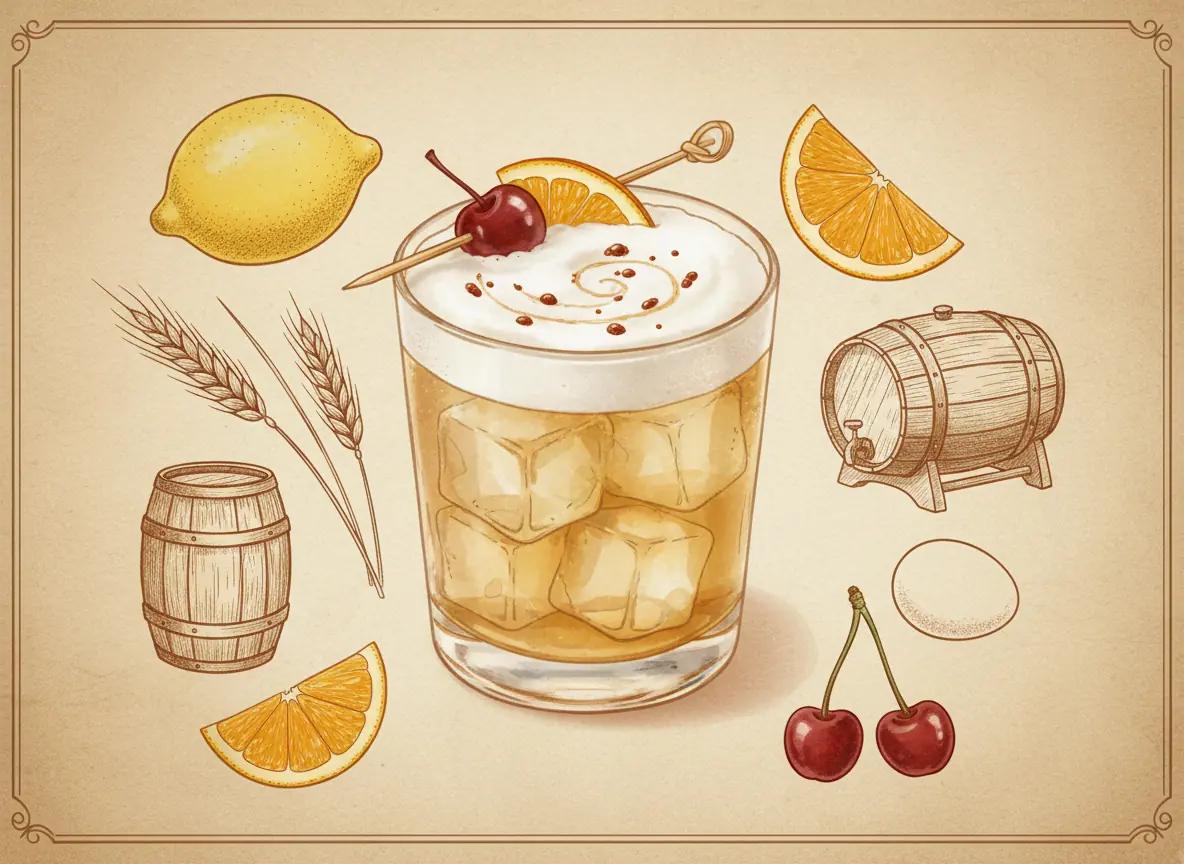
Whiskey Sour
A Whiskey Sour is 45ml of bourbon, 25ml of fresh lemon juice and 20ml of sugar syrup, shaken hard with ice, then poured through a strainer onto fresh cubes in a rocks glass, with half an orange slice and a cherry. Add 15ml of egg white, dry shaken first, and dot the foam with Angostura. About 1.8 UK units. The measures are the IBA’s. The IBA’s egg white is optional and only a few drops; we use 15ml, about half a white, because that is what a full foam takes. The bitters are not in the IBA recipe, and they only go on when there is foam to hold them. The name is in print by 1870, in a Wisconsin newspaper, and the sour is older still: Jerry Thomas printed brandy, gin and rum sours in 1862. Difford’s Guide lists a Boston Sour as bourbon soured with lemon juice and smoothed by egg white.
Sazerac
The IBA’s Sazerac is 50ml of cognac stirred with a sugar cube and two dashes of Peychaud’s bitters, then strained, with no ice, into a chilled rocks glass rinsed with absinthe, and finished with lemon zest. About 2.1 UK units. New Orleans more often makes it with rye whiskey. The Sazerac Company’s own history places Aaron Bird at the Sazerac House beside the Merchants Exchange from 1852 and dates the switch to rye to 1885. The Oxford Companion says the Sazerac cocktail was first mentioned in print only in 1899, and that the company’s account, which follows the historian Stanley Clisby Arthur, is undercut by numerous errors. The absinthe never goes into the mixing glass. It coats the glass and is poured away, leaving anise on the nose of every sip.
Improved Whiskey Cocktail
An Improved Whiskey Cocktail is 60ml of rye whiskey with 5ml of maraschino liqueur, 2.5ml of absinthe, 10ml of demerara syrup and two dashes of Angostura bitters, stirred over ice for 20 to 30 seconds and strained over one large cube in a rocks glass, with lemon peel expressed and dropped in. About 2.8 UK units. Difford’s Guide, reproducing it, says Jerry Thomas printed an Improved Whiskey Cocktail in his 1876 bar guide: the plain whiskey cocktail of spirit, sugar and bitters, with dashes of maraschino and absinthe added. The Oxford Companion says that once vermouth drinks arrived in the 1870s some drinkers kept to the tried-and-true formula and called for an “old-fashioned” cocktail. The additions are small on purpose. Each should sit behind the rye, never in front of it.
Where this one sits
Recipe by Jerry Can Spirits · Updated 19 October 2026