Southside
A Southside is 60ml of London Dry gin, 30ml of fresh lemon juice, 15ml of simple syrup and five or six mint leaves, shaken hard for 10 to 12 seconds and double strained into a chilled coupe, with a small mint sprig. About 2.4 UK units. Those are the IBA’s measures; 15ml of egg white is optional. The Oxford Companion, in an entry by Eric Felten, says the story that it was born in the speakeasies of Chicago’s South Side is incorrect: the drink evolved from the Mint Juleps made at Snedecor’s Tavern on Long Island, which became the Southside Sportsman’s Club, and it has long been the house drink at New York’s 21 Club. The drink does not depend on any of that. In the glass it is a gin sour scented with mint. Shaken and served up, with no soda or crushed ice, it is more concentrated than a Mojito, and the mint reads as aroma rather than as leaves in the drink.
Variations
Glassware: Coupe Glass
Garnish: Small mint sprig slapped once
Ingredients
60ml
London Dry at 40% ABV or slightly stronger. Juniper keeps the mint from turning the drink sweet; a softer, citrus-led gin gives a gentler version.
30ml
Squeezed the same day. The IBA’s 30ml of lemon against 15ml of syrup makes a dry sour, which keeps the mint fresh rather than sugary.
15ml
One to one sugar syrup, by weight. Mint reads as sweet, so the drink needs less sugar than a standard sour.
5 to 6 leaves
Whole, fresh leaves straight into the shaker. The ice bruises them during the shake; muddling tears them and makes the drink bitter.
15ml (optional)
The IBA lists only a few drops; 15ml, about half a white, gives a soft foam that carries the mint. Raw. Following the FSA, British Lion-mark eggs are safe raw, including for vulnerable groups and in pregnancy; pasteurised carton white is the alternative. Eating out, where the mark cannot be checked, the FSA advises vulnerable people to have their eggs thoroughly cooked. Contains egg: leave it out, or use aquafaba, for anyone allergic.
Instructions
Squeeze the lemon juice the same day and chill a coupe.
Add the gin, lemon juice, sugar syrup, mint leaves and egg white, if using, to a shaker.
If using egg white, dry shake without ice for 10 to 15 seconds.
Fill with cubed ice and shake hard for 10 to 12 seconds.
Double strain into the chilled coupe.
Slap a small mint sprig between your palms and lay it on the drink.
Source: the IBA (Official IBA specification, listed as South Side; method ours. The IBA’s egg white is a few drops; ours is 15ml, optional.). Last checked 10 October 2026.
Expert Tip
Do not muddle. The ice bruises the leaves during the shake, enough to release their oil; a muddler tears them and the drink turns grassy. Hold a tea strainer over the coupe as you pour. Mint shreds in the shaker, and the fragments belong in the sieve rather than the coupe. Slap the garnish sprig once between your palms before it goes on. It releases the scent you smell as you drink.
Behind the Southside
Flavour Profile
Three Claims, No Proof
The Oxford Companion says the Southside was rumoured, incorrectly, to be born in the Prohibition-era speakeasies of Chicago’s South Side. It evolved from the Mint Juleps made at Snedecor’s Tavern on Long Island, which became the Southside Sportsman’s Club, where New York’s wealthy went to fish for trout and picked up a taste for the drink. The Companion’s own recipe is a tall drink of gin, lemon juice, sugar, mint and soda, so the up version here differs in the glass as well as in the story.
The Mint Technique
Whole leaves go into the shaker without muddling. A hard shake of 10 to 12 seconds bruises them enough to release their oil, and the fine strainer removes the shreds. Torn leaves turn the drink bitter and leave green flecks in the coupe.
Gin Selection
A juniper-led London Dry gives the classic drink, crisp and dry against the mint. A citrus-led contemporary gin makes it softer and more summery. Avoid sweetened or flavoured gins: the drink already has sugar and mint, and a sweet gin leaves the lemon nothing to cut.
Shorter Than a Mojito
The Southside and the Mojito share mint, citrus and sugar, but they are built differently. A Mojito is built long over ice and topped with soda, so it is diluted by design. A Southside is shaken and served up, with its dilution fixed by the shake.
The result is a stronger, more concentrated drink. The mint comes through as scent rather than as leaves in the glass, and the gin’s botanicals stay in front.
Our Mojito beside the Southside
Spirit
- Mojito
- 45ml white rum
- Southside
- 60ml London Dry gin
Citrus
- Mojito
- 20ml lime
- Southside
- 30ml lemon
Sweetener
- Mojito
- Two teaspoons cane sugar
- Southside
- 15ml sugar syrup
Mint
- Mojito
- Six sprigs, pressed
- Southside
- Five or six leaves, shaken
Lengthener
- Mojito
- 75 to 100ml soda
- Southside
- None
Serve
- Mojito
- Highball over ice
- Southside
- Up, chilled coupe
UK units
- Mojito
- About 1.8
- Southside
- About 2.4
| Element | Mojito | Southside |
|---|---|---|
| Spirit | 45ml white rum | 60ml London Dry gin |
| Citrus | 20ml lime | 30ml lemon |
| Sweetener | Two teaspoons cane sugar | 15ml sugar syrup |
| Mint | Six sprigs, pressed | Five or six leaves, shaken |
| Lengthener | 75 to 100ml soda | None |
| Serve | Highball over ice | Up, chilled coupe |
| UK units | About 1.8 | About 2.4 |
Lemon or Lime
The IBA specifies lemon. Many bars pour lime, and both have a case. Lemon is rounder and sits more gently against mint, keeping the drink in the sour family. Lime is sharper and more aromatic and pulls it toward a Mojito without soda.
Our lime version keeps its own measures, 22.5ml of lime against 30ml of lemon, because in our experience lime at the full measure covers the mint. Whichever you use, squeeze it the same day; in a drink this simple there is nothing to hide stale juice.
The Royale
A Southside Royale tops the shaken drink with champagne or another dry sparkling wine in a flute. It is longer and lighter on the palate, the bubbles carry the mint, and it sits very close to a French 75.
How to Serve It
Up, in a chilled coupe, early in the evening. A small mint sprig, slapped once to release its scent, is the only garnish.
For mint and lime built long, make a Mojito; for cucumber with the mint, an Eastside.
Make it at home
The Spirit
GinGin is a spirit flavoured with juniper berries. Under the retained Regulation (EC) 110/2008, juniper must lead the taste, the floor is 37.5% ABV, and the route the flavour takes sets the grade: plain gin, distilled gin or London gin. Our recipes count it at 40%, and it carries the Martini, the Negroni and the Gin and Tonic.
More to explore
Frequently Asked Questions
What is in a Southside?
Where does the Southside come from?
What is the difference between a Southside and a Mojito?
Should a Southside use lemon or lime?
Should I muddle the mint?
Do I need egg white?
What is a Southside Royale?
How strong is a Southside?
Sources.
Correct as of 19 October 2026.
- The Oxford Companion to Spirits and Cocktails (Eric Felten), “The Southside” (secondary source: not born in Chicago speakeasies; evolved from the Mint Juleps of Snedecor’s Tavern and the Southside Sportsman’s Club on Long Island; the house drink at the 21 Club; a tall drink with soda).
- IBA, “South Side” (official New Era specification: 60ml London dry gin, 30ml lemon juice, 15ml simple syrup, 5 or 6 mint leaves, a few drops of egg white (optional)).
You Might Also Like
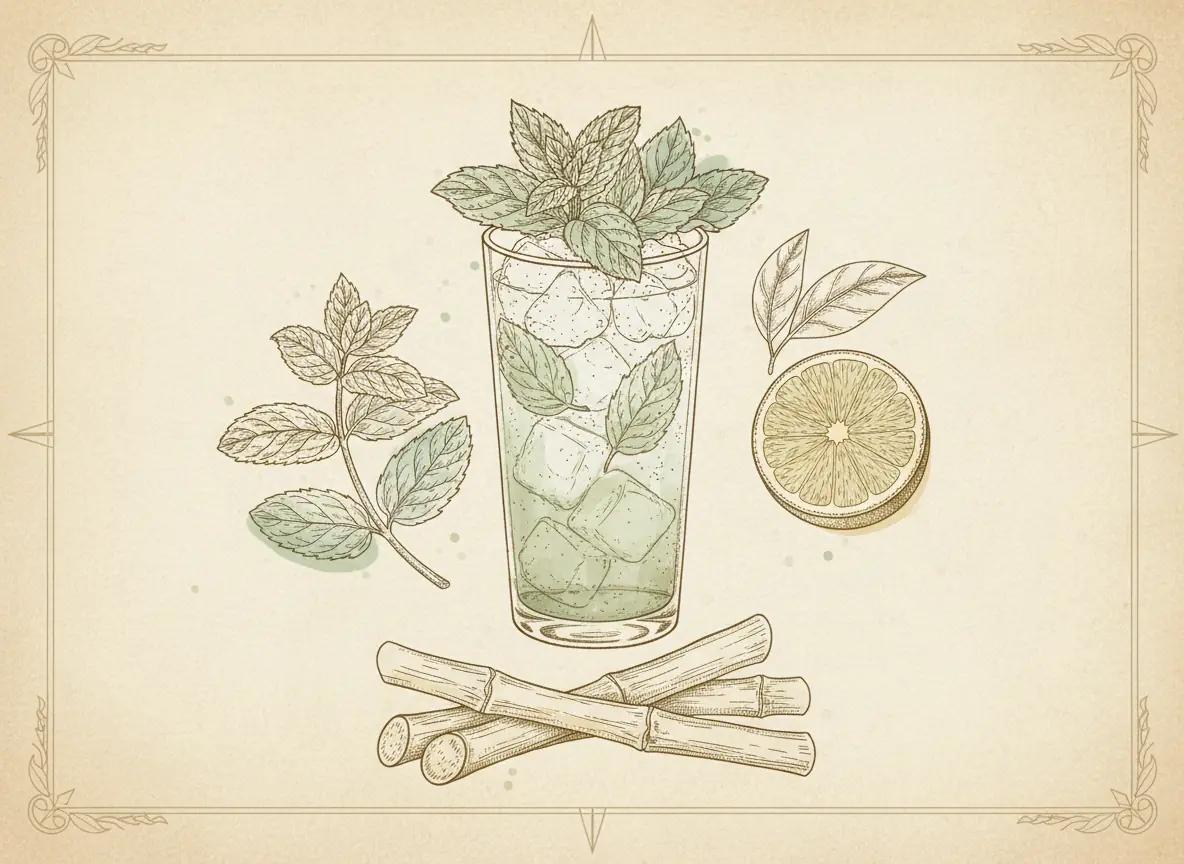
Mojito
A Mojito is 45ml of white rum, 20ml of fresh lime juice, two teaspoons of white cane sugar and six sprigs of mint, built in a highball. The mint is pressed gently with the sugar, the glass is filled with cubed ice, the rum and lime go in, and 75 to 100ml of chilled soda water tops it. About 1.8 UK units. Those are the IBA’s measures. The IBA only says to top up with soda, so the 75 to 100ml is ours. Press the mint once or twice and stop. Torn leaves make the drink bitter and grassy, and that, more often than the rum, is why a Mojito disappoints. The sugar grains help: they bruise the surface of the leaf as you press, and the lime then carries the oil through the glass.
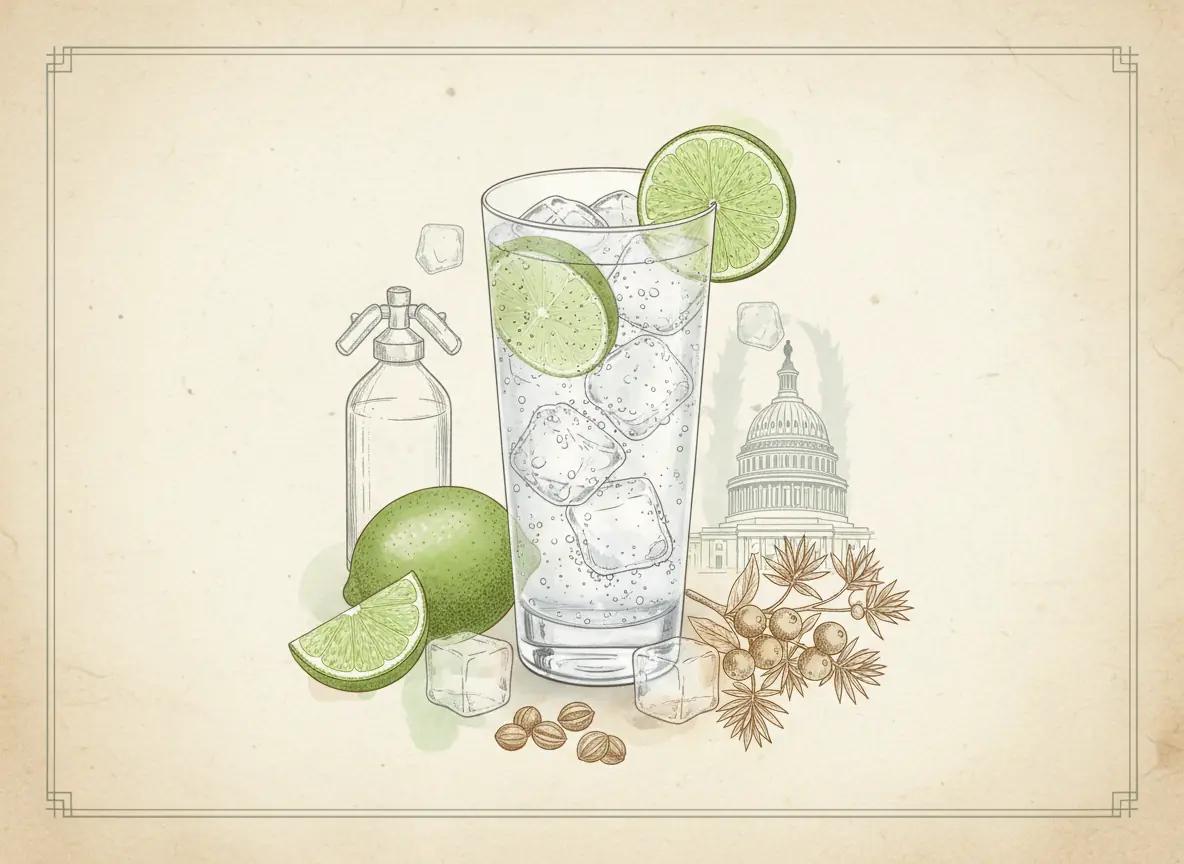
Gin Rickey
A Gin Rickey is 60ml of London Dry gin and 25ml of fresh lime juice over ice in a highball, topped with 100 to 125ml of cold soda water and finished with a lime wheel. There is no sugar in it. About 2.4 UK units. The Oxford Companion says the Rickey was popularised in the late 1880s at Shoomaker’s bar in Washington, D.C., by Colonel Joseph Kerr “Joe” Rickey, a lobbyist from Missouri, and the bartender George Williamson, that it began with bourbon, and that the Gin Rickey, first found in print in 1893, was the version most widely known by the mid-1890s. With no sugar to round anything off, the gin and the lime carry it. Squeeze the lime on the day and close to the drink: in our experience lime turns flat and bitter within hours, and a Rickey has nothing to hide that behind.
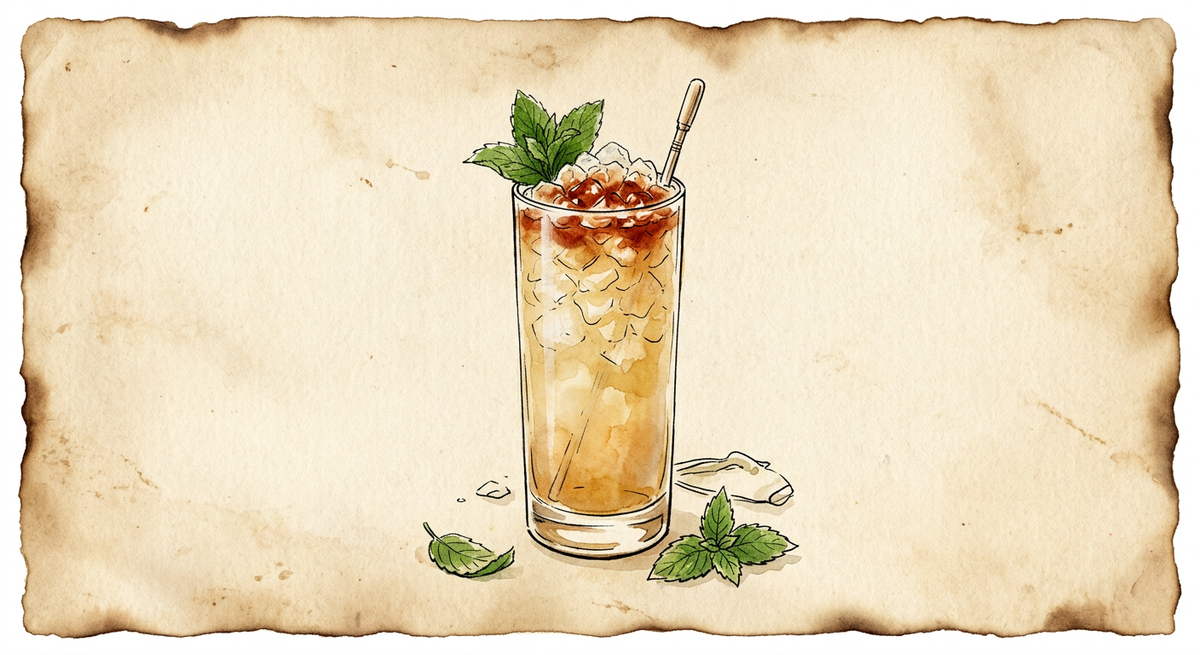
Queen’s Park Swizzle
A Queen’s Park Swizzle is 60ml of Demerara rum, 22.5ml of fresh lime juice and 15ml of demerara syrup over eight pressed mint leaves, swizzled with crushed ice in a highball until the glass frosts, then topped with more ice, four dashes of Angostura and a mint bouquet. About 2.5 UK units. It takes its name from the Queen’s Park Hotel in Port of Spain, Trinidad. The Oxford Companion says it first saw print in the 1946 Trader Vic’s Book of Food and Drink as a drink from the Queen’s Park Hotel in Trinidad, and that its creation was likely between 1933 and 1938. No bartender is named with it. Difford’s Guide says Trader Vic called it, in that book, “the most delightful form of anesthesia given out today”. The bitters go on last and are left alone. Drunk through a straw from the bottom of the glass, it opens on lime, mint and rum and closes on the Angostura as the bitters work down through the ice.
Where this one sits
Recipe by Jerry Can Spirits · Updated 19 October 2026