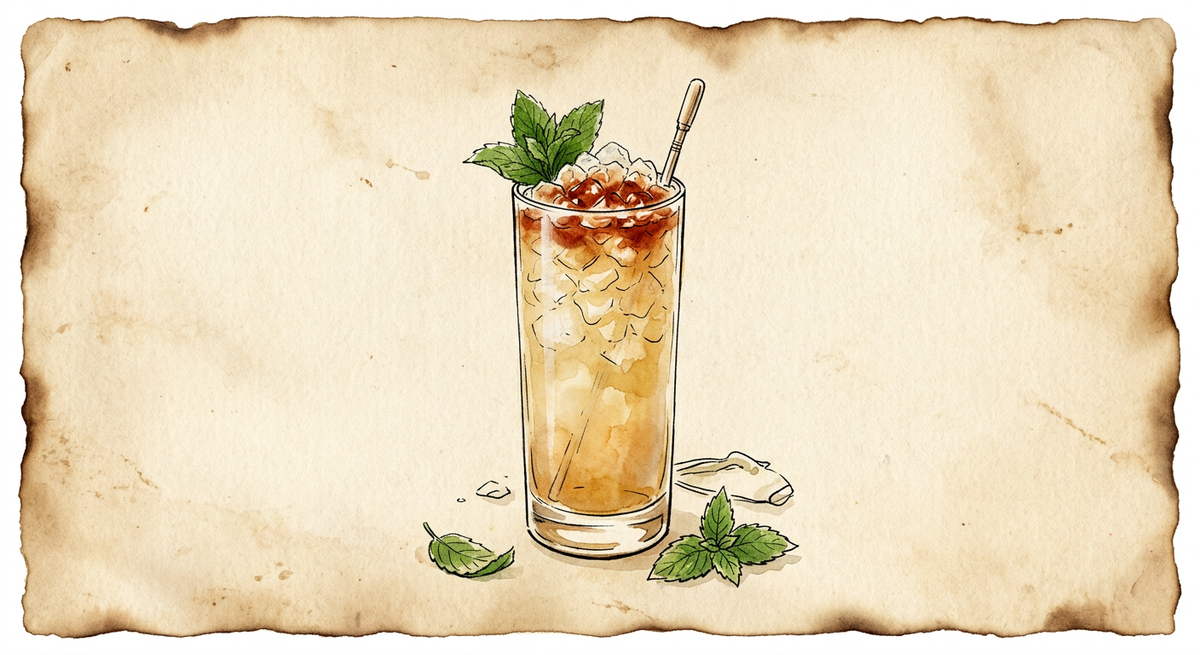
Queen’s Park Swizzle
A Queen’s Park Swizzle is 60ml of Demerara rum, 22.5ml of fresh lime juice and 15ml of demerara syrup over eight pressed mint leaves, swizzled with crushed ice in a highball until the glass frosts, then topped with more ice, four dashes of Angostura and a mint bouquet. About 2.5 UK units. It takes its name from the Queen’s Park Hotel in Port of Spain, Trinidad. The Oxford Companion says it first saw print in the 1946 Trader Vic’s Book of Food and Drink as a drink from the Queen’s Park Hotel in Trinidad, and that its creation was likely between 1933 and 1938. No bartender is named with it. Difford’s Guide says Trader Vic called it, in that book, “the most delightful form of anesthesia given out today”. The bitters go on last and are left alone. Drunk through a straw from the bottom of the glass, it opens on lime, mint and rum and closes on the Angostura as the bitters work down through the ice.
Glassware: Highball Glass
Garnish: Mint bouquet over the Angostura crown
Ingredients
60ml
A Demerara rum from Guyana at 40% ABV, the traditional base. Its dark sugar and dried fruit weight stands up to four dashes of bitters, where a light white rum is lost under them.
22.5ml
Squeezed the same day. It is the only acid, and pressed with the mint at the start it carries the leaf’s oil through the drink.
15ml
Demerara sugar dissolved in half its weight of water. Its brown-sugar depth matches the rum; a plain white syrup leaves the middle of the drink thin and sharp.
8 leaves
Spearmint, pressed rather than shredded. Torn leaves turn grassy and bitter and lodge in the straw.
4 dashes
At 44.7% ABV, about 0.1 of a unit across four dashes. They go on last, over the top ice, and stay there as the crown.
Instructions
Press eight mint leaves gently into the lime juice and demerara syrup in the base of a highball glass.
Fill the glass two-thirds with crushed ice and add the Demerara rum.
Spin a swizzle stick or bar spoon between your palms until the outside of the glass frosts.
Top with more crushed ice, packed proud of the rim.
Dash four dashes of Angostura over the ice and let them bleed down. Do not stir.
Plant a mint bouquet beside the bitters and add a straw.
Our version
No one recipe is fixed. The order is constant in the recipes we know: mint, lime and sugar pressed in the glass, Demerara rum and crushed ice, swizzled, with Angostura on top. Ours measures it as 60ml of rum, 22.5ml of lime, 15ml of demerara syrup, eight mint leaves and four dashes of bitters.
Source: our own specification. Last checked 10 October 2026.
Expert Tip
Swizzle before the bitters, never after. The stick goes through the rum, lime, syrup and crushed ice until the outside of the glass frosts; then top up with fresh crushed ice and dash the Angostura over it. Stir once the bitters are on and the layers merge into one flat brown drink. Cubes will not do. A swizzle stick works by spinning crushed ice through the liquid, and among cubes it only rattles. With no crusher, wrap ice in a clean tea towel and hit it with a rolling pin. Press the mint; do not tear it. Eight leaves pushed into the lime and syrup give the scent. Shredded leaves turn grassy and catch in the straw.
Behind the Queen’s Park Swizzle
Flavour Profile
A Trinidad Hotel Drink
The drink takes its name from the Queen’s Park Hotel in Port of Spain, Trinidad. The Oxford Companion says it first saw print in the 1946 Trader Vic’s Book of Food and Drink, that it was likely created between 1933 and 1938, and that Vic may have made the recipe himself in loose homage to the Green Swizzle, the hotel’s characteristic drink. No bartender’s name is recorded with it.
Trader Vic put it in a 1946 book and called it “the most delightful form of anesthesia given out today”. It sits on tiki menus now, but it is a Caribbean hotel drink with none of the Polynesian dressing.
How a Swizzle Stick Works
A swizzle stick is a length of stem with short prongs at one end. Held upright in the glass and spun between flat palms, the prongs whip crushed ice through the liquid, so the drink chills and dilutes in seconds without a shaker.
Frost on the outside of the glass is the signal to stop. The glass is then topped with fresh crushed ice, because swizzling melts some of it and the bitters need a bed to sit on.
Three Layers in One Glass
The build stacks the drink. Mint, lime and syrup sit at the bottom, the rum and ice fill the middle, and the Angostura soaks into the top few centimetres of ice.
A straw pushed to the base draws the bright part first. As the ice melts the bitters move down, so the last third tastes of clove and gentian over the rum. That slow change is what the drink offers over a Mojito, and a spoon stirred through it takes it away.
Why Demerara Rum
Demerara rum from Guyana has the weight for it: dark sugar, dried fruit and a heavy body that four dashes of bitters season rather than bury. A lighter aged rum makes a thinner drink, and a white rum is lost.
Demerara syrup follows the same logic. Brown sugar keeps the middle of the drink round, where a white syrup would leave it sharp against 22.5ml of lime.
Rum, Lime and Mint Three Ways
Three rum, lime and mint drinks compared; units take the rums at 40% ABV, our working figure, and Angostura at the 44.7% on DrinkSupermarket’s listing
Queen’s Park Swizzle
- Rum
- 60ml Demerara rum
- Lime
- 22.5ml
- Sugar
- 15ml demerara syrup
- Top
- Four dashes of Angostura
- Build
- Swizzled with crushed ice
- UK units
- About 2.5
Mojito
- Rum
- 45ml white rum
- Lime
- 20ml
- Sugar
- Two teaspoons of cane sugar
- Top
- 75 to 100ml soda water
- Build
- Built over ice
- UK units
- About 1.8
Old Cuban
- Rum
- 45ml aged rum
- Lime
- 22.5ml
- Sugar
- 30ml syrup
- Top
- 60ml Champagne, two dashes of Angostura in the shake
- Build
- Shaken, served up
- UK units
- About 2.5
| Drink | Rum | Lime | Sugar | Top | Build | UK units |
|---|---|---|---|---|---|---|
| Queen’s Park Swizzle | 60ml Demerara rum | 22.5ml | 15ml demerara syrup | Four dashes of Angostura | Swizzled with crushed ice | About 2.5 |
| Mojito | 45ml white rum | 20ml | Two teaspoons of cane sugar | 75 to 100ml soda water | Built over ice | About 1.8 |
| Old Cuban | 45ml aged rum | 22.5ml | 30ml syrup | 60ml Champagne, two dashes of Angostura in the shake | Shaken, served up | About 2.5 |
How to Serve It
In a highball packed with crushed ice proud of the rim, the Angostura crown untouched, a mint bouquet beside it and a straw that reaches the bottom. Drink it slowly: there are 60ml of rum under that ice.
For the light, soda-topped cousin, make a Mojito; for aged rum, mint, Angostura and Champagne, an Old Cuban; for Bermuda’s fruitier swizzle, a Rum Swizzle.
Make it at home
The Spirit
Aged RumAged rum is rum that has spent years in oak casks, usually ex-bourbon barrels, and taken on vanilla, caramel and dried fruit; our recipes count it at 40% ABV. In our recipes it is the rum for drinks where you should taste the spirit: the Old Cuban, the Mai Tai, the Rum Sour and the punch bowl.
More to explore
Frequently Asked Questions
What is in a Queen’s Park Swizzle?
Where does the Queen’s Park Swizzle come from?
Which rum belongs in a Queen’s Park Swizzle?
Why not stir in the Angostura?
Does the ice have to be crushed?
How does it compare with a Mojito?
How strong is a Queen’s Park Swizzle?
Sources.
Checked between 18 October and 19 October 2026.
- The Oxford Companion to Spirits and Cocktails (Jeff Berry), “Queen’s Park Swizzle” (secondary source: first in print in the 1946 Trader Vic’s Book of Food and Drink; likely created between 1933 and 1938; possibly Vic’s own recipe in homage to the Green Swizzle; not in the hotel’s 1932 booklet).
- DrinkSupermarket, “Angostura Aromatic Bitters 20cl” (retailer listing: strength 44.7%).
- Difford’s Guide, “Queen’s Park Swizzle” (secondary source: Bergeron 1946 “the most delightful form of anesthesia given out today”; the 1947 and 1972 Bartender’s Guides).
You Might Also Like
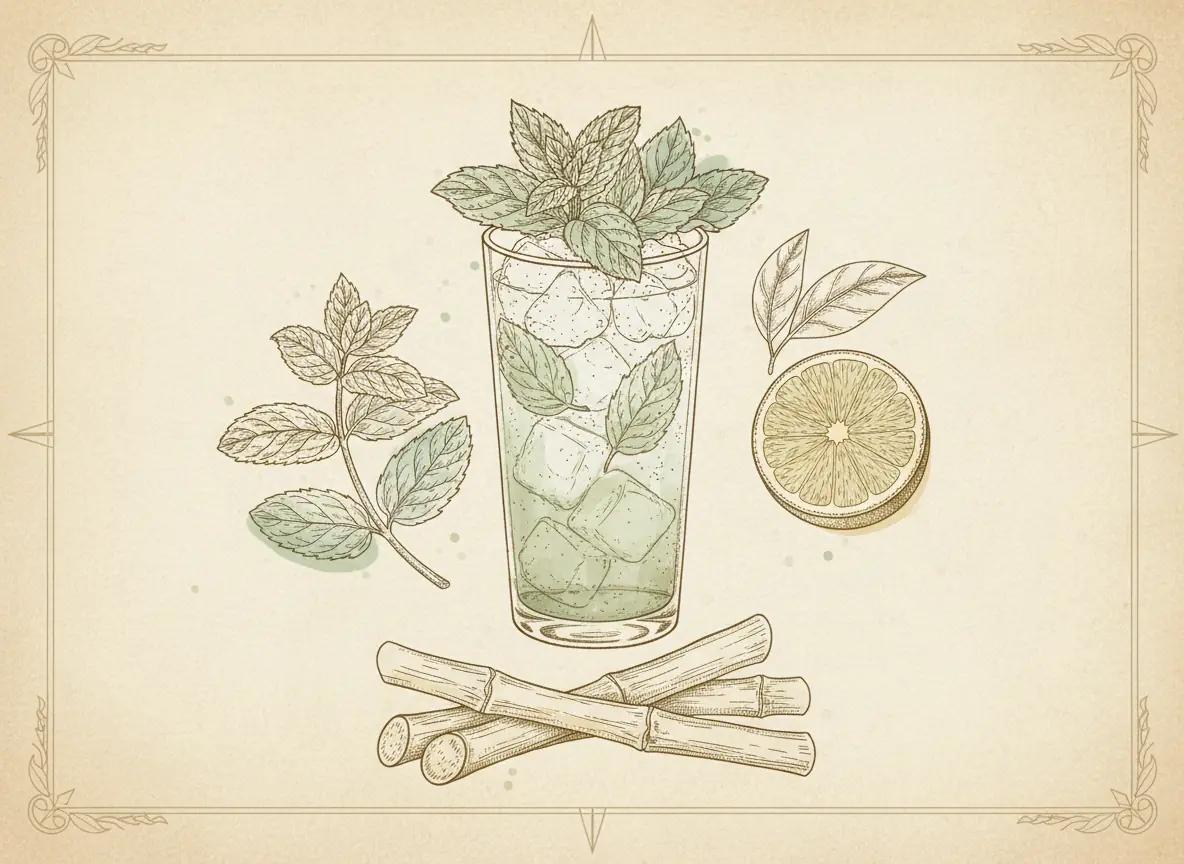
Mojito
A Mojito is 45ml of white rum, 20ml of fresh lime juice, two teaspoons of white cane sugar and six sprigs of mint, built in a highball. The mint is pressed gently with the sugar, the glass is filled with cubed ice, the rum and lime go in, and 75 to 100ml of chilled soda water tops it. About 1.8 UK units. Those are the IBA’s measures. The IBA only says to top up with soda, so the 75 to 100ml is ours. Press the mint once or twice and stop. Torn leaves make the drink bitter and grassy, and that, more often than the rum, is why a Mojito disappoints. The sugar grains help: they bruise the surface of the leaf as you press, and the lime then carries the oil through the glass.
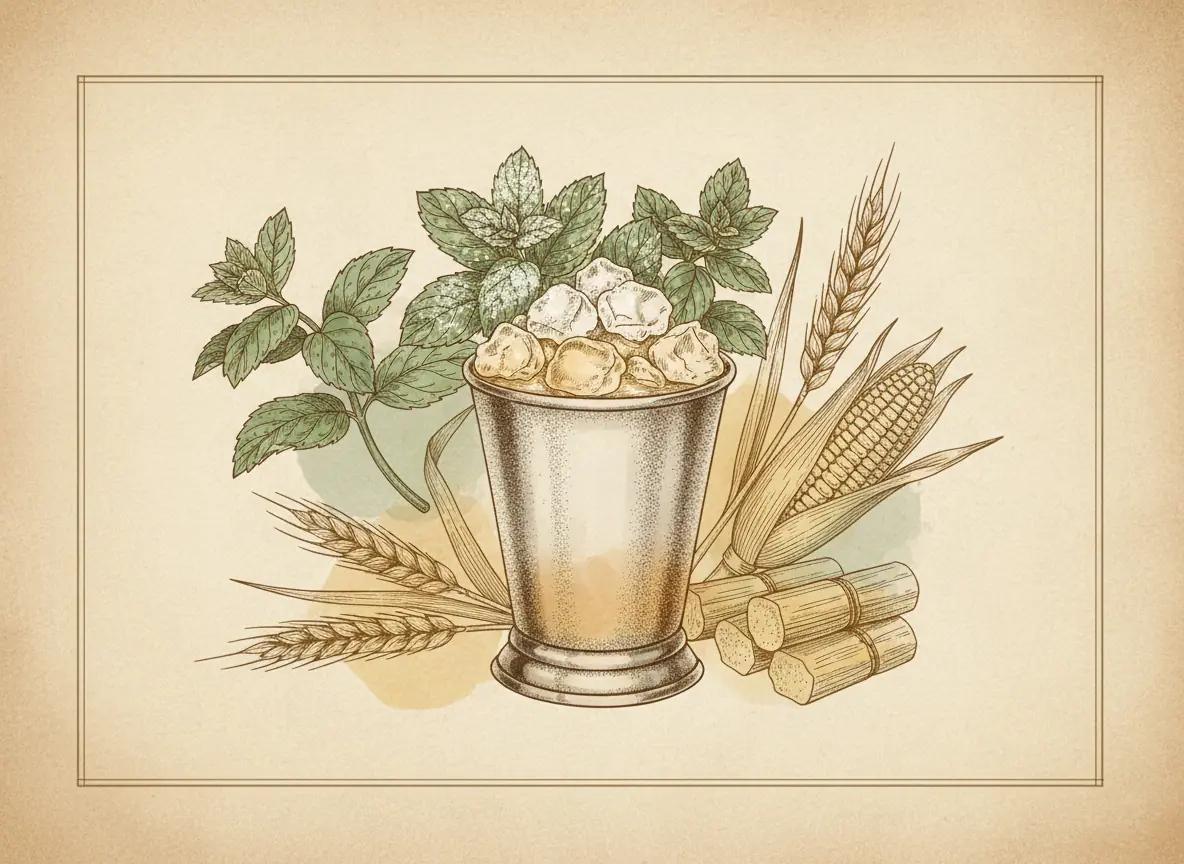
Mint Julep
A Mint Julep is 60ml of bourbon, the leaves of four mint sprigs, one teaspoon of powdered sugar and two teaspoons of water. Stir the sugar into the water, press the mint gently into it, pack the cup with crushed ice, pour in the bourbon and churn until the outside frosts, then crown it with a mint bouquet. About 2.4 UK units. The measures are the IBA’s. It is an old drink in print. The Oxford Companion, in an entry by David Wondrich, calls it the oldest of the canonical American mixed drinks, and finds a Williamsburg, Virginia, newspaper poem of 1770 that is clearly about a julep drunk for pleasure. It says Jerry Thomas’s 1862 guide gave the title Mint Julep to the brandy version, that from the 1870s the name meant a whisky drink, and that Churchill Downs named the bourbon Mint Julep its official drink in 1938. There is no citrus and no liqueur in the cup, so the work is in the cold. Crushed ice packed hard frosts the metal, melts slowly into the bourbon and holds the mint upright where the nose meets it.
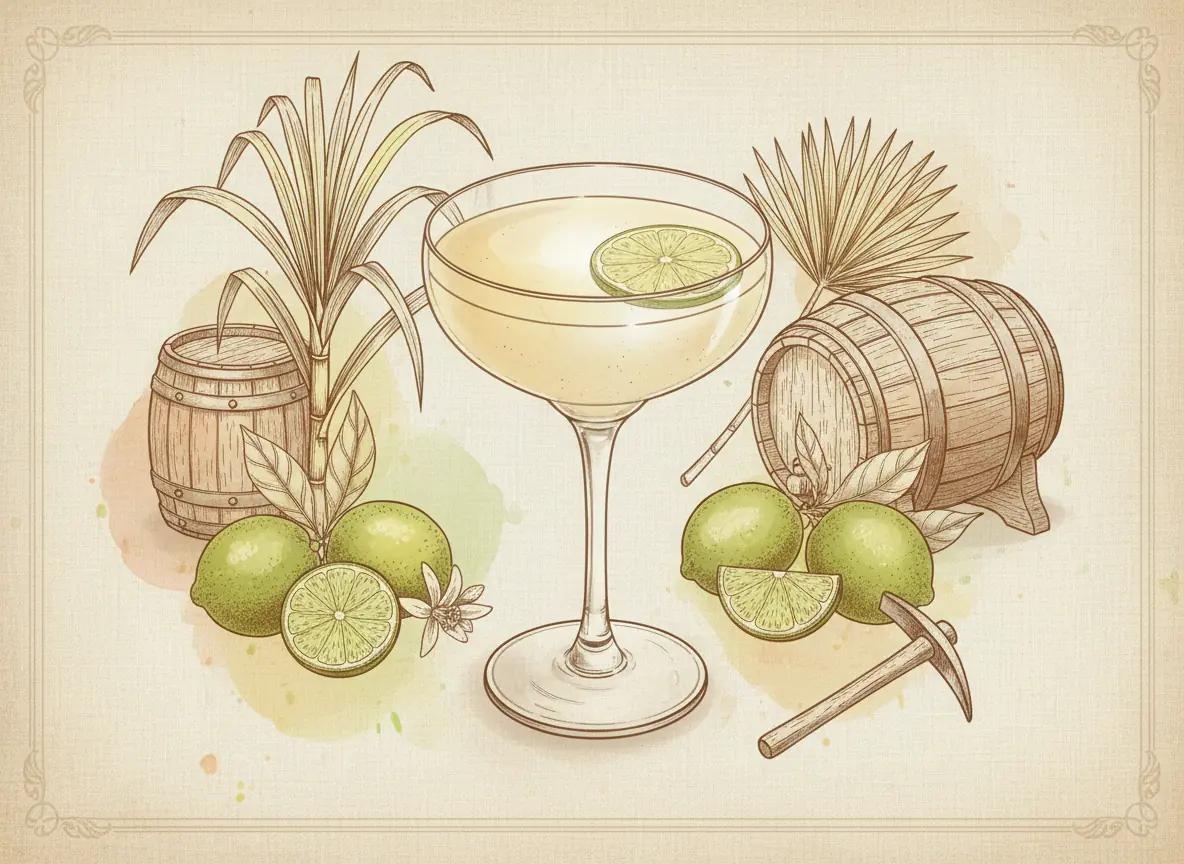
Daiquiri
A Daiquiri is 60ml white rum, 20ml fresh lime juice and two bar spoons of caster sugar. Stir the sugar into the rum and lime in the shaker until it dissolves, then add ice, shake hard for 10 to 12 seconds and double strain into a chilled coupe. About 2.4 UK units. Those are the IBA’s measures, and its method dissolves the sugar first too. The name belongs to Daiquirí, an iron-mining district and beach near Santiago de Cuba. Difford’s Guide credits Jennings Stockton Cox, an American engineer who led one of the first mining parties into Cuba’s iron-ore country after the Spanish-American War of 1898; the Oxford Companion has him making or supervising the first Daiquiri in 1896, and a Santiago bartender naming it in 1908. Difford’s says Constantino Ribalaigua Vert of Havana’s El Floridita made the frozen version famous. With three ingredients and no liqueur or bitters, the Daiquiri hides nothing. A flat rum, tired lime or undissolved sugar shows in the first sip.
Where this one sits
Recipe by Jerry Can Spirits · Updated 19 October 2026