Old Cuban
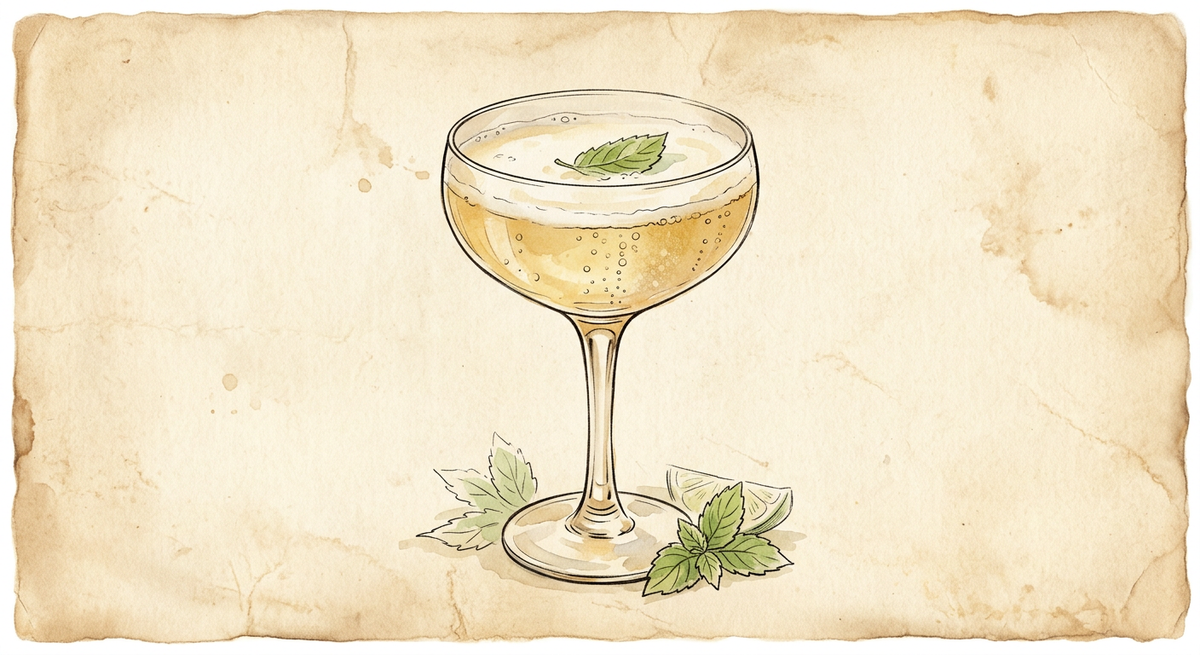
An Old Cuban is 45ml aged rum, 22.5ml fresh lime juice, 30ml simple syrup, two dashes of Angostura and six to eight mint leaves, shaken hard, double strained into a chilled coupe and topped with 60ml of brut champagne. That is the IBA specification, at about 2.5 UK units. Audrey Saunders created it: Punch, a secondary source, dates its debut to 2001, Imbibe to 2002 and Difford’s Guide to 2004. Punch says she opened Pegu Club in New York in 2005 and that it ran for fifteen years. The IBA lists the Old Cuban among its New Era cocktails. It reads as a Mojito dressed for an occasion: aged rum for white, champagne for soda, a coupe for a highball, and Angostura, which the IBA’s Mojito specification does not have. Shake the mint rather than muddle it, and strain it out.
Glassware: Coupe Glass
Garnish: Mint leaf floated on the mousse
Ingredients
45ml
A mid-weight aged rum at 40% ABV, with some oak and vanilla. A very heavy, dark rum fights the champagne; a white rum disappears under it.
22.5ml
Squeezed the same day, ideally to order. It sets the acid against 30ml of syrup and a dry wine.
30ml
One to one, sugar to water, by weight. There is more of it than lime because the champagne is dry; with an off-dry wine the drink turns sweet.
6 to 8 leaves
Fresh leaves, shaken in rather than muddled, then strained out. Keep one good leaf back for the top.
2 dashes
Two dashes. Angostura’s own page describes a bouquet of herbs, fruits and spices, which sit under the mint and lime and give the drink a darker finish than a Mojito’s.
60ml
Brut and cold. The IBA allows brut prosecco in its place, and a good crémant also works. Pour it last.
Instructions
Squeeze the lime juice the same day, ideally just before you build.
Chill a coupe of about 200ml in the freezer.
Add the aged rum, lime juice, simple syrup, Angostura and mint leaves to a shaker.
Fill the shaker with cubed ice and shake hard for 10 to 12 seconds.
Double strain into the chilled coupe.
Top slowly with 60ml of cold brut champagne.
Float a mint leaf on the surface and serve.
Source: the IBA (Official IBA specification, with one mint leaf where the IBA garnishes with mint sprigs; method ours). Last checked 9 October 2026.
Expert Tip
Shake the mint in with everything else and double strain. Hard shaking against cubed ice draws out the mint oils; muddling first bruises the leaves and adds a grassy bitterness that the champagne makes more obvious. Use a brut champagne, or a brut prosecco, which the IBA also allows. The 30ml of syrup is set against a dry wine, and an off-dry bottle makes the drink sweet. Pour the wine last and slowly, down the inside of the coupe, onto the strained sour. Poured fast it foams over and loses its sparkle.
Behind the Old Cuban
Flavour Profile
Where It Comes From
Punch dates the Old Cuban to its 2001 debut at Bemelmans Bar in the Carlyle hotel, where Audrey Saunders had been hired to revamp the cocktail programme; Imbibe says she introduced it there in 2002, and Difford’s Guide says 2004. Punch’s article on Pegu Club says she had never owned a bar until she opened it in 2005, and that it ran for fifteen years.
Punch says Pegu Club changed and improved the way we drink and think about cocktail bars, and calls the Old Cuban a modern classic. The IBA lists the Old Cuban as a New Era cocktail.
The Mojito, Moved Up
Take a Mojito and move each part up. White rum becomes aged rum. Soda becomes champagne. A tall glass of ice becomes a strained drink in a coupe.
Mojito and Old Cuban compared, from the IBA specifications (the soda measure is ours)
Rum
- Mojito
- 45ml white
- Old Cuban
- 45ml aged
Lime
- Mojito
- 20ml
- Old Cuban
- 22.5ml
Sugar
- Mojito
- Two teaspoons cane sugar
- Old Cuban
- 30ml simple syrup
Mint
- Mojito
- Pressed in the glass and left in
- Old Cuban
- Shaken, then strained out
Lengthener
- Mojito
- 75 to 100ml soda
- Old Cuban
- 60ml brut champagne
Bitters
- Mojito
- None
- Old Cuban
- Two dashes Angostura
Glass
- Mojito
- Highball over cubed ice
- Old Cuban
- Chilled coupe, no ice
| Part | Mojito | Old Cuban |
|---|---|---|
| Rum | 45ml white | 45ml aged |
| Lime | 20ml | 22.5ml |
| Sugar | Two teaspoons cane sugar | 30ml simple syrup |
| Mint | Pressed in the glass and left in | Shaken, then strained out |
| Lengthener | 75 to 100ml soda | 60ml brut champagne |
| Bitters | None | Two dashes Angostura |
| Glass | Highball over cubed ice | Chilled coupe, no ice |
Lime, mint and sugar stay at the centre, which is why it still tastes related.
Why the Bitters Matter
Everything else in the glass is bright: mint, lime, sugar and champagne.
Two dashes of Angostura, whose own page describes a bouquet of herbs, fruits and spices, give the drink a darker base note. Made without them it is pleasant and a little thin.
Aged Rum Under Champagne
Champagne is dry, acidic and assertive, and a light white rum disappears under it.
Aged rum has weight from the barrel, with vanilla and dried-fruit notes, enough to stay present under 60ml of wine, and it puts a warmer note under the mint.
Choose a mid-weight aged rum. A very dark or heavy one competes with the champagne rather than sitting under it.
How to Serve It
Shaken hard, double strained into a chilled coupe, topped slowly with champagne and finished with one mint leaf floated on the surface. The IBA garnishes with mint sprigs; a single leaf keeps the coupe tidy.
Serve it the moment it is topped, while the wine is lively. It suits a celebration, and it is the drink to pour for someone who usually orders a Mojito.
Make it at home
The Spirit
Aged RumAged rum is rum that has spent years in oak casks, usually ex-bourbon barrels, and taken on vanilla, caramel and dried fruit; our recipes count it at 40% ABV. In our recipes it is the rum for drinks where you should taste the spirit: the Old Cuban, the Mai Tai, the Rum Sour and the punch bowl.
Master the Techniques
More to explore
Frequently Asked Questions
Who created the Old Cuban?
What is in an Old Cuban?
How is it related to the Mojito?
Why shake the mint rather than muddle it?
What sparkling wine should I use?
How strong is an Old Cuban?
Sources.
Checked between 18 October and 19 October 2026.
- Punch, “How the Old Cuban Became a Modern Classic” (secondary source (Robert Simonson): debut in 2001 at Bemelmans Bar, the Carlyle; Saunders hired to revamp the cocktail programme; Pegu Club opened in 2005).
- Difford’s Guide, “Old Cuban” (secondary source: created in 2004 by Audrey Saunders, New York).
- IBA, “Old Cuban” (official specification; New Era category).
- IBA, “Mojito” (official specification: 45ml white rum, 20ml lime juice, six mint sprigs, two teaspoons sugar, soda; no bitters).
- Punch, “A Guiding Light Goes Dark: Pegu Club” (secondary source: Pegu Club’s 15-year reign under Audrey Saunders; she had never owned a bar until 2005).
- Imbibe, “Old Cuban” (secondary source: Saunders introduced the Old Cuban in 2002 at Bemelmans Bar).
- House of Angostura, “Angostura Aromatic Bitters” (maker’s page: aromatic taste with a bouquet of fruits, spices and herbs; reddish brown; the page does not name gentian).
You Might Also Like
Mojito
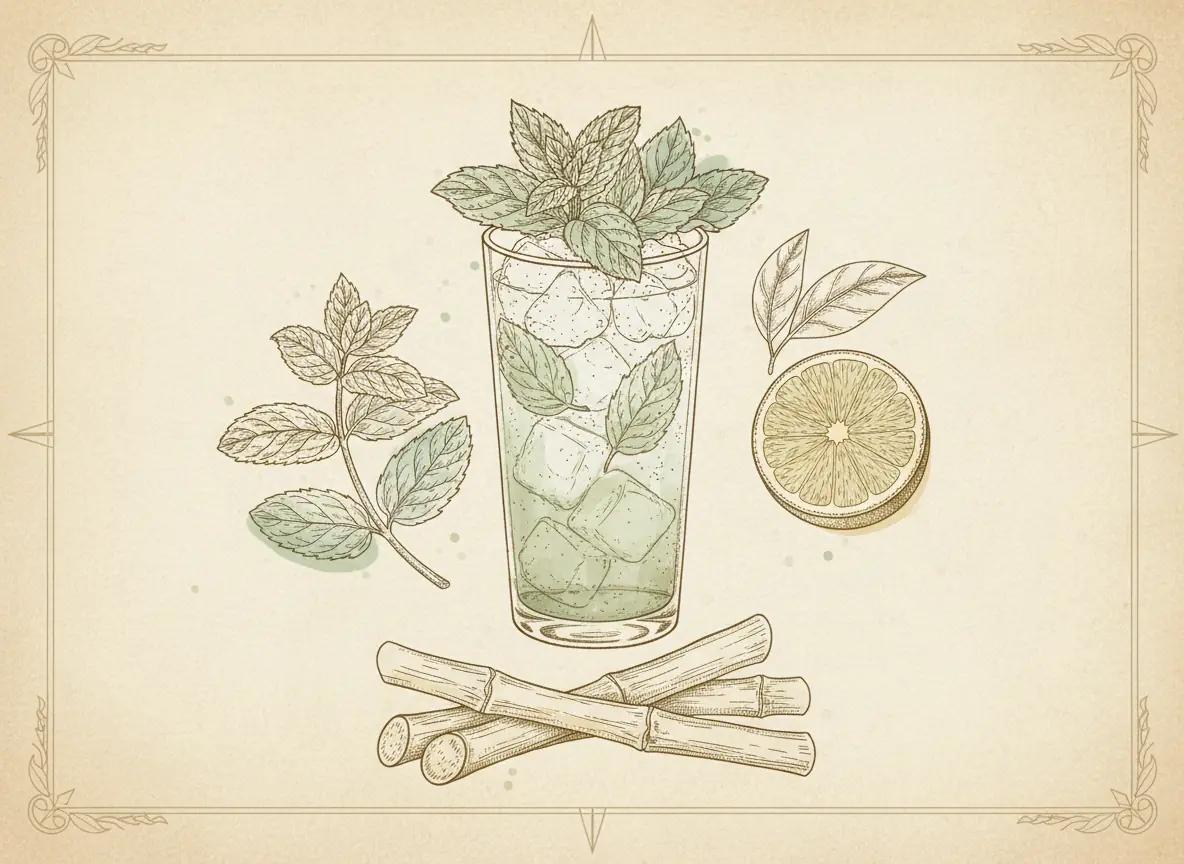
A Mojito is 45ml of white rum, 20ml of fresh lime juice, two teaspoons of white cane sugar and six sprigs of mint, built in a highball. The mint is pressed gently with the sugar, the glass is filled with cubed ice, the rum and lime go in, and 75 to 100ml of chilled soda water tops it. About 1.8 UK units. Those are the IBA’s measures. The IBA only says to top up with soda, so the 75 to 100ml is ours. Press the mint once or twice and stop. Torn leaves make the drink bitter and grassy, and that, more often than the rum, is why a Mojito disappoints. The sugar grains help: they bruise the surface of the leaf as you press, and the lime then carries the oil through the glass.
Airmail
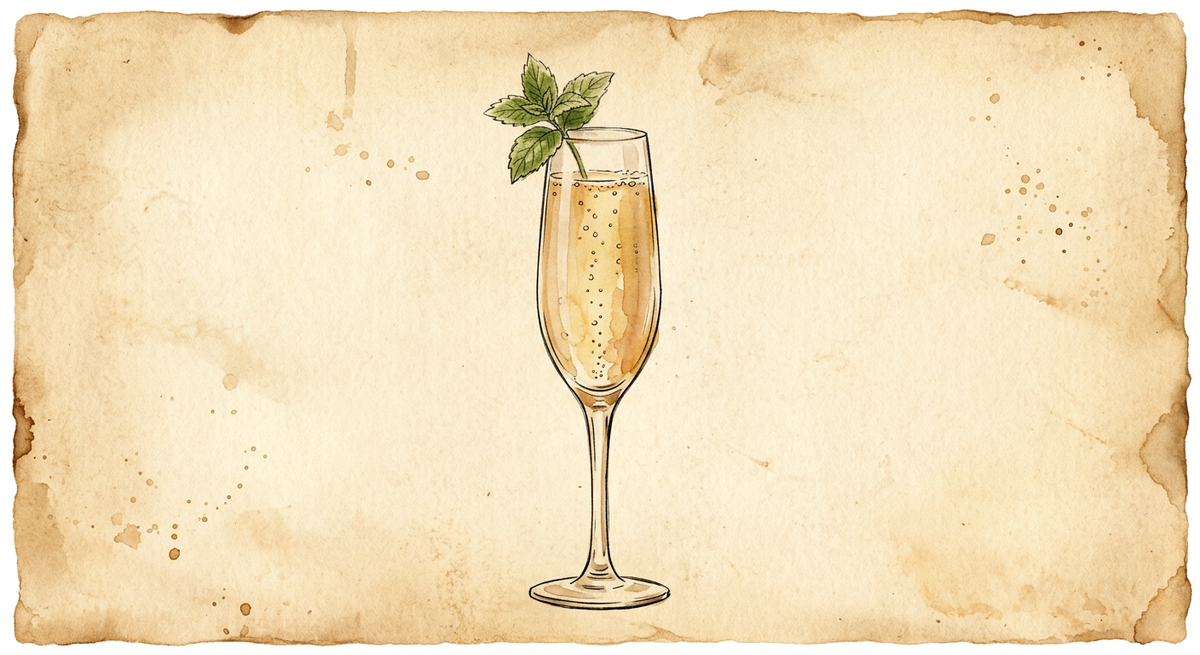
An Airmail is 45ml of aged rum, 15ml of fresh lime juice and 15ml of honey syrup, shaken hard for 10 to 12 seconds, double strained into a chilled flute and topped with 60ml of cold, dry champagne, with a sprig of mint. About 2.5 UK units. Difford’s Guide says the name likely refers to airmail as the quickest way to get a letter from A to B, and that the drink probably dates to the early days of airmail, which began on 15 May 1918. It calls the earliest known reference a 1930s Bacardí pamphlet, and has W.C. Whitfield printing it in Here’s How in 1941. Its own recipe is 45ml of rum, 15ml each of lime juice and honey syrup, and 50ml of brut sparkling wine; ours has the same rum and 60ml of champagne. Under the bubbles it is a honey daiquiri. The honey gives the drink floral weight that plain syrup lacks, and it meets the caramel of an aged rum on common ground, so the core stays warm under a cold, dry top.
French 75
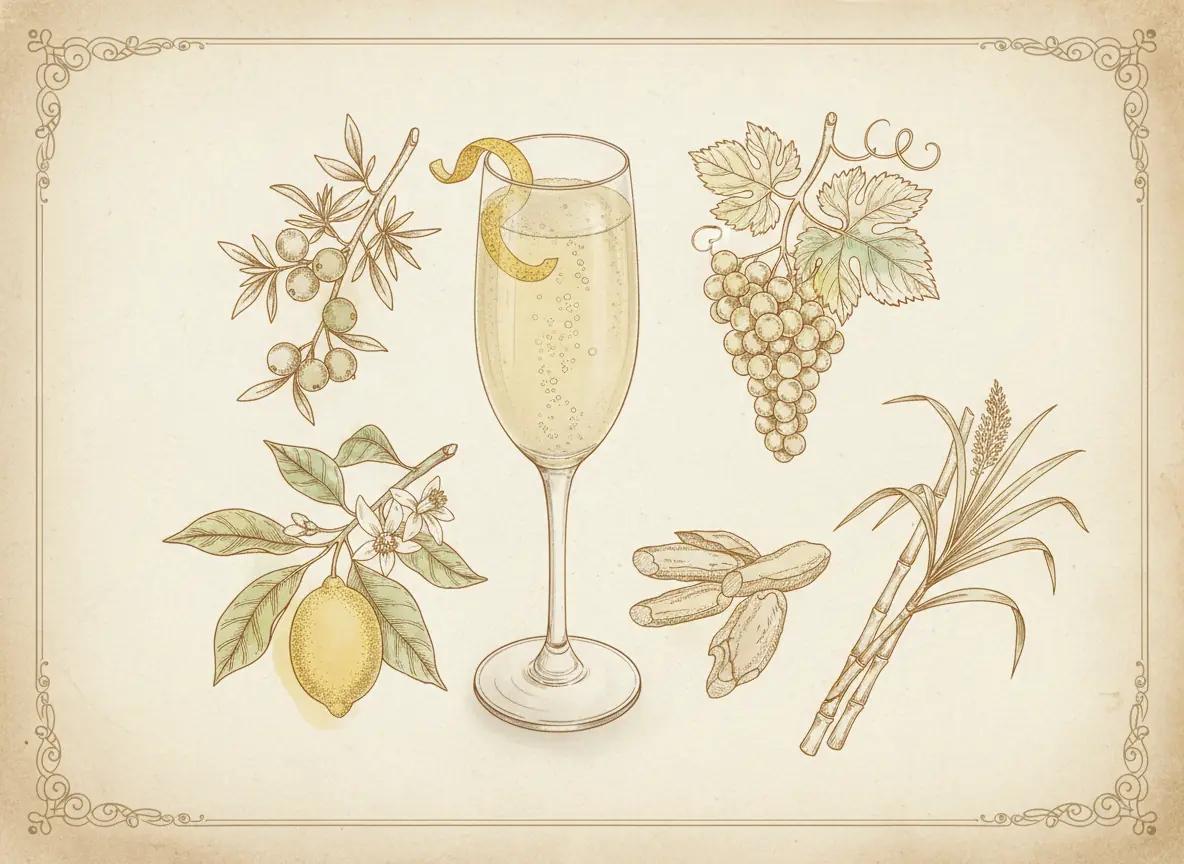
A French 75 is 30ml of London Dry gin, 15ml of fresh lemon juice and 15ml of sugar syrup, shaken hard for 10 to 12 seconds, double strained into a chilled flute and topped with 60ml of cold brut champagne, with a lemon twist. About 1.9 UK units. The measures are the IBA’s. The name is the French army’s 75mm field gun of the First World War. The drink is usually credited to Harry MacElhone and Harry’s New York Bar in Paris, often with the date 1915, but the printed record starts later. MacElhone’s ABC of Mixing Cocktails, published at the end of 1922 according to the Oxford Companion, has a ‘75’ of calvados, gin, grenadine and absinthe, as the Internet Archive’s scan of its second impression shows. The Companion, in an entry by David Wondrich, finds the gin, lemon, sugar and champagne formula and the French 75 name together first in Here’s How, a book put out by a New York humour magazine, in 1927. Built that way, it is a Tom Collins with champagne in place of soda: a short gin sour that the wine lengthens and lifts.
Where this one sits
Recipe by Jerry Can Spirits · Updated 19 October 2026