Fizzes
16 recipes
This Field Manual holds 16 recipes in the fizz family. A fizz is a sour shaken hard and topped with soda, served short in a small glass with no ice in it.
The absence of ice is the whole point and the reason a fizz is drunk quickly. Shaking does the chilling and the dilution before the drink reaches the glass, so there is nothing left to keep it cold. A gin fizz with egg white becomes a silver fizz, with the yolk a golden one, and with both a royal. The Ramos asks for twelve minutes of shaking and a cream and citrus emulsion that separates if you stop early.
Base Spirit
Difficulty Level
Airmail
The Airmail is the French 75’s tropical correspondent: golden rum, lime and honey under a champagne top, named in the 1930s for the postal service that was then shrinking the world. It surfaces with Cuban credentials and appears in the 1949 Esquire handbook, carrying the era’s aviation glamour with it, from the moment when crossing an ocean stopped meaning weeks at sea. Structurally it is a honey daiquiri that caught a flight. Rum, lime and honey syrup shaken as usual, then lengthened with champagne so the daiquiri’s warmth arrives with a sparkling wine’s lift underneath it. The honey is load-bearing rather than decorative: it rounds the rum in a way plain sugar cannot, and it survives the champagne’s dryness where a simple syrup would simply disappear. It remains badly underordered for a drink this good. As celebratory as a French 75, considerably warmer at the core, and the right bottle-of-fizz cocktail for rum drinkers who keep being handed gin.
Bellini
The Bellini was born at Harry’s Bar in Venice, perfected through the 1940s by founder Giuseppe Cipriani and named in 1948 for the painter: the drink’s soft pink, Cipriani said, was the colour of a robe in a Giovanni Bellini altarpiece. White peach purée and prosecco, in a bar that also invented carpaccio and served everyone from Hemingway to Chaplin: Venice in a small, cold glass. The engineering is a single decision honoured absolutely: white peaches, not yellow, crushed and sieved to velvet, one part purée to two of prosecco, folded rather than stirred. The fruit’s floral delicacy is the drink, and every substitution, yellow fruit, bottled nectar, peach liqueur, produces something pleasant and wrong. It is the standard by which fruit-and-fizz drinks are judged and the reason most fail: the Bellini is not a recipe so much as an ingredient shown respect. In white peach season it is unbeatable; out of season, good frozen purée keeps it honest, exactly as Harry’s does.
Buck’s Fizz
The Buck’s Fizz is the older sibling in the orange-and-champagne family, and the British one: invented in 1921 by barman Malachy McGarry at Buck’s Club in Mayfair, four years before the Ritz Paris poured its Mimosa. The club version ran the wine at twice the juice, a gentleman’s ratio for a drink designed to make morning drinking respectable, which in 1921 Mayfair counted as a public service. The heavier wine changes the character honestly. It is drier, brisker and more obviously a champagne drink wearing a splash of colour, where the Mimosa is a true half-and-half. British weddings adopted it as liturgy, Christmas mornings followed, and the name entered the national vocabulary thoroughly enough to be borrowed by a Eurovision act. At two to one the champagne is genuinely tasted rather than merely present, so the bottle earns rather more consideration here than it ever does under a Mimosa, and the drink repays it with the extra crispness that is its whole point.
Champagne Cocktail
The Champagne Cocktail is a sugar cube soaked in Angostura, dropped into a flute, given a small measure of cognac and topped with cold champagne. Jerry Thomas printed it in 1862, which makes it one of the oldest recipes still in general circulation and comfortably the oldest sparkling one. It also qualifies as a cocktail under the original 1806 definition: spirit, sugar, water and bitters. The water simply arrives as champagne, which is a considerably better joke than most drinks manage. The cube is the mechanism and the theatre at once. Dropped in whole it sits at the bottom of the glass streaming bubbles for the drink's entire life, dissolving slowly and releasing sugar and bitters as it goes, so the first mouthful is dry and the last is noticeably richer. It is the simplest piece of kinetic sculpture in the canon, and it is why the drink must be built and never stirred.
Death in the Afternoon
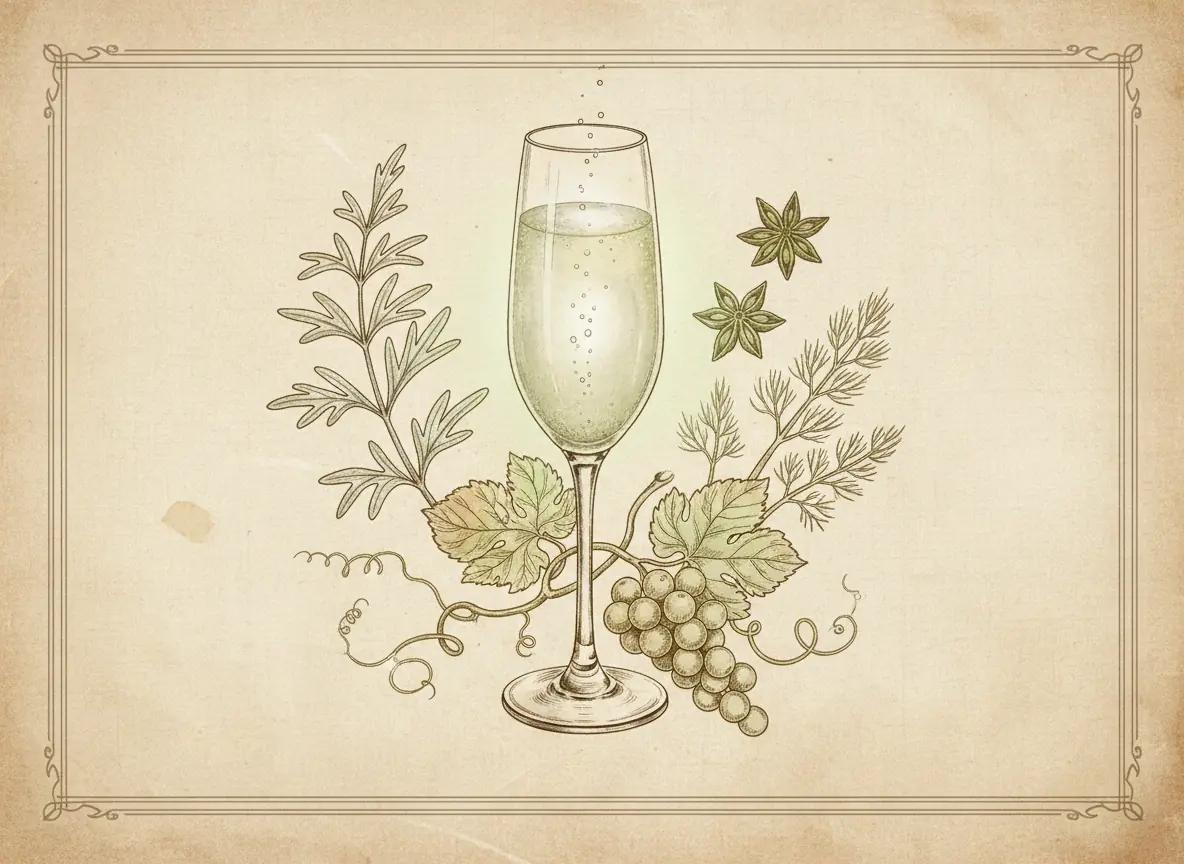
Death in the Afternoon was created by Ernest Hemingway and submitted to a 1935 celebrity cocktail collection called So Red the Nose, in which notable figures contributed original recipes with their own commentary. Hemingway's instructions were characteristically direct: pour one jigger of absinthe into a Champagne glass, add iced Champagne until it attains the proper opalescent milkiness, and drink three to five of them slowly. It is a two-ingredient cocktail with no technique beyond a careful pour. The absinthe louches as the Champagne makes contact, turning from clear to cloudy as the anise oils come out of solution. That transformation is not incidental: it signals the point at which the two ingredients have integrated, and the drink should be consumed from that moment rather than left to sit. The balance is the only variable that matters. Too much absinthe and the drink is medicinal; too little and the Champagne overwhelms the anise entirely. Hemingway's ratio produces a glass where both are audible without either one dominating.
French 75
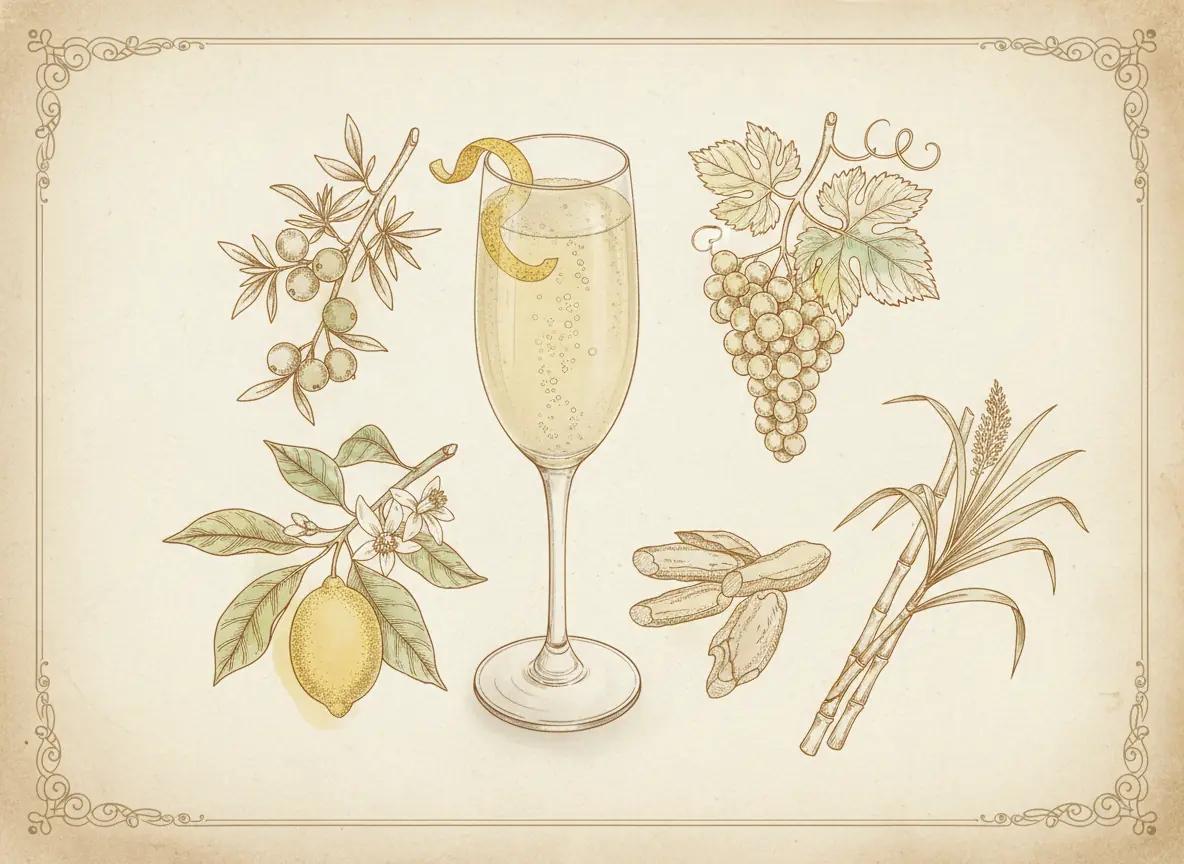
The French 75 was created at Harry's New York Bar in Paris in 1915 and named after the French 75mm field gun, the defining artillery piece of the First World War on the Western Front. The naming was not incidental: the drink was designed to hit with the force of the weapon, pairing gin and Champagne behind a presentation considerably more elegant than its strength suggests. The structure sits between the Tom Collins and the Champagne Cocktail. A gin sour of gin, fresh lemon juice and sugar syrup is shaken, strained into a flute or coupe, and topped with Champagne rather than soda water. The wine's yeast character, fruit and effervescence interact with the gin and citrus in a way soda cannot. The gin versus cognac debate has run since the drink appeared in print. The gin version is the historically consistent original and the one documented here; the cognac version, richer and more fruit-forward, is a legitimate variation.
Gin Fizz
The Gin Fizz is the sour family’s effervescent branch and one of the golden age’s defining orders: gin, lemon and sugar shaken hard and fired into a small glass with soda, drunk fast while the sparkle holds. Jerry Thomas printed the fizz template in 1876, New Orleans made a religion of it, and by 1900 fizzes were being drunk by the dozen at American bars with shaker-men working in shifts. The classic serve is the part modern bars forget: a fizz takes no ice in the glass. It is shaken viciously cold, strained into a small chilled tumbler, topped with a short measure of soda and drunk in a few minutes. Ice in the glass makes it a Collins, which is a longer and lazier drink entirely. From this template the family branches. Egg white makes a Silver Fizz, yolk a Golden, the whole egg a Royal, and the Ramos added cream and orange flower water and demanded twelve minutes of shaking.
Kir Royale
The Kir Royale carries the name of a war hero. Canon Félix Kir was a priest, a Resistance figure who helped thousands escape occupied France, and mayor of Dijon from 1945 until his death in 1968, and he served his city’s white wine with its blackcurrant liqueur at every official reception until the drink simply became him. The Royale is the upgrade that followed: crème de cassis under champagne rather than Burgundy’s still aligoté. It is the simplest great aperitif in the French canon, a measure of cassis in the flute with champagne poured slowly over it and the liqueur’s dark fruit blooming upward through the bubbles. The cassis does everything here, supplying the colour, the sweetness and the blackcurrant depth, while the champagne’s dryness keeps the whole thing standing at attention. The proportions are the only craft involved, and the original Kir on still white wine remains the daytime reading of the same idea.
Mead Royale
The Mead Royale is our celebration pour for St David's Day: dry Welsh mead and elderflower liqueur in a flute, topped with sparkling wine and finished with a lemon twist. It borrows the Royale grammar, a measure of something flavoured under a rise of something sparkling, and hands the flavoured seat to Wales' oldest drink. Mead was poured in the medieval Welsh courts and praised by the bards; here it contributes honey character without weight, which is exactly what a flute wants. The one rule is dryness. A dry mead reads as honeyed rather than sweet, and the wine's acidity keeps the whole glass crisp; a sweet mead turns the drink cloying by the second sip. The elderflower sits between the two, floral enough to bridge honey and wine, restrained enough at fifteen millilitres to stay a seasoning rather than a flavour of its own. Welsh sparkling wine completes the set if you can find it, but any properly dry bottle serves. Pour it for arrivals on the first of March: it asks little effort, lands light, and is distinctly Welsh from base to bubble.
Mimosa
The Mimosa is equal parts champagne and fresh orange juice, and the equal-parts pour is both its signature and its civilising feature. Half wine, half sunshine, low enough in strength to have three of across a morning, which is exactly what a brunch table wants. It is credited to the Ritz Paris in 1925 and named for the yellow bloom of the mimosa tree. London had got there four years earlier: Buck's Club was pouring champagne and orange from 1921 under the name Buck's Fizz, at two parts wine to one of juice. The two cities have disputed the territory politely ever since. The Fizz is older, and the Mimosa travelled further. There is exactly one rule and it is not about the wine. The orange juice must be fresh, and the drink is unusually unforgiving about it, because the wine's dryness amplifies everything a carton gets wrong rather than covering for it.
Morning Glory Fizz
The Morning Glory Fizz is the Victorian morning after in a small glass: Scotch given the full fizz treatment with egg white, split citrus, a thread of absinthe and a brisk top of soda. It appears in the manuals of the 1880s, Harry Johnson's among them, prescribed in print as a bracer to be taken before noon. It is the fizz family's only Scotch member and its most confident medical claim. The build is the Silver Fizz ceremony applied to malt: a dry shake to set the egg white, a hard wet shake to chill and aerate, then the ice-free glass and the fast soda the fizz laws demand. Lemon and lime split the citrus between them, which is a period habit rather than a modern flourish. The result is the family eccentric, whisky where gin ruled and morning where evening reigned, and it is genuinely excellent whenever anybody actually drinks it, which is the Victorian joke landing about a century late.
Old Cuban
The Old Cuban is a Mojito promoted rank by rank. Aged rum where white stood, champagne where the soda was, mint shaken rather than muddled, a coupe instead of a highball, and two dashes of Angostura that were never in the original at all. Audrey Saunders built it in 2001 and installed it at Pegu Club, where it became the house's gentler flagship alongside the gin drinks. It reached modern-classic status almost immediately and has not left the international lists since. What makes it work is that the promotion is systematic rather than decorative. Every substitution moves in the same direction, and the lime, mint and sugar core is untouched. The bitters are the one addition rather than an upgrade, and they are the masterstroke: two dark dashes grounding all that sparkle in something older and giving the drink a floor to stand on. It is the detail that makes the whole thing hold together.
Ramos Gin Fizz
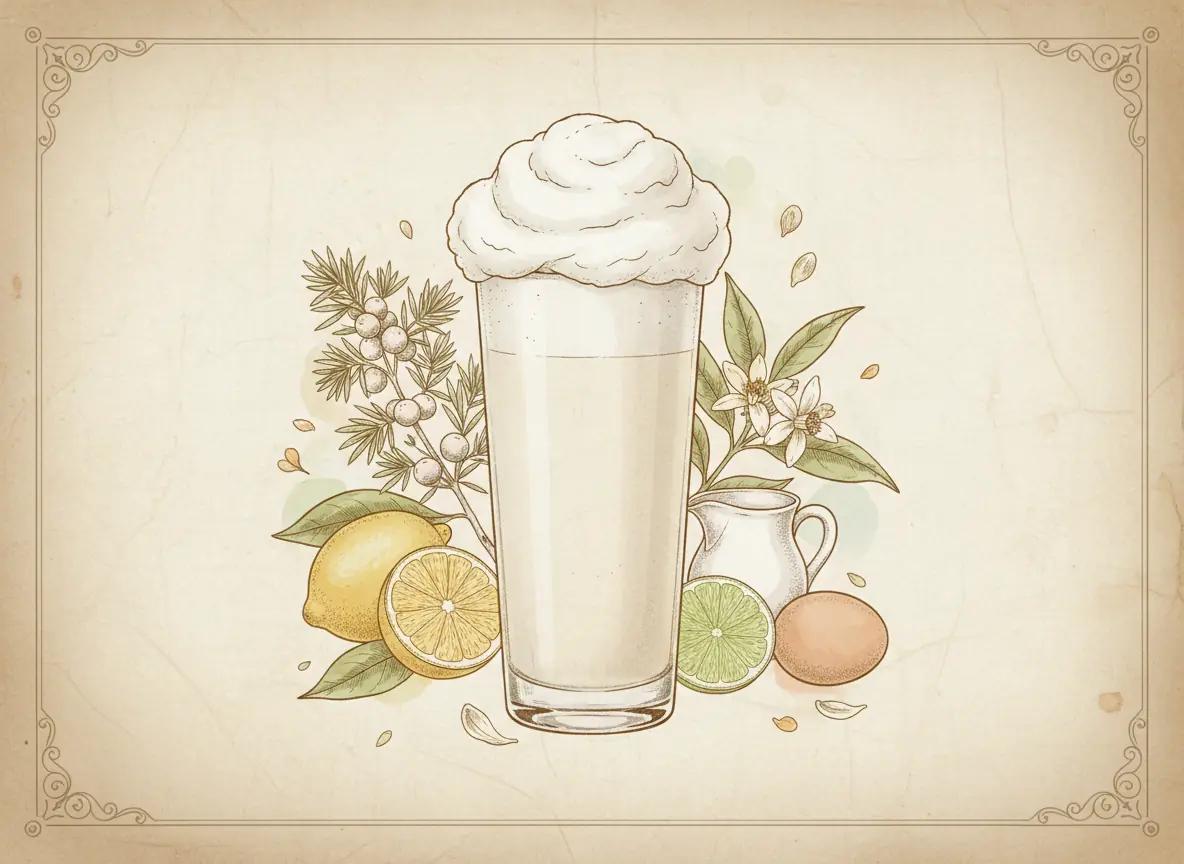
Henry C. Ramos created this at the Imperial Cabinet Saloon in New Orleans in 1888, and by the Mardi Gras of 1915 his bar needed thirty-five shaker boys working in relay to keep up with it. That is the drink’s reputation in one statistic: it is built on a shake so long that no single pair of arms could finish one. Seven ingredients go in before the soda: gin, lemon, lime, sugar, egg white, cream and orange flower water. The egg white and the cream emulsify over the shake into a foam denser and more stable than any sour’s, and the soda, poured in after straining, lifts that foam into a white column standing above the rim. Orange flower water is where most versions fail. It is a distilled floral water, not orange bitters and not zest, and it is the only thing that reaches between the gin’s botanicals and the cream’s weight. Two or three drops make the drink. Leave it out and you have a cream fizz with gin in it.
Rossini
The Rossini is the Bellini’s summer sibling, named with the same Venetian logic for another Italian master: strawberries where the peaches were, prosecco as before, and the composer of The Barber of Seville on the label. It grew up in the Veneto’s bars as the strawberry season’s answer to the house drink, and it has conquered aperitivo hour on its own colour alone. Strawberries are a more forgiving fruit than white peaches, which makes the Rossini the accessible end of the purée-and-prosecco family: ripe berries blended and sieved, seasoned with a thought of lemon, folded under cold prosecco. The berry’s acidity meets the wine more readily than peach ever does, and the drink runs brighter and more casual than its elder. It is the correct answer to a June afternoon, a jug of it the correct answer to a garden of guests, and the strawberries themselves the only quality question the drink ever asks.
Seelbach
The Seelbach has the best origin story in the modern canon, twice over. As first told: a pre-Prohibition house cocktail of Louisville’s grand Seelbach Hotel, lost when the Volstead Act closed the bar, and rediscovered in 1995 by restaurant director Adam Seger in an old ledger. Bourbon, orange liqueur, champagne and a frankly outrageous fourteen dashes of bitters. As finally told: in 2016 Seger confessed to Robert Simonson of the New York Times that he had invented the whole thing, recipe and provenance alike, because a grand hotel deserved a signature drink and nobody buys a new one. The hoax had by then spent two decades in respectable cocktail books, and the confession did something remarkable, which was nothing at all. The drink stayed on the lists. It stayed because it is genuinely good, and because the bitters are a genuine idea: seven dashes each of Angostura and Peychaud’s turn a bourbon champagne cocktail into something spiced, rosy and completely distinctive.
Sloe Gin Fizz
Sloe gin is England’s hedgerow in a bottle: blackthorn sloes picked after the first frost, steeped in gin and sugar through the winter, emerging deep garnet and tasting of plum skin and almond. For most of its history it stayed a sipping liqueur for hip flasks and shoot lunches, until American bartenders got hold of it and gave it the fizz treatment, and the hedgerow discovered it could dance. The fizz is the great American lengthener: spirit, citrus, sugar and soda, shaken hard and served effervescent, with an optional egg white turning the drink to silk. Applied to sloe gin the formula is transformative. The liqueur’s jammy depth gets stretched over lemon and bubbles into something long, blushing and berry-bright, with the almond note of the sloe stones surfacing at the finish. A measure of dry gin stiffens the frame, since sloe gin alone runs low-proof and sweet, and the result balances English autumn against American fizz: a drink that tastes like late September poured over July.