Champagne Cocktail
A Champagne Cocktail is a sugar cube soaked with two dashes of Angostura and dropped into a chilled flute, then 10ml of cognac and 90ml of cold champagne poured slowly down the side, with a lemon twist expressed over the top. It is never stirred. About 1.5 UK units. The Oxford Companion says the first description of a Champagne Cocktail with ice and bitters-saturated sugar comes from an American bar in Panama in 1855, and that Jerry Thomas published the recipe in 1862, with no brandy or cognac. Later recipes added cognac, and the IBA now lists 10ml, with a few optional drops of Grand Marnier. With the cognac in, it matches the first appearance in print of the cocktail formula and name that the Oxford Companion cites, from a Hudson, New York, newspaper of 13 May 1806: spirits, sugar, water and bitters, with the wine doing the work of the water. The cube is the reason to make it. It sits at the bottom of the flute, dissolving slowly and sending up a thin line of bubbles, so the first sips are dry and the last are sweeter and more spiced.
Glassware: Champagne Flute
Garnish: Lemon twist expressed and dropped in
Ingredients
1 cube
One white sugar cube, dropped in whole. It dissolves over the life of the drink and gives off a stream of bubbles; loose sugar dissolves at once and does neither.
2 dashes
Two dashes soaked into the cube, at 44.7% ABV on DrinkSupermarket’s listing. The gentian and spice come out with the sugar as the cube dissolves, rather than all at once.
10ml
A VS or VSOP at 40% ABV, poured onto the cube before the wine. Ten millilitres adds weight and dried fruit under the champagne; Thomas’s 1862 recipe omits it.
90ml
Brut, at about 12% ABV, and properly cold. It is almost all of the drink, so buy a bottle you would drink on its own; a dry crémant costs less and works as well. Contains sulphites.
Instructions
Chill a flute.
Soak a sugar cube with two dashes of Angostura and drop it into the flute.
Add the cognac.
Top slowly with the cold champagne, poured down the side of the glass.
Express a lemon twist over the surface and drop it in. Do not stir.
Source: the IBA (Official IBA specification; no Grand Marnier, and a lemon twist where the IBA garnishes with orange zest and a cherry; method ours). Last checked 9 October 2026.
Expert Tip
Do not stir it. The slow dissolve of the cube is the recipe; one stir spends the sugar at once and leaves sweetened champagne that no longer changes as you drink. Use a cube, not loose sugar. Granulated sugar dissolves straight away and gives no stream of bubbles. Soak the cube on a spoon so the bitters stay in the sugar rather than running into the glass ahead of it. Choose a dry champagne you would drink on its own, brut rather than demi-sec, since the cube brings the sweetness. A good crémant does the job for less. Prosecco is softer and fruitier, and against the Angostura it tastes sugary.
Behind the Champagne Cocktail
Flavour Profile
Where It Comes From
The Oxford Companion says the first description of a Champagne Cocktail with ice and bitters-saturated sugar comes from an American bar in Panama in 1855, and that Jerry Thomas published the recipe in 1862: sugar, one or two dashes of bitters and a piece of lemon peel, in a tumbler a third full of broken ice and filled up with wine, shaken, with no brandy or cognac.
Brandy or cognac came into later recipes, and Harry Johnson’s 1900 manual builds it on a lump of sugar with bitters, slices of orange, strawberries and pineapple, finished with the oil of a lemon peel. The IBA lists it today with 10ml of cognac and an optional few drops of Grand Marnier.
With the cognac in, it fits the first appearance of the cocktail formula and name in print, from The Balance and Columbian Repository of Hudson, New York, on 13 May 1806: spirits, sugar, water and bitters. Here the champagne stands in for the water.
The Working Cube
Dropped whole into a flute, a sugar cube dissolves slowly. While it does, its rough surface gives the carbon dioxide somewhere to form, so a thin stream of bubbles rises from it.
The bitters soaked into it come out with the sugar. The first sips are dry wine with a hint of spice; by the end the drink is sweeter and rounder. Stir it and that change happens in a second.
The Cognac Question
Ten millilitres is a small measure, and it is meant to be. It adds weight, oak and dried fruit under the wine without turning the drink into a brandy and soda.
Leave it out and you have Thomas’s version, which is lighter and sharper and works better as an aperitif.
Which Champagne
Most sparkling cocktails cover the wine: a French 75 puts gin and lemon under the bubbles, and a Kir Royale is coloured and sweetened by cassis. Here the additions are a cube, two dashes and 10ml of brandy.
So the wine is what you taste. Choose brut rather than demi-sec, because the cube brings the sugar. A dry crémant or cava works and costs less. Prosecco is softer and fruitier and turns sweet against the Angostura.
The IBA and Ours
The Champagne Cocktail: IBA measures beside ours
Champagne
- IBA
- 90ml, chilled
- Ours
- 90ml, cold, brut
Cognac
- IBA
- 10ml
- Ours
- 10ml, poured before the wine
Angostura
- IBA
- Two dashes
- Ours
- Two dashes, soaked into the cube
Sugar
- IBA
- One cube
- Ours
- One cube
Grand Marnier
- IBA
- A few drops, optional
- Ours
- None
Garnish
- IBA
- Orange zest and a maraschino cherry
- Ours
- Lemon twist, expressed and dropped in
UK units
- IBA
- About 1.5
- Ours
- About 1.5
| Element | IBA | Ours |
|---|---|---|
| Champagne | 90ml, chilled | 90ml, cold, brut |
| Cognac | 10ml | 10ml, poured before the wine |
| Angostura | Two dashes | Two dashes, soaked into the cube |
| Sugar | One cube | One cube |
| Grand Marnier | A few drops, optional | None |
| Garnish | Orange zest and a maraschino cherry | Lemon twist, expressed and dropped in |
| UK units | About 1.5 | About 1.5 |
How to Serve It
In a chilled flute, built in under a minute and handed over while the cube is still at work. It suits a toast, or the first drink of an evening.
For gin and lemon under champagne, make a French 75; for crème de cassis, a Kir Royale; for absinthe, Death in the Afternoon.
Make it at home
The Spirit
CognacCognac is a grape spirit distilled twice from white wine in copper pot stills in the Cognac area of western France and, under INAO’s specification, aged at least two years in oak and sold at no less than 40% ABV. The letters on the label are minimum ages, by the BNIC’s account: VS at least two years, VSOP four, XO ten. A VS or VSOP is what our cocktails assume.
More to explore
Frequently Asked Questions
Do I need a sugar cube?
Is the cognac traditional?
What champagne should I use?
Why should I not stir it?
What is the IBA recipe?
How many can I make from one bottle?
How strong is a Champagne Cocktail?
Sources.
Checked between 18 October and 19 October 2026.
- Internet Archive (vintage-cocktail-books-euvs), “How to Mix Drinks, or The Bon-Vivant’s Companion (Jerry Thomas, 1862)” (primary source: 110. Champagne Cocktail: sugar, one or two dashes of bitters, a piece of lemon peel; tumbler one-third full of broken ice, filled with wine; shake well and serve; no brandy).
- IBA, “Champagne Cocktail” (official specification: 90ml champagne, 10ml cognac, two dashes Angostura, a few drops of Grand Marnier (optional), one sugar cube; orange zest and maraschino cherry).
- The Oxford Companion to Spirits and Cocktails (David Wondrich), “Cock-Tail” (secondary source: the first unambiguous appearance in print of the formula and name, Hudson, New York, 1806, the Balance and Columbian Repository of 13 May 1806: “a stimulating liquor, composed of spirits of any kind, sugar, water, and bitters”).
- DrinkSupermarket, “Angostura Aromatic Bitters 200ml” (retailer listing: 44.7% ABV; gentian, spices).
- The Oxford Companion to Spirits and Cocktails (Elizabeth Gabay), “champagne cocktails” (secondary source: the first description with ice and bitters-saturated sugar from an American bar in Panama in 1855, published by Jerry Thomas in 1862; Boothby (1908) stipulated no stirring).
- Internet Archive (vintage-cocktail-books-euvs), “Harry Johnson’s New and Improved Bartenders’ Manual (1900)” (primary source: Champagne Cocktail with a lump of sugar, bitters, orange slices, strawberries and pineapple, the oil of a lemon peel on top).
You Might Also Like
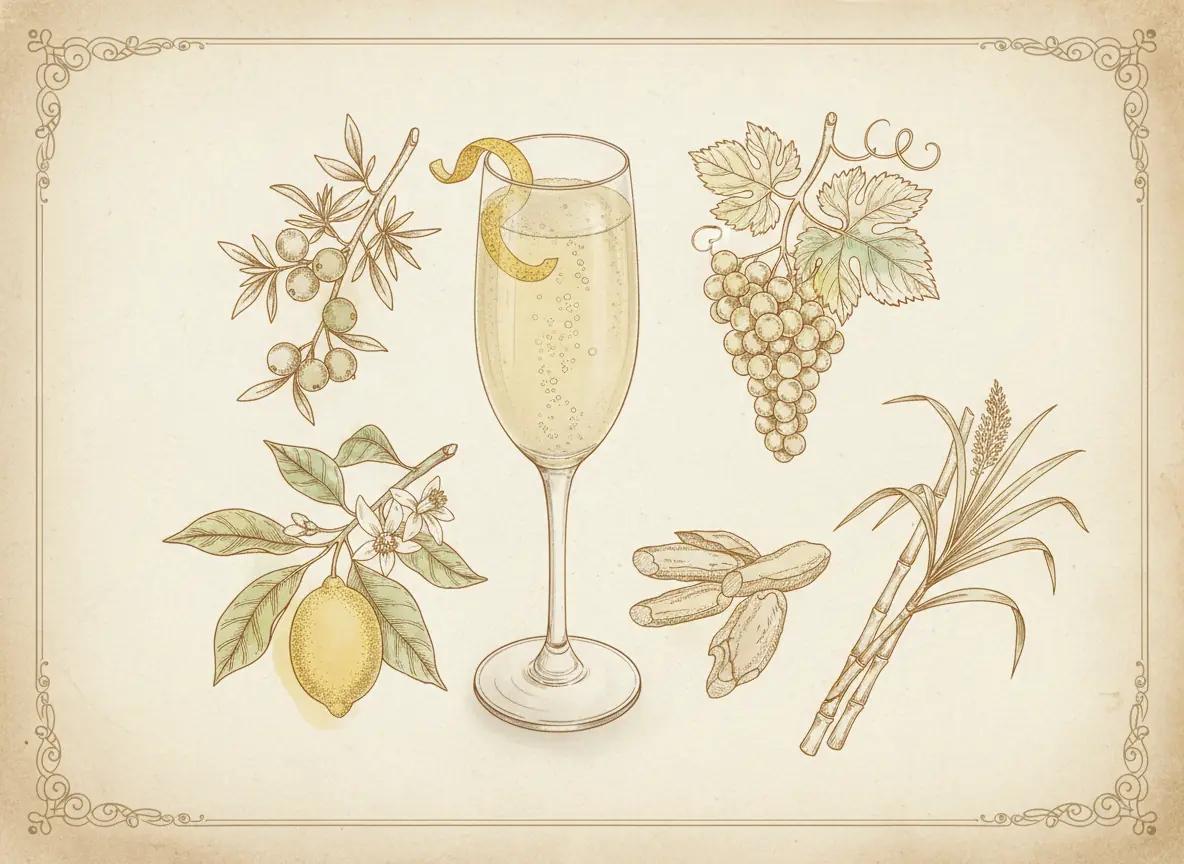
French 75
A French 75 is 30ml of London Dry gin, 15ml of fresh lemon juice and 15ml of sugar syrup, shaken hard for 10 to 12 seconds, double strained into a chilled flute and topped with 60ml of cold brut champagne, with a lemon twist. About 1.9 UK units. The measures are the IBA’s. The name is the French army’s 75mm field gun of the First World War. The drink is usually credited to Harry MacElhone and Harry’s New York Bar in Paris, often with the date 1915, but the printed record starts later. MacElhone’s ABC of Mixing Cocktails, published at the end of 1922 according to the Oxford Companion, has a ‘75’ of calvados, gin, grenadine and absinthe, as the Internet Archive’s scan of its second impression shows. The Companion, in an entry by David Wondrich, finds the gin, lemon, sugar and champagne formula and the French 75 name together first in Here’s How, a book put out by a New York humour magazine, in 1927. Built that way, it is a Tom Collins with champagne in place of soda: a short gin sour that the wine lengthens and lifts.
Seelbach
A Seelbach is 30ml of bourbon, 15ml of orange curaçao and seven dashes each of Angostura and Peychaud’s bitters, stirred with ice, strained into a chilled flute and topped with 90ml of cold champagne, with an orange twist. About 3.3 UK units. Its history is a confession. Difford’s Guide, a secondary source, says that in 1995 Adam Seger, who had taken charge of beverage operations at the Seelbach Hotel in Louisville, Kentucky, claimed to have found the hotel’s pre-Prohibition house cocktail, from about 1917, in old menus. Cocktail books by Gary and Mardee Regan in 1997 and Ted Haigh in 2009 repeated the story. Difford’s has Robert Simonson debunking it in his New York Times drinks column, and the Times piece, as Sirvo reprinted it on 7 November 2016, has Seger saying he made up the drink and the story together. The drink kept its place after the story fell. Fourteen dashes of bitters is the idea that carries it: they spice the bourbon and turn the champagne a faint pink.
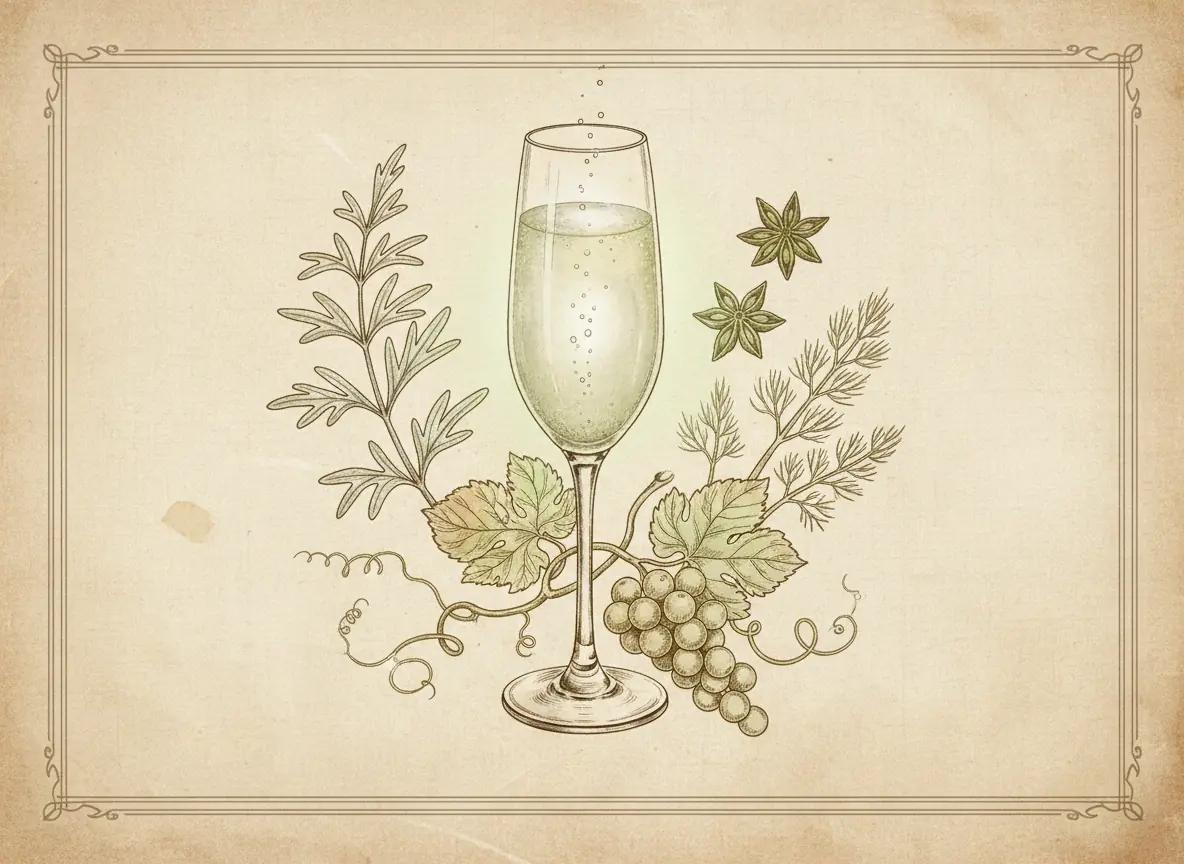
Death in the Afternoon
Death in the Afternoon is 30ml absinthe in a cold flute, with about 90ml of very cold Champagne poured in slowly until the drink turns cloudy. No garnish and no ice. About 3.1 UK units, two-thirds of it from the absinthe. The recipe was published in the Internet Archive’s scan of So Red the Nose, or Breath in the Afternoon, a cocktail book of 1935 with contributions from famous authors, and the drink shares its name with Hemingway’s 1932 book on bullfighting. His instructions, as the book prints them: pour one jigger of absinthe into a champagne glass, add iced champagne until it attains the proper opalescent milkiness, and drink three to five of these slowly. That milkiness is the louche, anise oils falling out of solution as the wine thins the spirit, and it is your cue to stop pouring.
Where this one sits
Recipe by Jerry Can Spirits · Updated 19 October 2026