
Champagne Cocktails

12 recipes

This Field Manual holds 12 recipes built on champagne or sparkling wine. The bubbles are an ingredient rather than a mixer, and that changes the order of work: everything else goes in first, the wine goes in last, and nothing gets stirred afterwards.

Dryness decides the drink. A brut keeps a sugar cube or a liqueur in check, where a demi-sec on top of either turns cloying. Temperature does the rest, because a warm bottle loses carbonation as it pours and the drink is flat before it reaches the table. Prosecco and cava work in most of these and cost less; the exception is anything where the wine is most of the glass, which is where the better bottle shows.

Difficulty Level

Bellini

The Bellini was born at Harry’s Bar in Venice, perfected through the 1940s by founder Giuseppe Cipriani and named in 1948 for the painter: the drink’s soft pink, Cipriani said, was the colour of a robe in a Giovanni Bellini altarpiece. White peach purée and prosecco, in a bar that also invented carpaccio and served everyone from Hemingway to Chaplin: Venice in a small, cold glass. The engineering is a single decision honoured absolutely: white peaches, not yellow, crushed and sieved to velvet, one part purée to two of prosecco, folded rather than stirred. The fruit’s floral delicacy is the drink, and every substitution, yellow fruit, bottled nectar, peach liqueur, produces something pleasant and wrong. It is the standard by which fruit-and-fizz drinks are judged and the reason most fail: the Bellini is not a recipe so much as an ingredient shown respect. In white peach season it is unbeatable; out of season, good frozen purée keeps it honest, exactly as Harry’s does.

Buck’s Fizz

The Buck’s Fizz is the older sibling in the orange-and-champagne family, and the British one: invented in 1921 by barman Malachy McGarry at Buck’s Club in Mayfair, four years before the Ritz Paris poured its Mimosa. The club version ran the wine at twice the juice, a gentleman’s ratio for a drink designed to make morning drinking respectable, which in 1921 Mayfair counted as a public service. The heavier wine changes the character honestly. It is drier, brisker and more obviously a champagne drink wearing a splash of colour, where the Mimosa is a true half-and-half. British weddings adopted it as liturgy, Christmas mornings followed, and the name entered the national vocabulary thoroughly enough to be borrowed by a Eurovision act. At two to one the champagne is genuinely tasted rather than merely present, so the bottle earns rather more consideration here than it ever does under a Mimosa, and the drink repays it with the extra crispness that is its whole point.

Champagne Cocktail

The Champagne Cocktail is a sugar cube soaked in Angostura, dropped into a flute, given a small measure of cognac and topped with cold champagne. Jerry Thomas printed it in 1862, which makes it one of the oldest recipes still in general circulation and comfortably the oldest sparkling one. It also qualifies as a cocktail under the original 1806 definition: spirit, sugar, water and bitters. The water simply arrives as champagne, which is a considerably better joke than most drinks manage. The cube is the mechanism and the theatre at once. Dropped in whole it sits at the bottom of the glass streaming bubbles for the drink's entire life, dissolving slowly and releasing sugar and bitters as it goes, so the first mouthful is dry and the last is noticeably richer. It is the simplest piece of kinetic sculpture in the canon, and it is why the drink must be built and never stirred.

Champagne Punch

The Champagne Punch is a celebration batch for gatherings where elegance matters more than warmth: a chilled base of cognac, orange liqueur, fresh orange juice and lemon, with two bottles of champagne added at the last possible moment. A ladle, a row of flutes, and a bowl full of colour. The staging is the recipe. The base is combined and chilled well ahead, so the only job at service is the pour, and the champagne goes in just before guests reach the bowl, because carbonation spent early is carbonation wasted. If the party runs across hours, add the bottles in stages, one at a time, and the fizz lasts as long as the evening does. The cognac is doing real work down there, putting depth and dried fruit under the sparkle while the orange liqueur and juice keep the bowl bright. The format also scales down: the same drink sized to a 187ml bottle and a shared carafe makes a punch for two.
Death in the Afternoon

Death in the Afternoon

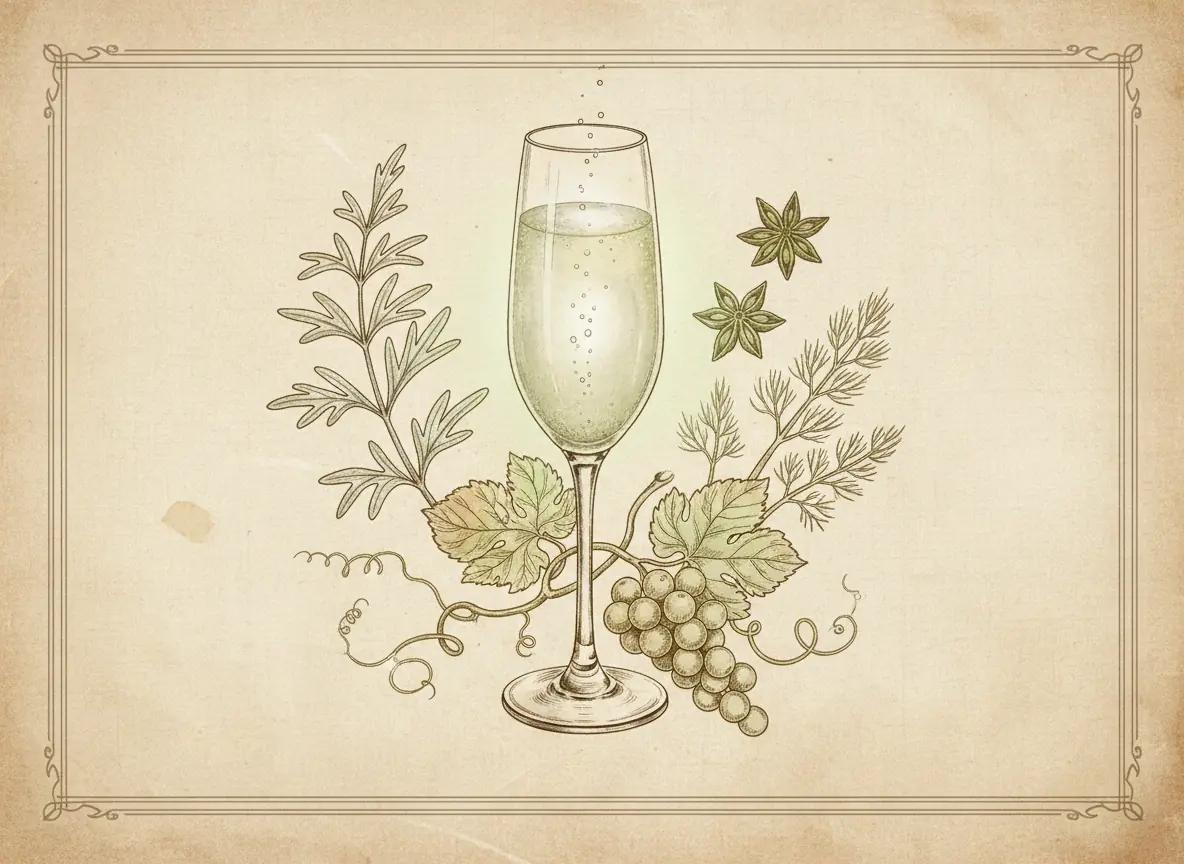
Death in the Afternoon was created by Ernest Hemingway and submitted to a 1935 celebrity cocktail collection called So Red the Nose, in which notable figures contributed original recipes with their own commentary. Hemingway's instructions were characteristically direct: pour one jigger of absinthe into a Champagne glass, add iced Champagne until it attains the proper opalescent milkiness, and drink three to five of them slowly. It is a two-ingredient cocktail with no technique beyond a careful pour. The absinthe louches as the Champagne makes contact, turning from clear to cloudy as the anise oils come out of solution. That transformation is not incidental: it signals the point at which the two ingredients have integrated, and the drink should be consumed from that moment rather than left to sit. The balance is the only variable that matters. Too much absinthe and the drink is medicinal; too little and the Champagne overwhelms the anise entirely. Hemingway's ratio produces a glass where both are audible without either one dominating.

Hugo Spritz

The Hugo Spritz is the Alps answering Venice: created in 2005 by Roland Gruber, a bartender in Naturns in South Tyrol, as a lighter alternative to the bitter spritzes ruling the south. Elderflower, prosecco, mint and soda, and the aperitivo hour gone alpine meadow. Gruber's original poured lemon balm syrup, and by his own account he named it Hugo more or less at random after rejecting Otto. The elderflower version conquered within the decade, carried along by the liqueur boom that started in 2007, and it took the name with it. It crossed into Germany and Austria first, then went everywhere prosecco pours. The build is meadow arithmetic. Twenty-five millilitres of elderflower is the spritz-length calibration, floral and present without tipping into pot-pourri; the mint is slapped rather than muddled; prosecco carries and soda lifts. It is the spritz for guests the Aperol bottle intimidates, and the politest aperitif of the summer.

Kir Royale

The Kir Royale carries the name of a war hero. Canon Félix Kir was a priest, a Resistance figure who helped thousands escape occupied France, and mayor of Dijon from 1945 until his death in 1968, and he served his city’s white wine with its blackcurrant liqueur at every official reception until the drink simply became him. The Royale is the upgrade that followed: crème de cassis under champagne rather than Burgundy’s still aligoté. It is the simplest great aperitif in the French canon, a measure of cassis in the flute with champagne poured slowly over it and the liqueur’s dark fruit blooming upward through the bubbles. The cassis does everything here, supplying the colour, the sweetness and the blackcurrant depth, while the champagne’s dryness keeps the whole thing standing at attention. The proportions are the only craft involved, and the original Kir on still white wine remains the daytime reading of the same idea.

Limoncello Spritz

The Limoncello Spritz is a digestivo promoted to the aperitivo hour. Limoncello was made to be drunk ice-cold in small glasses after dinner, and lengthening it with prosecco and soda moves it to the other end of the meal entirely. The spritz template is fixed: a liqueur, a sparkling wine, a splash of soda, over ice in a large glass. Most versions put something bitter in the liqueur position. This one puts something sweet there instead, which is why the soda is not optional here in the way it very nearly is in an Aperol Spritz. It is the only thing standing between the drink and syrup. It spread through Italian summers in the 2010s and outward from there, and it was argued about by people who felt limoncello belonged after dinner. They lost. What it does well is give a table that finds bitterness a chore something to drink at the same hour as everyone else, and it tastes exactly like the coast it comes from.

Mead Royale

The Mead Royale is our celebration pour for St David's Day: dry Welsh mead and elderflower liqueur in a flute, topped with sparkling wine and finished with a lemon twist. It borrows the Royale grammar, a measure of something flavoured under a rise of something sparkling, and hands the flavoured seat to Wales' oldest drink. Mead was poured in the medieval Welsh courts and praised by the bards; here it contributes honey character without weight, which is exactly what a flute wants. The one rule is dryness. A dry mead reads as honeyed rather than sweet, and the wine's acidity keeps the whole glass crisp; a sweet mead turns the drink cloying by the second sip. The elderflower sits between the two, floral enough to bridge honey and wine, restrained enough at fifteen millilitres to stay a seasoning rather than a flavour of its own. Welsh sparkling wine completes the set if you can find it, but any properly dry bottle serves. Pour it for arrivals on the first of March: it asks little effort, lands light, and is distinctly Welsh from base to bubble.

Mimosa

The Mimosa is equal parts champagne and fresh orange juice, and the equal-parts pour is both its signature and its civilising feature. Half wine, half sunshine, low enough in strength to have three of across a morning, which is exactly what a brunch table wants. It is credited to the Ritz Paris in 1925 and named for the yellow bloom of the mimosa tree. London had got there four years earlier: Buck's Club was pouring champagne and orange from 1921 under the name Buck's Fizz, at two parts wine to one of juice. The two cities have disputed the territory politely ever since. The Fizz is older, and the Mimosa travelled further. There is exactly one rule and it is not about the wine. The orange juice must be fresh, and the drink is unusually unforgiving about it, because the wine's dryness amplifies everything a carton gets wrong rather than covering for it.

Rossini

The Rossini is the Bellini’s summer sibling, named with the same Venetian logic for another Italian master: strawberries where the peaches were, prosecco as before, and the composer of The Barber of Seville on the label. It grew up in the Veneto’s bars as the strawberry season’s answer to the house drink, and it has conquered aperitivo hour on its own colour alone. Strawberries are a more forgiving fruit than white peaches, which makes the Rossini the accessible end of the purée-and-prosecco family: ripe berries blended and sieved, seasoned with a thought of lemon, folded under cold prosecco. The berry’s acidity meets the wine more readily than peach ever does, and the drink runs brighter and more casual than its elder. It is the correct answer to a June afternoon, a jug of it the correct answer to a garden of guests, and the strawberries themselves the only quality question the drink ever asks.

Sgroppino

The Sgroppino is Venice untying dinner's knot: lemon sorbet whisked with prosecco and a thread of vodka into a froth you can drink. It is the Veneto's palate cleanser between courses and its gentlest goodbye after them, and the dialect name means precisely that loosening. The method is the recipe. The sorbet is softened for a couple of minutes and whisked smooth, the vodka goes through as a binder, and the prosecco is folded in stages until the texture pours like sea foam. A blender does not produce this: the violence splits what the whisk marries, and what comes out is slush rather than silk. Venice uses a bowl, a fork and a wrist. It sits in the spritz family's dessert corner, and it is the correct answer to a summer table that wants pudding and an aperitivo's manners at the same time. Nothing else in the repertoire does both jobs in one glass, which is why Venice has never felt the need to replace it.