Limoncello Spritz
A Limoncello Spritz is 50ml of limoncello from the freezer, 90ml of brut prosecco and 30ml of soda water, built over ice in a copa or large wine glass, stirred once and finished with a lemon wheel and a sprig of mint. About 2.4 UK units, taking the limoncello at 28% ABV. It follows the spritz pattern of liqueur, sparkling wine and soda, with a sweet lemon liqueur where the Aperol Spritz has a bitter orange one. That makes the soda and a dry prosecco more important here: they are all that keeps the sugar in check. Limoncello is lemon zest steeped in alcohol, then sweetened, and in southern Italy it is poured ice-cold after dinner. The spritz moves it to the start of the evening.
Glassware: Copa Glass
Garnish: Lemon wheel and Mint sprig
Ingredients
50ml
Around 28% ABV; Luxardo’s is 27% on its maker’s page. Keep it in the freezer. Look for one that tastes of zest rather than of boiled sweets; a bright yellow colour tells you nothing.
30ml
Freshly opened and cold. It thins the sugar and lifts the zest, and nothing else in the glass does that job.
Instructions
Fill a copa or large wine glass with cubed ice.
Pour in the limoncello straight from the freezer.
Add the prosecco, then the soda water.
Stir once, gently.
Garnish with a lemon wheel and a slapped mint sprig.
Expert Tip
Keep the limoncello in the freezer. At around 28% ABV it will not freeze solid; it pours thick and cold, and cold makes the sugar taste lighter. From the shelf it tastes syrupy, and the ice cannot catch up. Buy brut prosecco. Extra dry, despite the name, is sweeter than brut, and it stacks sugar on sugar. If extra dry is all you have, add more soda. Measure the soda. 30ml is a small pour, but against a sweet liqueur it does the job bitterness does in other spritzes, and the drink is cloying without it.
Behind the Limoncello Spritz
Flavour Profile
Where It Comes From
Limoncello is made across southern Italy and is most associated with the Amalfi coast and the Sorrento peninsula. Lemon zest is steeped in neutral alcohol, which draws out the oil, and the spirit is then sweetened with sugar and water. No juice goes in.
It is traditionally served ice-cold in small glasses after a meal. The spritz is a recent use for it.
Why the Soda Matters
In an Aperol Spritz the liqueur is bitter, so the soda mostly lengthens the drink. Here the liqueur is sweet and nothing in the glass is bitter. The soda and the dry prosecco are what stop it tasting of syrup.
That is also why brut matters. An extra dry prosecco carries more sugar, and this drink has none to spare.
The Cold
Cold changes how sweet a liqueur tastes. The same limoncello at room temperature and from the freezer tastes like two products: one heavy and sugary, one sharp, with the zest in front.
Ice in the glass cannot fix a warm pour quickly enough, because the first sips are gone before it has done its work.
Where It Sits in the Family
Three spritzes compared; the units are our calculation at Aperol’s 11% on its maker’s FAQ, limoncello at our working figure of 28%, prosecco at our working 11% and elderflower liqueur at 20%, the strength LWC lists for St-Germain
Limoncello Spritz
- Liqueur
- 50ml limoncello
- Sparkling wine
- 90ml prosecco
- Soda
- 30ml
- UK units
- About 2.4
Aperol Spritz
- Liqueur
- 60ml Aperol
- Sparkling wine
- 90ml prosecco
- Soda
- 30ml
- UK units
- About 1.7
Hugo Spritz
- Liqueur
- 25ml elderflower liqueur
- Sparkling wine
- 90ml prosecco
- Soda
- 30ml
- UK units
- About 1.5
| Drink | Liqueur | Sparkling wine | Soda | UK units |
|---|---|---|---|---|
| Limoncello Spritz | 50ml limoncello | 90ml prosecco | 30ml | About 2.4 |
| Aperol Spritz | 60ml Aperol | 90ml prosecco | 30ml | About 1.7 |
| Hugo Spritz | 25ml elderflower liqueur | 90ml prosecco | 30ml | About 1.5 |
The bitter version is the Aperol Spritz; the floral one, with elderflower and mint, is the Hugo Spritz. This one suits a table where not everyone likes bitterness.
How to Serve It
In a large glass packed with ice: limoncello first, then prosecco, then soda, and one gentle stir.
The lemon wheel adds a little fresh acid as you drink, and a slapped mint sprig gives the nose something other than sugar.
Make it at home
The Spirit
LimoncelloLimoncello is an Italian lemon liqueur, usually about 28% ABV, made from lemon zest steeped in spirit, then mixed with sugar syrup; no juice goes in. It is served ice cold from the freezer after dinner, and it is the base of the Limoncello Spritz. In a drink it brings lemon oil and sugar, not acid, so it does not replace lemon juice.
More to explore
Frequently Asked Questions
What is in a Limoncello Spritz?
Why keep limoncello in the freezer?
Is a Limoncello Spritz too sweet?
How strong is a Limoncello Spritz?
Can I use champagne instead of prosecco?
Limoncello Spritz or Aperol Spritz?
Sources.
Correct as of 19 October 2026.
- Luxardo, “Limoncello” (producer’s page: 27% Alc. by Vol.).
- Aperol, “Aperol FAQ” (maker’s own page: “Aperol has an alcohol content of 11%”).
- LWC, “St-Germain 70cl” (UK wholesaler listing: Alcohol By Volume 20%).
You Might Also Like
Hugo Spritz
A Hugo Spritz is 25ml of elderflower liqueur, 90ml of cold prosecco and 30ml of soda water, built in a large wine glass full of ice with a slapped sprig of mint and a lime wheel, then stirred once. It holds about 1.5 UK units on our calculation, a little less than an Aperol Spritz at the 11% on Aperol’s own FAQ, and tastes floral where that one is bitter. Difford’s Guide says Roland Gruber created it in June 2005 at his Sanzeno wine and cocktail bar in Naturno, South Tyrol, northern Italy, as a riff on the Spritz Veneziano. His first version used lemon balm syrup, and elderflower syrup and then elderflower liqueur replaced it. He first named it Otto and quickly renamed it. Difford’s says it became a well-known contemporary classic in Switzerland, where Gruber bartended after his bar closed.
Sgroppino
A Sgroppino is a scoop of sharp lemon sorbet whisked with 20ml of vodka and 60ml of cold prosecco into a pourable froth, served at once in a chilled flute with a lemon twist. About 1.5 UK units. Some lemon sorbets are set with egg white, so check the tub for anyone allergic to egg. It comes from Venice, where it is poured between courses or after a heavy meal. The name usually gets traced back to the Venetian verb sgropàre, to untie, and its work is to loosen the knot a long dinner leaves behind. Technique decides it. Soften the sorbet for two minutes, whisk the vodka through, then fold the prosecco in a little at a time. A blender shears the mixture and knocks the gas out of the wine, and the result is slush rather than froth.
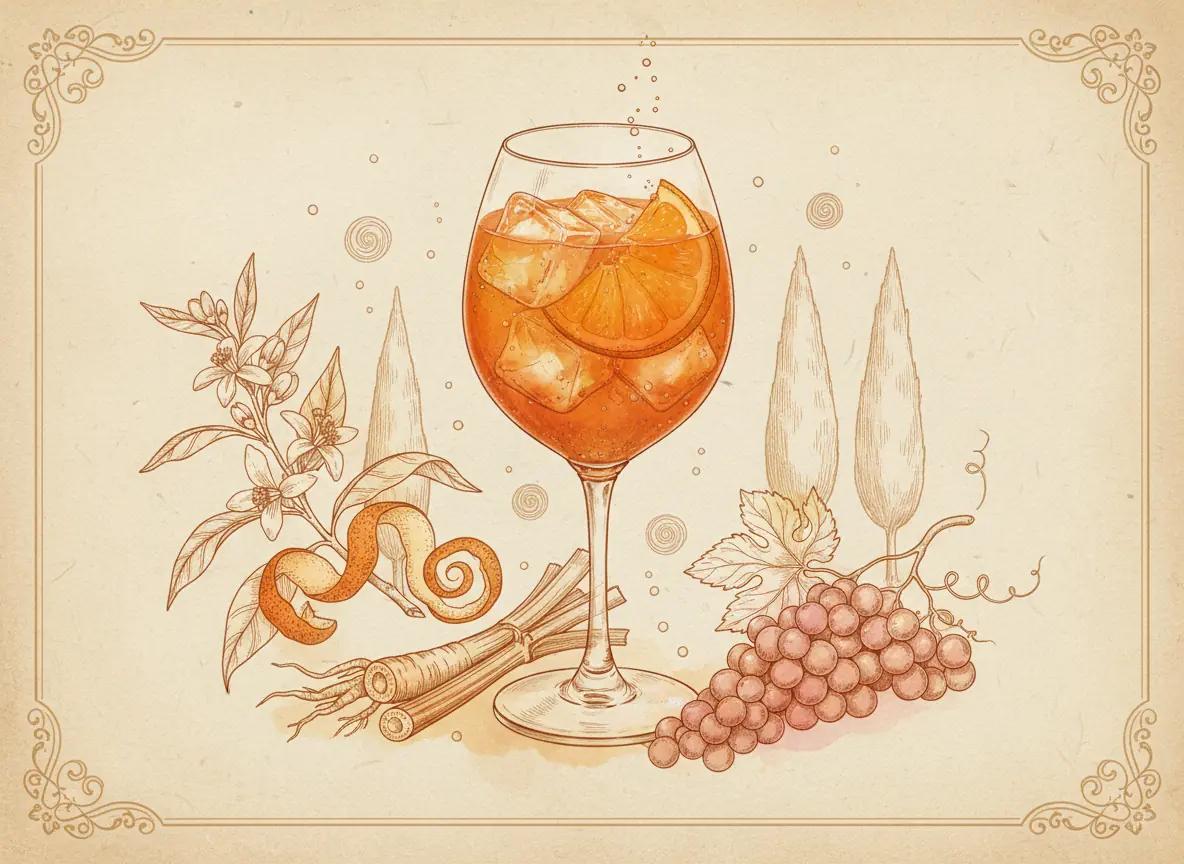
Aperol Spritz
An Aperol Spritz is three parts prosecco, two parts Aperol and one part soda: 90ml prosecco, 60ml Aperol and 30ml soda water, poured in that order into a large wine glass packed with ice, with an orange slice to finish. That is the International Bartenders Association’s Spritz, with its splash of soda measured. Aperol is an Italian aperitivo at 11% ABV by its maker’s FAQ, with zesty orange and herbal notes on its product page; Difford’s Guide, a secondary source, names bitter orange, gentian, cinchona bark and Chinese rhubarb among its ingredients. Aperol says Luigi and Silvio Barbieri created it in 1919, and Difford’s Guide places the company in Padua. The spritz habit in the Veneto is older; VinePair traces it to the Veneto under Austrian rule, when the Austrians added a splash of water, a spritz, to the local wine. Pour the prosecco first and the Aperol mixes as it goes in. A glass holds about 1.7 UK units.
Where this one sits
Recipe by Jerry Can Spirits · Updated 19 October 2026