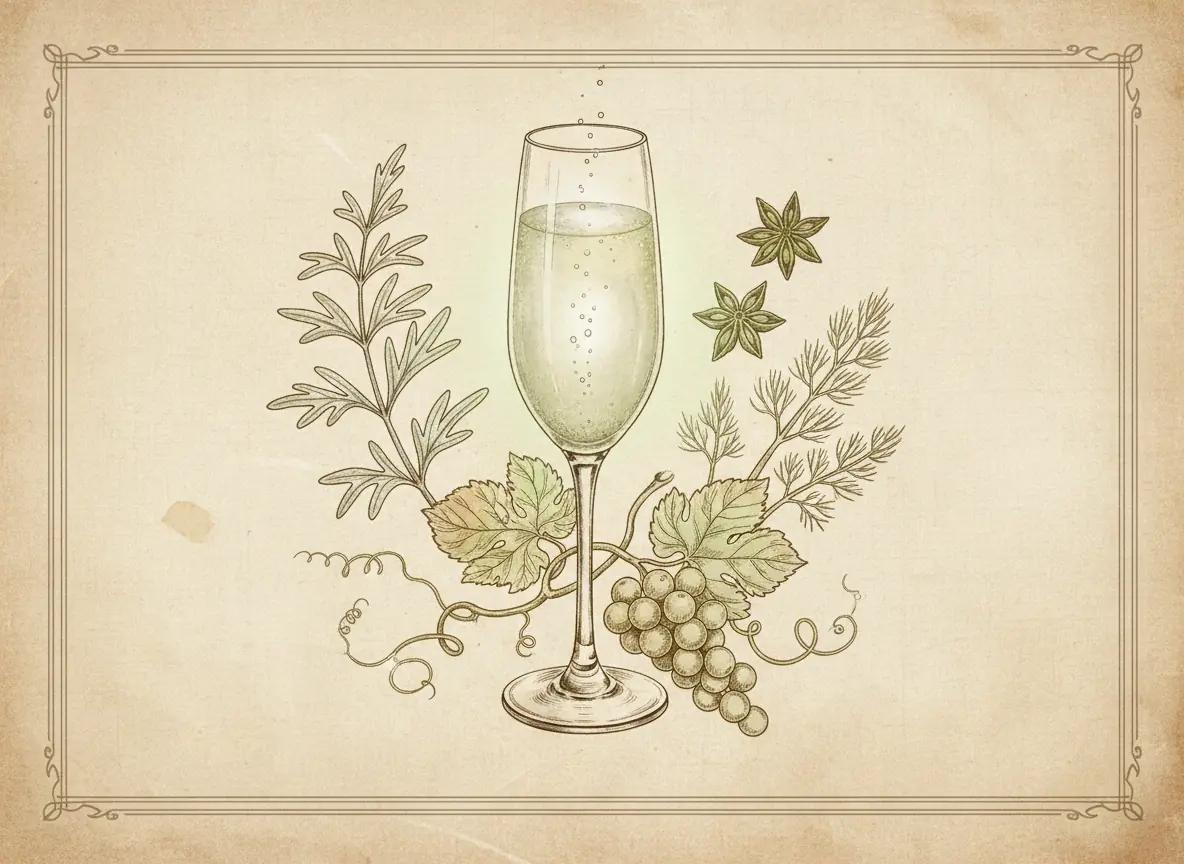
Death in the Afternoon
Death in the Afternoon is 30ml absinthe in a cold flute, with about 90ml of very cold Champagne poured in slowly until the drink turns cloudy. No garnish and no ice. About 3.1 UK units, two-thirds of it from the absinthe. The recipe was published in the Internet Archive’s scan of So Red the Nose, or Breath in the Afternoon, a cocktail book of 1935 with contributions from famous authors, and the drink shares its name with Hemingway’s 1932 book on bullfighting. His instructions, as the book prints them: pour one jigger of absinthe into a champagne glass, add iced champagne until it attains the proper opalescent milkiness, and drink three to five of these slowly. That milkiness is the louche, anise oils falling out of solution as the wine thins the spirit, and it is your cue to stop pouring.
Glassware: Champagne Flute
Garnish: None
Ingredients
30ml
An absinthe made with grand wormwood, green anise and sweet fennel, which the Oxford Companion says is typically bottled at 55 to 72% ABV; we use 68%, the figure on Drinkfinder’s listing for Pernod Absinthe. Pastis and anise liqueurs are sweeter and softer, and they make a different drink.
About 90ml
Brut Champagne, at our working figure of 12% ABV, as cold as you can get it. Dry, sharp wine stands up to the anise, while a sweeter bottle drags the drink towards confectionery. A dry traditional-method sparkling wine also works.
Instructions
Chill a Champagne flute with ice water, then empty it.
Pour the absinthe into the flute.
Pour in about 90ml of cold Champagne slowly, watching the drink turn cloudy.
Stop once it is evenly milky.
Serve at once, without garnish.
Expert Tip
Pour the Champagne slowly and watch the glass. The absinthe clouds as the wine goes in, and once it is evenly milky the drink is ready. Different absinthes get there at slightly different points, so trust your eye over the measure. Chill the flute and keep the Champagne very cold. Warm wine foams up over the absinthe instead of mixing with it, and the louche comes out patchy. Use a dry absinthe made with wormwood and anise. Pastis will cloud too, but it is sweetened and lower in strength, and the glass ends up rounder and sweeter, without the bitter wormwood edge.
Behind the Death in the Afternoon
Flavour Profile
The Origin
The recipe was published in December 1935 in So Red the Nose, or Breath in the Afternoon, a cocktail book with contributions from famous authors, and the drink shares its name with Hemingway’s 1932 book on bullfighting. His instructions, as the book prints them, ran to three sentences: pour one jigger of absinthe into a champagne glass, add iced champagne until it attains the proper opalescent milkiness, and drink three to five of these slowly.
The printed recipe carried its own origin story, which the scan shows: Hemingway writes that the drink was arrived at by the author and three officers of H.M.S. Danae after having spent seven hours overboard trying to get Capt. Bra Saunders’ fishing boat off a bank where she had gone with them in a N.W. gale. The ship story is the one in print; we have found no primary record of a Left Bank origin.
The Louche
Absinthe’s anise and fennel oils stay dissolved while the spirit is strong. Add something weaker, water or wine, and they come out as tiny droplets that scatter light, and the drink turns from clear green-gold to milky.
Here the Champagne does the work a fountain does for absinthe and water. Poured slowly, it clouds the glass from the bottom up, and the moment it is evenly opalescent is the moment to stop. Less wine leaves it harsh; much more and it tastes thin.
What Each Part Does
Death in the Afternoon: the two ingredients, at our working strengths
Absinthe
- Measure
- 30ml
- Strength
- 68% ABV, about 2.0 UK units
- Its job
- Anise, wormwood and the louche
Brut Champagne
- Measure
- About 90ml
- Strength
- 12% ABV, about 1.1 UK units
- Its job
- Dilution, acidity and bubbles
| Ingredient | Measure | Strength | Its job |
|---|---|---|---|
| Absinthe | 30ml | 68% ABV, about 2.0 UK units | Anise, wormwood and the louche |
| Brut Champagne | About 90ml | 12% ABV, about 1.1 UK units | Dilution, acidity and bubbles |
The Absinthe
Absinthe is a strong spirit flavoured with grand wormwood, green anise and fennel, often with other herbs. A dry, unsweetened bottle is what this drink needs: the Champagne already brings acidity, and the wormwood’s bitterness keeps the anise from tasting of sweets.
A strong pastis such as Pernod is the stand-in some reach for. Both cloud in the glass, but Annex II of Regulation (EC) No 110/2008, as retained, gives pastis less than 100 grams of sugar a litre and a minimum of 40% ABV, so the result is softer and rounder. The Oxford Companion calls pastis a French aperitif flavoured with anise and licorice that became popular as an alternative to the outlawed absinthe. That is a variation worth knowing, and a different drink from the one Hemingway wrote down.
How to Serve It
In a cold flute or coupe, without ice or garnish, before dinner. Hemingway’s instruction to drink it slowly holds up: one glass is about 3.1 UK units, more than a 250ml glass of 12% wine, and it does not taste that strong.
Use a brut Champagne with real acidity; a soft, sweet sparkling wine lets the anise run the whole glass.
Make it at home
The Spirit
AbsintheAbsinthe is a high-strength spirit whose flavour comes from fennel, green anise and grand wormwood, bottled strong; our recipes assume 68% ABV. Regulation (EC) 110/2008 gives it no definition of its own, so it goes on sale as a spirit drink, and Regulation (EC) 1334/2008 limits drinks made from wormwood to 35mg of thujone a kilogram. Cocktails take it by the rinse, the dash or the half teaspoon, and only occasionally by the measure.
Master the Techniques
More to explore
Frequently Asked Questions
What is a Death in the Afternoon?
Where does the name come from?
Why does the absinthe turn cloudy?
How strong is a Death in the Afternoon?
Do I need an absinthe fountain?
Can I use Pernod or pastis instead of absinthe?
How much absinthe is a jigger?
Sources.
Correct as of 19 October 2026.
- Internet Archive, “So Red the Nose or Breath in the Afternoon (1935), scan” (primary source, read as text: Ernest Hemingway’s Death in the Afternoon Cocktail, 1 jigger of absinthe into a champagne glass, iced champagne until opalescent, 3 to 5 slowly; Hemingway’s note on H.M.S. Danae; copyright December 1935, Farrar & Rinehart).
- The Oxford Companion to Spirits and Cocktails (Gwydion Stone), “absinthe” (secondary source: typically bottled at 55 to 72% ABV; grand wormwood, aniseed and fennel seed in the canonical pre-ban formula).
- legislation.gov.uk, “Regulation (EC) No 110/2008, Annex II (retained)” (retained text: pastis (26) aniseed-flavoured with licorice-root extract, minimum 40%, less than 100 grams of sugar per litre; pastis de Marseille (27) minimum 45%).
- The Oxford Companion to Spirits and Cocktails (David Wondrich), “jigger” (secondary source: nominally a wineglass, two ounces or 60 ml, measured examples usually smaller; the American jigger slipped from two ounces to an ounce and a half to often an ounce and a quarter).
- Hemingway Society, “Abbreviations for the Works of Ernest Hemingway” (learned society reference list: Death in the Afternoon, Scribner’s, 1932).
- Drinkfinder, “Pernod Absinthe 70cl” (UK retailer listing: ABV 68%).
- The Oxford Companion to Spirits and Cocktails, “pastis” (secondary source: a French aperitif flavoured with anise and licorice, popular as an alternative to the outlawed absinthe).
You Might Also Like
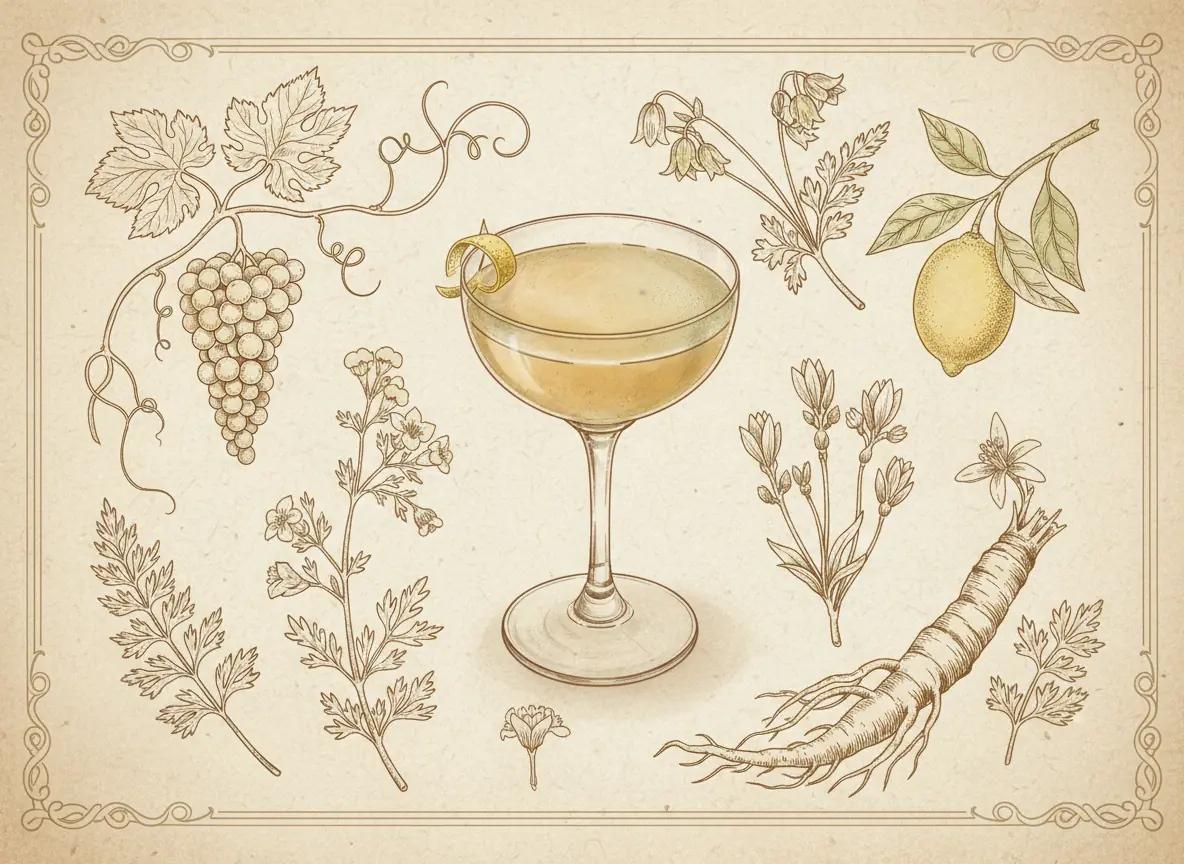
Champs-Élysées
A Champs-Élysées is 45ml of cognac, 15ml of green Chartreuse, 20ml of fresh lemon juice, 10ml of sugar syrup and a dash of Angostura, shaken hard with ice for 10 to 12 seconds and double strained into a chilled coupe, finished with an expressed lemon twist. About 2.6 UK units. Difford’s Guide gives the earliest known recipe as the one in Drinks, Long and Short by Nina Toye and A. H. Adair, published in 1925: three parts brandy, one of Chartreuse and one and a half of sweetened lemon juice, with a dash of Angostura. Our measures keep the three to one of brandy to Chartreuse and split the sweetened lemon into fresh juice and syrup. It reads as a Sidecar with green Chartreuse in place of the orange liqueur. Chartreuse is 55% ABV on its own page and, in our view, intensely herbal, so even a small measure changes the whole drink: the cognac and lemon are still there, under a layer of mountain herbs.
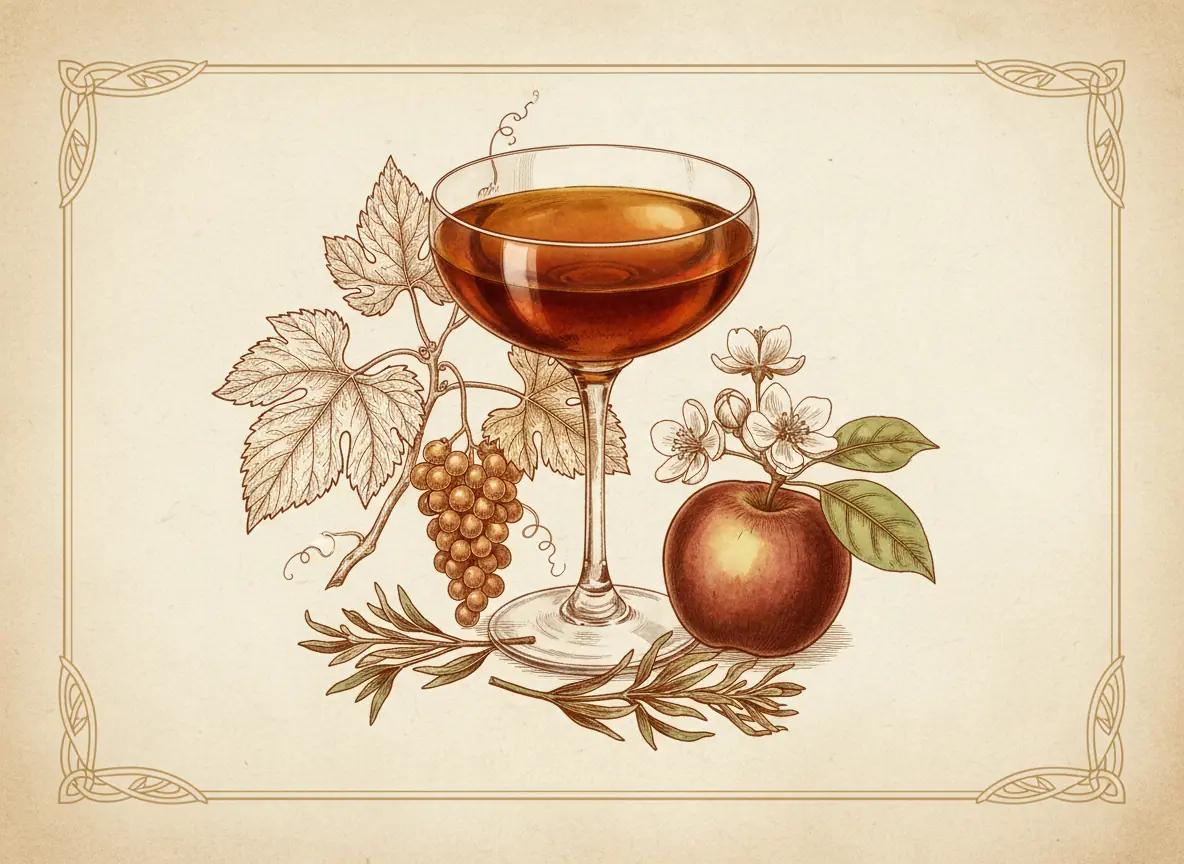
Corpse Reviver No. 1
Our Corpse Reviver No. 1 is 30ml each of cognac, Calvados and sweet vermouth, stirred over ice for 20 to 30 seconds and strained into a chilled coupe, with no garnish. About 2.9 UK units. It is a short, stirred drink of two fruit brandies and vermouth, and nothing like the gin and lemon No. 2. The phrase came before the drink. The Oxford Companion says a Corpse Reviver appears to have been a real drink at an American-style bar in Piccadilly in the late 1850s, and the Gentleman’s Table Guide of 1871, in the Internet Archive scan, gives a recipe of half a wineglass each of brandy and maraschino with two dashes of Boker’s bitters. Harry Craddock printed a No. 1 and a No. 2 in the Savoy Cocktail Book in 1930, and the Companion says it was he who tethered the name to actual recipes. Difford’s Guide, quoting the Savoy, gives half brandy and a quarter each of apple brandy or Calvados and Italian vermouth, which is two parts brandy to one each of the others. Ours pours equal parts, which brings the apple forward and makes the vermouth a full partner.
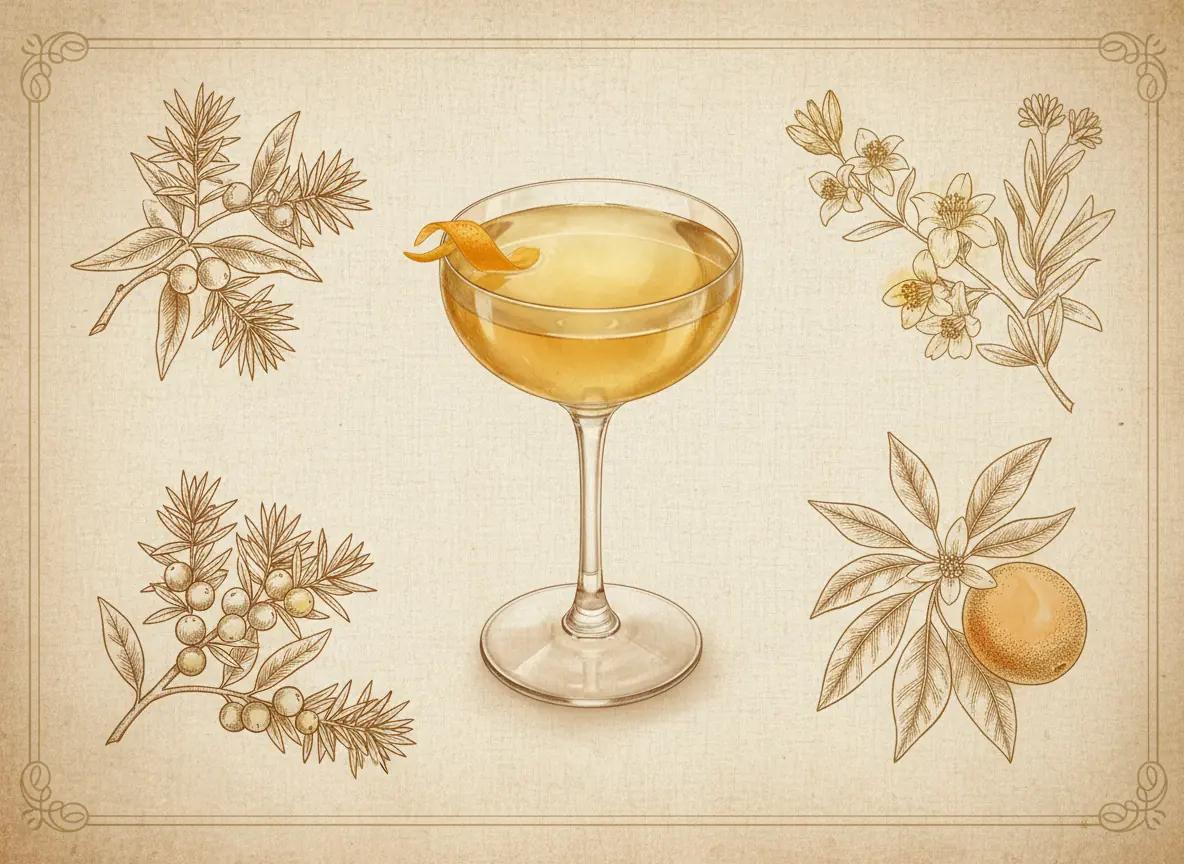
Alaska
An Alaska is 50ml of London Dry gin and 25ml of yellow Chartreuse with two dashes of orange bitters, stirred over ice for 30 seconds and strained into a chilled Nick & Nora, with a lemon twist. About 3.1 UK units, all of it spirit. It was in print by 1914, Punch says, when Jacques Straub’s Drinks listed it as Old Tom gin with a smaller measure of yellow Chartreuse and a dash of orange bitters, shaken. The gin-led ratio has held; the Old Tom and the shaking have not. The name is unexplained; Difford’s Guide offers only a conjecture about the Alaska gold rush and the drink’s golden colour. Yellow Chartreuse is the drink. Sweet and spicy at 43% ABV on Chartreuse’s own page, softer than green, it sweetens the gin and seasons it at once. A full 30-second stir is what turns two strong bottles into one smooth drink.
Where this one sits
Recipe by Jerry Can Spirits · Updated 19 October 2026