Sloe Gin Fizz
A Sloe Gin Fizz is 45ml of sloe gin, 15ml of London Dry gin, 30ml of fresh lemon juice and 10ml of sugar syrup, shaken hard, strained into a chilled small highball with no ice and topped with 60ml of cold soda water, with a lemon wheel. About 1.8 UK units. Add 15ml of egg white for a foam; it is raw egg. Sloe gin is a liqueur, not a gin: sloes steeped in gin with sugar, at 25% ABV or more under Regulation (EC) No 110/2008, and sweet. That is why the drink carries 15ml of dry gin as well, for backbone, and why the syrup should be tasted against the bottle you have. It is built the same way as our Gin Fizz: shaken, served short with no ice and drunk while the soda is lively. PUNCH puts sloe gin’s close link with this drink at the start of the twentieth century.
Glassware: Highball Glass
Garnish: Lemon wheel
Ingredients
45ml
A liqueur, not a gin: sloes steeped in gin with sugar, at 25% ABV or more under Regulation (EC) No 110/2008. Sweetness varies a lot between bottles, so taste it first.
15ml
At 40% ABV. Sloe gin alone is soft and sweet against 30ml of lemon; this measure gives the drink its spine.
30ml
Squeezed the same day. The fizz’s full sour measure, needed against the sugar already in the sloe gin.
10ml
Sugar and water, 1:1 by weight. Start at 10ml and adjust to the bottle: less for a sweet sloe gin, none for a very sweet one.
15ml (optional)
For a white foam over the pink. Dry shake it first. Raw. Following the FSA, British Lion-mark eggs are safe raw, including for vulnerable groups and in pregnancy; pasteurised carton white is the alternative. Eating out, where the mark cannot be checked, the FSA advises vulnerable people to have their eggs thoroughly cooked. Contains egg: leave it out, or use aquafaba, for anyone allergic.
60ml
Cold and freshly opened, poured last and briskly. At 60ml it lifts the drink without drowning it.
Instructions
Chill a small highball glass in the freezer.
Add the sloe gin, gin, lemon juice, sugar syrup and egg white, if using, to a shaker.
If using egg white, dry shake without ice for 10 to 15 seconds.
Fill with cubed ice and shake hard for 10 to 12 seconds.
Strain into the chilled glass, with no ice.
Top briskly with 60ml of cold soda water and add a lemon wheel.
Our version
There is no single fixed recipe; many pour sloe gin alone with lemon, sugar and soda. Ours follows our Gin Fizz, 30ml of lemon, 10ml of syrup and 60ml of soda with no ice in the glass, and splits the spirit into 45ml of sloe gin and 15ml of London Dry gin.
Source: our own specification. Last checked 10 October 2026.
Expert Tip
Taste the sloe gin before you measure the syrup. Bottles range from tart to very sweet, and 10ml is a starting point: a sweet bottle may want 5ml, or none. Chill the glass; put no ice in it. Nothing in the glass will cool the drink later, so the shake does all of it: hard, for the full 10 to 12 seconds. For a foam, add 15ml of egg white and dry shake for 10 to 15 seconds before the ice goes in, then pour the soda through the middle so the white rises over the pink. The white is raw, so skip it for anyone avoiding egg.
Behind the Sloe Gin Fizz
Flavour Profile
Sloe Gin Meets the Fizz
Sloe gin is a British country drink. The Oxford Companion calls it an extremely popular British infusion of blackthorn berries in gin sweetened with sugar, traditionally served around Christmas and New Year. Raw sloes dry the mouth in seconds, the Woodland Trust says, so they go in as flavouring: its recipe freezes them, steeps them in gin with sugar for about two months and ends with a dark red liquid. Made slowly, it picks up an almond note from the stones.
The fizz is American: spirit, citrus and sugar shaken and topped with soda. Punch says sloe gin became widely associated with the Sloe Gin Fizz at the beginning of the twentieth century.
A Liqueur, Not a Gin
The name misleads. Sloe gin is a sweetened liqueur. Regulation (EC) No 110/2008, retained in GB law, defines it as a liqueur produced by maceration of sloes in gin with the possible addition of sloe juice, and sets 25% ABV as the minimum. That is well short of the 40% of the gin it is made from.
Two things follow. The drink needs 15ml of dry gin to hold its shape against 30ml of lemon, and the syrup needs tasting, because one bottle can be far sweeter than the next.
The Gin Fizz Frame
Our Gin Fizz, Sloe Gin Fizz and Tom Collins
Spirit
- Gin Fizz
- 45ml gin
- Sloe Gin Fizz
- 45ml sloe gin, 15ml gin
- Tom Collins
- 60ml gin
Fresh lemon juice
- Gin Fizz
- 30ml
- Sloe Gin Fizz
- 30ml
- Tom Collins
- 30ml
Sugar syrup
- Gin Fizz
- 10ml
- Sloe Gin Fizz
- 10ml, to taste
- Tom Collins
- 15ml
Soda water
- Gin Fizz
- 60ml
- Sloe Gin Fizz
- 60ml
- Tom Collins
- 90ml
Ice in the glass
- Gin Fizz
- None
- Sloe Gin Fizz
- None
- Tom Collins
- A full glass
UK units
- Gin Fizz
- About 1.8
- Sloe Gin Fizz
- About 1.8
- Tom Collins
- About 2.4
| Element | Gin Fizz | Sloe Gin Fizz | Tom Collins |
|---|---|---|---|
| Spirit | 45ml gin | 45ml sloe gin, 15ml gin | 60ml gin |
| Fresh lemon juice | 30ml | 30ml | 30ml |
| Sugar syrup | 10ml | 10ml, to taste | 15ml |
| Soda water | 60ml | 60ml | 90ml |
| Ice in the glass | None | None | A full glass |
| UK units | About 1.8 | About 1.8 | About 2.4 |
With or Without Egg
With 15ml of egg white, dry shaken first, the drink carries a white collar over the pink, and by the old naming that makes it a silver fizz. Without it the drink is sharper and quicker to make. Both are right; the white is raw, so ask before you add it.
How to Serve It
Short, in a chilled small highball with no ice and a lemon wheel, and drunk while the soda is still lively. Autumn suits it, when last year’s sloe gin is ready and this year’s is steeping.
For the same frame on plain gin, the Gin Fizz; for gin, lemon and blackberry over crushed ice, the Bramble; for a fizz with cream and egg white, the Ramos Gin Fizz.
Make it at home
The Spirit
Sloe GinDespite its name, sloe gin is a fruit liqueur: sloes, the small sour fruit of the blackthorn tree, macerated in gin and sweetened, then bottled at 25% ABV or more, usually 25 to 30%. Regulation (EC) No 110/2008 defines it in its own right and allows only natural flavourings in it. It brings plum, tartness and a deep red colour to the Sloe Gin Fizz and to long drinks with tonic.
More to explore
Frequently Asked Questions
What is in a Sloe Gin Fizz?
Is sloe gin a gin?
Why add regular gin to sloe gin?
Why is there no ice in the glass?
Do I need the egg white?
Can I use homemade sloe gin?
How strong is a Sloe Gin Fizz?
Sources.
Correct as of 19 October 2026.
- legislation.gov.uk, “Regulation (EC) No 110/2008, Annex II (retained)” (category 37: sloe gin is a liqueur produced by maceration of sloes in gin with the possible addition of sloe juice; minimum 25% ABV).
- Woodland Trust, “When to pick sloes and how to make sloe gin” (charity’s recipe: pick after the first frost or freeze; 450g sloes, 225g caster sugar, 1 litre gin; shake every other day for a week, then weekly for two months; dark red; improves over time).
- Punch, “Bringing It Back Bar: What to Do With Sloe Gin” (secondary source: sloe gin became widely associated with the Sloe Gin Fizz at the beginning of the 20th century).
- The Oxford Companion to Spirits and Cocktails (Anistatia R. Miller and Jared M. Brown), “sloe gin” (secondary source: a British infusion of blackthorn berries in gin sweetened with sugar; traditionally served around Christmas and New Year; commercial by the end of the nineteenth century; a mid-twentieth-century rise with the Sloe Gin Fizz).
You Might Also Like
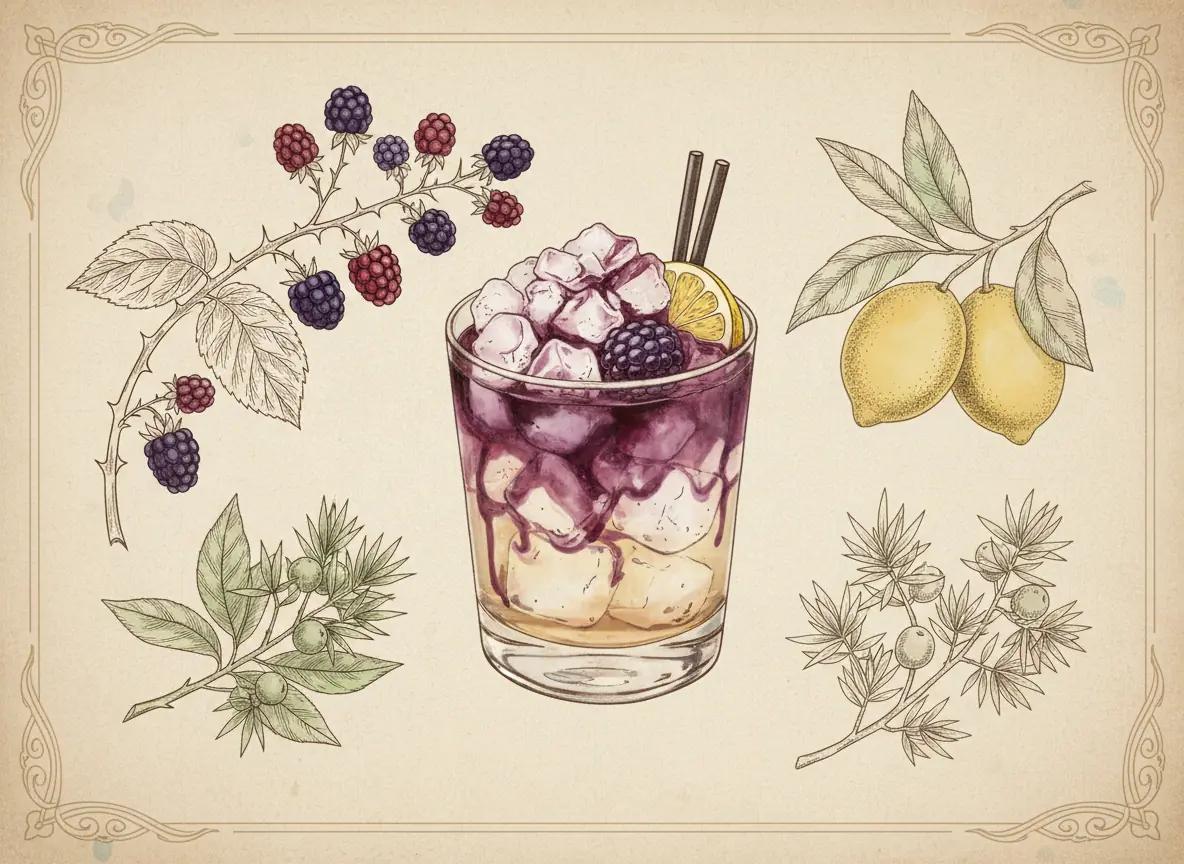
Bramble
A Bramble is 50ml London Dry gin, 25ml fresh lemon juice and 12.5ml sugar syrup, shaken hard and strained over crushed ice in a rocks glass, with 15ml of crème de mûre poured over the top so it bleeds down through the ice. A lemon slice and blackberries finish it. About 2.2 UK units. These are the IBA’s measures. Dick Bradsell created it at Fred’s Club in Soho: Punch dates it to 1984, Bradsell’s own account in Difford’s Guide says the mid-eighties or thereabouts, and the Oxford Companion says 1989. He wanted a British cocktail, and he took the idea from going blackberrying as a child on the Isle of Wight. Bramble is the everyday name for the blackberry bush. Underneath, it is a gin sour. The liqueur on top makes it change as you drink: tart and sharp at first, darker and fruitier towards the bottom of the glass.
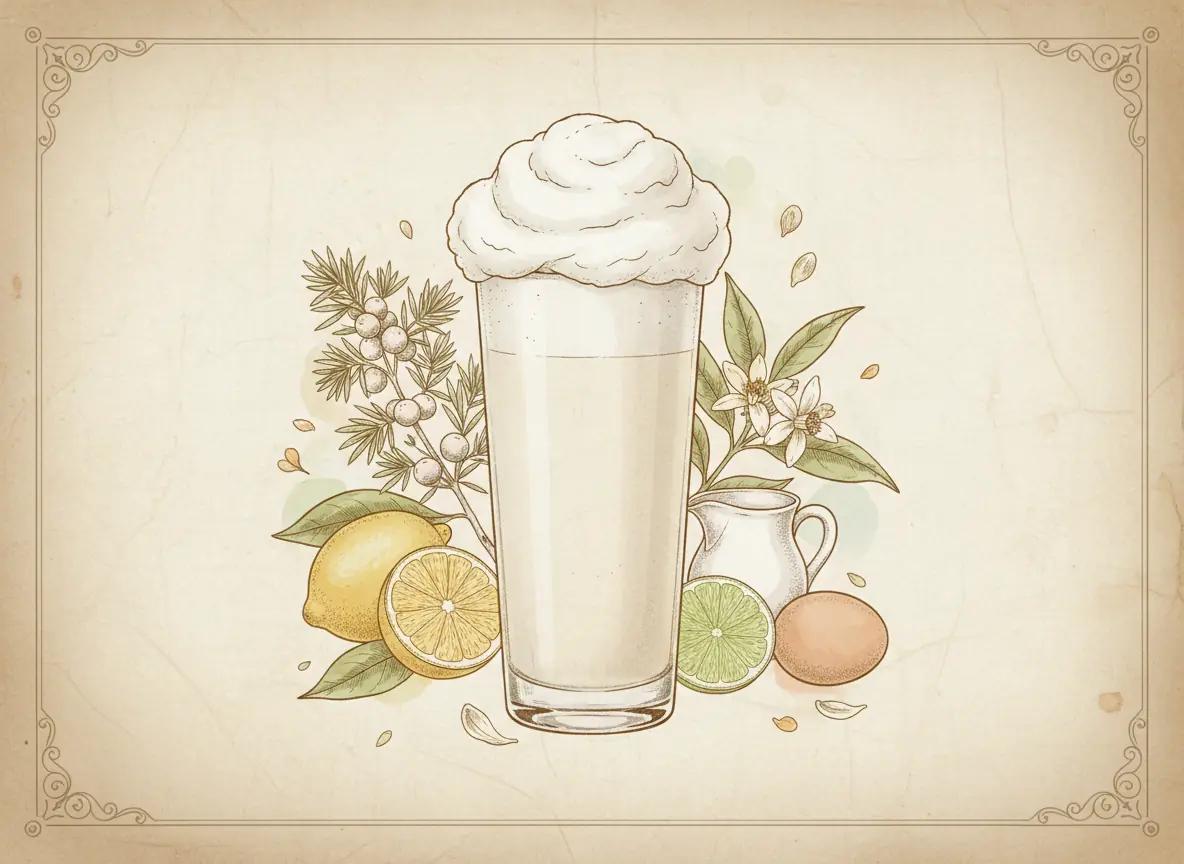
Ramos Gin Fizz
A Ramos Gin Fizz is 45ml of London Dry gin, 15ml each of fresh lemon and lime juice, 30ml of sugar syrup, 30ml of egg white, 60ml of double cream, three dashes of orange flower water and two drops of vanilla extract, shaken long and hard, strained into a chilled highball with no ice and lifted with 60ml of soda water. About 1.8 UK units. It contains raw egg and dairy. Difford’s Guide, a secondary source, says Henry C. Ramos created it in 1888 at the Imperial Cabinet Saloon in New Orleans; the IBA gives the same year but a different bar. The Oxford Companion says the drink’s precise origins are unknown, that the earliest definite notice in print is from 1895, and that the likeliest period is 1892 to 1894. Difford’s quotes Stanley Clisby Arthur on 35 shaker boys at Ramos’s later bar, the Stag, during the 1915 Mardi Gras. The measures are the IBA’s. The shake is the work: cream and egg white need time to whip into a foam dense enough for the soda to push up out of the glass.
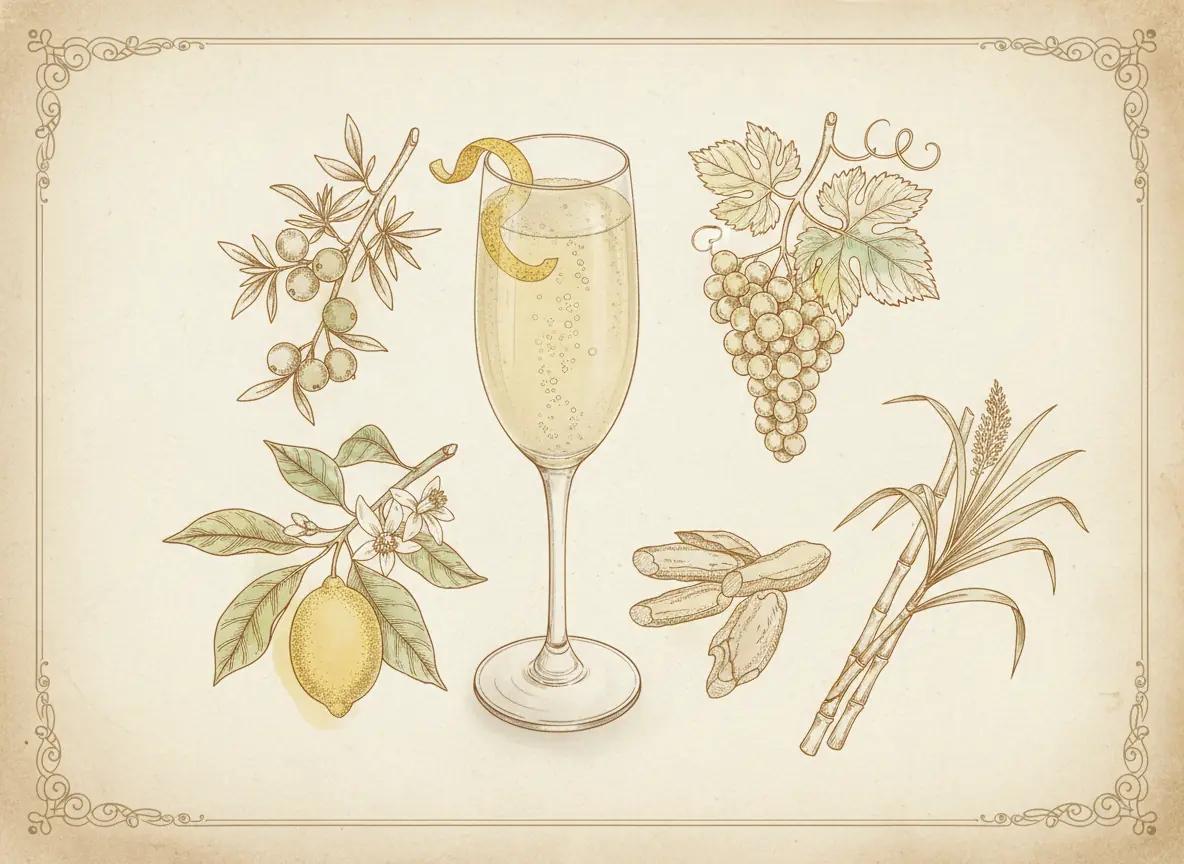
French 75
A French 75 is 30ml of London Dry gin, 15ml of fresh lemon juice and 15ml of sugar syrup, shaken hard for 10 to 12 seconds, double strained into a chilled flute and topped with 60ml of cold brut champagne, with a lemon twist. About 1.9 UK units. The measures are the IBA’s. The name is the French army’s 75mm field gun of the First World War. The drink is usually credited to Harry MacElhone and Harry’s New York Bar in Paris, often with the date 1915, but the printed record starts later. MacElhone’s ABC of Mixing Cocktails, published at the end of 1922 according to the Oxford Companion, has a ‘75’ of calvados, gin, grenadine and absinthe, as the Internet Archive’s scan of its second impression shows. The Companion, in an entry by David Wondrich, finds the gin, lemon, sugar and champagne formula and the French 75 name together first in Here’s How, a book put out by a New York humour magazine, in 1927. Built that way, it is a Tom Collins with champagne in place of soda: a short gin sour that the wine lengthens and lifts.
Where this one sits
Recipe by Jerry Can Spirits · Updated 19 October 2026