Gin Fizz
A Gin Fizz is 45ml of London Dry gin, 30ml of fresh lemon juice and 10ml of sugar syrup, shaken hard with ice for 10 to 12 seconds, strained into a chilled small highball with no ice and topped with 60ml of cold soda water. A lemon wheel is optional. About 1.8 UK units. The gin, lemon and syrup are the IBA’s measures; the IBA tops with a splash of soda. No ice in the glass is the point. All of the chilling and dilution happens in the shaker, and the soda goes in short and lively, so the drink is at its best for the first few minutes. Built over ice and topped longer, the same ingredients make a Tom Collins. Difford’s Guide places the Gin Fizz in Jerry Thomas’s 1876 Bar-tenders Guide. The Oxford Companion says the fizz seems to have come from New York, and the egg variations followed: the Silver, Golden and Royal Fizz, and the Ramos Gin Fizz.
Glassware: Highball Glass
Garnish: Lemon wheel (optional)
Ingredients
45ml
A crisp London Dry at 40% ABV or a little more. The drink is short and quick, so a gin with clear juniper reads through the lemon and soda better than a soft one.
30ml
Squeezed the same day. A fizz runs sharper than a Collins because the soda is short and there is no ice melting in the glass.
10ml
Sugar and water, 1:1 by weight. Sweetness reads lower when a drink is this cold, and 10ml balances 30ml of lemon in a short serve.
Instructions
Chill a small highball or fizz glass in the freezer.
Add the gin, lemon juice and sugar syrup to a shaker.
Fill with cubed ice and shake hard for 10 to 12 seconds.
Strain into the chilled glass, with no ice.
Top briskly with 60ml of cold soda water.
Add a lemon wheel if you like, and serve at once.
Source: the IBA (Official IBA measures; 60ml of soda for the IBA’s splash; method ours). Last checked 9 October 2026.
Expert Tip
Chill the glass rather than adding ice. With nothing in the glass to cool the drink later, the shake has to do all of it, so shake hard for the full 10 to 12 seconds. Pour the soda last and briskly, from a cold bottle opened that day. At 60ml it is a short top: enough to lift the sour, not enough to drown it. Serve at once; a fizz warms and flattens as it stands. For a Silver Fizz, add 15ml of egg white and dry shake for 10 to 15 seconds before the ice goes in. The white is raw, so leave it out for anyone allergic to egg.
Behind the Gin Fizz
Flavour Profile
Where It Comes From
Difford’s Guide places the Gin Fizz in Jerry Thomas’s 1876 Bar-tenders Guide: spirit, citrus and sugar, shaken and topped with soda. Harry Johnson’s 1882 manual, in the Internet Archive’s scan, carries a Gin Fizz, a Silver Fizz and a Golden Fizz.
The Oxford Companion says the fizz first appears in print in 1876, in the second edition of Jerry Thomas’s Bar-Tender’s Guide, that the earliest references are from New York, and that it caught on in the summers of 1879 and 1880. The Ramos Gin Fizz, with cream and egg white, needed shakers most: Difford’s quotes Stanley Clisby Arthur on 35 shaker boys at the Stag, Henry Ramos’s later bar, in the 1915 Mardi Gras.
Fizz Versus Collins
The two share their ingredients and differ in the build.
A Collins is built long over ice and sipped, with the melting ice diluting it as it goes. A fizz is shaken cold, served short with no ice, and drunk while the soda is at its liveliest. The ice is the switch between them.
Sling, Collins, Fizz and Rickey
Sling, Collins, Fizz and Rickey compared
Gin Sling
- Spec
- 50ml gin, 25ml lemon, 15ml syrup, 60ml soda
- Build
- Built over ice
- Glass
- Sling glass or highball
- What sets it apart
- Nutmeg grated over the top; a short top of soda
Tom Collins
- Spec
- 60ml gin, 30ml lemon, 15ml syrup, 90ml soda
- Build
- Built over ice
- Glass
- Collins glass
- What sets it apart
- The longest of the four; no spice
Gin Fizz
- Spec
- 45ml gin, 30ml lemon, 10ml syrup, 60ml soda
- Build
- Shaken hard, served with no ice
- Glass
- Small highball or fizz glass
- What sets it apart
- Short and drunk quickly while the soda is lively
Gin Rickey
- Spec
- 60ml gin, 25ml lime, 100 to 125ml soda
- Build
- Built over ice
- Glass
- Highball
- What sets it apart
- Lime and no sugar, so it is dry
| Drink | Spec | Build | Glass | What sets it apart |
|---|---|---|---|---|
| Gin Sling | 50ml gin, 25ml lemon, 15ml syrup, 60ml soda | Built over ice | Sling glass or highball | Nutmeg grated over the top; a short top of soda |
| Tom Collins | 60ml gin, 30ml lemon, 15ml syrup, 90ml soda | Built over ice | Collins glass | The longest of the four; no spice |
| Gin Fizz | 45ml gin, 30ml lemon, 10ml syrup, 60ml soda | Shaken hard, served with no ice | Small highball or fizz glass | Short and drunk quickly while the soda is lively |
| Gin Rickey | 60ml gin, 25ml lime, 100 to 125ml soda | Built over ice | Highball | Lime and no sugar, so it is dry |
Why No Ice
All of the dilution has to happen in the shaker, which is why the shake is hard and full length.
Strained into a chilled, empty glass and topped with a short pour of soda, the drink is at its proper strength and temperature from the first sip. It then warms and flattens over a few minutes, which is why it was ordered and drunk quickly.
The Egg Variations
Egg white makes a Silver Fizz, silkier, with a foam; use 15ml and dry shake it first. The yolk makes a Golden Fizz, richer and rounder, and the whole egg a Royal Fizz.
The Ramos Gin Fizz goes furthest, adding cream and orange flower water to the egg white, with a very long shake; the IBA says the original was shaken for 12 minutes by a crew of 30 bartenders. Each step trades the plain fizz’s speed for texture.
How to Serve It
A chilled small highball, a hard shake, a brisk top of soda and no delay. A lemon wheel is optional.
For the same drink built long over ice, make a Tom Collins; with egg white, cream and orange flower water, a Ramos Gin Fizz.
Make it at home
The Spirit
GinGin is a spirit flavoured with juniper berries. Under the retained Regulation (EC) 110/2008, juniper must lead the taste, the floor is 37.5% ABV, and the route the flavour takes sets the grade: plain gin, distilled gin or London gin. Our recipes count it at 40%, and it carries the Martini, the Negroni and the Gin and Tonic.
Master the Techniques
More to explore
Frequently Asked Questions
Why is there no ice in a Gin Fizz?
What is the difference between a Gin Fizz and a Tom Collins?
Where does the Gin Fizz come from?
What is the IBA Gin Fizz?
What is a Silver Fizz?
How long does a fizz last?
How strong is a Gin Fizz?
Sources.
Correct as of 19 October 2026.
- Difford’s Guide, “Gin Fizz” (secondary source: a mid-19th-century classic which appears in Jerry Thomas’s 1876 Bar-tenders Guide).
- The Oxford Companion to Spirits and Cocktails (David Wondrich), “The fizz” (secondary source: first in print in 1876 in the second edition of Thomas’s Bar-Tender’s Guide; the earliest references are from New York; it caught on in the summers of 1879 and 1880; the Silver, Golden and Morning Glory fizzes by 1882).
- Harry Johnson, 1882 (Internet Archive scan), “Harry Johnson’s new and improved bartender’s manual” (primary source: Silver Fizz (71), Gin Fizz (78), Golden Fizz (188)).
- IBA, “Gin Fizz” (official specification: 45ml gin, 30ml fresh lemon juice, 10ml simple syrup, a splash of soda water; shaken, thin tall tumbler).
- Difford’s Guide, “Ramos Gin Fizz” (secondary source: Arthur’s Famous New Orleans Drinks: 35 shaker boys in the 1915 Mardi Gras at the Stag).
- IBA, “Ramos Fizz” (official note: originally shaken for 12 minutes by a crew of 30 bartenders).
You Might Also Like
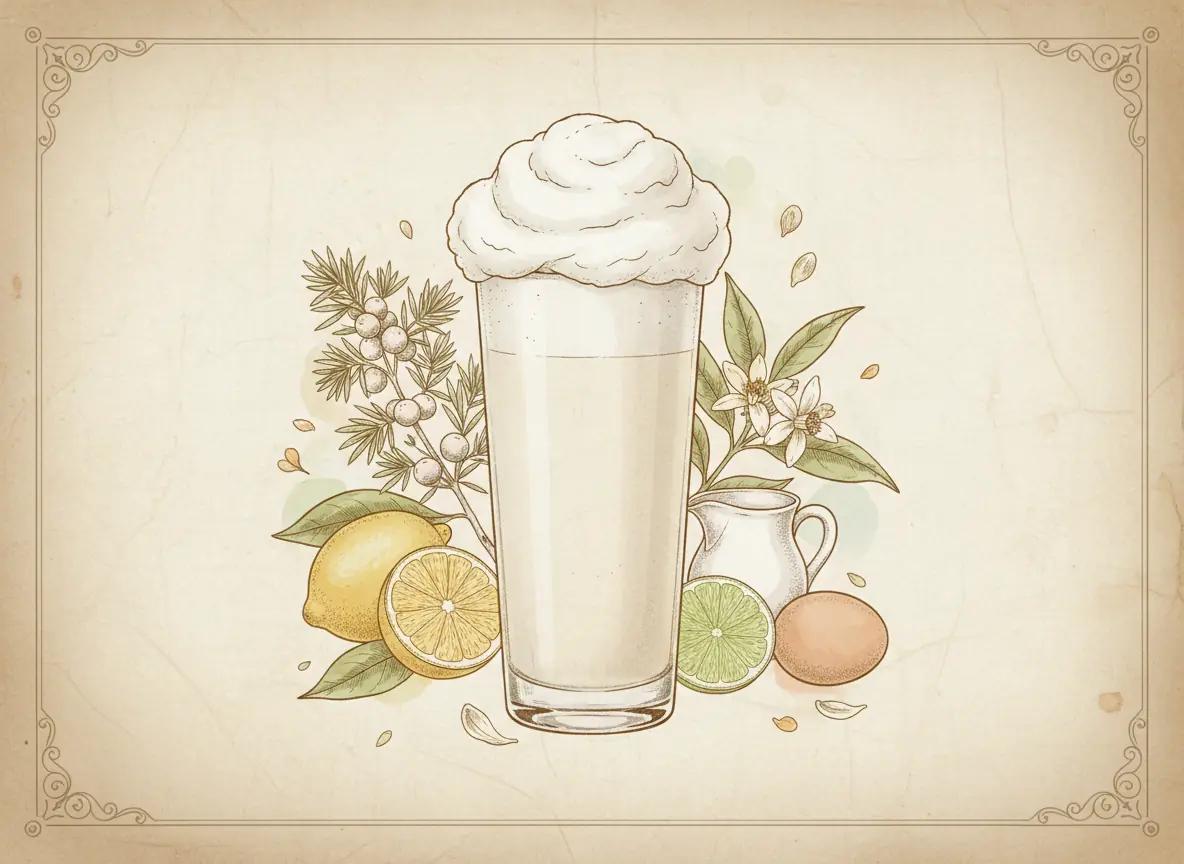
Ramos Gin Fizz
A Ramos Gin Fizz is 45ml of London Dry gin, 15ml each of fresh lemon and lime juice, 30ml of sugar syrup, 30ml of egg white, 60ml of double cream, three dashes of orange flower water and two drops of vanilla extract, shaken long and hard, strained into a chilled highball with no ice and lifted with 60ml of soda water. About 1.8 UK units. It contains raw egg and dairy. Difford’s Guide, a secondary source, says Henry C. Ramos created it in 1888 at the Imperial Cabinet Saloon in New Orleans; the IBA gives the same year but a different bar. The Oxford Companion says the drink’s precise origins are unknown, that the earliest definite notice in print is from 1895, and that the likeliest period is 1892 to 1894. Difford’s quotes Stanley Clisby Arthur on 35 shaker boys at Ramos’s later bar, the Stag, during the 1915 Mardi Gras. The measures are the IBA’s. The shake is the work: cream and egg white need time to whip into a foam dense enough for the soda to push up out of the glass.
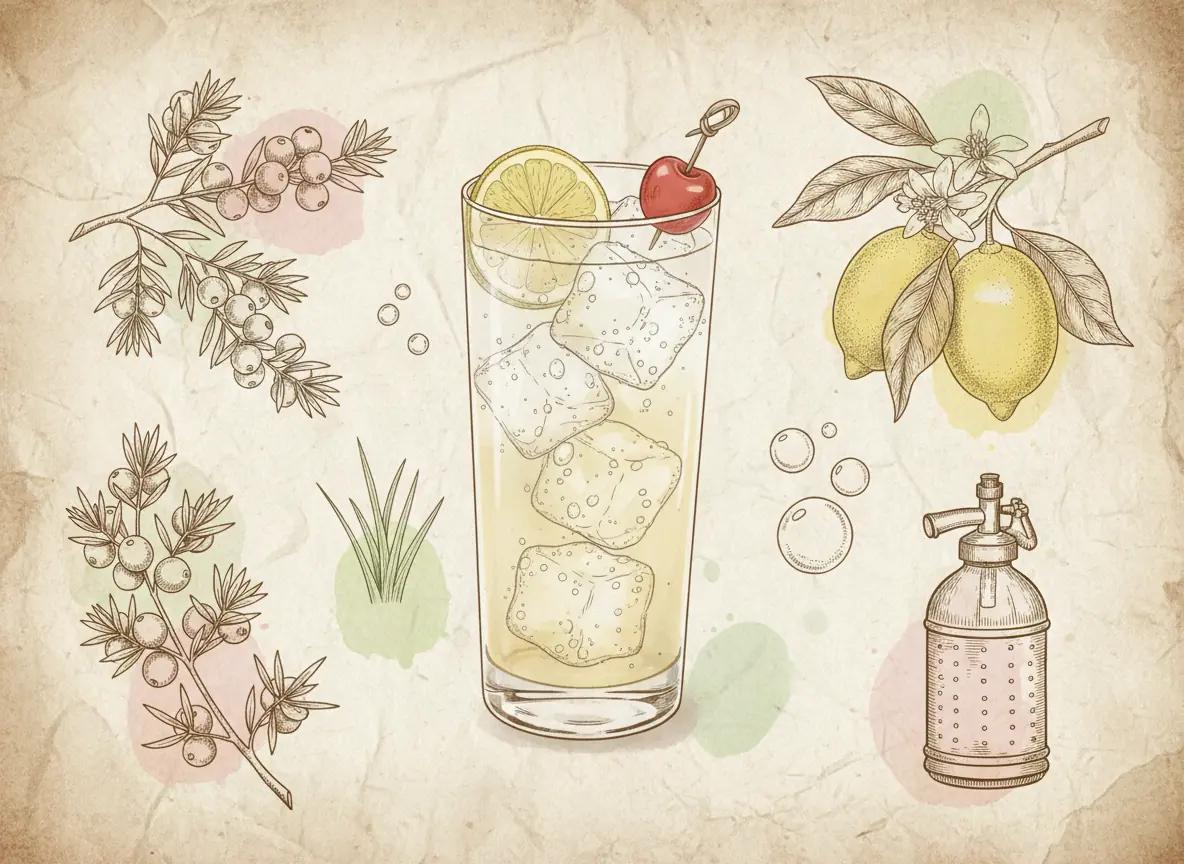
Tom Collins
A Tom Collins is 60ml London Dry gin, 30ml fresh lemon juice and 15ml sugar syrup built over ice in a collins glass, topped with 90ml of cold soda and stirred once, with a lemon slice and a cherry. It is a collins in the plainest sense: spirit, citrus and sugar, topped with soda. Difford’s Guide, a secondary source, reports one account that traces the name to the Great Tom Collins Hoax of 1874, in which people in New York were told that a man called Tom Collins had been insulting them and could be found in a bar some distance away. It also gives accounts of a real Mr Collins. The drink the name attached to may be older: Difford’s credits John Collins, head waiter at Limmer’s Hotel on Conduit Street in London, with the Collins. Early recipes used Dutch genever, and Old Tom gin came into them later; the IBA still specifies Old Tom for a Tom Collins. This version uses London Dry for a drier, sharper drink, and the Old Tom version follows as a variation.
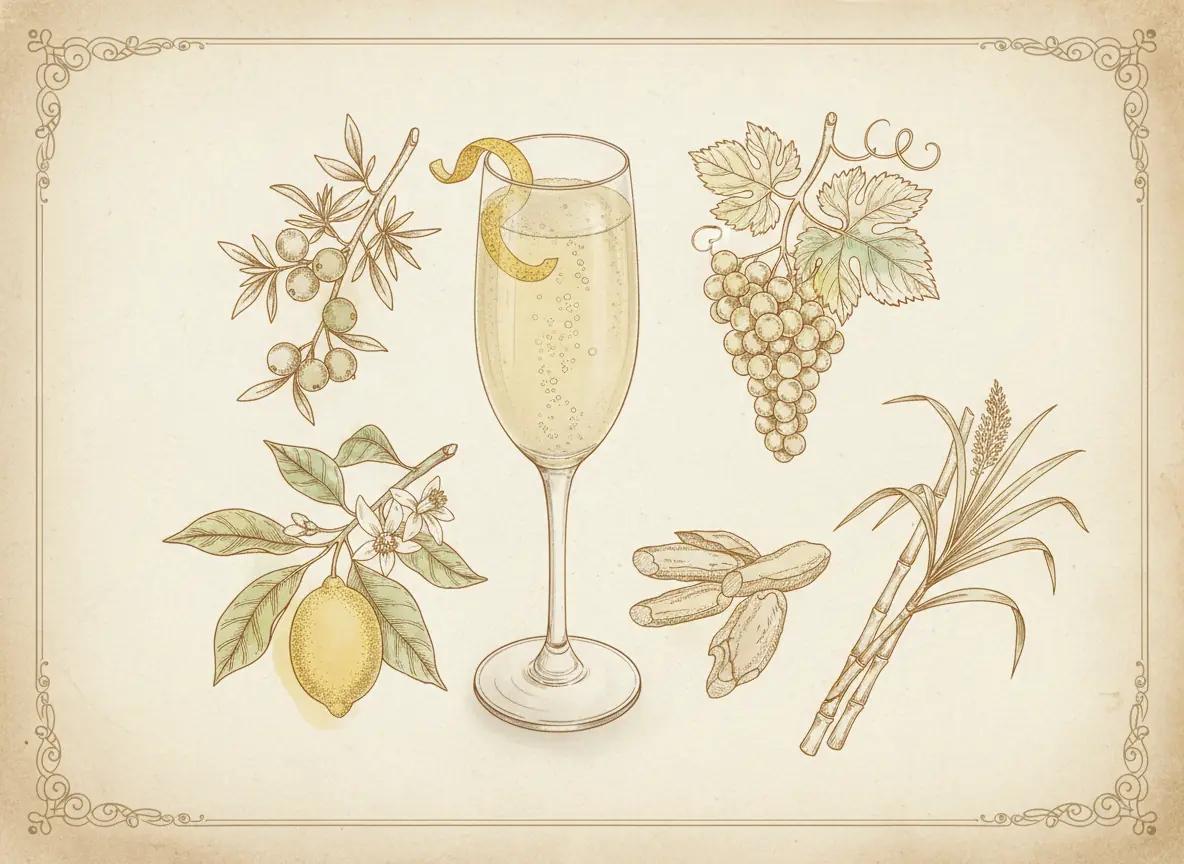
French 75
A French 75 is 30ml of London Dry gin, 15ml of fresh lemon juice and 15ml of sugar syrup, shaken hard for 10 to 12 seconds, double strained into a chilled flute and topped with 60ml of cold brut champagne, with a lemon twist. About 1.9 UK units. The measures are the IBA’s. The name is the French army’s 75mm field gun of the First World War. The drink is usually credited to Harry MacElhone and Harry’s New York Bar in Paris, often with the date 1915, but the printed record starts later. MacElhone’s ABC of Mixing Cocktails, published at the end of 1922 according to the Oxford Companion, has a ‘75’ of calvados, gin, grenadine and absinthe, as the Internet Archive’s scan of its second impression shows. The Companion, in an entry by David Wondrich, finds the gin, lemon, sugar and champagne formula and the French 75 name together first in Here’s How, a book put out by a New York humour magazine, in 1927. Built that way, it is a Tom Collins with champagne in place of soda: a short gin sour that the wine lengthens and lifts.
Where this one sits
Recipe by Jerry Can Spirits · Updated 19 October 2026