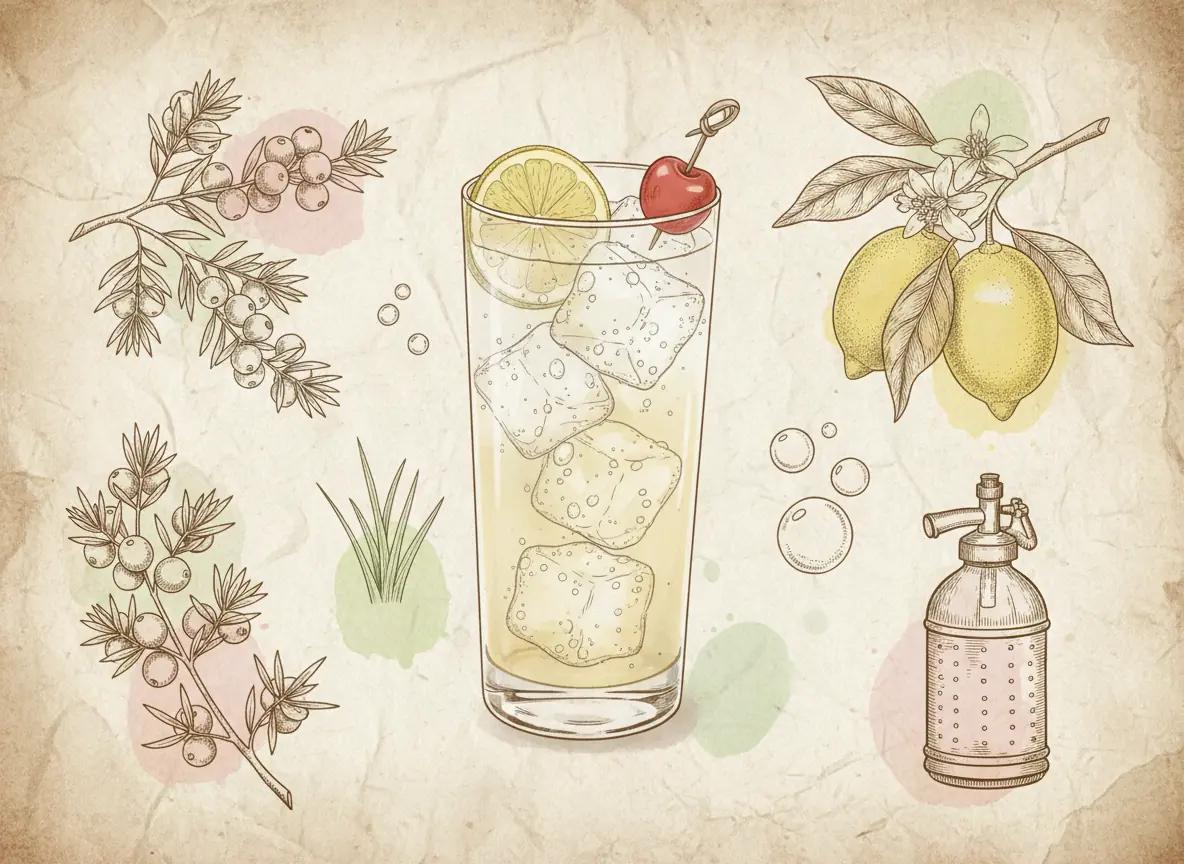
Tom Collins
The Tom Collins is a gin sour lengthened with soda: gin, fresh lemon, sugar syrup and soda water over ice in a tall glass. The simplicity is deceptive. Built with a quality London Dry, lemon squeezed to order and well-chilled soda poured carefully, it is one of the most refreshing long drinks there is. Built with bottled juice and flat soda, it is one of the most disappointing. The name comes from one of the odder stories in the canon. The Great Tom Collins Hoax of 1874 involved telling somebody that a man called Tom Collins had been disparaging them in a nearby bar, then sending them off to find a person who did not exist. It spread across American cities fast enough that the name entered everyday speech, and a long gin drink already being served as the John Collins acquired it almost by association. Old Tom gin, the sweeter style that preceded London Dry, was the format's original base and makes a rounder, gentler drink. Both are correct.
Glassware: Collins Glass
Garnish: Lemon Slice Luxardo and Maraschino Cherry
Ingredients
60ml
A gin with clear juniper character. In a build this stripped back the botanical profile defines the drink more than any other single ingredient in it.
30ml
Squeezed immediately before building. This is the element most commonly compromised in high-volume service, and in a long drink there is no concentration to hide oxidised juice behind.
15ml
One part sugar to one part warm water. The balance here runs tart rather than sweet, and the syrup should support the lemon rather than soften it.
90ml
Well chilled, added last, poured gently down the inside of the glass. Flat soda produces a flat Collins regardless of the quality of everything that preceded it.
Instructions
Squeeze the lemon juice immediately before building the drink.
Fill a Collins glass to the top with large cubed ice.
Add the gin, lemon juice and sugar syrup over the ice.
Stir briefly to combine.
Pour the chilled soda water gently down the inside of the glass.
Stir once with a single upward lift of the bar spoon.
Garnish with a lemon slice and a good cherry, and serve immediately.
Expert Tip
Thirty millilitres of lemon is more than most shaken sours take, and it is deliberate. Ninety millilitres of soda extends the drink considerably, and a standard sour ratio tastes of soda water with a faint citrus note once the top has gone in. Measure it rather than eyeballing it. Squeeze to order. In a long build there is no concentration to mask oxidised juice, so pre-squeezed lemon shows up far more obviously here than in a short shaken drink. Pour the soda gently down the inside of the glass and stir once with a single upward lift of the spoon. Every extra stir costs carbonation, and flat soda produces a flat Collins regardless of what went in before it.
Behind the Tom Collins
Flavour Profile
Where It Comes From
The format predates its most famous name by several decades. John Collins was a waiter at Limmer's Hotel on Conduit Street in London who served a long drink of genever, lemon, sugar and soda in the early nineteenth century, and it was documented under his own name before it crossed into American bars.
The Great Tom Collins Hoax of 1874 changed that. The joke was to tell somebody that a man called Tom Collins was in a nearby bar saying unpleasant things about them, and then to watch them go looking. It spread across American cities with Gilded Age speed, and the name entered the vocabulary so thoroughly that the existing John Collins acquired it.
Some accounts credit a simultaneous shift from genever to Old Tom gin, with the Tom referring to the gin rather than the hoaxer. The record supports both without settling either.
The Collins Format
A Collins is a sour extended with soda into a long drink, and that single addition produces a categorically different result.
A daiquiri and a Tom Collins share the same underlying logic of spirit, fresh citrus and sugar. The Collins adds soda, builds over ice rather than shaking, and comes out longer, lower in perceived strength and suited to being drunk over an hour rather than ten minutes. The effervescence also changes how the aromatics behave, lifting the gin's botanicals out of the glass in a way a shaken and strained drink does not.
The format takes almost any base spirit. The gin version is canonical because a good London Dry against lemon and soda shows what it can do at its best.
Why the Lemon Measure Is Higher
Thirty millilitres against sixty of gin is a fuller citrus measure than most shaken sours use, and the reason is arithmetic rather than taste.
The soda adds ninety millilitres to the finished drink, which is more than the gin and the lemon combined. A standard sour ratio that tastes balanced in a coupe is under-acidic once that much water and carbonation has gone in, and the result reads as fizzy and vaguely lemony rather than as a sour.
The higher measure keeps the acid balance holding from the first mouthful to the last, which is what a drink built to last an hour actually needs.
Old Tom and the Historical Version
Old Tom is the sweeter, softer style that preceded London Dry's dominance, and it is the gin the format was originally built on.
Where London Dry's juniper sits against the lemon in clean, direct contrast, Old Tom's softer botanicals and residual sweetness give a rounder result in which the gin leads more gently and the syrup can come down. It is worth making once alongside the London Dry version, because the comparison shows how much of a drink's character comes from the style of the base rather than from the recipe.
Hayman's and Ransom both make reliable contemporary Old Toms. Reduce the sugar by taste rather than by a fixed amount, because residual sweetness varies considerably between producers.
How to Serve It
Built over ice in a Collins glass, soda poured carefully, stirred once, garnished with a lemon slice and a good cherry, served immediately with a straw.
It is one of the most reliably crowd-pleasing drinks there is: accessible to people who do not normally drink gin, and interesting enough to reward those who do.
Make it at home
The Spirit
GinA flavour requirement rather than a method. The law asks only that juniper be the predominant taste and that the spirit reach 37.5%, which leaves everything else on the botanical bill to the distiller and permits a gin that was never redistilled at all.
Master the Techniques
More to explore
Frequently Asked Questions
What is a Tom Collins?
Why is it called a Tom Collins?
Why is there so much lemon juice?
What is the difference between a Tom Collins and a Gin Fizz?
You Might Also Like
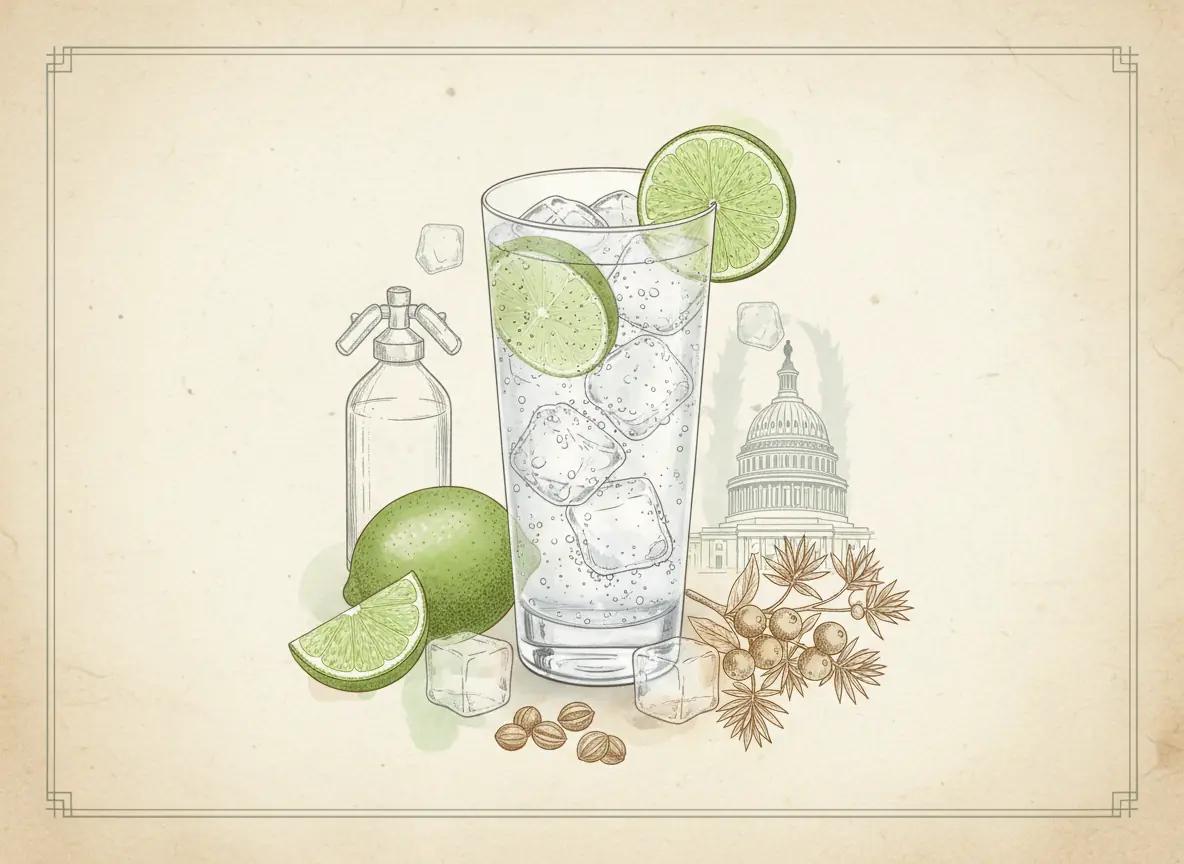
Gin Rickey
The Gin Rickey is gin, fresh lime juice and soda water over ice, and there is no sugar in it of any kind. That absence is the whole drink. It is what separates a Rickey from a Fizz, and it is why the gin matters more here than in almost anything else you can build. It is named after Colonel Joe Rickey, a Missouri lobbyist who drank his bourbon with lime and soda at Shoomaker's on Pennsylvania Avenue in 1880s Washington, consistently enough that the bartenders named the order after him. The gin version came shortly afterwards and overtook the original so completely that a Rickey now means gin unless you say otherwise. Rickey himself, by most accounts, thought the gin version was worse. He was outvoted. With no sweetener and only three ingredients, the freshness of the lime is the most consequential thing in the build. Squeezed to order it is bright and genuinely refreshing. Squeezed an hour earlier it is flat and slightly bitter, and nothing else in the glass can cover for it.
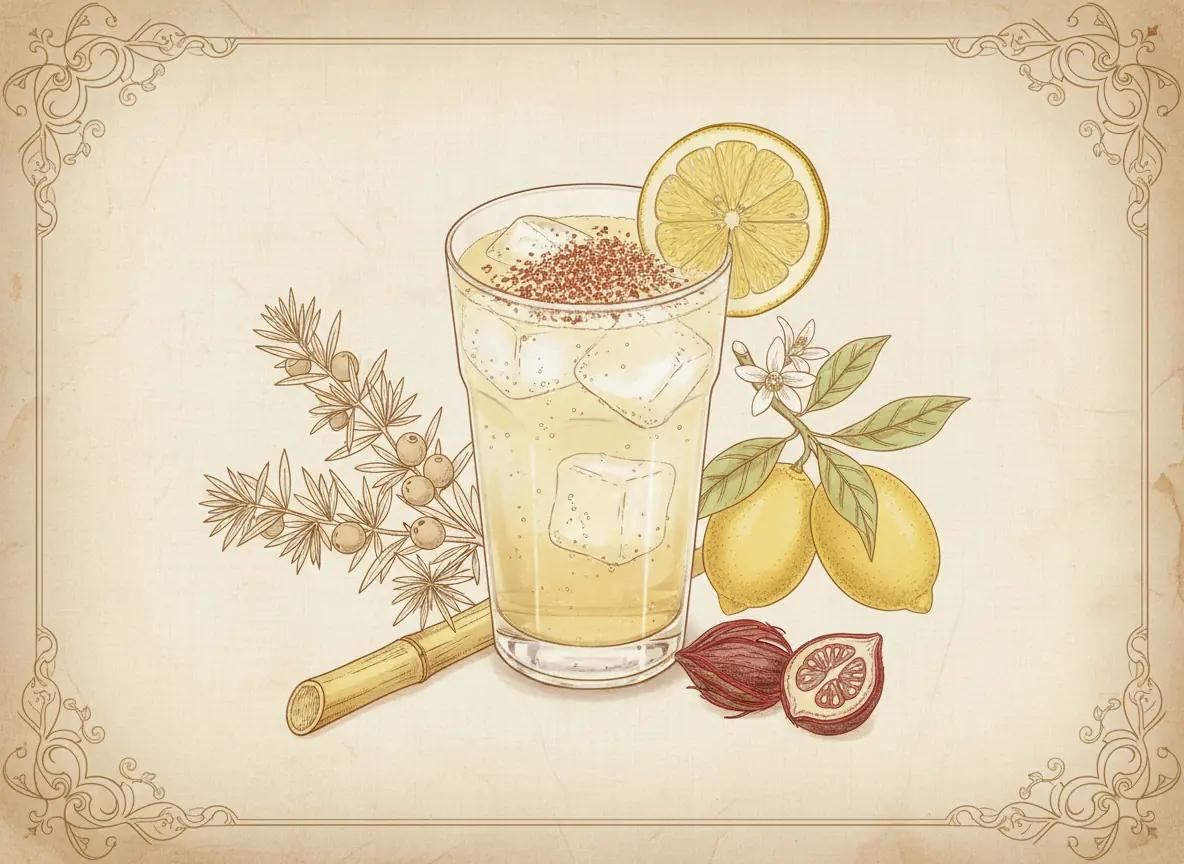
Gin Sling
The Gin Sling is one of the oldest cocktail formats in existence. Jerry Thomas documented it in his 1862 Bartenders Guide, but the sling predates him by at least a century, with references appearing in American newspapers as early as the 1750s. At its core it is a simple thing: gin, citrus, sweetener, soda water, and nutmeg, built long and served over ice. Honest, unfussy, and completely satisfying when made with care. The sling sits at the intersection of the highball and the sour, with the length and refreshment of the former and the citrus backbone of the latter. It rewards good ingredients and correct proportion rather than technique or obscure components. The gin should be present. The lemon should be fresh. The soda should be cold and poured last. The nutmeg should be fresh and grated directly over the glass. Thomas was specific on that last point. In his manual he defined the sling by a single distinguishing detail: it had nutmeg on top. The toddy did not. That is the entire difference between the two formats as he recorded it. The nutmeg has largely disappeared from modern versions. It should not have.
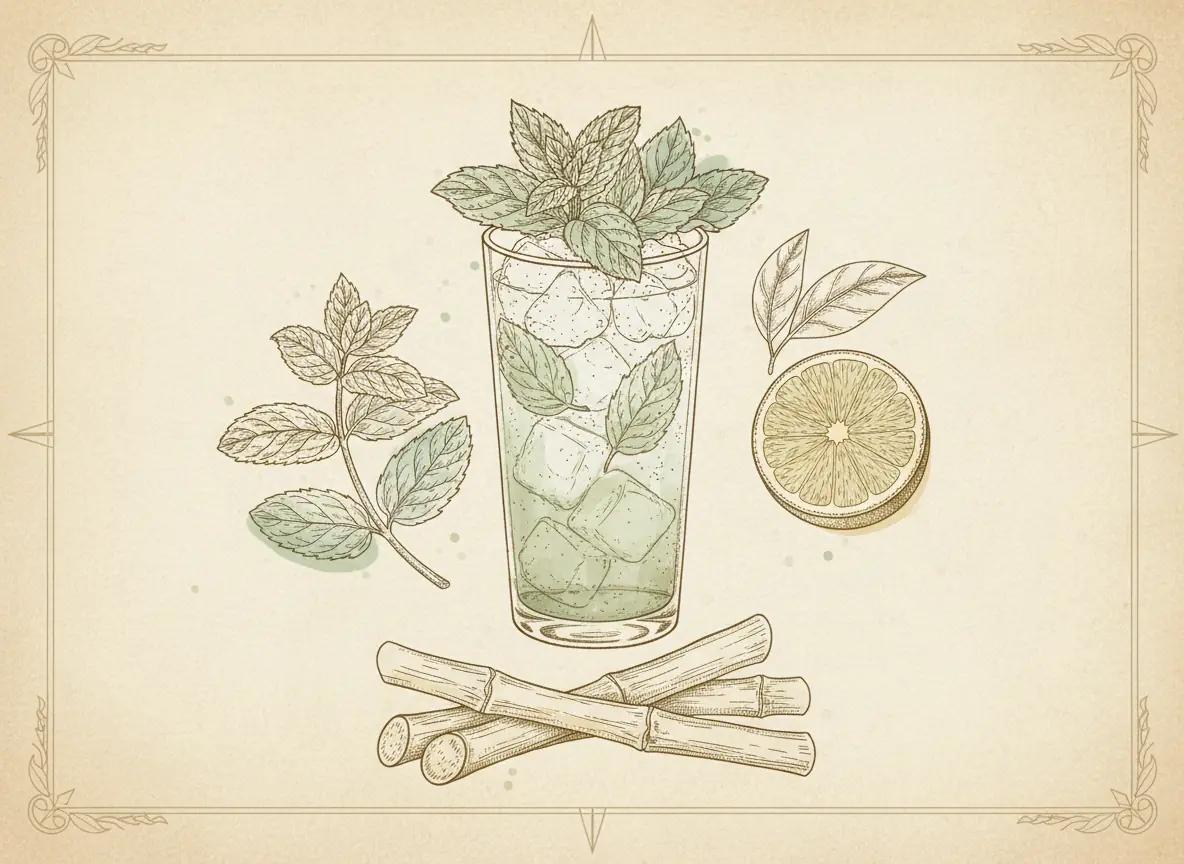
Mojito
The Mojito is one of the oldest Cuban cocktails on record, its roots traced to a sixteenth-century proto-version called El Draque, named after Sir Francis Drake, whose fleet anchored off Havana in 1586. Drake’s sailors mixed local aguardiente, the rough precursor to Cuban rum, with mint, lime and sugar as a remedy for dysentery and scurvy. The combination has proved more enduring than the illness. The modern Mojito is built on white rum, with soda water extending it into a long, refreshing serve suited to the Cuban climate. Hemingway is associated with it through La Bodeguita del Medio, and whether that association is accurate or partly mythologised is debated. The drink does not need it. Technique matters here more than most high-volume bars are willing to invest in: mint pressed rather than muddled, lime squeezed fresh, sugar dissolved before the rum, and soda poured gently enough to survive into the first sip.
Where this one sits
Recipe by Jerry Can Spirits