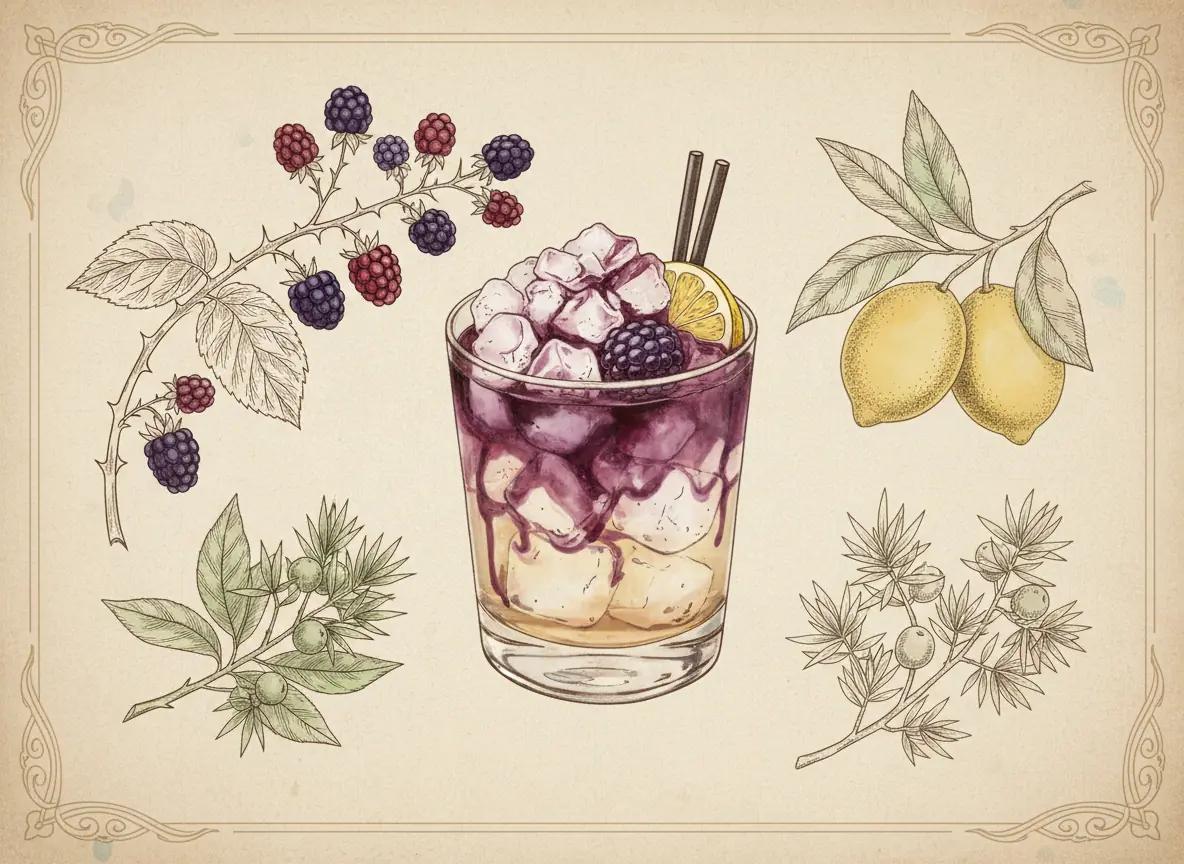
Bramble
A Bramble is 50ml London Dry gin, 25ml fresh lemon juice and 12.5ml sugar syrup, shaken hard and strained over crushed ice in a rocks glass, with 15ml of crème de mûre poured over the top so it bleeds down through the ice. A lemon slice and blackberries finish it. About 2.2 UK units. These are the IBA’s measures. Dick Bradsell created it at Fred’s Club in Soho: Punch dates it to 1984, Bradsell’s own account in Difford’s Guide says the mid-eighties or thereabouts, and the Oxford Companion says 1989. He wanted a British cocktail, and he took the idea from going blackberrying as a child on the Isle of Wight. Bramble is the everyday name for the blackberry bush. Underneath, it is a gin sour. The liqueur on top makes it change as you drink: tart and sharp at first, darker and fruitier towards the bottom of the glass.
Variations
Glassware: Rocks Glass
Garnish: Lemon slice and Blackberries
Ingredients
50ml
Juniper-forward London Dry, 40% ABV or a touch stronger. It carries the drink until the blackberry arrives; a soft, floral gin gets lost.
25ml
From lemons cut that day. At twice the syrup measure it keeps the sour sharp, so the liqueur has something to sweeten as it sinks.
12.5ml
One part sugar to one part water, by weight. The IBA measure is half the lemon, which leaves the base tart on purpose.
15ml
A blackberry liqueur made from real fruit; Drinkfinder lists Giffard’s at 16% ABV. In our experience Giffard and Cartron are both reliable. Crème de cassis is the usual substitute and makes a darker, blackcurrant drink.
Instructions
Squeeze the lemon juice the same day, ideally just before you build.
Fill a rocks glass with crushed ice.
Add the gin, lemon juice and sugar syrup to a shaker with cubed ice.
Shake hard for 10 to 12 seconds.
Strain over the crushed ice, then top up the ice so it stands proud of the rim.
Pour the crème de mûre slowly over the top in a circle, so it bleeds down through the ice.
Garnish with a lemon slice and blackberries, and serve with a short straw.
Source: the IBA (Official IBA specification; method ours). Last checked 9 October 2026.
Expert Tip
Pour the crème de mûre last, slowly, in a circle over the crushed ice. Poured fast it runs straight to the bottom; poured gently it trails down through the ice and leaves the top of the drink sharp. Keep it to 15ml. The base already has its syrup, and a heavier pour of liqueur makes the whole glass sweet before you are halfway down. Fill the rocks glass to the brim with crushed ice. Cubes leave gaps the liqueur drops straight through, and the drink loses its gradient in seconds.
Behind the Bramble
Flavour Profile
The Origin
Dick Bradsell created the Bramble at Fred’s Club, a members’ club in Soho, in the mid-eighties or thereabouts, he wrote for Difford’s Guide; Punch gives 1984 and the Oxford Companion 1989. He set out to make a British cocktail, and the reference he chose was his own: going blackberrying as a child on the Isle of Wight. Bramble is the everyday name for the blackberry bush.
The IBA includes it in its New Era list at 50ml gin, 25ml lemon, 12.5ml syrup and 15ml crème de mûre, which are the measures used here.
The Structure
The base is a gin sour with the lemon at twice the syrup, so it is tart before anything else happens. The crème de mûre goes in after the drink is in the glass and sweetens it from the top down.
Crushed ice is what makes that work. It slows the liqueur’s descent, so the drink changes over ten minutes rather than ten seconds: sharp and juniper-led at the top, dark and jammy at the bottom.
Bramble: what each ingredient does
London Dry gin
- Measure
- 50ml
- Its job
- Juniper and backbone
Fresh lemon juice
- Measure
- 25ml
- Its job
- The sour
Sugar syrup (1:1)
- Measure
- 12.5ml
- Its job
- Takes the edge off the lemon
Crème de mûre
- Measure
- 15ml
- Its job
- Blackberry, colour and the sweet finish
Crushed ice
- Measure
- A full glass
- Its job
- Slows the liqueur and chills the drink
| Ingredient | Measure | Its job |
|---|---|---|
| London Dry gin | 50ml | Juniper and backbone |
| Fresh lemon juice | 25ml | The sour |
| Sugar syrup (1:1) | 12.5ml | Takes the edge off the lemon |
| Crème de mûre | 15ml | Blackberry, colour and the sweet finish |
| Crushed ice | A full glass | Slows the liqueur and chills the drink |
The Crème de Mûre Question
Crème de mûre is a sweet blackberry liqueur. A good one tastes of cooked fruit with some sharpness left in it; a cheap one tastes of blackberry flavouring and sugar, and poured over the top of the glass, it has nowhere to hide.
In our experience Giffard and Cartron are reliable. Without either, crème de cassis makes a darker, blackcurrant version that plenty of bartenders pour.
For the base, a London Dry gin with firm juniper holds its shape; a softer, more floral gin tends to vanish under the blackberry.
How to Serve It
In a rocks glass packed with crushed ice, with a lemon slice and blackberries on top and a short straw. Drink from the bottom through the straw for blackberry, or from the top of the glass for gin and lemon.
Make it at home
The Spirit
Blackberry LiqueurBlackberry liqueur, sold in France as crème de mûre, is made by steeping blackberries in spirit and adding sugar, usually 16 to 20% ABV. It is the dark, jammy top of a Bramble, poured over crushed ice to streak down through the glass. It is often confused with crème de cassis, which is blackcurrant: sharper, sweeter and stronger in flavour.
Master the Techniques
More to explore
Frequently Asked Questions
What is a Bramble?
Why is the crème de mûre not shaken in?
Which blackberry liqueur should I use?
How strong is a Bramble?
Can I use crème de cassis instead?
Who created the Bramble?
What garnish goes on a Bramble?
Sources.
Checked between 18 October and 19 October 2026.
- Difford’s Guide (Dick Bradsell, 2001 and 2015), “Bramble cocktail - its inception told by its creator” (the creator’s own account: at Fred’s Club in Soho “back in the mid-eighties or thereabouts”; a British drink; a bramble is the bush blackberries grow on; Isle of Wight childhood).
- IBA, “Bramble” (official specification: 50ml gin, 25ml fresh lemon juice, 12.5ml sugar syrup, 15ml crème de mûre poured over; optional lemon slice and blackberries).
- Drinkfinder, “Giffard Creme de Mure 70cl” (UK retailer listing: ABV 16%).
- Punch, “Bramble Cocktail Recipe” (secondary source: invented in 1984 by Dick Bradsell at Fred’s Club in Soho).
- The Oxford Companion to Spirits and Cocktails (Anistatia Miller and Jared Brown), “The Bramble” (secondary source: created by Dick Bradsell in 1989 at Fred’s Club, Soho (opened the year before); a streamlined version of his Zanzibar Singapore Sling; blackberries of his Isle of Wight childhood).
You Might Also Like
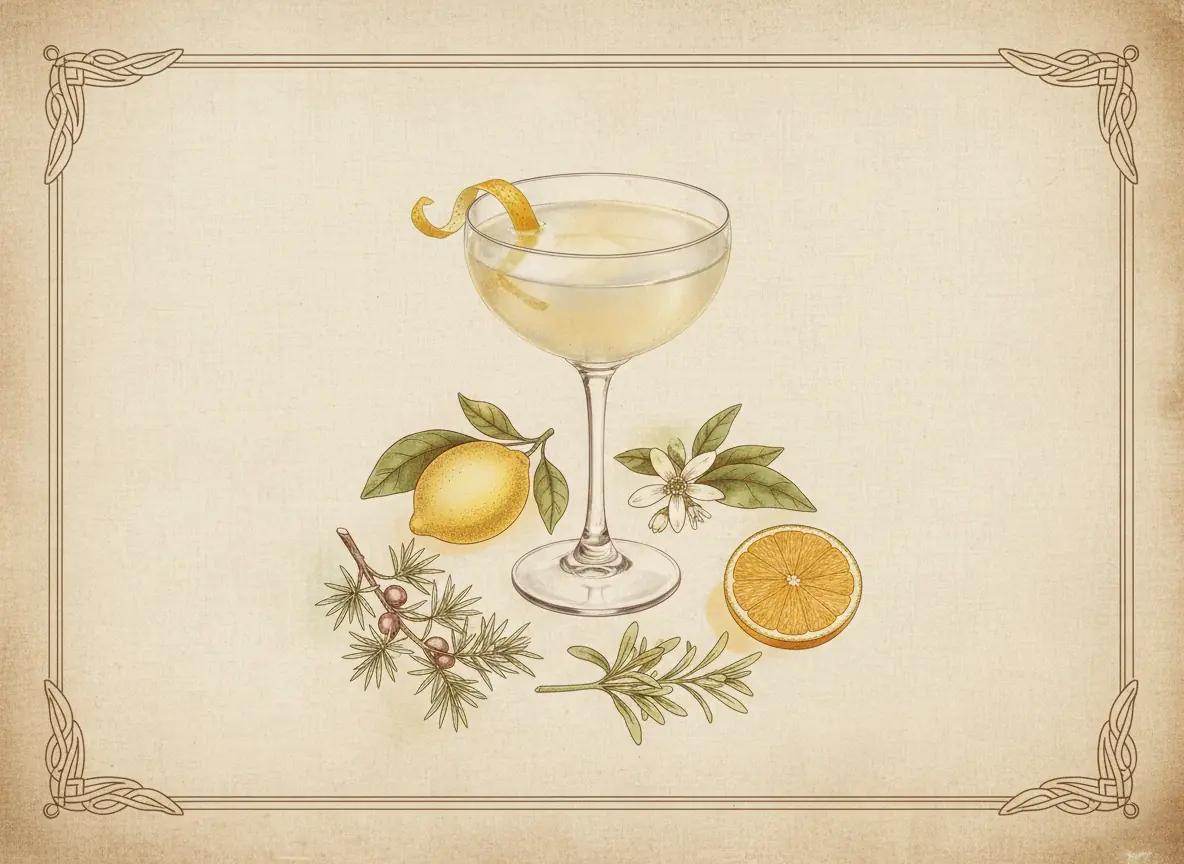
Corpse Reviver No. 2
A Corpse Reviver No. 2 is 30ml each of London Dry gin, Cointreau, Lillet Blanc and fresh lemon juice, shaken hard for 10 to 12 seconds and double strained into a chilled coupe rinsed with absinthe, with lemon peel expressed over the top. About 2.9 UK units. The four measures are the IBA’s. The IBA puts a dash of absinthe in the shaker; we rinse the glass with it, which leaves the scent with less of the anise. Lillet Blanc stands in for the Kina Lillet of older recipes; accounts differ on whether that was a more bitter wine. Harry Craddock printed it in the Savoy Cocktail Book in 1930, beside a No. 1. Under the No. 2 he added a warning: four taken in swift succession would unrevive the corpse again.
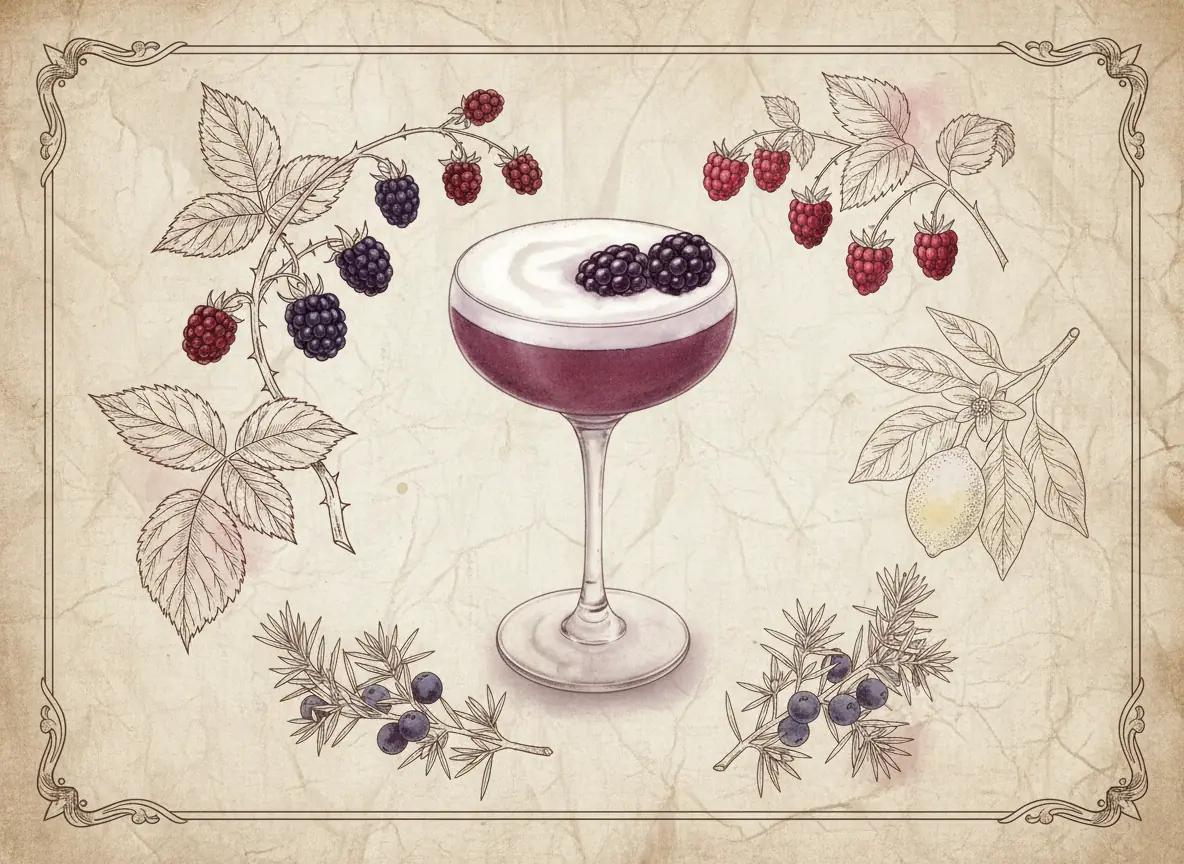
Berry Sour
A Berry Sour is 50ml of London Dry gin, 20ml of crème de mûre, 25ml of fresh lemon juice, 10ml of sugar syrup and 15ml of egg white, dry shaken, shaken again with ice and double strained into a chilled coupe, with two blackberries on the foam. About 2.4 UK units. The egg white is raw, so leave it out for anyone allergic to egg. It is our gin sour built from the Bramble’s bottles. Dick Bradsell says in Difford’s Guide that he created the Bramble in the mid-eighties at Fred’s Club in Soho (the Oxford Companion says 1989), and its method pours the crème de mûre over crushed ice so it bleeds down through the drink. Here the liqueur goes into the shaker, and the glass stays one even colour all the way down, under a white head. The trade is deliberate. You lose the Bramble’s shift from sharp to dark as you drink; you gain a silkier texture and a drink that tastes the same at the bottom as at the top. The juniper should still come through the fruit.
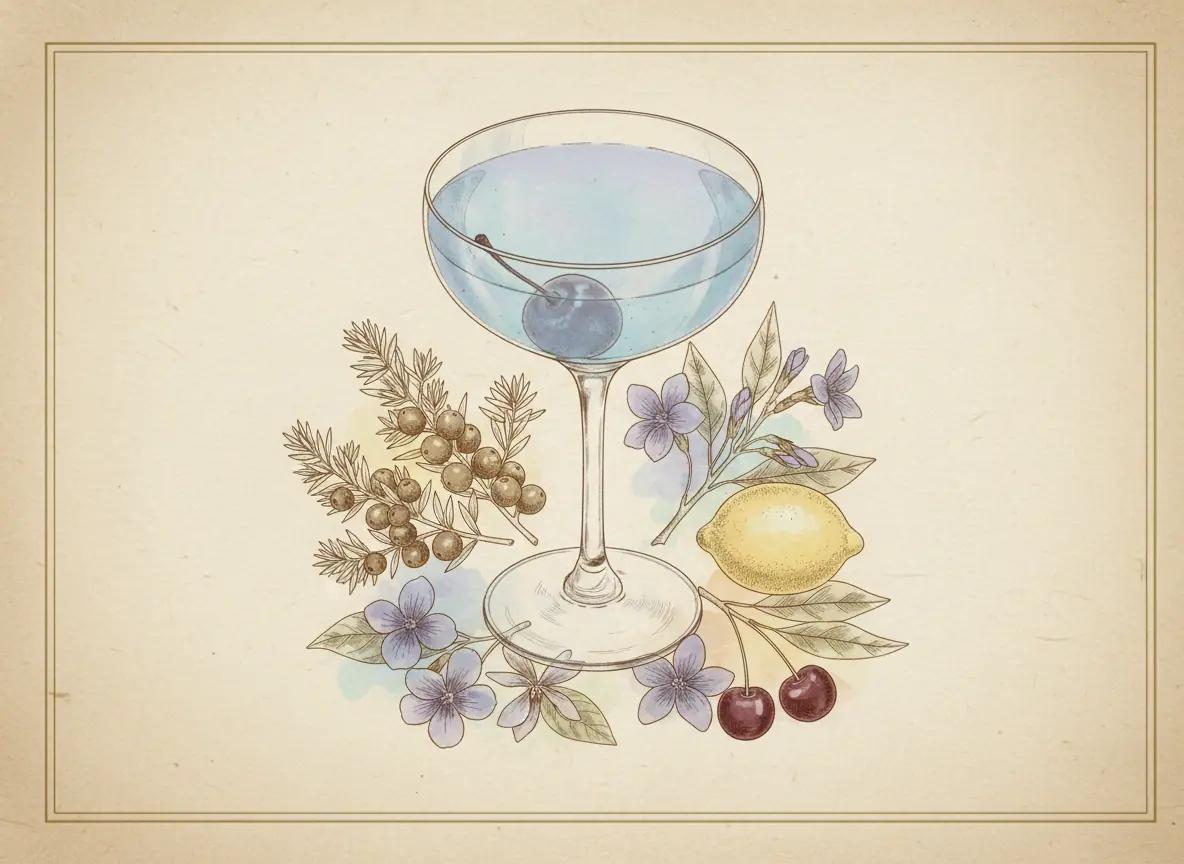
Aviation
An Aviation is gin, maraschino, lemon and a little crème de violette: 45ml gin, 15ml maraschino liqueur, 15ml fresh lemon juice and one bar spoon of crème de violette, shaken hard and double strained into a chilled coupe, with a cherry dropped in. The measures are the International Bartenders Association’s. The violette gives the drink its pale blue-violet colour. Hugo Ensslin, bar manager at the Wallick Hotel in New York, published the original formula for the classic Aviation in his 1916 Recipes for Mixed Drinks, the Oxford Companion says. In 1930 the Savoy Cocktail Book printed it without the violette, and many bartenders followed that version. Keep the violette to a bar spoon: more turns the drink soapy and purple. A glass holds about 2.4 UK units.
Where this one sits
Recipe by Jerry Can Spirits · Updated 19 October 2026