Morning Glory Fizz
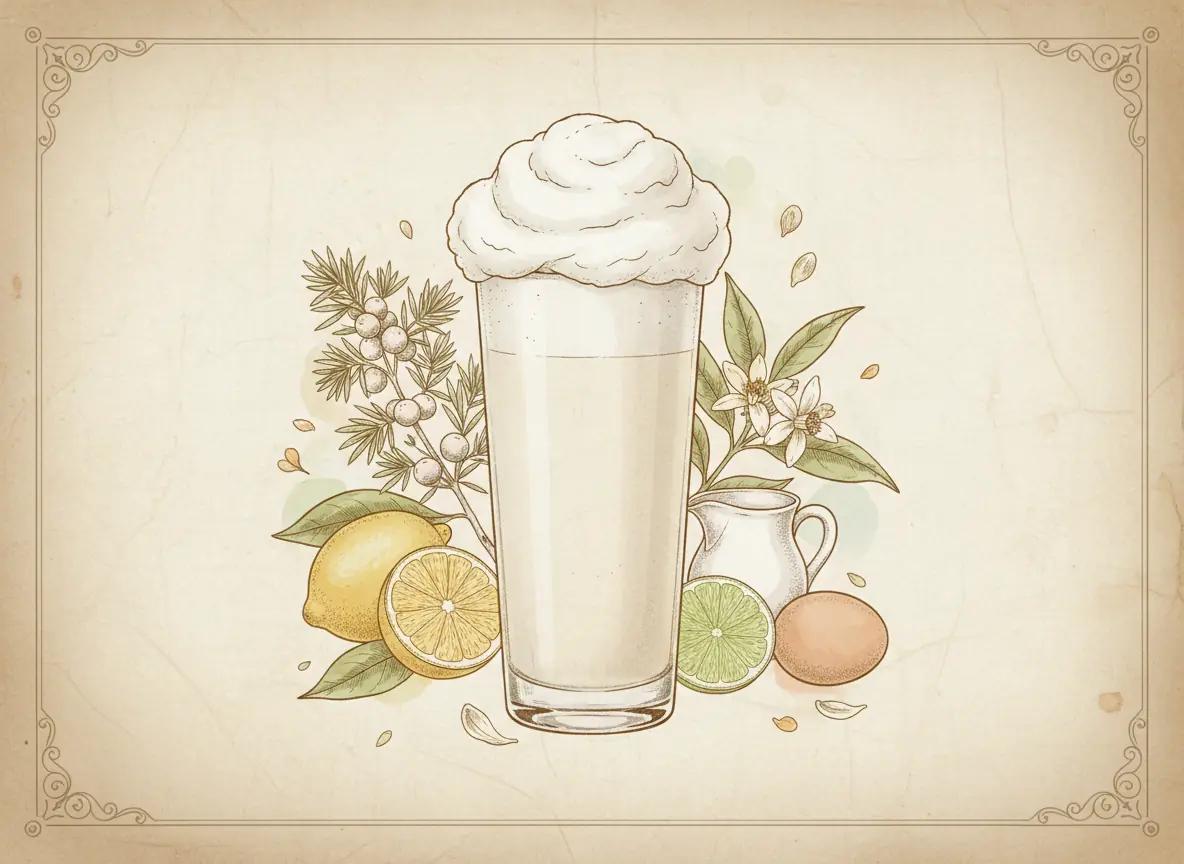
A Morning Glory Fizz is 60ml of unpeated Scotch, 15ml of fresh lemon juice, 10ml of fresh lime juice, 20ml of simple syrup, one egg white and two dashes of absinthe, dry shaken for 10 to 15 seconds, shaken hard with ice for 10 to 12, strained into a chilled highball without ice and finished with 60ml of soda. About 2.5 UK units. It contains raw egg. Harry Johnson printed it in his Bartender’s Manual of 1882, with Scotch, lemon and lime, sugar, egg white, absinthe and soda, and recommended it as a morning drink that would give a good appetite and quiet the nerves. His recipe gives no millilitres; the measures are ours. It is a Silver Fizz on whisky. The egg white gives the soda something to lift into a head, the absinthe runs through it as a thread of anise, and the split citrus keeps the malt bright.
Glassware: Highball Glass
Garnish: None
Ingredients
60ml
Unpeated, at 40% ABV: a Speyside malt or a sound blend. Peat fights both the egg and the anise, and an expensive bottle is lost under citrus and soda.
15ml
Squeezed the same day. Johnson calls for lemon and lime together, and lemon is the rounder half.
10ml
Squeezed the same day. Sharper and more floral than lemon, it gives the malt an edge that lemon alone does not.
20ml
Sugar and water, one to one by weight. It balances 25ml of citrus between the two juices and softens the egg; cut it and the drink turns austere.
1 (about 30ml)
One fresh egg white. Raw. Following the FSA, British Lion-mark eggs are safe raw, including for vulnerable groups and in pregnancy; pasteurised carton white is the alternative. Eating out, where the mark cannot be checked, the FSA advises vulnerable people to have their eggs thoroughly cooked. Contains egg: leave it out, or use aquafaba, for anyone allergic.
2 dashes
Two dashes, shaken in. At around 68% ABV absinthe is loud, and a third dash buries the malt.
60ml
Cold and freshly opened, poured quickly into the empty glass. The force of the pour lifts the foam into a head.
Instructions
Squeeze the lemon and lime juice the same day.
Add the Scotch, both juices, syrup, egg white and absinthe to a shaker.
Dry shake without ice for 10 to 15 seconds.
Fill with cubed ice and shake hard for 10 to 12 seconds.
Strain into a chilled highball without ice.
Top quickly with the soda and serve at once.
Our version
Harry Johnson’s 1882 recipe gives the ingredients without modern measures. Ours sets them at 60ml of Scotch, 15ml of lemon, 10ml of lime, 20ml of syrup, one egg white, two dashes of absinthe and 60ml of soda.
Source: our own specification. Last checked 9 October 2026.
Expert Tip
Dry shake first, for 10 to 15 seconds without ice, then shake hard with ice for 10 to 12. The first shake builds the foam; the second chills and dilutes it. Skip the first and the head is thin and gone within a minute. Keep the glass empty of ice and cold from the freezer. The shake has already chilled the drink, and ice in the glass would break up the soda and flatten the foam. Pour the soda in quickly so it lifts the head, and hand the drink over at once. Use an unpeated Scotch, such as a Speyside malt or a sound blend. Smoke and egg white sit badly together, and peat leaves the anise nowhere to go.
Behind the Morning Glory Fizz
Flavour Profile
Where It Comes From
Harry Johnson’s Bartender’s Manual of 1882 gives the Morning Glory Fizz, in the Internet Archive’s scan, with Scotch whiskey, lemon and lime juice, sugar, egg white, three or four dashes of absinthe and syphon seltzer or Vichy water.
In the Internet Archive’s scan he recommends it as an excellent one for a morning beverage, which will give a good appetite and quiet the nerves, and says it must be drunk as soon as it is prepared.
Egg White and Malt
A Silver Fizz is a fizz with egg white. The dry shake without ice unfolds the proteins so they trap air; the shake with ice chills and dilutes; the soda, poured fast into a cold, empty glass, lifts the foam into a head.
Scotch carries more weight than gin, so the foam sits on a drink with body rather than the light, sharp base of a Gin Fizz. The soda stops that weight turning heavy.
The Absinthe Thread
The two dashes go into the shaker, so the anise runs through the foam rather than sitting on the nose as it would from a rinsed glass.
Count them. At around 68% ABV absinthe is loud, and a third dash in a drink this size buries both the malt and the citrus.
The Split Citrus
Johnson calls for lemon and lime together. Many later recipes use lemon alone; ours keeps both, at 15ml and 10ml.
Lemon is rounder; lime is sharper and more floral. Against malt, which is heavier and sweeter than gin, the second acid keeps the drink bright.
Three Fizzes Side by Side
The Morning Glory Fizz beside two gin fizzes
Morning Glory Fizz (ours)
- Spirit
- 60ml Scotch
- Citrus
- 15ml lemon, 10ml lime
- Egg
- Egg white
- Also
- Two dashes of absinthe, soda
Gin Fizz
- Spirit
- Gin
- Citrus
- Lemon
- Egg
- None
- Also
- Soda
Ramos Gin Fizz
- Spirit
- Gin
- Citrus
- Lemon and lime
- Egg
- Egg white and cream
- Also
- Orange flower water, soda
| Drink | Spirit | Citrus | Egg | Also |
|---|---|---|---|---|
| Morning Glory Fizz (ours) | 60ml Scotch | 15ml lemon, 10ml lime | Egg white | Two dashes of absinthe, soda |
| Gin Fizz | Gin | Lemon | None | Soda |
| Ramos Gin Fizz | Gin | Lemon and lime | Egg white and cream | Orange flower water, soda |
How to Serve It
In a chilled highball without ice and without garnish, the foam on top, handed over the moment the soda goes in.
Make them one at a time. A fizz is at its best in the first few minutes, and it cannot be batched.
For a gin fizz with egg white and cream, make a Ramos Gin Fizz; for whisky, egg white and absinthe served short, a Rattlesnake.
Make it at home
The Spirit
Whisky (Scotch)Scotch is whisky distilled and matured in Scotland, kept in oak for three years at the least, and bottled no weaker than 40% ABV. The Scotch Whisky Regulations 2009 allow only three ingredients, water, malted barley and whole grains of other cereals, and only water and plain caramel colouring may be added later. Fifteen recipes in our library call for it, from the Penicillin and Hot Toddy to the Rob Roy.
More to explore
Frequently Asked Questions
What is a Morning Glory Fizz?
Was it really a morning drink?
Which Scotch works best?
Why no ice in the glass?
Does a Morning Glory Fizz contain raw egg?
How strong is a Morning Glory Fizz?
What is a Silver Fizz?
Sources.
Correct as of 19 October 2026.
- Harry Johnson, 1882 (Internet Archive scan), “Harry Johnson’s new and improved bartender’s manual” (primary source: 33. Morning Glory Fizz: sugar, 3 or 4 dashes lemon juice, 2 or 3 dashes lime juice, 3 or 4 dashes absinthe, shaved ice, white of an egg, a wine glass of Scotch whiskey; shake, strain, fill up with syphon seltzer or Vichy water; to be drunk as soon as prepared; recommended as a morning beverage that will give a good appetite and quiet the nerves).
You Might Also Like
Ramos Gin Fizz
A Ramos Gin Fizz is 45ml of London Dry gin, 15ml each of fresh lemon and lime juice, 30ml of sugar syrup, 30ml of egg white, 60ml of double cream, three dashes of orange flower water and two drops of vanilla extract, shaken long and hard, strained into a chilled highball with no ice and lifted with 60ml of soda water. About 1.8 UK units. It contains raw egg and dairy. Difford’s Guide, a secondary source, says Henry C. Ramos created it in 1888 at the Imperial Cabinet Saloon in New Orleans; the IBA gives the same year but a different bar. The Oxford Companion says the drink’s precise origins are unknown, that the earliest definite notice in print is from 1895, and that the likeliest period is 1892 to 1894. Difford’s quotes Stanley Clisby Arthur on 35 shaker boys at Ramos’s later bar, the Stag, during the 1915 Mardi Gras. The measures are the IBA’s. The shake is the work: cream and egg white need time to whip into a foam dense enough for the soda to push up out of the glass.
Gin Fizz
A Gin Fizz is 45ml of London Dry gin, 30ml of fresh lemon juice and 10ml of sugar syrup, shaken hard with ice for 10 to 12 seconds, strained into a chilled small highball with no ice and topped with 60ml of cold soda water. A lemon wheel is optional. About 1.8 UK units. The gin, lemon and syrup are the IBA’s measures; the IBA tops with a splash of soda. No ice in the glass is the point. All of the chilling and dilution happens in the shaker, and the soda goes in short and lively, so the drink is at its best for the first few minutes. Built over ice and topped longer, the same ingredients make a Tom Collins. Difford’s Guide places the Gin Fizz in Jerry Thomas’s 1876 Bar-tenders Guide. The Oxford Companion says the fizz seems to have come from New York, and the egg variations followed: the Silver, Golden and Royal Fizz, and the Ramos Gin Fizz.
Rattlesnake
A Rattlesnake is 60ml of rye whiskey, 22.5ml of fresh lemon juice, 20ml of sugar syrup, 15ml of egg white and three dashes of absinthe, dry shaken for 10 to 15 seconds, shaken hard with ice for 10 to 12 seconds more and double strained into a chilled coupe. No garnish. About 2.6 UK units. It is a whiskey sour with absinthe shaken through it. In a Sazerac the absinthe coats the glass and reaches you as scent; here it is mixed into the foam, so a light anise runs through every sip. The egg white is optional and raw: leave it out for anyone allergic to egg, or use pasteurised white from a carton. Difford’s Guide prints the drink from Harry Craddock’s Savoy Cocktail Book of 1930, where a note says it is so called because it will either cure a rattlesnake bite, kill rattlesnakes or make you see them.
Where this one sits
Recipe by Jerry Can Spirits · Updated 19 October 2026