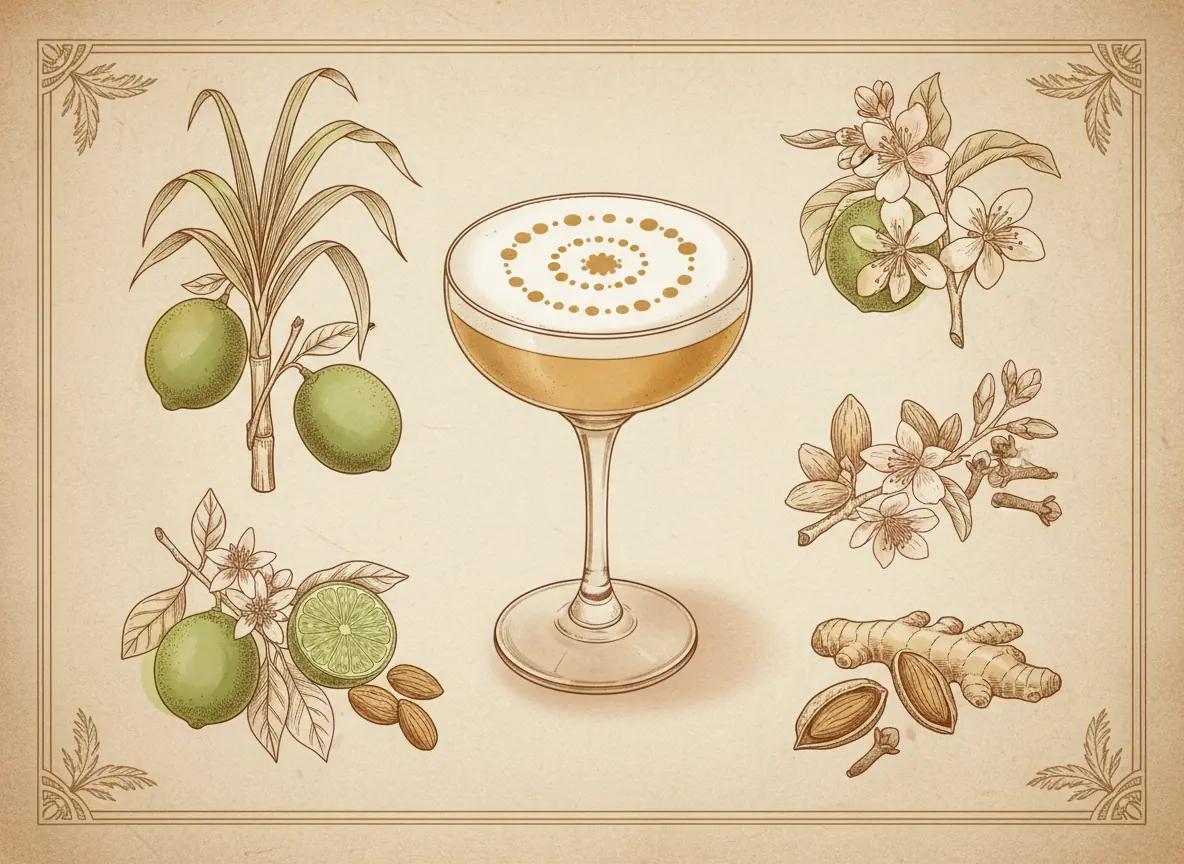
Tiki Sour
A Tiki Sour is a rum sour with tiki flavours: 50ml aged rum, 25ml fresh lime juice, 12.5ml orgeat and 7.5ml falernum, plus 15ml egg white if you want a foam, shaken first without ice and then with it, and double strained into a chilled coupe. Angostura, dotted on the foam, is the garnish. The frame is the classic sour of spirit, citrus, sweetener and egg. The contents come from tiki: almond from the orgeat, clove and ginger from the falernum, and an aged rum’s vanilla and oak. We have found no source that names a creator or a date for it. Orgeat is made from almonds and falernum often contains almond, so the drink is not for anyone with a nut allergy. A glass holds about 2.1 UK units.
Glassware: Coupe Glass
Garnish: Angostura bitters a few drops on the foam
Ingredients
50ml
A rum with a few years in oak, around 40% ABV, carrying vanilla and dried fruit. A light aged rum keeps the drink bright; an older one makes it richer. White rum leaves it thin, and spiced rum doubles up on the falernum.
25ml
Squeezed the same day. Against 20ml of almond and spice syrups, 25ml of lime holds the balance on the sour side.
12.5ml
Almond syrup, the sweetener in a Mai Tai. Choose one made with real almonds for body and a soft nuttiness. It contains almond, so it is unsuitable for anyone with a nut allergy.
7.5ml
The Oxford Companion to Spirits and Cocktails describes falernum as rum-, sugar- and lime-based, with spices such as cloves, ginger and nutmeg and sometimes almonds. Haus Alpenz lists John D. Taylor’s Velvet Falernum, the usual bottle, as a rum-based liqueur at 11.0% ABV. It adds the spice that marks the drink as tiki. Check the label for almond.
15ml
Optional. 15ml is half a medium egg white, dry shaken for a dense foam that holds the bitters; without it the drink is sharper. Raw. Following the FSA, British Lion-mark eggs are safe raw, including for vulnerable groups and in pregnancy; pasteurised carton white is the alternative. Eating out, where the mark cannot be checked, the FSA advises vulnerable people to have their eggs thoroughly cooked. Contains egg: leave it out, or use aquafaba, for anyone allergic.
Instructions
Squeeze the lime juice the same day.
Add the rum, lime juice, orgeat, falernum and egg white, if using, to a shaker without ice.
If using the egg white, dry shake for 10 to 15 seconds.
Add cubed ice and shake hard for 10 to 12 seconds.
Double strain into a chilled coupe.
Dot three drops of Angostura bitters on the foam.
Our version
We have found no published specification or creator. Ours is 50ml aged rum, 25ml lime, 12.5ml orgeat and 7.5ml falernum, with 15ml egg white as an option and Angostura dotted on the foam.
Source: our own specification. Last checked 9 October 2026.
Expert Tip
Shake without ice first, for 10 to 15 seconds, to whip the egg white. Ice goes in for the second shake, 10 to 12 seconds and hard, and a fine strainer gives a smooth, even foam. Use an orgeat made with real almonds. At 12.5ml it supplies most of the body and sweetness, and a thin, artificial one leaves the drink sharp and hollow. Check which falernum you have. Haus Alpenz lists John D. Taylor’s Velvet Falernum as a rum-based liqueur at 11.0% ABV; in our experience a falernum syrup is sweeter, so trim the orgeat slightly if you use one.
Behind the Tiki Sour
Flavour Profile
A Sour With Tiki Inside
Tiki drinks tend to be long, built over crushed ice with several rums and syrups. Sours are short: a spirit, citrus, a sweetener and often egg white, shaken and strained. The Tiki Sour keeps the sour’s shape and fills it with tiki ingredients.
We have found no source that names a creator or a year, so the recipe is what we have to go on.
Orgeat and Falernum
Orgeat is almond syrup, the sweetener in the Mai Tai. It gives the drink body and a soft, nutty sweetness, and helps the egg white foam hold.
Falernum adds what orgeat cannot. The Oxford Companion to Spirits and Cocktails describes it as rum-, sugar- and lime-based, with spices such as cloves, ginger and nutmeg and sometimes almonds, and Haus Alpenz lists John D. Taylor’s Velvet Falernum as a rum-based liqueur. At 7.5ml it is a seasoning, but the clove meets the aged rum’s oak and makes the spice feel part of the drink. Together the two supply 20ml of sweetener against 25ml of lime.
The Rum
Aged rum is the base because the drink needs weight. Vanilla, caramel and dried fruit from the oak sit under the almond and spice. A light aged rum makes a brighter drink; one with five years or more brings more oak and stands up better to the syrups.
The Tiki Sour beside the Whiskey Sour
Tiki Sour
- Spirit
- 50ml aged rum
- Citrus
- 25ml lime
- Sweeteners
- 12.5ml orgeat, 7.5ml falernum
- Egg white
- 15ml, optional
- UK units
- 2.1
Whiskey Sour (IBA)
- Spirit
- 45ml bourbon
- Citrus
- 25ml lemon
- Sweeteners
- 20ml sugar syrup
- Egg white
- 15ml, optional
- UK units
- 1.8
| Drink | Spirit | Citrus | Sweeteners | Egg white | UK units |
|---|---|---|---|---|---|
| Tiki Sour | 50ml aged rum | 25ml lime | 12.5ml orgeat, 7.5ml falernum | 15ml, optional | 2.1 |
| Whiskey Sour (IBA) | 45ml bourbon | 25ml lemon | 20ml sugar syrup | 15ml, optional | 1.8 |
The Tiki Sour is stronger than the IBA’s Whiskey Sour and no plain sugar at all, with the orgeat and falernum doing the sweetening.
The Egg White and the Bitters
Use the egg white or not. Whipped by the dry shake, it becomes a foam that softens the lime and lifts the almond towards you as you drink. Leave it out for a sharper, lighter drink.
A few drops of Angostura on the foam add aroma and a bitter edge against the syrups. They are the garnish, so dot them on just before serving.
How Strong It Is
With aged rum at 40% ABV and falernum at the 11.0% ABV Haus Alpenz lists for Velvet Falernum, a Tiki Sour holds about 2.1 UK units. It contains almond from the orgeat and usually from the falernum, so check before serving anyone with a nut allergy.
Make it at home
The Spirit
Aged RumAged rum is rum that has spent years in oak casks, usually ex-bourbon barrels, and taken on vanilla, caramel and dried fruit; our recipes count it at 40% ABV. In our recipes it is the rum for drinks where you should taste the spirit: the Old Cuban, the Mai Tai, the Rum Sour and the punch bowl.
Master the Techniques
More to explore
Frequently Asked Questions
What is a Tiki Sour?
How strong is a Tiki Sour?
Does a Tiki Sour contain nuts?
How is a Tiki Sour different from a rum sour?
Why dry shake the egg white?
What rum suits a Tiki Sour?
Sources.
Correct as of 19 October 2026.
- The Oxford Companion to Spirits and Cocktails (Martin Cate), “falernum” (secondary source: a traditional liqueur from Barbados; historically rum-, sugar- and lime-based, with Caribbean spices such as cloves, ginger and nutmeg; almonds sometimes added).
- Haus Alpenz, “R. L. Seale & Co. Ltd.: John D. Taylor’s Velvet Falernum” (importer’s producer page: Velvet Falernum, Barbados, 11.0% ABV; “this rum-based liqueur”).
- Difford’s Guide, “Falernum” (secondary source: always made with lime, sugar and lightly fortified with rum, usually with cloves, nutmeg, cinnamon, ginger and almonds).
You Might Also Like
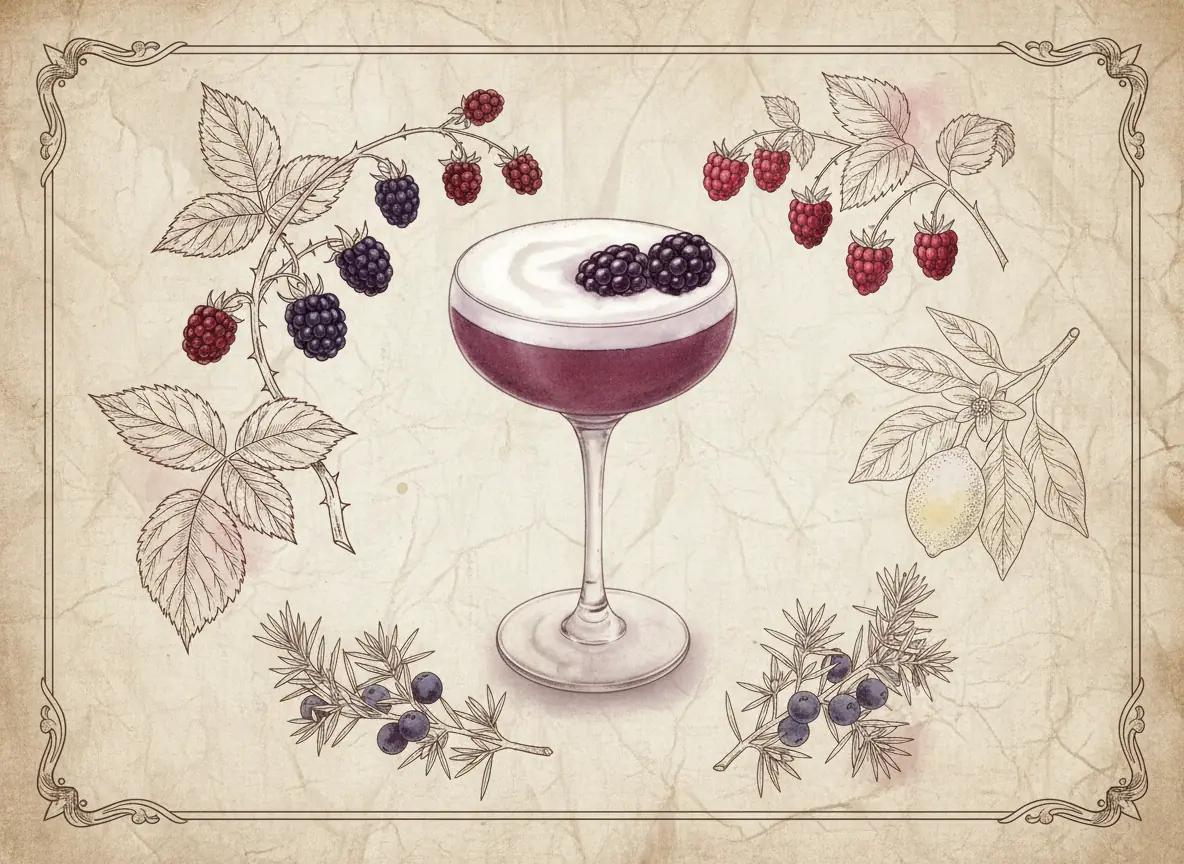
Berry Sour
A Berry Sour is 50ml of London Dry gin, 20ml of crème de mûre, 25ml of fresh lemon juice, 10ml of sugar syrup and 15ml of egg white, dry shaken, shaken again with ice and double strained into a chilled coupe, with two blackberries on the foam. About 2.4 UK units. The egg white is raw, so leave it out for anyone allergic to egg. It is our gin sour built from the Bramble’s bottles. Dick Bradsell says in Difford’s Guide that he created the Bramble in the mid-eighties at Fred’s Club in Soho (the Oxford Companion says 1989), and its method pours the crème de mûre over crushed ice so it bleeds down through the drink. Here the liqueur goes into the shaker, and the glass stays one even colour all the way down, under a white head. The trade is deliberate. You lose the Bramble’s shift from sharp to dark as you drink; you gain a silkier texture and a drink that tastes the same at the bottom as at the top. The juniper should still come through the fruit.
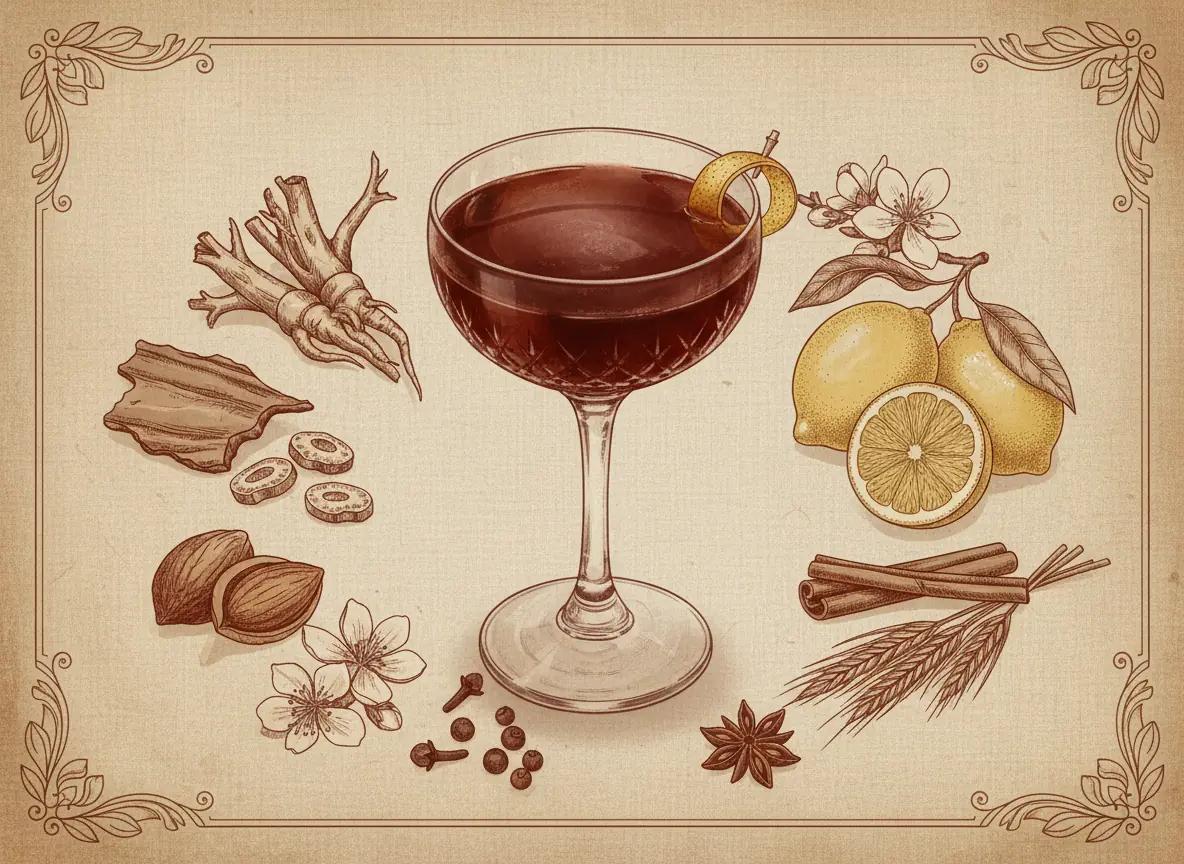
Trinidad Sour
A Trinidad Sour is 45ml Angostura bitters, 30ml orgeat, 22.5ml fresh lemon juice and 15ml rye whiskey, shaken hard for 10 to 12 seconds and double strained into a chilled coupe, with a strip of lemon peel twisted over the drink. Those are the IBA’s measures, in its New Era list. About 2.6 UK units, most of it from the bitters, which are 44.7% ABV on DrinkSupermarket’s listing. Angostura is the base here, not the seasoning. Difford’s Guide, a secondary source, says Giuseppe Gonzalez created the drink in 2009 at Clover Club in Brooklyn; Punch says he claims to have created it early in his brief time at the bar, which opened in 2008. It works because of the orgeat. At 30ml, an almond syrup has the sweetness and body to carry that much Angostura, and the lemon keeps it from cloying. The rye is small but adds the grain weight the bitters lack. Orgeat is an almond syrup, which rules the drink out for anyone allergic to tree nuts.
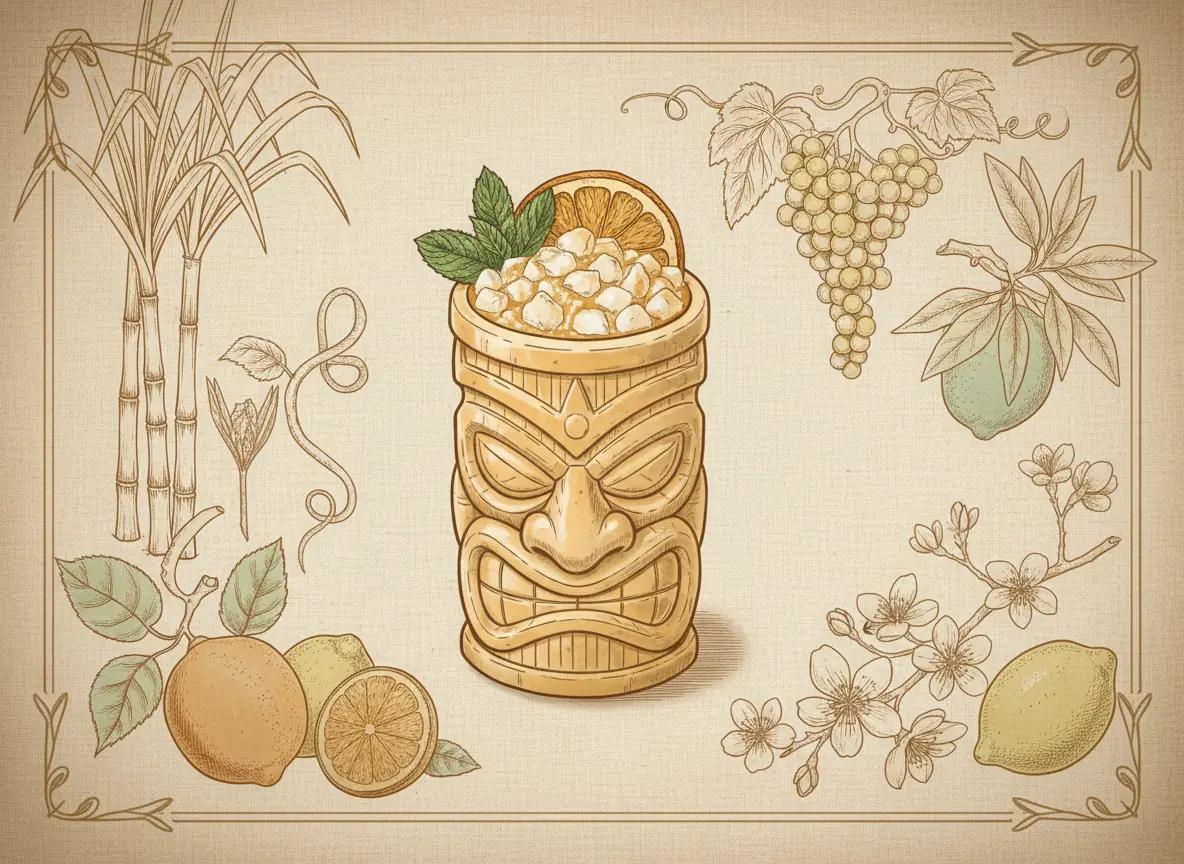
Scorpion
The Scorpion is Trader Vic’s rum and brandy sour: 45ml white rum, 22.5ml cognac, 50ml fresh orange juice, 30ml fresh lemon juice and 15ml orgeat, shaken hard and strained over crushed ice in a tiki mug or large rocks glass. The measures are adapted from Trader Vic’s Bartender’s Guide in its 1972 revised edition. Victor Bergeron, the Trader Vic of the restaurant chain, is credited with it; Punch dates his recipe to 1946, and Tasting Table traces the drink to a Honolulu punch in print by 1938. Difford’s Guide, citing Life magazine, has Vic serving the Scorpion in four-pint bowls made to serve four, and prints his 1972 recipes for a single glass and for a bowl for three or four. The single glass is the same drink at one person’s size. It comes out pale orange, almond-scented and drier than it looks, at about 2.7 UK units. Fresh orange and lemon and an orgeat made from almonds decide it. Orgeat contains nuts, which matters for anyone with an allergy.
Where this one sits
Recipe by Jerry Can Spirits · Updated 19 October 2026