Spicy Margarita
A Spicy Margarita is 60ml of blanco tequila, 30ml of fresh lime juice and 15ml of agave syrup, shaken hard for 10 to 12 seconds with three slices of jalapeño muddled in the tin, then double strained over fresh ice in a margarita glass with half a salt rim and a jalapeño slice on the edge. About 2.4 UK units. It is a Tommy’s Margarita with heat. Difford’s Guide gives a Tommy’s as 60ml of reposado tequila, 30ml of lime juice and 15ml of agave syrup, and ours uses the same measures, with blanco tequila and the agave syrup straight from the bottle. In our view the muddled-jalapeño version is a modern bar habit rather than a classic with a birth date. The seeds decide the heat: out for warmth, in for fire.
Glassware: Margarita Glass
Garnish: Jalapeño slice on the rim and Half salt rim
Ingredients
60ml
A blanco made from 100% agave, at 40% ABV. Its pepper and green agave notes sit naturally with the jalapeño. A reposado softens the drink and moves it towards the Picante de la Casa.
30ml
Squeezed the same day. At 30ml it is the only acid, and it keeps the heat and the sweetness in proportion.
15ml
Bottled agave syrup, used as it comes rather than cut with water. It rounds the chilli heat, and at 15ml it matches the agave in Difford’s Tommy’s Margarita.
3 slices
Three slices from a fresh pepper, briefly muddled. Most of the heat sits in the seeds and white pith: out for warmth, in for more.
Instructions
Squeeze the lime juice the same day, and salt half the outside rim of a margarita glass.
Press three jalapeño slices two or three times with a muddler in the base of a shaker.
Add the tequila, lime juice and agave syrup.
Fill with cubed ice and shake hard for 10 to 12 seconds.
Double strain into the margarita glass over fresh ice.
Garnish with a jalapeño slice on the rim.
Expert Tip
Taste the jalapeño before you build. Peppers vary a great deal, even from one plant, and a sliver on the tongue tells you whether three slices will warm the drink or burn it. Scrape out the seeds and white pith for a gentler glass. Muddle briefly. Two or three presses release the heat and the green flavour; pounding the slices to pulp adds bitterness and fragments. Double strain without fail. Chilli left in the glass keeps infusing, and the last sip ends up hotter than the first.
Behind the Spicy Margarita
Flavour Profile
Where It Comes From
In our view the muddled-jalapeño version is a modern bar habit rather than a classic with a birth date.
It sits on the Tommy’s Margarita frame, which Julio Bermejo made at Tommy’s Mexican Restaurant in San Francisco with agave in place of the orange liqueur. Difford’s Guide dates it to circa 1987 or 1988, and Bermejo himself told Patrón it was around 1989 or 1990. Agave sweetness rounds chilli heat without the orange note a triple sec would add.
Controlling the Heat
Three deseeded slices, pressed briefly, give warmth that arrives on the finish. Leave the seeds in and the heat comes forward and stays.
The seeds and white pith hold most of the capsaicin, so they matter more than the number of slices. Jalapeños vary from fruit to fruit; taste a sliver and set the count by the pepper you have.
Muddle or Infuse
Muddling gives control drink by drink and a greener bite, because the fresh flesh adds a vegetal note as well as heat.
For a round, infuse instead. Slice a jalapeño into the bottle, taste the tequila every thirty minutes or so, and strain the pepper out when the heat is where you want it. Muddled drinks made one after another can each land at a different heat; an infused bottle pours the same glass every time.
The Salt Rim
Salt on a Margarita tempers bitterness and lifts the lime. Here it also seems to dull the chilli a little, so the salted half of the rim is the cooler side.
Salt only the outer edge of the rim. Crystals on the inside dissolve into the drink and salt the whole glass.
Three Tequila Sours Without Orange Liqueur
The Spicy Margarita beside its two nearest relations; the Tommy’s row is Difford’s measure and the Picante row is Soho House’s recipe
Spicy Margarita
- Tequila
- 60ml blanco
- Lime
- 30ml
- Sweetener
- 15ml agave syrup, uncut
- Heat
- Three slices of jalapeño
- UK units
- 2.4
Tommy’s Margarita
- Tequila
- 60ml reposado
- Lime
- 30ml
- Sweetener
- 15ml agave syrup
- Heat
- None
- UK units
- 2.4
Picante de la Casa
- Tequila
- 50ml reposado
- Lime
- 25ml
- Sweetener
- 20ml agave nectar
- Heat
- Red chilli and coriander
- UK units
- 2.0
| Drink | Tequila | Lime | Sweetener | Heat | UK units |
|---|---|---|---|---|---|
| Spicy Margarita | 60ml blanco | 30ml | 15ml agave syrup, uncut | Three slices of jalapeño | 2.4 |
| Tommy’s Margarita | 60ml reposado | 30ml | 15ml agave syrup | None | 2.4 |
| Picante de la Casa | 50ml reposado | 25ml | 20ml agave nectar | Red chilli and coriander | 2.0 |
For coriander and a rounder tequila, make the Picante de la Casa.
How to Serve It
Double strained over fresh ice in a margarita glass, half the rim salted, a jalapeño slice on the edge so nobody drinks it unwarned.
It suits food, tacos and anything grilled especially. Start a heat-shy guest on the deseeded version.
Make it at home
The Spirit
TequilaTequila is a Mexican spirit distilled from the blue agave plant, made, the Oxford Companion says, only in Jalisco and municipalities of four other states; our recipes use 40% ABV. A label reading 100% agave means every sugar came from the plant, where plain tequila needs only 51%. Most of our 26 tequila recipes ask for 100% agave blanco.
More to explore
Frequently Asked Questions
How do I control the heat?
Which agave syrup should I use for a Spicy Margarita?
Muddled jalapeño or infused tequila?
Why only half a salt rim?
Why does the last sip taste hotter?
How strong is a Spicy Margarita?
How is it different from a Picante de la Casa?
Sources.
Correct as of 19 October 2026.
- Difford’s Guide, “Tommy’s Margarita” (secondary source: created circa 1987/88 by Julio Bermejo at his family’s Tommy’s in San Francisco; 60ml reposado tequila, 30ml lime juice, 15ml agave syrup; agave in place of triple sec).
- Soho House (House Notes), “Celebrate World Tequila Day with our Picantes” (the group’s own page: Picante de la Casa recipe 50ml reposado, 20ml agave nectar, 25ml lime, chilli and ten coriander leaves, served in a rocks glass).
- Patrón Tequila (interview with Julio Bermejo), “A Visit With Julio Bermejo, Creator of Tommy’s Margarita” (the creator’s own account: around 1989 or 1990, 100% agave tequila and agave fructose cut with a little simple syrup; the restaurant opened in 1965).
You Might Also Like
Tommy’s Margarita
A Tommy’s Margarita is 60ml blanco tequila made from 100% agave, 30ml fresh lime juice and 30ml agave syrup, shaken hard and strained into a rocks glass of fresh ice, with a lime wheel. The agave syrup is nectar cut one to one with water. There is no orange liqueur. About 2.4 UK units. Difford’s Guide says Julio Bermejo created it, dating it to circa 1987 or 1988, at his family’s Tommy’s Mexican Restaurant in San Francisco, whose name the drink carries; Punch places it in the early ’90s. The IBA includes it in its New Era category with 60ml of 100% agave tequila, 30ml of lime and 30ml of agave nectar; we cut the nectar one to one with water. Without triple sec, the sweetener comes from the same plant as the spirit, and the tequila stands at the front of the drink. It is the plainest way to taste whether a bottle is any good.
Margarita
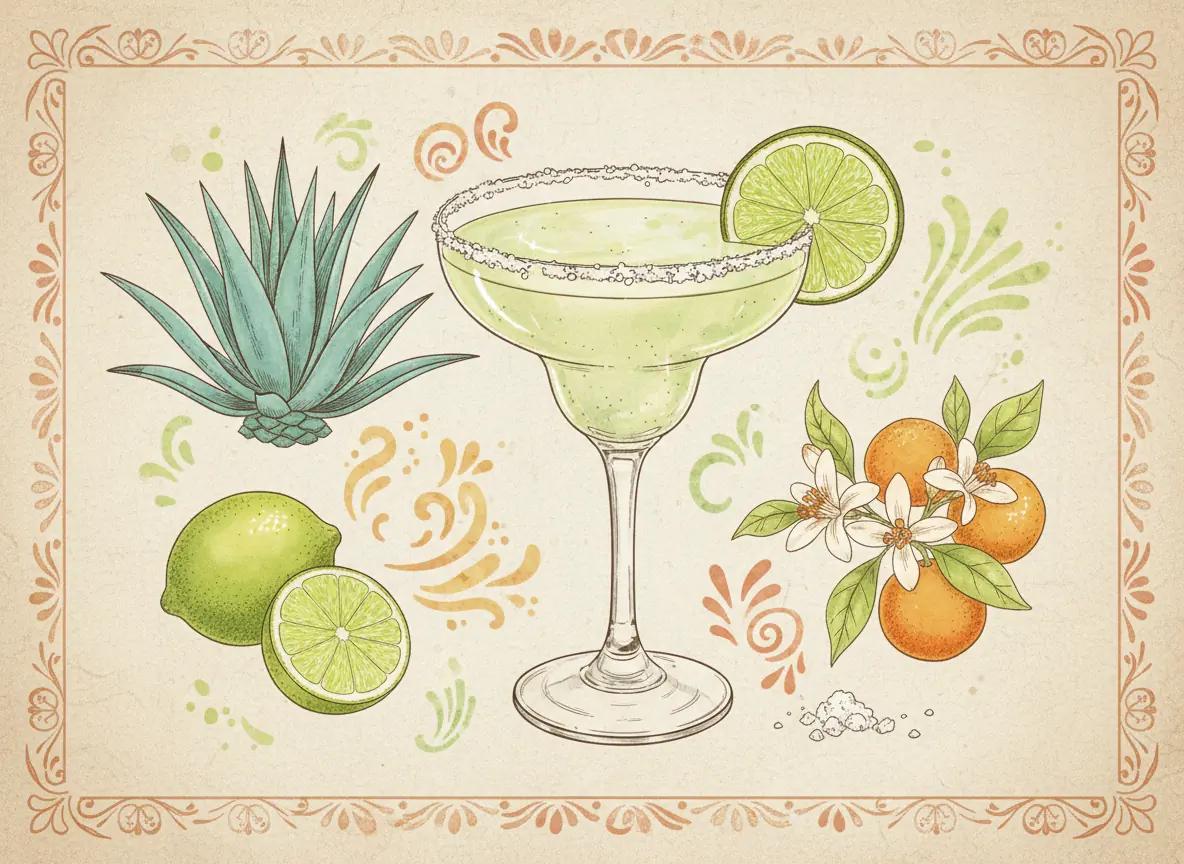
A Margarita is 50ml of 100% agave blanco tequila, 20ml of triple sec and 15ml of fresh lime juice, shaken hard for 10 to 12 seconds and double strained into a chilled coupe with half the rim salted, with a lime wheel. About 2.8 UK units. Strained over fresh ice in a rocks glass, it is the same drink, longer and cooler. These are the IBA’s measures. The lime is the smallest pour, so the agave leads and the orange liqueur rounds it: the drink tastes of tequila first and sour second. The Oxford Companion to Spirits and Cocktails, in an entry by David Wondrich, calls the origins of the Margarita one of cocktail history’s most notorious swamps, with at least half a dozen plausible claimants, among them Carlos Herrera at Rancho La Gloria in 1947, Margarita Sames in Acapulco in 1948 and the bartender Santos Cruz in Galveston in the same year. It finds the drink under the name Margarita in print in September 1953, in a California newspaper column, followed soon after by Esquire.
Paloma
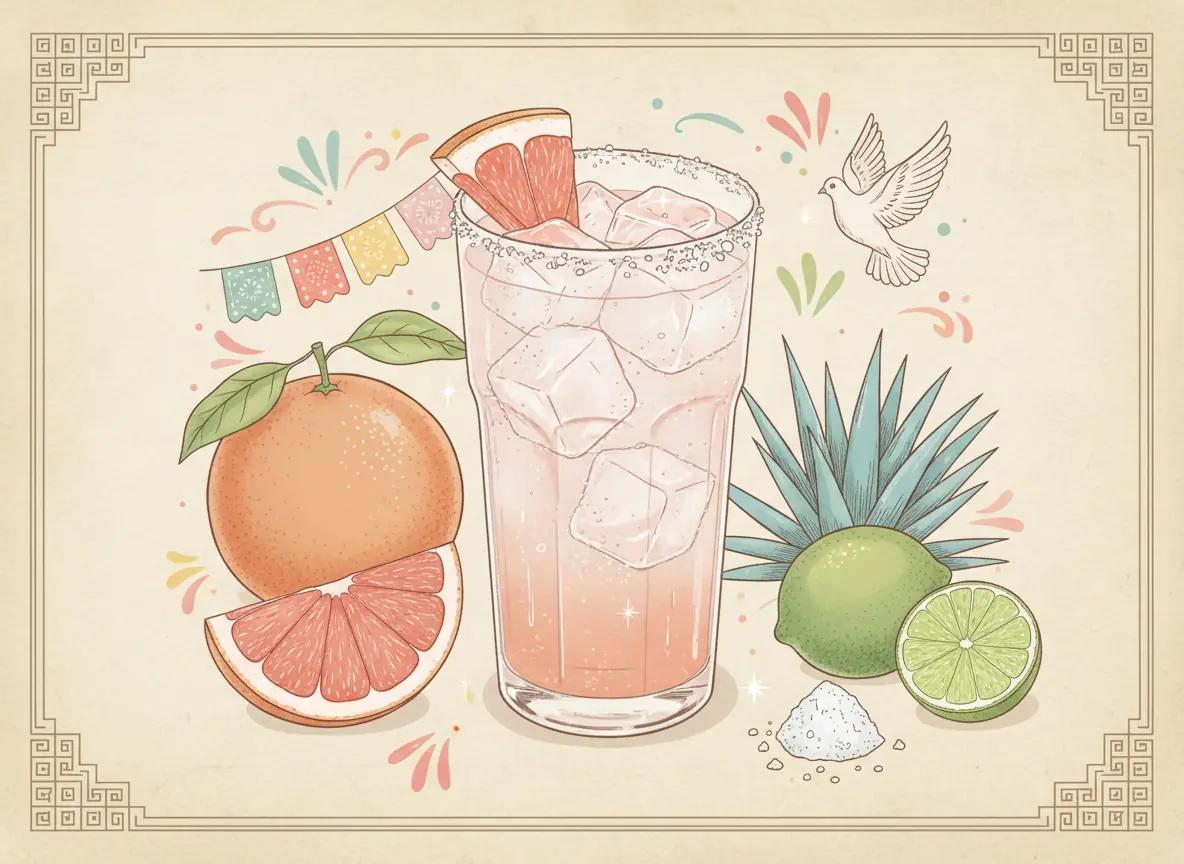
A Paloma is 50ml of blanco tequila, 5ml of fresh lime juice and a pinch of salt over ice in a highball, topped with 100ml of pink grapefruit soda and stirred gently once. Those are the IBA’s measures. We salt half the rim and add a grapefruit slice and a lime wheel. About 2.0 UK units. Paloma is Spanish for dove. The Oxford Companion traces the tequila and grapefruit soda combination to 1950, when a brochure for Squirt suggested mixing it with tequila, with Squirt launched in Mexico in 1955, and says it is unknown who adapted the combination to Mexican tastes. The soda does most of the work. It brings the grapefruit, the sugar and the fizz in one pour, so the recipe needs no syrup and only a little lime. The pinch of salt in the drink softens the grapefruit’s bitter edge and lets the agave through.
Where this one sits
Recipe by Jerry Can Spirits · Updated 19 October 2026