Tommy’s Margarita
A Tommy’s Margarita is 60ml blanco tequila made from 100% agave, 30ml fresh lime juice and 30ml agave syrup, shaken hard and strained into a rocks glass of fresh ice, with a lime wheel. The agave syrup is nectar cut one to one with water. There is no orange liqueur. About 2.4 UK units. Difford’s Guide says Julio Bermejo created it, dating it to circa 1987 or 1988, at his family’s Tommy’s Mexican Restaurant in San Francisco, whose name the drink carries; Punch places it in the early ’90s. The IBA includes it in its New Era category with 60ml of 100% agave tequila, 30ml of lime and 30ml of agave nectar; we cut the nectar one to one with water. Without triple sec, the sweetener comes from the same plant as the spirit, and the tequila stands at the front of the drink. It is the plainest way to taste whether a bottle is any good.
Glassware: Rocks Glass
Garnish: Lime wheel and Half salt rim (optional)
Ingredients
60ml
Blanco and 100% agave, which the IBA requires. Unaged, it keeps the pepper and green agave notes the drink is built to show. A reposado gives a rounder, oakier drink.
30ml
Squeezed the same day. At 30ml against 30ml of cut syrup it makes a full sour, and there is no liqueur to soften stale juice.
30ml
Agave nectar cut one to one with water, so 30ml carries about 15ml of nectar. It sweetens with a faint note of the plant the tequila comes from.
Instructions
Squeeze the lime juice the same day, ideally just before you build.
Make agave syrup by stirring agave nectar with an equal amount of water.
Fill a rocks glass with fresh cubed ice.
Add the tequila, lime juice and agave syrup to a shaker.
Fill the shaker with cubed ice and shake hard for 10 to 12 seconds.
Strain over the fresh ice and garnish with a lime wheel.
Source: the IBA (Official IBA specification, with the agave nectar cut one to one with water; method ours). Last checked 9 October 2026.
Expert Tip
Use 100% agave tequila. Mixto can include as much as 49% sugars from other sources, and with no liqueur to cover it, its thin, hot finish shows at once. Cut the agave nectar one to one with water before you measure it. Neat nectar is thick and slow to mix, and at 30ml it would make the drink twice as sweet. Salt is optional. The IBA garnishes with lime only; if you want salt, rim half the outside of the glass so each sip is a choice.
Behind the Tommy’s Margarita
Flavour Profile
The Origin
Difford’s Guide says Julio Bermejo created the drink, named after his family’s restaurant, Tommy’s Mexican Restaurant in San Francisco, in circa 1987 or 1988, and Punch says the early ’90s. Punch says Bermejo left out the orange liqueur for the natural honeyed flavour of agave nectar, and Difford’s says agave syrup takes the place of the triple sec at Tommy’s.
The IBA lists it among its New Era drinks.
Why No Triple Sec
Orange liqueur does two jobs in a classic Margarita: it sweetens, and it adds orange. The orange sits over the tequila and pads it, which flatters a weak spirit and hides a good one.
Agave syrup sweetens and adds little else beyond a faint vegetal note from the same plant. The drink dries out around the spirit, and you taste the bottle you bought.
Margarita, Grand Margarita and Tommy’s Margarita compared
Margarita (IBA)
- Spec
- 50ml tequila, 20ml triple sec, 15ml lime
- Strength
- About 2.8 UK units
- Character
- Sharp, bright, agave-led
Grand Margarita (IBA)
- Spec
- 45ml tequila, 30ml Grand Marnier, 15ml lime
- Strength
- About 3.0 UK units
- Character
- Rounder, with oak and dried fruit
Tommy’s Margarita (IBA)
- Spec
- 60ml tequila, 30ml lime, 30ml agave nectar
- Strength
- About 2.4 UK units
- Character
- No liqueur; tequila and lime in front
| Drink | Spec | Strength | Character |
|---|---|---|---|
| Margarita (IBA) | 50ml tequila, 20ml triple sec, 15ml lime | About 2.8 UK units | Sharp, bright, agave-led |
| Grand Margarita (IBA) | 45ml tequila, 30ml Grand Marnier, 15ml lime | About 3.0 UK units | Rounder, with oak and dried fruit |
| Tommy’s Margarita (IBA) | 60ml tequila, 30ml lime, 30ml agave nectar | About 2.4 UK units | No liqueur; tequila and lime in front |
Reading the Label
Tequila sold as 100% agave comes entirely from blue agave. Mixto need only be 51% agave, with the rest from other sugars, and the word rarely appears on the bottle.
In a drink this plain the difference shows. Mixto is thinner and sweeter, with a hot finish, and the pepper and green notes the Tommy’s is built around are mostly missing.
How to Serve It
Shaken hard, then strained onto fresh ice in a rocks glass, with a lime wheel. Salt is optional; half a rim leaves the choice to each sip.
For a rounder drink with a cognac-based orange liqueur, the Grand Margarita keeps the lime at 15ml and adds 30ml of Grand Marnier.
Make it at home
The Spirit
TequilaTequila is a Mexican spirit distilled from the blue agave plant, made, the Oxford Companion says, only in Jalisco and municipalities of four other states; our recipes use 40% ABV. A label reading 100% agave means every sugar came from the plant, where plain tequila needs only 51%. Most of our 26 tequila recipes ask for 100% agave blanco.
More to explore
Frequently Asked Questions
What makes a Tommy’s Margarita different?
Who invented the Tommy’s Margarita?
Does it take a salt rim?
How strong is a Tommy’s Margarita?
Agave syrup or agave nectar?
How does it compare with a classic Margarita?
Sources.
Correct as of 19 October 2026.
- Difford’s Guide, “Tommy’s Margarita” (secondary source: created circa 1987/88 by Julio Bermejo and named after his family’s Mexican restaurant in San Francisco, set up in 1965; agave syrup in place of the triple sec).
- IBA, “Tommy’s Margarita” (official specification: 60 ml tequila 100% agave, 30 ml fresh lime juice, 30 ml agave nectar; shake with ice, strain into a chilled rocks glass filled with ice; lime slice).
- Punch, “Tommy’s Margarita” (secondary source: created in the early ’90s by Julio Bermejo of Tommy’s Mexican Restaurant, San Francisco; orange liqueur omitted for agave nectar).
You Might Also Like
Margarita
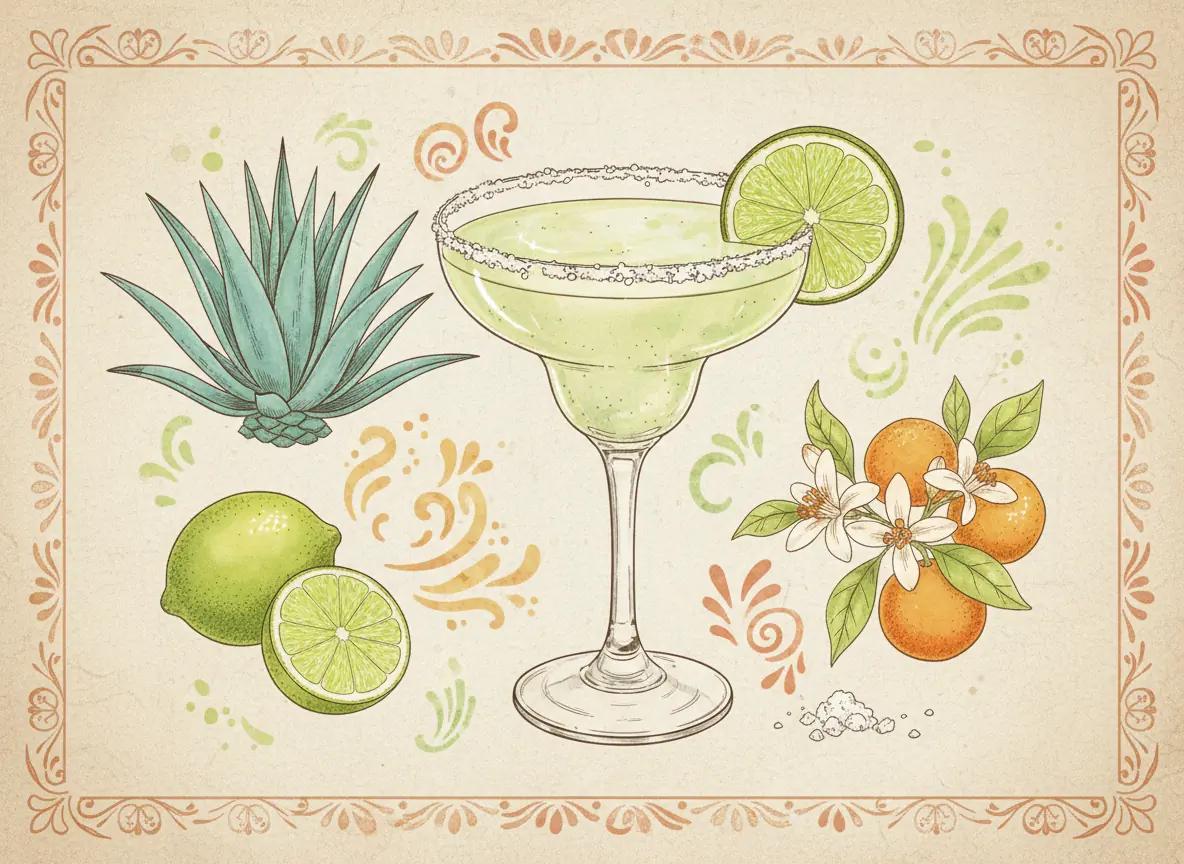
A Margarita is 50ml of 100% agave blanco tequila, 20ml of triple sec and 15ml of fresh lime juice, shaken hard for 10 to 12 seconds and double strained into a chilled coupe with half the rim salted, with a lime wheel. About 2.8 UK units. Strained over fresh ice in a rocks glass, it is the same drink, longer and cooler. These are the IBA’s measures. The lime is the smallest pour, so the agave leads and the orange liqueur rounds it: the drink tastes of tequila first and sour second. The Oxford Companion to Spirits and Cocktails, in an entry by David Wondrich, calls the origins of the Margarita one of cocktail history’s most notorious swamps, with at least half a dozen plausible claimants, among them Carlos Herrera at Rancho La Gloria in 1947, Margarita Sames in Acapulco in 1948 and the bartender Santos Cruz in Galveston in the same year. It finds the drink under the name Margarita in print in September 1953, in a California newspaper column, followed soon after by Esquire.
Spicy Margarita
A Spicy Margarita is 60ml of blanco tequila, 30ml of fresh lime juice and 15ml of agave syrup, shaken hard for 10 to 12 seconds with three slices of jalapeño muddled in the tin, then double strained over fresh ice in a margarita glass with half a salt rim and a jalapeño slice on the edge. About 2.4 UK units. It is a Tommy’s Margarita with heat. Difford’s Guide gives a Tommy’s as 60ml of reposado tequila, 30ml of lime juice and 15ml of agave syrup, and ours uses the same measures, with blanco tequila and the agave syrup straight from the bottle. In our view the muddled-jalapeño version is a modern bar habit rather than a classic with a birth date. The seeds decide the heat: out for warmth, in for fire.
Paloma
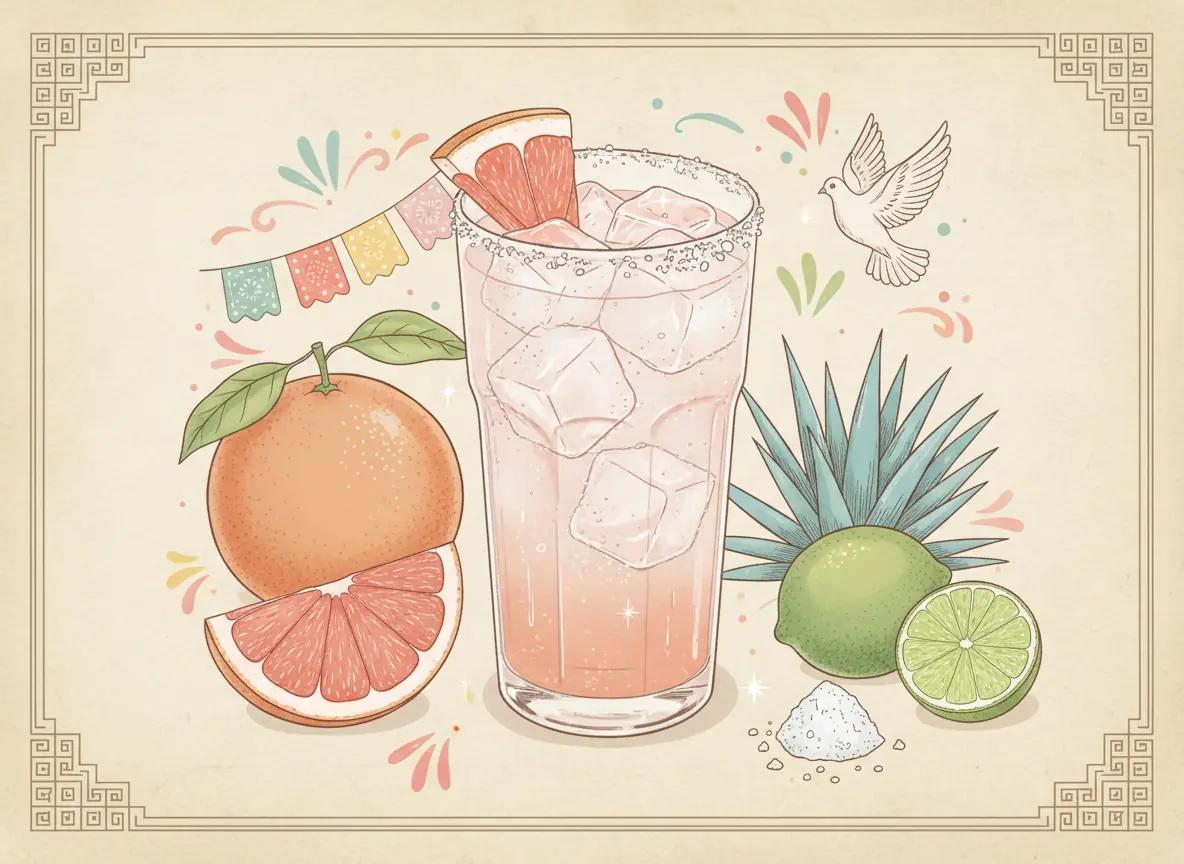
A Paloma is 50ml of blanco tequila, 5ml of fresh lime juice and a pinch of salt over ice in a highball, topped with 100ml of pink grapefruit soda and stirred gently once. Those are the IBA’s measures. We salt half the rim and add a grapefruit slice and a lime wheel. About 2.0 UK units. Paloma is Spanish for dove. The Oxford Companion traces the tequila and grapefruit soda combination to 1950, when a brochure for Squirt suggested mixing it with tequila, with Squirt launched in Mexico in 1955, and says it is unknown who adapted the combination to Mexican tastes. The soda does most of the work. It brings the grapefruit, the sugar and the fizz in one pour, so the recipe needs no syrup and only a little lime. The pinch of salt in the drink softens the grapefruit’s bitter edge and lets the agave through.
Where this one sits
Recipe by Jerry Can Spirits · Updated 19 October 2026