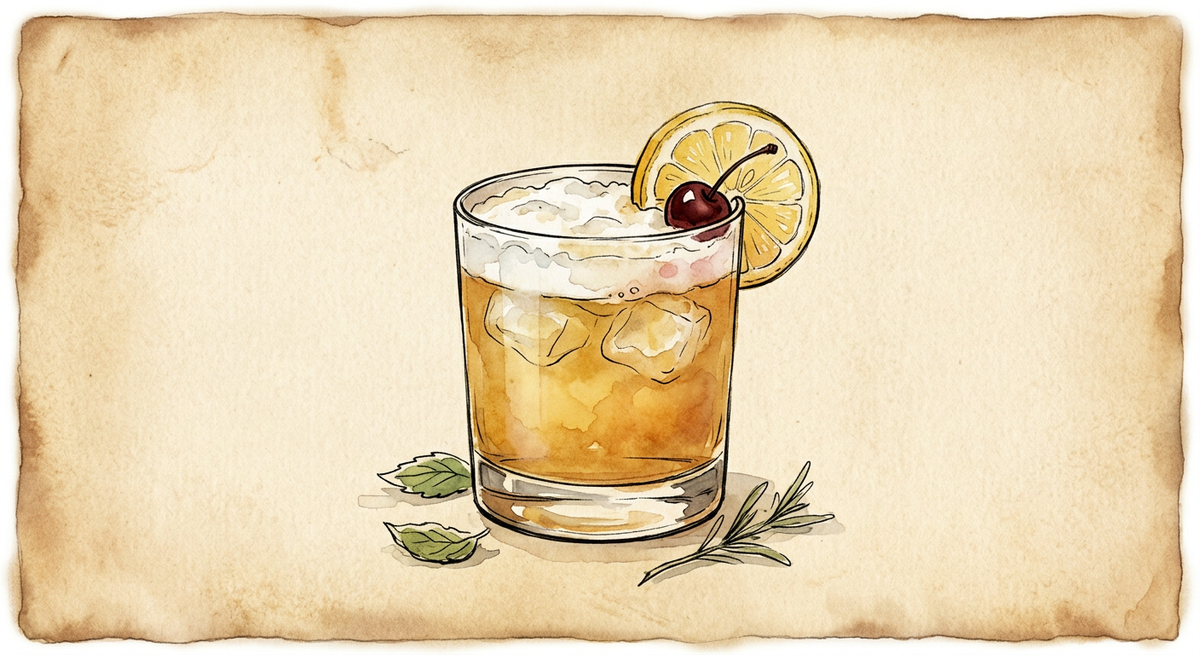
Rum Sour
A Rum Sour is 60ml of aged rum, 25ml of fresh lemon juice and 20ml of simple syrup, shaken hard with ice for 10 to 12 seconds and strained over fresh ice in a rocks glass, with a lemon wheel and a cherry. About 2.4 UK units. Egg white is optional: dry shake it for 10 to 15 seconds first, then double strain over ice or into a chilled coupe. Lemon and aged rum are the point. Lime and white rum make a Daiquiri; lemon is rounder and suits a rum with oak and dried fruit in it, much as it suits bourbon in a Whiskey Sour. The sour is an old template. Difford’s Guide says Jerry Thomas’s 1862 Bartender’s Guide has recipes for a Brandy Sour, a Gin Sour and a Santa Cruz, which it calls a rum sour.
Glassware: Rocks Glass
Garnish: Lemon wheel and Maraschino cherry
Ingredients
60ml
An aged rum at 40% ABV with some oak and dried fruit; a few years in cask is enough. White rum leaves the drink thin, and a heavily sweetened rum blurs the lemon.
25ml
Squeezed the same day. Lemon is what makes this a Rum Sour; with lime it becomes a long Daiquiri.
20ml
One part sugar to one part water by weight, stirred until clear. Slightly under the lemon. Demerara syrup (2:1) at about two thirds of the measure gives a deeper, toffee-edged sour.
1 (about 30ml), optional
Optional. It brings texture, not taste, and needs the dry shake. Raw. The NHS says hen eggs with the British Lion stamp can be eaten raw, including in pregnancy, while other hen eggs should be eaten well cooked; pasteurised carton white is the alternative. Contains egg: leave it out, or use aquafaba, for anyone allergic.
Instructions
Squeeze the lemon juice the same day.
Add the rum, lemon juice and simple syrup to a shaker, with the egg white if you are using it.
With egg white, dry shake without ice for 10 to 15 seconds.
Fill with ice and shake hard for 10 to 12 seconds.
Strain over fresh ice in a rocks glass, or into a chilled coupe; double strain the egg white version either way.
Garnish with a lemon wheel and a cherry.
Expert Tip
Use aged rum. A white rum in a lemon sour tastes thin, because there is no oak or dried fruit for the lemon to work against. Demerara syrup in place of simple deepens it and suits a darker bottle. Set the syrup by the fruit in front of you. A hard winter lemon wants the full 20ml; a softer summer one wants a touch under. Move the sugar, never the lemon, or the drink stops being a sour. For the foamed version, give the tin 10 to 15 seconds with no ice, then 10 to 12 seconds hard with it, and double strain. Without that first shake the white never builds a proper head.
Behind the Rum Sour
Flavour Profile
Where It Comes From
Rum was in the sour from the start of the printed record. Difford’s Guide says the first known written recipe for a Sour is in Jerry Thomas’s 1862 Bartender’s Guide, which has a Brandy Sour, a Gin Sour and a Santa Cruz, a rum sour. In the 1862 text, on the Internet Archive, the Gin Sour is made like the Gin Fix without its fruits but for a small piece of lemon, and a footnote says the Santa Cruz sour is made by substituting Santa Cruz rum for the gin, with the lemon skin put in the glass.
The Oxford Companion says Jennings Cox, who made or supervised the first Daiquiri in 1896, went on calling it his “rum sour” for years before it had a name: rum, lime juice and sugar. Its Mai Tai entry calls that drink a rum sour accented with orgeat. The aged-rum, lemon version is the quieter branch.
Lemon Against Lime
Lime is sharp and slightly bitter at the edge, and it suits white rum, which has little to get in its way.
Lemon is rounder and softer, and it works best against weight: vanilla in bourbon, fruit in brandy, oak and dried fruit in aged rum. Swap one citrus for the other and you have changed the drink, not adjusted it.
Why Aged Rum
White rum in a lemon sour tastes of sweetened acid with a thin alcoholic edge. More rum only makes it hotter.
An aged rum gives the lemon something to sit against and the sugar somewhere to go, and the drink balances at the standard measures. Demerara syrup takes it a step darker.
The Egg White Question
The white is optional. It tastes of nothing; what it changes is the feel, a soft head on top and an acid that lands later and rounder.
Dry shake it without ice for 10 to 15 seconds so the foam forms, then shake hard with ice for 10 to 12 seconds and double strain. Over fresh ice it stays cold to the end; in a coupe the foam shows better.
Plain or Foamed
The Rum Sour two ways
Shake
- Plain
- 10 to 12 seconds hard, with ice
- With egg white
- Dry shake 10 to 15 seconds, then 10 to 12 seconds with ice
Strain
- Plain
- Over fresh ice
- With egg white
- Double strained
Glass
- Plain
- Rocks glass
- With egg white
- Rocks glass over ice, or a chilled coupe
Texture
- Plain
- Sharp and direct
- With egg white
- Silky, with a foam
Allergen
- Plain
- None
- With egg white
- Egg
UK units
- Plain
- 2.4
- With egg white
- 2.4
| Element | Plain | With egg white |
|---|---|---|
| Shake | 10 to 12 seconds hard, with ice | Dry shake 10 to 15 seconds, then 10 to 12 seconds with ice |
| Strain | Over fresh ice | Double strained |
| Glass | Rocks glass | Rocks glass over ice, or a chilled coupe |
| Texture | Sharp and direct | Silky, with a foam |
| Allergen | None | Egg |
| UK units | 2.4 | 2.4 |
How to Serve It
Over fresh ice in a rocks glass with a lemon wheel and a cherry, or up in a chilled coupe when the egg white is in.
For the bourbon version, make the Whiskey Sour; for lime and white rum, the Daiquiri.
Make it at home
The Spirit
Aged RumAged rum is rum that has spent years in oak casks, usually ex-bourbon barrels, and taken on vanilla, caramel and dried fruit; our recipes count it at 40% ABV. In our recipes it is the rum for drinks where you should taste the spirit: the Old Cuban, the Mai Tai, the Rum Sour and the punch bowl.
Master the Techniques
More to explore
Frequently Asked Questions
What is the difference between a Rum Sour and a daiquiri?
White or aged rum?
Egg white or not?
Can I use demerara syrup?
How strong is a Rum Sour?
Which aged rum works best?
Is it the same as a Whiskey Sour?
Can I put orgeat in a Rum Sour?
Sources.
Correct as of 19 October 2026.
- Difford’s Guide, “Sour cocktails: history” (secondary source: the first known written recipe for a Sour is in Jerry Thomas’s 1862 Bartender’s Guide: a Brandy Sour, a Gin Sour and a Santa Cruz (rum sour)).
- The Oxford Companion to Spirits and Cocktails (Jeff Berry), “The Daiquiri” (secondary source: Jennings Cox made or supervised the first Daiquiri in 1896 from rum, lime juice and sugar and for twelve years called it his “rum sour”).
- The Oxford Companion to Spirits and Cocktails (Jeff Berry), “The Mai Tai” (secondary source: a rum sour accented with orgeat; Trader Vic’s 1944 formula of Jamaican rum, lime juice, curaçao, orgeat and sugar syrups).
- NHS, “Foods to avoid in pregnancy” (official page: hen eggs with the British Lion stamp (or from the Laid in Britain scheme) can be eaten raw, partially cooked or well cooked; other hen eggs only well cooked).
- Jerry Thomas, 1862 (Internet Archive scan), “How to Mix Drinks, or The Bon-Vivant’s Companion” (primary source: 143. Gin Sour (the gin fix without its fruits but a small piece of lemon); footnote: the Santa Cruz sour is made by substituting Santa Cruz rum for gin; put the lemon skin in the glass).
You Might Also Like
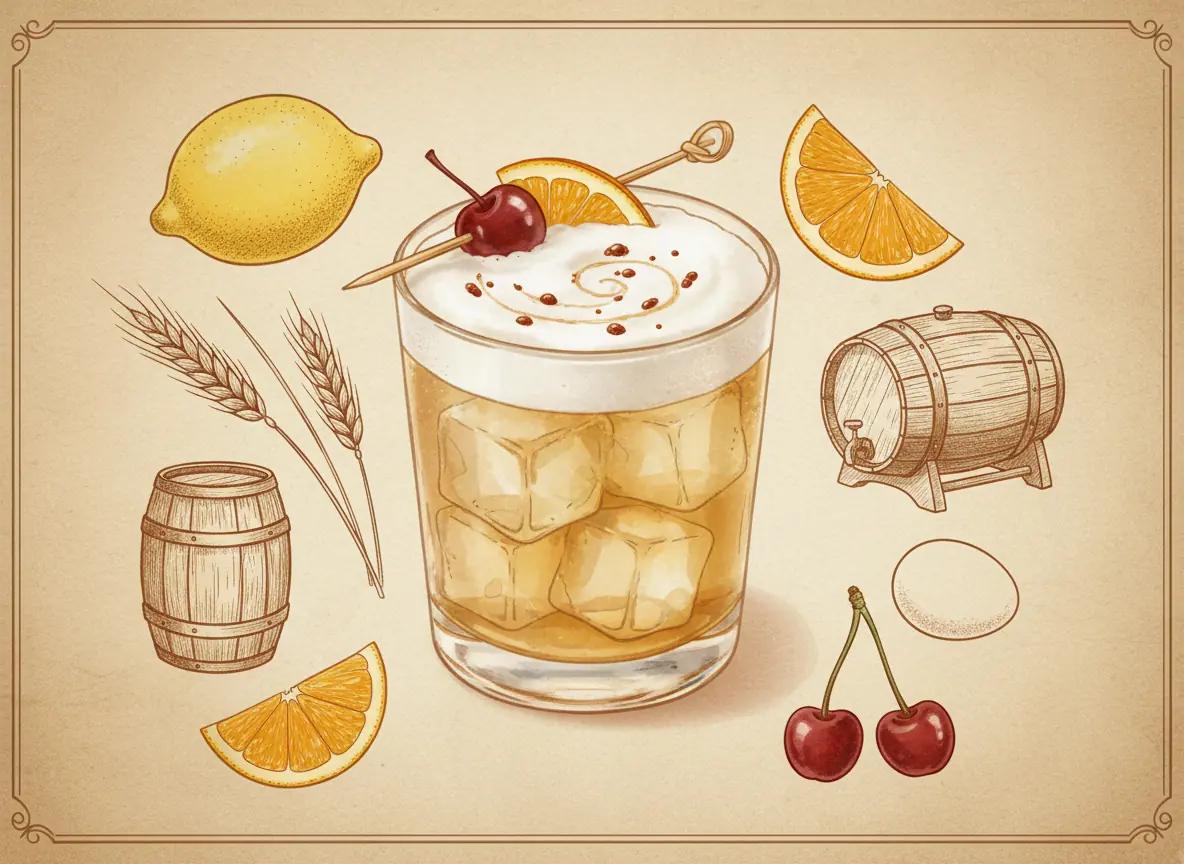
Whiskey Sour
A Whiskey Sour is 45ml of bourbon, 25ml of fresh lemon juice and 20ml of sugar syrup, shaken hard with ice, then poured through a strainer onto fresh cubes in a rocks glass, with half an orange slice and a cherry. Add 15ml of egg white, dry shaken first, and dot the foam with Angostura. About 1.8 UK units. The measures are the IBA’s. The IBA’s egg white is optional and only a few drops; we use 15ml, about half a white, because that is what a full foam takes. The bitters are not in the IBA recipe, and they only go on when there is foam to hold them. The name is in print by 1870, in a Wisconsin newspaper, and the sour is older still: Jerry Thomas printed brandy, gin and rum sours in 1862. Difford’s Guide lists a Boston Sour as bourbon soured with lemon juice and smoothed by egg white.
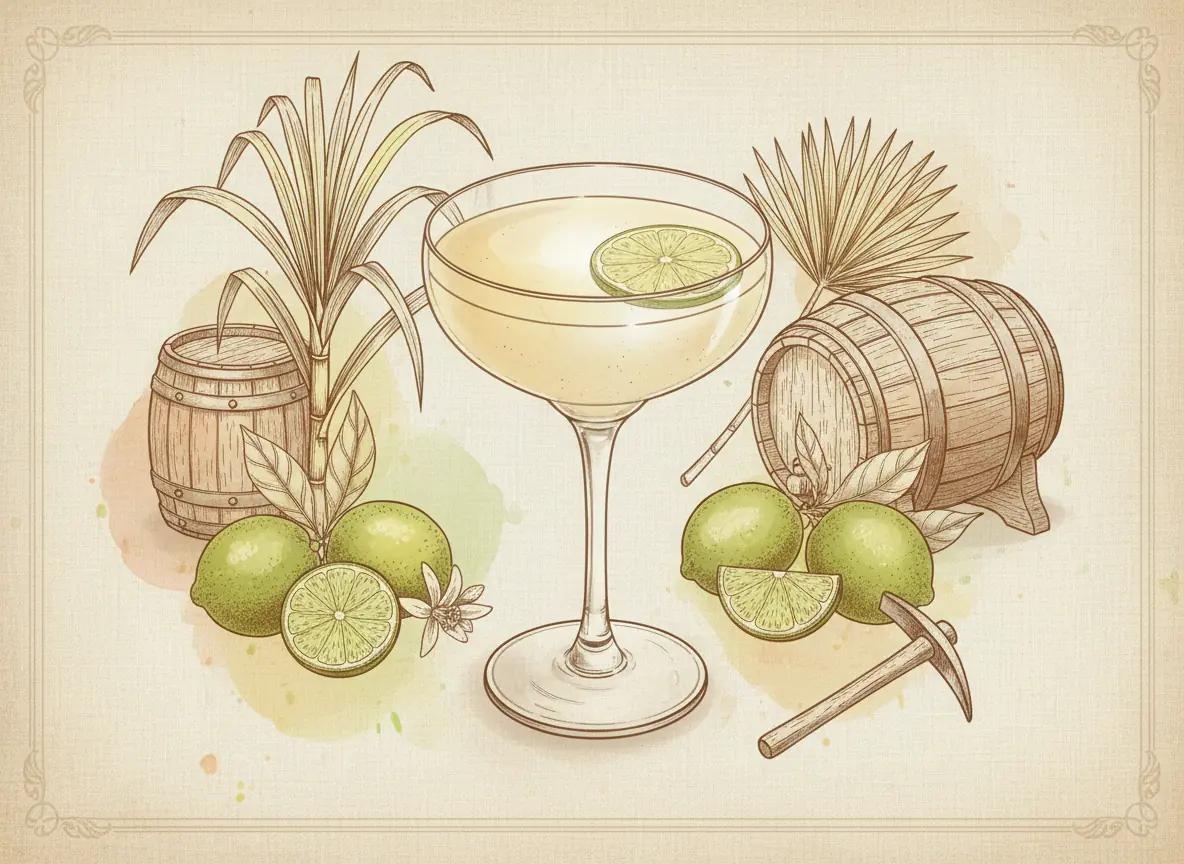
Daiquiri
A Daiquiri is 60ml white rum, 20ml fresh lime juice and two bar spoons of caster sugar. Stir the sugar into the rum and lime in the shaker until it dissolves, then add ice, shake hard for 10 to 12 seconds and double strain into a chilled coupe. About 2.4 UK units. Those are the IBA’s measures, and its method dissolves the sugar first too. The name belongs to Daiquirí, an iron-mining district and beach near Santiago de Cuba. Difford’s Guide credits Jennings Stockton Cox, an American engineer who led one of the first mining parties into Cuba’s iron-ore country after the Spanish-American War of 1898; the Oxford Companion has him making or supervising the first Daiquiri in 1896, and a Santiago bartender naming it in 1908. Difford’s says Constantino Ribalaigua Vert of Havana’s El Floridita made the frozen version famous. With three ingredients and no liqueur or bitters, the Daiquiri hides nothing. A flat rum, tired lime or undissolved sugar shows in the first sip.
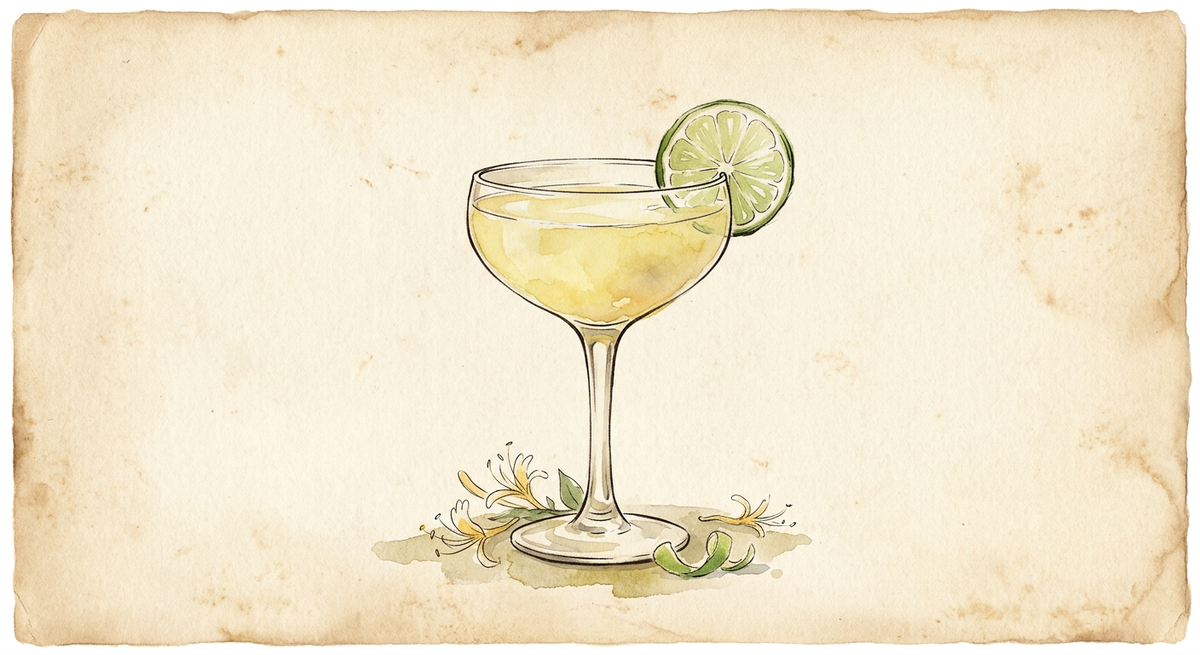
Honeysuckle
A Honeysuckle is 60ml of white rum, 22.5ml of fresh lime juice and 22.5ml of honey syrup (two parts honey, one part warm water), shaken hard for 10 to 12 seconds and double strained into a chilled coupe, with a lime wheel. About 2.4 UK units. It is a daiquiri sweetened with honey instead of sugar. Honey has a floral smell and a waxy weight that sugar lacks, so the drink comes out rounder and more golden than a Daiquiri, and the honey rather than the lime is what you notice first. The name is older than our recipe. It is usually traced to David Embury’s The Fine Art of Mixing Drinks of 1948, where the Honeysuckle is a Bee’s Knees made with rum, and so with lemon. We use lime, which keeps it in the daiquiri family.
Where this one sits
Recipe by Jerry Can Spirits · Updated 19 October 2026