Queen’s Park Hotel Super Cocktail
A Queen’s Park Hotel Super Cocktail is 45ml of light gold rum, 15ml of sweet vermouth, 15ml of fresh lime juice, 7.5ml of grenadine, 7.5ml of rich syrup and 3 dashes of Angostura bitters, shaken and strained into a chilled coupe, with a lime zest twist expressed over the drink. About 2.0 UK units by our strengths. Difford’s Guide prints 1.9. It is not the Queen’s Park Swizzle. The hotel in Port of Spain, Trinidad, is the same. The rum, the glass, the ice and the method are all different. It drinks like a Daiquiri with sweet vermouth, grenadine and Angostura through the middle.
Glassware: Coupe Glass
Garnish: Lime zest twist expressed over the drink and used as the garnish
Ingredients
Instructions
Chill a coupe.
Squeeze the lime the day you serve it.
Add the rum, vermouth, lime juice, grenadine, rich syrup and bitters to a shaker with ice.
Shake hard for 10 to 12 seconds.
Strain into the chilled coupe.
Express a lime zest twist over the drink and use it as the garnish.
Source: Difford's Guide (recipe 3625, measures, method and garnish as printed (45ml light gold rum from a 1 to 3 year old molasses column still, 15ml Strucchi Rosso vermouth, 15ml lime juice, 7.5ml grenadine or pomegranate syrup, 7.5ml 2:1 cane sugar syrup, 3 dashes Angostura, shaken, strained into a chilled coupe, lime zest twist expressed over the drink); Difford’s presents it as adapted from Owen Rutter, If Crab No Walk: A Traveller in the West Indies (1932)). Last checked 1 November 2026.
Expert Tip
Measure the grenadine with a small jigger. At 7.5ml the pomegranate is a background note, and a heavier pour turns the drink sweet. Put the bitters in the shaker, not on top. Three dashes is what separates this from a plain Daiquiri. Express the zest over the surface before it goes in. The lime oils are the first thing you smell.
Behind the Queen’s Park Hotel Super Cocktail
Flavour Profile
A 1932 travel book and a hotel bar
Difford’s Guide says its recipe is adapted from If Crab No Walk: A Traveller in the West Indies, a 1932 book by the British travel writer Owen Rutter. Rutter writes of the Queen’s Park Hotel in Port of Spain, Trinidad, and of its Long Bar with the Brass Rail, where a guest could order the hotel’s Super Cocktail.
Because Difford’s presents the recipe as an adaptation, the measures here are Difford’s, not Rutter’s. Difford’s adds that Rutter’s version was originally made with Trinidad gold rum, Canning’s Caroni Rum. We name no bartender and no year of creation.
Not the Queen’s Park Swizzle
The same hotel is remembered for the Queen’s Park Swizzle, and Difford’s points to it from this recipe. The two share a building and almost nothing else. The Swizzle is 60ml of Demerara rum, lime, demerara syrup, eight mint leaves and four dashes of Angostura, swizzled over crushed ice in a highball. The Super Cocktail is a lighter gold rum with vermouth and grenadine, shaken and served up, with no mint.
A Daiquiri that takes vermouth and grenadine
Rum, lime and sugar are the frame of the Daiquiri. Here 15ml of sweet vermouth adds herbs and a dry edge, grenadine adds pomegranate and colour, and three dashes of Angostura bitters run through all of it. Difford’s says the weight of Angostura makes it best described as a Trinidadian Daiquiri.
Difford’s specifies a light gold style of rum, one to three years old, from a molasses column still. Our gold rum page covers the style. If you make grenadine at home as a 2:1 pomegranate syrup, Difford’s says to use 15ml and leave out the rich syrup.
The Queen’s Park Hotel Super Cocktail beside the Swizzle and two rum drinks
Super Cocktail
- Rum
- 45ml light gold
- Citrus
- 15ml lime
- Other
- Sweet vermouth, grenadine, Angostura
Queen’s Park Swizzle
- Rum
- 60ml Demerara
- Citrus
- 22.5ml lime
- Other
- Demerara syrup, mint, Angostura
Daiquiri
- Rum
- 60ml white rum
- Citrus
- 20ml lime
- Other
- Caster sugar
El Presidente
- Rum
- 45ml white
- Citrus
- None
- Other
- Dry vermouth, orange curaçao, grenadine
| Drink | Rum | Citrus | Other |
|---|---|---|---|
| Super Cocktail | 45ml light gold | 15ml lime | Sweet vermouth, grenadine, Angostura |
| Queen’s Park Swizzle | 60ml Demerara | 22.5ml lime | Demerara syrup, mint, Angostura |
| Daiquiri | 60ml white rum | 20ml lime | Caster sugar |
| El Presidente | 45ml white | None | Dry vermouth, orange curaçao, grenadine |
The El Presidente is the nearest in ingredients: rum, vermouth and grenadine, with no lime.
Make it at home
The Spirit
Gold RumGold rum is a lightly aged rum, normally 40% ABV, mostly from column stills in the Spanish Caribbean, with a pale amber colour from its time in oak. Our recipes ask for gold Puerto Rican rum, which, Rums of Puerto Rico says, Puerto Rican law ages for at least a year in white oak, to fill the middle of a three-rum tiki drink.
More to explore
Frequently Asked Questions
What is a Queen’s Park Hotel Super Cocktail?
Is it the same as the Queen’s Park Swizzle?
Who created the Queen’s Park Hotel Super Cocktail?
How strong is a Queen’s Park Hotel Super Cocktail?
What rum should I use?
Can I use homemade grenadine?
Which vermouth suits it?
Can I make a jug of it?
Sources.
Correct as of 1 November 2026.
- Difford’s Guide, “Queen’s Park Hotel Super Cocktail” (recipe 3625: gold rum, sweet vermouth, lime, grenadine, 2:1 syrup, Angostura, shaken, coupe; 1.9 units; adapted from Owen Rutter, 1932; Trinidad gold rum noted; points to the Queen’s Park Swizzle).
- NHS, “Calculating alcohol units” (the 14-units-a-week guidance and the units calculation).
You Might Also Like
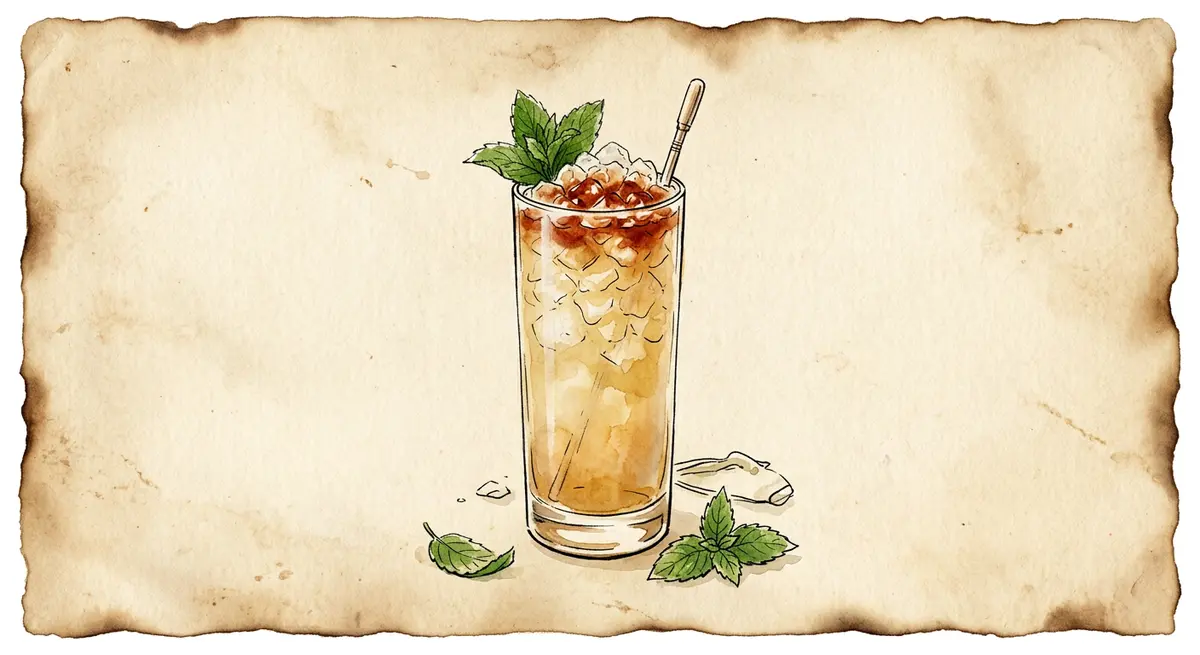
Queen’s Park Swizzle
A Queen’s Park Swizzle is 60ml of Demerara rum, 22.5ml of fresh lime juice and 15ml of demerara syrup over eight pressed mint leaves, swizzled with crushed ice in a highball until the glass frosts, then topped with more ice, four dashes of Angostura and a mint bouquet. About 2.5 UK units. It takes its name from the Queen’s Park Hotel in Port of Spain, Trinidad. The Oxford Companion says it first saw print in the 1946 Trader Vic’s Book of Food and Drink as a drink from the Queen’s Park Hotel in Trinidad, and that its creation was likely between 1933 and 1938. No bartender is named with it. Difford’s Guide says Trader Vic called it, in that book, “the most delightful form of anesthesia given out today”. The bitters go on last and are left alone. Drunk through a straw from the bottom of the glass, it opens on lime, mint and rum and closes on the Angostura as the bitters work down through the ice.
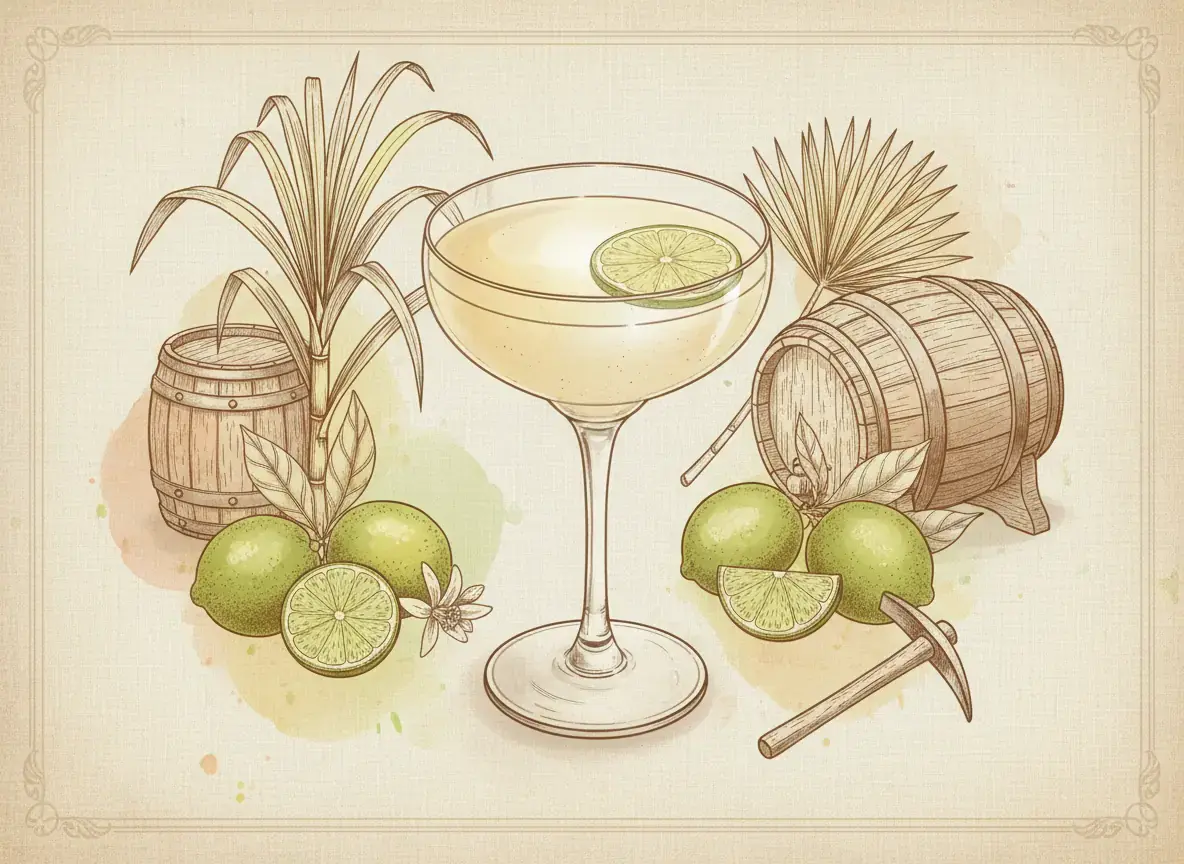
Daiquiri
A Daiquiri is 60ml white rum, 20ml fresh lime juice and two bar spoons of caster sugar. Stir the sugar into the rum and lime in the shaker until it dissolves, then add ice, shake hard for 10 to 12 seconds and double strain into a chilled coupe. About 2.4 UK units. Those are the IBA’s measures, and its method dissolves the sugar first too. The name belongs to Daiquirí, an iron-mining district and beach near Santiago de Cuba. Difford’s Guide credits Jennings Stockton Cox, an American engineer who led one of the first mining parties into Cuba’s iron-ore country after the Spanish-American War of 1898; the Oxford Companion has him making or supervising the first Daiquiri in 1896, and a Santiago bartender naming it in 1908. Difford’s says Constantino Ribalaigua Vert of Havana’s El Floridita made the frozen version famous. With three ingredients and no liqueur or bitters, the Daiquiri hides nothing. A flat rum, tired lime or undissolved sugar shows in the first sip.
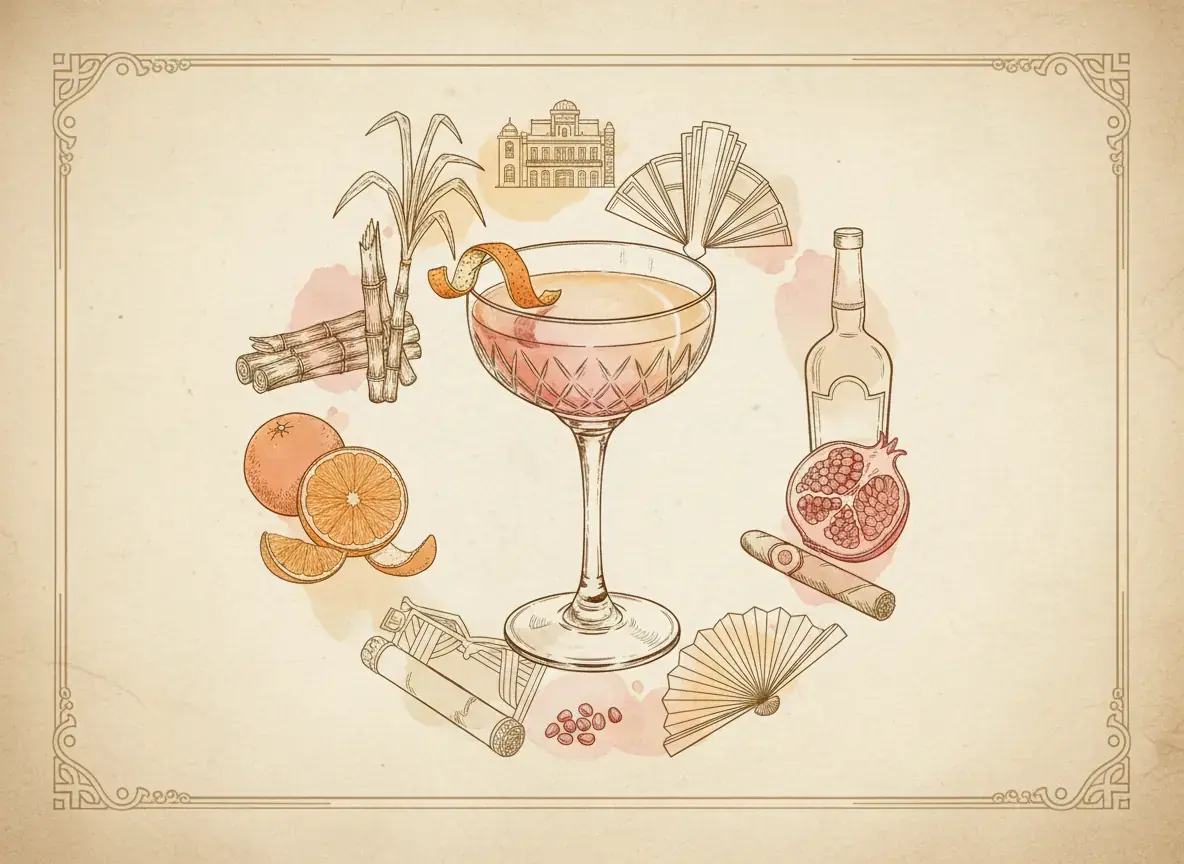
El Presidente
El Presidente is a stirred Cuban rum drink: 45ml white rum, 22.5ml dry vermouth, 10ml orange curaçao and 7.5ml grenadine, stirred for 20 to 30 seconds over ice and strained into a chilled coupe, finished with an expressed orange peel. It drinks like a light rum Manhattan, dry and aromatic, with a pale pink colour from the grenadine. Basil Woon’s 1928 book on Cuba calls it one of the two cocktails most in demand in Havana. Who created it and which president it honours are both disputed: the Floridita’s own 1939 book prints a 1937 report crediting Constante Ribalaigua, and Bar Vademecum reports David Wondrich naming Mario García Menocal, president from 1913 to 1921; Bar Vademecum adds that the story of a drink named for Gerardo Machado cannot be right for the earliest recipes, since Machado was not elected until 1925. Older recipes use Chambéry, a blanc vermouth sweeter than dry: two parts to one of rum in Escalante’s 1915 manual, half and half in Basil Woon’s 1928 account. Ours uses dry at two to one with a little more curaçao. Each one comes to about 2.6 UK units.
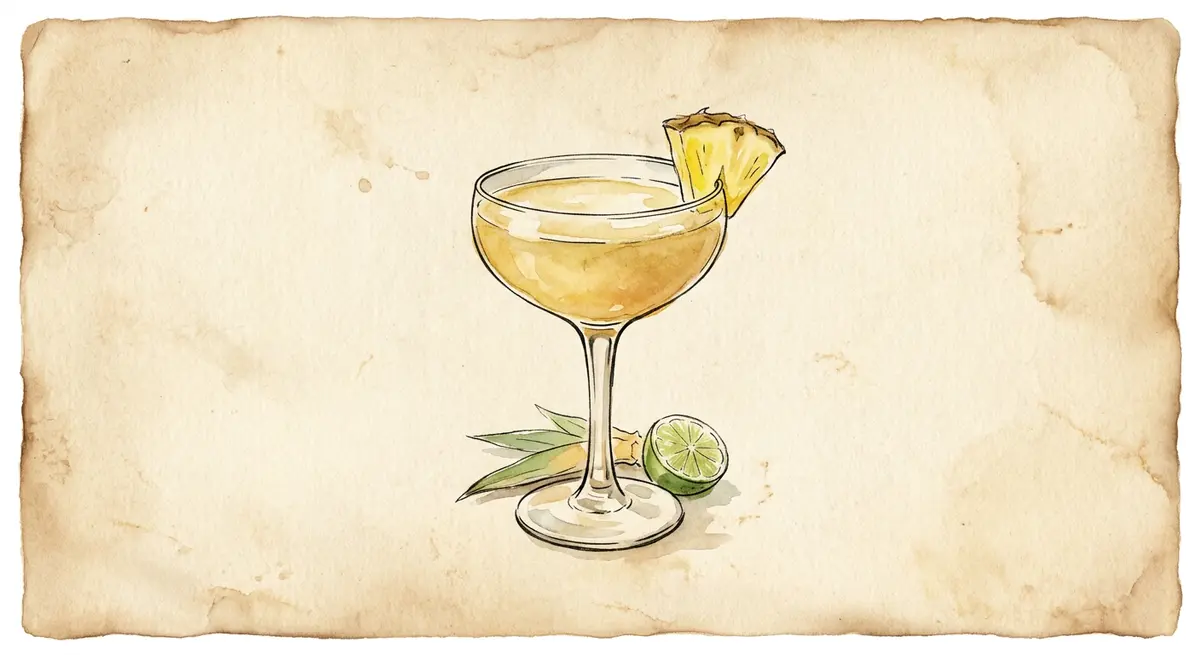
Hotel Nacional
A Hotel Nacional is 45ml of gold rum, 45ml of fresh pineapple juice, 15ml of fresh lime juice and 5ml of dry apricot brandy, shaken hard with cracked ice for 10 to 12 seconds and strained into a chilled coupe. It is Charles H. Baker’s 1939 recipe, with his jigger taken as 45ml, his teaspoon as 5ml and the juice of half a lime as 15ml. About 2.0 UK units. It is a pineapple daiquiri with a trace of stone fruit underneath, and no sugar but the pineapple’s own. The dry apricot brandy is a teaspoon, a kernel note under the fruit rather than a flavour in front of it. The lime keeps it a sour rather than a fruit cup. The name is the Hotel Nacional de Cuba’s, which the Oxford Companion calls Havana’s grandest luxury resort when it opened in 1930, and Difford’s Guide lists the drink as the Hotel Nacional Special. Baker credits Wil P. Taylor, the hotel’s manager from 1931 to 1933; Difford’s adds that Eddie Woelke and Fred Kaufman have been credited too.
Where this one sits
Recipe by Jerry Can Spirits · Updated 1 November 2026