Snowdonia Sour
The Snowdonia Sour is a Penderyn whisky sour: 50ml of the whisky, 25ml of fresh lemon juice, 15ml of elderflower liqueur, 10ml of simple syrup and an optional 15ml of egg white, shaken hard and strained into a chilled coupe, with a lemon wheel. About 2.6 UK units, taking the Madeira Finish at 46% ABV. It is our house whisky sour for St David’s Day. The sour frame suits Penderyn’s light body, and the honeyed malt shows through the lemon instead of fighting it. Elderflower liqueur takes part of the sugar’s place and gives the drink a floral middle, so it tastes of hedgerow rather than of syrup. With the egg white, dry shake for 10 to 15 seconds before the ice goes in, then shake hard for 10 to 12. The foam holds the lemon wheel. Without it the drink is sharper, clearer and quicker to make.
Glassware: Coupe Glass
Garnish: Lemon wheel rested on the foam, or on the rim if you skipped the egg white
Ingredients
50ml
The Madeira Finish, at 46% ABV, is what we pour; Legend, bottled at 40%, gives a softer sour. A light, honeyed malt folds into lemon, where a heavy or peated one buries the elderflower.
25ml
Squeezed the same day. Its 25ml answers the 15ml of liqueur and 10ml of syrup together, which is the arithmetic the drink turns on.
15ml
At about 20% ABV. Part sweetener, part flavour: it gives the floral middle. Keep it at 15ml and adjust the syrup instead if the balance drifts.
10ml
Sugar and water, 1:1 by weight. The fine adjustment: trim it first if the drink reads sweet, since liqueurs vary.
15ml (optional)
About half a white, dry shaken into a silky foam that carries the elderflower’s perfume and holds the garnish. Raw. Following the FSA, British Lion-mark eggs are safe raw, including for vulnerable groups and in pregnancy; pasteurised carton white is the alternative. Eating out, where the mark cannot be checked, the FSA advises vulnerable people to have their eggs thoroughly cooked. Contains egg: leave it out, or use aquafaba, for anyone allergic.
Instructions
Chill a coupe and squeeze the lemon.
Add the Penderyn, lemon juice, elderflower liqueur, simple syrup and egg white, if using, to a shaker.
If using egg white, dry shake without ice for 10 to 15 seconds.
Fill with cubed ice and shake hard for 10 to 12 seconds.
Double strain into the chilled coupe.
Rest the lemon wheel on the foam, or on the rim if you left out the egg white.
Our version
Our own sour for the first of March: 50ml Penderyn, 25ml lemon, 15ml elderflower liqueur, 10ml simple syrup and an optional 15ml of egg white, shaken and served up. No published original.
Source: our own specification. Last checked 10 October 2026.
Expert Tip
Squeeze the lemon on the day. It is 25ml in a drink of about 100 and the only acid in it, so tired juice shows at once. If you use egg white, commit to the dry shake: 10 to 15 seconds without ice until the mix thickens, then ice and a hard 10 to 12. A lazy foam collapses in the coupe within a minute and looks worse than none. Taste before you adjust. Elderflower liqueurs vary in sweetness, and the drink should finish floral and dry rather than perfumed. If it runs sweet, trim the syrup first and leave the liqueur alone, because the elderflower is what separates this from a plain whisky sour.
Behind the Snowdonia Sour
Flavour Profile
A House Sour for St David’s Day
The Snowdonia Sour is a house serve made for St David’s Day, to give Welsh whisky the sour treatment. The name honours the mountains rather than any bar; there is no origin story, only a design. The sour frame of spirit, citrus and sugar forgives a great deal, and the change here is to hand part of the sweet seat to elderflower liqueur.
Why Penderyn Suits a Sour
Penderyn’s own site says its single copper-pot still, designed by Dr David Faraday, produces spirit in a single distillation at a draw of 92% ABV, giving a clean, fruity character. In our view that light style, with honey and vanilla from the cask, is what lets lemon juice in.
Heavier malts fight lemon juice; this one folds into it, the honey reading through the citrus. Fifty millilitres is the pour, with the Madeira Finish as the default bottle and Legend as the gentler, cheaper choice.
The Elderflower
Fifteen millilitres of elderflower liqueur does two jobs: it replaces part of the sugar, and it gives the drink its floral middle. The 10ml of simple syrup left in the build is the fine adjustment. Elder grows in hedgerows across Britain, Wales included, and flowers for a few weeks in late spring; the liqueur keeps that scent for the rest of the year.
The Foam Is Optional
Without egg white the drink is a clean, sharp sour, quicker to make and no less balanced.
With 15ml of white, dry shaken for 10 to 15 seconds and then shaken hard with ice for 10 to 12, the surface turns to silk, carries the elderflower’s perfume and holds the lemon wheel steady. The white is raw, so leave it out for anyone avoiding egg.
Beside the Whiskey Sour and the Collins
The Snowdonia Sour beside our Whiskey Sour and Elderflower Collins
Spirit
- Snowdonia Sour
- 50ml Penderyn
- Whiskey Sour
- 45ml bourbon
- Elderflower Collins
- 45ml gin
Lemon
- Snowdonia Sour
- 25ml fresh
- Whiskey Sour
- 25ml fresh
- Elderflower Collins
- 25ml fresh
Sweetener
- Snowdonia Sour
- 15ml elderflower liqueur, 10ml simple syrup
- Whiskey Sour
- 20ml sugar syrup
- Elderflower Collins
- 20ml elderflower liqueur
Egg white
- Snowdonia Sour
- 15ml, optional
- Whiskey Sour
- 15ml, optional
- Elderflower Collins
- None
Serve
- Snowdonia Sour
- Up, in a coupe
- Whiskey Sour
- Over fresh ice, rocks glass
- Elderflower Collins
- Long, topped with 90ml soda
UK units
- Snowdonia Sour
- About 2.6
- Whiskey Sour
- About 1.8
- Elderflower Collins
- About 2.2
| Element | Snowdonia Sour | Whiskey Sour | Elderflower Collins |
|---|---|---|---|
| Spirit | 50ml Penderyn | 45ml bourbon | 45ml gin |
| Lemon | 25ml fresh | 25ml fresh | 25ml fresh |
| Sweetener | 15ml elderflower liqueur, 10ml simple syrup | 20ml sugar syrup | 20ml elderflower liqueur |
| Egg white | 15ml, optional | 15ml, optional | None |
| Serve | Up, in a coupe | Over fresh ice, rocks glass | Long, topped with 90ml soda |
| UK units | About 2.6 | About 1.8 | About 2.2 |
The Whiskey Sour is the template, sweetened with syrup alone. The Elderflower Collins lets the liqueur do all the sweetening in a long gin drink. The Snowdonia Sour splits the job between the two, so the flower is present without taking over.
How to Serve It
Double strained into a chilled coupe, with the lemon wheel on the foam if you built one. It is a drink for the first half of the evening, sharp enough to open the appetite, and it stands up to Welsh rarebit.
It shares the St David’s Day table with the Welsh Gold and the Dragon’s Breath; for the bourbon template, make a Whiskey Sour.
Make it at home
The Spirit
Penderyn Welsh WhiskyPenderyn is a single malt whisky made by the Penderyn distillery in Wales, which, by Penderyn’s own account, first ran spirit in 2000 in a village in the Brecon Beacons foothills. Its signature Madeira bottling, aged in ex-bourbon barrels and finished in Madeira wine casks, is 46% ABV; the lighter Legend and Myth are 40%. We use it in three recipes, always pouring the Madeira bottling.
More to explore
Frequently Asked Questions
Do I need the egg white?
What does the elderflower liqueur do?
Which whisky works best?
Is the Snowdonia Sour a classic?
Can I use elderflower cordial instead of the liqueur?
Why dry shake first?
How strong is a Snowdonia Sour?
Sources.
Correct as of 19 October 2026.
- Penderyn, “Our Story” (maker’s own page: the Faraday still, a single copper-pot still designed by Dr David Faraday; a single distillation at an industry-high draw of 92% ABV; “remarkably clean, fruity and flavoursome character”).
- Penderyn, “Penderyn Madeira 70cl” (maker’s own shop page: aged in ex-bourbon barrels and finished in Madeira wine casks; 46% ABV).
- Penderyn, “Penderyn Legend 70cl” (maker’s own shop page: 40% ABV).
You Might Also Like
Whiskey Sour
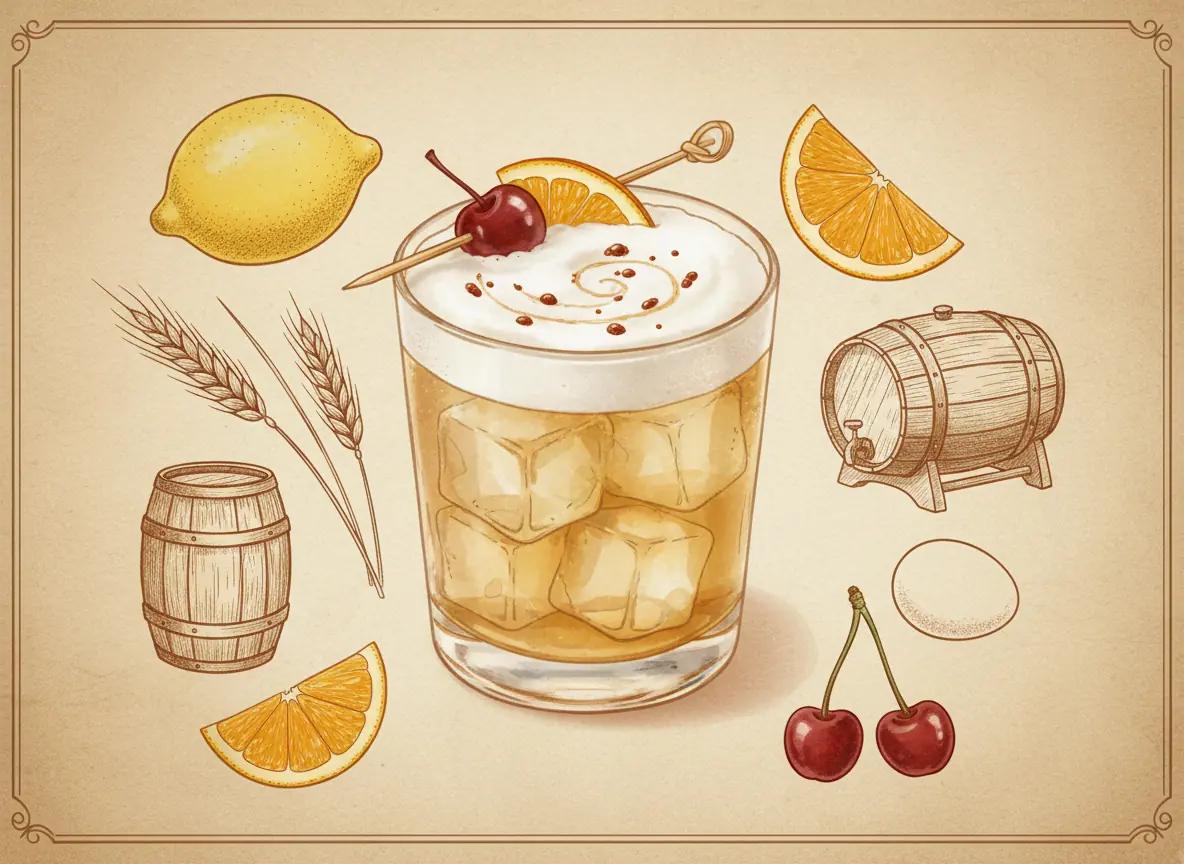
A Whiskey Sour is 45ml of bourbon, 25ml of fresh lemon juice and 20ml of sugar syrup, shaken hard with ice, then poured through a strainer onto fresh cubes in a rocks glass, with half an orange slice and a cherry. Add 15ml of egg white, dry shaken first, and dot the foam with Angostura. About 1.8 UK units. The measures are the IBA’s. The IBA’s egg white is optional and only a few drops; we use 15ml, about half a white, because that is what a full foam takes. The bitters are not in the IBA recipe, and they only go on when there is foam to hold them. The name is in print by 1870, in a Wisconsin newspaper, and the sour is older still: Jerry Thomas printed brandy, gin and rum sours in 1862. Difford’s Guide lists a Boston Sour as bourbon soured with lemon juice and smoothed by egg white.
Elderflower Collins
An Elderflower Collins is 45ml of gin, 20ml of elderflower liqueur and 25ml of fresh lemon juice, shaken hard for 10 to 12 seconds, strained over fresh ice in a collins glass and topped with 90ml of soda, with a lemon wheel and a mint sprig. About 2.2 UK units. It is a Tom Collins with the sugar syrup replaced by elderflower liqueur, which sweetens and perfumes at once. The LWC catalogue describes St-Germain as the world’s first elderflower liqueur and dates its launch to 2007, and the Collins is an obvious frame to try such a liqueur in. Measure the liqueur. At 20ml the drink is floral and still tastes of gin; at 30ml the elderflower takes over and no extra lemon brings it back.
Where this one sits
Recipe by Jerry Can Spirits · Updated 19 October 2026