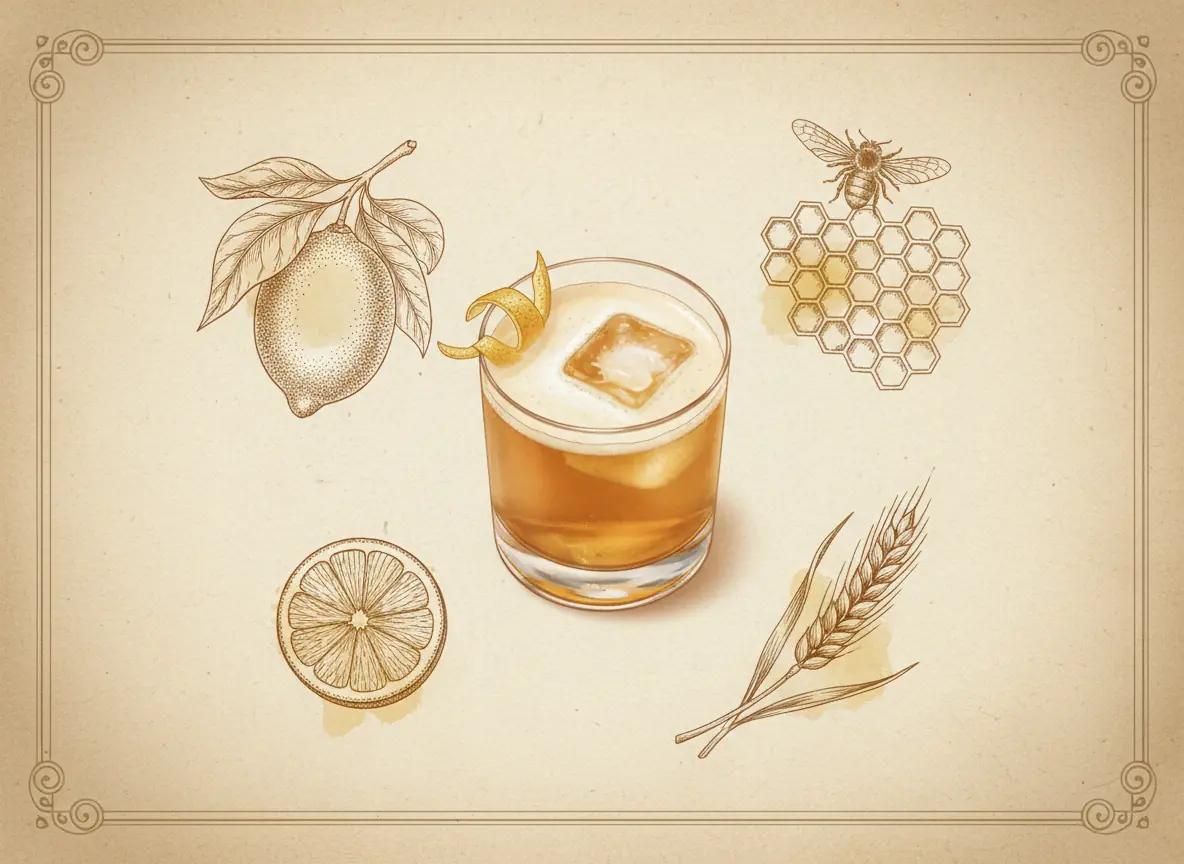
Honey Sour
A Honey Sour is a Whiskey Sour sweetened with honey: 60ml bourbon, 25ml fresh lemon juice and 15ml honey syrup mixed at two parts honey to one of warm water, shaken hard and double strained over a large cube in a rocks glass. A 15ml egg white is optional and gives it a soft foam, with three drops of Angostura on top. Honey changes more than the sweetness. It adds a floral, waxy note on top of the bourbon’s vanilla and caramel, and more body than sugar syrup. The drink sits between the Whiskey Sour and the Gold Rush, the bourbon, lemon and honey drink that Punch credits to T. J. Siegal at Milk & Honey in New York, in 2000 by its account and 2001 by VinePair’s. The Honey Sour adds back the egg white and the bitters, with a little less syrup. No one is recorded as its inventor. It is a sweetener swap on a sour. Difford’s Guide dates the first written sour recipes to Jerry Thomas’s 1862 guide and the oldest known whiskey sour mention to a Wisconsin newspaper of 1870. A glass holds about 2.4 UK units.
Glassware: Rocks Glass
Garnish: Lemon wheel and Angostura bitters three drops on the foam
Ingredients
60ml
A bourbon at 40% ABV or slightly stronger, with plenty of vanilla and caramel. Those notes are what the honey sits on; a thin bourbon gets lost under it.
25ml
Squeezed the same day. At 25ml it is the only acid against 15ml of rich syrup, and lemon that has stood overnight leaves the drink flat and sweet.
15ml
Two parts honey to one part warm water, stirred until it runs freely, then cooled. That is our house ratio, and it is rich enough that 15ml does the job.
15ml
Optional. About half the white of a fresh medium egg. It gives a soft foam that holds the bitters and carries the honey’s aroma; without it the drink is sharper and thinner. Raw. Following the FSA, British Lion-mark eggs are safe raw, including for vulnerable groups and in pregnancy; pasteurised carton white is the alternative. Eating out, where the mark cannot be checked, the FSA advises vulnerable people to have their eggs thoroughly cooked. Contains egg: leave it out, or use aquafaba, for anyone allergic.
3 drops
Three drops on the foam, for aroma more than flavour. Without the egg white, add them to the shaker instead.
Instructions
Squeeze the lemon juice the same day.
Make the honey syrup: two parts honey stirred into one part warm water, then cooled.
Add the bourbon, lemon juice, honey syrup and egg white, if using, to a shaker without ice.
If using the egg white, dry shake for 10 to 15 seconds.
Add cubed ice and shake hard for 10 to 12 seconds.
Double strain into a rocks glass over one large cube.
Dot three drops of Angostura on the foam and rest a lemon wheel on the rim.
Our version
No published specification exists for a Honey Sour. Ours is the Whiskey Sour’s shape with 60ml bourbon, 25ml lemon and 15ml of two-to-one honey syrup, the egg white optional and Angostura on the foam.
Source: our own specification. Last checked 9 October 2026.
Expert Tip
Make the syrup first and let it cool. Warm syrup shaken with ice melts more of it, and the drink comes out thin. Neat honey is worse: it thickens on contact with cold lemon, sticks to the shaker and leaves the glass sweeter at the bottom than the top. With the egg white, the order matters. Dry shake everything without ice for 10 to 15 seconds so the white whips, then add ice and shake hard for 10 to 12 seconds. Double strain, so the foam sets smooth with no shards of ice in it. Taste before the bitters go on. If it is too sweet, add a little more lemon rather than more bourbon.
Behind the Honey Sour
Flavour Profile
What the Honey Changes
Sugar syrup sweetens a sour and stays out of the way. Honey syrup does not. It brings its own floral, slightly waxy flavour and more body than sugar at the same sweetness, so a Honey Sour feels rounder in the mouth than a Whiskey Sour built the same way.
Bourbon suits it. Aged in new charred oak, it carries vanilla and caramel, and honey lays a floral note over them rather than more of the same sweetness.
Where It Fits
No inventor or date is attached to the Honey Sour. Honey has sweetened sours for a century: the Bee’s Knees, gin with honey and lemon, was first printed in Paris in 1929, on Difford’s Guide’s account. With bourbon, the most familiar version is the Gold Rush, which Punch credits to T. J. Siegal at Milk & Honey, in 2000 on its account and 2001 on VinePair’s: bourbon, lemon and honey syrup and nothing else.
The Honey Sour is that drink with the Whiskey Sour’s egg white and bitters added back, and a little less syrup.
Three bourbon sours
Whiskey Sour (IBA)
- Bourbon
- 45ml
- Lemon
- 25ml
- Sweetener
- 20ml sugar syrup
- Egg white
- 15ml, optional
- UK units
- 1.8
Gold Rush
- Bourbon
- 60ml
- Lemon
- 22.5ml
- Sweetener
- 22.5ml honey syrup
- Egg white
- None
- UK units
- 2.4
Honey Sour
- Bourbon
- 60ml
- Lemon
- 25ml
- Sweetener
- 15ml rich honey syrup
- Egg white
- 15ml, optional
- UK units
- 2.4
| Drink | Bourbon | Lemon | Sweetener | Egg white | UK units |
|---|---|---|---|---|---|
| Whiskey Sour (IBA) | 45ml | 25ml | 20ml sugar syrup | 15ml, optional | 1.8 |
| Gold Rush | 60ml | 22.5ml | 22.5ml honey syrup | None | 2.4 |
| Honey Sour | 60ml | 25ml | 15ml rich honey syrup | 15ml, optional | 2.4 |
The Gold Rush and the Honey Sour carry the same alcohol. The Honey Sour is the sharper of the two, with more lemon against less syrup, and the foam makes it lighter on the tongue.
The Syrup
Honey is about four-fifths sugar (82.4 g of carbohydrate in 100 g, in the USDA FoodData Central entry for honey) and too thick to mix with cold ingredients. Stirred into warm water, it pours and measures like any other syrup. Our house honey syrup is two parts honey to one of water, so 15ml brings the honey forward without adding much water to the shake.
Honey varies more than sugar does. A light wildflower or clover honey keeps the drink bright. A dark heather or buckwheat honey brings a deeper, almost savoury note and makes the drink heavier.
The Egg White
The egg white is optional, and it changes the drink more than the honey does. Dry shaken first, without ice, it whips into a foam; shaken again with ice, the foam turns fine and stable. It softens the lemon and lifts the honey’s smell to the nose.
Without it, the Honey Sour is sharper and a little thinner, and closer to a Gold Rush.
How Strong It Is
With 60ml of bourbon at 40% ABV, a Honey Sour holds about 2.4 UK units, more than an IBA Whiskey Sour at 1.8. The honey and the foam make it taste gentler than that.
Make it at home
The Spirit
Whiskey (Bourbon)Under the US standard 27 CFR 5.143, bourbon is an American whiskey whose mash is at least 51% corn, matured in fresh charred oak barrels and bottled at 40% ABV or higher, the figure our recipes use. The fresh charred wood gives it its vanilla, caramel and colour, and the corn gives a rounder, sweeter spirit than rye. It is the base of 26 of our recipes, more than any other whiskey.
Master the Techniques
More to explore
Frequently Asked Questions
What is a Honey Sour?
What is the difference between a Honey Sour and a Gold Rush?
How strong is a Honey Sour?
How do you make honey syrup for a Honey Sour?
Do I need egg white in a Honey Sour?
Which bourbon and which honey work best?
Can I make a Honey Sour with Scotch?
Sources.
Checked between 18 October and 19 October 2026.
- Difford’s Guide, “Sour cocktails: history” (secondary source: first record of a Sour in 1856 (Toronto); first known written recipes in Jerry Thomas’s 1862 Bartender’s Guide (Brandy Sour, Gin Sour, Santa Cruz); oldest known Whiskey Sour mention in the Waukesha Plain Dealer, 4 January 1870).
- Punch, “Gold Rush” (secondary source: created by T. J. Siegal, a childhood friend of Sasha Petraske, at Milk & Honey (opened 1999), sometime in 2000; 2 ounces bourbon, 3/4 ounce lemon juice, 3/4 ounce honey syrup (3:1)).
- Difford’s Guide, “Bee’s Knees” (secondary source: first printed in Cocktails de Paris, 1929).
- USDA FoodData Central, “Honey (SR Legacy 169640)” (primary source (government database): carbohydrate by difference 82.4 g and water 17.1 g per 100 g).
- IBA, “Whiskey Sour” (official specification: 45ml bourbon, 25ml fresh lemon juice, 20ml sugar syrup, few drops of egg white optional).
- VinePair, “The Gold Rush Recipe” (secondary source: developed in 2001 at Milk & Honey by T. J. Siegal, a longtime friend of the owner, Sasha Petraske; Whiskey Sour with the egg white left out and honey syrup for the simple syrup).
You Might Also Like
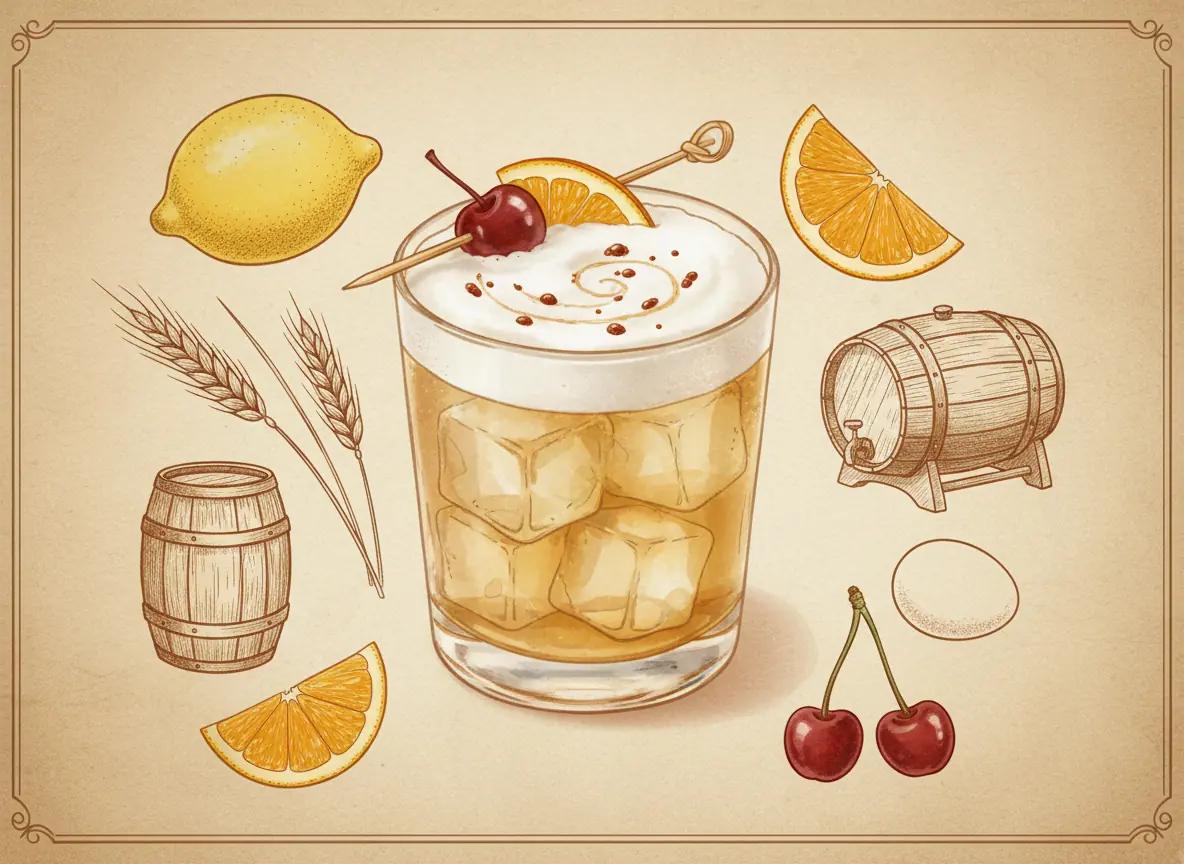
Whiskey Sour
A Whiskey Sour is 45ml of bourbon, 25ml of fresh lemon juice and 20ml of sugar syrup, shaken hard with ice, then poured through a strainer onto fresh cubes in a rocks glass, with half an orange slice and a cherry. Add 15ml of egg white, dry shaken first, and dot the foam with Angostura. About 1.8 UK units. The measures are the IBA’s. The IBA’s egg white is optional and only a few drops; we use 15ml, about half a white, because that is what a full foam takes. The bitters are not in the IBA recipe, and they only go on when there is foam to hold them. The name is in print by 1870, in a Wisconsin newspaper, and the sour is older still: Jerry Thomas printed brandy, gin and rum sours in 1862. Difford’s Guide lists a Boston Sour as bourbon soured with lemon juice and smoothed by egg white.
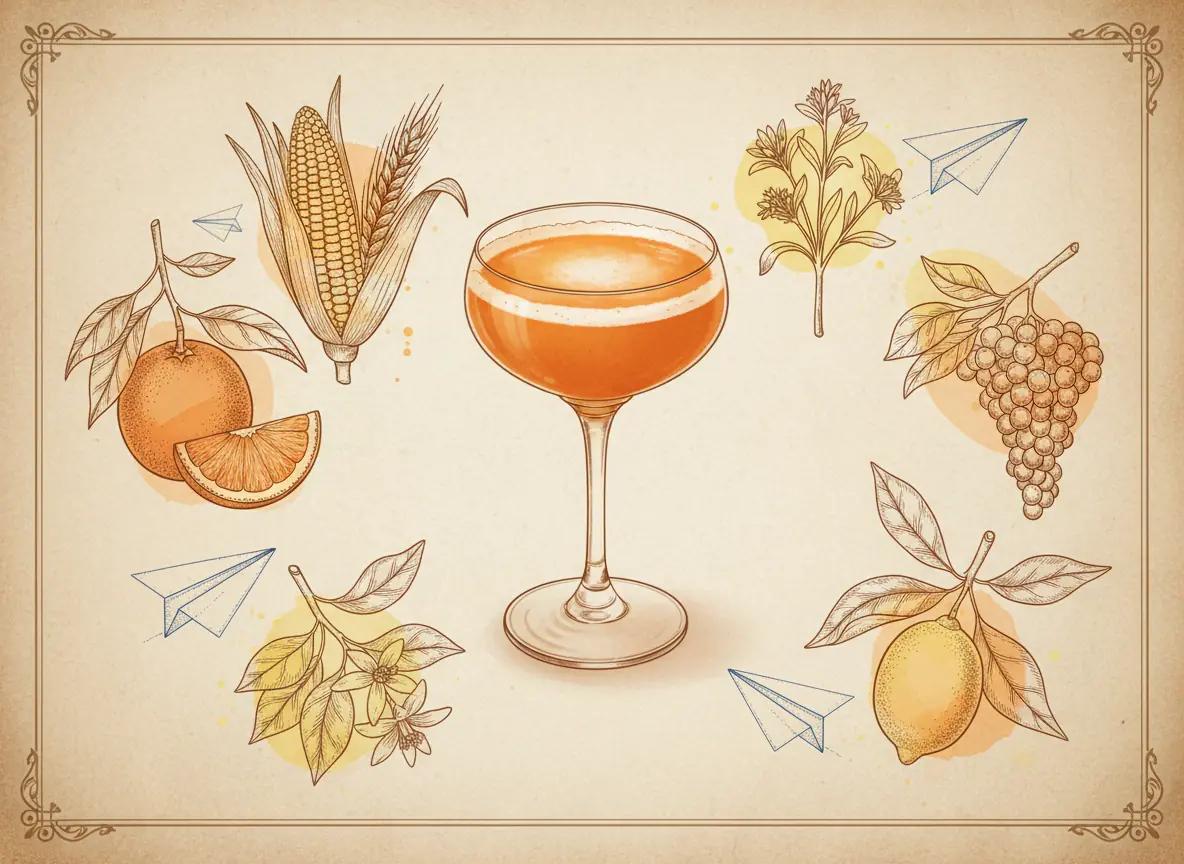
Paper Plane
A Paper Plane is 30ml each of bourbon, Aperol, Amaro Nonino and fresh lemon juice, shaken hard and double strained into a chilled coupe. Four equal parts, which is the IBA specification: bitter orange, herbs and lemon over bourbon, at about 2.6 UK units. Punch, a secondary source, says Toby Maloney, who helped open The Violet Hour in Chicago, asked Sam Ross to create a drink for the bar, and that it was on the menu there in the summer of 2008. Ross named it after the M.I.A. song Paper Planes. The first version used Campari; Punch quotes Ross finding it slightly too bitter and short of sweetness, and he moved to Aperol. Equal parts leaves nowhere to hide. Squeeze the lemon the same day and use Nonino, not a cheaper amaro, because each ingredient is a quarter of the drink.
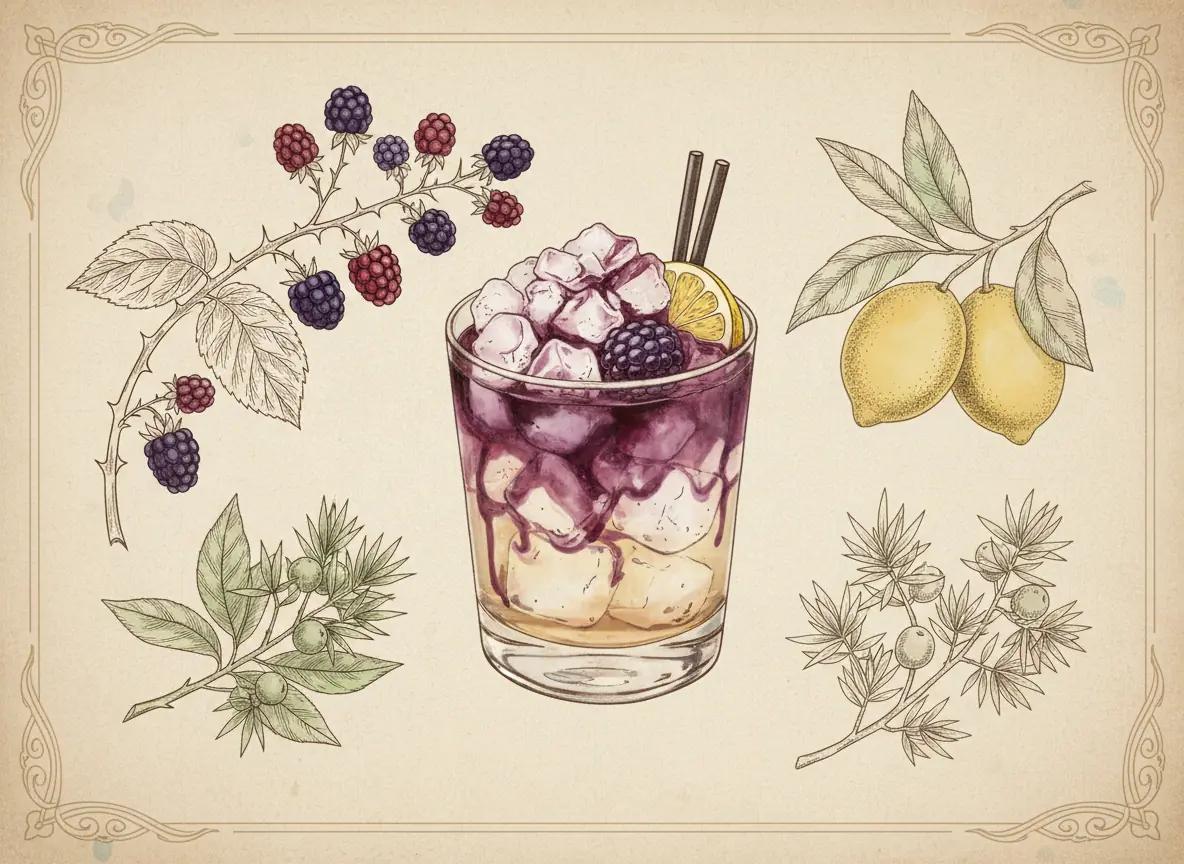
Bramble
A Bramble is 50ml London Dry gin, 25ml fresh lemon juice and 12.5ml sugar syrup, shaken hard and strained over crushed ice in a rocks glass, with 15ml of crème de mûre poured over the top so it bleeds down through the ice. A lemon slice and blackberries finish it. About 2.2 UK units. These are the IBA’s measures. Dick Bradsell created it at Fred’s Club in Soho: Punch dates it to 1984, Bradsell’s own account in Difford’s Guide says the mid-eighties or thereabouts, and the Oxford Companion says 1989. He wanted a British cocktail, and he took the idea from going blackberrying as a child on the Isle of Wight. Bramble is the everyday name for the blackberry bush. Underneath, it is a gin sour. The liqueur on top makes it change as you drink: tart and sharp at first, darker and fruitier towards the bottom of the glass.
Where this one sits
Recipe by Jerry Can Spirits · Updated 19 October 2026