French Pearl
A French Pearl is 60ml of gin, 7.5ml of pastis, 22.5ml of lime juice, 22.5ml of simple syrup and six mint sprigs, with the mint muddled in the shaker, then shaken with ice and fine strained into a coupe. About 2.7 UK units, counting the gin at 40% ABV and the pastis at 45% ABV. Punch credits Audrey Saunders of the Pegu Club in New York and prints the recipe. Ounces become millilitres here. It is a mint and lime gin sour with a trace of aniseed.
Glassware: Coupe Glass
Garnish:
Ingredients
7.5ml
Punch prints a quarter of an ounce. Pastis is a French aniseed spirit drink flavoured with anise and liquorice, counted here at 45% ABV.
Instructions
Chill a coupe.
Squeeze the lime the day you serve it.
Add the lime juice, simple syrup and mint to a shaker and muddle gently.
Add the gin, pastis and ice.
Shake hard for 10 to 12 seconds.
Fine strain into the chilled coupe.
Source: its creator's published specification (Audrey Saunders, Pegu Club, New York, published at Punch (punchdrink.com/recipes/french-pearl/); measures and method as printed there (2 ounces gin, 1/4 ounce pastis, 3/4 ounce lime juice, 3/4 ounce simple syrup, 6 mint sprigs; muddle lime, syrup and mint, add gin and pastis, shake, fine strain into a coupe); ounces converted to ml; no garnish printed). Last checked 1 November 2026.
Expert Tip
Measure the pastis with a small jigger. At 7.5ml it is an accent, and a heavier pour takes over the mint. Muddle gently. Tearing the leaves releases bitter, grassy flavours that the syrup cannot hide. Fine strain, or the glass fills with green specks.
Behind the French Pearl
Flavour Profile
A drink built to introduce Americans to gin and pastis
Punch credits Audrey Saunders of the Pegu Club in New York. It sets the story in 2006, when few people in the United States understood the appeal of gin or pastis. Saunders’ answer was to put both in one shaken drink with lime juice, simple syrup and mint leaves, and to call it the French Pearl.
Punch tags the recipe easy and shaken. It prints no garnish, so we add none.
A little pastis goes a long way
The gin is the base, at eight times the pastis. The 7.5ml of pastis is there for aroma, a faint aniseed note under the mint. Pastis is a French anise spirit. We have no page for pastis itself, but our Pernod page describes a French anise spirit at 40% ABV that does the same job.
Fresh mint is muddled with the lime juice and simple syrup before the spirits go in. Press it once or twice. Punch asks for a fine strain, which keeps the leaf fragments out of the coupe.
The French Pearl beside three green drinks
French Pearl
- Spirit
- Gin
- Herb
- Mint
- Citrus
- Lime
- Anise
- Pastis
Mojito
- Spirit
- White rum
- Herb
- Mint
- Citrus
- Lime
- Anise
- None
Gin Basil Smash
- Spirit
- London Dry gin
- Herb
- Basil
- Citrus
- Lemon
- Anise
- None
Bee’s Knees
- Spirit
- London Dry gin
- Herb
- None
- Citrus
- Lemon
- Anise
- None
| Drink | Spirit | Herb | Citrus | Anise |
|---|---|---|---|---|
| French Pearl | Gin | Mint | Lime | Pastis |
| Mojito | White rum | Mint | Lime | None |
| Gin Basil Smash | London Dry gin | Basil | Lemon | None |
| Bee’s Knees | London Dry gin | None | Lemon | None |
The Gin Basil Smash is the nearest herbal gin drink, and the Mojito is the mint-and-lime classic.
Make it at home
The Spirit
GinGin is a spirit flavoured with juniper berries. Under the retained Regulation (EC) 110/2008, juniper must lead the taste, the floor is 37.5% ABV, and the route the flavour takes sets the grade: plain gin, distilled gin or London gin. Our recipes count it at 40%, and it carries the Martini, the Negroni and the Gin and Tonic.
More to explore
Frequently Asked Questions
What is a French Pearl?
Who created the French Pearl?
Why does it have pastis in it?
How strong is a French Pearl?
Can I use Pernod or absinthe instead of pastis?
Which gin suits it?
Does it have a garnish?
What glass do I use?
Sources.
Correct as of 1 November 2026.
- Punch, “French Pearl” (recipe and origin: Audrey Saunders, Pegu Club, New York; 2 oz gin, 1/4 oz pastis, 3/4 oz lime juice, 3/4 oz simple syrup, 6 mint sprigs, shaken, fine strained into a coupe; context: few Americans understood gin or pastis in 2006).
- NHS, “Calculating alcohol units” (the 14-units-a-week guidance and the units calculation).
You Might Also Like
Southside
A Southside is 60ml of London Dry gin, 30ml of fresh lemon juice, 15ml of simple syrup and five or six mint leaves, shaken hard for 10 to 12 seconds and double strained into a chilled coupe, with a small mint sprig. About 2.4 UK units. Those are the IBA’s measures; 15ml of egg white is optional. The Oxford Companion, in an entry by Eric Felten, says the story that it was born in the speakeasies of Chicago’s South Side is incorrect: the drink evolved from the Mint Juleps made at Snedecor’s Tavern on Long Island, which became the Southside Sportsman’s Club, and it has long been the house drink at New York’s 21 Club. The drink does not depend on any of that. In the glass it is a gin sour scented with mint. Shaken and served up, with no soda or crushed ice, it is more concentrated than a Mojito, and the mint reads as aroma rather than as leaves in the drink.
Gin Basil Smash
A Gin Basil Smash is 60ml London Dry gin, 22.5ml fresh lemon juice, 22.5ml simple syrup and ten basil leaves. The basil is muddled firmly into the lemon and syrup, the gin goes in, and the drink is shaken hard, double strained over fresh ice in a rocks glass and finished with a basil sprig. In short, a bright green gin sour, at about 2.4 UK units. Punch, a secondary source, says Jörg Meyer, owner of Le Lion in Hamburg, first sold it as the Gin Pesto in spring 2008, and that Meyer counts 10 July 2008 as its birthday: the date of his post on the Bitters Blog about the drink re-christened the Gin Basil Smash. The IBA lists it among its New Era cocktails, measure for measure. The muddle decides it. Basil gives up its pepper and anise only under real pressure, and a timid press leaves a pale sour with a leaf in it.
Bee’s Knees
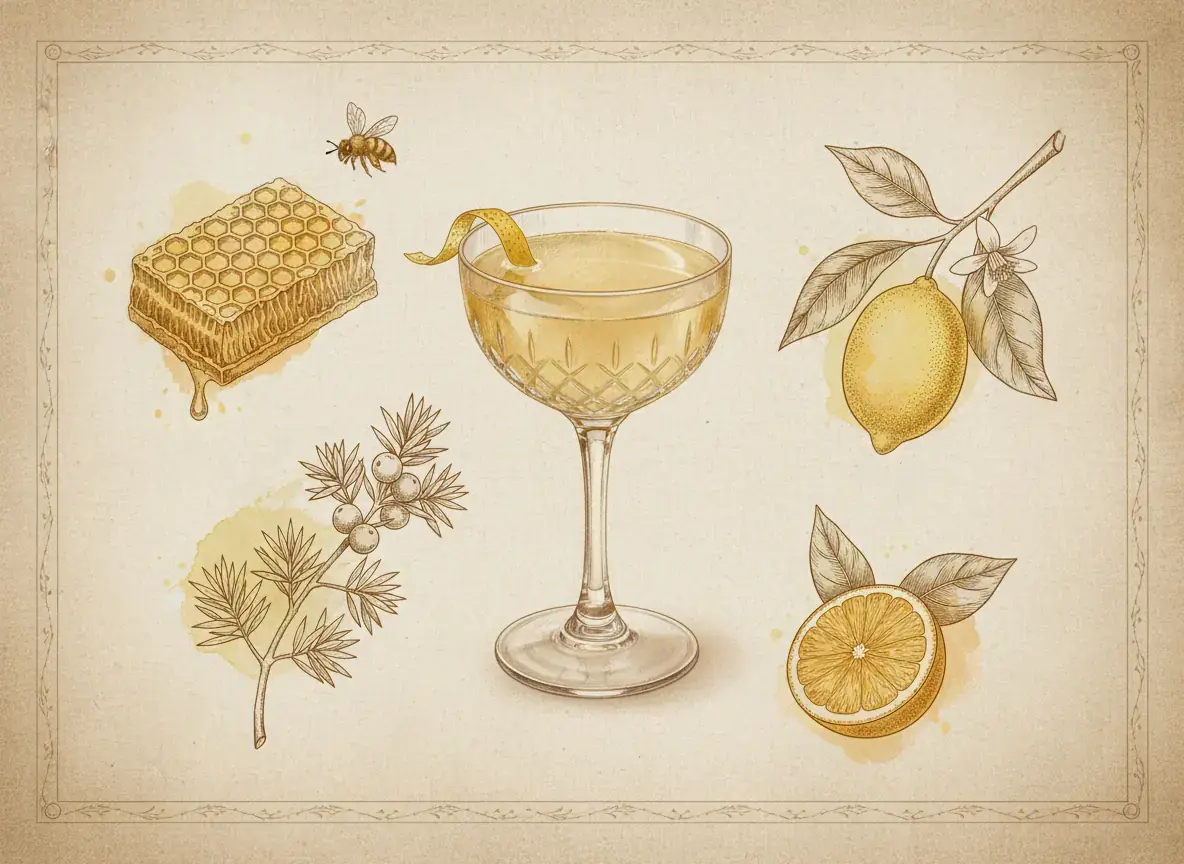
A Bee’s Knees is 52.5ml of London Dry gin, 22.5ml each of fresh lemon and orange juice and two teaspoons (10ml) of honey syrup, made with two parts honey to one of warm water. Shake it hard for 10 to 12 seconds and double strain it into a chilled coupe, with a strip of lemon peel. About 2.1 UK units. The measures are the IBA’s. The orange is the part most recipes leave out. The oldest printings are gin, lemon and honey alone; David Embury suggested a little orange juice as a variation in 1948, and the IBA built it in. Orange softens the lemon, which is why two teaspoons of honey syrup are enough. The drink is often filed under American Prohibition, with honey and lemon covering for bathtub gin. Difford’s Guide, a secondary source, says the earliest printing tells a different story: Cocktails de Paris, published in 1929, credits it to Frank Meier of the Ritz in Paris, and Meier claimed it again in his own book in 1936.
Last Word
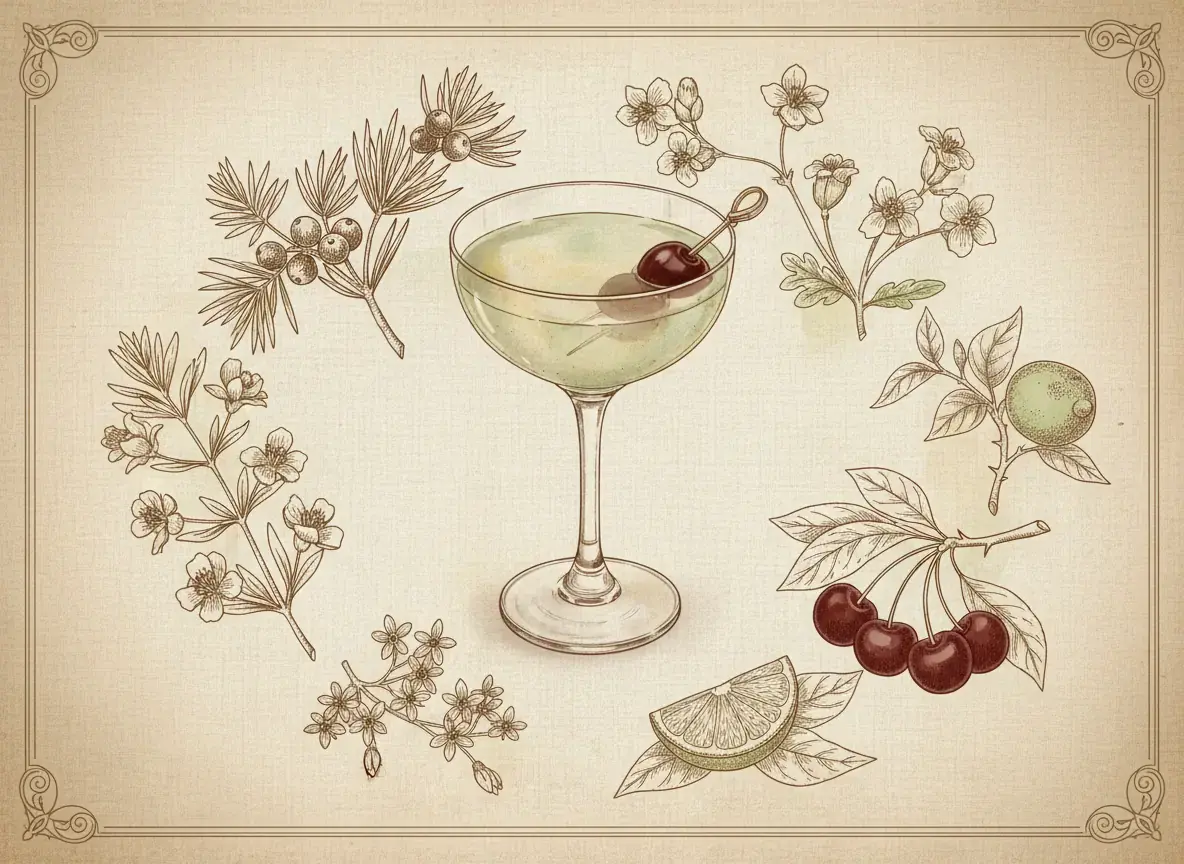
A Last Word is 22.5ml each of gin, green Chartreuse, maraschino liqueur and fresh lime juice, shaken hard for 10 to 12 seconds and double strained into a chilled Nick & Nora or coupe. About 2.9 UK units. The measures are the IBA’s; the cherry or lime twist is ours. The Oxford Companion says the drink first appears in print in the Detroit Athletic Club News in 1916, on a menu at 35 cents, a high price then. Ted Saucier’s Bottoms Up of 1951 prints the recipe, quoting a club source who says Frank Fogarty, a vaudeville monologist, introduced it there about thirty years earlier. In 2003 Murray Stenson put it on the menu at the Zig Zag Café in Seattle, from where it spread, the Companion says. Four strong flavours at equal volume, and none takes over. Chartreuse brings herbs and heat, maraschino cherry and a bitter almond edge, lime the acid, and gin holds them together.
Where this one sits
Recipe by Jerry Can Spirits · Updated 1 November 2026