Pegu Club
A Pegu Club is 60ml of London Dry gin, 22.5ml of orange curaçao, 22.5ml of fresh lime juice, a dash of Angostura and a dash of orange bitters, shaken hard for 10 to 12 seconds and double strained into a chilled coupe, with a lime wheel. About 3.4 UK units. It is named for the Pegu Club in Rangoon, now Yangon, a gentlemen’s club in the old British colonial outpost of Rangoon that, the Oxford Companion says, was founded in 1871. The Oxford Companion to Spirits and Cocktails gives Harry McElhone’s Barflies and Cocktails of 1927 as the earliest known reference; Difford’s Guide gives his 1923 ABC of Mixing Cocktails, and the Internet Archive scan of that book prints it as No. 197. The Savoy Cocktail Book of 1930 calls it one that has travelled, and is asked for, round the world. There is no syrup. The curaçao is the only sweetener, the lime is matched to it measure for measure, and the gin is close to two thirds of the drink, so it runs dry and strong. The two bitters, one dash each, give the finish its spice and peel.
Glassware: Coupe Glass
Garnish: Lime wheel
Ingredients
60ml
A juniper-led London Dry at 40% ABV or a little more. At 60ml it is close to two thirds of the drink, so it sets the character.
22.5ml
Orange liqueur on a brandy base, at around 40% ABV. The only sweetener in the glass; a triple sec makes a brighter, sweeter drink.
22.5ml
Squeezed the same day. Matched to the curaçao measure for measure, it keeps a strong drink sharp.
Instructions
Chill a coupe and squeeze the lime juice the same day.
Add the gin, orange curaçao, lime juice, Angostura and orange bitters to a shaker.
Fill with cubed ice and shake hard for 10 to 12 seconds.
Double strain into the chilled coupe.
Garnish with a lime wheel.
Our version
The New York Pegu Club bar’s recipe as given in The Oxford Companion to Spirits and Cocktails: 60ml London Dry gin, about 22ml each of orange curaçao and lime (22.5ml here), and a dash each of Angostura and orange bitters.
Source: our own specification. Last checked 10 October 2026.
Expert Tip
Use an orange curaçao at around 40% ABV, ideally a dry one. It is the drink’s only sugar, and a sweet, low-strength orange liqueur tips it soft. One dash of each bitters, no more. Angostura at the back, orange bitters at the front. Doubling either pushes the gin aside. Squeeze the lime the same day. At 22.5ml it is the only acid against a large pour of gin, and bottled juice tastes flat beside it.
Behind the Pegu Club
Flavour Profile
The Club in Rangoon
The Oxford Companion, in an entry by Robert Simonson, says the Pegu Club in Rangoon was founded in 1871 and named after the province in which it was located. It moved to new, larger quarters in 1882 to receive the Prince of Wales, the Companion says, and occupied them until the British left the country in 1948. The Myanmar Army used it afterwards, and it then lay vacant for many years.
The Oxford Companion says precisely when the drink was created, and by whom, is unknown. The Oxford Companion adds that references to “red” and “yellow” cocktails at another club in Yangon in 1888, and to iced drinks at the Pegu Club bar the next year, make an earlier origin quite possible.
From Barflies to the Savoy
The Oxford Companion gives Harry McElhone’s Barflies and Cocktails, 1927, as the earliest known reference; the scan reads one dash each of Angostura and orange bitters, a teaspoonful of Rose’s lime juice, one sixth orange curaçao and two thirds gin. Difford’s Guide dates its first appearance to McElhone’s 1923 ABC of Mixing Cocktails, and the second impression of that book on the Internet Archive prints it as No. 197: one dash each of Angostura and orange bitters, a teaspoonful of Rose’s lime juice, orange curaçao and gin. Harry Craddock reprinted the recipe in The Savoy Cocktail Book in 1930 as “the favourite cocktail of the Pegu Club, Burma, and one that has travelled, and is asked for, round the world”.
The Oxford Companion says the recipes of 1930 did not agree: Craddock reprinted McElhone’s recipe, which specified Rose’s preserved lime juice limited to a teaspoon. “Jimmy”, who had worked at Ciro’s in London, published a recipe the same year with equal parts curaçao and lime juice, presumably fresh, and the Companion says most modern mixologists follow it, wittingly or not.
Curaçao, Lime and a Dash of Each
Three things carry the drink. The gin, at 60ml, sets its character. The curaçao and lime are matched, so sweet and sour cancel each other out and the gin shows through. The bitters, a single dash each, give the finish a second layer: orange peel up front, clove and bark at the back.
Because the curaçao is the only sweetener, its strength and sugar decide the balance. A dry curaçao near 40% ABV keeps the drink taut. A sweeter, lower-strength orange liqueur softens it, and adding syrup takes it further the same way.
Our Pegu Club, Gimlet and White Lady compared
Gin
- Pegu Club
- 60ml
- Gimlet
- 60ml
- White Lady
- 40ml
Orange liqueur
- Pegu Club
- 22.5ml orange curaçao
- Gimlet
- None
- White Lady
- 30ml Cointreau
Citrus
- Pegu Club
- 22.5ml fresh lime
- Gimlet
- 22.5ml lime cordial
- White Lady
- 20ml fresh lemon
Bitters
- Pegu Club
- One dash each, Angostura and orange
- Gimlet
- None
- White Lady
- None
Method
- Pegu Club
- Shaken
- Gimlet
- Stirred
- White Lady
- Shaken
UK units
- Pegu Club
- About 3.4
- Gimlet
- About 2.4
- White Lady
- About 2.8
| Element | Pegu Club | Gimlet | White Lady |
|---|---|---|---|
| Gin | 60ml | 60ml | 40ml |
| Orange liqueur | 22.5ml orange curaçao | None | 30ml Cointreau |
| Citrus | 22.5ml fresh lime | 22.5ml lime cordial | 20ml fresh lemon |
| Bitters | One dash each, Angostura and orange | None | None |
| Method | Shaken | Stirred | Shaken |
| UK units | About 3.4 | About 2.4 | About 2.8 |
The New York Bar
The Oxford Companion says a New York bar of the same name opened in 2005 on the border of SoHo and Greenwich Village, with Audrey Saunders as beverage director, and closed in 2020. The recipe here is the one The Oxford Companion gives for that bar, in an entry by Saunders and David Wondrich: 60ml gin, about 22ml each of curaçao and lime, and a dash of each bitters.
How to Serve It
Served up in a cold coupe with a lime wheel; double straining keeps flecks of ice off the top. It is a strong drink for its size, so one before dinner is the measure.
For gin and lime without the liqueur, make a Gimlet; for gin, orange liqueur and lemon, a White Lady.
Make it at home
The Spirit
GinGin is a spirit flavoured with juniper berries. Under the retained Regulation (EC) 110/2008, juniper must lead the taste, the floor is 37.5% ABV, and the route the flavour takes sets the grade: plain gin, distilled gin or London gin. Our recipes count it at 40%, and it carries the Martini, the Negroni and the Gin and Tonic.
More to explore
Frequently Asked Questions
What is in a Pegu Club cocktail?
Where does the Pegu Club come from?
Why does it use two kinds of bitters?
Can I use triple sec instead of orange curaçao?
Was it always made with fresh lime?
What was the Pegu Club bar in New York?
Pegu Club or Gimlet?
How strong is a Pegu Club?
Sources.
Correct as of 19 October 2026.
- The Oxford Companion to Spirits and Cocktails (Robert Simonson), “Pegu Club” (secondary source: the Rangoon club founded 1871, moved 1882 to receive the Prince of Wales, used until 1948, then by the Myanmar Army; the New York bar opened 2005, closed 2020, Audrey Saunders beverage director).
- The Oxford Companion to Spirits & Cocktails (Spirits & Distilling), “The Pegu Club Cocktail” (secondary source (Audrey Saunders and David Wondrich): earliest known reference 1927 in McElhone’s Barflies and Cocktails; origin unknown; Craddock reprinted McElhone’s recipe in the 1930 Savoy Cocktail Book with Rose’s lime limited to 1 teaspoon; “Jimmy” of Ciro’s published equal parts curaçao and lime juice earlier in 1930; Pegu Club, New York recipe 60 ml gin, 22 ml lime, 22 ml orange curaçao, 1 dash Angostura, 1 dash orange bitters).
- Difford’s Guide, “Pegu Club Cocktail (Difford’s recipe)” (secondary source: first appears in Harry McElhone’s 1923 “Harry” of Ciro’s ABC of Mixing Cocktails and in the 1930 Savoy Cocktail Book; Jimmy’s recipe, published just months before Craddock’s, calls for fresh lime).
- Harry McElhone (1927), Internet Archive, “Barflies and Cocktails” (primary source: Pegu Club Cocktail. 1 dash of Angostura Bitters, 1 dash of Orange Bitters, 1 teaspoonful Lime Juice (Rose’s), 1/6 Curaçao (Orange), 2/3 Gin).
- Harry Craddock (1930), Internet Archive, “The Savoy Cocktail Book” (primary source: Pegu Club Cocktail, 1 dash Angostura, 1 dash orange bitters, 1 teaspoonful lime juice; “The favourite cocktail of the Pegu Club, Burma, and one that has travelled, and is asked for, round the world.”).
- Harry McElhone, Internet Archive, ““Harry” of Ciro’s ABC of Mixing Cocktails (1923, second impression)” (primary source, read 19 Oct in the Vintage Cocktail Books collection: 197. Pegu Club Cocktail. 1 dash of Angostura Bitters, 1 dash of Orange Bitters, 1 teaspoonful Lime Juice (Rose’s), Curaçao (Orange), Gin (the OCR garbles the fractions)).
You Might Also Like
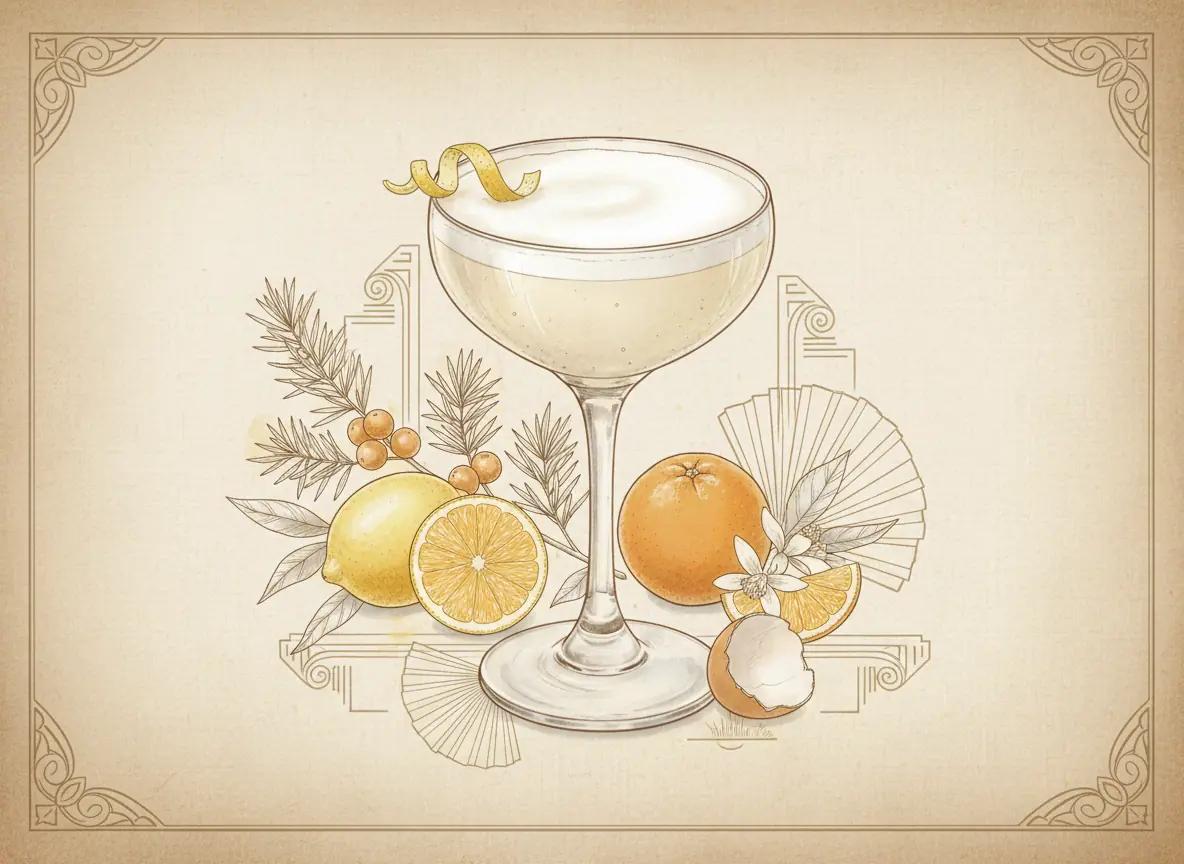
White Lady
A White Lady is 40ml of London Dry gin, 30ml of Cointreau and 20ml of fresh lemon juice, shaken hard with ice for 10 to 12 seconds and double strained into a chilled coupe, with lemon peel expressed over the top. About 2.8 UK units. Those are the IBA’s measures, and there is no egg white in them. The name is older than the recipe. Difford’s Guide, a secondary source, says Harry MacElhone gave it in 1919, at Ciro’s Club in London, to a drink of brandy, crème de menthe and Cointreau. The gin, Cointreau and lemon version is credited to his rebuild at Harry’s New York Bar in Paris in 1929, though Difford’s says most dispute that, and The Savoy Cocktail Book printed it in 1930, also without egg. Egg white came later: Difford’s Guide finds the earliest recipe with it in The Sacramento Bee of 1936. It makes a softer, foamed drink, given here as a variation. The plain version is sharp and dry, the gin in front and the orange behind it.
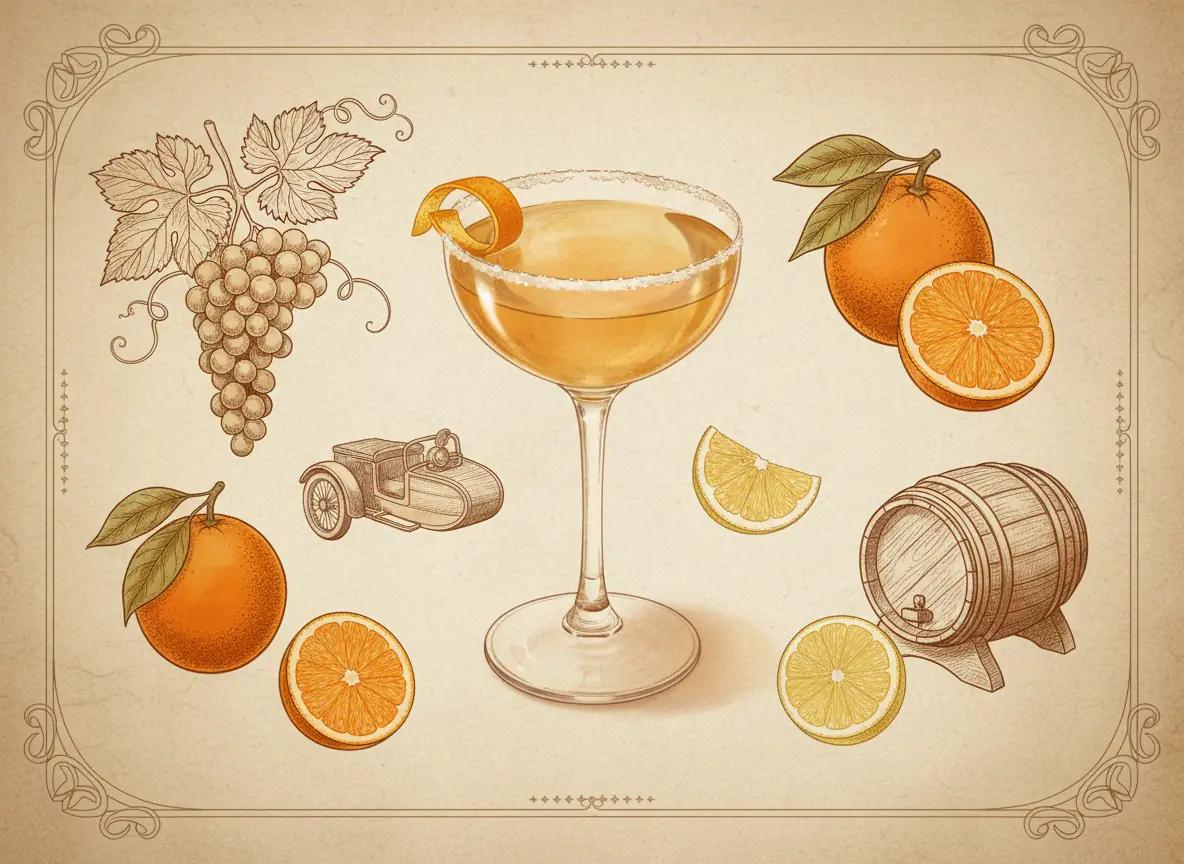
Sidecar
A Sidecar is a cognac sour: 50ml cognac, 20ml Cointreau or another triple sec and 20ml fresh lemon juice, shaken hard and double strained into a chilled coupe under an expressed strip of lemon peel. The IBA gives these measures, which put the cognac at two and a half parts to one each of orange and lemon. The Oxford Companion dates the first printed recipes to 1922, in Robert Vermeire’s Cocktails: How to Mix Them in May and Harry MacElhone’s Harry’s ABC of Mixing Cocktails at the end of the year, both at equal parts by Difford’s Guide. Both named Pat MacGarry of Buck’s Club in London; Difford’s says later editions of MacElhone’s book appear to take the credit for himself. The sugared rim came later: the earliest mention we have read is a 1932 American book, and the Oxford Companion says the drink has often been served with one since the 1930s. Ours has no rim. Each Sidecar carries about 2.8 UK units.
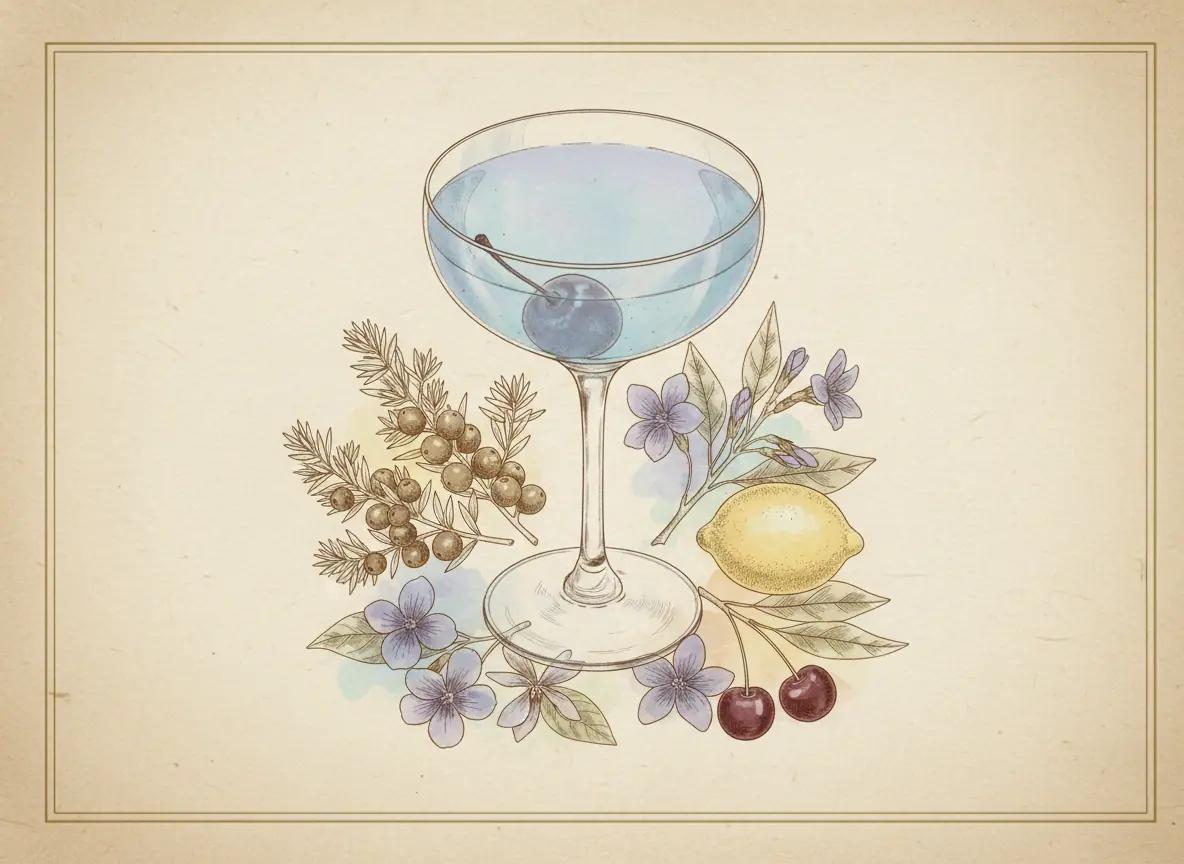
Aviation
An Aviation is gin, maraschino, lemon and a little crème de violette: 45ml gin, 15ml maraschino liqueur, 15ml fresh lemon juice and one bar spoon of crème de violette, shaken hard and double strained into a chilled coupe, with a cherry dropped in. The measures are the International Bartenders Association’s. The violette gives the drink its pale blue-violet colour. Hugo Ensslin, bar manager at the Wallick Hotel in New York, published the original formula for the classic Aviation in his 1916 Recipes for Mixed Drinks, the Oxford Companion says. In 1930 the Savoy Cocktail Book printed it without the violette, and many bartenders followed that version. Keep the violette to a bar spoon: more turns the drink soapy and purple. A glass holds about 2.4 UK units.
Where this one sits
Recipe by Jerry Can Spirits · Updated 19 October 2026