Monkey Gland
A Monkey Gland is 45ml of gin, 45ml of fresh orange juice, 15ml of grenadine and 15ml of absinthe, shaken hard with ice for 10 to 12 seconds and double strained into a chilled coupe, with an orange twist. Those are the IBA’s measures, a tablespoon each of absinthe and grenadine. About 2.8 UK units. Difford’s Guide quotes the 1923 edition of Harry MacElhone’s ABC of Mixing Cocktails as calling it invented by the author and named for Serge Voronoff’s experiments in rejuvenation. Roger Gosden’s account for the International Society for Fertility Preservation says Voronoff, a French surgeon, grafted slices of chimpanzee testis and later whole monkey testes into men to rejuvenate them, and that bars served a Monkey Gland cocktail containing absinthe. MacElhone used far less absinthe, a single dash, with a teaspoon of grenadine and gin and orange in equal halves. At the IBA’s tablespoon the anise leads the drink; at a dash it sits behind the orange. We give his version as a variation.
Variations
Glassware: Coupe Glass
Garnish: Orange twist
Ingredients
45ml
A London Dry at 40% ABV. Its juniper stops a drink of orange, grenadine and anise reading as fruit juice. MacElhone named Gordon’s.
45ml
Squeezed the same day, from sweet oranges. At equal measure to the gin it is half the base of the drink.
15ml
A pomegranate grenadine, a tablespoon as the IBA lists it. It colours the drink and adds a tart red-fruit note; an artificial one adds only sugar.
15ml
A tablespoon at our working figure of 68% ABV, as the IBA lists the tablespoon, which puts anise in front. MacElhone’s 1923 recipe used a single dash.
Instructions
Chill a coupe.
Add the gin, orange juice, grenadine and absinthe to a shaker.
Fill with cubed ice and shake hard for 10 to 12 seconds.
Double strain into the chilled coupe.
Express an orange twist over the surface and drop it in.
Source: the IBA (IBA specification; method and garnish ours). Last checked 10 October 2026.
Expert Tip
Measure the absinthe. A tablespoon at around 68% ABV carries over a third of the alcohol in the glass and most of its flavour; poured by eye, it buries the orange. If the anise is too much for you, make MacElhone’s version: one dash of absinthe, 5ml of grenadine and equal gin and orange. It is drier, and the gin shows. Use oranges squeezed the same day. Carton juice is flat and sweet, and with grenadine already in the glass the drink turns sugary.
Behind the Monkey Gland
Flavour Profile
MacElhone’s Invention
Difford’s Guide quotes the 1923 edition of Harry MacElhone’s ABC of Mixing Cocktails: one dash of absinthe, a teaspoonful of grenadine, half orange juice and half Gordon gin, shaken and strained into a cocktail glass, “Invented by the Author and deriving its name from Voronoff’s experiments in rejuvenation”. Difford’s says the drink first appears in the 1922 edition, which it could not consult; its biography of MacElhone dates his first edition to 1921.
Difford’s Guide says MacElhone took a role at Ciro’s Club in London after the First World War, and that on 8 February 1923 he bought the New York Bar in Paris and renamed it Harry’s New York Bar. The Oxford Companion says his White Lady, in his 1922 book, used brandy, crème de menthe and Cointreau, a long way from the gin drink of that name today.
Voronoff’s Monkey Glands
Roger Gosden, writing for the International Society for Fertility Preservation, says the French surgeon Serge Voronoff preferred chimpanzees as donors, stitching a slice of donor testis beside a patient’s own, and switched to monkeys when the supply of chimpanzees ran out, grafting them whole.
Gosden says the press ran a “Monkey-gland Campaign” and that bars served a cocktail called Monkey Gland, said to extend longevity. Gosden says that in 1927 a delegation of senior scientists criticised Voronoff’s record-keeping and his selection of prize animals, and that careful observers who took biopsies could not find a single living cell in the grafts, only scars.
A Dash or a Tablespoon
The IBA lists a tablespoon each of absinthe and grenadine. At around 68% ABV, that much absinthe carries over a third of the alcohol in the glass, and anise leads from the first sip.
MacElhone’s dash puts the anise behind the orange, where it dries the finish, and his teaspoon of grenadine adds colour without much sweetness. Make both: they are recognisably the same drink and taste quite different.
Two Recipes
The Monkey Gland in MacElhone’s 1923 edition, as Difford’s Guide quotes it, and as the IBA gives it
Gin
- MacElhone, 1923
- Half, Gordon’s
- IBA (ours)
- 45ml
Orange juice
- MacElhone, 1923
- Half
- IBA (ours)
- 45ml
Grenadine
- MacElhone, 1923
- One teaspoon
- IBA (ours)
- One tablespoon, 15ml
Absinthe
- MacElhone, 1923
- One dash
- IBA (ours)
- One tablespoon, 15ml
Method
- MacElhone, 1923
- Shaken, strained
- IBA (ours)
- Shaken 10 to 12 seconds, double strained
Garnish
- MacElhone, 1923
- Not stated
- IBA (ours)
- Orange twist
UK units
- MacElhone, 1923
- About 1.9, with the halves at 45ml
- IBA (ours)
- About 2.8
| Element | MacElhone, 1923 | IBA (ours) |
|---|---|---|
| Gin | Half, Gordon’s | 45ml |
| Orange juice | Half | 45ml |
| Grenadine | One teaspoon | One tablespoon, 15ml |
| Absinthe | One dash | One tablespoon, 15ml |
| Method | Shaken, strained | Shaken 10 to 12 seconds, double strained |
| Garnish | Not stated | Orange twist |
| UK units | About 1.9, with the halves at 45ml | About 2.8 |
Beside the Bronx
The Bronx also puts gin against fresh orange juice, but holds it with sweet and dry vermouth, which makes a drier, more herbal drink. The Monkey Gland swaps the vermouths for grenadine and absinthe, so it is fruitier at the front and anise-led at the finish.
How to Serve It
Cold, in a chilled coupe, with an orange twist expressed over the top. Shake it hard: the orange juice takes on a light froth that carries the anise to the nose.
For gin and orange with vermouth, make a Bronx; for the gin sour later credited to MacElhone, a White Lady.
Make it at home
The Spirit
GinGin is a spirit flavoured with juniper berries. Under the retained Regulation (EC) 110/2008, juniper must lead the taste, the floor is 37.5% ABV, and the route the flavour takes sets the grade: plain gin, distilled gin or London gin. Our recipes count it at 40%, and it carries the Martini, the Negroni and the Gin and Tonic.
Master the Techniques
More to explore
Frequently Asked Questions
What is in a Monkey Gland?
What is the Monkey Gland named after?
Who created the Monkey Gland?
How much absinthe goes in a Monkey Gland?
Can I use pastis instead of absinthe?
Did MacElhone also create the White Lady?
How strong is a Monkey Gland?
Sources.
Correct as of 19 October 2026.
- Difford’s Guide, “Monkey Gland” (secondary source: MacElhone’s 1923 edition quoted: 1 dash Absinthe, 1 teaspoonful of Grenadine, 1/2 Orange Juice, 1/2 Gordon Gin. Shake well, and strain into a cocktail glass. (Invented by the Author and deriving its name from Voronoff’s experiments in rejuvenation.); first appears in the 1922 Harry’s ABC of Mixing Cocktails, which Difford’s could not consult).
- Difford’s Guide, “Harry MacElhone” (secondary source: after the war took a role at Ciro’s Club, London; first book “Harry of Ciro’s ABC of Mixing Cocktails” in 1921; on 8 February 1923 bought the New York Bar in Paris and renamed it Harry’s New York Bar).
- International Society for Fertility Preservation (Roger Gosden), “Monkey business: Voronoff’s promises and the fall of the rejuvenators (Gland grafters, part 3)” (named-author scholarly essay: Voronoff, a French surgeon, grafted chimpanzee and monkey testis tissue to rejuvenate men; the Monkey-gland Campaign; a Monkey Gland cocktail with absinthe; the 1927 delegation; no living cells in the grafts).
- The Oxford Companion to Spirits and Cocktails (Anistatia R. Miller and Jared M. Brown), “White Lady” (secondary source: two White Ladies; McElhone’s brandy, crème de menthe and Cointreau in his 1922 book; the gin, lemon and Cointreau drink associated with the Savoy bar, first recipe in Craddock’s Savoy Cocktail Book).
- IBA, “Monkey Gland” (official specification: 45 ml dry gin, 45 ml fresh orange juice, 1 tablespoon absinthe, 1 tablespoon grenadine syrup; shake with ice, strain into a chilled cocktail glass).
- Harry McElhone, Internet Archive, ““Harry” of Ciro’s ABC of Mixing Cocktails (1923, second impression)” (primary source, read 19 Oct in the Vintage Cocktail Books collection: 157. Monkey’s Gland Cocktail. 1 dash of Absinthe, 1 teaspoonful of Grenadine, 1/2 Orange Juice, 1/2 Gordon Gin. Shake well and strain into cocktail glass. (Invented by the Author, and deriving its name from Voronoff’s experiments in rejuvenation.)).
You Might Also Like
Bronx
A Bronx is 45ml of London Dry gin, 15ml of sweet vermouth, 15ml of dry vermouth and 30ml of fresh orange juice, shaken hard for 10 to 12 seconds and double strained into a chilled coupe, with an orange twist. About 2.3 UK units. Albert Stevens Crockett’s Old Waldorf Bar Days of 1931 credits Johnnie Solon, a bartender at the old Waldorf-Astoria in New York, and gives his account of naming it after the Bronx Zoo. Crockett could not date the drink, and the Oxford Companion lists at least eleven claimants, the earliest John E. “Curly” O’Connor, who was known as the inventor of the Bronx Cocktail in 1901. The drink is a Perfect Martini with orange juice shaken through. The split vermouths stop the juice making it soft, and fresh orange is what keeps it bright.
Doctor Funk
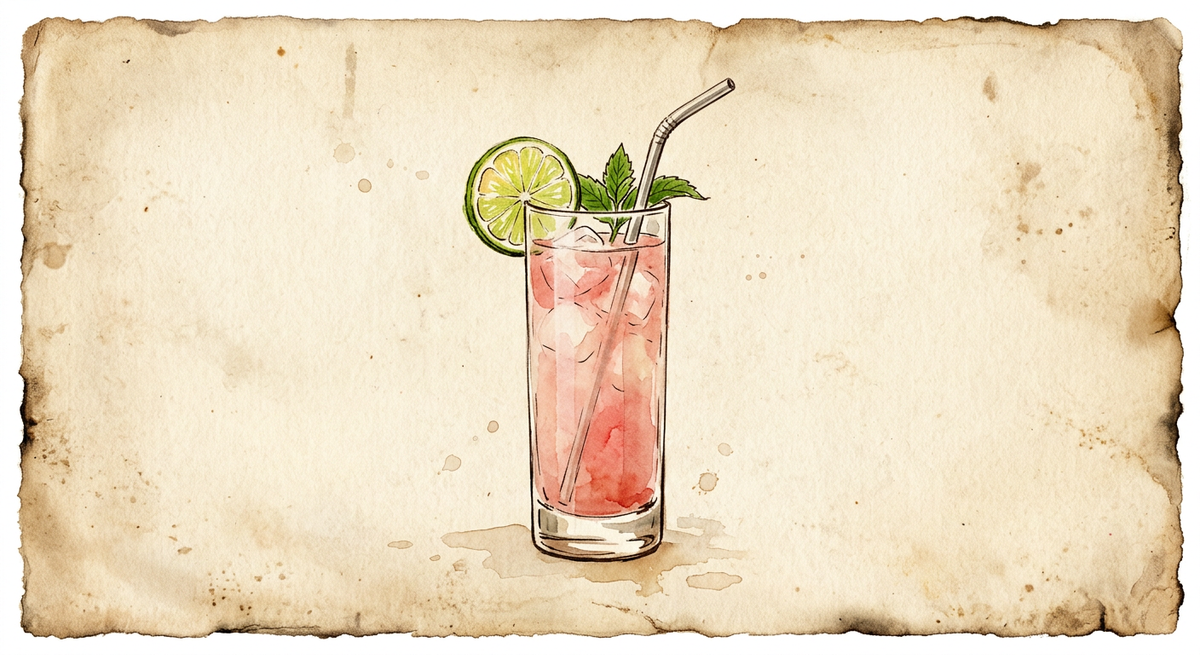
A Doctor Funk is a long rum drink seasoned with absinthe: 60ml white rum, 22.5ml fresh lime juice, 15ml fresh lemon juice, 10ml grenadine, 10ml sugar syrup and 7.5ml absinthe, shaken hard, strained over fresh ice in a collins glass and topped with 60ml soda water and a lime wheel. The result is dry, sharp, faintly aniseed and pale pink. It is named after Dr Bernhard Funk, a German doctor in Samoa and, as Frederick O’Brien wrote in 1921, physician to Robert Louis Stevenson. Frederick O’Brien’s 1921 book Mystic Isles of the South Seas describes the doctor’s drink: absinthe, a dash of grenadine, the juice of two limes and half a pint of siphon water. Don the Beachcomber later added rum, a change Difford’s Guide dates to the early 1950s. A glass holds about 2.9 UK units, more than its length suggests.
White Lady
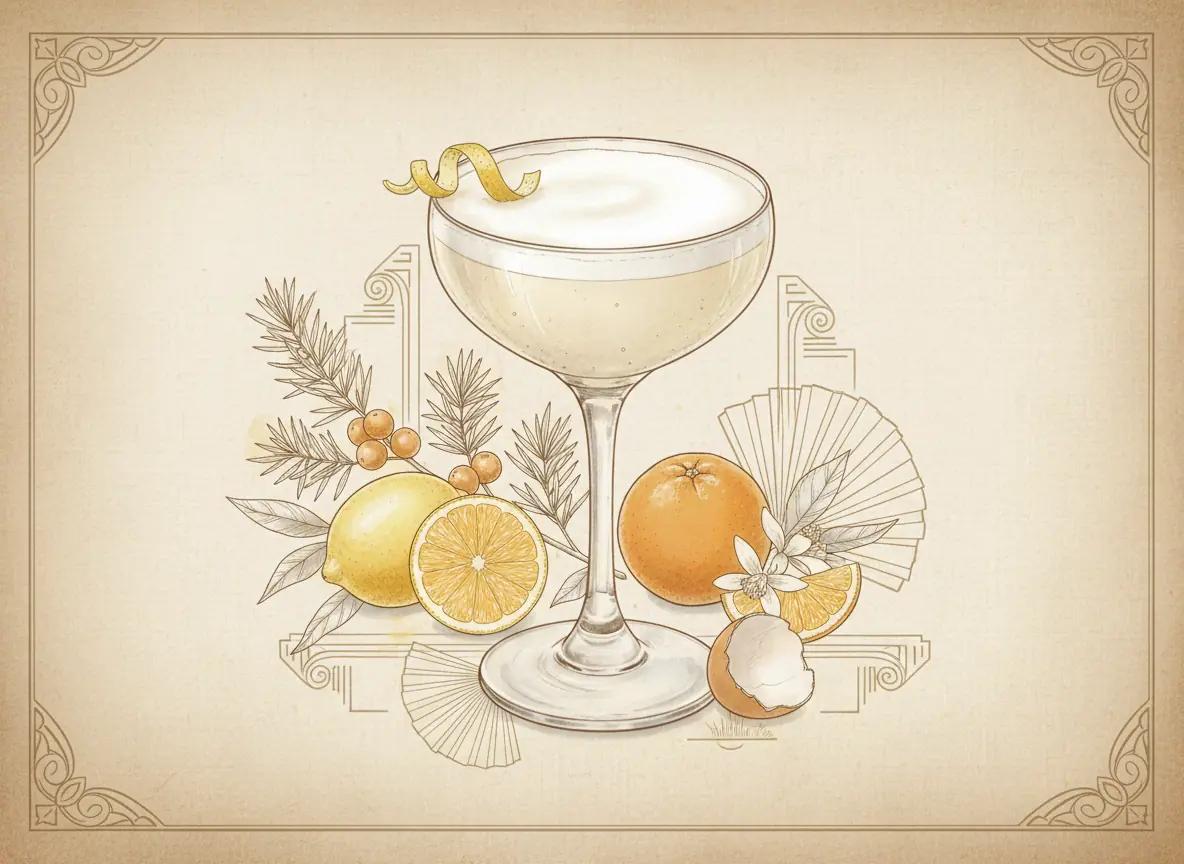
A White Lady is 40ml of London Dry gin, 30ml of Cointreau and 20ml of fresh lemon juice, shaken hard with ice for 10 to 12 seconds and double strained into a chilled coupe, with lemon peel expressed over the top. About 2.8 UK units. Those are the IBA’s measures, and there is no egg white in them. The name is older than the recipe. Difford’s Guide, a secondary source, says Harry MacElhone gave it in 1919, at Ciro’s Club in London, to a drink of brandy, crème de menthe and Cointreau. The gin, Cointreau and lemon version is credited to his rebuild at Harry’s New York Bar in Paris in 1929, though Difford’s says most dispute that, and The Savoy Cocktail Book printed it in 1930, also without egg. Egg white came later: Difford’s Guide finds the earliest recipe with it in The Sacramento Bee of 1936. It makes a softer, foamed drink, given here as a variation. The plain version is sharp and dry, the gin in front and the orange behind it.
Where this one sits
Recipe by Jerry Can Spirits · Updated 19 October 2026