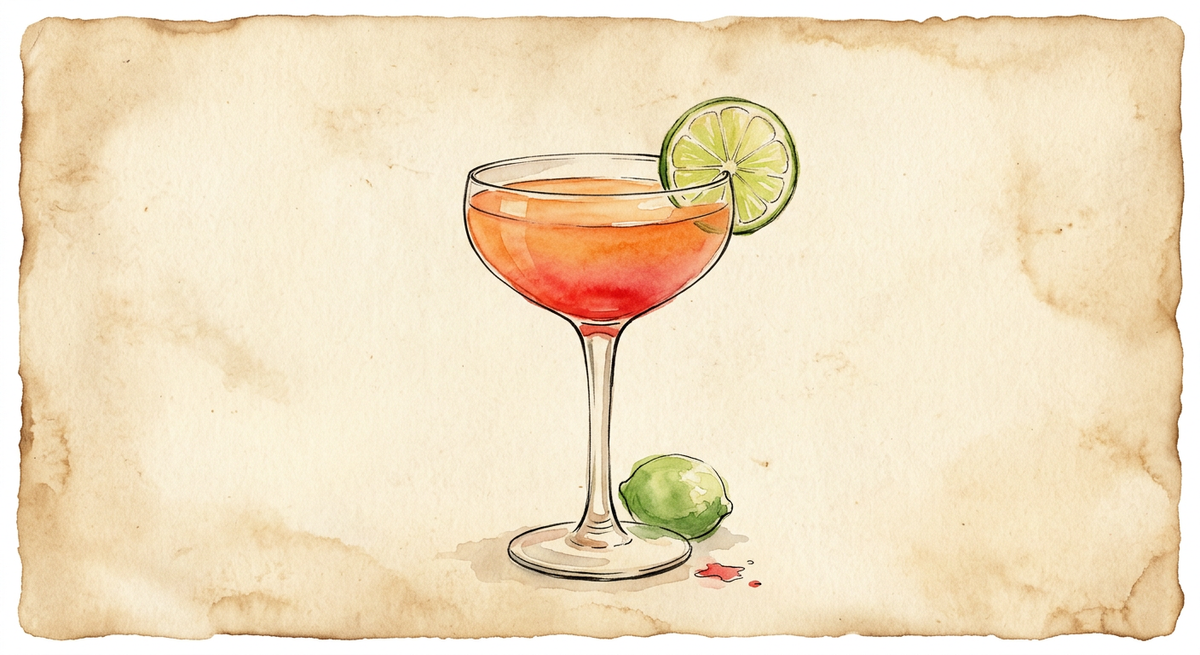
Bacardi Cocktail
A Bacardi Cocktail is 50ml of Bacardi Carta Blanca, 20ml of fresh lime juice, 10ml of grenadine and 5ml of sugar syrup, shaken hard and double strained into a chilled coupe, with a lime wheel. About 1.9 UK units. It is a daiquiri coloured and partly sweetened with grenadine. The name is tied to Bacardi’s trade mark, by Difford’s Guide’s account. Difford’s says Bacardi took the Barbizon-Plaza Hotel and the Wivel Restaurant in New York to court over Bacardi Cocktails made with other rums, and Bacardi Limited’s own account dates the ruling to 28 April 1936: a drink listed as a Bacardi cocktail must contain Bacardi rum. Difford’s Guide says opinion divides on whether the original had grenadine, and that the vintage books listing a Bacardi Cocktail without it favour grenadine being a later addition; the Oxford Companion says it may originally have been nothing more than a Daiquiri made with Bacardi rum. A grenadine made from pomegranate keeps it tart.
Glassware: Coupe Glass
Garnish: Lime wheel
Ingredients
50ml
At 37.5% ABV on Greene King Orders’ trade listing for the UK bottle. The 1936 ruling, as Bacardi Limited reports it, ties the name to Bacardi rum; at home, the same build with another Cuban-style white rum is a grenadine daiquiri.
20ml
Squeezed the same day, ideally within a few hours. In our experience lime juice goes flat as it stands, and at 20ml it is the drink’s only acid.
10ml
Pomegranate syrup, for the pink colour and a tart fruit note. Commercial red syrups add sweetness and colour only.
5ml
Five millilitres, to round the lime once the grenadine has done most of the sweetening.
Instructions
Chill a coupe.
Add the rum, lime juice, grenadine and sugar syrup to a shaker.
Fill with cubed ice and shake hard for 10 to 12 seconds.
Double strain into the chilled coupe.
Garnish with a lime wheel.
Our version
Bacardi Limited reports that under a 1936 New York ruling, a drink listed as a Bacardí cocktail must be made with Bacardí rum. The measures are ours: 50ml of rum and 20ml of lime, with the sweetening split between 10ml of grenadine and 5ml of syrup so it stays a daiquiri.
Source: our own specification. Last checked 10 October 2026.
Expert Tip
Use a grenadine made from pomegranate. At 10ml it supplies the colour and most of the sweetness, and real pomegranate brings a tart edge that meets the lime. Bright red syrups are sugar and colouring, and they turn the drink into a sweet cordial. Keep the split at ten and five. The grenadine does most of the sweetening and the syrup corrects the lime. Push the grenadine up and it stops tasting like a daiquiri. To make grenadine, warm equal weights of pomegranate juice and sugar until the sugar dissolves, without letting it boil. We keep it for about two weeks in the fridge.
Behind the Bacardi Cocktail
Flavour Profile
Where It Comes From
Difford’s Guide dates the Bacardi Cocktail to Cuba in 1917 and says there are two schools of thought on the original: a Daiquiri made with Bacardi rum, with the grenadine version coming in New York after Prohibition, or grenadine from the start; the vintage books that list it without grenadine favour the first. The Oxford Companion says it may originally have been nothing more than a Daiquiri made with Bacardi rum, though somewhere along the line grenadine found its way into the mix. No source we read names who first added the grenadine.
The 1936 Ruling
Bacardi Limited’s own account says that in 1936, during the Great Depression, a few New York bars and restaurants substituted lesser quality rums when asked for Bacardi cocktails, and that Bacardi took legal action. Difford’s Guide names two of them, the Barbizon-Plaza Hotel and the Wivel Restaurant on West Fifty-Fourth Street, says the case protected the company’s trade mark, and says Bacardi family members travelled from Cuba to give evidence.
Bacardi Limited’s own account (press release) dates the ruling to 28 April 1936, by Justice John L. Walsh of the New York Supreme Court, quotes him that “subterfuge and a fraud is subjected on the purchaser when BACARDÍ rum is left out of a drink listed as a BACARDÍ cocktail”, and says it was affirmed by the Appellate Division a year later. In our reading the ruling governs what a bar may sell under the name; it does not reach a home kitchen.
The Grenadine Split
Ten millilitres of grenadine and five of plain syrup share the sweetening. The grenadine brings the colour and a tart pomegranate note; the syrup rounds the lime without adding more fruit.
Push the grenadine to 15ml and drop the syrup, and the pomegranate takes over. It stops tasting like a daiquiri with colour and becomes a fruit drink with rum in it.
Why the Grenadine Has to Be Real
Much of what is sold as grenadine is sugar syrup with acid and red colouring. Against lime and white rum it adds sweetness and nothing to answer the lime.
Real pomegranate syrup is sharp and slightly astringent, so the two fruits pull against each other as the recipe intends.
Three Havana Sours
The Bacardi Cocktail beside two daiquiris
Bacardi Cocktail
- Rum
- 50ml Bacardi Carta Blanca
- Lime
- 20ml
- Sweetener
- 10ml grenadine, 5ml syrup
- Method
- Shaken, served up
- UK units
- About 1.9
Daiquiri (IBA)
- Rum
- 60ml white rum
- Lime
- 20ml
- Sweetener
- Two bar spoons caster sugar
- Method
- Shaken, served up
- UK units
- About 2.4
El Floridita Daiquiri
- Rum
- 60ml white rum
- Lime
- 15ml
- Sweetener
- 10ml syrup, 5ml maraschino
- Method
- Flash blended with crushed ice
- UK units
- About 2.6
| Drink | Rum | Lime | Sweetener | Method | UK units |
|---|---|---|---|---|---|
| Bacardi Cocktail | 50ml Bacardi Carta Blanca | 20ml | 10ml grenadine, 5ml syrup | Shaken, served up | About 1.9 |
| Daiquiri (IBA) | 60ml white rum | 20ml | Two bar spoons caster sugar | Shaken, served up | About 2.4 |
| El Floridita Daiquiri | 60ml white rum | 15ml | 10ml syrup, 5ml maraschino | Flash blended with crushed ice | About 2.6 |
How to Serve It
Shaken hard for 10 to 12 seconds, double strained into a chilled coupe and served with a lime wheel, while the colour is bright and the drink at its coldest.
For the plain version, make a Daiquiri; for the frozen Havana version with maraschino, an El Floridita Daiquiri.
Make it at home
The Spirit
Bacardi Carta BlancaBacardi Carta Blanca is Bacardi's light white rum, listed in the UK at 37.5% ABV by the trade wholesaler Greene King Orders; Bacardi's own site for the US sells it as Bacardi Superior. By Bacardi's own account it is aged in American white oak and passed through charcoal, and its own history records the 1936 New York ruling that tied the Bacardi Cocktail to its rum, which is why our recipe names it.
Master the Techniques
More to explore
Frequently Asked Questions
What is in a Bacardi Cocktail?
Does a Bacardi Cocktail legally require Bacardi?
How is it different from a daiquiri?
Was the original made with grenadine?
Why does the grenadine have to be real?
Are other cocktail names tied to a brand?
How strong is a Bacardi Cocktail?
Sources.
Checked between 18 October and 19 October 2026.
- Difford’s Guide, “Bacardi Cocktail” (secondary source: originated in Cuba in 1917; two schools of thought on grenadine; the 1936 case against the Barbizon-Plaza Hotel and the Wivel Restaurant, Justice Walsh).
- The Oxford Companion to Spirits and Cocktails, “Bacardi Cocktail” (secondary source (unsigned entry): may originally have been nothing more than a Daiquiri made with Bacardi rum, though grenadine found its way into the mix).
- Bacardi Limited, “Bacardi Toasts 80th Anniversary of BACARDÍ Rum Consumer Rights Court Ruling” (the owner’s press release of 28 April 2016: bars substituting lesser quality rums; ruling of 28 April 1936 by Justice John L. Walsh; affirmed by the Appellate Division a year later).
- Greene King Orders, “Bacardi Carta Blanca Rum 37.5 70cl” (trade listing for the UK bottle: 37.5% ABV).
- Gosling’s, “Goslings Rum” (the owner’s site: Dark ‘n Stormy® with the registered symbol; Black Seal Rum the essential ingredient of Bermuda’s signature cocktail).
- Pusser’s Rum, “The Pusser’s Painkiller® Story” (the owner’s site: The Pusser’s Painkiller® written with the registered symbol).
You Might Also Like
Daiquiri
A Daiquiri is 60ml white rum, 20ml fresh lime juice and two bar spoons of caster sugar. Stir the sugar into the rum and lime in the shaker until it dissolves, then add ice, shake hard for 10 to 12 seconds and double strain into a chilled coupe. About 2.4 UK units. Those are the IBA’s measures, and its method dissolves the sugar first too. The name belongs to Daiquirí, an iron-mining district and beach near Santiago de Cuba. Difford’s Guide credits Jennings Stockton Cox, an American engineer who led one of the first mining parties into Cuba’s iron-ore country after the Spanish-American War of 1898; the Oxford Companion has him making or supervising the first Daiquiri in 1896, and a Santiago bartender naming it in 1908. Difford’s says Constantino Ribalaigua Vert of Havana’s El Floridita made the frozen version famous. With three ingredients and no liqueur or bitters, the Daiquiri hides nothing. A flat rum, tired lime or undissolved sugar shows in the first sip.
El Floridita Daiquiri
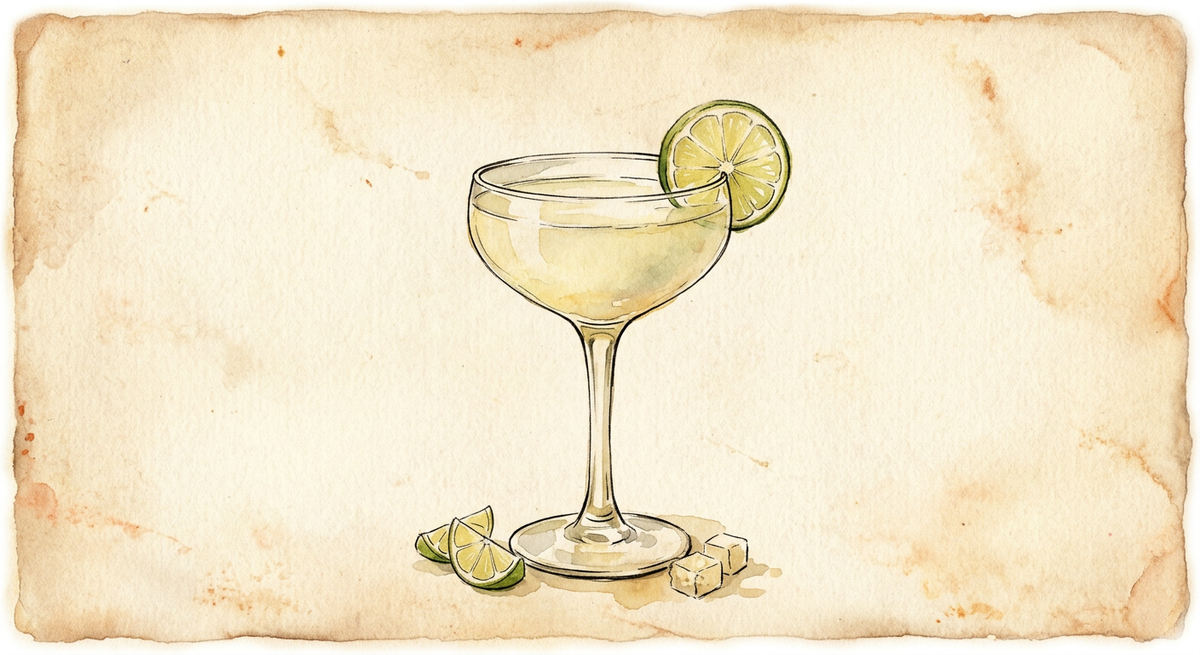
An El Floridita Daiquiri is 60ml of white rum, 15ml of fresh lime juice, 5ml of maraschino and 10ml of sugar syrup, flash blended with fine crushed ice for five to ten seconds and heaped into a chilled coupe as soft snow, with a short straw. About 2.6 UK units. The Oxford Companion says the Floridita began as the Piña de Plata café in the centre of Havana, renamed the Café Restaurant la Florida some time between 1898 and 1907, that Constantino Ribalaigua Vert began working there in 1912 or 1914 (accounts differ) and bought the bar in 1935, and that shortly after Repeal he used the electric blender to make the first frozen Daiquiris. Kevin Kos’s history of the daiquiri lists this one as Daiquiri No. 4 in the 1937 edition of the bar’s cocktail book. The maraschino lifts the lime without tasting of cherry, and the shaved ice makes it a frappé rather than a slush.
Hemingway Daiquiri
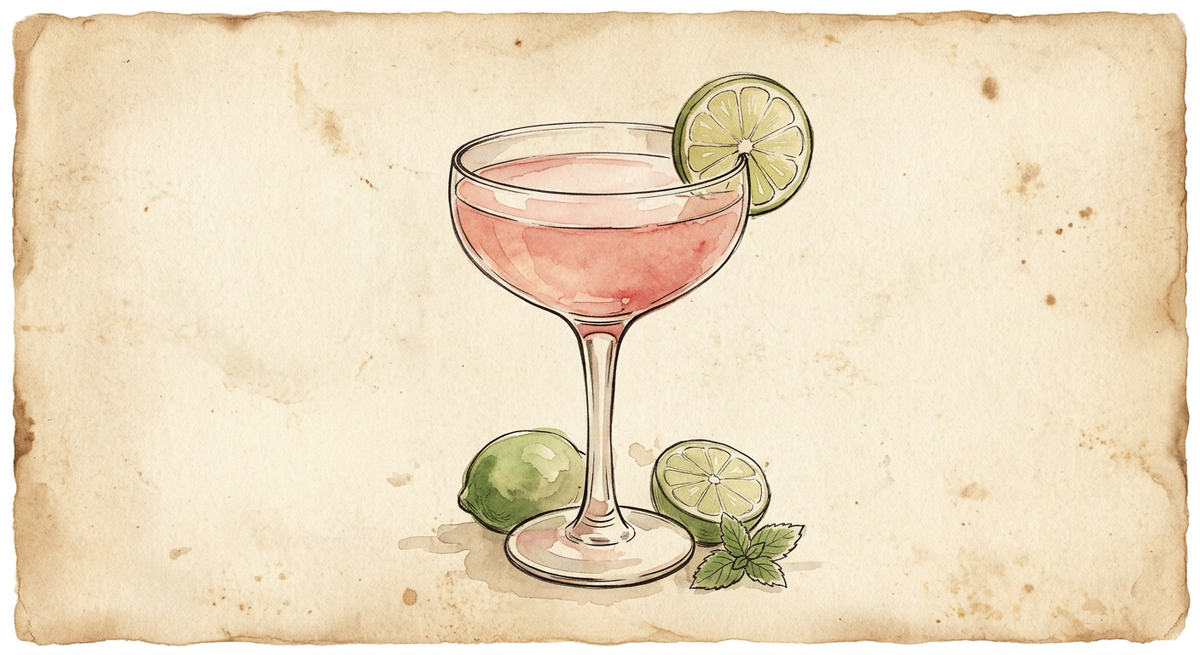
A Hemingway Daiquiri is 60ml white rum, 40ml fresh grapefruit juice, 15ml fresh lime juice and 15ml maraschino liqueur, shaken hard and double strained into a chilled coupe, with a lime wheel. The measures follow the IBA, which lists it as the Hemingway Special. There is no sugar syrup: the maraschino is the only sweetness. About 2.9 UK units. The Oxford Companion to Spirits and Cocktails says it is a version of the Daiquiri No. 3 from Havana’s Floridita bar, named for the writer who downed them there in volume. Difford’s Guide has Hemingway trying the Floridita’s standard frozen Daiquiri and saying he preferred it without sugar and with double rum, which became the Papa Doble, and says the head bartender Antonio Meilan later added maraschino and grapefruit juice to make the Hemingway Special. It is drier and more bitter than a classic Daiquiri, and the grapefruit decides how it tastes.
Where this one sits
Recipe by Jerry Can Spirits · Updated 19 October 2026