Breakfast Martini
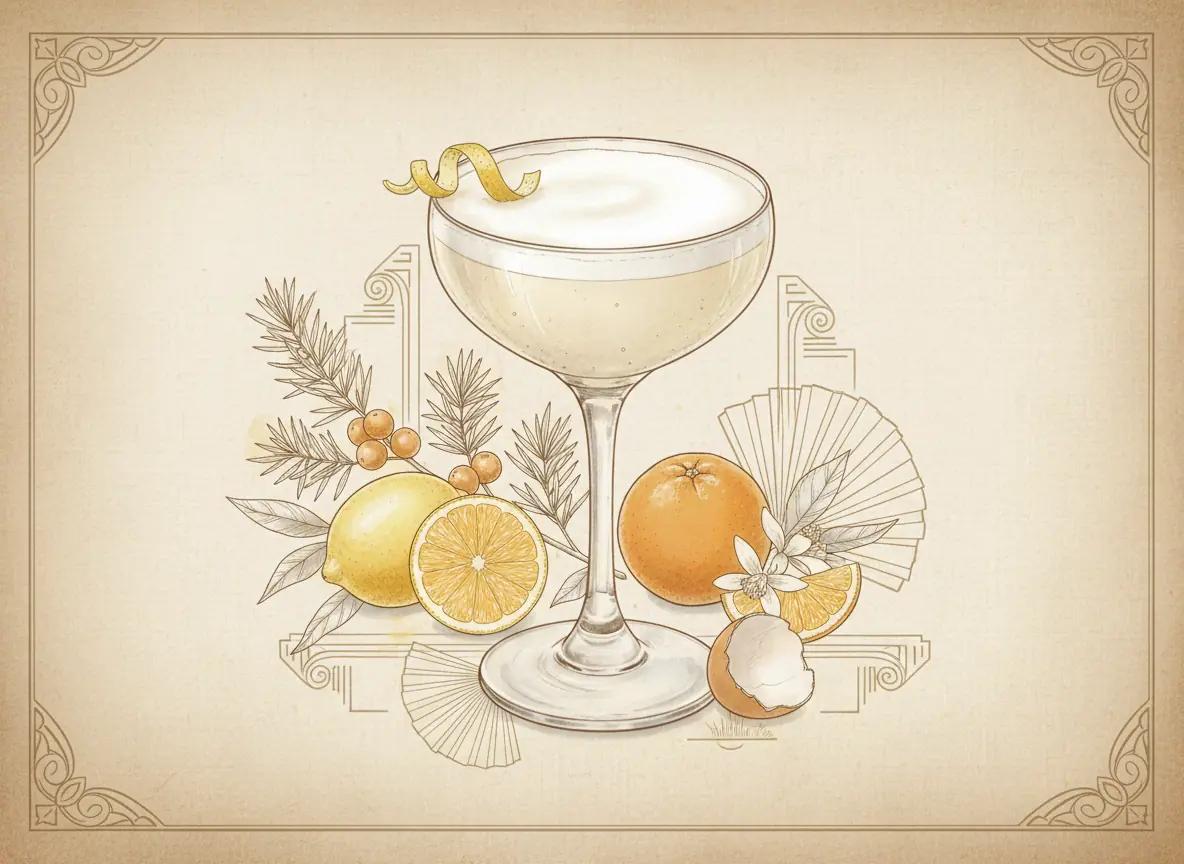
A Breakfast Martini is 50ml of London Dry gin, 15ml of Cointreau, 15ml of fresh lemon juice and one barspoon of fine-cut orange marmalade, stirred together in the shaker until the marmalade loosens, then shaken hard with ice for 10 to 12 seconds and double strained into a chilled coupe, with an orange twist. About 2.6 UK units. Salvatore Calabrese created it in 1996 while managing the Library Bar at the Lanesborough hotel in London, by his account in CLASS magazine: his wife Sue gave him marmalade on toast the morning after a late shift, and the bitter, tangy flavour set him thinking about a cocktail. Only the name and the glass come from the Martini. The drink itself is a gin sour sweetened with preserve, close kin to the White Lady, with marmalade in place of most of the orange liqueur. The jar sets the drink’s character: Seville peel makes it bitter-edged and dry, a sweet marmalade makes it taste of jam.
Glassware: Coupe Glass
Garnish: Orange twist
Ingredients
50ml
A London Dry at 40% ABV or a little more. Firm juniper holds its own against the orange; a soft, floral gin lets the marmalade take over.
15ml
Cointreau, at our working figure of 40% ABV, is what CLASS magazine’s recipe from Calabrese uses. A dry triple sec at the same strength works. At 15ml it brightens the orange; the marmalade does most of the sweetening.
15ml
Squeezed the same day. It is the liquid the marmalade dissolves into, and the acid that stops the preserve making the drink sweet.
1 barspoon
Fine or medium-cut Seville marmalade. One barspoon sweetens the drink, adds bitter peel and gives it body from the pectin. Thick-cut peel stays in the strainer.
Instructions
Chill a coupe.
Put the marmalade, lemon juice and gin in a shaker and stir until the marmalade has loosened.
Add the Cointreau, fill with cubed ice and shake hard for 10 to 12 seconds.
Double strain into the chilled coupe.
Express an orange twist over the surface and drop it in.
Our version
Calabrese’s measures as he gives them (50ml gin, 15ml Cointreau, 15ml lemon, one barspoon of fine-cut marmalade), stirred in the shaker before shaking. We double strain and finish with an orange twist where he shreds orange peel over the top.
Source: our own specification. Last checked 10 October 2026.
Expert Tip
Work the marmalade in before the ice. Spoon it into the shaker with the lemon and gin and stir until it slackens into a loose syrup. Shaken straight from the jar, it sets into cold lumps that stay in the strainer. Choose a fine or medium-cut Seville marmalade. Seville oranges carry the bitterness that keeps the drink dry; a sweet, mild marmalade turns it into orange jam with gin. Thick-cut peel catches in the strainer and wastes the flavour. Double strain. Even fine-cut marmalade leaves shreds of peel behind, and they look like a mistake on the surface of a clear drink.
Behind the Breakfast Martini
Flavour Profile
Calabrese, the Lanesborough, 1996
CLASS magazine’s interview has Salvatore Calabrese managing the Library Bar at the Lanesborough in 1996. The story he tells is that the morning after a particularly late shift his wife Sue, instead of her usual suggestion that he eat breakfast, gave him marmalade on toast. He took the jar to work and developed the drink there.
The drink arrived during the decade of flavoured Martinis and outlived most of them. In our view the reason is plain once the name is set aside: it is a gin sour, and sours do not go out of fashion.
One Spoon, Three Jobs
A barspoon of marmalade does what would otherwise take two bottles. Its sugar sweetens in place of syrup. Its peel brings bitter orange, as a liqueur would. And its pectin gives the drink a soft body, without egg white.
Because the spoon is already sweet, the Cointreau stays at 15ml, half what a White Lady pours. It brightens the orange from the fresh, peel-oil side, while the marmalade brings the cooked, bitter side.
Choosing the Jar
The marmalade decides the drink. Seville oranges are bitter, and a Seville marmalade gives a dry glass with a bitter edge. A sweet marmalade, made from sweet oranges, gives orange jam with gin in it.
Fine or medium cut dissolves into the lemon. Thick-cut peel will not, and it ends up in the strainer with most of its flavour. Lime or grapefruit marmalade works on the same terms and makes a sharper drink.
Beside the White Lady and the Cosmonaut
Three gin sours from our recipes: Breakfast Martini, White Lady and Cosmonaut; the dates follow CLASS magazine (Calabrese, 1996), the Internet Archive’s scan of the Savoy Cocktail Book (1930) and the Oxford Companion (Milk & Honey, 1999), and the units are our calculation at 40% ABV for gin and Cointreau
London Dry gin
- Breakfast Martini
- 50ml
- White Lady
- 40ml
- Cosmonaut
- 60ml
Orange liqueur
- Breakfast Martini
- 15ml Cointreau
- White Lady
- 30ml Cointreau
- Cosmonaut
- None
Fresh lemon juice
- Breakfast Martini
- 15ml
- White Lady
- 20ml
- Cosmonaut
- 22.5ml
Preserve
- Breakfast Martini
- One barspoon marmalade
- White Lady
- None
- Cosmonaut
- One barspoon raspberry
Garnish
- Breakfast Martini
- Orange twist
- White Lady
- Lemon peel, expressed
- Cosmonaut
- None
Created
- Breakfast Martini
- Salvatore Calabrese, 1996
- White Lady
- In the Savoy Cocktail Book, 1930
- Cosmonaut
- Sasha Petraske, at Milk & Honey (opened 1999)
UK units
- Breakfast Martini
- About 2.6
- White Lady
- About 2.8
- Cosmonaut
- About 2.4
| Element | Breakfast Martini | White Lady | Cosmonaut |
|---|---|---|---|
| London Dry gin | 50ml | 40ml | 60ml |
| Orange liqueur | 15ml Cointreau | 30ml Cointreau | None |
| Fresh lemon juice | 15ml | 20ml | 22.5ml |
| Preserve | One barspoon marmalade | None | One barspoon raspberry |
| Garnish | Orange twist | Lemon peel, expressed | None |
| Created | Salvatore Calabrese, 1996 | In the Savoy Cocktail Book, 1930 | Sasha Petraske, at Milk & Honey (opened 1999) |
| UK units | About 2.6 | About 2.8 | About 2.4 |
The Cosmonaut makes the same move with raspberry, and it is the later drink: Difford’s Guide says Sasha Petraske created it at Milk & Honey, which the Oxford Companion says opened in New York on New Year’s Eve 1999. Both drinks depend on working the preserve into the citrus before the ice goes in.
How to Serve It
Straight up, in a well-chilled coupe, with an orange twist expressed over the top. Calabrese finishes his with shredded orange peel. Either puts fresh orange oil on the nose, the one kind of orange the marmalade cannot supply.
For the liqueur-led original, make a White Lady; for raspberry preserve in place of marmalade, a Cosmonaut.
Make it at home
The Spirit
GinGin is a spirit flavoured with juniper berries. Under the retained Regulation (EC) 110/2008, juniper must lead the taste, the floor is 37.5% ABV, and the route the flavour takes sets the grade: plain gin, distilled gin or London gin. Our recipes count it at 40%, and it carries the Martini, the Negroni and the Gin and Tonic.
Master the Techniques
More to explore
Frequently Asked Questions
Who created the Breakfast Martini?
What is in a Breakfast Martini?
Why is my Breakfast Martini lumpy?
Which marmalade should I use?
Is it really a Martini?
Is the Breakfast Martini older than the Cosmonaut?
How strong is a Breakfast Martini?
Sources.
Correct as of 19 October 2026.
- CLASS, “Modern classics: Breakfast Martini” (drinks trade magazine (Clinton Cawood, 1 May 2025), interview with Salvatore Calabrese: manager of the Library Bar of the Lanesborough Hotel in 1996; his wife Sue gave him marmalade on toast after a late shift; recipe 50ml gin, 15ml Cointreau, 15ml lemon juice, 1 full barspoon of fine-cut orange marmalade).
- Difford’s Guide, “Cosmonaut” (secondary source: adapted from a recipe created by Sasha Petraske at his Milk & Honey bar in New York; gin, lemon juice and raspberry preserves; named as a jab at the Cosmopolitan (Michael Madrusan, in Georgette Moger-Petraske’s 2016 book)).
- The Oxford Companion to Spirits and Cocktails (Jim Meehan), “Milk & Honey” (secondary source: opened by Sasha Petraske on Eldridge Street, Lower East Side, New York, on New Year’s Eve 1999; moved uptown in 2013; the old space reopened as Attaboy).
- Internet Archive, “The Savoy Cocktail Book (Harry Craddock, 1930)” (scanned reproduction of the 1930 book: lists the White Lady Cocktail; also a Marmalade Cocktail (marmalade, lemon juice, gin)).
You Might Also Like
White Lady
A White Lady is 40ml of London Dry gin, 30ml of Cointreau and 20ml of fresh lemon juice, shaken hard with ice for 10 to 12 seconds and double strained into a chilled coupe, with lemon peel expressed over the top. About 2.8 UK units. Those are the IBA’s measures, and there is no egg white in them. The name is older than the recipe. Difford’s Guide, a secondary source, says Harry MacElhone gave it in 1919, at Ciro’s Club in London, to a drink of brandy, crème de menthe and Cointreau. The gin, Cointreau and lemon version is credited to his rebuild at Harry’s New York Bar in Paris in 1929, though Difford’s says most dispute that, and The Savoy Cocktail Book printed it in 1930, also without egg. Egg white came later: Difford’s Guide finds the earliest recipe with it in The Sacramento Bee of 1936. It makes a softer, foamed drink, given here as a variation. The plain version is sharp and dry, the gin in front and the orange behind it.
Cosmonaut
A Cosmonaut is 60ml of London Dry gin, 22.5ml of fresh lemon juice and a barspoon of raspberry preserve, shaken hard with ice for 10 to 12 seconds and double strained into a chilled coupe, with no garnish. About 2.4 UK units, all from the gin. Punch, which prints Sasha Petraske’s recipe from Robert Simonson’s 3-Ingredient Cocktails, credits him with it and calls it his sly retort to the popularity of the Cosmopolitan. The Oxford Companion says Petraske opened Milk & Honey in New York on New Year’s Eve 1999, and that every drink there was carefully measured with jiggers. The preserve is the sweetener. A spoonful brings sugar and cooked raspberry together, with pectin that gives the drink more body than syrup would. Loosen it in the lemon first, and double strain the drink to catch the seeds.
Cosmopolitan
A Cosmopolitan is 40ml of citrus vodka, 15ml of Cointreau, 15ml of fresh lime juice and 30ml of cranberry juice, shaken hard for 10 to 12 seconds and double strained into a chilled coupe, with an orange twist. About 2.2 UK units. The measures are the IBA’s. The Oxford Companion says the Cosmopolitan has a confused and contested history, that most claims lack supporting evidence, and that the recipe served worldwide was most likely formulated in 1988 by Toby Cecchini at the Odeon in New York, with Absolut Citron, Cointreau, fresh lime and cranberry, after a cruder San Francisco drink of the same name that the San Francisco Chronicle called “a Kamikaze with cranberry juice” in 1987. Cecchini told Punch the same year, 1988. Under the colour it is a sour: vodka, orange liqueur and lime, with cranberry for tint and a little extra acid. Made with fresh lime and served very cold, it is tart and dry, a long way from the sweet pink drink of its reputation.
Where this one sits
Recipe by Jerry Can Spirits · Updated 19 October 2026