Gin Cocktails, page 3

70 recipes, page 3 of 3

Base Spirit

Difficulty Level

Monkey Gland

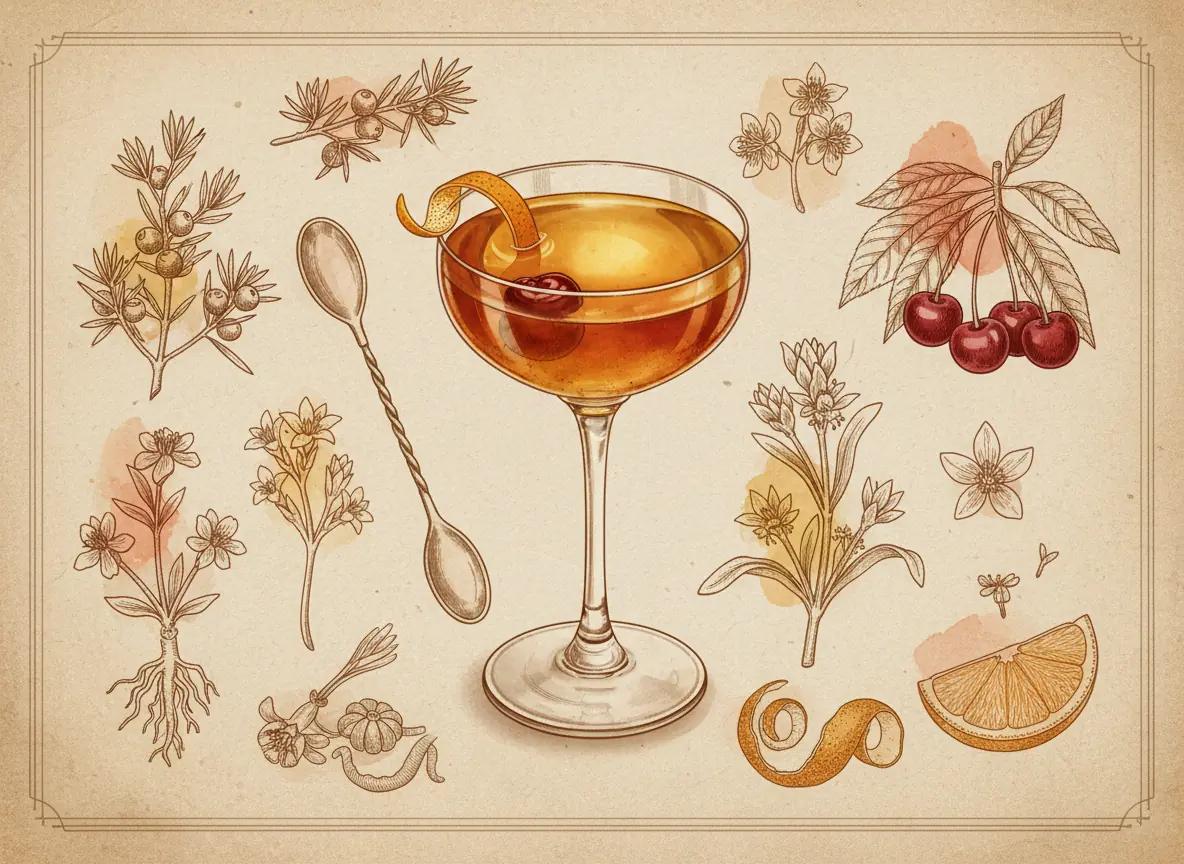
The Monkey Gland has the strangest name origin in the classic canon and wears it proudly. Harry MacElhone mixed it at his Paris bar in the early 1920s and named it for Dr Serge Voronoff’s celebrity surgery of the day, which grafted monkey gland tissue into ageing men on a promise of restored vigour. The science was quackery. The cocktail was sound. It is the Bronx’s Parisian cousin with the vermouths sent home: fresh orange against gin, grenadine supplying colour and a pomegranate seam, and absinthe doing measured shadow work that keeps the fruit from simple sweetness. The drink reads sunlit at the front and mysterious at the finish, which was presumably the marketing. It survives as the era’s best conversation piece that also happens to drink well. The story is the garnish, the spec needs only honest juice and a counted absinthe measure, and the name has been raising eyebrows profitably for a century.
Negroni

Negroni

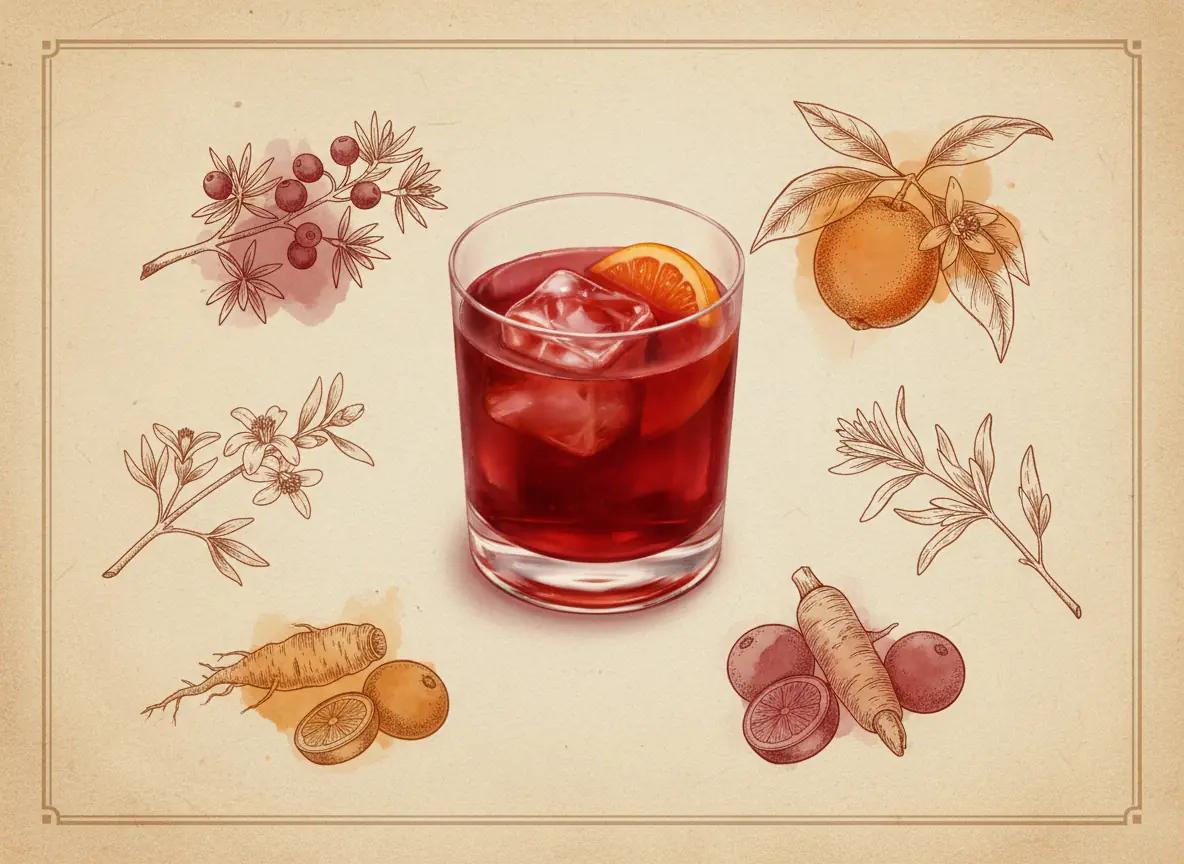
The Negroni is the most ordered classic cocktail in the world and the drink that defined the contemporary revival. It is also one of the simplest: equal parts gin, Campari and sweet vermouth, stirred and served over ice with an orange peel. That simplicity is a function of how precisely the three are calibrated against one another. The story most commonly told places Count Camillo Negroni at the Caffè Casoni in Florence in 1919, asking Fosco Scarselli to strengthen his Americano by replacing the soda with gin. The account is debated; the structure is not. Both drinks share the same base of Campari and sweet vermouth, and that one substitution turns a sessionable aperitif into one of the most spirit-forward short drinks there is. The sweet vermouth is the most commonly neglected variable. At equal volume it is a third of the drink rather than a background ingredient, and a bottle left open at room temperature for months will define a Negroni more completely than the gin does, with no amount of good Campari correcting it.

Old Friend

The Old Friend is gin and Campari with the bitterness turned down and the fruit turned up: fresh grapefruit juice does what a Negroni asks the drinker to accept, and an elderflower whisper rounds off what is left. It is generally attributed to Jim Meehan, the bartender behind PDT, who built it around 2012. The proportions are his style: precise, small, and unwilling to round anything to a convenient number. Twenty-two millilitres of grapefruit is not an accident, and neither is the seven and a half of elderflower. What it does well is introduce people to Campari. A Negroni asks for a taste already acquired; this one arrives blush pink, floral at the edges and bitter only underneath, and converts more drinkers than any amount of arguing. Shaken and served up, it is bitter enough to count as an aperitif and gentle enough to hand to someone who says they do not like bitter drinks.

Paradise

The Paradise is gin, apricot brandy and orange juice, and it is one of the few pre-war cocktails that has survived without anyone feeling the need to rescue it. It appears in Harry Craddock's Savoy Cocktail Book in 1930 and in most of the bar books that followed, and the proportions have barely moved since. Thirty millilitres of gin to twenty of apricot brandy and fifteen of orange juice is a shorter, spirit-led build than the fruit in it suggests. The apricot is the pivot: it brings stone-fruit sweetness and a faint kernel bitterness that meets the gin's juniper rather than smothering it, and the orange juice is there to lengthen and brighten rather than to make a fruit drink. It is the sort of cocktail that reads badly on paper and works in the glass, which is roughly the story of the entire 1930s canon.

Pegu Club

The Pegu Club was the officers’ club of colonial Rangoon, a white building above the Pegu river where the gin was cold and the empire was warm, and its house cocktail travelled home in steamer trunks. By the 1920s the recipe was appearing in the great London bar books, with Harry Craddock’s Savoy Cocktail Book noting it as a drink that had gone round the world and was asked for everywhere it landed. It is a gin sour wearing dress uniform: a big measure of gin, orange curacao carrying all the sweetness, fresh lime cutting through, and two different bitters bracing the finish. Nothing about it is soft. The drink runs dry, aromatic and slightly stern, which is presumably how the club liked its members. Its second act mattered as much as its first. When Audrey Saunders opened Pegu Club in New York in 2005 and named it for this drink, the bar became a proving ground for the modern gin revival, and the cocktail that had outlived its empire found itself, once again, asked for everywhere.
Pink Gin

Pink Gin

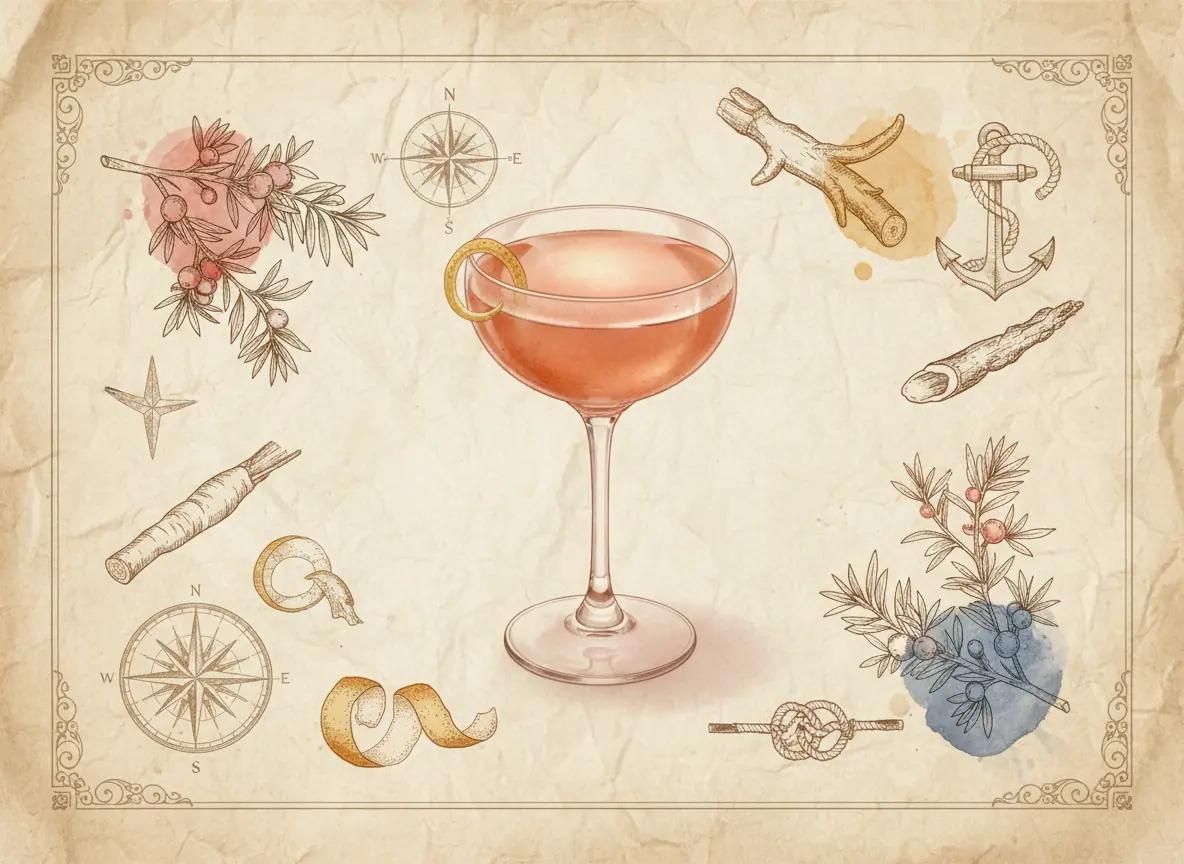
Pink Gin is a British naval drink connecting the Royal Navy, the port of Plymouth and the medicinal origins of Angostura bitters. It emerged in the mid-nineteenth century when Royal Navy surgeons began adding Angostura to gin as a remedy for seasickness and digestive complaints. The bitters were genuine medicine before they were a cocktail ingredient, and the gin was the vehicle that made them palatable. It is one of the most austere drinks in the canon: gin and Angostura, nothing else. No vermouth, no citrus, no sweetener. The result depends entirely on the gin and the hand, and Plymouth is the historically correct choice, its softer, less juniper-forward character suiting the directness of the build in a way a more assertive London Dry does not. The drink has never been fashionable outside naval circles and the officers’ messes where it remained a fixture, and that has nothing whatever to do with its quality.

Pink Lady

The Pink Lady is the Clover Club’s Broadway cousin: gin and apple brandy under grenadine and an egg-white silk, named for a 1911 stage hit and adopted between the wars as the sophisticated woman’s order, a branding that history first sneered at and then, as with its Philadelphia relative, quietly apologised for. The drink was always better than the condescension. The build splits its base. Gin carries the botanicals, a measure of apple brandy adds orchard depth beneath, lemon holds the line and real grenadine does the blushing. The egg white performs its Clover Club office, dry shake first, and the finished drink stands rose-pink under a white crown, tart before it is sweet. It reads today as the missing link between the Clover Club and the Jack Rose, borrowing from both of them at once: raspberry’s drink, apple’s drink, and this one drawing from each. The colour is comfortably the least interesting true thing about it.

Poet’s Dream

The Poet's Dream is a martini with Bénédictine in it at full measure rather than as a barspoon, which is the whole point. Gin, dry vermouth and Bénédictine at forty-five, twenty-two and twenty-two, with orange bitters. That proportion makes the liqueur a principal rather than a seasoning. Most drinks that use Bénédictine give it five or ten millilitres and let it add depth in the background; here it stands at parity with the vermouth and supplies the drink's entire sweet register along with most of its conversation. It surfaces in the bar books of the 1930s, the Café Royal Cocktail Book of 1937 among them, with no author recorded, which was normal for the period. The name promises more romance than the recipe needs. What it delivers is a dry martini frame carrying twenty-seven herbs, which is a good deal more articulate than a martini has any obligation to be.
Ramos Gin Fizz

Ramos Gin Fizz

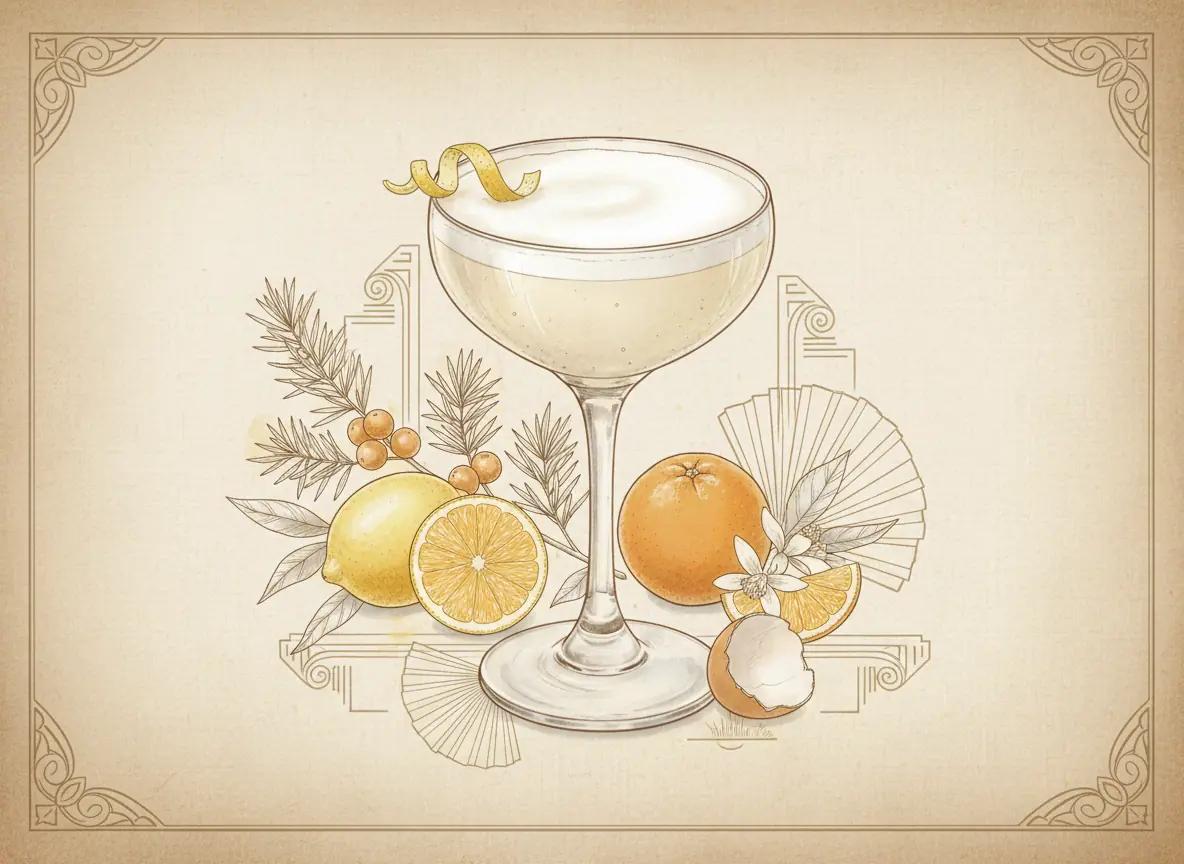
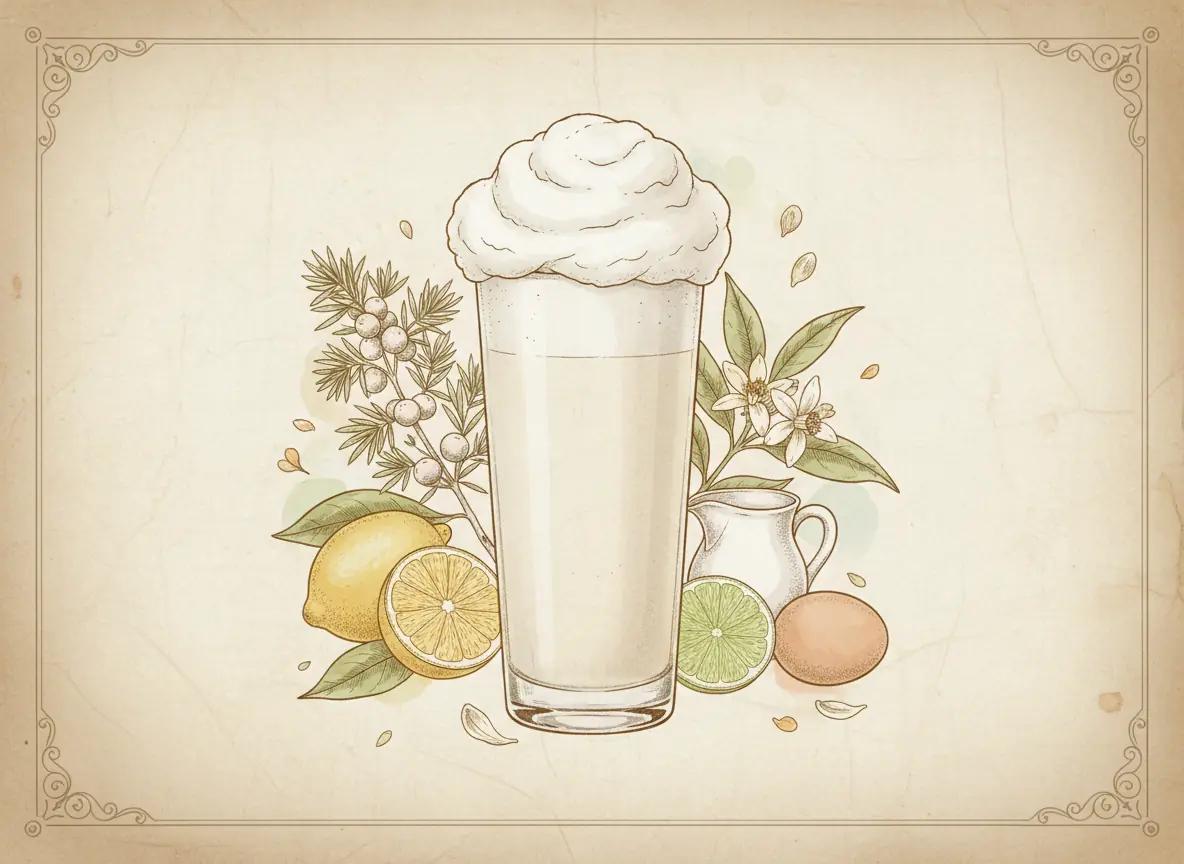
Henry C. Ramos created this at the Imperial Cabinet Saloon in New Orleans in 1888, and by the Mardi Gras of 1915 his bar needed thirty-five shaker boys working in relay to keep up with it. That is the drink’s reputation in one statistic: it is built on a shake so long that no single pair of arms could finish one. Seven ingredients go in before the soda: gin, lemon, lime, sugar, egg white, cream and orange flower water. The egg white and the cream emulsify over the shake into a foam denser and more stable than any sour’s, and the soda, poured in after straining, lifts that foam into a white column standing above the rim. Orange flower water is where most versions fail. It is a distilled floral water, not orange bitters and not zest, and it is the only thing that reaches between the gin’s botanicals and the cream’s weight. Two or three drops make the drink. Leave it out and you have a cream fizz with gin in it.
Sherry Martini

Sherry Martini

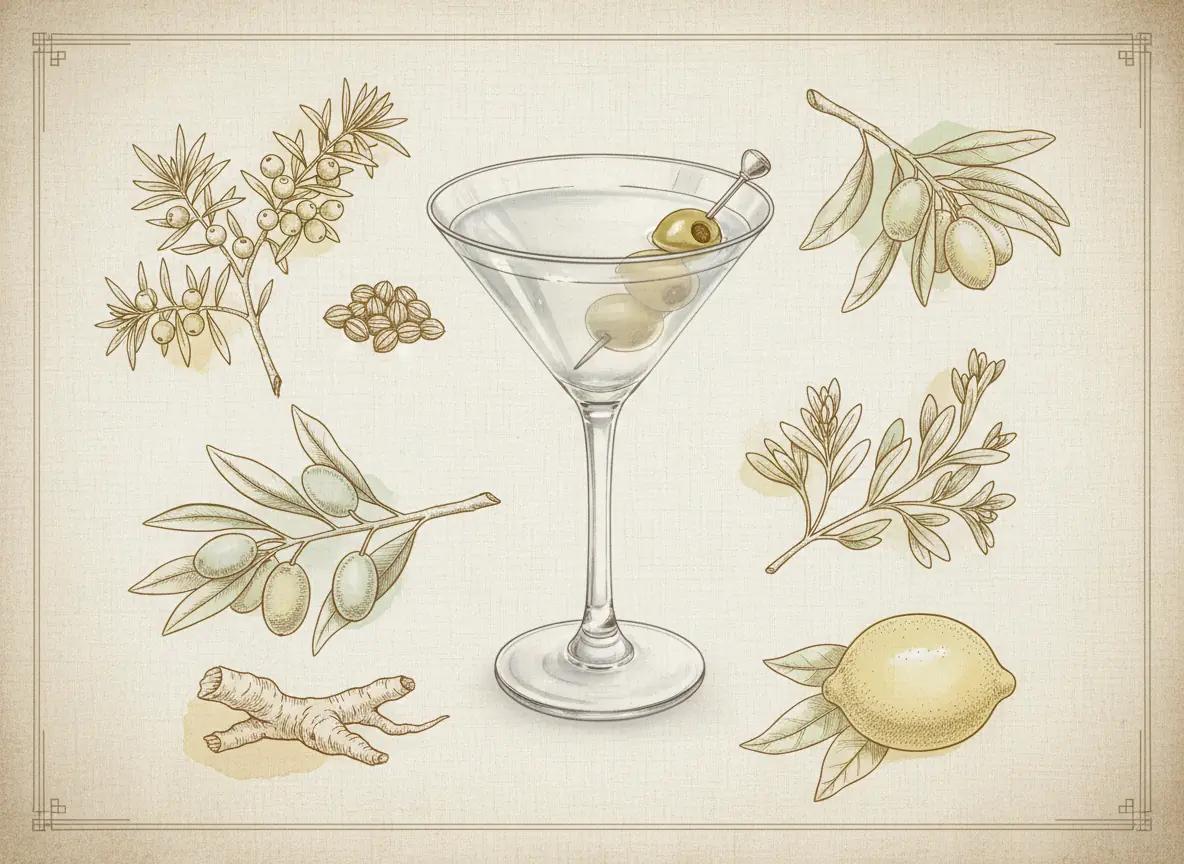
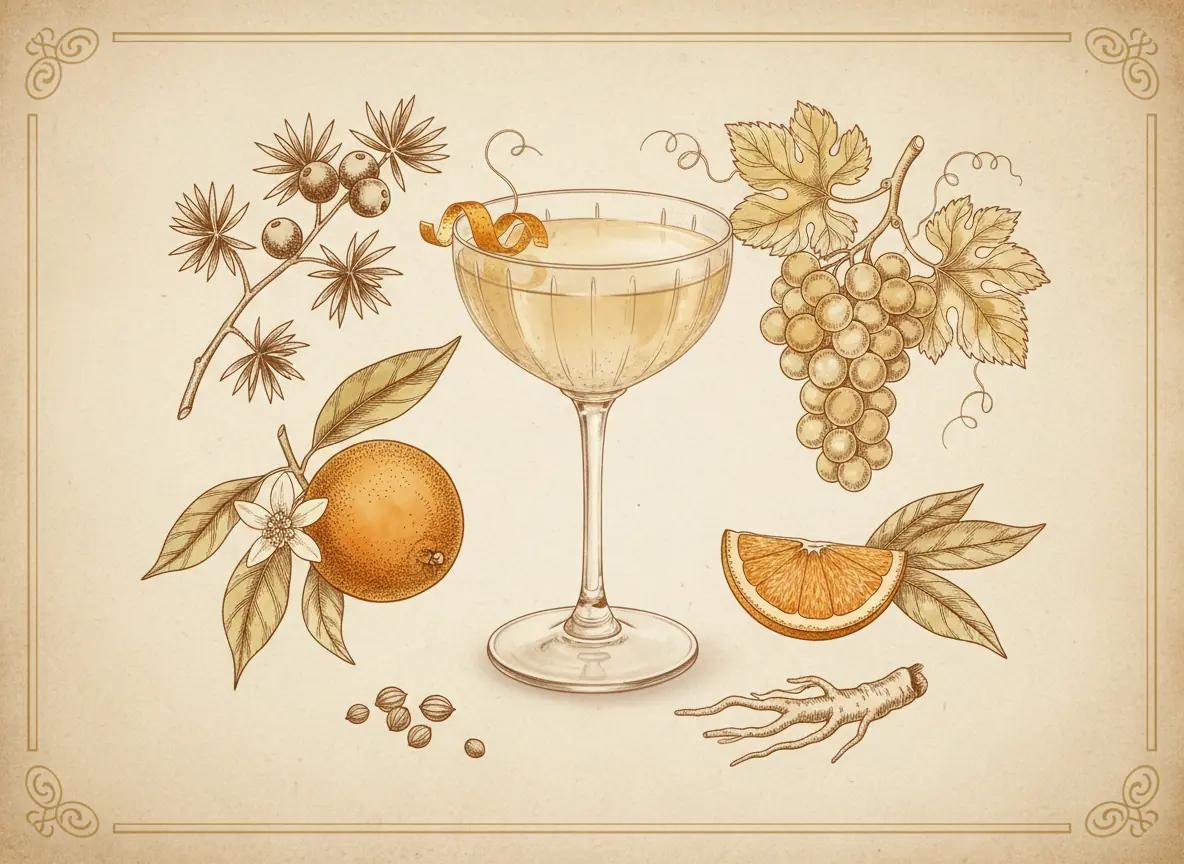
The Sherry Martini is a Martini variation in which fino sherry replaces dry vermouth as the modifier, producing a drink that is lighter, more saline and more delicate than the original while keeping the clean, spirit-forward structure that defines the format. It has no single documented origin and no named creator. It emerged from the same bartending culture that produced the Bamboo and the Sherry Cobbler. The relationship between gin and fino is one of the more intuitive combinations in the stirred canon. The saline, nutty, mineral quality of fino sits against the juniper and botanicals of a London Dry in a way that is immediately coherent. Where dry vermouth brings a wine character that can occasionally compete with the gin, fino provides a lower, quieter backdrop that lets the gin lead clearly while adding genuine complexity of its own. The ratio is the variable that most repays adjustment. Two to one, gin forward, is the version here; move toward equal parts for more sherry, or reduce it further to let the gin lead more clearly.
Singapore Sling

Singapore Sling

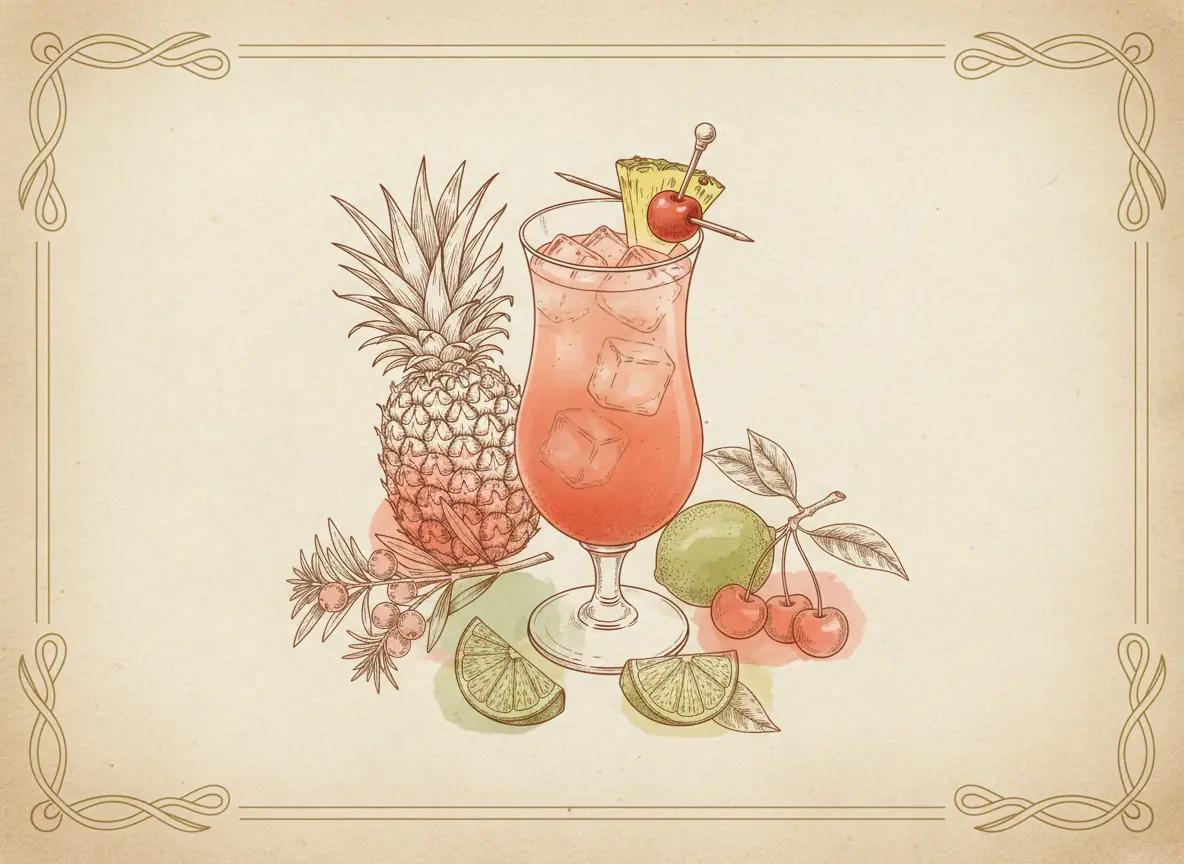
The Singapore Sling was created by Ngiam Tong Boon at the Long Bar of the Raffles Hotel in Singapore around 1915. It was built as a drink a woman could order in public without the social discomfort that accompanied ordering spirits directly, the pink colour and fruit-forward character providing a degree of cover that a straight gin drink would not have offered in that era. The cover worked. The drink outlasted the social conditions that made it necessary by more than a century. The recipe that circulated for decades after Ngiam's original was disputed, diluted, and in many cases replaced entirely by a pre-mixed version served at the Raffles Long Bar itself. The version documented here works from the most credible reconstruction: gin, Cherry Heering, Cointreau, Bénédictine, grenadine, fresh pineapple juice, fresh lime juice and Angostura bitters. It is a considerably more interesting drink than the commercial versions carrying the same name. Fresh pineapple juice is not optional. Tinned juice produces a flat, artificially sweet result the rest of the ingredients cannot compensate for.

Southside

Nobody owns the Southside’s origin story, which is half its charm. New York claims it for the 21 Club, the speakeasy where it was the house pour for the well-dressed end of Prohibition; Long Island claims it for the Southside Sportsmen’s Club, where mint from the kitchen garden met gin after the shooting; Chicago claims it for the South Side itself, where mobs allegedly softened harsh bootleg gin with lemon, sugar and mint. All three stories involve gin that needed forgiving and mint that obliged. What emerged is the Mojito’s cooler-headed cousin: gin, citrus, sugar and mint, shaken and strained into a coupe rather than built long over ice. Without soda and crushed ice diluting the frame, the drink is more concentrated and more elegant, the mint reading as perfume rather than salad, the gin’s botanicals and the herb finishing each other’s sentences. It survived Prohibition for the simplest reason: it never needed bad gin to justify itself. With a good London Dry the Southside is one of the finest simple gin sours in the canon, a drink that dresses for dinner where the Mojito dresses for the beach.

The Daffodil

The Daffodil is a house gin serve for St David’s Day, named for the national flower it resembles in the glass: Welsh gin shaken with limoncello, fresh lemon and a short measure of syrup, strained into a coupe under a lemon twist. Its work is colour as much as flavour, yellow-hued and spring-forward for a feast day that lands while winter is still arguing its case. Doubling the lemon sounds like a mistake and is the opposite. The limoncello brings sweetened, sunny peel; the fresh juice brings the sharp half of the same fruit; and ten millilitres of simple syrup trues the seam between them. Underneath, a Welsh gin supplies the structure, and there are several worth reaching for. Serve it cold and serve it early in the running order. It is a first-drink cocktail, bright enough to open a gathering and clean enough that the heavier whisky serves still make sense afterwards.
Tom Collins

Tom Collins

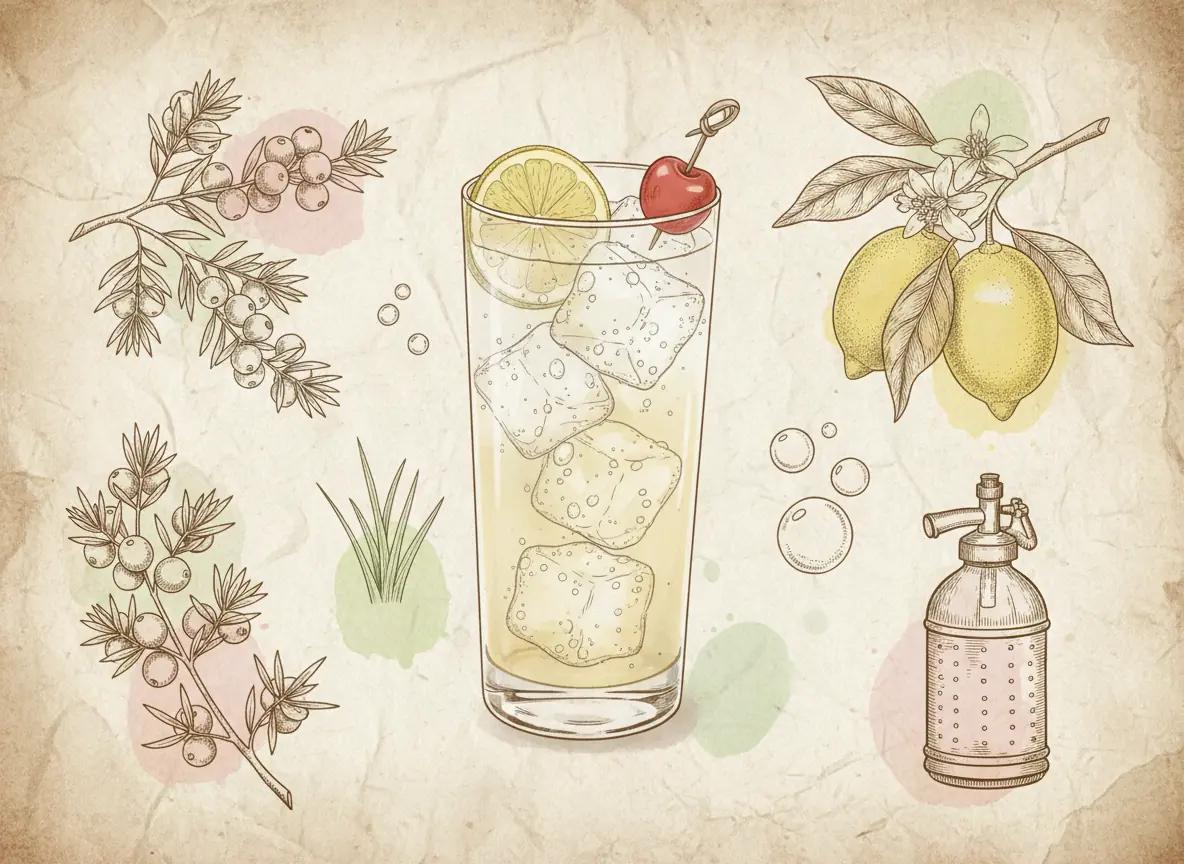
The Tom Collins is a gin sour lengthened with soda: gin, fresh lemon, sugar syrup and soda water over ice in a tall glass. The simplicity is deceptive. Built with a quality London Dry, lemon squeezed to order and well-chilled soda poured carefully, it is one of the most refreshing long drinks there is. Built with bottled juice and flat soda, it is one of the most disappointing. The name comes from one of the odder stories in the canon. The Great Tom Collins Hoax of 1874 involved telling somebody that a man called Tom Collins had been disparaging them in a nearby bar, then sending them off to find a person who did not exist. It spread across American cities fast enough that the name entered everyday speech, and a long gin drink already being served as the John Collins acquired it almost by association. Old Tom gin, the sweeter style that preceded London Dry, was the format's original base and makes a rounder, gentler drink. Both are correct.

Turf Club

The Turf Club is one of the oldest named drinks in the martini family, appearing in the bar books of the 1880s when gin and vermouth together was still a new enough idea to need names. The turf clubs were horse-racing institutions, and the drink took their gloss. The spec is a martini wearing everything: Old Tom gin and dry vermouth in equal measure, then a barspoon of maraschino, half a teaspoon of absinthe and two dashes of orange bitters on top. That was the standard aromatic wardrobe of the decade, and the twentieth century spent seventy years taking it off one piece at a time until only the twist survived. It is usually studied alongside the Tuxedo, which uses the same five ingredients at slightly quieter measures. Tasted in sequence they are a lesson in how far a barspoon moves a drink. Anyone who knows only the dry martini meets the Turf Club the way a reader meets an unabridged edition.

Tuxedo

The Tuxedo takes its name from Tuxedo Park, the Hudson Valley enclave whose club gave the dinner jacket its American name, and the drink is dressed accordingly: Old Tom gin and dry vermouth in the equal 1880s manner, with maraschino, absinthe and orange bitters worn as studs and cufflinks. Against its twin the Turf Club it is the quieter dresser. The same five elements, with the maraschino and the absinthe pulled back to whispers, so the martini’s wine-and-juniper conversation carries more of the evening. The absinthe is sometimes taken as a glass rinse rather than a measure, which is the drink’s one black-tie flourish. It survives as the martini family’s formalwear: the drink to pour when the occasion asks for history with its shoes shined, and the natural second chapter to read after the Turf Club’s unabridged edition. Harry Johnson printed an early reading, and the Savoy fixed the version most bars now follow.

Vancouver

The Vancouver is gin and sweet vermouth with a barspoon of Bénédictine and two dashes of orange bitters. It is the house drink of the Sylvia Hotel on English Bay, poured there since the middle of the twentieth century, and the city has claimed it with the quiet confidence of a place that knows it has a good one. Structurally it is the Hanky Panky with a different bottle in the seasoning slot. Ada Coleman's drink uses fernet, which is menthol and bitterness and arrives like a slap. Bénédictine is honeyed and herbal and arrives like a handshake. Same skeleton, entirely different manners. That makes it the most approachable of the gin and sweet vermouth family, which is not always a compliment and is here. It is gentler than the Hanky Panky and richer than a dry martini, and it is built for a second glass and a view rather than for making a point.
Vesper

Vesper

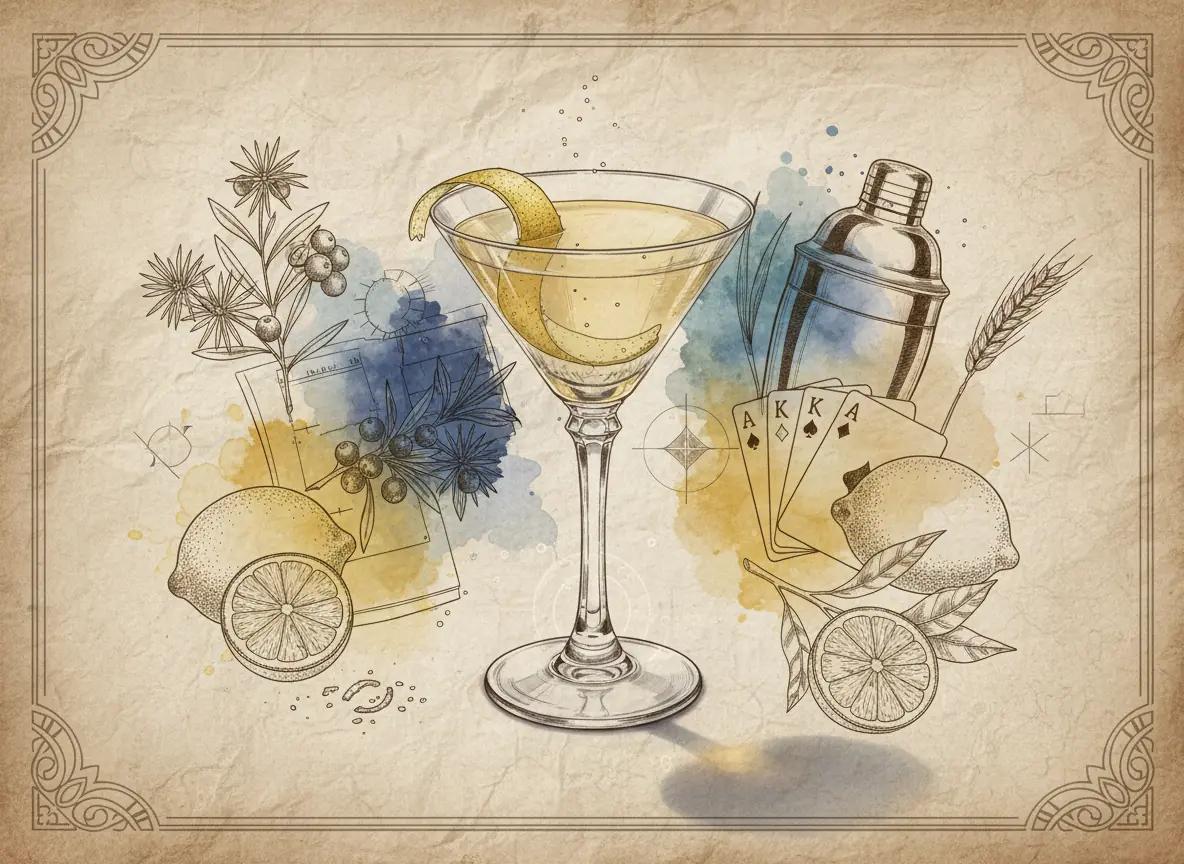
The Vesper was created by Ian Fleming for his first James Bond novel, Casino Royale, published in 1953. Bond orders it in chapter seven, dictates the recipe to a bartender unprompted, and names it after Vesper Lynd, the double agent at the heart of the novel. It is one of very few cocktails invented in fiction that crossed into genuine bar culture. Three ingredients: gin, vodka and an aromatised wine, shaken not stirred, served in a deep champagne goblet with a large thin slice of lemon peel. The instruction to shake rather than stir is the most debated piece of direction in cocktail writing, and it is preference rather than technique. Fleming wrote Kina Lillet, which was reformulated in 1986 into the lighter and less bitter Lillet Blanc. The official specification names Lillet Blanc and that is the recipe above; the Cocchi Americano build below carries the quinine bitterness the original had, and is the closer reading of the 1953 text.

White Lady

White Lady

The White Lady was created by Harry MacElhone at Ciro's Club in London in 1919, in an early form built on crème de menthe, and then substantially revised by MacElhone himself at Harry's New York Bar in Paris in 1929, when he replaced the mint with gin and added egg white. The earlier drink carries the same name and is a different thing entirely. The 1929 revision is the one ordered today. Gin, Cointreau and fresh lemon in a ratio that seats the gin clearly in front, with the liqueur and the acid holding a balanced frame around it. The official specification stops there; MacElhone's own rebuild adds an egg white, and that version is below. It is often described as a Sidecar made with gin, which is accurate as far as it goes and misses the specific relationship between juniper and Cointreau's orange. The two sit at adjacent points in the canon rather than one being a substitution of the other.

White Negroni

The White Negroni came out of an improvisation. Wayne Collins, a British bartender demonstrating at VinExpo in Bordeaux in 2001, was asked to work with French products and did not have Campari or sweet vermouth to hand. He rebuilt the Negroni from what was available: Suze in place of the Campari, Lillet Blanc in place of the vermouth, gin unchanged. It is a translation rather than a substitution. Suze is bitter from gentian root, which is earthy and vegetal where Campari is bitter orange, and Lillet answers with honeyed citrus and a touch of quinine where sweet vermouth brought weight and spice. The structure survives intact and every flavour in it changes. What you get is paler, drier and stranger than the original, and it has done more than anything else to put Suze on back bars outside France. Plenty of people prefer it to a Negroni. The argument is worth having with one of each in front of you.

Witch's Brew

The Witch's Brew is a colour-changing gin serve built for the one night of the year when theatre outranks subtlety. Stirred with butterfly pea flower syrup, the gin pours a deep, inky blue and sits in the coupe looking entirely too calm. The second act arrives at the table: a small jug of lemon juice and elderflower liqueur, poured in front of the drinker, moves the drink from blue to violet in seconds. The trick is chemistry rather than sleight of hand. Butterfly pea flowers carry anthocyanin pigments that read blue in a neutral spirit. Lemon juice lowers the pH, the pigment molecules change form, and the colour shifts through purple towards pink. Nothing artificial, nothing hidden, just an acid doing what acids do. Underneath the performance sits a proper drink. Gin carries the botanicals, elderflower liqueur rounds the citrus, and the pea flower syrup brings sweetness with almost no flavour of its own, which is exactly the point. Halloween claims it first, but it works on any evening that has reached the hour for a small piece of magic.

Yellow Jacket

Yellow Jacket

A gin sour built around two natural allies. Yellow Chartreuse and honey syrup share a floral, herbal sweetness that neither achieves alone, and fresh lemon juice cuts through both with clean tartness. London Dry gin provides the backbone, holding its own against the Chartreuse's complexity without overwhelming the delicacy of the honey. The pairing is not obvious until you taste it. Yellow Chartreuse is built around chamomile, saffron and alpine botanicals; good honey carries floral notes from the flowers the bees visited. They do not duplicate each other so much as extend each other, and the drink's character comes almost entirely from the way the two sit together in the glass. The result is bright, aromatic and golden in the glass. Herbal without being aggressive. Sweet without being cloying. Tart without being sharp. The Yellow Jacket sits in its own space on the sour spectrum, recognisable in structure but quite distinctive in character, and it is one of the cleaner expressions of yellow Chartreuse anywhere in the canon.