
Gin Cocktails, page 2

70 recipes, page 2 of 3

Base Spirit

Difficulty Level

English Garden

The English Garden is what it says on the glass: gin, elderflower, pressed apple and mint shaken into a long drink that tastes of the country it is named for. It has no inventor on record. The recipe surfaced in British bars sometime in the 2000s, spread faster than its paperwork, and settled into the repertoire as a contemporary classic nobody can quite pin down. It works because every ingredient pulls the same way. Elderflower and apple are hedgerow and orchard, gin’s botanicals are half a herb garden already, and the mint in the shaker with the cucumber on the glass folds in the kitchen plot. The lemon and a small measure of syrup hold the sweetness at cordial levels rather than pudding ones. It is the gin drink for people still deciding about gin, and the summer alternative for anyone who finds the Pimm’s jug too sweet: soft enough for a garden afternoon, structured enough to stand a second round.

Enzoni

The Enzoni is a Negroni spliced with a sour, and the graft is five muddled grapes. Gin and Campari come from the first family, lemon and sugar from the second, and the grapes hold the two together. They do it by carrying two inheritances at once. The juice sweetens the way syrup would, and the skins bring a gentle tannin that structures the drink the way vermouth might. Wine's raw materials standing in where wine would ordinarily be, which is why the finished drink reads as vinous without a wine bottle anywhere near it. It is credited to Vincenzo Errico, the same bartender behind the Red Hook, around 2003. Errico worked in both the New York and London rooms of Milk & Honey and the sources differ on which this came out of, so it is more honest to leave that open than to pick one. Two grafts in the same year, both permanent, is a considerable record.

Fitzgerald

The Fitzgerald is proof that a modern classic can be four ingredients old. Dale DeGroff built it at the Rainbow Room in the 1990s when a guest asked for a gin drink that was not a martini, and he answered with a gin sour seasoned with Angostura. He named it for F. Scott, and it reads like something Gatsby’s caterers would have poured without comment. The bitters are the entire intervention and they change everything. Two dashes against gin and lemon add clove-dark depth and a dry finish, pulling the sour out of the afternoon and into the evening. It is the same trick the Pegu Club plays with two bitters, executed with one bottle and no liqueur at all. DeGroff’s books spread it worldwide as the example of how little a new drink needs, and it remains the fastest upgrade to a gin sour anyone knows: the bottle is already on the bar, and the dash costs nothing but the thought.

Fluffy Duck

The Fluffy Duck is the advocaat bottle’s night out: Dutch custard liqueur lifted with gin and orange, lengthened with soda into a 1970s party classic whose name describes the texture and whose texture keeps the promise. The build balances custard against botanicals. Advocaat and gin at matched measure, with the gin performing on custard exactly the trick juniper performs on cream in an Alexander, cutting the richness so the drink stays a drink. Orange juice brightens it, triple sec doubles the orange from the liqueur side, and the soda lofts the whole thing into the fluff the duck is named for. It drinks like a float that learned manners: sweet, soft and considerably more refreshing than a custard-based cocktail has any business being. Advocaat gets two outings a year in most households, and this is comfortably the better of them and the one that has nothing at all to do with Christmas.

Ford Cocktail

The Ford is the 1890s martini at its most courteous: Old Tom gin and dry vermouth at equal strength, seasoned with a barspoon of Bénédictine and orange bitters, from George Kappeler’s 1895 Modern American Drinks. It is the gin drink the Gilded Age actually poured while history was busy mythologising the dry martini. Equal parts is the era’s signature and the drink’s character. The Old Tom’s gentle sweetness meets the vermouth’s herbs at eye level, the Bénédictine threads honeyed spice through the seam, and the orange bitters brighten the whole thing in the period manner. Nothing dominates and everything converses. The revival rediscovered it when Old Tom returned to production, and it has become the standard demonstration of what the sweetened gin style was actually for: not a curiosity but a different and gentler martini tradition, one that the twentieth century’s long march toward dryness simply steamrolled on its way past.
French 75

French 75

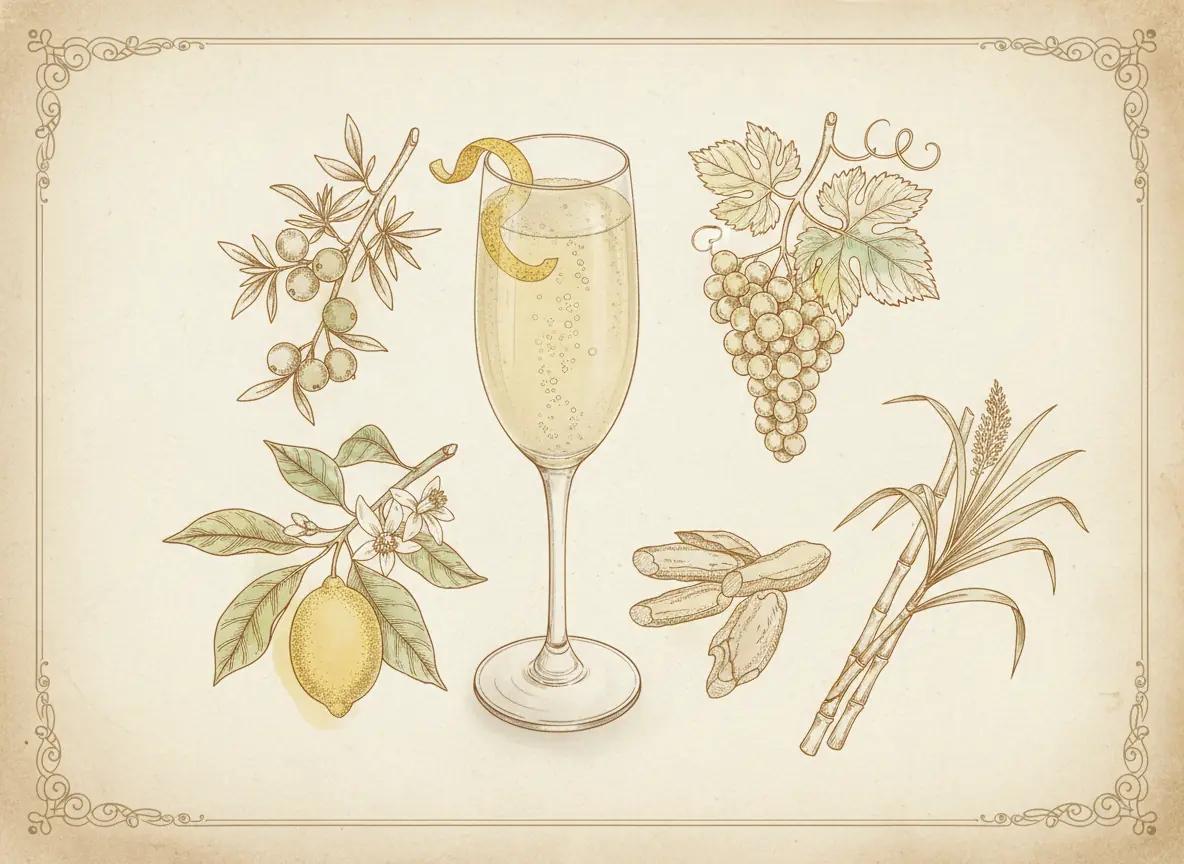
The French 75 was created at Harry's New York Bar in Paris in 1915 and named after the French 75mm field gun, the defining artillery piece of the First World War on the Western Front. The naming was not incidental: the drink was designed to hit with the force of the weapon, pairing gin and Champagne behind a presentation considerably more elegant than its strength suggests. The structure sits between the Tom Collins and the Champagne Cocktail. A gin sour of gin, fresh lemon juice and sugar syrup is shaken, strained into a flute or coupe, and topped with Champagne rather than soda water. The wine's yeast character, fruit and effervescence interact with the gin and citrus in a way soda cannot. The gin versus cognac debate has run since the drink appeared in print. The gin version is the historically consistent original and the one documented here; the cognac version, richer and more fruit-forward, is a legitimate variation.
Gibson

Gibson

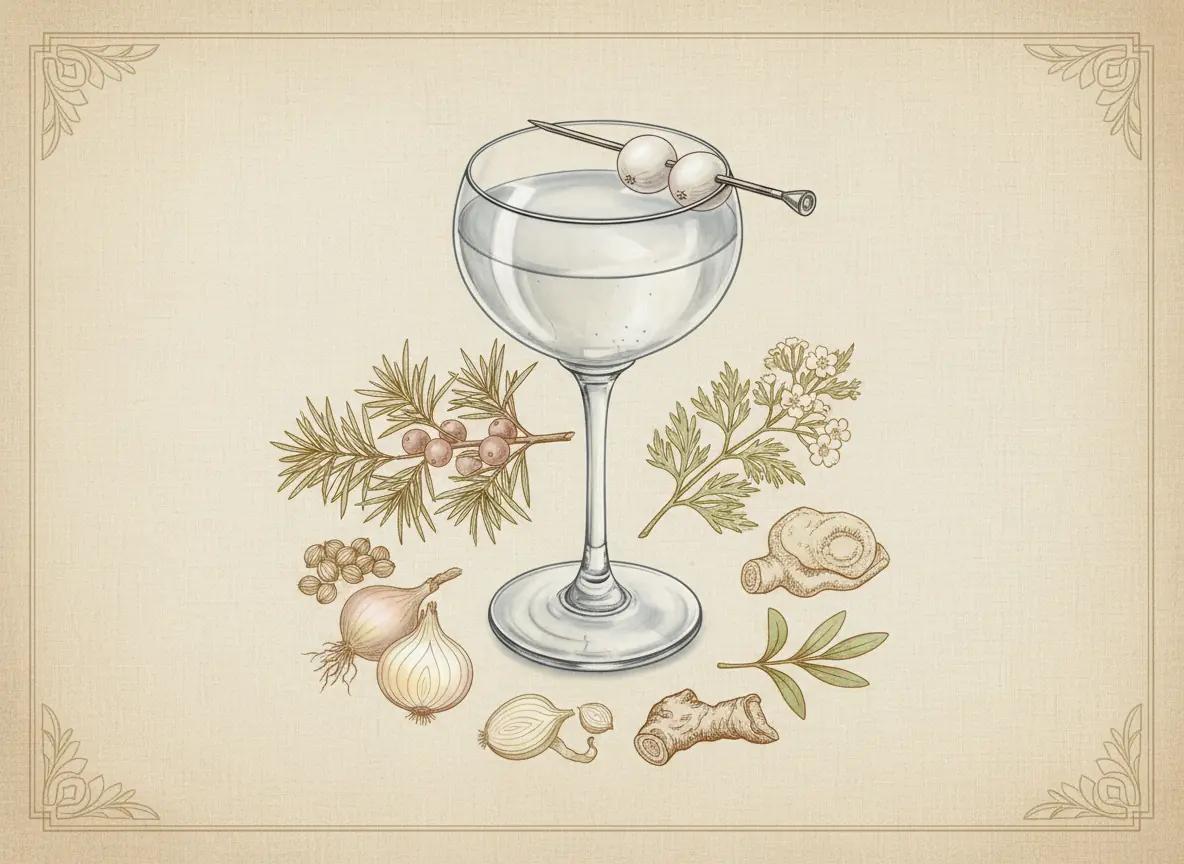
The Gibson is a Martini with one substitution: a cocktail onion in place of the lemon twist or olive. That substitution is the entire definition of the drink, and the source of a reasonable debate about whether a garnish change can constitute a distinct cocktail. It can. The pickled onion is not decoration: it introduces brine, acidity and a faint sweetness from the pickling liquor as it sits. The origin is disputed. The most cited account attributes it to a San Francisco businessman named Walter D.K. Gibson, who either requested the onion as a personal preference or used it to identify his glass at parties where he drank water rather than gin. Neither version is verifiable. The build is identical to the Martini in every respect except the garnish. The onion should be a quality pickled pearl onion with genuine brine character, because a cheap one introduces a synthetic note the gin and vermouth cannot absorb.

Gimlet

The Gimlet is the Royal Navy in a coupe. In 1867 the Merchant Shipping Act made lime rations compulsory aboard British ships, and in the same year Lauchlin Rose of Leith patented a way of preserving lime juice in sugar without a drop of alcohol. Rose's Lime Cordial went to sea, the officers' gin went into it, and somewhere between Portsmouth and Bombay the Gimlet was born. The defining decision is the cordial. A true Gimlet is gin and lime cordial and nothing else, and its character is exactly the cooked, marmalade-edged lime that preservation produces: smooth, rounded and faintly nostalgic, closer to silk than to citrus. Fresh lime and sugar make a bright and blameless drink, but they make a different one, and the traditional position is that the cordial version is the Gimlet and the fresh version is its modern variation. Proportions are the drinker's prerogative in the naval spirit. The classic pour ran as heavy as half and half; the modern palate prefers the drier three to one given here.

Gin & It

The Gin & It is the martini’s English aunt: gin and Italian sweet vermouth, the It of the name, poured together with ceremony and, in the classic London reading, no ice at all. It ruled the West End’s theatre bars and hotel lounges through the first half of the twentieth century, ordered as gin-and-Italian by drinkers who considered American ice an affectation. It is the sweet martini at its most relaxed. Where a Martinez dresses the same pairing with maraschino and a Hanky Panky with fernet, the Gin & It simply lets gin and red vermouth talk to each other, and the room-temperature tradition rewards trying once: the botanicals of both bottles arrive noticeably louder unchilled. The modern serve stirs it cold and settles toward two to one, and both readings are given here. Either way it is the fastest sweet martini in the canon and the best use of an open vermouth this side of a Negroni.

Gin & Tonic

The Gin & Tonic is medicine that stayed for the party. Quinine, the bitter bark extract that treated malaria across the British Empire, was so foul in solution that officers of the East India Company cut it with sugar, soda and their gin ration, and by the 1850s the treatment had become the drink. Modern tonic still carries a token dose of the original prescription: the bitterness is heritage rather than flavouring. It is the most ordered mixed drink in Britain and among the least considered. Two ingredients and ice leave nothing to hide behind: the gin has to be worth tasting, the tonic has to be fresh and properly carbonated, and one part gin to two of tonic keeps the drink a partnership rather than a dilution. The Spanish rebuilt the serve in the 2000s as gastronomy, and the copa balloon full of ice is the standard here: more ice than seems polite, tonic down the glass wall, and a garnish chosen rather than assumed.

Gin Basil Smash

The Gin Basil Smash is the modern classic with a precise birthday: July 2008, Le Lion in Hamburg, where Jörg Meyer muddled a fistful of basil into a gin sour and watched the result go green and go global. Within two years it was poured from Sydney to San Francisco, and it remains the fastest-adopted European drink of its generation. The build is a smash in the Jerry Thomas sense with the herb turned hero: basil muddled firmly with lemon, gin shaken through, the whole double-strained into a vivid chlorophyll glass. Basil behaves better than mint under violence, its deeper oils releasing pepper and anise without bitterness, and the drink tastes like a herb garden with a law degree. Meyer named it the Gin Pesto at first, thought better of it, and the smash conquered under its working title. It is the single best argument that the modern classics era belongs to Europe as much as New York, and the whole recipe fits in one hand.

Gin Cocktail

The Gin Cocktail is what the word cocktail meant before it meant anything else. The definition printed in 1806 was specific: spirit, sugar, water and bitters, and nothing else qualified. This is that formula with gin in the spirit slot, and Jerry Thomas printed it in 1862 among the first recipes anyone had bothered to write down. The build is small, stirred and dry. Sixty millilitres of gin, a barspoon of syrup, two dashes of Angostura and a lemon twist. Thomas also gives a fancy version with a barspoon of curaçao in it, which perfumes the drink without meaningfully sweetening it, and that is the version worth making. It is effectively an Old Fashioned, and it predates the name. The whiskey branch of the same formula became the Old Fashioned and, with absinthe, the Sazerac. The gin version simply stayed as it was and fell out of fashion, which is a shame, because it is very good and takes ninety seconds.

Gin Fizz

The Gin Fizz is the sour family’s effervescent branch and one of the golden age’s defining orders: gin, lemon and sugar shaken hard and fired into a small glass with soda, drunk fast while the sparkle holds. Jerry Thomas printed the fizz template in 1876, New Orleans made a religion of it, and by 1900 fizzes were being drunk by the dozen at American bars with shaker-men working in shifts. The classic serve is the part modern bars forget: a fizz takes no ice in the glass. It is shaken viciously cold, strained into a small chilled tumbler, topped with a short measure of soda and drunk in a few minutes. Ice in the glass makes it a Collins, which is a longer and lazier drink entirely. From this template the family branches. Egg white makes a Silver Fizz, yolk a Golden, the whole egg a Royal, and the Ramos added cream and orange flower water and demanded twelve minutes of shaking.
Gin Rickey

Gin Rickey

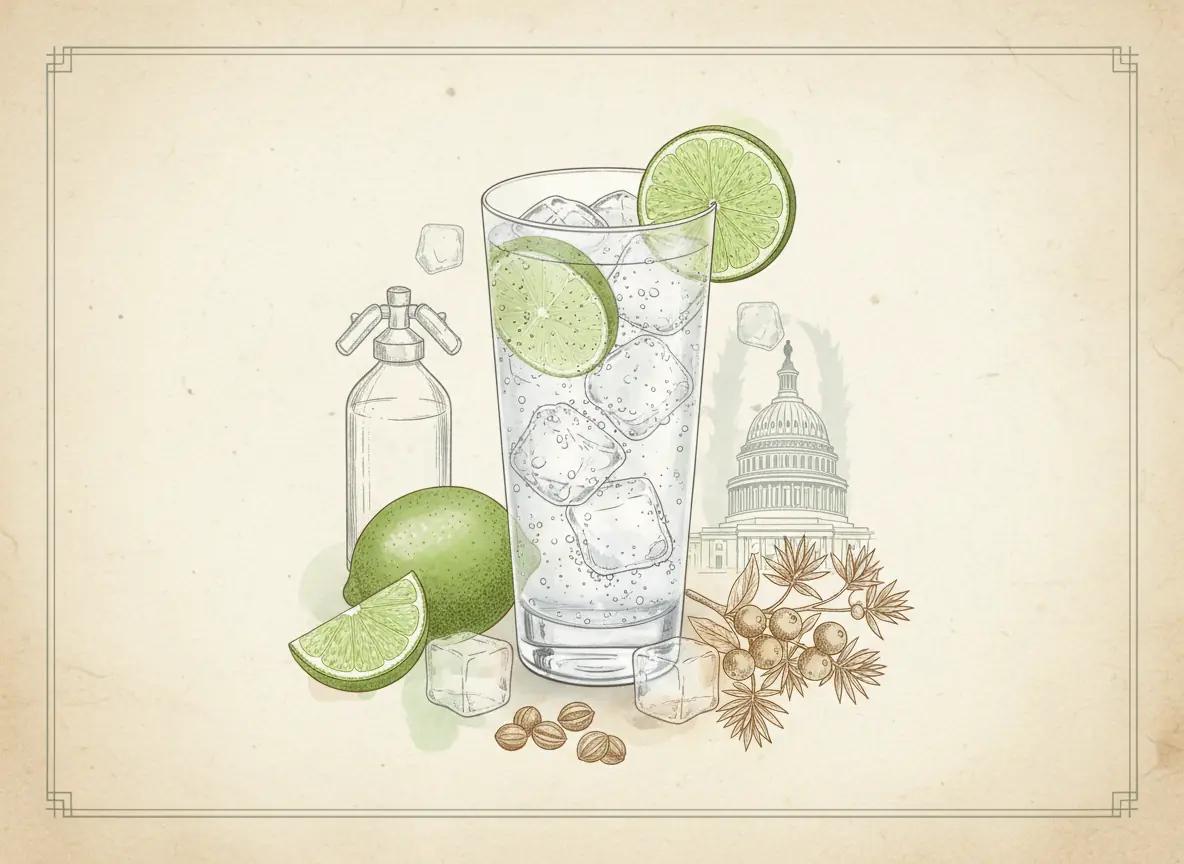
The Gin Rickey is gin, fresh lime juice and soda water over ice, and there is no sugar in it of any kind. That absence is the whole drink. It is what separates a Rickey from a Fizz, and it is why the gin matters more here than in almost anything else you can build. It is named after Colonel Joe Rickey, a Missouri lobbyist who drank his bourbon with lime and soda at Shoomaker's on Pennsylvania Avenue in 1880s Washington, consistently enough that the bartenders named the order after him. The gin version came shortly afterwards and overtook the original so completely that a Rickey now means gin unless you say otherwise. Rickey himself, by most accounts, thought the gin version was worse. He was outvoted. With no sweetener and only three ingredients, the freshness of the lime is the most consequential thing in the build. Squeezed to order it is bright and genuinely refreshing. Squeezed an hour earlier it is flat and slightly bitter, and nothing else in the glass can cover for it.
Gin Sling

Gin Sling

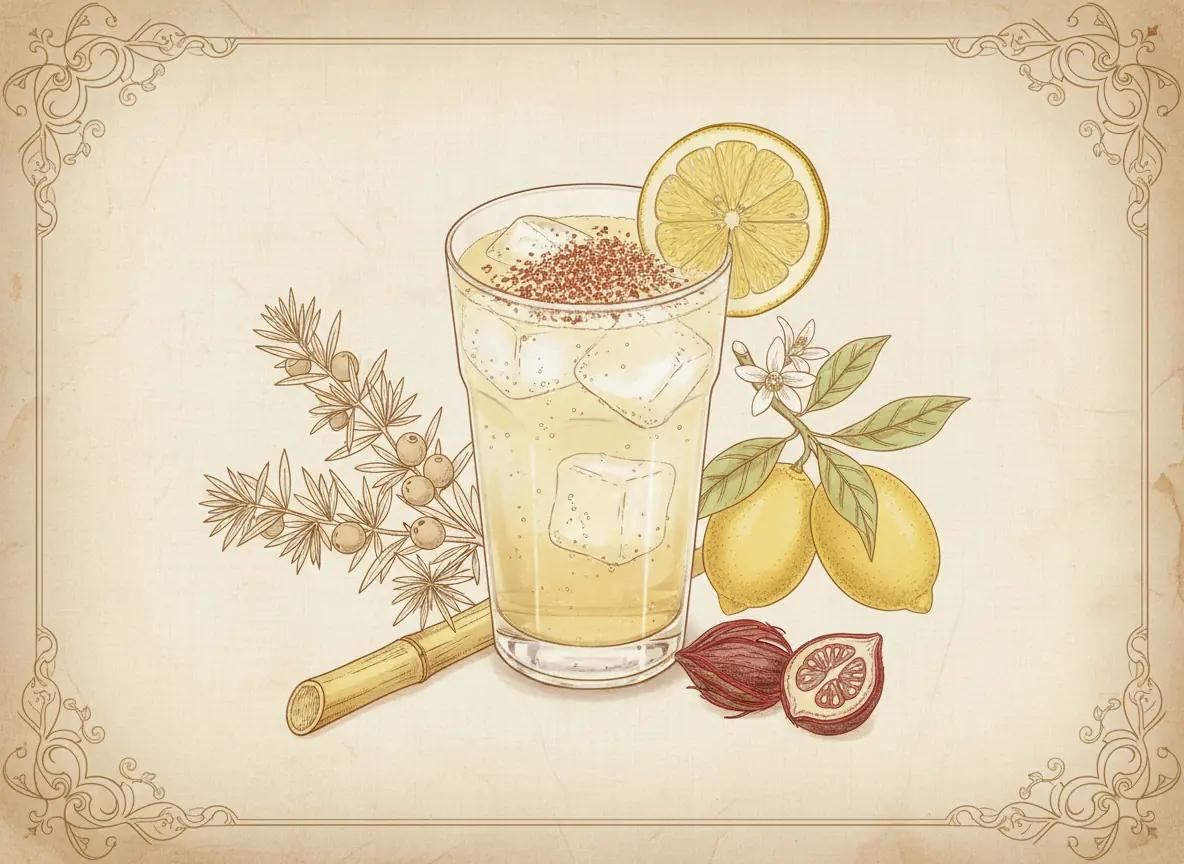
The Gin Sling is one of the oldest cocktail formats in existence. Jerry Thomas documented it in his 1862 Bartenders Guide, but the sling predates him by at least a century, with references appearing in American newspapers as early as the 1750s. At its core it is a simple thing: gin, citrus, sweetener, soda water, and nutmeg, built long and served over ice. Honest, unfussy, and completely satisfying when made with care. The sling sits at the intersection of the highball and the sour, with the length and refreshment of the former and the citrus backbone of the latter. It rewards good ingredients and correct proportion rather than technique or obscure components. The gin should be present. The lemon should be fresh. The soda should be cold and poured last. The nutmeg should be fresh and grated directly over the glass. Thomas was specific on that last point. In his manual he defined the sling by a single distinguishing detail: it had nutmeg on top. The toddy did not. That is the entire difference between the two formats as he recorded it. The nutmeg has largely disappeared from modern versions. It should not have.

Gin Sour

The Gin Sour is the sour family’s plainest statement and one of its oldest: spirit, lemon and sugar, the template Jerry Thomas codified in 1862 applied to the botanical spirit, predating most of the famous gin drinks that descend from it. Every White Lady, Bee’s Knees and Clover Club is a Gin Sour that learned a second language. Its plainness is the point. Three ingredients expose the gin completely, which makes this the sour that teaches botanicals: a juniper-led London Dry gives the classic spine, while a citrus or floral gin turns the same spec into a different afternoon entirely. The optional egg white borrows the Boston Sour’s silk without changing the argument. It sits in the canon as the missing link drinkers skip past, ordering its descendants without ever meeting the ancestor. Made with a good gin and honest lemon, it explains in one glass why the template conquered the world.

Hanky Panky

Ada Coleman ran the American Bar at the Savoy from 1903 to 1926, the first and for nearly a century the only woman to hold the post, and mixed for Mark Twain, the Prince of Wales and anyone else London considered worth knowing. The Hanky Panky was built for the actor Charles Hawtrey, who arrived exhausted and asked for something with a point to it. Coleman’s answer, by her own account after much experimenting, made Hawtrey declare it the real hanky-panky, and the name never left. The structure is a sweet martini with a twist of genius: equal parts gin and sweet vermouth, seasoned with a barspoon and a half of Fernet Branca. That small dose of Milan’s great bitter amaro runs through the drink like a dark thread, menthol and roots under the vermouth’s plush, and makes the Hanky Panky the first great amaro-accented cocktail, decades ahead of the fashion. It drinks like velvet with a conscience: rounded and warming at the front, bitter and cooling at the finish, with the orange twist bridging the two. One of the very few pre-war cocktails that needs no modernising at all.

Income Tax

The Income Tax is a Bronx with two dashes of Angostura in it. Gin, both vermouths, fresh orange juice, and then a small levy of bitters entered against the sweetness. The name is a straight-faced joke about the era's newest certainty. Two dashes is a small change with a large return. Clove and gentian dry the Bronx's sunny finish, give the two vermouths some structure to sit in, and move the drink from something that belongs at brunch to something that belongs at the aperitif hour. It appears in the 1920s and reaches the canon through Harry Craddock's Savoy Cocktail Book of 1930. Between it and the Bronx there is a genuinely useful choice rather than a hierarchy: the Bronx for optimism, the Income Tax for realism, and the name settles which of the two drinks better in April. Both are worth keeping in the repertoire, and they are one ingredient apart.

Jasmine

The Jasmine is the modern classic that performs a magic trick: gin, Campari, orange liqueur and lemon, and the finished drink tastes, unmistakably and to everybody who tries it, of pink grapefruit. Paul Harrington built it in 1990s California for a friend named Jasmin, published it in his pioneering book Cocktail, and the accidental grapefruit has been converting drinkers ever since. The illusion is arithmetic. Campari’s bitter orange plus Cointreau-style sweetness plus lemon’s acid lands precisely on grapefruit’s coordinates, so three ingredients triangulate a fourth fruit that never enters the glass at all. It is the drinks world’s favourite proof that flavour is construction rather than contents. It drinks as a dry, blush-pink sour with a properly bitter finish, and it is one of the great Campari gateways for the aperitivo-shy: the bitterness arrives dressed as fruit, and by the time anybody notices they are two in and asking questions about Negronis.
Last Word

Last Word

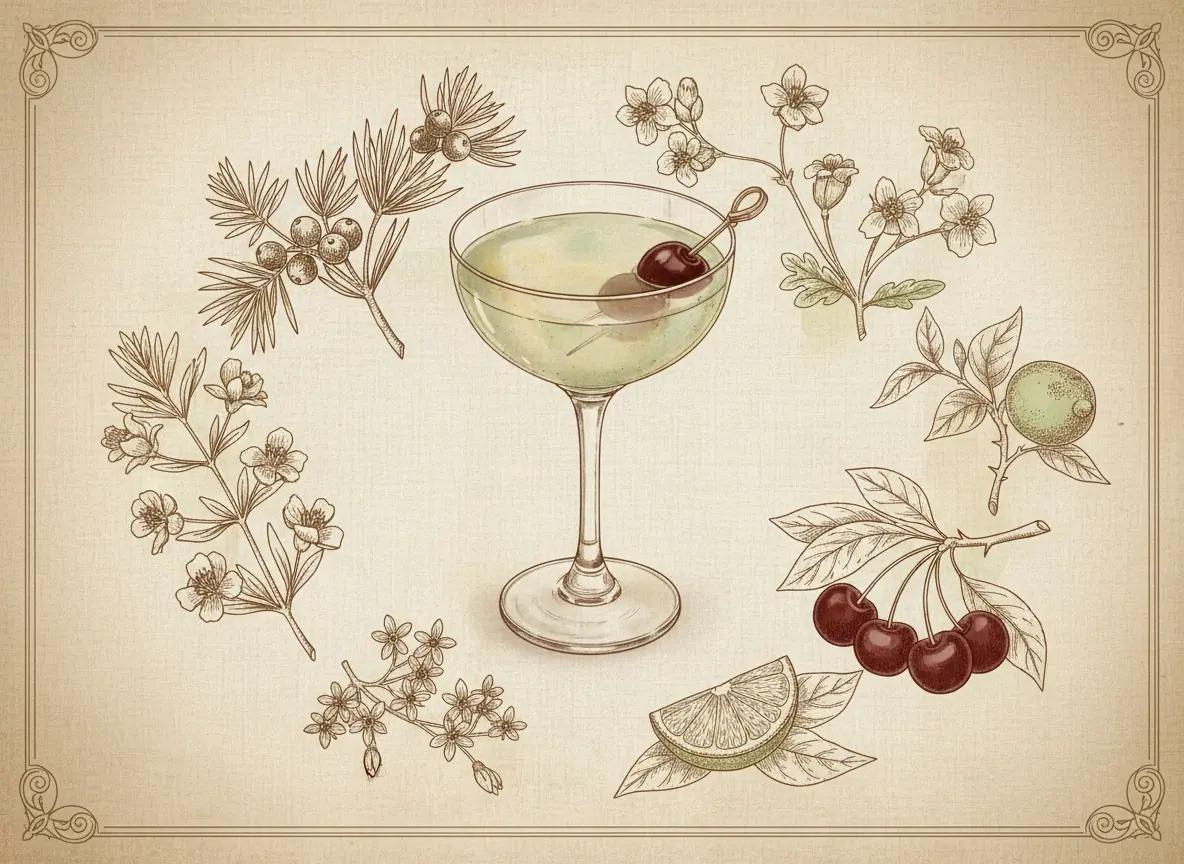
The Last Word is one of the great equal-parts cocktails: gin, green Chartreuse, maraschino liqueur, and fresh lime juice in identical measures, shaken and served up. No component leads and no component follows. Each of the four is assertive enough to dominate a lesser recipe, and the fact that none dominates this one is the drink’s central achievement. It originated at the Detroit Athletic Club around 1915, documented by Ted Saucier in his 1951 book Bottoms Up and attributed to vaudeville performer Frank Fogarty, who allegedly introduced it to the club. It disappeared almost entirely during and after Prohibition and was rediscovered in the early 2000s by Seattle bartender Murray Stenson, who found it in Saucier’s book and put it on the menu at the Zig Zag Café. From there it spread through the craft cocktail world and has not left. The revival was deserved. Green Chartreuse brings herbal intensity, maraschino brings cherry sweetness and a faint bitter almond note, fresh lime brings tartness, and gin holds it together. Each sip reveals a different component leading depending on where in the glass you are. It is a drink worth paying attention to.

Left Bank Martini

The Left Bank Martini puts dry white wine where the vermouth would go. Gin leads, elderflower liqueur supplies the sweetness and the perfume, and a crisp unoaked white does the job of the aromatised wine without bringing botanicals of its own. That substitution is the whole design. Vermouth is wine plus herbs, and those herbs argue with elderflower. Take them away and the blossom has the glass to itself, which is exactly what a drink built to introduce an elderflower liqueur needs. It was made in 2006 at London's Cabinet Room for that liqueur's launch, a year before the bottle became ubiquitous, and named for Saint-Germain-des-Prés, the Parisian quarter on the left bank of the Seine that also gave the bottle its name. Launch cocktails rarely outlive the party. This one entered the repertoire. It is shaken rather than stirred, which is unusual for anything calling itself a martini, and it lands cold, floral and unapologetically pretty.

London Calling

London Calling is a gin sour with fino sherry in it, and the sherry is doing the job salt does in cooking. Fifteen millilitres is not enough to taste as sherry. It is enough to dry the finish, deepen the middle and make the lemon read sharper than it otherwise would. It is credited to Chris Jepson, who built it at MASH in London in 2002, and named for the Clash record. That date matters: it is roughly a decade ahead of the point at which fino became a fashionable thing to have behind a bar, and the drink is routinely named as one of the things that started the shift. The result is a sour with its collar up. Dry, mineral and considerably more serious than a gin sour has any obligation to be, and the sort of drink to put in front of someone who has told you they do not like sherry, without mentioning what is in it.

Martinez

Martinez

The Martinez is the oldest documented ancestor of the Martini and the drink from which the entire stirred gin cocktail tradition most likely descends. It appeared in Jerry Thomas's 1887 bar guide in a form recognisable today: gin, sweet vermouth, maraschino, and bitters, stirred and served cold. The Martini took the format, swapped sweet vermouth for dry, removed the maraschino, and produced something cleaner and less complex. Whether that represents progress or loss depends entirely on which drink you are holding. The Martinez is richer, more layered, and more demanding of attention than the Martini it inspired. The sweet vermouth brings body and fruit character that dry vermouth does not; the maraschino introduces a dry cherry and almond note that sits underneath the gin without announcing itself; the bitters tie everything together. The official specification builds it at equal parts on London Dry with orange bitters, and that is the recipe above: drier, sharper, and more clearly a relative of the Martini. The nineteenth-century reading uses Old Tom, a shorter vermouth measure and Angostura, and it is carried below with its own proportions.

Martini

Martini

The Martini is the most argued-about drink in the history of bartending. The disputes over ratio, gin versus vodka, stirred versus shaken, olive versus twist have run for over a century, and most are preference dressed up as correctness. The Martini tolerates a wide range of builds. What it does not tolerate is imprecision or poor ingredients. The version documented here is a gin Martini at the official ratio of six parts gin to one of dry vermouth, stirred, served cold, with a lemon twist. At that ratio the vermouth reads as a mineral edge and a wine note behind the juniper rather than an equal partner, which is where the modern consensus has settled. Wetter builds are set out below and none of them is wrong. The fashion for extremely dry Martinis, with the vermouth reduced to a rinse or omitted entirely, produces what is technically chilled gin. There is nothing wrong with chilled gin. It is not a Martini. The vermouth matters as much as the gin. Treat it as perishable, keep it refrigerated, and replace it within four weeks.