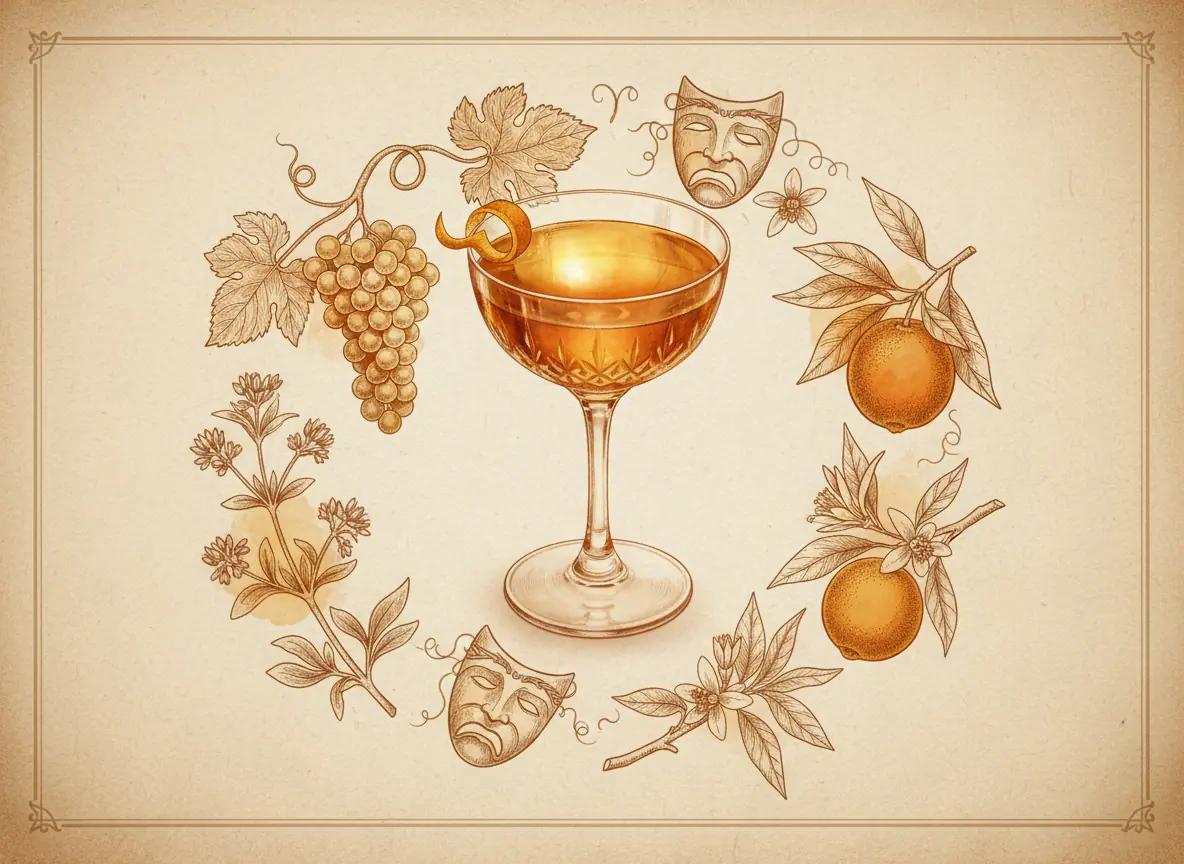
Adonis
The Adonis was created at the Hoffman House bar in New York in 1884 to celebrate the extraordinary run of the Broadway musical of the same name, which became one of the longest-running shows of the nineteenth century. It is a two-spirit build of dry sherry and sweet vermouth with orange bitters, stirred and served cold, and one of the earliest documented low-ABV cocktails in the American canon. Where its close relative the Bamboo is dry, saline and mineral, the Adonis is softer, rounder and more fruit-forward. The sweet vermouth introduces a warmth and body that dry vermouth does not, and the result sits more comfortably after a meal than before one. The choice between the two is largely a question of when they are being drunk. Fino or manzanilla sherry is the correct call. Its dry, saline character is the counterweight the vermouth's sweetness needs, and an amontillado pushes the drink toward richness at the cost of the delicacy that makes it interesting.
Glassware: Coupe Glass
Garnish: Orange Twist (expressed)
Ingredients
45ml
Fino or manzanilla provides the dry saline counterweight the sweet vermouth needs. Refrigerate after opening and use within two weeks.
30ml
Refrigerate after opening and replace within four weeks. The sweetness and body it brings is the defining difference between the Adonis and the Bamboo.
2 dashes
The aromatic bridge between the sherry and sweet vermouth. Regans' Orange Bitters No. 6 or Fee Brothers Orange Bitters both perform well here.
Instructions
Chill a coupe in the freezer or with ice water before building the drink.
Add fino sherry, sweet vermouth, and orange bitters to a mixing glass.
Add a scoop of large cubed ice and stir for 20 to 25 seconds until well chilled and properly diluted.
Discard the chilling ice from the coupe and strain the cocktail cleanly into the glass.
Cut a wide strip of orange peel and express the oils over the surface of the drink.
Rest the peel on the rim and serve immediately.
Expert Tip
The ratio runs slightly sherry-forward rather than equal parts, and that is what keeps the drink from tipping into sweetness. If the finished glass reads too round or too soft, reduce the sweet vermouth by five millilitres before adjusting anything else. That single change restores the balance without altering the character. Both ingredients are perishable and neither is protected. There is no distilled spirit here and no citrus acid, so nothing masks a tired bottle: the sherry wants using within about two weeks of opening and the vermouth within four, both refrigerated from the day they are opened. Express orange peel rather than lemon. Sweet vermouth has an affinity with orange that lemon does not replicate in this structure, and the oil noticeably changes the first sip.
Behind the Adonis
Flavour Profile
The Origin
The Hoffman House was one of the most celebrated hotel bars in late nineteenth-century New York, known for its lavish interior, its prominent clientele, and its bartenders who were considered among the most skilled in the city. In 1884 a Broadway musical called Adonis opened at the Bijou Theatre and went on to run for six hundred and three performances, an extraordinary figure for the era that made it the longest-running musical in Broadway history at the time. The Hoffman House created a drink to mark the occasion and named it after the show.
The musical's success and the bar's reputation between them gave the drink enough visibility to survive into the bartending literature of the following decades. It appeared in print in several bar guides of the late nineteenth and early twentieth centuries and was carried into the cocktail revival by historians and bartenders who recognised the quality of the original balance. It remains one of the oldest continuously documented low-ABV cocktails in the American record.
The Adonis and the Bamboo
The Adonis and the Bamboo are as closely related as two distinct cocktails can be without one being a direct variation of the other. Both are built on fino sherry as the primary ingredient. Both are stirred, spirit-forward drinks served cold in a coupe with citrus peel expressed over the surface. The single structural difference is the vermouth: the Adonis uses sweet, the Bamboo uses dry. That difference changes the character of the finished drink entirely.
The Bamboo is mineral, saline, and taut, a drink that sits naturally before a meal as an aperitif. The Adonis is rounder, softer, and more fruit-forward, with the sweet vermouth introducing a warmth that shifts the drink toward digestif territory without making it heavy. Understanding both drinks and when each is appropriate is one of the more useful pieces of knowledge available to anyone who takes low-ABV cocktail building seriously.
The Sherry Foundation
Fino sherry is not a neutral base. It brings genuine complexity to the Adonis in the form of saline mineral character, nuttiness from the flor-ageing process, and a dry finish that keeps the sweet vermouth from making the drink cloying. The counterpoint between the dryness of the fino and the sweetness of the vermouth is what makes the balance of the Adonis interesting. Remove the fino and replace it with a neutral white wine and the drink collapses into simple sweetness. The sherry is structural.
Both the fino sherry and the sweet vermouth are perishable products that degrade after opening. The Adonis has no distilled spirit base, no citrus acid, and no high-alcohol component to mask the deterioration of its ingredients. What you pour directly determines what you drink. Keep both refrigerated and use them within the timelines they require.
How to Serve It
Stirred, strained, and served cold in a coupe with expressed orange peel over the surface. The orange peel rather than lemon is the correct choice here. The sweet vermouth has an affinity with orange that lemon does not replicate in this structure, and the oil released by the orange peel over the surface of the drink changes the first sip in a way that is immediately noticeable. Serve it cold and serve it fresh. Like the Bamboo, the Adonis does not improve with time in the glass.
Make it at home
The Spirit
Fino SherryA pale, bone-dry sherry from Jerez, aged under a living veil of yeast that keeps the air off it. It is a white wine that has been fortified, not a spirit, and treating it as one is why so many bottles are drunk stale.
Master the Techniques
More to explore
Frequently Asked Questions
What is an Adonis?
How does it differ from a Bamboo?
Which sherry, and does freshness matter?
You Might Also Like
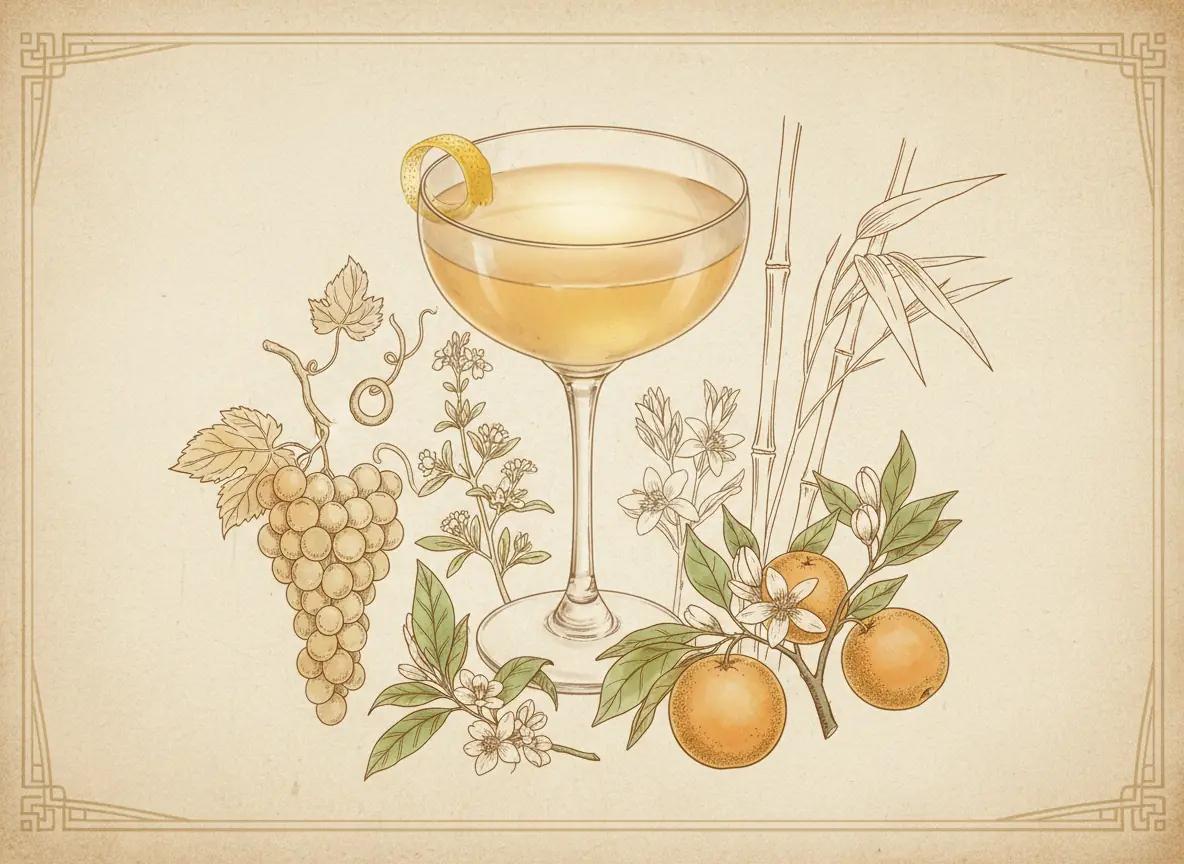
Bamboo
The Bamboo was created by Louis Eppinger at the Grand Hotel in Yokohama around 1890, making it one of the earliest documented low-ABV cocktails and one of the first drinks of note created outside Europe or North America. Eppinger was a German-born bartender who ran the Grand Hotel bar for decades, and the travellers who passed through carried his drinks back with them. The Bamboo was the most enduring of them. Equal parts dry sherry and dry vermouth with orange bitters, stirred and served cold. The format sits in the Martini family, spirit-forward and stirred, but the absence of a distilled base produces something considerably lighter and more delicate than anything built on gin or whiskey. It asks for attention rather than demanding it. Fino or manzanilla performs best: dry, saline and nutty in a way that gives the drink genuine complexity at a fraction of the alcohol. The sherry choice changes the Bamboo more than any other variable in the build.
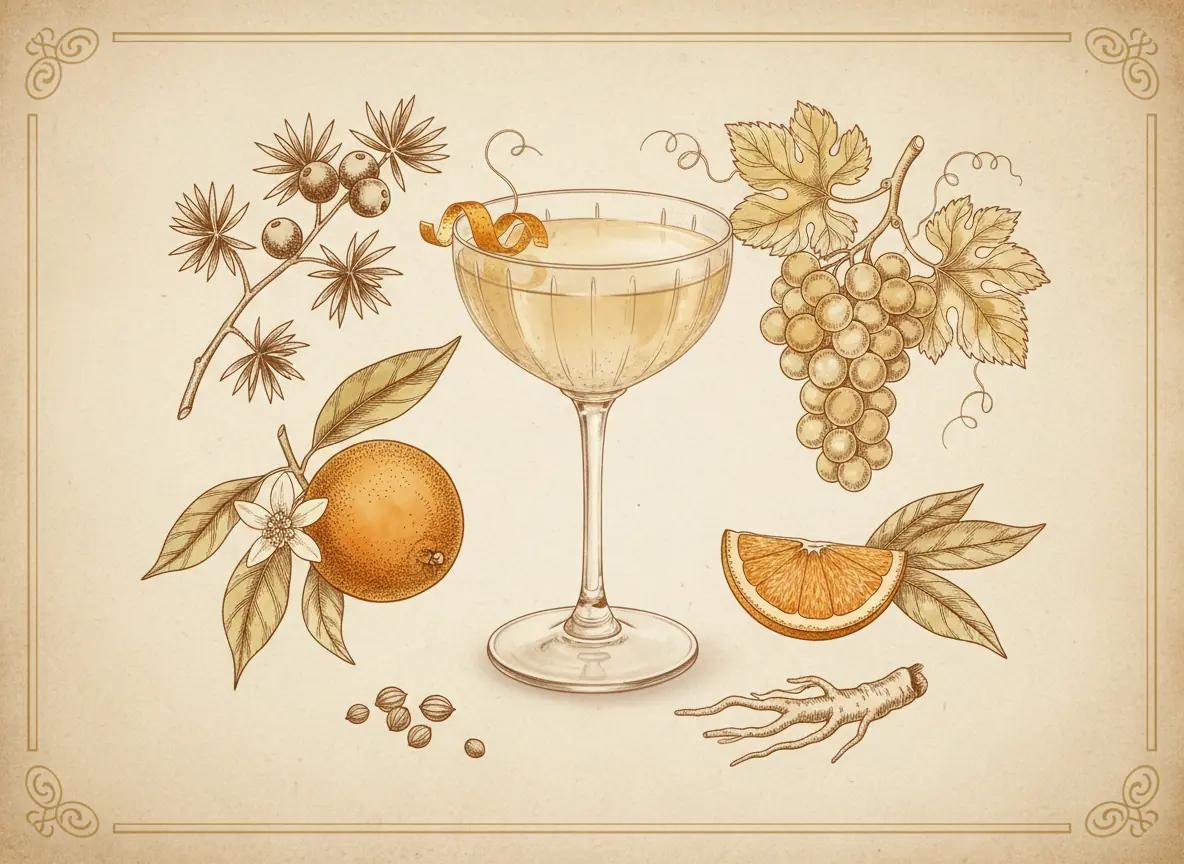
Sherry Martini
The Sherry Martini is a Martini variation in which fino sherry replaces dry vermouth as the modifier, producing a drink that is lighter, more saline and more delicate than the original while keeping the clean, spirit-forward structure that defines the format. It has no single documented origin and no named creator. It emerged from the same bartending culture that produced the Bamboo and the Sherry Cobbler. The relationship between gin and fino is one of the more intuitive combinations in the stirred canon. The saline, nutty, mineral quality of fino sits against the juniper and botanicals of a London Dry in a way that is immediately coherent. Where dry vermouth brings a wine character that can occasionally compete with the gin, fino provides a lower, quieter backdrop that lets the gin lead clearly while adding genuine complexity of its own. The ratio is the variable that most repays adjustment. Two to one, gin forward, is the version here; move toward equal parts for more sherry, or reduce it further to let the gin lead more clearly.
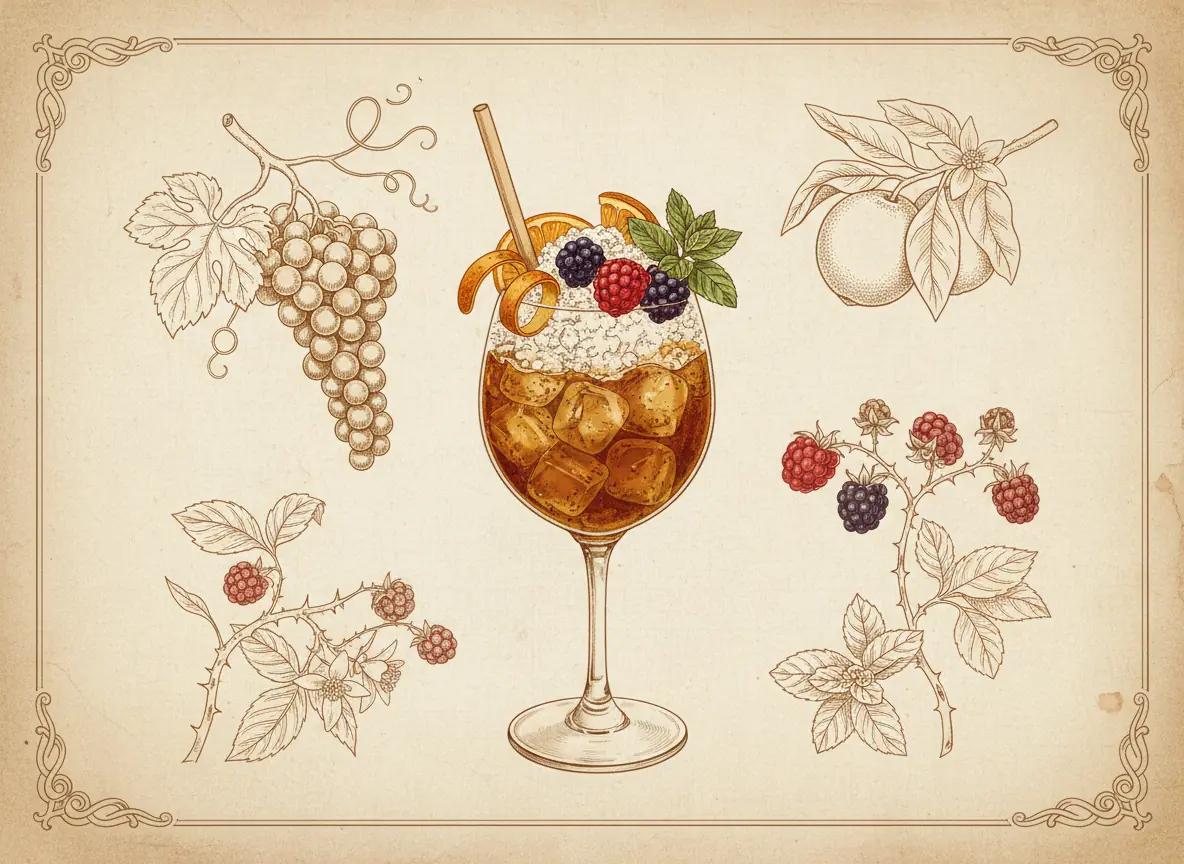
Sherry Cobbler
The Sherry Cobbler is one of the most historically significant drinks in American cocktail culture, and one of the least appreciated. It was the most popular cocktail in America through the mid-nineteenth century, ordered in every bar, hotel and oyster saloon from New York to San Francisco, and Jerry Thomas documented it in his 1862 Bartenders Guide with the confidence reserved for drinks that need no introduction. The cobbler is built on three things: sherry, sugar and citrus, packed into a glass of crushed ice and served with a straw. That last detail matters more than it sounds. The Sherry Cobbler is widely credited as the drink that popularised the drinking straw in America. Sherry is a fortified wine rather than a spirit, lower in alcohol than the bases that anchor most cocktails, which makes this one of the most sessionable drinks in the canon and one of the most elegant. It simply is what it is: one of the great originals.
Where this one sits
Recipe by Jerry Can Spirits